Natural Cheek Contour: Your Ultimate Guide 2025
Why Natural Cheek Contour Matters for a Youthful, Lifted Look

Natural cheek contour is about enhancing your existing bone structure to create the appearance of higher, more defined cheekbones without looking overly made-up. Whether you’re using makeup techniques or exploring longer-term solutions, the goal is simple: add dimension to your face for a more sculpted, youthful appearance.
Quick Guide to Creating Natural Definition:
- Identify your natural cheekbone placement by sucking in your cheeks or feeling for the zygomatic bone
- Choose the right products – powder contour for beginners, cream for a dewy look
- Apply contour 3-4 shades darker than your skin tone in the hollow of your cheek
- Blend upward with soft strokes for a seamless finish
- Add highlighter to the top of your cheekbone to create lift
- Consider your face shape to tailor placement for the most flattering results
Defined cheekbones are considered a near-universal sign of beauty and help your face appear more lifted and structured. The good news? You don’t need to be born with prominent cheekbones to achieve this look. Through strategic makeup application, you can create shadows and highlights that mimic natural bone structure. For those seeking more permanent results, professional procedures offer lasting definition.
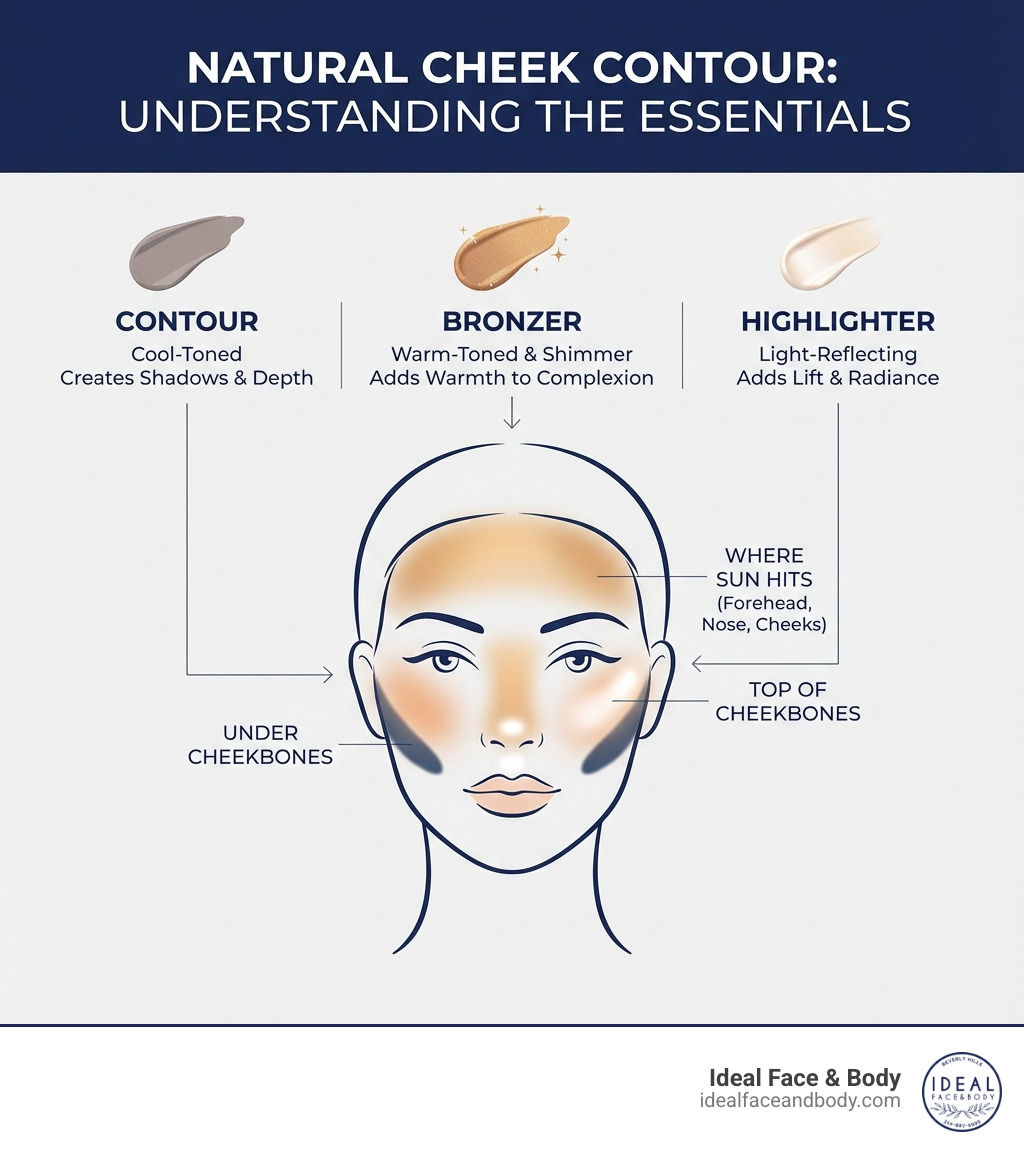
Understanding the difference between contour (which creates shadows and depth), bronzer (which warms your complexion), and highlighter (which catches light) is essential for achieving a natural look. Contour should have cool or neutral undertones to mimic real shadows, while bronzer typically features warm, golden hues.
As Dr. Sarah Yovino, a double board-certified master injector specializing in non-surgical medical aesthetics, I’ve helped countless patients achieve beautiful, natural cheek contour through both makeup guidance and advanced cosmetic procedures. My expertise in facial anatomy and aesthetic improvement allows me to provide comprehensive solutions for those seeking defined, sculpted cheeks.
Understanding Your Facial Anatomy for a Flawless Contour
A beautiful, natural cheek contour starts with understanding your unique facial anatomy. To improve your features effectively, you need to know your bone structure and natural shadows. The cheekbone (zygomatic bone) provides the framework for your face. Since contouring varies by face shape, a personalized approach is key.

How to Find Your Natural Cheekbone Placement
Before picking up a brush, find the natural hollows and high points that will guide your application. This is crucial for a natural-looking contour.
Here are a few simple methods:
- The “Fish Face” Method: Pucker your lips or suck in your cheeks. The indentation that appears just below your cheekbone is your natural hollow, the perfect spot to apply contour to create a shadow.
- Feel for the Bone: Gently feel for your cheekbone, starting from your ear and moving toward your nose. The area just beneath it, where your fingers dip, is the hollow.
- Thumb and Index Finger Guide: Place your thumb inside your mouth and your index finger on your cheek. Your index finger will naturally rest along the underside of your cheekbone, showing you the line to follow.
- Makeup Brush Placement Trick: Place a makeup brush handle diagonally from your earlobe toward the corner of your mouth to find the angle. Apply your contour only about halfway down this line for a more natural effect.
Tailoring Contour to Your Face Shape
Once you’ve found your cheekbone placement, consider your face shape. Contouring creates illusions that can subtly alter the perception of your facial structure.
Here are some general guidelines:
- Oval Face: Simply improve your existing structure. Apply contour in the hollows of your cheeks, blending upwards towards your hairline.
- Round Face: To create definition and the illusion of length, apply contour in the cheek hollows, extending it slightly further towards your mouth and blending up towards your temples.
- Square Face: To soften strong angles, apply contour in the cheek hollows and add a touch along your temples and jawline.
- Heart-Shaped Face: To balance a wider forehead with a narrower chin, apply contour in the cheek hollows and lightly along the temples and jawline.
- Diamond Face: To soften prominent cheekbones, apply contour directly on them, blending downwards into the hollows. Also, add a touch to the temples and jawline.
These are guidelines. The most important thing is to work with your unique features and blend thoroughly for a seamless, natural cheek contour.
The Makeup Artist’s Toolkit for Natural Cheek Contour
Contouring adds dimension and defines your features, but a natural look lies in choosing the right products and mastering the application. We’re aiming for subtle shadows that improve, not harsh lines that distract.
Choosing Your Tools: Cream vs. Powder Contour
The choice between cream and powder contour depends on your skin type, desired finish, and skill level.
| Feature | Cream Contour | Powder Contour |
|---|---|---|
| Finish | Hydrating, dewy look, natural skin-like finish | Matte finish, can sometimes make skin look flat |
| Skin Type | Best for dry, normal, or mature skin; gives glow | Best for oily or combination skin; controls shine |
| Blendability | Blends seamlessly into skin, requires quick work | Easier to blend for beginners, buildable |
| Pigmentation | Can be more pigmented, but also sheer | Less harsh and pigmented, forgiving |
| Durability | Can be long-lasting, especially when set | Excellent for setting, long-wearing |
| Beginner-Friendly | Can be trickier for beginners due to blending time | Recommended for beginners, easier to control |
We recommend powder contour for beginners, as it’s more forgiving and allows you to gradually build up definition.
The Great Debate: Bronzer vs. Contour
Understanding the difference between bronzer and contour is vital for a natural cheek contour. While both add dimension, they have distinct purposes.
- Bronzer: Is meant to warm up your complexion. It typically has warm hues and shimmer to create a sun-kissed look. Apply it where the sun would naturally hit your face, like the tops of cheekbones and the forehead.
- Contour: Is meant to create depth. It should have a cool or neutral base to mimic natural shadows. Contour products are usually matte. Apply it to the hollows of the cheeks, along the jawline, and the sides of the nose.
Using them together creates a defined, healthy-looking complexion. First contour, then bronze, then highlight.
A Step-by-Step Guide to Applying Natural Cheek Contour
Now that we’ve chosen our products, let’s walk through the application process.
- Foundation First: Always apply foundation and concealer first. This creates a blank canvas and prevents you from wiping away your contour.
- Concealer Application: Apply concealer in a triangle shape under your eyes and blend. This brightens and lifts the area.
- Contour Placement: Use a contour product 3-4 shades darker than your skin. Apply it to your cheek hollows, starting halfway between your ear and mouth and extending toward your hairline. Don’t bring it too close to your mouth.
- Blending Upwards: This is the most crucial step. Blend your contour with upward strokes using a soft brush or damp sponge. The goal is to diffuse the product into a natural-looking shadow with no harsh lines.
- Blush Application: Apply blush to the apples of your cheeks (smile to find them). Blend it up toward your temples, slightly overlapping your contour.
- Highlighter Placement: Apply highlighter to the top of your cheekbones where light naturally hits. Blend it smoothly into your blush for extra lift.
- Setting Powder (Optional): A light dusting of translucent setting powder can lock in your look, especially if you have oily skin or used cream products. For extra definition, you can “bake” by applying a heavy layer of powder under your contour line, letting it sit for 10 minutes, then dusting it off.
Common Contouring Mistakes and How to Avoid Them
Even seasoned makeup enthusiasts can make mistakes. Here are common pitfalls to avoid for a natural cheek contour:
- Wrong Shade Selection: Using a shade that’s too warm or dark is a common error. Choose a cool or neutral-toned product a few shades deeper than your skin to mimic a natural shadow.
- Harsh, Unblended Lines: Avoid stripes by blending thoroughly. Use a clean brush or damp sponge to diffuse the edges until the product melts into your skin.
- Applying Too Low: Contouring too low can drag your face down. Keep the product in the natural hollow, above the jawline.
- Using Too Much Product: Start with a small amount and build gradually. It’s easier to add more than to remove.
- Forgetting to Blend: Blending is the secret to a flawless contour. Blend upwards toward the hairline and temples to lift the face and ensure a seamless transition.
- Not Considering Skin Texture: Choose products suited to your skin. Powders can emphasize dryness, while creams might be too dewy for oily skin if you prefer a matte finish.
By being mindful of these common mistakes, we can ensure our natural cheek contour always looks effortless and beautiful.
Beyond Makeup: Lifestyle Habits for Defined Cheeks
Beyond makeup, certain lifestyle habits can support a more defined facial appearance. These methods improve facial tone and reduce puffiness, contributing to a naturally sculpted look without relying on cosmetics.
Facial Toning Tips
Facial muscles, like any other muscle, benefit from exercise. Toning them can help create a more lifted, youthful contour.
- Gentle Facial Massage and Lymphatic Drainage: Regular, gentle massage improves circulation and reduces fluid retention in the face, which can lead to a less puffy, more sculpted appearance.
- Cheek Exercises: Simple exercises like puffing up your cheeks or sucking them in and holding for 30 seconds can strengthen lesser-used facial muscles over time.
- Myofunctional Approaches: Tactics like “mewing” involve adjusting your tongue and jaw alignment to improve facial posture, which may lead to a more defined facial structure for some. You can learn more about these approaches here: More on myofunctional approaches
- Microcurrent Technology: Non-invasive devices use gentle electrical currents to re-energize and tone facial muscles. Consistent use can help lift and firm the muscles around the cheekbones for a more sculpted look.
The Role of Diet and Hydration
Diet and hydration significantly impact our appearance. Managing them is a powerful tool for achieving a natural cheek contour.
- Reducing Sodium Intake: High sodium intake causes fluid retention and facial puffiness, obscuring your cheekbones. Reducing salt helps minimize puffiness so your natural bone structure can show. For more on how salt affects fluid retention, see: How salt can lead to fluid retention
- Staying Hydrated: Proper hydration helps minimize bloating and puffiness. When you’re dehydrated, your body retains water, which can show up in your face. Drinking plenty of water reduces this effect. Understand why dehydration causes bloating here: Why dehydration causes bloating
- Limiting Alcohol: Alcohol, especially sugary drinks, is a major cause of bloating and puffiness. Practicing moderation can benefit your skin health and contribute to a more defined facial appearance.
- Maintaining a Healthy Weight: A stable, healthy weight can help refine facial features and improve cheek definition, as significant weight fluctuations can affect the fat pads in the face.
Professional Procedures for Lasting Definition
When makeup and lifestyle changes aren’t enough to achieve your desired look, professional cosmetic procedures in Beverly Hills offer more dramatic and lasting solutions.
Our team at Ideal Face & Body, including Dr. Sarah Yovino and Dr. Justin Yovino, specializes in advanced cosmetic and aesthetic procedures designed to improve your natural beauty with precision. For a more permanent, sculpted cheek contour, options like buccal fat removal can be transformative.
Understanding Buccal Fat Removal
Buccal fat removal, or buccal lipectomy, is a surgical procedure that reduces the buccal fat pads in the cheek hollows. These pads can cause a rounder face, often called “chubby cheeks,” even on slender individuals. The goal is to create a more sculpted, V-shaped facial contour by accentuating the cheekbones for a chiseled look. Benefits include a more contoured face, improved cheekbone definition, and a slimmer lower face. The results are permanent, as removed fat cells do not grow back. You can learn more about what buccal fat removal entails here: What is buccal fat removal? and explore the numerous advantages: Benefits of Buccal Fat Removal.
Is Buccal Fat Removal Right for You?
Deciding on facial contouring surgery is a significant step. It’s important to know if you’re a candidate and what the process involves.
- Ideal Candidates: The best candidates have full, round cheeks from prominent buccal fat pads and desire a more sculpted look. They should be in good overall health, have realistic expectations, and have a mature facial structure. For information on suitable ages, refer to: Buccal Fat Removal Age.
- Consultation Process: A thorough consultation with an experienced surgeon like Dr. Justin Yovino or Dr. Sarah Yovino in Beverly Hills is essential. We will assess your facial anatomy, discuss your aesthetic goals, and determine if buccal fat removal is the most appropriate procedure for you, explaining the process, risks, and benefits in detail.
- Recovery and Downtime: While minimally invasive, expect some swelling and discomfort. Most patients return to light activities within a few days, with full results becoming visible as swelling subsides over several weeks to months. We provide detailed post-operative care instructions to ensure a smooth recovery. For a comprehensive look at the pros and cons, please visit: Buccal Fat Removal Pros and Cons.
Professional options can provide long-lasting improvements to your natural cheek contour. We encourage you to view some of our changes at: Buccal Lipectomy / Cheek Reduction.
Frequently Asked Questions about Natural Cheek Contouring
Here are answers to common questions about achieving a natural-looking cheek contour.
What type of contour is best for beginners seeking a natural look?
Powder contour is generally recommended for beginners. It’s less pigmented and easier to blend than cream or liquid options. Its forgiving, buildable nature allows you to start with a subtle application and gradually add more definition until you achieve your desired natural cheek contour.
Can you contour before or after foundation for a natural look?
For a seamless look, we always recommend contouring after applying your foundation and concealer. Here’s why:
- Blank Canvas: Foundation creates an even base, allowing you to create new, intentional shadows with your contour product.
- Prevents Wiping Away Product: Applying foundation over contour, especially a high-coverage one, can wipe away your work.
- Seamless Blending: Contouring over foundation allows the product to melt seamlessly into your skin rather than sitting on top.
How does skin texture affect the approach to natural cheek contouring?
Skin texture plays a significant role in which products will work best for you:
- For Dry or Mature Skin: Cream contour is often the preferred choice. It’s hydrating and provides a dewy look that won’t emphasize fine lines or dry patches.
- For Oily or Combination Skin: Powder contour can be an excellent option. Its matte finish helps to absorb excess oil and control shine throughout the day.
Regardless of your skin type, prepping and moisturizing your skin before makeup will always contribute to a smoother, more natural-looking contour.
Conclusion
Achieving a beautiful, natural cheek contour is within everyone’s reach, whether you prefer the artistry of makeup or are considering more permanent solutions. We’ve explored how understanding your unique facial anatomy, selecting the right tools, and mastering blending techniques can create stunning, subtle definition. Beyond makeup, incorporating healthy lifestyle habits, such as targeted facial exercises and mindful diet and hydration, can further improve your natural features.
The goal is always to improve your inherent beauty, creating dimension and a youthful, lifted appearance that feels authentic to you. For those seeking a more permanent solution to achieve a sculpted look, exploring professional options with Dr. Sarah Yovino and Dr. Justin Yovino in Beverly Hills can provide lasting and natural-looking results. With their expertise in facial aesthetics, you can find custom treatments that align with your vision for a beautifully defined contour. Learn more about achieving a natural cheek contour with professional guidance: Learn more about achieving a natural cheek contour with professional guidance.