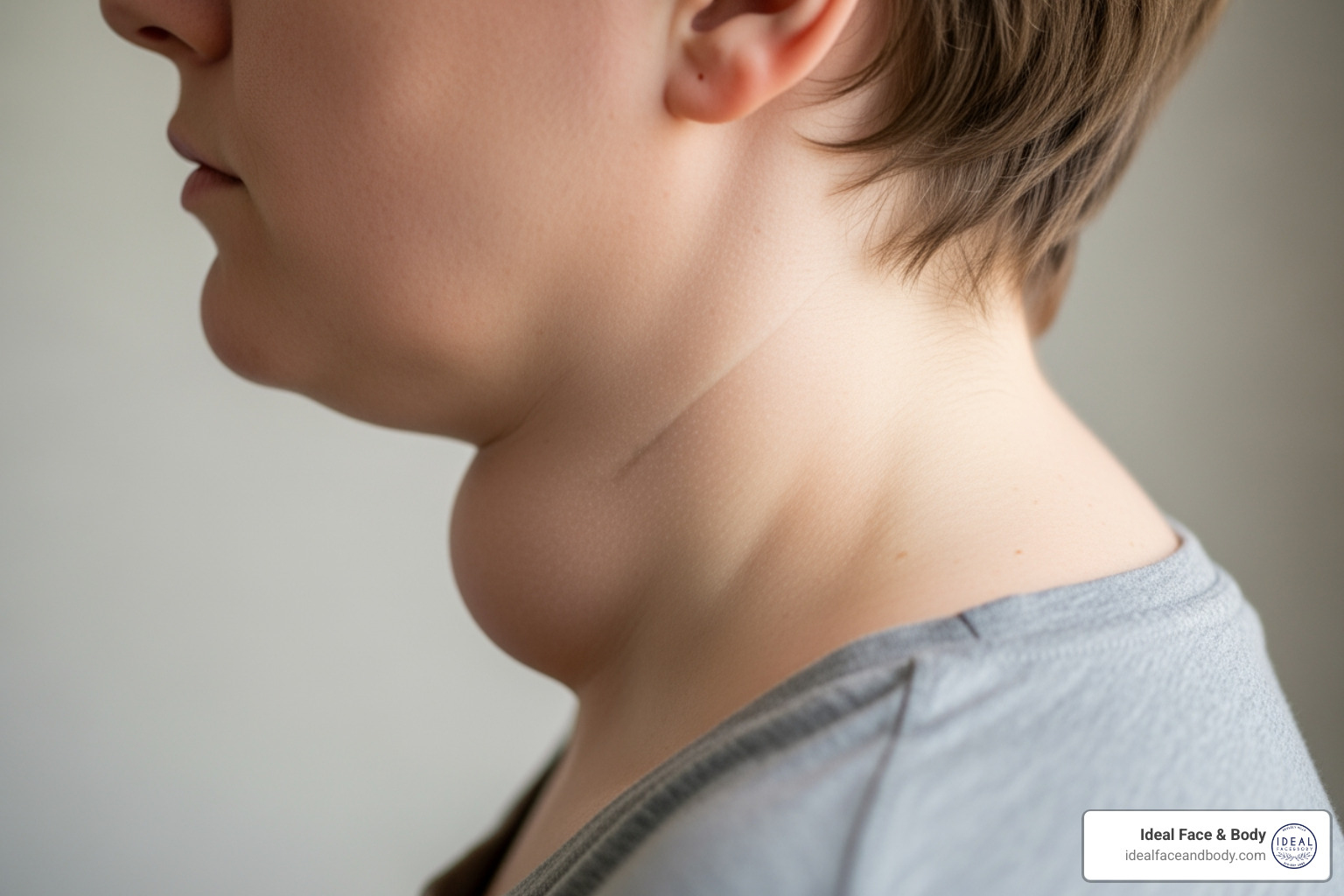
How to Get Rid of Neck Hump Forever
Understanding Your Neck Hump: What It Is and How to Address It
Get Rid of Neck Hump concerns by first understanding what you’re dealing with. A neck hump appears as a rounded bulge at the base of your neck or upper back, creating a noticeable curve that can affect both your appearance and confidence. Here’s what you need to know:
Quick Solutions to Get Rid of Neck Hump:
- For posture-related humps (Dowager’s Hump): Daily exercises like chin tucks and shoulder blade squeezes, plus improved posture habits
- For fat-based humps (Buffalo Hump): Weight management, healthy lifestyle changes, or cosmetic procedures like liposuction
- When to see a doctor: If the hump causes pain, appears suddenly, or comes with breathing difficulties or balance problems
As writer Nora Ephron once observed, “Our faces are lies and our necks are the truth.” Many people notice this change when looking in the mirror—that rounded prominence that wasn’t there before. Whether you call it a dowager’s hump, buffalo hump, or simply a neck hump, it can leave you feeling self-conscious about your profile.
The good news? Solutions exist. The path forward depends on what’s causing your specific neck hump.
Some neck humps develop from years of poor posture—what we now call “tech neck” from constantly looking down at phones and computers. For every inch your head tilts forward, your spine experiences an extra 10 pounds of force. Over time, this creates visible changes in your upper back curvature.
Other neck humps result from localized fat deposits that accumulate at the base of the neck. These respond to different treatments than posture-related humps, which is why identifying the type matters so much.
This guide will walk you through everything you need to know: the different types of neck humps, their underlying causes, effective at-home strategies, and when professional treatments make sense. You’ll learn specific exercises that work, posture corrections that help, and advanced options like cosmetic procedures when conservative approaches aren’t enough.
I’m Dr. Sarah Yovino, a double board-certified specialist in non-surgical medical aesthetics. Through years of advanced training in cosmetic procedures, I’ve helped many patients Get Rid of Neck Hump concerns using both conservative approaches and state-of-the-art treatments like Precision Sculpt awake liposuction. Understanding the root cause is always the first step toward the right solution.
What Is a Neck Hump and What Causes It?
A neck hump is a noticeable bulge or rounded curve that forms at the back of the neck, specifically where the cervical (neck) and thoracic (upper back) spine meet. This area, known as the cervicothoracic junction, is a common site for various changes that can lead to this prominent appearance. Beyond the visible aspect, a neck hump can bring a host of uncomfortable symptoms, including chronic neck pain, stiffness, persistent headaches, and general fatigue in the upper back and shoulders. In more severe cases, it can even affect balance or lead to issues with breathing or swallowing.
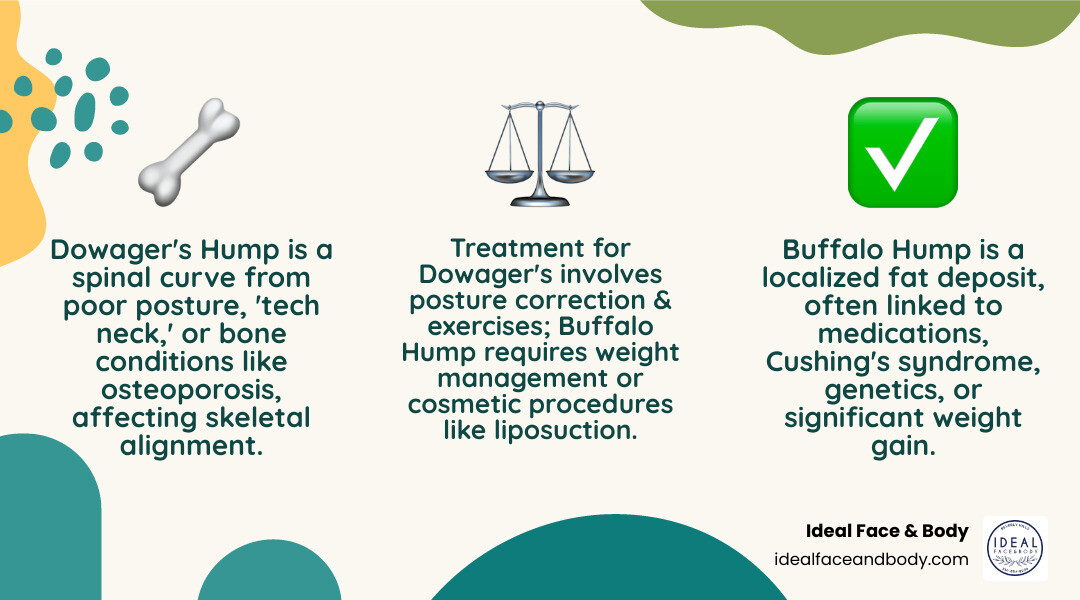
When we talk about a “neck hump,” we’re often referring to one of two distinct conditions: a Dowager’s Hump, which is primarily a skeletal or postural issue, or a Buffalo Hump, which involves localized fat accumulation. Understanding the difference is crucial because it dictates the most effective approach to Get Rid of Neck Hump.
Here’s a quick overview of how these two types differ:
| Feature | Dowager’s Hump (Kyphosis) | Buffalo Hump |
|---|---|---|
| Primary Cause | Spinal curvature (poor posture, osteoporosis) | Localized fat deposits |
| Composition | Bone and soft tissue changes due to spinal deformity | Excess fatty tissue |
| Primary Treatment Focus | Posture correction, exercises, physical therapy, bone health | Weight management, medication adjustment, liposuction |
It’s important to differentiate between these two, as their underlying causes and, consequently, their treatments, are quite different. While a Dowager’s Hump is a structural change, a Buffalo Hump is a soft tissue issue.
Dowager’s Hump (Kyphosis): A Spinal Curve Issue
The Dowager’s Hump, also known medically as kyphosis or hyperkyphosis, is a condition characterized by an excessive forward curve of the upper spine. The normal curvature of the spine in this region typically ranges from 20 to 40 degrees. When this curve becomes exaggerated, often exceeding 40 degrees, it creates the visible rounded appearance we call a Dowager’s Hump.
The most common culprit behind a Dowager’s Hump in today’s world is poor posture. We often find ourselves hunched over devices—smartphones, tablets, and computers—leading to what’s colloquially known as “tech neck.” This constant forward-leaning posture puts immense stress on our cervical and thoracic spine. Think about it: your head typically weighs 10-12 pounds. When it’s in a neutral position, your neck can easily support this weight. However, as you bend your head forward, even just an inch, your spine experiences an additional 10 pounds of force. At a 45- to 60-degree angle, like when you’re looking at your phone, the force on your neck can skyrocket to 50-60 pounds! Over time, this chronic forward head posture can lead to an abnormal curve of your upper vertebrae, creating the hump. This condition, medically called kyphosis, results from this chronic, forward-leaning posture that is all too common in our digital age.
Another significant contributor, especially among older adults, is osteoporosis. This condition weakens bones, making them fragile and prone to fractures. In the spine, this can lead to compression fractures, where the vertebrae collapse and compress, causing the upper back to curve more severely. This increased forward curve forces us to lift our necks into more extension just to see forward, exacerbating the hump. Given that the prevalence of hyperkyphosis increases with age, affecting an estimated 20-40% of older adults, and women are more likely to develop a Dowager’s hump as hormone changes during menopause can increase their risk of osteoporosis, it’s clear why aging is a critical factor. Degenerative changes in the spine, which are a natural part of the aging process, also play a role, contributing to disc shrinkage and joint stiffening that can further accentuate the hump.
Buffalo Hump: An Issue of Fat Deposits
In contrast to the structural changes seen in a Dowager’s Hump, a Buffalo Hump is characterized by a localized accumulation of fatty tissue at the base of the neck and upper back. While it might look similar to a Dowager’s Hump, its origin is entirely different.
Often, a Buffalo Hump is a symptom of an underlying medical condition. One of the most well-known causes is Cushing’s disease. If you have Cushing’s disease, your body produces excess cortisol, a hormone that can lead to increased fat production and redistribution, including the characteristic fat pad at the back of the neck. Certain medications, particularly long-term steroid use, can also lead to a similar fat accumulation.
Beyond medical conditions, genetics can play a role in where our bodies store fat. Some individuals may be predisposed to developing fat deposits in this area. Significant weight gain can also contribute to a Buffalo Hump, as overall body fat increases, leading to more prominent localized fat pads.
It’s crucial to distinguish between a Dowager’s Hump and a Buffalo Hump because the treatment approaches are vastly different. A Dowager’s Hump requires addressing spinal alignment and bone health, while a Buffalo Hump often involves managing an underlying condition, weight loss, or targeted fat removal.
At-Home Strategies for Improving a Neck Hump
For many individuals, especially those with a posture-related Dowager’s Hump, starting with at-home strategies can lead to significant improvement. Our approach focuses on postural correction, strengthening weak muscles, and improving flexibility to counteract the forward rounding of the spine. Consistency is key here, and incorporating these practices into your daily routine can make a world of difference.

Corrective Exercises and Stretches
Targeted exercises can help realign your spine, strengthen supporting muscles, and improve overall flexibility. We recommend performing these exercises regularly to see the best results.
Here are some key exercises to help Get Rid of Neck Hump concerns related to posture:
- Chin Tucks: This exercise strengthens the deep neck flexors and helps to retract the head, counteracting forward head posture. Sit or stand tall with your shoulders relaxed. Gently pull your chin straight back, as if you’re trying to make a double chin, keeping your gaze forward. Hold for 5-10 seconds, then release. Aim for 3 sets of 10 repetitions daily. This not only strengthens neck muscles but also benefits neck discs.
- Scapular Squeezes: These help strengthen the upper back muscles that pull your shoulders back and down, improving your posture. Sit or stand tall. Squeeze your shoulder blades together as if you’re trying to hold a pencil between them. Keep your shoulders down, away from your ears. Hold for 5-10 seconds, then relax. Perform 3 sets of 10 repetitions daily.
- Wall Angels: This exercise improves mobility in the thoracic spine and strengthens the muscles that support good posture. Stand with your back flat against a wall, heels about six inches away. Your head, shoulders, and hips should touch the wall. Raise your arms to a “W” shape, then slide them up the wall as if making a snow angel, reaching a “Y” position, while keeping your elbows and wrists against the wall. Slowly return to the “W” position. Repeat for 10-15 repetitions.
- Doorway Pectoral Stretch: Often, tight chest muscles contribute to rounded shoulders and a forward head posture. This stretch helps open the chest. Stand in a doorway with your forearms on the doorframe, elbows bent at a 90-degree angle. Step forward gently with one foot until you feel a stretch across your chest. Hold for 20-30 seconds, then relax. Repeat 2-3 times daily.
- Upper Back Stretch: Stand tall with relaxed shoulders, interlace your fingers behind your back, and stretch your arms up while gently arching your back. This helps improve mobility in the upper spine.
- Thoracic Spine Foam Rolling: Lie on your back with a foam roller placed under your upper back. Gently roll up and down, allowing your spine to extend over the roller. This can help improve thoracic mobility.
Consistency is paramount. Even small, frequent efforts throughout the day can lead to significant improvements. For example, practicing scapula setting whenever you’re at your desk or relaxing on the couch can help build new muscle memory.
Mastering Good Posture and Ergonomics
Good posture isn’t just about standing up straight; it’s about maintaining proper alignment throughout all your daily activities. Your musculoskeletal system is designed to bear weight and absorb stress efficiently when aligned correctly. As the Guide to Good Posture emphasizes, proper posture keeps your body strong, flexible, and balanced.
Here’s how to master good posture and ergonomics to help Get Rid of Neck Hump:
- Aligning Ears Over Shoulders: Consciously check your posture throughout the day. Your ears should be aligned directly over your shoulders, and your shoulders should be pulled back and down, not hunched forward. Imagine a string pulling the crown of your head towards the ceiling, lengthening your spine.
- Ergonomic Workspace: If you spend a lot of time at a desk, optimizing your workspace is critical. Your computer screen should be at eye level, so your field of vision falls in the middle of the screen, preventing you from craning your neck forward or down. Use a supportive chair that encourages an upright posture.
- Eye-Level Screens: For smartphone and tablet users, the “tech neck” is a major concern. Hold your devices up to eye level instead of looking down. This simple change can significantly reduce the strain on your neck, preventing the 50-60 pounds of force that can occur when looking down at a 45-60 degree angle.
- Taking Frequent Breaks: Prolonged static positions are detrimental to spinal health. Take short breaks every 30-60 minutes to stand, stretch, and move around. This helps prevent muscle fatigue and encourages better posture.
- Supportive Sleeping Positions: Your sleep posture also matters. Sleeping on your back with a supportive, not too high, pillow can help maintain the natural curve of your neck. Avoid sleeping on your stomach, which can force your neck into an awkward, extended position for hours. A supportive mattress also plays a role in overall spinal alignment.
By integrating these practices into your daily life, you’re not only working to Get Rid of Neck Hump but also promoting overall spinal health and reducing discomfort.
How to Get Rid of Neck Hump with Professional Help
Sometimes, at-home strategies aren’t enough, or the underlying cause of a neck hump requires specialized intervention. Knowing when to seek professional medical help is crucial. If your neck hump causes significant pain, appears suddenly, or is accompanied by symptoms like numbness, weakness, balance issues, or difficulty breathing, it’s time to consult a doctor. The first step is always to get an accurate diagnosis to determine the true cause of the hump.

Physical Therapy and Medical Management
For Dowager’s Humps primarily caused by poor posture or mild to moderate kyphosis, physical therapy can be incredibly effective. A physical therapist can:
- Provide Personalized Exercise Plans: Beyond general exercises, a physical therapist will assess your specific muscle imbalances and postural habits to create a custom program. This might include targeted strengthening exercises for your upper back and neck, stretching for tight chest and neck muscles, and exercises to improve core stability, which supports overall spinal alignment.
- Manual Therapy: They may use hands-on techniques to improve joint mobility, reduce muscle tension, and alleviate pain.
- Education and Ergonomic Advice: Physical therapists can offer in-depth guidance on maintaining good posture in various settings (work, home, recreation) and advise on ergonomic adjustments for your daily activities.
- Back Braces: In some cases, particularly for younger individuals with advanced kyphosis, a back brace might be recommended to help train the spine into a more correct alignment and prevent further worsening of the condition.
If osteoporosis is a contributing factor to your Dowager’s Hump, medical management becomes paramount. A doctor can recommend treatments to strengthen your bones, which may include:
- Medications: Prescribed medications can help increase bone density and reduce the risk of future compression fractures.
- Dietary and Lifestyle Changes: Guidance on calcium and Vitamin D intake, along with weight-bearing exercises, is often part of the medical management plan for osteoporosis.
How to Get Rid of Neck Hump Caused by Fat
For a Buffalo Hump, where the primary issue is localized fat accumulation, the approach differs significantly from treating a Dowager’s Hump.
- Weight Management: If excess body weight is contributing to the Buffalo Hump, a comprehensive weight management plan involving a healthy diet and regular exercise is a crucial first step. Reducing overall body fat can help diminish the prominence of the fat pad.
- Addressing Underlying Conditions: If your Buffalo Hump is linked to conditions like Cushing’s disease or certain medications, working with your doctor to manage these underlying health issues is essential. Adjusting medication (under medical supervision) or treating the hormonal imbalance can lead to a reduction in the fat deposit.
- Limitations for Stubborn, Localized Fat: Even with significant weight loss and management of underlying conditions, some localized fat deposits can be incredibly stubborn. This is where cosmetic procedures can offer a more direct and often permanent solution.
Cosmetic Procedures to Get Rid of Neck Hump
When conservative measures are insufficient, especially for persistent Buffalo Humps, cosmetic procedures offer effective ways to Get Rid of Neck Hump caused by fat. At Ideal Face & Body in Beverly Hills, CA, we specialize in advanced aesthetic procedures designed to address these concerns.
- Liposuction for Buffalo Hump: This is a highly effective procedure for removing localized fat deposits that form a Buffalo Hump. Liposuction directly targets and suctions out the excess fatty tissue, leading to a smoother, more contoured profile.
- Precision Sculpt Awake Liposuction: We offer Precision Sculpt awake liposuction, a state-of-the-art technique that allows for the precise removal of fat while the patient remains awake and comfortable. This minimally invasive approach offers several benefits:
- Improved Safety: Being awake allows for better communication with Dr. Sarah Yovino or Dr. Justin Yovino, ensuring patient comfort and safety throughout the procedure.
- Quicker Recovery: Compared to traditional liposuction under general anesthesia, awake liposuction often involves less downtime.
- Targeted Results: Precision Sculpt allows for highly targeted fat removal, sculpting the area to achieve a natural-looking, smoother contour at the base of the neck.
- Minimally Invasive Options: Beyond liposuction, other minimally invasive options may be considered depending on the specific nature of the fat deposit and any accompanying skin laxity. These procedures aim to reduce fat and tighten skin with less invasiveness than traditional surgery.
Cosmetic procedures like liposuction are specifically for Buffalo Humps (fat deposits) and not for Dowager’s Humps (spinal curvature). An initial consultation with Dr. Sarah Yovino or Dr. Justin Yovino will help determine the exact nature of your neck hump and the most appropriate treatment plan.
Frequently Asked Questions about Neck Humps
We often hear many questions from our patients regarding neck humps, their causes, and how to effectively treat them. Here, we address some of the most common inquiries to help you better understand your condition and the paths available to Get Rid of Neck Hump.
Can a neck hump go away completely?
Yes, a neck hump can often go away completely, or at least significantly reduce in prominence, depending on its underlying cause and how diligently we address it.
- For postural humps (Dowager’s Hump): If your hump is primarily due to poor posture and muscle imbalances, consistent effort with corrective exercises, stretches, and mindful posture correction can lead to a complete reversal or substantial improvement. This involves strengthening weak muscles and stretching tight ones to restore the natural curvature of the spine. It takes time and dedication, but the body is remarkably adaptable.
- For fat-based humps (Buffalo Hump): Humps caused by localized fat deposits can be permanently removed through targeted cosmetic procedures like liposuction. Once these fat cells are removed, they do not return to the treated area. If the fat accumulation is due to weight gain or an underlying medical condition, addressing these factors can also lead to a reduction in the hump.
The key is identifying the correct type of hump and then committing to the appropriate treatment strategy.
How long does it take to fix a neck hump?
The timeline for fixing a neck hump varies significantly based on its cause, severity, and the chosen treatment method. Patience and consistency are your best friends on this journey.
- Postural Correction and Exercises: For humps caused by poor posture, you might start noticing subtle improvements in posture and reduced discomfort within a few weeks of consistent exercises and ergonomic adjustments. However, significant changes in the spinal curve and muscle memory can take several months, often between 3 to 6 months, and sometimes longer, to achieve noticeable and lasting results.
- Weight Management: If excess weight contributes to a Buffalo Hump, the reduction will align with your overall weight loss journey, which is a gradual process.
- Cosmetic Procedures (e.g., Liposuction): For fat-based humps treated with procedures like Precision Sculpt awake liposuction, the physical removal of fat is immediate. However, the final results become fully apparent after the initial swelling subsides, which can take a few weeks to a couple of months. The healing process is generally quicker than waiting for postural changes to manifest, offering a faster route to a smoother profile.
We emphasize that early intervention often leads to faster and more successful outcomes, regardless of the treatment path.
What causes a neck hump in females?
While neck humps can affect anyone, women often face a higher risk due to several specific factors:
- Osteoporosis: Women are significantly more prone to osteoporosis, particularly after menopause. The hormonal changes during menopause, specifically the decline in estrogen, can accelerate bone density loss. This makes women more susceptible to vertebral compression fractures in the upper spine, which directly contribute to the development of a Dowager’s Hump. In fact, women are more likely to develop a Dowager’s hump, as hormone changes during menopause can increase their risk of osteoporosis.
- Hormonal Changes Affecting Fat Distribution: Hormonal fluctuations throughout a woman’s life, including during menopause, can also influence where fat is stored in the body. This can sometimes lead to an increased likelihood of localized fat accumulation at the base of the neck, contributing to a Buffalo Hump.
- Postural Habits: Similar to men, women are equally susceptible to the effects of poor posture, often exacerbated by daily activities like prolonged device use (“tech neck”), certain occupational demands, or carrying heavy bags that can strain the upper back and neck.
- Scheuermann’s Kyphosis: While not exclusive to females, Scheuermann’s Kyphosis, a condition where spinal vertebrae grow into a wedge shape instead of a rectangle, often appears in teenagers. This can lead to an exaggerated spinal curve that is more pronounced in some individuals.
Understanding these contributing factors allows us to tailor prevention and treatment strategies specifically for women, addressing both skeletal health and fat distribution concerns to effectively Get Rid of Neck Hump.
Conclusion: Your Path to a Smoother, More Confident Profile
The journey to Get Rid of Neck Hump begins with understanding. We’ve explored that a neck hump isn’t just one thing; it can be a Dowager’s Hump, caused by spinal curvature and posture, or a Buffalo Hump, resulting from localized fat deposits. Each type demands a different approach, but the good news is that effective solutions are available for both.
We encourage you to start with conservative measures: dedicate yourself to corrective exercises, accept mindful posture, and optimize your workspace. These at-home strategies are powerful tools for improving spinal health and can significantly reduce the appearance of posture-related humps. Maintaining a healthy weight and lifestyle also plays a crucial role, especially when addressing fat-related concerns.
However, we also recognize that sometimes, conservative efforts aren’t enough, or the nature of the hump requires specialized intervention. This is where professional help becomes invaluable. Whether it’s physical therapy to guide you through personalized rehabilitation, medical management for underlying conditions like osteoporosis, or advanced cosmetic procedures for stubborn fat deposits, our team at Ideal Face & Body in Beverly Hills, CA, is here to help.
For those whose neck hump is primarily due to localized fat, our expertise in advanced procedures offers a direct path to a smoother profile. We pride ourselves on offering state-of-the-art treatments like Precision Sculpt awake liposuction, a minimally invasive option custom to precisely remove unwanted fat, helping you achieve the aesthetic results you desire with comfort and efficiency.
Don’t let a neck hump diminish your confidence. Take the first step today by identifying the cause, starting with what you can do at home, and knowing that expert guidance and advanced solutions are within reach.
Explore buffalo hump removal with Precision Sculpt awake liposuction and let us help you achieve a profile you’ll love.