Lasers for tattoo removal: Safe & Effective 2026
Understanding How Modern Technology Removes Unwanted Tattoos
Lasers for tattoo removal have become the gold standard for erasing unwanted ink, changing what was once a permanent decision into a reversible one. Here’s what you need to know:
Main Types of Lasers for Tattoo Removal:
- Q-Switched (Nanosecond) Lasers – The proven technology using billionths-of-a-second pulses to break down ink
- Picosecond Lasers – Next-generation devices using trillionths-of-a-second pulses for faster, more effective removal
Key Laser Wavelengths:
- 1064 nm – Targets black and dark blue ink
- 532 nm – Removes red, orange, and yellow pigments
- 755 nm – Effective on green and blue colors
- 694 nm – Treats stubborn blue and green inks
How It Works:
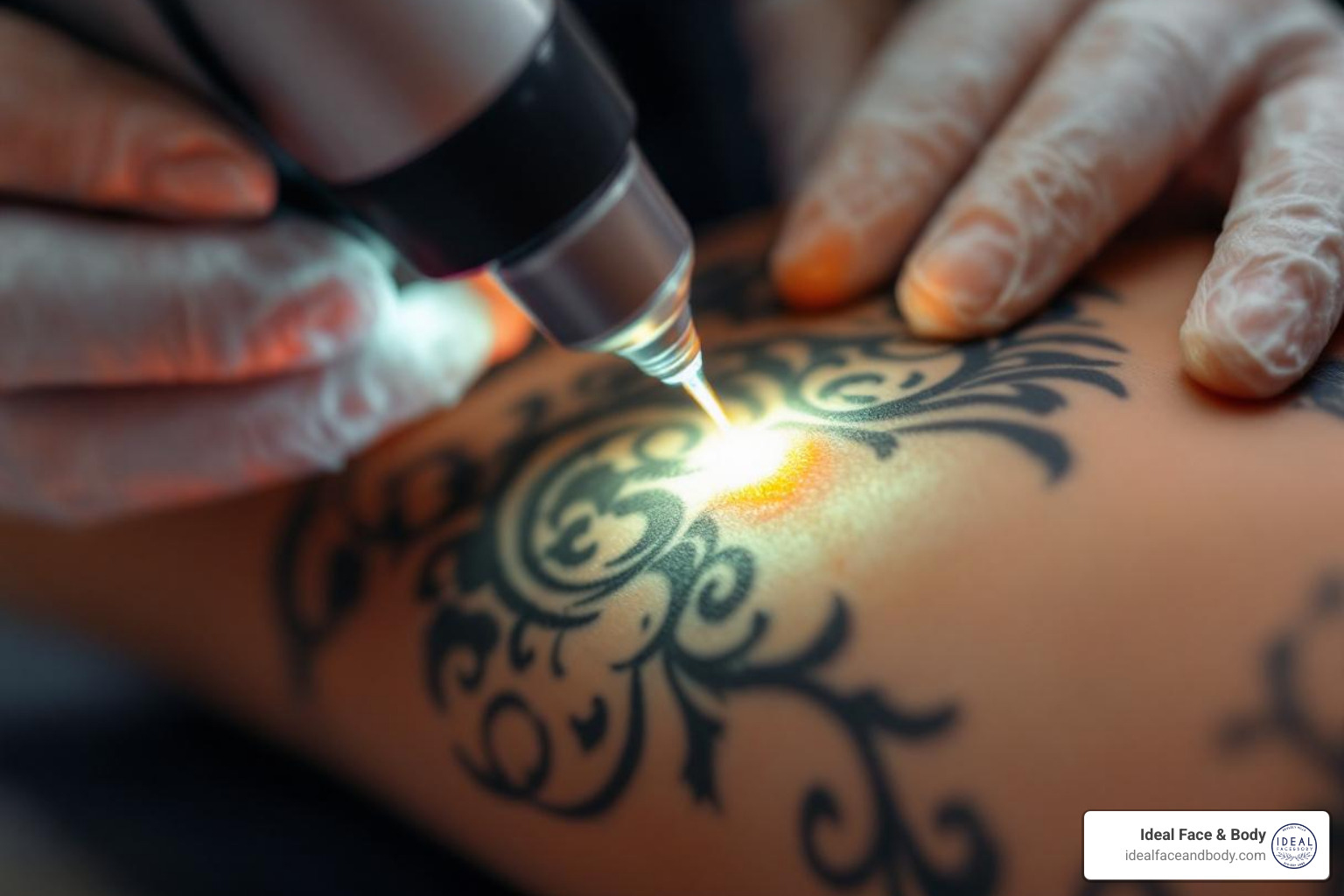
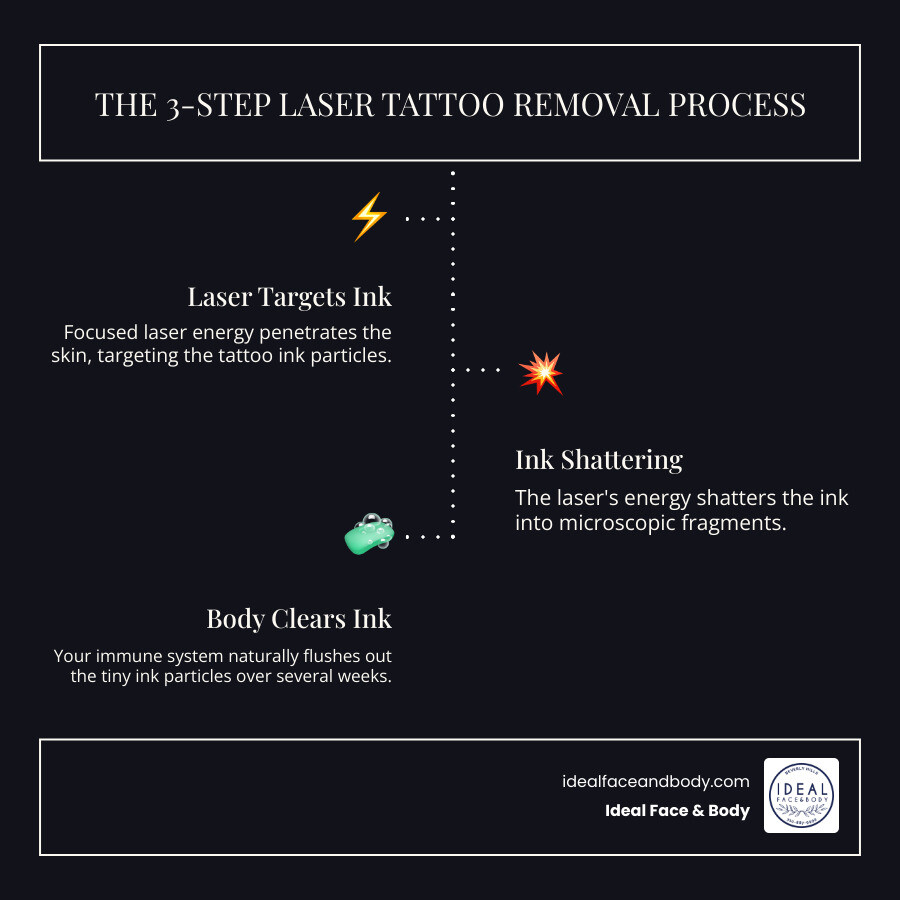
Laser energy shatters tattoo ink into tiny particles that your body’s immune system naturally removes over time.
The tattoo industry has grown dramatically, with up to one-quarter of young to middle-aged adults in the United States having at least one tattoo. Yet tattoo prevalence tells only part of the story—approximately 24% of people with tattoos experience regret about their decision. This has fueled rapid growth in the tattoo removal market, which was valued at $1.1 billion in 2022 and is projected to reach $3.1 billion by 2030.
Why laser technology? Unlike older methods such as dermabrasion or surgical excision, lasers can target ink pigments without significant damage to surrounding skin tissue. The technology works through selective photothermolysis—a precise process where laser light is absorbed by tattoo ink particles, breaking them into fragments small enough for your body to eliminate naturally.
Different laser types offer distinct advantages. Q-switched lasers have been the workhorse of tattoo removal for decades, while newer picosecond lasers deliver energy in even shorter bursts for potentially faster clearance with fewer side effects. The choice of laser wavelength matters too—certain colors respond better to specific wavelengths of light.
As Dr. Sarah Yovino, I’ve worked extensively with advanced laser technologies for aesthetic treatments and understand how crucial proper technique and equipment selection are when performing procedures like lasers for tattoo removal. My training in pain management has allowed me to perfect comfortable treatment protocols for patients seeking to erase unwanted ink in Beverly Hills.
Simple lasers for tattoo removal glossary:
How Laser Technology Erases Ink
At its core, the effectiveness of lasers for tattoo removal lies in a scientific principle called selective photothermolysis. This fancy term simply means that specific wavelengths of light are precisely aimed at the tattoo ink, and only the ink absorbs this energy, leaving the surrounding skin largely untouched. Think of it like a specialized key fitting only one lock.
When the laser energy hits the tattoo, the ink particles act as chromophores—targets that absorb the light. This absorption causes the ink to rapidly heat up and shatter into much smaller fragments. This process primarily involves a photoacoustic effect, where the intense, rapid energy delivery creates a shockwave that breaks apart the pigment. This is distinct from a purely photothermal effect, which relies more on heat and carries a higher risk of damaging surrounding tissue.
Once these ink particles are fractured, your body’s natural defense system kicks into gear. Specialized white blood cells called macrophages—the body’s clean-up crew—identify these foreign, now smaller, ink fragments and begin to carry them away. These fragments are then cleared through the lymphatic system, which is part of your immune system, eventually fading the tattoo. This natural process is why multiple sessions are required for complete removal; your body needs time to process and eliminate the ink after each treatment.
A Guide to the Different Lasers for Tattoo Removal
The evolution of laser technology has brought increasingly sophisticated devices to the field of tattoo removal. The primary distinction among these devices often comes down to their pulse duration—how quickly the laser energy is delivered.
| Criteria | Nanosecond Lasers (Q-Switched) | Picosecond Lasers |
|---|---|---|
| Pulse Duration | Billionths of a second (ns) | Trillionths of a second (ps) |
| Mechanism | Primarily photothermal, some photoacoustic | Primarily photoacoustic, minimal photothermal |
| Ink Shattering | Breaks ink into smaller fragments | Breaks ink into much finer particles |
| Typical Sessions | More sessions required | Fewer sessions required |
| Best For | Darker inks, established technology | All colors, especially stubborn blues/greens, faster clearance |
Q-Switched (Nanosecond) Lasers: The Proven Workhorse
For decades, Q-switched lasers have been the gold standard in tattoo removal, earning their reputation as the “proven workhorse.” These devices deliver laser energy in ultra-short bursts, measured in nanoseconds (billionths of a second). The rapid delivery of energy causes a photothermal effect (heat) and a significant photoacoustic effect (shockwave), effectively breaking down tattoo pigments.
The Q-switched Nd:YAG laser, for instance, is highly regarded for its versatility and effectiveness. It is particularly adept at removing a wide range of tattoo colors and is considered safe and effective for all skin types, including darker skin tones. Its ability to target various ink colors and its established safety profile make it a reliable choice for many tattoo removal scenarios.
Picosecond Lasers: The Next Generation of Removal
Stepping into the spotlight as the “next generation” of tattoo removal technology are picosecond lasers. As the name suggests, these lasers operate with an ultra-short pulse duration, delivering energy in picoseconds (trillionths of a second)—a thousand times faster than nanosecond lasers.
This incredibly short pulse duration dramatically improves the photoacoustic effect, shattering tattoo ink into much finer, dust-like particles. This allows the body’s immune system to clear the pigment more efficiently, often resulting in fewer overall treatment sessions and faster clearance, especially for challenging pigments. The advanced technology behind picosecond lasers, sometimes referred to as PressureWave technology, minimizes the amount of heat delivered to the skin, thus reducing the risk of thermal damage, scarring, and hyperpigmentation compared to older technologies. We use cutting-edge picosecond laser technology at Ideal Face & Body in Beverly Hills to deliver superior results for our patients.
The Role of Wavelengths in Lasers for Tattoo Removal
One of the fascinating aspects of lasers for tattoo removal is how specific wavelengths of light are selected to target particular ink colors. Just as different colors absorb different parts of the visible light spectrum, tattoo inks respond uniquely to various laser wavelengths. This concept is crucial for effective and comprehensive tattoo removal, especially for multicolored tattoos. For a deeper dive into the science, you can explore scientific research on laser tattoo removal.
Here are some common laser wavelengths and the ink colors they effectively target:
- 1064 nm (Nd:YAG): This infrared wavelength is excellent for targeting black and dark blue inks. It penetrates deeper into the skin, making it safe and effective for darker skin types by minimizing epidermal melanin absorption.
- 532 nm (KTP/Nd:YAG): This green light wavelength is highly absorbed by red, orange, and yellow pigments. It’s often used in conjunction with 1064 nm to address the warmer spectrum of tattoo colors.
- 755 nm (Alexandrite): This red light wavelength is particularly effective for green and blue inks. It’s a strong choice for those notoriously stubborn colors.
- 694 nm (Ruby): Similar to 755 nm, the ruby laser’s red light is also highly effective for blue and green inks, offering another option for these challenging pigments.
Because tattoos often contain a variety of colors, a multi-wavelength laser system is often necessary. These systems allow practitioners to switch between different wavelengths, ensuring that all ink colors in a tattoo can be effectively targeted and broken down.
Factors That Determine Tattoo Removal Success
Starting on the journey of tattoo removal requires setting realistic expectations. We often use tools like the Kirby-Desai Scale, which considers several parameters, to help estimate the number of treatment sessions needed. This scale accounts for factors like skin type, tattoo location, color, amount of ink, scarring, and layering.

Tattoo Characteristics
The tattoo itself holds many clues about how easily it will fade.
- Ink Color: Black ink is generally the easiest to remove because it absorbs all laser wavelengths. Vivid colors like red, orange, and yellow respond well to specific wavelengths (like 532 nm). However, green and blue inks are often the most challenging, requiring specialized wavelengths (755 nm or 694 nm) and sometimes more sessions. Flesh-colored, white, and some permanent makeup inks can be particularly tricky; they may even paradoxically turn black when treated by laser, making them even harder to remove.
- Ink Composition & Depth: Professional tattoos typically use higher quality, more concentrated inks that are deposited deeper and more uniformly in the dermis. Amateur tattoos, often made with less stable inks like Indian ink or soot, are usually more superficial. The composition (e.g., presence of heavy metals, titanium dioxide, iron oxide) and depth of the ink significantly influence how it responds to laser treatment.
- Professional vs. Amateur Tattoos: As mentioned, professional tattoos tend to be denser and deeper, often requiring more sessions than amateur tattoos, which are generally lighter and shallower.
- Tattoo Age: Older tattoos often fade more easily than newer ones. Over time, the body naturally breaks down some of the ink, and UV light exposure can also degrade the pigments, making them more receptive to laser treatment.
- Tattoo Location: Tattoos located on areas with good blood circulation (like the torso or neck) tend to clear faster than those on extremities (like the ankles or fingers). The body’s immune response, which carries away the shattered ink, is more efficient in areas with robust circulation.
Patient Factors
Your individual biology also plays a significant role in the success and speed of tattoo removal.
- Skin Type (Fitzpatrick Scale): We carefully assess your Fitzpatrick skin type—a classification system for skin’s response to UV light—to determine the safest and most effective laser settings. Patients with darker skin tones (Fitzpatrick types IV-VI) are at a higher risk of pigmentary changes (hypopigmentation or hyperpigmentation) due to the laser’s interaction with melanin. For these skin types, longer wavelengths like 1064 nm are often preferred as they are less absorbed by epidermal melanin, reducing the risk of complications.
- Immune System Health: A healthy, robust immune system is crucial because it’s your body’s macrophages that ultimately clear the fragmented ink. Factors like overall health, lifestyle, and even smoking status can influence the efficiency of this process.
- Healing Process: Each person heals differently. The speed and quality of your skin’s healing response between sessions can impact the overall treatment timeline and outcome.
- Sun Exposure: Sun exposure before or after treatment can significantly impact results and increase the risk of side effects. Tanned skin should not be treated, and strict sun protection is essential throughout the entire removal process.
Safety First: Professional vs. At-Home Devices
When considering tattoo removal, the question of where and how to undergo treatment is paramount. The market is flooded with options, but for your safety and the effectiveness of the procedure, professional treatment is the only recommended path.
Why Professional Treatment is Essential
Professional tattoo removal, particularly with advanced lasers for tattoo removal, is a medical procedure that requires expertise and specialized equipment. Here at Ideal Face & Body in Beverly Hills, we prioritize your safety and optimal results.
- Medical-Grade Equipment: Professional clinics invest in powerful, multi-wavelength laser systems that are precisely calibrated for tattoo removal. These are not toys; they deliver significant energy in controlled bursts, designed to safely and effectively break down ink.
- Trained Professionals: Our team, including practitioners like Dr. Sarah Yovino and Dr. Justin Yovino, are extensively trained in laser physics, skin biology, and the nuances of tattoo removal. They understand how different lasers interact with various ink colors and skin types, ensuring safe and effective treatment protocols.
- Safety Protocols: Professional settings adhere to strict safety guidelines, including proper eye protection for both the patient and the operator, appropriate room setup, and emergency procedures.
- Skin Cooling Methods: To improve comfort and protect the skin, professional treatments often incorporate advanced skin cooling methods, such as chilled air or contact cooling, before, during, and after laser application.
- Potential Side Effects & Management: While professional laser tattoo removal is generally safe, side effects like blistering, swelling, redness, and temporary hyperpigmentation or hypopigmentation can occur. Our experienced professionals are trained to anticipate, minimize, and effectively manage these side effects, ensuring a smoother recovery.
- Proper Aftercare: We provide detailed aftercare instructions and support to promote healing and optimize results, including recommending specific ointments and advising on sun protection.
The Dangers of At-Home Lasers for Tattoo Removal
The allure of DIY solutions can be strong, but when it comes to tattoo removal, at-home devices pose significant risks and are largely ineffective. As the FDA strongly advises, “Do not expect tattoo removal ointments and creams to remove your tattoo.” You can read more about the FDA consumer advice on tattoo removal.
- DIY Devices & Unregulated Pens: A quick search online will reveal a plethora of cheap, handheld “laser pens” or “tattoo removal creams.” These products are often unregulated, lack scientific validation, and are marketed with misleading claims.
- Ineffectiveness & Insufficient Power: At-home laser devices simply lack the power, precision, and wavelength diversity of professional machines. They cannot generate the energy needed to effectively shatter tattoo ink deep within the dermis. Instead, they might only superficially damage the skin or partially bleach the ink, leading to patchy results.
- High Risk of Injury: Without proper training, medical oversight, or appropriate safety measures, using these devices carries a high risk of serious injury. We’ve seen cases of:
- Burns: Improper energy delivery can cause severe thermal burns.
- Permanent Scarring: Irreparable damage to the skin can result in disfiguring scars.
- Infection: Open wounds from burns or improper technique are highly susceptible to infection.
- Pigmentary Changes: These devices often cause irreversible hyperpigmentation or hypopigmentation, leaving permanent discoloration worse than the original tattoo.
- Eye Damage: Without medical-grade protective eyewear, there’s a serious risk of permanent eye damage.
Attempting to remove a tattoo at home is a gamble with your skin’s health and appearance. The temporary saving of money is not worth the potential for permanent damage that professional treatment can avoid.
Frequently Asked Questions about Lasers for Tattoo Removal
We understand you likely have many questions when considering tattoo removal. Here are some of the most common ones we hear in our Beverly Hills clinic:
Is laser tattoo removal painful?
We won’t sugarcoat it—laser tattoo removal can be uncomfortable, but it’s generally well-tolerated. Many patients describe the sensation as similar to a rubber band snapping against the skin, or perhaps a rapid series of small pinpricks. The level of discomfort can vary depending on the tattoo’s location, your individual pain threshold, and the size of the tattoo.
To ensure your comfort, we use several strategies:
- Topical Numbing Creams: We can apply a strong topical anesthetic cream to the treatment area prior to your session, significantly reducing sensation.
- Skin Cooling Methods: During the procedure, advanced cooling devices deliver chilled air to the skin, which helps to numb the area and minimize discomfort.
Our goal is always to make your experience as comfortable as possible, and we pride ourselves on our ability to provide a “painless” experience through meticulous technique and pain management.
How many sessions will I need?
This is one of the most common questions, and the answer, unfortunately, is “it varies.” There’s no one-size-fits-all number, as several factors influence the total number of sessions required for complete tattoo clearance:
- Ink Characteristics: The color, density, depth, and chemical composition of the ink all play a role. Black ink tends to fade fastest, while greens and blues can be more stubborn. Denser, professional tattoos typically require more sessions than lighter, amateur ones.
- Skin Type: Your individual skin type and how it responds to the laser, as well as its ability to clear the fragmented ink, are significant factors.
- Laser Type Used: Advanced picosecond lasers often achieve better clearance in fewer sessions compared to older nanosecond technologies.
- Tattoo Age and Location: Older tattoos tend to fade faster, and tattoos on areas with good circulation respond more quickly.
While it’s impossible to give an exact number without a personalized assessment, most tattoos require an average range of 6 to 12 sessions, spaced typically 6 to 8 weeks apart, to allow your body time to process the ink. Some smaller, older, or lighter tattoos might clear in fewer, while very large, dense, or colorful tattoos might require more. We will provide a personalized estimate during your consultation.
What is the aftercare process like?
Proper aftercare is crucial for optimal healing and results, and to minimize the risk of complications. After each laser tattoo removal session, we will provide you with specific instructions, but generally, you can expect the following:
- Keeping the Area Clean: It’s important to keep the treated area clean and dry. Gently wash it with mild soap and water, and pat it dry.
- Applying Ointment: We will recommend a topical antibiotic ointment or a specialized healing balm to apply to the treated area for a few days to prevent infection and promote healing.
- Avoiding Sun Exposure: Strict sun protection is paramount. The treated skin will be more sensitive to the sun, and exposure can lead to hyperpigmentation (darkening) or even burns. We advise covering the area or using a high-SPF sunscreen diligently.
- Following Provider Instructions: Adhere closely to all post-treatment guidelines provided by our team. This includes advice on showering, exercise, and avoiding activities that might irritate the treated skin. You may experience some redness, swelling, and blistering, which are normal parts of the healing process. We will guide you on how to manage these temporary side effects.
Conclusion
The journey to erase unwanted ink has been revolutionized by advanced lasers for tattoo removal. What was once a near-permanent mark can now be effectively and safely faded, or even entirely removed, thanks to the precision of modern laser technology. The science of selective photothermolysis, coupled with the body’s natural immune response, forms the foundation of this transformative process.
From the established reliability of Q-switched (nanosecond) lasers to the cutting-edge speed and efficacy of picosecond lasers, the technology continues to advance, offering more efficient and comfortable treatments. The strategic use of various wavelengths allows us to tackle the full spectrum of tattoo colors, ensuring comprehensive removal.
However, the effectiveness and, more importantly, the safety of tattoo removal hinge on professional care. Attempting DIY removal with unregulated devices or creams is not only ineffective but poses significant risks of permanent skin damage. Choosing a reputable clinic with medical-grade equipment and trained professionals, like Ideal Face & Body in Beverly Hills, is essential for achieving the best possible results while safeguarding your skin.
At Ideal Face & Body, we combine our expertise in advanced aesthetic procedures with a deep understanding of laser technologies to provide exceptional tattoo removal services. Our commitment to patient comfort and safety, exemplified by our practitioners like Dr. Sarah Yovino and Dr. Justin Yovino, ensures that your experience in Beverly Hills is as smooth and effective as possible.
If you’re considering removing a tattoo, we invite you to take the first step towards clearer skin. Schedule a consultation for laser tattoo removal with us today to discuss your options and create a personalized treatment plan.