How to Heal Your Tummy Tuck Incisions Like a Pro
Why Proper Tummy Tuck Incision Care Matters for Your Results
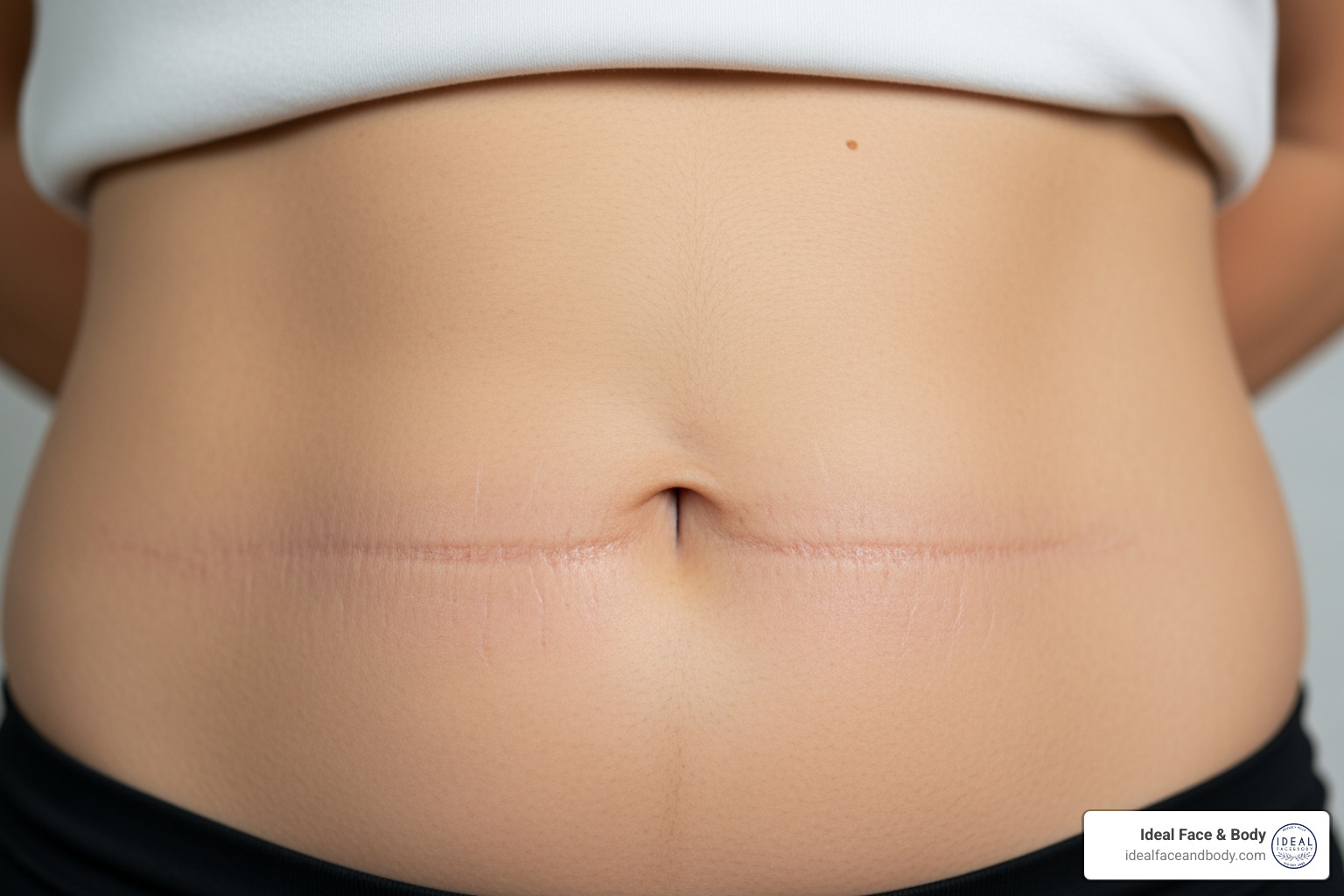
Tummy tuck incision care is the foundation of a successful abdominoplasty recovery. Your daily attention to wound hygiene, compression, and activity restrictions directly determines how well your incisions heal and how visible your scars will ultimately be.
Quick Guide to Tummy Tuck Incision Care:
- Keep incisions clean and dry – Shower after 48 hours, pat dry gently, no soaking for 2 weeks
- Wear compression garments 24/7 – Remove only for showering during first 4-6 weeks
- Empty and record drain output – Measure fluid 2-3 times daily until removal (typically 7-14 days)
- Walk bent forward initially – Reduces tension on suture lines for first 7-10 days
- Avoid strenuous activity – No lifting, exercise, or stretching for 6-8 weeks
- Watch for infection signs – Call your surgeon for fever over 101°F, excessive redness, or pus
- Start scar therapy early – Apply silicone sheets or cream beginning 3-6 weeks post-op
- Protect from sun exposure – Use SPF 50+ sunscreen for 12-18 months to prevent discoloration
During your tummy tuck recovery, the first few weeks require meticulous attention to prevent complications like infection, seroma (fluid buildup), or poor wound healing. About 20% of patients experience fluid accumulation after drains are removed, and roughly 10% develop keloid scarring. The good news? Following evidence-based incision care protocols dramatically reduces these risks and helps your scar fade as much as possible over the 12 months following surgery.
After a tummy tuck, you’ll have a hip-to-hip incision along your lower abdomen, typically positioned to hide beneath underwear or swimsuits. For mini tummy tucks, the scar is shorter—just 3 to 6 inches. Either way, how you care for these incisions during the critical healing window shapes your long-term cosmetic outcome.
As Dr. Sarah Yovino, I’ve guided countless patients through post-surgical recovery, applying my expertise in pain management and precise aesthetic techniques to optimize healing outcomes. My approach to tummy tuck incision care emphasizes both clinical best practices and practical strategies that fit into your daily routine, ensuring you heal comfortably while achieving natural-looking results.
Tummy tuck incision care further reading:
Understanding Your Tummy Tuck Incision and Placement
When we perform an abdominoplasty at Ideal Face & Body in Beverly Hills, we aren’t just removing skin; we are architecting a new abdominal contour. The type of incision you have depends entirely on your anatomy and your aesthetic goals. Understanding where your incision is and why it’s there is the first step in tummy tuck incision care.
Full Abdominoplasty
In a full tummy tuck, the incision typically runs horizontally from hip bone to hip bone, just above the pubic mound. We take great care to place this as low as possible so it remains hidden by your favorite swimwear or underwear. Additionally, a full tummy tuck involves a second incision around the belly button. While your navel stays attached to its original stalk, we redrape the skin over it and create a new opening, which requires its own set of care instructions.
The Mini-Tuck
A mini-tuck is ideal for patients with minor skin laxity below the navel. The incision is much shorter—often only 3 to 6 inches, similar to a C-section scar. Because there is no incision around the belly button, the recovery and tummy tuck incision care for a mini-tuck are generally less intensive, though no less important.
Fleur-de-Lis Technique
For patients who have lost a significant amount of weight, a fleur-de-lis tummy tuck may be necessary. This involves the standard horizontal incision plus a vertical incision running up the center of the abdomen. This “T” shaped scar allows us to remove excess skin horizontally and vertically, providing the most dramatic contouring possible.
Regardless of the technique, we use advanced surgical closures. This often includes layered sutures that dissolve over time, surgical glue, or Steri-Strips. These methods are designed to minimize skin tension, which is the primary enemy of a thin, flat scar. You can learn more about the clinical side of these procedures in this Tummy tuck overview and risks guide.
Step-by-Step Tummy Tuck Incision Care at Home
Once you leave our Beverly Hills office, the baton is passed to you. Proper tummy tuck incision care at home is about maintaining a clean, stable environment for your body to do its work.
The Golden Rule: Hygiene
Before you even think about touching your dressings, you must prioritize Incision & Surgical Wound Care through rigorous hand hygiene. Always wash your hands with warm water and antibacterial soap for at least 20 seconds. This simple step is your strongest defense against post-operative infection.
Daily Inspection
We recommend inspecting your incisions daily. Use a hand mirror if necessary to see the full length of the hip-to-hip line. You are looking for:
- Suture lines that are staying closed
- Normal bruising (which often moves down the body due to gravity)
- Any new or unusual redness
- Drainage that is clear or straw-colored (normal) versus cloudy or foul-smelling (not normal)
The Showering Protocol
Most of our patients can take their first shower 48 hours after surgery. Here is how to do it like a pro:
- Remove the garment gently: Your first time out of the compression garment can feel a bit “weird” or “loose.” Move slowly.
- Lukewarm water only: Avoid hot water, which can increase swelling or cause dizziness.
- Mild soap: Use a fragrance-free, gentle cleanser. Do not scrub the incision. Let the soapy water run over the area.
- The Pat-Dry Technique: Never rub your incision with a towel. Use a clean, dry towel to pat the area gently. Some patients even use a hair dryer on the “cool” setting to ensure the Steri-Strips are completely dry.
- No Soaking: This is critical. No bathtubs, hot tubs, or swimming pools for at least 4 to 6 weeks. Soaking can soften the incision and introduce bacteria.
For more detailed milestones, check our tummy-tuck-recovery-tips.
Essential Supplies for Tummy Tuck Incision Care
Having your recovery station stocked before you arrive home is a game-changer. We recommend having these items within arm’s reach at our tummy-tuck-beverly-hills recovery center or your home:
- ABD Pads and Sterile Gauze: To cushion the incision and absorb any minor weeping.
- Medical Tape: Paper tape is usually gentlest on the skin.
- Fragrance-Free Soap: Such as Dove Sensitive Skin or Cetaphil.
- Stool Softeners: Pain medication and surgery can cause constipation; straining on the toilet is bad for your abdominal incisions.
- Compression Garments: We often provide the first one, but having a second “wash-and-wear” garment is helpful.
- Hand Sanitizer: For quick use before and after drain management.
Safe Movement and Positioning
How you move affects the tension on your stitches. For the first 7 to 10 days, you will likely need to walk with a slight “stoop” or “hunch.” This “bent-over walking” prevents the skin from stretching too tightly over the repair.
When resting, we suggest the “beach chair” position—reclined with pillows under your knees and your head elevated. This keeps the abdominal muscles relaxed. If you need to cough or sneeze, “splint” your incision by holding a firm pillow against your belly. This absorbs the pressure and protects the sutures. For a full timeline of when you can stand up straight, see our tummy-tuck-recovery-time-guide.
Managing Drains and Compression Garments
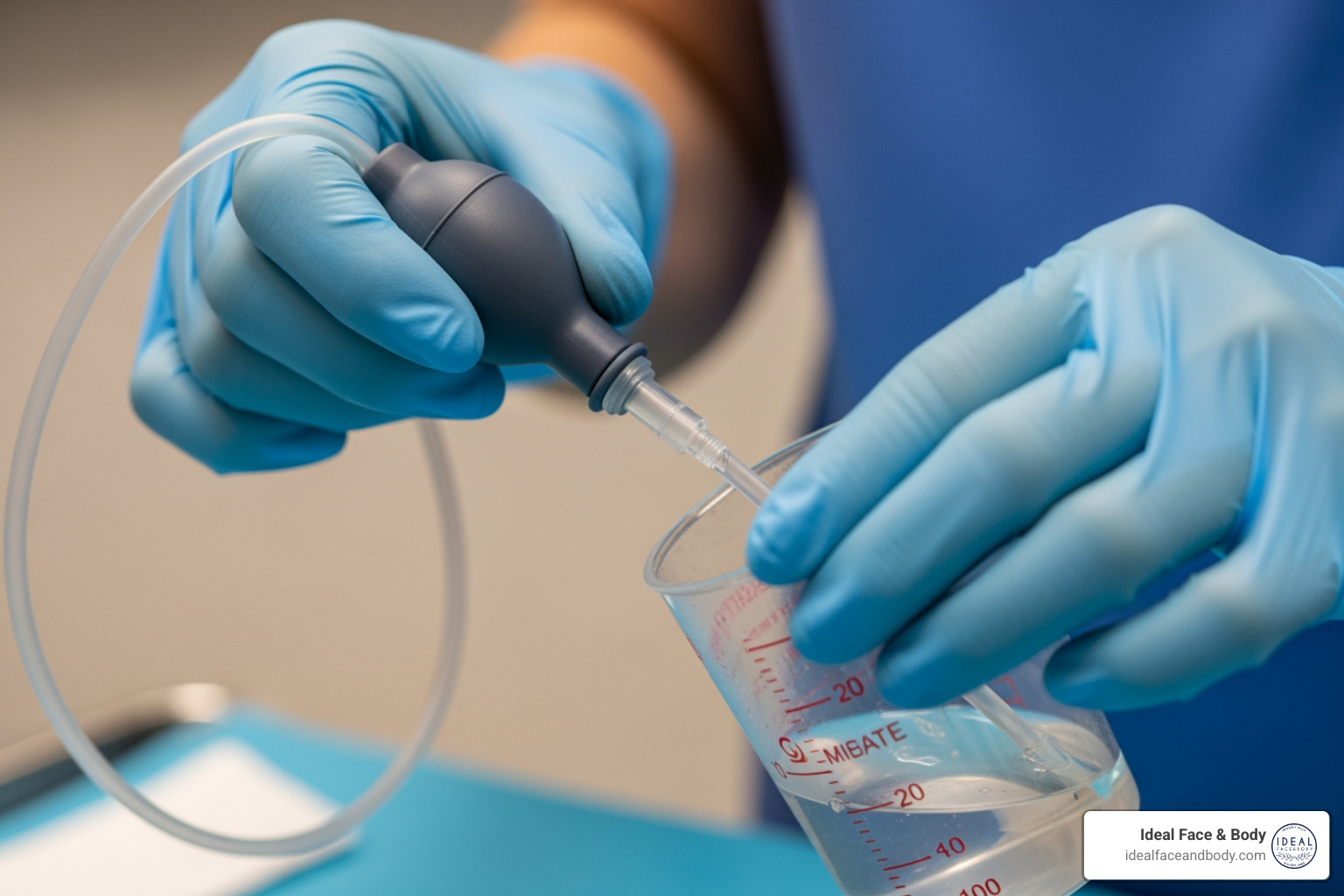
Many tummy tuck procedures require surgical drains to prevent seromas. These small, flexible tubes exit through tiny incisions near your main scar and connect to a “grenade” shaped bulb.
Drain Maintenance
- Emptying: You’ll need to empty the bulbs 2-3 times daily.
- Measuring: Record the fluid output in cc’s (cubic centimeters). This data tells us when it’s safe to remove them—usually when output is less than 25cc in a 24-hour period.
- Suction: After emptying, squeeze the bulb flat before capping it. This creates the vacuum pressure needed to pull fluid out.
- Milking the tubes: Occasionally, small clots can block the tube. Gently “milking” or stripping the tubing helps keep the fluid flowing.
The Power of Compression
Your compression garment is not just for comfort; it’s a medical necessity. It minimizes swelling, supports the newly tightened muscles, and helps the skin adhere to the underlying tissue. Wear it 24/7 for the first 4 weeks, removing it only for your daily shower. After that, we may transition you to 16 hours a day.
Proper healing also requires internal support. Following proper nutrition for wound healing—focusing on lean proteins, Vitamin C, and hydration—provides the building blocks your body needs to seal those incisions.
Advanced Scar Minimization and Long-Term Healing
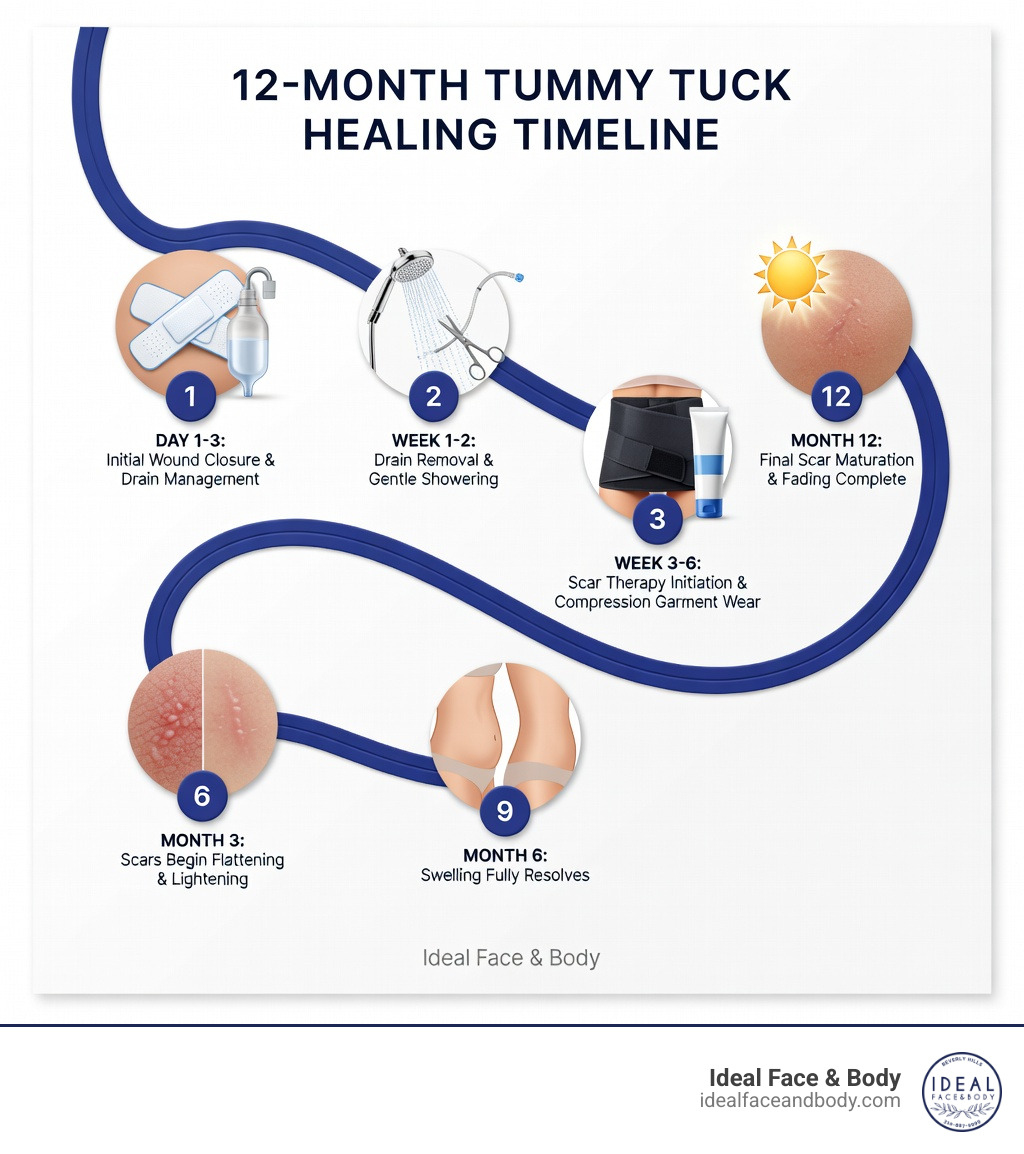
Once the initial “wound” phase is over (usually around week 3 to 6), we shift our focus from “healing” to “fading.” This is where tummy tuck incision care becomes an art form.
Fibroblast Activity and Collagen
During the first few months, your body is busy sending fibroblasts (worker-bee cells) to the site to lay down collagen. Initially, this collagen is disorganized, which is why scars look red, raised, and feel “ropey.” Over the next year, that collagen remodels and flattens.
| Treatment | Benefits | When to Start |
|---|---|---|
| Silicone Gel Sheets | Hydrates the scar; flattens raised tissue | 3-6 weeks (once skin is closed) |
| Scar Creams | Easier for joints/curved areas; often contains Vitamin E | 3-6 weeks |
| Scar Massage | Breaks up internal scar tissue; improves blood flow | 3-6 weeks (with surgeon approval) |
| Sunscreen (SPF 50+) | Prevents permanent dark pigmentation | As soon as incision is exposed to light |
Hyperbaric Oxygen Therapy (HBOT)
At Ideal Face & Body, we are big believers in adjunct therapies. HBOT involves breathing pure oxygen in a pressurized chamber, which can increase the amount of oxygen in your blood and speed up the healing of your tummy tuck incision care by as much as 50%. This is particularly helpful for patients who have had a tummy-tuck-after-pregnancy and want to return to their busy lives as quickly as possible.
Long-Term Tummy Tuck Incision Care and Scar Prevention
The journey of a tummy tuck scar is a marathon, not a sprint. Even after you feel “back to normal,” your scar is still maturing.
- Silicone Therapy: Consistent use of medical-grade silicone for 2 to 4 months is the gold standard for scar minimization.
- Scar Massage: Once we give you the green light, gentle massage helps soften the “fibrosis” or firmness under the skin. Use a circular motion with a little scar cream or Vitamin E oil.
- Sun Protection: This is the most overlooked step. UV rays can permanently darken a healing scar (hyperpigmentation). Keep your scar covered or use a high-quality SPF 50+ for at least 18 months.
- Stable Weight: Significant weight fluctuations can stretch the scar, making it wider. Maintaining the results of your tummy-tuck-beverly-hills-frequently-asked-questions through a healthy lifestyle is key.
Troubleshooting Common Issues and When to Call Your Surgeon
Most recoveries are smooth, but it’s important to know what “normal” looks like versus what requires a call to Dr. Justin Yovino or Dr. Sarah Yovino.
Normal vs. Concerning Symptoms
- Numbness: Normal. It can take 9 to 24 months for full sensation to return as nerves regenerate.
- Itching: Normal. This is often a sign of healing or a reaction to the compression garment. Try a fragrance-free moisturizer on the surrounding skin.
- Spitting Sutures: These are small, dissolvable stitches that the body pushes to the surface instead of absorbing. They look like small white threads or “pimples” on the incision line. While annoying, they are generally harmless.
- Swelling: Normal. It will peak around day 3-5 and gradually subside over 6 weeks, though minor “end-of-day” swelling can last 6 months.
When to Call Us Immediately:
- Fever: Any temperature over 101°F.
- Spreading Redness: If the skin around the incision becomes bright red, hot, and the redness is moving further away from the scar.
- Uncontrolled Pain: Pain that is not relieved by your prescribed medications.
- Shortness of Breath: This can be a sign of a blood clot and requires emergency attention.
- Odor: Any foul-smelling discharge from the incision or drain sites.
For more on managing a smooth recovery, read about our quick-tummy-tuck-recovery protocols.
Frequently Asked Questions about Tummy Tuck Incisions
How soon after surgery can I shower?
Typically, you can shower 48 hours after your procedure. You must avoid soaking in baths, pools, or hot tubs for at least 4 to 6 weeks to ensure the incision is fully sealed and to prevent infection. When you do shower, remember to pat the area dry gently—no rubbing!
When will my tummy tuck scar finally fade?
Patience is key here. Your scar will likely look its “worst” (red and raised) around the 2-to-3-month mark. It will then begin to flatten and lighten. Most scars take a full 12 to 18 months to reach their final, faded appearance. Consistent tummy tuck incision care and sun protection are your best tools for a great result.
What are “spitting sutures” and are they dangerous?
Spitting sutures occur when your body tries to expel a dissolvable stitch rather than absorbing it. You might see a small clear or white “fishing line” poking through the skin. They aren’t dangerous, but don’t pull on them! If they are irritating you, we can safely trim them during a follow-up visit at our Beverly Hills office.
Conclusion
At Ideal Face & Body, we believe that the best results come from a partnership between the surgeon and the patient. By following these tummy tuck incision care steps, you are protecting your investment and ensuring that your new, contoured abdomen looks as beautiful as possible.
Whether you are in the early days of drain management or the later months of scar therapy, our team in Beverly Hills is here to support you. We pride ourselves on personalized recovery plans that prioritize your comfort and your aesthetic outcome.
Ready to see what’s possible? View our Tummy Tuck Gallery to see the real-world results of our precision techniques and dedicated patient care. Your journey to a more confident you starts with a single step—and we’re with you for every one of them.