Hypertrophic Scar Removal: A Guide to Smoother Results
What You Need to Know About Hypertrophic Scar Removal
Hypertrophic scar removal is a real, achievable goal — and there are several proven ways to do it. Here’s a quick overview of your main options:
Most effective treatments for hypertrophic scars:
| Treatment | Best For | Notes |
|---|---|---|
| Corticosteroid injections | Raised, inflamed scars | First-line; 50–100% flattening rate |
| Silicone gel or sheets | New and recent scars | Non-invasive; gold-standard home care |
| Laser therapy (PDL, CO2, Fraxel) | Color, texture, height | Often combined with other treatments |
| Surgical revision | Severe or resistant scars | Followed by adjunct therapy to prevent recurrence |
| Intralesional 5-FU or bleomycin | Resistant scars | Effective off-label options |
| Pressure therapy | Post-burn or post-surgical | Worn 6–12 months for best results |
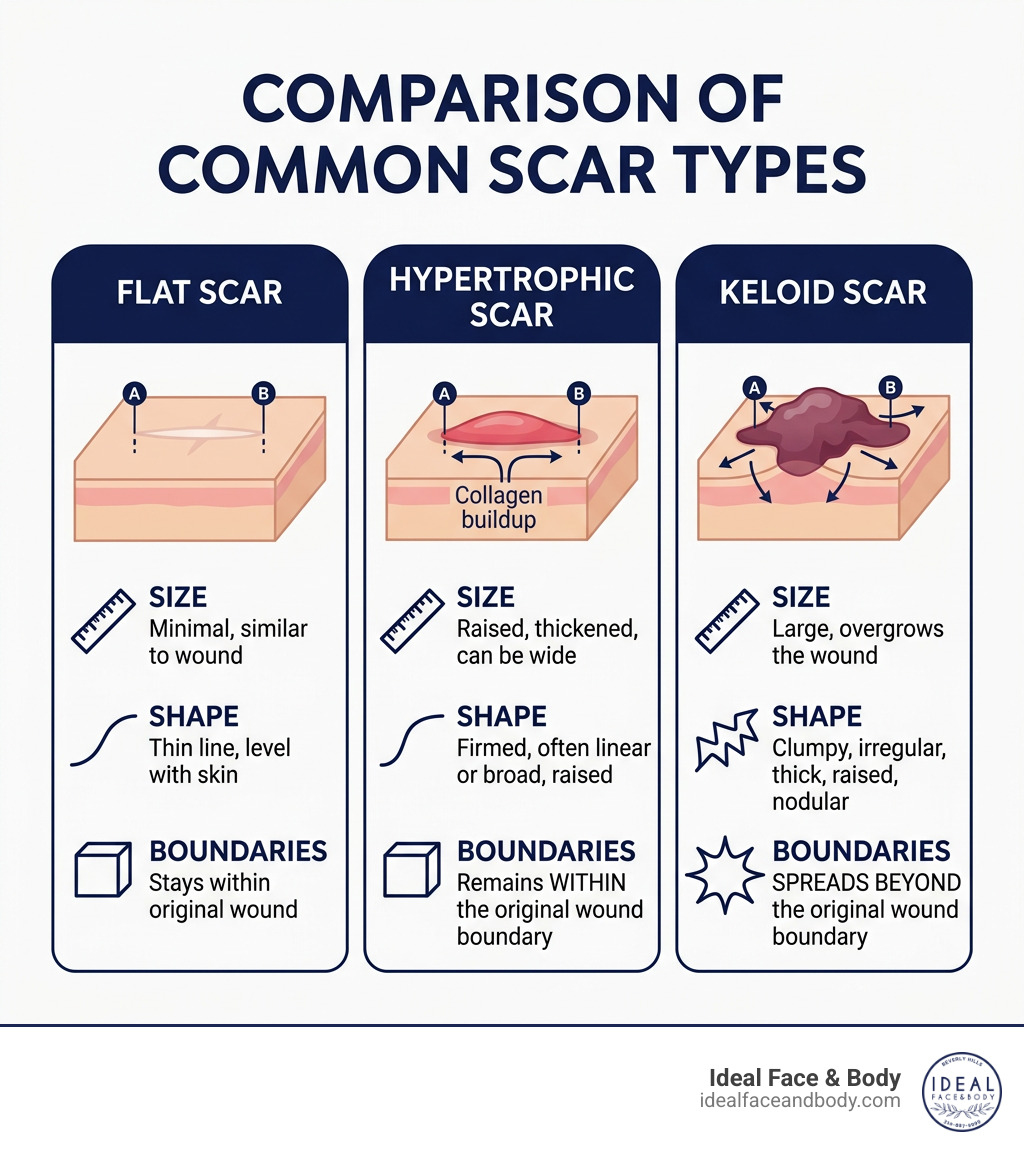
Hypertrophic scars are thick, raised scars that form when the body produces too much collagen during healing. They stay within the original wound boundary — unlike keloids, which spread beyond it. They can develop after surgery, burns, acne, or even a minor cut.
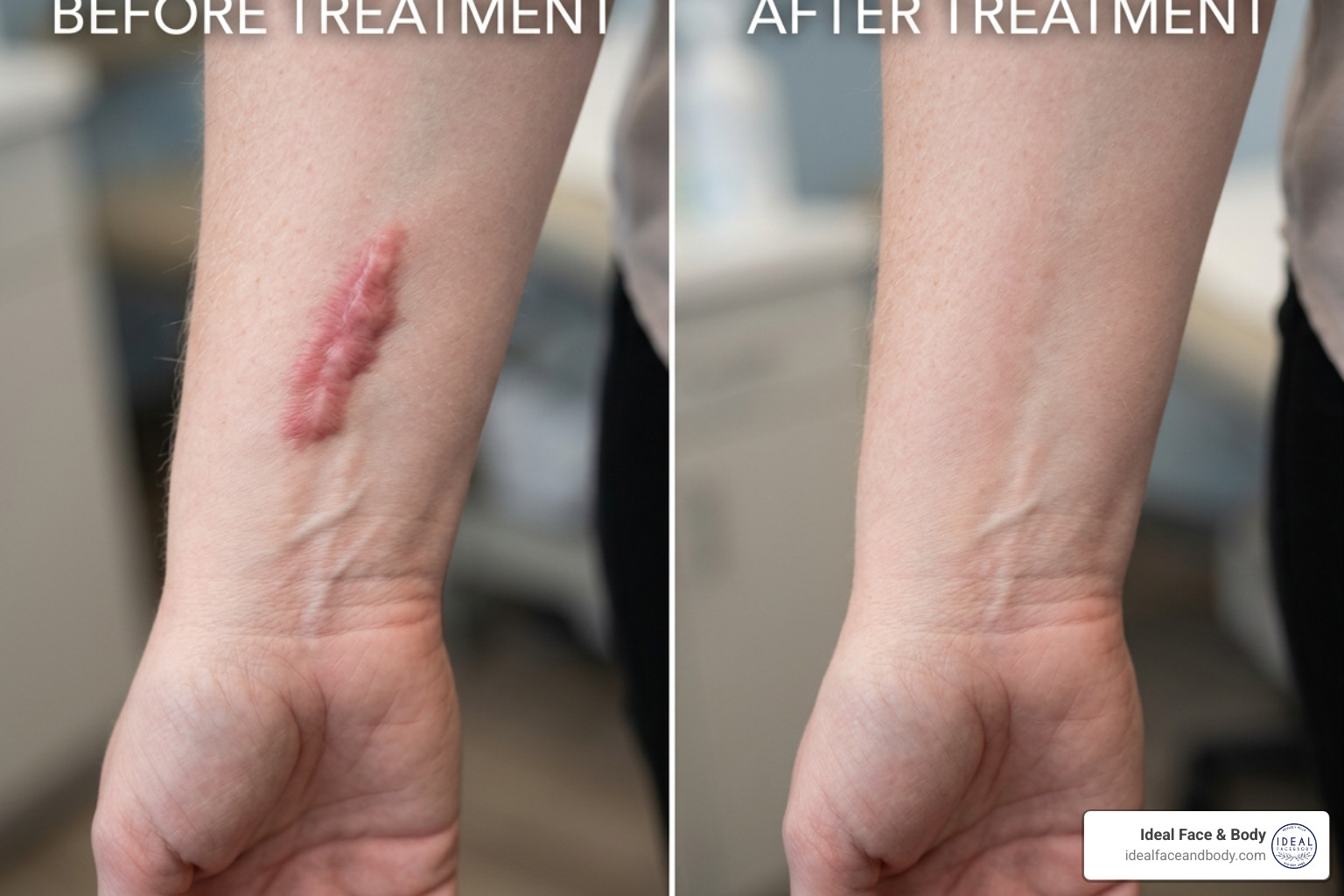
The good news: hypertrophic scars can improve. Some flatten on their own over time. Many respond well to professional treatment, especially when caught early.
I’m Dr. Sarah Yovino, MD, a double board-certified master injector with experience in laser treatments, microneedling, chemical peels, and other advanced therapies — including hypertrophic scar removal for patients who want real, natural-looking results. In the sections below, I’ll walk you through everything you need to know to find the right path forward for your skin.
Terms related to hypertrophic scar removal:
Understanding Hypertrophic Scars vs. Keloids
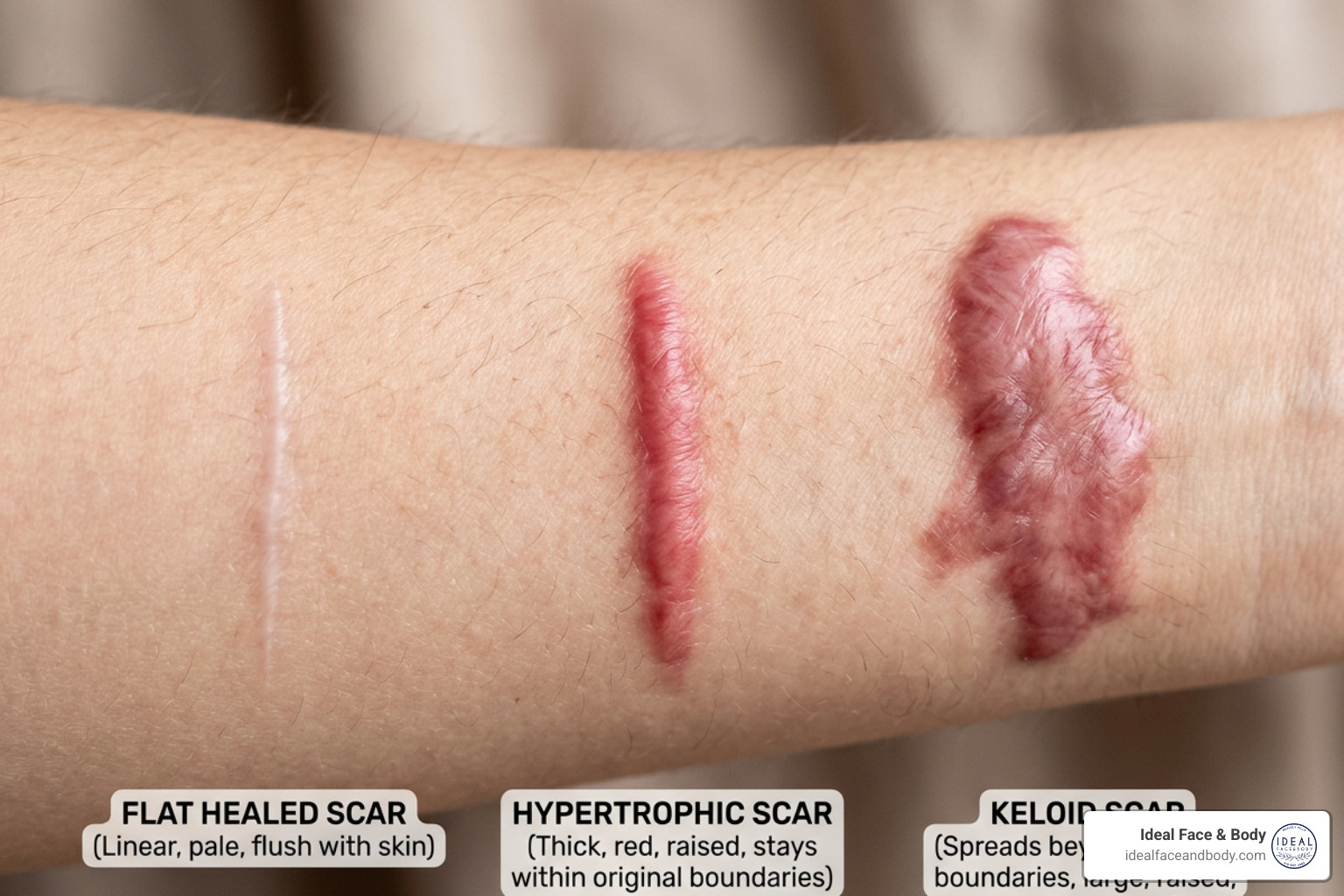
When we talk about hypertrophic scar removal, the first step is identifying exactly what we are dealing with. While they look similar to the untrained eye, hypertrophic scars and keloids are different biological “beasts.”
At a microscopic level, both involve an overgrowth of fibrous tissue, but the way that tissue organizes itself is the key. In a hypertrophic scar, the collagen fibers tend to arrange themselves parallel to the surface of the skin. In a keloid, those fibers are disorganized and chaotic.
| Feature | Hypertrophic Scar | Keloid Scar |
|---|---|---|
| Boundaries | Stays within the original wound | Grows beyond the original wound edges |
| Growth Pattern | Develops rapidly (weeks), may regress | Develops later (months/years), persists |
| Common Sites | Areas of tension (shoulders, joints) | Earlobes, chest, back, shoulders |
| Collagen | Parallel fibers | Disorganized, thick bundles |
| Treatment Ease | Generally easier to flatten | High recurrence rate; very difficult |
According to scientific reviews of hypertrophic scar pathophysiology, these scars are driven by the activity of fibroblasts and myofibroblasts. These cells are like the “construction workers” of your skin. Usually, they build a scar and then stop. In a hypertrophic response, they keep working overtime, often triggered by signaling molecules like TGF-beta.
Defining the Hypertrophic Response
The “hypertrophic response” is essentially a wound-healing process that got a little too enthusiastic. It usually kicks in during the inflammatory or proliferative phases of healing. If a wound is under constant tension—like a surgical incision over a knee or a shoulder—the body sends extra collagen to “reinforce” the area. This collagen dysregulation leads to the thick, red, or purple raised appearance we recognize.
The maturation timeline for these scars is long. While they usually show up within a month or two of the injury, they can take a full year to mature. This is why we often recommend waiting a bit before jumping into aggressive surgical hypertrophic scar removal, as the body may naturally remodel and flatten the tissue during that first year.
Key Differences from Keloid Scars
The most important distinction we make here at Ideal Face & Body is the boundary. If you have a scar from a small piercing that has grown into a large, bulbous mass the size of a marble, that’s likely a keloid. If you have a surgical line that has simply become thick and raised but stayed in that “line” shape, that’s a hypertrophic scar.
Keloids have a strong genetic component and are much more common in patients with darkly pigmented skin—carrying a 15- to 20-fold increased risk. Hypertrophic scars, however, can happen to anyone if the wound conditions (like infection or tension) are right. Understanding these nuances is vital for a successful scar revision procedure.
Effective Methods for Hypertrophic Scar Removal
In Beverly Hills, our patients expect precision. We don’t just use a “one size fits all” approach. Instead, we often use combination therapies to attack the scar from multiple angles: reducing redness, flattening the height, and softening the texture.
Intralesional Injections and Corticosteroids
The gold standard for flattening a raised scar is the intralesional injection. We typically use triamcinolone acetonide (a potent corticosteroid). These injections work by breaking the bonds between collagen fibers and reducing inflammation.
Statistics show that corticosteroid injections can flatten 50% to 100% of hypertrophic scars. However, they do have a recurrence rate of 9% to 50%, which is why we often combine them with other methods. For very stubborn scars, we might use “chemotherapy” agents like 5-Fluorouracil (5-FU) or Bleomycin. These sounds scary, but in tiny, localized doses, they are incredibly effective at stopping the “over-active” cells from producing more scar tissue. We also find that microneedling hypertrophic scars can help “channel” these medications deeper into the tissue.
Laser Hypertrophic Scar Removal
Lasers have revolutionized hypertrophic scar removal. We use different wavelengths depending on the scar’s “personality”:
- Vbeam (Pulsed Dye Laser): This is the go-to for red, angry-looking scars. It targets the blood vessels (vascular targeting), essentially starving the scar of the blood supply it needs to grow while simultaneously reducing redness.
- Fractional CO2 and Fraxel: These lasers create thousands of microscopic “holes” in the scar tissue. This triggers the body to replace the thick, abnormal collagen with fresh, healthy, flat skin.
As noted in laser therapy for hypertrophic scars and keloids research, these tools are particularly successful for symptomatic scars that itch or cause pain.
Surgical Revision and Advanced Sculpting
Sometimes, the best path to hypertrophic scar removal is to start over. In a scar revision procedure, Dr. Justin Yovino can surgically remove the old scar and re-close the wound using advanced, tension-free techniques.
We might use “scalpel sculpting” or light electrocautery to shave down raised areas. The key to success here is what happens after the surgery. To prevent the hypertrophic scar from coming back, we almost always follow up with silicone sheeting or steroid injections during the healing phase.
Specialized Care for Papular Acne Scars on the Nose
One of the most frustrating types of scarring occurs on the nose and chin: papular acne scars. These look like small, skin-colored bumps that just won’t go away. They are essentially tiny hypertrophic scars.
Why Standard Lasers May Fail
Many patients come to us at Ideal Face & Body after trying CO2 lasers elsewhere with no luck. Why do they fail? The skin on the nose is unique—it’s thick, rich in sebaceous (oil) glands, and the fibrotic density of these papules is very high. A standard resurfacing laser often just “skims” the surface without reaching the root of the bump. For these, a more specialized acne scar treatment is required.
Emerging Treatments: Bleomycin and RF
We have found great success using off-label Bleomycin injections for these nose bumps. Bleomycin works by inducing apoptosis (cell death) in the overactive fibroblasts.
Another powerful tool is radiofrequency (RF) microneedling. This combines the physical remodeling of needles with heat energy that “shrinks” the collagen fibers from the inside out. If you’re struggling with these bumps, looking into microneedling for scar tissue is a great place to start.
Prevention and Home Care for Hypertrophic Scar Removal
You don’t always need a laser to see results. In fact, what you do at home is just as important as what we do in the office.
Silicone Sheets and Gels
Silicone is the undisputed “gold standard” of home scar care. It works by creating an occlusive barrier that increases the hydration and temperature of the scar tissue. This tells the body to stop producing so much collagen.
Studies show a 50% to 100% response rate when silicone elastomer sheeting is used correctly. For the best results, you should wear the sheets for 12 to 24 hours a day for at least 2 to 3 months. For facial scars where sheets are awkward, a high-quality silicone gel is a great alternative. Check out our best scar healing treatments guide for our top recommendations.
Pressure Therapy and Massage
Pressure therapy has been used for decades, especially for burn victims. By applying constant pressure (usually 24 to 30 mm Hg), we can mechanically flatten the scar. While it requires high compliance—often wearing garments for 6 to 12 months—the success rate is near 90% to 100%.
Scar massage is another “low-tech” but high-reward strategy. By firmly massaging the scar, you help break up the dense collagen bundles. Some patients even use a dermaroller for scars at home to help soften the tissue, though this should always be done under professional guidance to avoid making the inflammation worse.
Home Care for Hypertrophic Scar Removal
The sun is the enemy of a healing scar. UV radiation can cause permanent darkening (hyperpigmentation) of the scar tissue. We recommend:
- SPF 30+: Apply every single day, even if it’s cloudy.
- Moist Healing: Keep the area hydrated with petroleum jelly or silicone gel. A dry scar is an unhappy scar.
- Avoid Irritation: Don’t use harsh “scar fading” creams with unknown ingredients that might cause dermatitis and further inflammation.
Frequently Asked Questions about Scar Revision
How long does it take to see results from hypertrophic scar removal?
Patience is a virtue when it comes to skin. Because the maturation phase of a scar lasts up to a year, you won’t see “overnight” results. Most professional treatments, like lasers or injections, require a series of sessions spaced 4 to 6 weeks apart. You will typically start to see visible flattening and fading after the second or third treatment, but the remodeling process continues internally for months.
Can hypertrophic scars return after surgical removal?
Yes, they can. Because your body has already shown a “tendency” to over-produce collagen, there is a risk of recurrence. However, we minimize this risk by using “triple therapy”—combining surgery with corticosteroids and silicone sheeting. This combination has been shown to have an 88% success rate with a much lower recurrence rate than surgery alone.
Are hypertrophic scar treatments painful?
We do everything possible to make your experience at Ideal Face & Body comfortable. For injections, we use very fine needles and can apply topical numbing creams. For laser treatments, we use cooling devices and topical anesthetics. Most patients describe the sensation as a light “snapping” or “stinging,” but it is generally very well tolerated.
Conclusion: Achieving Smoother Skin in Beverly Hills
At Ideal Face & Body in Beverly Hills, we believe that you shouldn’t have to live with a permanent reminder of a past injury or surgery. Whether you are dealing with a raised surgical line or stubborn acne bumps on your nose, hypertrophic scar removal is possible with the right expertise.
Dr. Sarah Yovino and Dr. Justin Yovino are dedicated to providing personalized consultations that look at your specific skin type, the age of your scar, and your lifestyle goals. From advanced “Precision Sculpt” techniques to the latest in microneedling for scars, we have the tools to help you achieve the smooth, confident skin you deserve.
Ready to start your journey? Contact us today to schedule your consultation and let’s create a plan for your hypertrophic scar removal.