The Secret to a Heart-Shaped Face: Unveiling Buccal Fat Removal
Understanding Facial Contouring and the Heart-Shaped Aesthetic

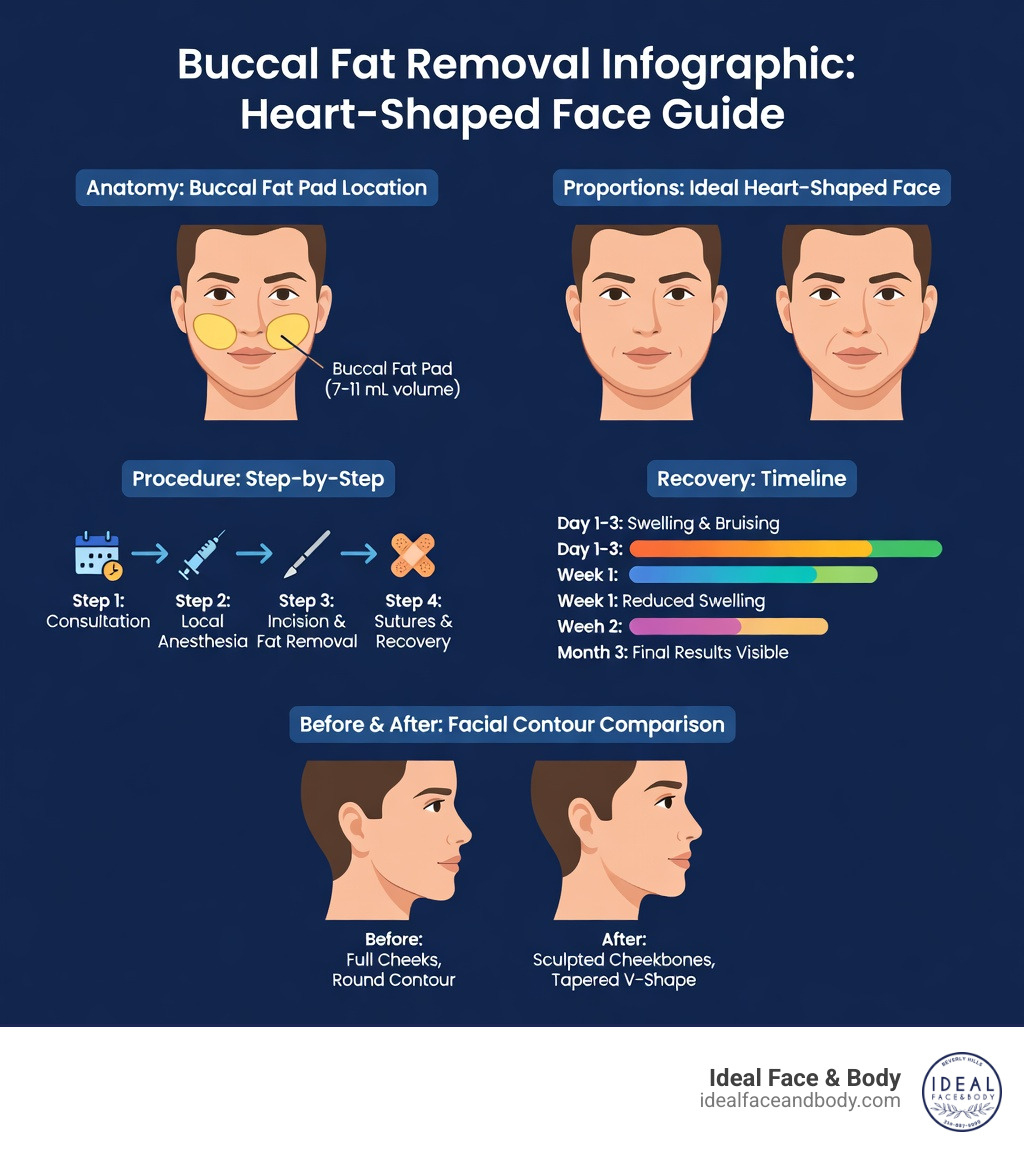
Buccal fat removal for heart-shaped face is a minimally invasive cosmetic procedure that removes excess fat from the lower cheeks to create a more sculpted, V-shaped facial contour. This surgical technique targets the buccal fat pads—naturally occurring deposits located between your cheekbones and jawline—to enhance facial definition and create the coveted heart-shaped appearance.
Quick Overview: What You Need to Know
- What it does: Removes buccal fat pads to slim the lower cheeks and accentuate cheekbones
- Ideal for: Adults with persistent cheek fullness that doesn’t respond to weight loss
- Procedure time: 45-60 minutes under local anesthesia
- Recovery: 7-10 days of swelling, full results visible in 2-3 months
- Results: Permanent—the fat pads do not grow back
- Face shape goal: Creates a V-line from cheekbones to chin for a heart-shaped contour
Many people struggle with what they describe as “chubby cheeks” or “chipmunk cheeks” that persist into adulthood, even when maintaining a healthy body weight. This fullness is often genetic and related to the size of your buccal fat pads, which sit deep in the mid-face region between the masseter and buccinator muscles.
The buccal fat pad volume varies naturally from person to person—research shows a mean volumetric variation of 7.8 to 11.2 milliliters for males and 7.2 to 10.8 milliliters for females. While these fat pads serve important functions in infants and children (supporting suckling and facial movement), they can create excessive fullness in the lower face for some adults.
The desire for a heart-shaped face has grown significantly in recent years, driven by social media and beauty trends. This facial shape is characterized by wider, prominent cheekbones that taper down to a defined jawline and chin—creating that distinctive V-shaped or heart-like contour. For those with naturally round or oval faces, buccal fat removal offers a surgical solution to achieve this aesthetic.
I’m Dr. Sarah Yovino, a double board-certified master injector specializing in non-surgical and minimally invasive aesthetic procedures at Ideal Face & Body in Beverly Hills. While I focus primarily on non-surgical facial rejuvenation, I work closely with patients considering buccal fat removal for heart-shaped face goals, helping them understand their options and set realistic expectations. Together with Dr. Justin Yovino, we guide patients through both surgical and non-surgical approaches to facial contouring, ensuring each individual receives personalized care that enhances their natural features.
Similar topics to buccal fat removal for heart-shaped face:
What is Buccal Fat Removal for a Heart-Shaped Face?
At its core, Buccal Lipectomy is the surgical reduction of the “Bichat’s fat pad,” a specialized pocket of fat located in the hollow of the cheek. While most facial fat is subcutaneous (sitting just under the skin), the buccal fat pad is deep-seated, nestled between the buccinator muscle and the masseter muscle.
Scientific research on Buccal Fat Pad Reduction highlights that this fat pad has a central body and several extensions. In the context of buccal fat removal for heart-shaped face goals, we specifically target the buccal extension. This is the portion of the pad that creates that “chipmunk” fullness in the lower mid-face. By precisely reducing this volume, we can reveal the underlying facial architecture, allowing the cheekbones to appear more prominent and the lower face to taper elegantly toward the chin.
According to scientific research on the anatomy of the buccal fat pad, the volume of these pads actually grows significantly during our youth, increasing from roughly 4,000 to 8,000 cubic millimeters between the ages of 10 and 20. While they slightly decline over the next 30 years, those with genetically large pads may never see that “baby fat” disappear, regardless of diet or exercise. This is where aesthetic recontouring becomes a powerful tool for achieving a more mature, defined look.
Determining Your Candidacy for a Sculpted Look
Are you a good candidate for this procedure? One of the easiest ways to get a preliminary idea is the “fish face” test. By sucking in your cheeks, you can see where the natural hollows of your face lie. If the area that “pooches” out even when you suck in is significant, you likely have prominent buccal fat pads.
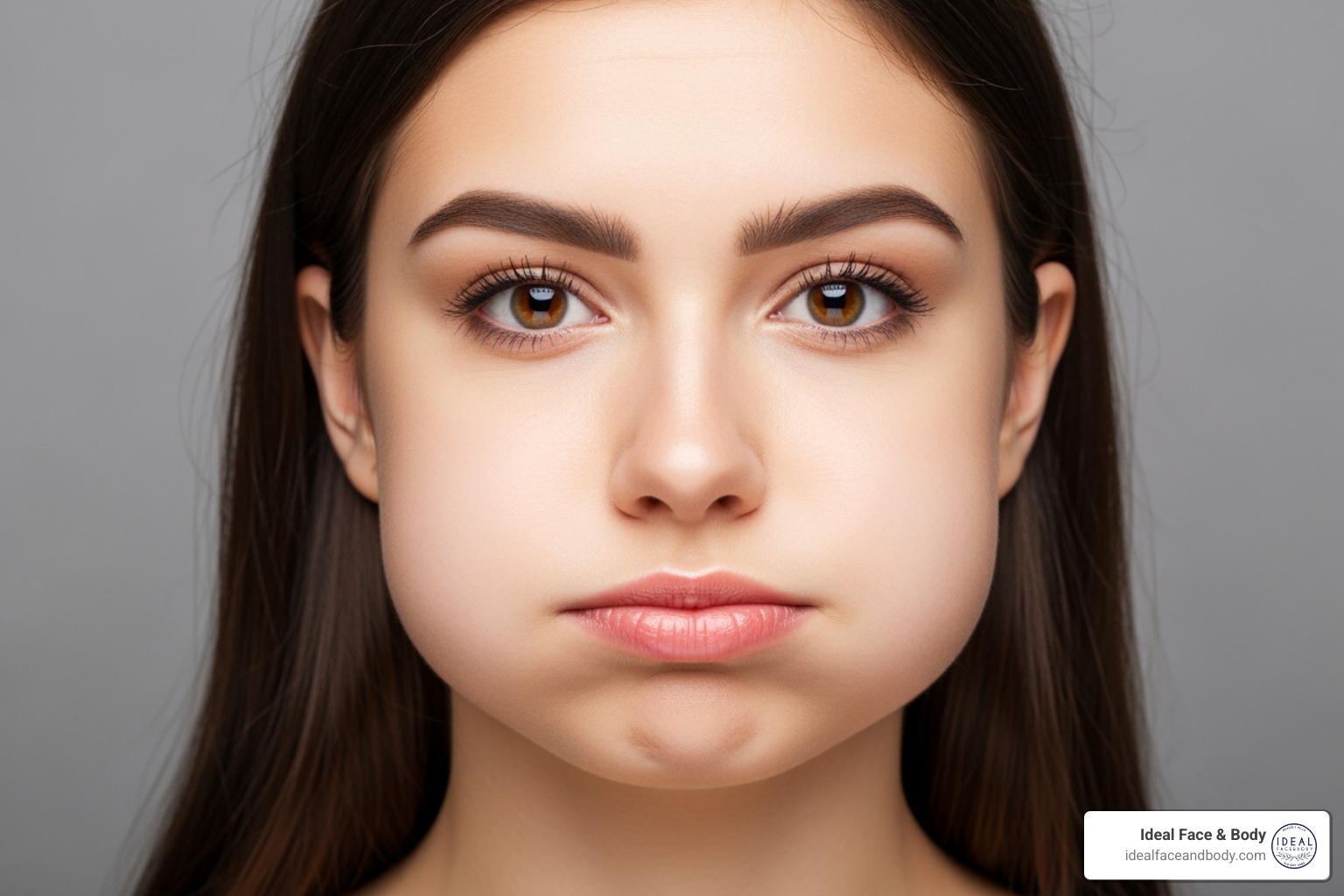
However, professional assessment is vital. Scientific research on buccal fat pad removal for facial aesthetics emphasizes that the best results occur in patients with true “pseudoherniation” of the fat pad—where the fat creates a visible bulge. At Ideal Face & Body, we look for:
- Facial Maturation: We generally recommend waiting until at least age 18 to 20. Buccal Fat Removal Age is a critical factor because facial fat naturally diminishes as we enter our 30s. Removing too much too early can lead to a gaunt look later in life.
- Genetic Fullness: If your parents or siblings have the same round cheek structure despite being at a healthy weight, your fullness is likely genetic.
- Stable Weight: The procedure is best performed when you are at your goal weight, as significant weight fluctuations can alter facial proportions.
- Strong Bone Structure: Ideal candidates have good zygomatic prominence (high cheekbones). If someone has “malar hypoplasia” (underdeveloped cheekbones), removing buccal fat might actually make the face look sunken rather than contoured.
It is also a popular choice for men. Buccal Fat Removal Men helps create a more chiseled, masculine jawline by reducing the softness in the lower cheek area.
Ideal Candidates for Buccal Fat Removal for a Heart-Shaped Face
The perfect candidate is an adult who feels their face is “bottom-heavy.” If you feel your face looks too round or square and you desire that classic heart-shaped taper, this procedure is designed for you. Before committing, it’s wise to weigh the Buccal Fat Removal Pros and Cons. The pros include permanent slimming and improved confidence, while the cons involve the standard risks of any minor surgery and the need for a conservative approach to prevent premature aging.
The Procedure: How to Achieve a Contoured Appearance
One of the most appealing aspects of this procedure at Ideal Face & Body in Beverly Hills is that it can be performed as an “awake” procedure. This means we use local anesthesia to numb the area, similar to a dental visit, avoiding the risks and grogginess associated with general anesthesia.
How is Buccal Fat Removal Done? The process is remarkably straightforward:
- Incision: A small, 1-2 cm incision is made inside the mouth, typically above the second upper molar. This ensures there are no external scars.
- Access: We perform a blunt dissection through the buccinator muscle. Scientific research on the clinical significance of the buccal fat pad notes that we must be careful to avoid Stenson’s duct (the parotid gland duct) and the facial nerve branches.
- Extraction: Once the fat pad is reached, we apply gentle pressure to the outside of the cheek, causing the fat to “tease” out through the incision. We resect only the portion that protrudes passively.
- Closure: The incision is closed with dissolvable sutures.
Step-by-Step: Buccal Fat Removal for a Heart-Shaped Face
Our Buccal Fat Removal Surgery Guide outlines a typical 45-minute experience. After numbing, Dr. Justin Yovino performs a precise resection, ensuring that the amount of fat removed is symmetrical on both sides. This is a “less is more” procedure; we aim for a natural curve, not a hollowed-out “skeleton” look. Because the incisions are inside the mouth, the invasiveness is kept to an absolute minimum.
Recovery and Long-Term Results
The recovery process is relatively quick, but patience is key when waiting for the final “reveal.”
| Phase | Timeline | What to Expect |
|---|---|---|
| Initial Healing | Days 1–3 | Swelling is at its peak; looks like you had wisdom teeth removed. |
| Social Recovery | Days 7–10 | Most visible swelling subsides; you can return to social activities. |
| Subtle Contouring | 4–6 Weeks | Residual internal swelling fades; you begin to see the V-line. |
| Final Results | 3–6 Months | The skin has fully “shrink-wrapped” to the new contour. |
During Buccal Fat Removal Recovery, we recommend a liquid diet for the first few days, progressing to soft foods. Maintaining excellent oral hygiene with salt-water rinses or prescribed mouthwash is essential to prevent infection.
While scientific research on managing complications of buccal fat removal mentions risks like hematoma or trismus (jaw stiffness), these are rare when the procedure is performed by experienced surgeons like ours in Beverly Hills. The results are permanent because buccal fat pads do not regrow. However, we always factor in aging considerations. As we age, we naturally lose fat in other areas of the face. By being conservative during your initial procedure, we ensure you maintain a healthy, youthful volume as the decades pass.
Non-Surgical Alternatives and Enhancements
Not everyone is ready for surgery, and in some cases, a heart-shaped face is better achieved through other means. If your “fullness” is actually caused by a wide jaw muscle rather than fat, Masseter Botox is a fantastic alternative. By relaxing the chewing muscle, the jawline narrows, creating a natural taper.
Other options include:
- Dermal Fillers: Adding volume to the cheekbones or chin can “trick” the eye into seeing a heart shape by changing the facial proportions.
- Non-Surgical Chin Reduction: Sometimes, balancing the chin is the key to that V-line aesthetic.
- Kybella or CoolSculpting: These are better suited for fat under the chin (the “double chin”) rather than the deep buccal fat.
- How to Remove Cheek Fat Naturally: While diet and exercise help overall body fat, they often have little impact on the genetic buccal fat pad.
Frequently Asked Questions about Buccal Fat Removal
Is the procedure permanent?
Yes. Once the buccal fat pads are removed, they are gone for good. Cheek Reduction FAQs Can Buccal Fat Come Back clarifies that while you can still gain weight in other parts of your face (subcutaneous fat), the specific deep-seated fullness addressed by this surgery will not return. This makes it a one-time investment in your facial structure.
What are the risks of hollowing?
The “gaunt” look is the biggest concern for most patients. This usually happens when a surgeon is too aggressive or performs the procedure on someone with a naturally thin face. Scientific research on buccal fat pad excision for cheek refinement emphasizes the importance of surgeon expertise. At Ideal Face & Body, we pride ourselves on a conservative approach that anticipates how your face will age, ensuring you look refreshed, not hollowed out.
How much does the procedure cost?
Buccal Fat Removal Cost varies significantly based on several factors. These include the surgeon’s level of experience, the geographic location (Beverly Hills facilities often have different overhead than rural clinics), and whether you are combining the surgery with other treatments like a chin implant or neck liposuction. Since this is considered an elective cosmetic procedure, it is not covered by insurance. We provide detailed, transparent breakdowns during our personalized consultations.
Conclusion
Achieving the perfect buccal fat removal for heart-shaped face result requires a blend of surgical precision and aesthetic artistry. At Ideal Face & Body in Beverly Hills, Dr. Sarah Yovino and Dr. Justin Yovino specialize in helping patients refine their features through our signature “Precision Sculpt” techniques. Whether you are looking for an awake buccal fat removal or a comprehensive non-surgical facial rejuvenation plan, we are dedicated to providing results that are as natural as they are beautiful.
Ready to say goodbye to “chubby cheeks” and hello to a contoured V-line? Contact us today to schedule your consultation and take the first step toward the heart-shaped face you’ve always wanted.