How to Pick a Laser Lipo Machine That Actually Works
What to Know Before Buying a Laser Lipo Machine
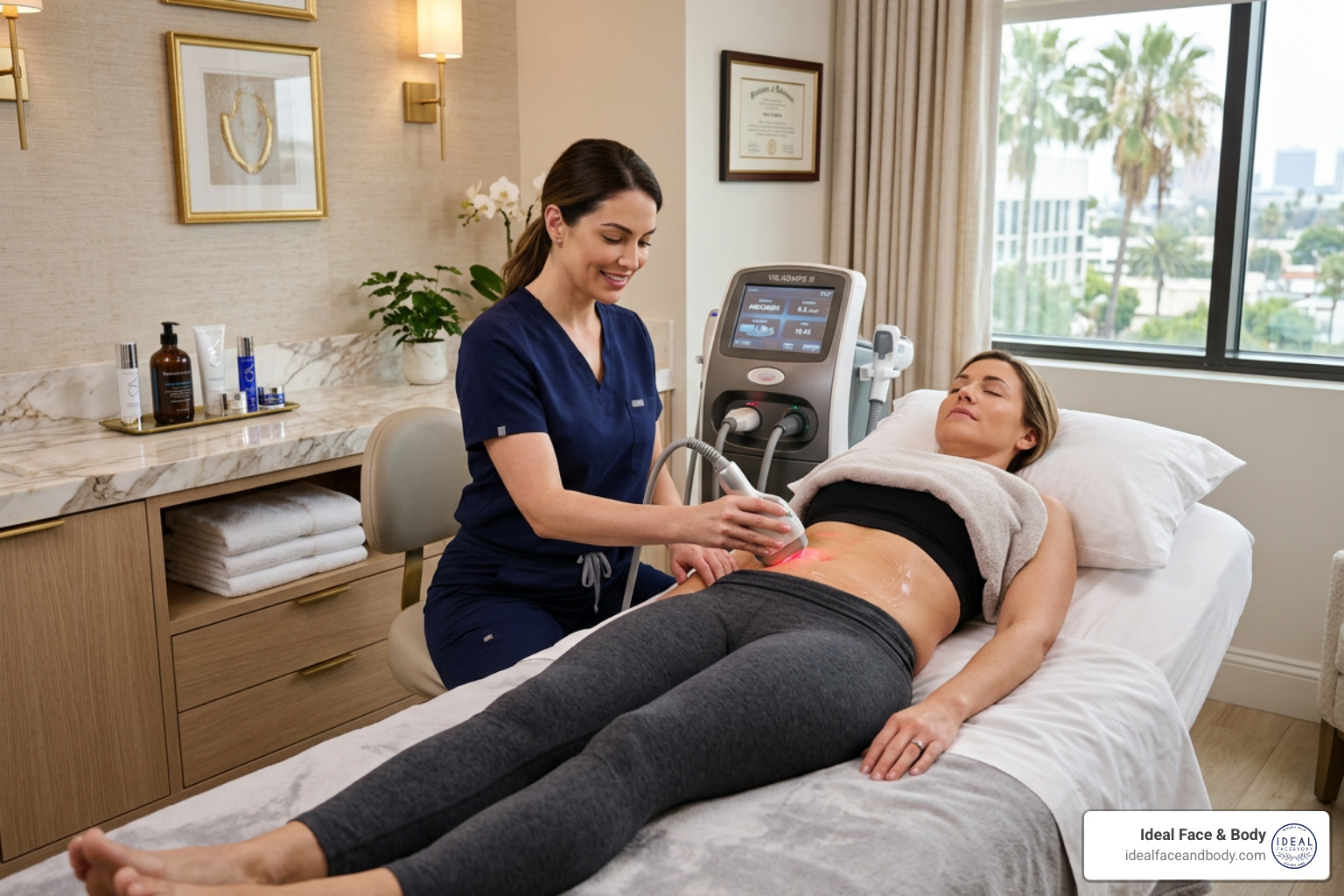
A laser lipo machine uses targeted laser energy to break down stubborn fat cells — either non-invasively through low-level laser therapy (LLLT), or minimally invasively with a fiber-optic laser inserted beneath the skin.
Quick answer: the best laser lipo machine for you depends on these key factors:
| Factor | What to Look For |
|---|---|
| Treatment type | Non-invasive LLLT vs. invasive laser-assisted liposuction |
| Wavelength | 635-650nm or 1064nm for fat targeting |
| FDA clearance | Essential for safety and clinical credibility |
| Power output | Higher wattage = deeper penetration |
| Combo technologies | RF, cavitation, or PEMF for enhanced results |
Not every machine on the market delivers what it promises. Some produce real, clinically validated fat reduction. Others fall short — especially lower-powered home devices that can’t match professional-grade results.
This guide cuts through the noise so you can make a confident, informed decision.
I’m Dr. Sarah Yovino, MD, a double board-certified aesthetic specialist at Ideal Face & Body in Beverly Hills, with hands-on experience evaluating and applying the latest laser lipo machine technologies for body contouring. In the sections ahead, I’ll walk you through exactly what separates effective equipment from overpriced gadgets.
Laser lipo machine terms to learn:
Understanding the Technology Behind a Laser Lipo Machine
When we talk about a laser lipo machine, we are describing a sophisticated piece of medical technology designed to target the subcutaneous fat layer—the “pinchable” fat just beneath your skin. While traditional methods rely on physical force to break up fat, laser technology uses light energy to achieve its goals.
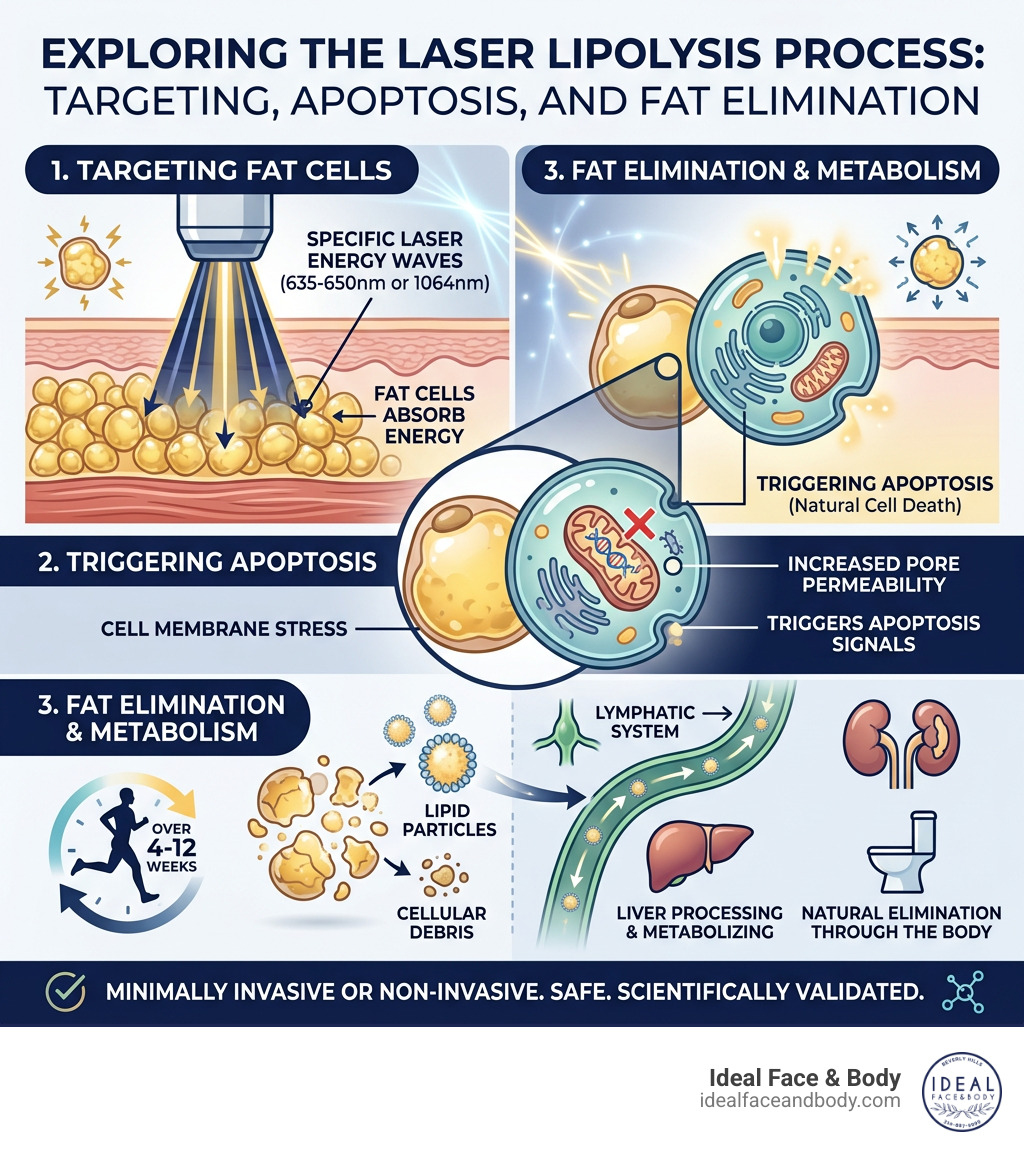
The science hinges on a process often called photobiomodulation or laser-induced apoptosis. High-end professional machines, such as those utilizing a 1064nm wavelength, penetrate deep into the adipose tissue. This specific wavelength is considered a “gold standard” because it is highly absorbed by fat but less so by the water in the skin, allowing the heat to bypass the surface and reach the fat cells directly.
Once the laser energy hits the fat cells, it heats them to a temperature between 42°C and 46°C. This thermal stress causes the fat cells to lose their structural integrity—a process known as apoptosis. Over the following weeks, your body’s lymphatic system identifies these damaged cells as waste and naturally flushes them out. According to clinical insights on laser lipo effectiveness, this method provides a statistically significant reduction in adipose layer thickness, with some studies showing up to a 41% reduction in treated areas.
For those looking for more comprehensive details, you can read more info about laser liposuction to see how these machines fit into a larger body sculpting plan.
Non-Invasive LLLT vs. Invasive Laser-Assisted Liposuction
It is vital to distinguish between the two primary types of laser lipo machine technologies.
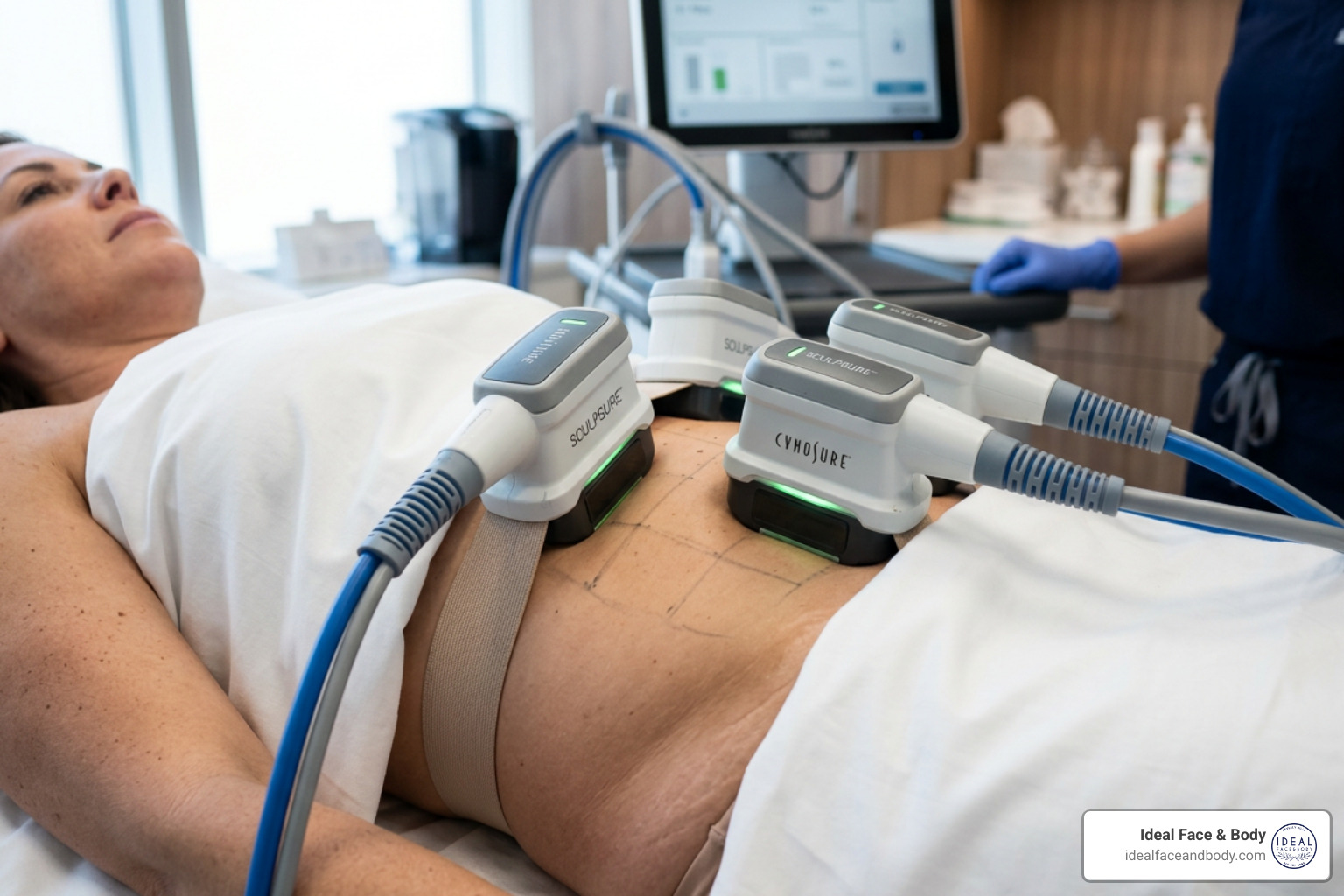
- Low-Level Laser Therapy (LLLT): This is the truly non-invasive “cold laser” approach. The paddles are placed on top of the skin. They emit low levels of laser energy that create a chemical signal in the fat cells, opening tiny pores in the cell membrane. This allows stored triglycerides to leak out into the interstitial space to be metabolized. There are no incisions, no pain, and zero downtime.
- Invasive Laser-Assisted Liposuction: This is a surgical procedure, like the well-known Smartlipo Triplex. Here, a thin fiber-optic laser is inserted through a tiny incision. The laser literally melts the fat (liquefaction) and coagulates the surrounding blood vessels, which leads to less bruising and significant skin tightening. The melted fat is then gently suctioned out.
Understanding the difference between traditional and laser lipo is the first step in deciding which machine matches your goals. If you want a “lunchtime” procedure with no needles, LLLT is the way to go. If you want dramatic, one-time results with skin retraction, an invasive laser-assisted system is superior.
Wavelengths and Power in a Laser Lipo Machine
Not all light is created equal. The effectiveness of a laser lipo machine is dictated by its wavelength and power density.
- 635nm – 650nm: This visible red light range is common in LLLT machines. It is excellent for altering the permeability of fat cell membranes.
- 980nm: Often used in combination with other wavelengths, 980nm targets water and fat, aiding in the thermal breakdown of tissue and stimulating collagen production for a tightening effect.
- 1064nm: The heavy hitter for deep fat penetration. It reaches the entire subcutaneous layer to trigger permanent fat cell death.
Power is equally important. Professional machines often feature adjustable power outputs (ranging from 50mW to 100mW per diode in non-invasive units, or up to 40W or more in surgical units). Higher power allows for shorter treatment times and deeper tissue reach. This energy also stimulates fibroblasts, which are the cells responsible for collagen, helping to ensure that as the fat leaves, the skin doesn’t sag. You can find more laser fat removal details regarding how these technical specs influence treatment outcomes.
Key Features to Look for in Professional Equipment
If you are evaluating a laser lipo machine for purchase or treatment, you shouldn’t settle for “off-brand” technology. In Beverly Hills, our patients expect the highest level of safety and efficacy, and that starts with FDA clearance. An FDA-cleared device has undergone rigorous testing to prove that it does what the manufacturer claims it does without posing undue risk to the patient.
Another critical feature is the applicator design. Look for “large spot size” applicators (some professional models offer up to 36 cm²). A larger spot size ensures uniform energy distribution, which prevents “hot spots” that can cause discomfort or uneven results. Advanced machines also include real-time temperature control. These sensors monitor the skin’s surface temperature constantly, ensuring the fat is getting hot enough to melt while the skin remains safe and comfortable.
For those specifically concerned about the lower body, certain applicators are contoured specifically for the laser lipo for thighs to ensure the laser energy is delivered efficiently to those curved areas.
Safety Protocols and Clinical Reliability
Safety isn’t just about the machine; it’s about the data. High-quality professional machines boast a high “clinical reliability rating”—often 92% or higher. This means the technology works consistently across different body types and skin tones.
Patient comfort is another benchmark. On the Wong-Baker pain scale (where 10 is the worst pain imaginable), top-tier non-invasive laser lipo treatments typically score an average of 2.6. Most patients describe the sensation as a deep warmth or a “hot stone massage” feeling rather than pain.
Furthermore, many modern professional systems now include IoT (Internet of Things) data integration. This allows providers to track treatment parameters and ensure every session is optimized for the best possible result. These laser lipo safety facts highlight why professional supervision is so much safer than attempting “DIY” fat reduction at home.
Comparing Laser Lipolysis to Other Fat Reduction Methods
The “body sculpting” world is crowded. You’ve likely heard of Cryolipolysis (fat freezing), Ultrasonic Cavitation, and Radiofrequency (RF). So, how does a laser lipo machine stack up?
- Vs. Cryolipolysis: Fat freezing uses cold to kill fat cells. While effective, it can be uncomfortable and occasionally leads to “shelving” or uneven fat loss. Laser lipo uses heat, which inherently promotes skin tightening—something cold treatments don’t do as effectively.
- Vs. Ultrasonic Cavitation: Cavitation uses sound waves to create micro-bubbles that “pop” fat cells. It’s a great technology, but it doesn’t offer the same collagen-stimulating benefits as a 1064nm or 980nm laser.
- Vs. Vaser Lipo: Vaser uses ultrasound to shake fat cells loose before suction. It is a powerful surgical tool. A Vaser lipo comparison shows that while Vaser is excellent for large volume removal, laser lipo is often preferred for its superior skin-tightening capabilities.
Synergistic Technologies in a Laser Lipo Machine
The best results often come from “multi-platform” machines. Many professional laser lipo machine models are now “4-in-1” or “6-in-1” systems. They combine the laser with:
- Radiofrequency (RF): To tighten the skin and reduce the appearance of cellulite.
- Vacuum Suction: To provide lymphatic drainage, helping the body move the “melted” fat out of the system faster.
- PEMF (Pulsed Electromagnetic Fields): To improve blood flow and accelerate healing.
These combinations are particularly effective for difficult areas. If you’ve ever wondered, “does laser lipo work on thighs?“, the answer is a resounding yes—especially when the laser is paired with RF to smooth out cellulite at the same time.
Expected Results and Patient Selection
Who is the ideal candidate for a laser lipo machine? Contrary to popular belief, these machines are not weight-loss tools. They are precision instruments for body contouring.
The best candidates are individuals with a BMI of 30 or less who have “stubborn” pockets of fat that don’t respond to diet or exercise. This includes the abdomen, “love handles,” back fat, inner and outer thighs, and even the “double chin” area.
In terms of results, patience is key. While some patients see a minor change after one session, a full course of 6-12 sessions is typically recommended. In clinical settings, patients have reported a combined loss of 3 to 9 inches from their waist, hips, and thighs after completing their protocol. You can see what this looks like in practice by checking out our laser lipo before and after guide.
Preparing for and Maintaining Treatment Outcomes
To get the most out of your laser lipo machine sessions, your body needs to be in peak “elimination” mode.
- Hydration is non-negotiable: You should drink at least 2 liters of water a day before and after your treatment. The fat is released into your lymphatic system, and water is the “vehicle” that carries it out.
- Post-Treatment Exercise: We recommend at least 30 minutes of light cardio (like a brisk walk) within 12 hours of your session. This jumpstarts your metabolic rate and ensures the released fatty acids are burned as energy rather than being re-absorbed by other fat cells.
- Dietary Choices: While you don’t need a restrictive diet, avoiding heavy alcohol and high-carb meals for 48 hours post-treatment helps your liver focus on processing the fat cells.
The longevity of your results depends on you. If you maintain a stable weight, the results can be permanent. For a deeper dive into the “how-to” of results, see our article on does laser lipo work.
Frequently Asked Questions about Laser Lipo Machines
Is a home-use laser lipo machine as effective as a professional one?
In short: No. While there are many “portable” or home-use versions of the laser lipo machine available online, they generally lack the power density required to achieve deep tissue penetration. A professional machine in a Beverly Hills clinic might have a power output of 100mW per diode or more, whereas home devices are often significantly weaker to prevent accidental burns by untrained users. Professional treatments also involve specialized protocols and often combine multiple technologies (like RF and vacuum) that home units simply don’t have.
How many sessions are typically needed for noticeable fat reduction?
Most patients require a series of 6 to 12 treatments to see a transformative result. These are usually spaced about twice a week. This frequency allows the lymphatic system enough time to clear the released fat without becoming overwhelmed. Results are cumulative; you’ll likely notice your clothes fitting better around session 4 or 5, with full results appearing about 12 weeks after your final session.
What are the potential side effects of laser lipolysis?
Non-invasive laser lipo is incredibly safe. The most common side effects are minor swelling, slight redness (similar to a mild sunburn), or skin sensitivity in the treated area. These usually resolve within a few hours. In rare cases, if a patient is not properly hydrated, they may feel slightly nauseous or “sluggish” as the body processes the released fat. This is why hydration is our number one post-care tip!
Conclusion
Choosing the right laser lipo machine—or the right clinic to perform the treatment—is a decision that should be based on science, safety, and proven results. Whether you are looking for the total “fat melting” power of an invasive procedure or the convenient, “lazy slimming” benefits of a non-invasive LLLT session, the technology is now more reliable than ever.
At Ideal Face & Body in Beverly Hills, we specialize in these advanced contouring techniques. Under the expert guidance of Dr. Justin Yovino and Dr. Sarah Yovino, we offer our signature “Precision Sculpt” awake liposuction for those seeking dramatic results, as well as a range of non-invasive options for those who prefer a gentler approach.
Please keep in mind that treatment costs vary significantly based on the number of areas being treated and the specific technology used. The best way to find out what will work for your unique body is to speak with an expert.
Ready to see what’s possible? Schedule a consultation with us today and let’s start your transformation.