The Great Escape from Your Abdominal Pannus
Identifying Your Abdominal Pannus: Causes and Severity
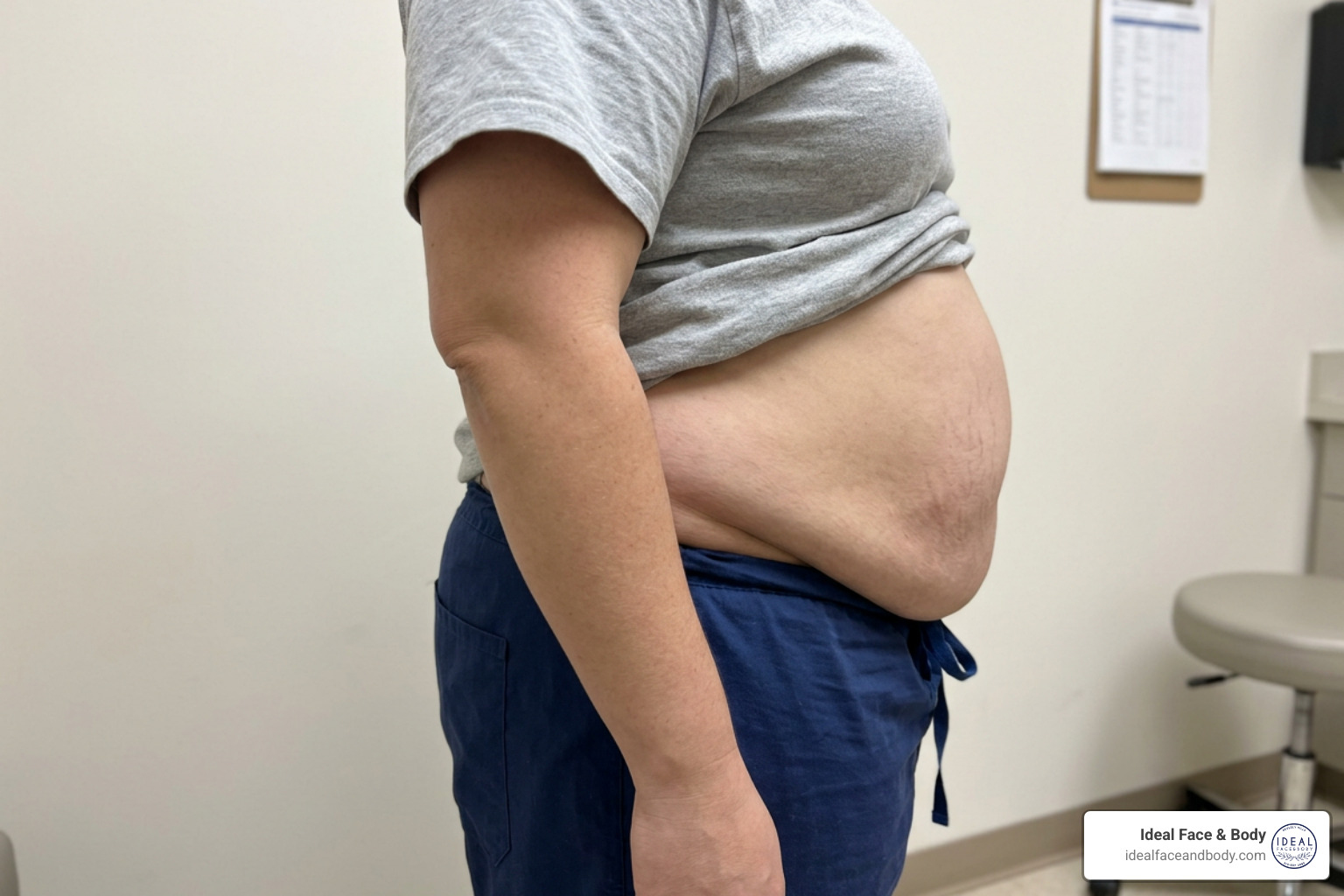
Abdominal pannus — also called “apron belly” or panniculus — is an overhang of excess skin and fat that droops below the waistline. It is not the same as regular belly fat. It forms when skin is stretched beyond its ability to snap back, leaving a flap that can hang over the hips, thighs, or even the knees.
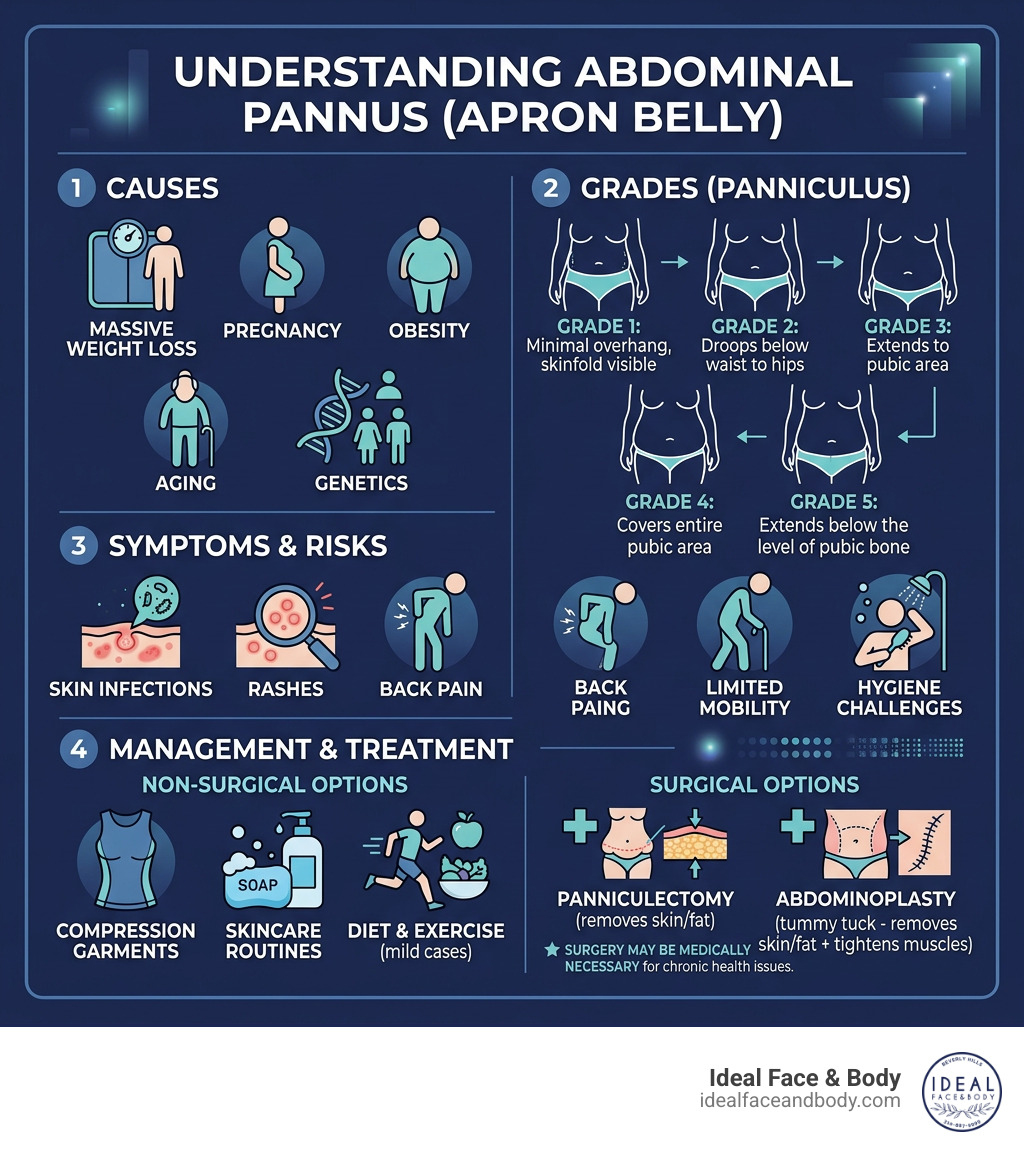
Quick answers about abdominal pannus:
- What it is: A hanging fold of excess skin and fat in the lower abdomen
- Main causes: Massive weight loss, pregnancy, obesity, aging, genetics
- Health risks: Skin infections, rashes, back pain, limited mobility
- Non-surgical options: Compression garments, skincare routines, diet and exercise (for mild cases)
- Surgical options: Panniculectomy (removes excess skin/fat) or abdominoplasty/tummy tuck (also tightens muscles)
- When surgery is covered: When medically necessary — such as chronic infections or mobility problems — and conservative treatments have failed
Living with an abdominal pannus goes far beyond appearance. For many people, it means daily discomfort — constant skin irritation, hygiene challenges, and back strain that make even simple movements harder. It can quietly chip away at your confidence and quality of life.
The good news? There are real, proven ways to manage it — from daily skincare habits to life-changing surgical procedures. This guide walks you through all of them, step by step.
I’m Dr. Sarah Yovino, MD, a double board-certified aesthetic specialist at Ideal Face & Body in Beverly Hills, and my background in body rejuvenation and non-surgical contouring gives me a unique perspective on treating the physical and emotional burden of abdominal pannus. Whether you’re exploring conservative options or considering surgery, I’ll help we understand exactly what your choices are.
Key terms for abdominal pannus:
Many of our patients come to us in Beverly Hills confused about why their gym routine isn’t “burning off” their lower stomach. The reason is often that they aren’t dealing with simple fat storage, but a structural change in the skin and subcutaneous tissue.
While the terms are often used interchangeably in casual conversation, there is a scientific distinction regarding panniculus nomenclature. A panniculus is a dense layer of fatty tissue and skin in the lower abdomen. Interestingly, the term “pannus” actually refers to abnormal fibrovascular tissue often seen in inflammatory conditions like rheumatoid arthritis, but in body contouring, abdominal pannus has become the standard name for the “apron” effect.
What Causes the Apron to Drop?
The primary driver of a panniculus is the loss of skin elasticity. Think of your skin like a high-quality elastic band. If you stretch it slightly and let go, it snaps back. But if you stretch it to its limit and hold it there for a long time, it loses its “memory” and stays stretched out.
- Massive Weight Loss: This is perhaps the most common cause we see. When someone loses 100 pounds or more, the fat cells shrink, but the skin that housed them remains.
- Pregnancy: The rapid expansion of the abdomen can permanently damage the collagen and elastin fibers.
- Aging: As we age, our skin naturally loses the proteins that keep it tight.
- Genetics: Some people are simply predisposed to carrying weight in the lower abdomen, sometimes referred to by the acronym FUPA (Fatty Upper Pelvic Area).
Regular Belly Fat vs. Abdominal Pannus
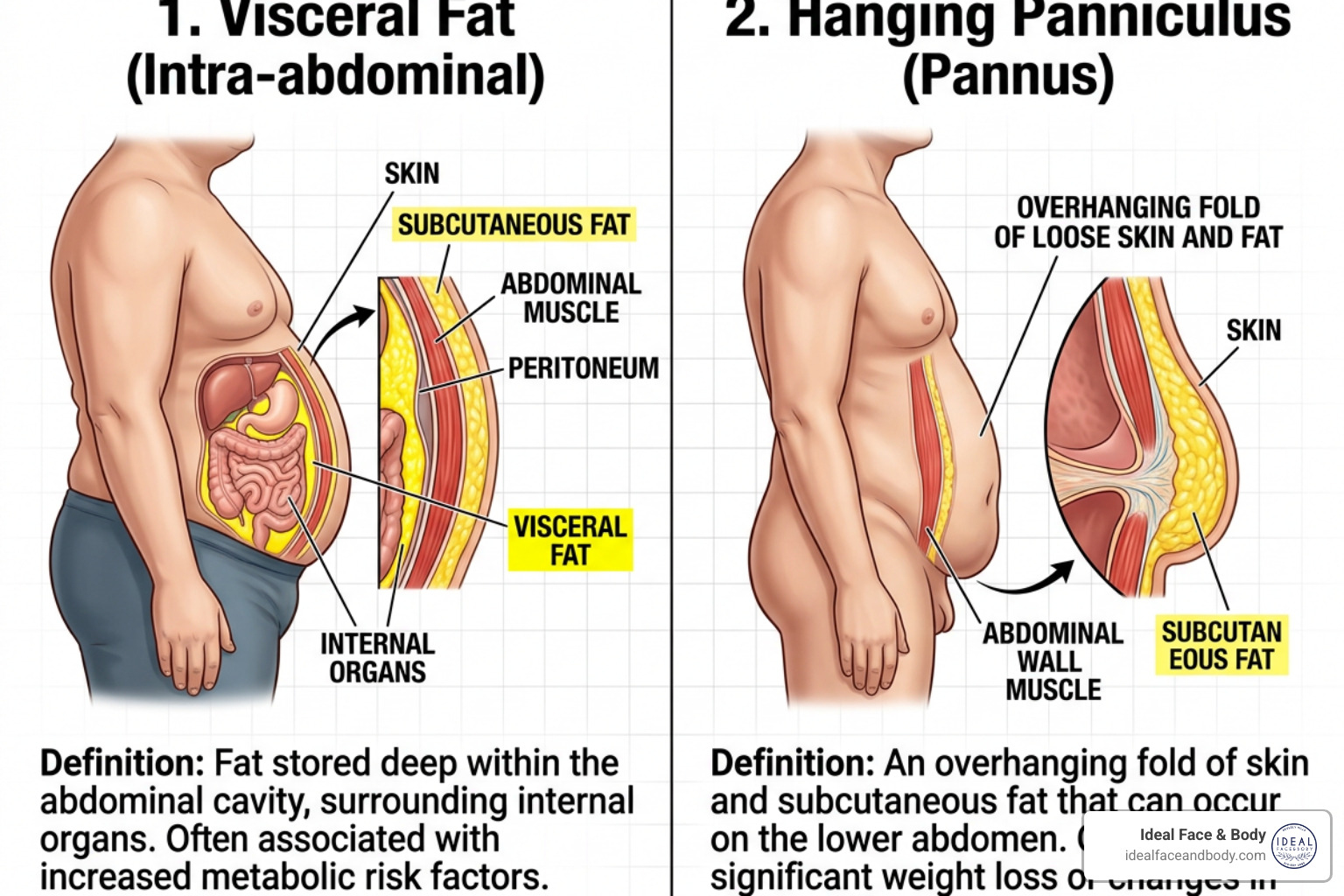
It is vital to distinguish between visceral fat (fat around the organs), subcutaneous fat (pinchable fat), and a true abdominal pannus.
| Feature | Regular Belly Fat | Abdominal Pannus |
|---|---|---|
| Composition | Primarily adipose (fat) tissue | Skin, fat, and often connective tissue |
| Structure | Sits firmly against the abdominal wall | Hangs or droops over the pubic area/thighs |
| Response to Exercise | Can be “burned” through a calorie deficit | Skin remains even after fat is lost |
| Health Risks | Metabolic issues, heart disease | Skin infections (intertrigo), back pain |
| Primary Treatment | Diet and cardiovascular exercise | Surgical removal (Panniculectomy/Tummy Tuck) |
How the Abdominal Pannus is Graded
Medical professionals use a grading system to determine the severity of the condition. This helps us communicate with insurance companies and plan the surgical approach.
- Grade 1: The panniculus reaches the mons pubis (the pubic hairline) but does not cover the genitals.
- Grade 2: The fold covers the genitals and reaches the upper thigh crease.
- Grade 3: The fold extends to the mid-thigh.
- Grade 4: The fold extends to the knees.
- Grade 5: The fold extends below the knees.
As the grade increases, so does the functional impairment. Patients with Grade 3 or higher often experience significant difficulty with walking, hygiene, and finding clothing that fits. If you are noticing a smaller “pooch” that doesn’t quite hang, you might be a candidate for our mini-tuck services rather than a full panniculectomy.
Why the Apron Belly Forms After Pregnancy
Pregnancy is a beautiful journey, but it is also a marathon for your skin. During those nine months, the abdominal wall stretches significantly. This often leads to diastasis recti, a condition where the “six-pack” muscles separate.
When the muscles separate and the skin loses its elasticity, the lower abdomen lacks the internal support to stay flat. This creates the “rubber band effect” where the skin hangs loosely over the lower pelvic area. You can see examples of how we address these postpartum changes in our gallery of abdominal results.
Managing Symptoms: A How-To for Daily Care
If you aren’t ready for surgery, or if you are in the process of losing weight, managing the daily symptoms of an abdominal pannus is crucial. The primary enemy is moisture. When skin sits against skin, it creates a warm, damp environment perfect for bacteria and fungi.
The Challenge of Intertrigo
Intertrigo is a common skin infection that occurs in the folds of the panniculus. Symptoms include:
- Red or reddish-brown rash
- Itching or burning sensation
- Macerated (softened/white) skin
- A foul odor
Non-Surgical Relief for a Mild Abdominal Pannus
For those with a Grade 1 or 2 panniculus, conservative management can provide significant relief. Scientific research on pannus reduction suggests that while you cannot “exercise away” loose skin, you can manage the complications.
- Keep it Dry: After showering, use a hairdryer on a “cool” setting to ensure the skin fold is completely dry.
- Use Barriers: Moisture-wicking fabrics or specialized silver-impregnated cloths (like InterDry) can be placed in the fold to absorb sweat and kill microbes.
- Skincare: Use pH-balanced cleansers. Avoid heavy lotions in the fold; instead, use antifungal powders or barrier creams to prevent friction.
- Supportive Garments: High-quality compression wear can lift the panniculus, reducing the strain on your back and preventing the “skin-on-skin” contact that leads to rashes. If your primary concern is stubborn fat rather than just skin, you might explore non-surgical contouring options to help slim the area.
Lifestyle Changes and Prevention
While you can’t always prevent a panniculus—especially after massive weight loss—you can minimize its severity.
- Stable Weight: Fluctuating weight (yo-yo dieting) is incredibly hard on skin elasticity. Aim to maintain a stable weight for at least six months.
- Hydration and Nutrition: Skin needs water and nutrients like Vitamin C and protein to maintain its structure.
- Slow Weight Loss: Losing weight at a steady pace (1-2 pounds a week) gives the skin a slightly better chance to adapt compared to rapid surgical weight loss.
Surgical Solutions: Panniculectomy vs. Tummy Tuck
When conservative measures fail and the abdominal pannus interferes with your daily life, surgery is the gold standard for treatment. However, there is a major difference between a “functional” surgery and a “cosmetic” one.
The Panniculectomy
A panniculectomy is a functional procedure. Its primary goal is to remove the overhanging “apron” of skin and fat.
- What it does: Removes the hanging tissue.
- What it doesn’t do: It does not tighten the abdominal muscles (plication) and usually does not reposition the belly button.
- The result: Relief from infections and improved mobility.
According to the clinical guide to panniculectomy, this procedure is often performed on patients who have lost a significant amount of weight and are suffering from chronic health issues due to the skin.
The Tummy Tuck (Abdominoplasty)
An abdominoplasty is a more comprehensive, cosmetic, and functional procedure.
- What it does: Removes excess skin/fat, tightens the underlying muscles (fixing diastasis recti), and creates a new opening for the belly button.
- The result: A flatter, firmer, and more contoured midsection.
At Ideal Face & Body, we often combine elements of both to ensure the patient gets the medical relief they need along with the aesthetic result they desire. You can learn more about our tummy tuck services here.
When is Surgery Medically Necessary?
This is the big question for insurance coverage. Most insurance companies view a tummy tuck as purely cosmetic. However, a panniculectomy may be covered if you meet strict criteria:
- The Grade: Usually, the panniculus must hang below the pubic bone (Grade 2 or higher).
- Chronic Issues: You must document at least three months of chronic rashes, ulcers, or infections that haven’t responded to topical medical treatments.
- Weight Stability: You typically need to have maintained a stable weight for at least six months (or 18 months post-bariatric surgery).
- Functional Impact: Documentation that the skin interferes with walking or activities of daily living.
Research on quality of life post-surgery shows that patients who undergo these procedures report significantly higher satisfaction and physical well-being.
Choosing the Right Procedure in Beverly Hills
In our Beverly Hills office, Dr. Justin Yovino and I take a personalized approach. We don’t just look at the skin; we look at the person. We assess your surgical expertise, your health history, and your goals. We want to ensure you have realistic expectations—surgery will leave a scar, but for most, a scar is a small price to pay for the “Great Escape” from the physical weight of a panniculus.
You can see the dramatic transformations our patients have experienced in our gallery of tummy tuck transformations.
The Step-by-Step Guide to Surgical Recovery
Recovery from a panniculectomy or tummy tuck is a marathon, not a sprint. Because we are removing a large “en bloc” section of tissue, your body needs time to heal the new internal connections.
The First Two Weeks Post-Op
Immediately following surgery, you will likely have drainage tubes. These are essential for preventing a seroma (fluid buildup).
- The Semi-Fowler Position: For the first week, you’ll need to sleep with your head and knees elevated (like a recliner). This keeps the tension off your incision.
- Movement: We want you walking! Not a marathon, but a few steps every hour to prevent blood clots.
- Pain Management: We utilize modern protocols to keep you comfortable. Most patients find that the “tightness” is more noticeable than sharp pain.
Following research on preventing surgical complications, we emphasize the use of compression garments to support the tissues and reduce swelling. You can find more about what to expect in the early days of recovery here.
Long-Term Healing and Scar Care
- Swelling: This can persist for 3 to 6 months. You’ll notice your results look better every single week.
- Scar Fading: Your scar will be red and raised initially. Over 12 to 24 months, it will flatten and fade. We provide detailed scar care protocols, including silicone sheeting and sun protection.
- Final Results: While the weight relief is instant, the final “aesthetic” result takes about a year to fully settle.
We invite you to view our gallery of long-term results to see how scars mature over time.
Frequently Asked Questions about Abdominal Pannus
Can exercise alone remove a large pannus?
Unfortunately, no. While exercise is vital for heart health and can reduce the fat within the pannus, it cannot shrink the skin. Once the elastic fibers in the skin are broken, surgery is the only way to remove the excess “apron.”
How do I know if my insurance will cover a panniculectomy?
You will need a paper trail. Visit your primary care doctor or a dermatologist every time you have a rash or infection under the fold. Document these visits for at least three months. If these conservative treatments fail, your surgeon can submit a “letter of medical necessity” to your insurance provider.
What is the difference between a panniculectomy and a tummy tuck?
Think of a panniculectomy as “subtraction” (removing the hang) and a tummy tuck as “subtraction plus reconstruction” (removing the hang, tightening the muscles, and sculpting the waistline).
Conclusion
The journey to overcoming an abdominal pannus is about more than just a flatter stomach; it’s about reclaiming your mobility, your skin health, and your self-esteem. Whether you are managing symptoms with daily care or ready to take the surgical leap, you don’t have to do it alone.
At Ideal Face & Body in Beverly Hills, Dr. Sarah Yovino and Dr. Justin Yovino are dedicated to providing the highest level of aesthetic and functional care. We specialize in helping you find the “Great Escape” from the physical and emotional burden of excess abdominal skin.
Are you ready to see what’s possible? Start your transformation today by scheduling a consultation with our team. We look forward to helping you feel comfortable in your own skin again.