Scar revision procedure: Amazing 2025 Results
Understanding the Reality of Scar Revision
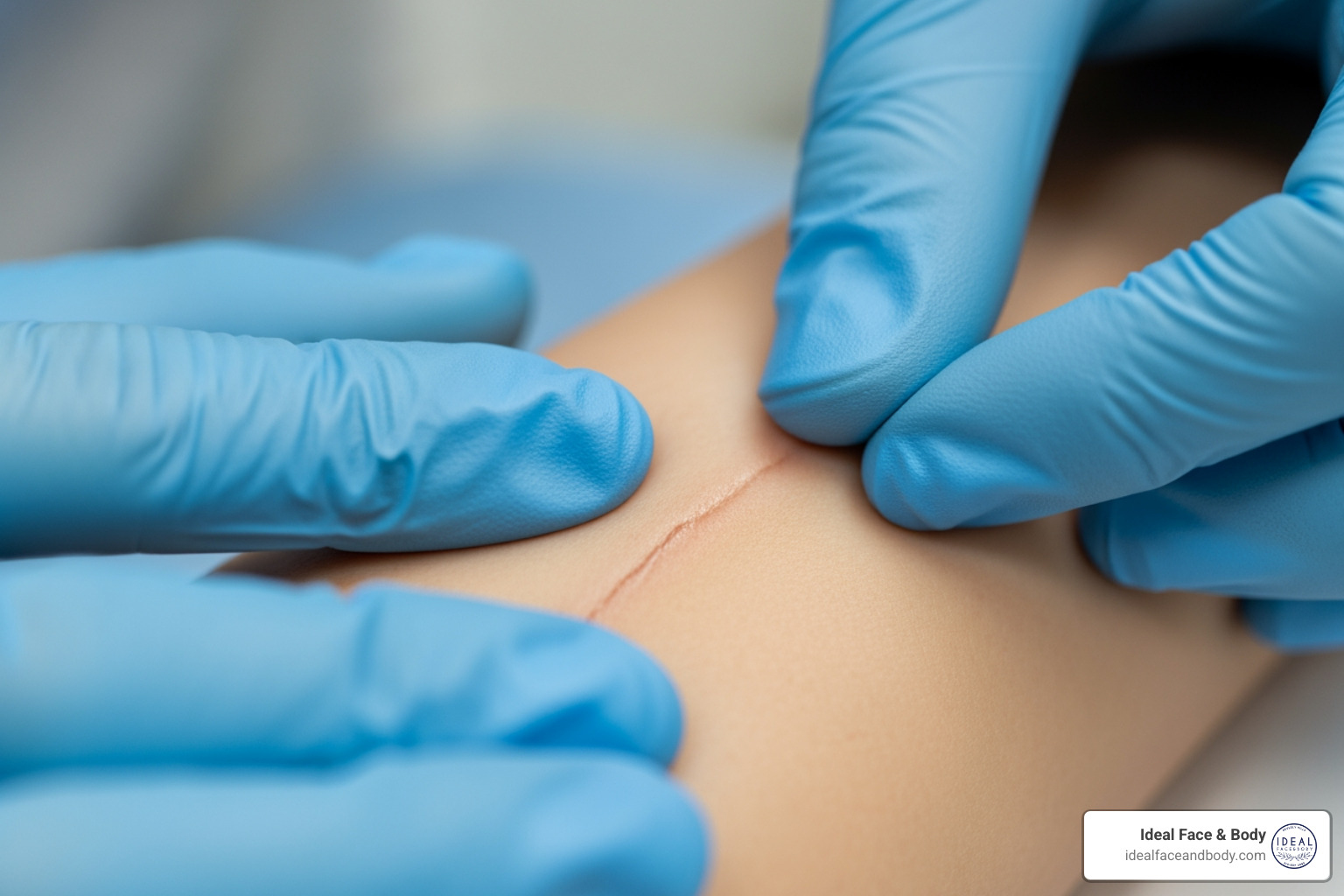
A scar revision procedure is a treatment designed to minimize the appearance of scars, restore function, and improve skin texture. While scars cannot be completely erased, these procedures aim to make them less noticeable by blending them with surrounding skin, repositioning them, or reducing their size.
What Scar Revision Can Do:
- Improve the appearance of scars from surgery, injury, or burns
- Reduce discomfort or itching associated with scars
- Restore movement restricted by contracture scars
- Blend scars with surrounding skin for a more natural look
- Address various scar types including keloids, hypertrophic, and atrophic scars
Scars from acne, surgery, or an accident can affect how you see yourself. The emotional weight of a visible scar often extends far beyond its physical presence.
The reality is this: no procedure can make a scar vanish completely. Scar tissue is fundamentally different from normal skin, made of fibrous collagen from your body’s healing response. However, modern scar revision can dramatically improve a scar’s appearance, often changing a prominent, thick, or discolored scar into a thin, flat line that blends naturally with your skin.
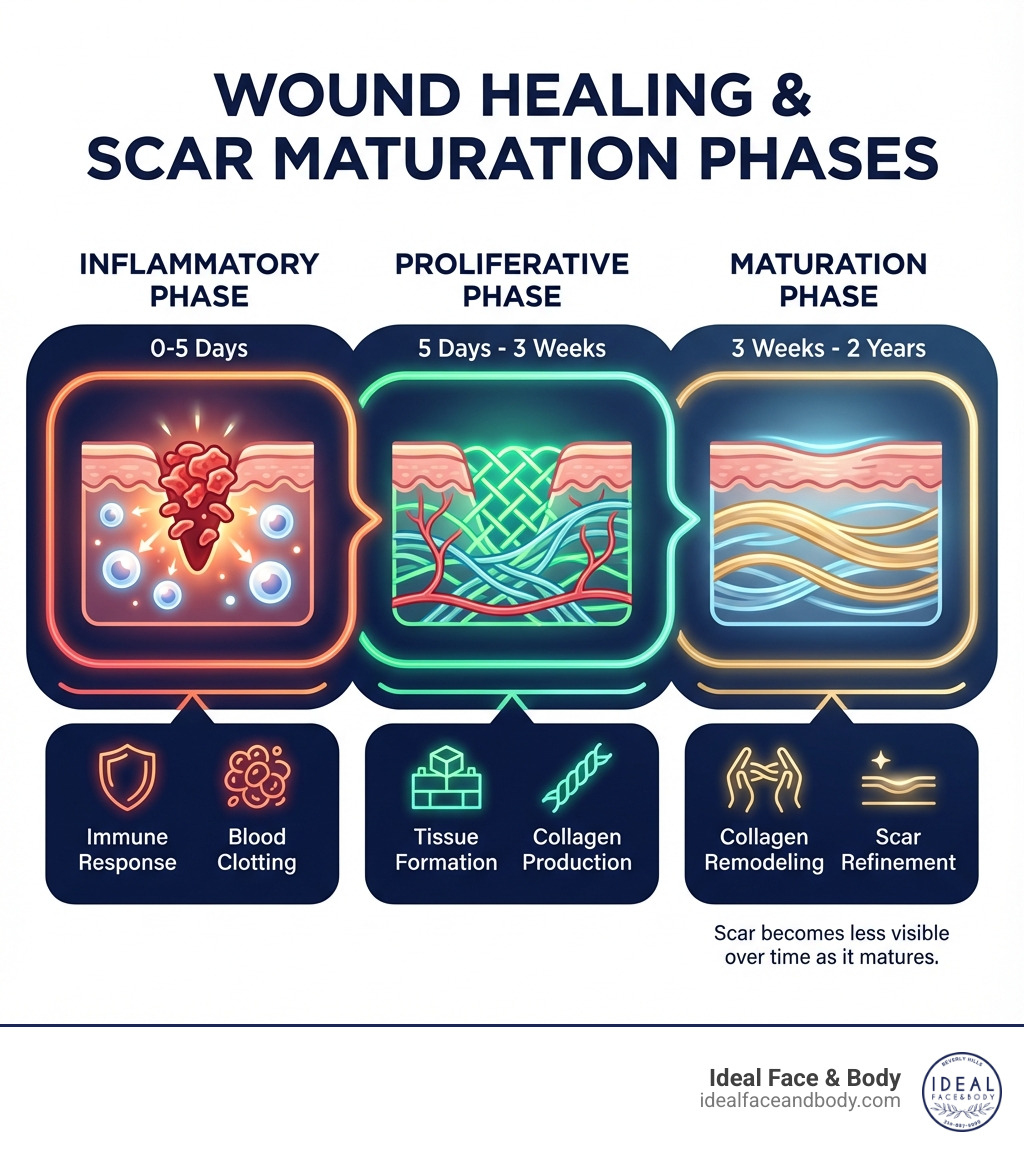
The journey to scar improvement requires patience. Most scars need 12 to 18 months to fully mature before revision is most effective. During this time, your body is still remodeling the scar tissue. Rushing treatment can lead to disappointing results.
Treatment options range from simple topical applications to advanced surgical techniques, and the best approach depends on your specific scar and goals. Many patients achieve optimal results through a combination of techniques.
Dr. Sarah Yovino, MD, a double board-certified specialist at Ideal Face & Body, helps patients understand their options for scar revision. She uses advanced laser technologies, injectables, and customized treatment plans to achieve natural-looking improvements, ensuring realistic expectations and optimal outcomes.
Scar revision procedure terms to remember:
Understanding Scars and Candidacy for Revision
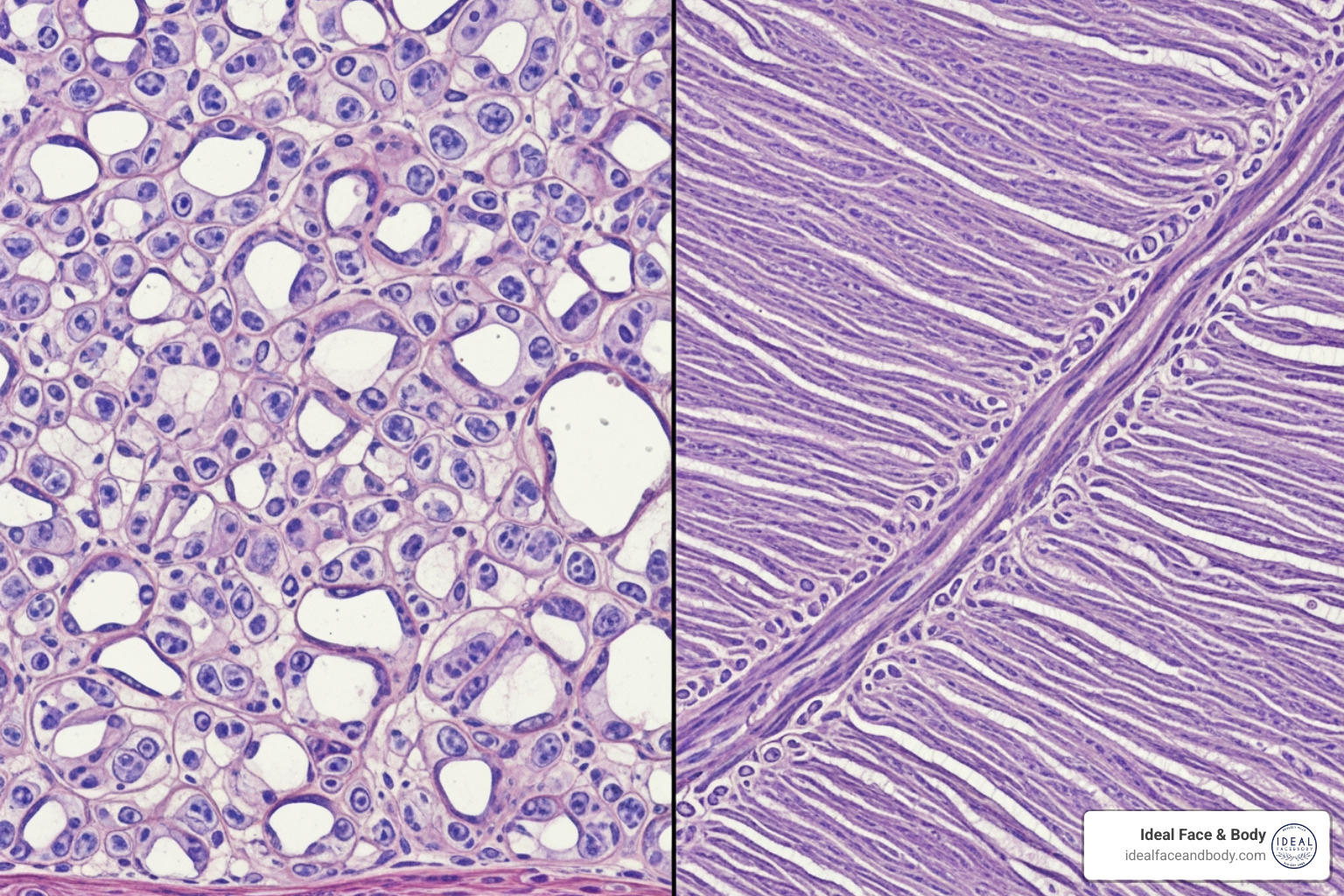
Before exploring scar revision procedures, it’s helpful to understand what a scar is. A scar is the body’s natural way of healing and replacing damaged skin with fibrous tissue, mostly collagen. Unlike the organized collagen in normal skin, scar tissue collagen is often thicker and less elastic, which is why scars look and feel different.
Several factors influence a scar’s final appearance:
- Skin Type: Darker skin tones are more prone to keloids and hyperpigmentation, while lighter skin may experience hypopigmentation.
- Age: Younger skin’s robust healing can produce more pronounced scars, while older skin’s reduced elasticity affects healing differently.
- Location of Injury: Scars on high-tension areas like joints or the chest are more likely to widen. Facial scars may heal better due to good blood supply.
- Depth and Type of Injury: Deeper wounds, like burns, result in more noticeable scars.
- Individual Healing Response: Genetics, nutrition, and overall health influence how your body heals.
Our goal with scar revision procedures is not to erase scars, but to improve their appearance and restore function, making them less conspicuous.
Types of Scars That Can Be Improved
We treat a wide variety of scars, and understanding the type helps tailor the treatment:
- Atrophic Scars: These are depressions or indentations caused by a lack of collagen during healing.
- Acne Scars: Common atrophic scars, including “ice pick,” “boxcar,” and “rolling” types. We offer acne scar treatment options like microneedling for scar tissue and laser skin resurfacing.
- Chickenpox Scars: Often small, round depressions. Our microneedling chicken pox scars treatments can be very effective.
- Hypertrophic Scars: Raised, red scars that stay within the original wound’s boundaries, resulting from collagen overproduction.
- Keloid Scars: Similar to hypertrophic scars, but they grow aggressively beyond the original wound edges. They are more common in darker skin tones and have a high recurrence rate. We understand the complexities of Surgical Scar Revision: An Overview for these scars.
- Contracture Scars: Often from burns, these scars tighten the skin, which can restrict movement of muscles and joints.
Are You a Good Candidate?
Determining if a scar revision procedure is right for you involves a thorough evaluation:
- Good Physical Health: Being in good general health is essential for proper healing.
- Non-Smoker: Smoking impairs blood flow and healing, increasing complication risks. We advise quitting smoking at least 4 weeks before and after revision.
- Realistic Goals: Revision aims for improvement, not perfection. Understanding this leads to higher satisfaction.
- Bothered by a Scar’s Appearance: If a scar causes you distress or impacts your self-confidence, revision is a valid option.
- Scar is Fully Mature: Most scars need 12 to 18 months to mature. Revising an immature scar can lead to suboptimal results.
The Comprehensive Scar Revision Procedure
Our primary goals with any scar revision procedure are to improve the scar’s aesthetic appearance and restore function. Whether your scar is wide, discolored, or restricting movement, our approach is to make it blend more seamlessly with your skin. The skill of a board-certified plastic surgeon like Dr. Justin Yovino is crucial for achieving delicate, natural-looking results.
The Initial Consultation and Preparation
Your journey begins with a comprehensive consultation at our Beverly Hills office.
- Scar Analysis: We’ll examine your scar’s type, size, location, and texture.
- Discussing Goals: We’ll have an open conversation about what you hope to achieve, ensuring your expectations are realistic.
- Choosing a Technique: We’ll recommend the surgical or non-surgical techniques best suited for your scar.
- Pre-Operative Instructions: We’ll provide detailed instructions, which may include dietary changes, medication adjustments, and quitting smoking. As noted in research, there’s a strong scientific rationale for tobacco abstention with plastic surgery due to its negative effects on healing.
Steps of a Surgical Scar Revision Procedure
For scars requiring surgical intervention, the procedure is performed with precision.
- Anesthesia Options: Your comfort is our priority. We use local anesthesia, intravenous (IV) sedation, or general anesthesia, depending on the extent of the revision.
- The Treatment – Excision of Old Scar Tissue: Dr. Yovino will carefully cut out the existing fibrous scar tissue.
- Meticulous Layered Closure: This critical step helps create a finer new scar. Deep, dissolvable sutures are placed beneath the skin to relieve tension, and the outer skin is carefully closed with fine sutures or surgical tape.
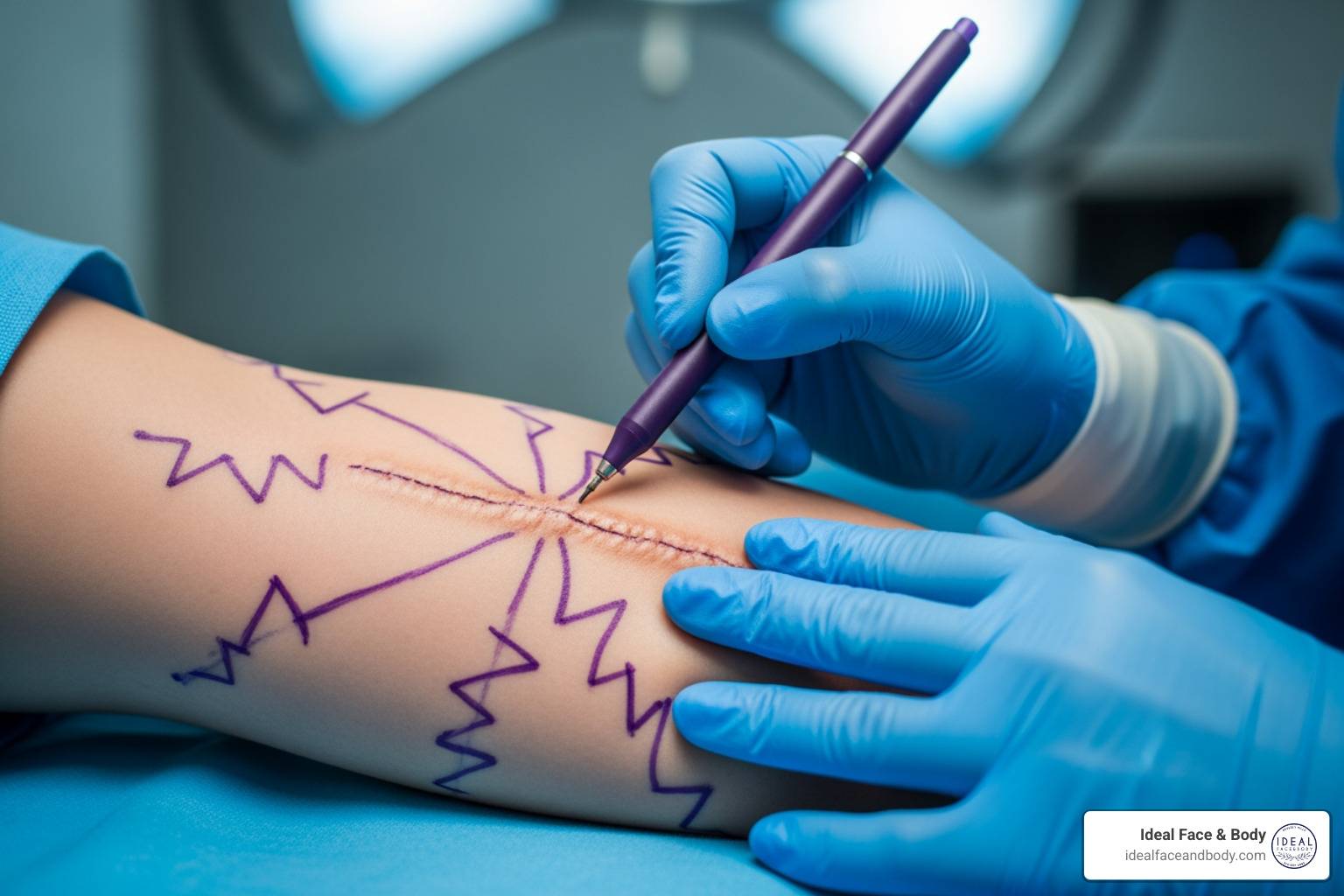
- Aligning with Natural Skin Creases: Whenever possible, the new incision is oriented along natural skin tension lines to help camouflage it. Advanced techniques like Z-plasty or W-plasty are designed to achieve this. You can learn more about the steps in Scar Revision Procedure Steps.
A Spectrum of Treatment Options: From Topicals to Surgery
The beauty of modern scar revision procedures lies in the wide array of options available. We often employ a combination therapy approach, recognizing that no single treatment is a magic bullet for all scars. Our goal is always to customize the treatment to your specific scar type, ensuring the most effective and personalized plan for you.
Non-Surgical and Minimally Invasive Treatments
For many scars, especially those that are new, mild, or do not cause functional issues, non-surgical and minimally invasive options can offer significant improvement.
- Topical Treatments: Applied to the skin’s surface, these include silicone gels and sheets to hydrate scar tissue and regulate collagen, and pressure therapy to flatten raised scars.
- Injectable Treatments: These are administered directly into the scar tissue.
- Corticosteroid Injections: Often used for raised scars like hypertrophic and keloid scars, corticosteroids help reduce inflammation and inhibit collagen synthesis, leading to a flatter, softer scar.
- Dermal Fillers: For depressed or pitted scars, such as many atrophic acne scars, dermal fillers (like Juvéderm®, Radiesse®, or Restylane®) can be injected to raise the skin level, making the scar less noticeable. Results are temporary.
- Other Injections: For resistant scars, other agents like 5-Fluorouracil (5-FU) or Botulinum toxin type A may be used to inhibit fibroblast proliferation or decrease tension on wound edges.
- Surface Treatments: These treatments work by removing or remodeling the top layers of skin.
- Dermabrasion: This technique uses a rapidly rotating device to “sand” away the top layers of skin, smoothing out irregularities.
- Chemical Peels: Various chemical solutions are applied to the skin, causing controlled exfoliation. This can improve scar texture and reduce discoloration. We offer options like The PerfectDerma Peel.
- Laser Therapy: A cornerstone of modern scar revision. Pulsed Dye Lasers (PDL) reduce redness, while ablative lasers (like our CO2 laser resurfacing) and fractional lasers remove skin layers to stimulate new collagen and smooth texture.
- Microneedling: This technique uses tiny needles to create controlled micro-injuries, prompting collagen and elastin production. It’s excellent for improving skin texture and reducing the appearance of various scars. We specialize in microneedling for scar treatment and for specific issues like microneedling chicken pox scars.
- Skin Bleaching Agents: Topical medications containing ingredients like hydroquinone can help lighten hyperpigmented scars.
Advanced Surgical Techniques
When scars are severe or cause functional impairment, surgical scar revision procedures may be the most appropriate solution. Dr. Justin Yovino employs meticulous techniques to achieve the best possible outcomes.
- Simple Excision: The scar is surgically removed, and the wound is closed with a very fine suture line, replacing a wider scar with a thinner one.
- Z-Plasty: This versatile technique uses Z-shaped incisions to create small triangular flaps of skin that are rotated to change the scar’s direction, lengthen it, and make it less obvious.
- W-Plasty: This uses a series of small, interlocking triangular flaps to create a jagged, irregular scar line that is less conspicuous than a straight line.
- Geometric Broken-Line Closure (GBLC): An advancement of W-plasty, GBLC uses a random, irregular pattern of geometric shapes to create an even more camouflaged scar line.
- Skin Grafts & Flaps: For very large scars or severe tissue loss, healthy skin is taken from another area of your body (graft) or transferred with its underlying blood supply (flap) to cover the defect.
- Tissue Expansion: A silicone balloon is placed under healthy skin near the scar and gradually inflated, stretching the skin. Once enough excess skin is created, the scar is removed, and the expanded skin is used to cover the area.
Recovery, Risks, and Long-Term Results
Starting on a scar revision procedure is a significant step, and understanding the journey that follows is just as important as the procedure itself. Post-procedure care is critical for success, and patience is key during the healing process.
The Recovery Journey After a Scar Revision Procedure
What you do after your scar revision procedure heavily influences the final outcome. Our team will provide detailed post-operative instructions custom to your specific procedure.
- Immediate Aftercare: A light dressing will be applied to protect the incision site. We’ll advise you on how to keep the area clean.
- Managing Swelling and Bruising: Some swelling and bruising are normal. Keeping the treated area liftd and using cold compresses can help minimize these effects.
- Suture Removal Timeline: Sutures are typically removed within 3-7 days, depending on the location of the scar.
- Activity Restrictions: It’s crucial to avoid activities that put stress or tension on the new scar for a period specified by Dr. Yovino.
- Sun Protection Importance: This cannot be stressed enough! Exposing a healing scar to direct sunlight can lead to permanent hyperpigmentation (darkening). We recommend strict sun avoidance and diligent use of broad-spectrum sunscreen (SPF 30 or higher) for at least a year.
- Scar Maturation Phase: Scars continue to mature and remodel for 12 to 18 months. The final appearance of your revised scar won’t be apparent for some time, so patience and adherence to aftercare are paramount.
Potential Complications and Prevention
While scar revision procedures are generally safe, they carry potential risks. We take every precaution to minimize these, but it’s important for you to be aware:
- Infection: Though rare, infection is a possibility. Follow our wound care instructions diligently.
- Bleeding/Hematoma Formation: Excessive bleeding or the collection of blood under the skin can occur.
- Keloid or Hypertrophic Recurrence: For individuals prone to these raised scars, there’s a risk of recurrence. We might use adjunctive treatments to mitigate this risk.
- Pigment Changes: Both hyperpigmentation (darkening) and hypopigmentation (lightening) can occur. Sun protection is key to preventing hyperpigmentation.
- Wound Dehiscence (Separation): The wound edges might separate, often linked to excessive tension. Our layered closure technique helps prevent this.
- Choosing a Board-Certified Surgeon: The best way to minimize risks is to choose a board-certified plastic surgeon like Dr. Justin Yovino.
Emerging Trends in Scar Treatment
The field of scar revision is constantly evolving with exciting new advancements.
- Fat Grafting: Injecting your own fat can improve scar quality, texture, and color due to the regenerative properties of stem cells in the fat, as supported by research like Fat injection for scar remodelling.
- Stem Cell & Gene Therapy: While still largely in the research phase, these therapies hold immense potential to modulate the healing response and reduce scar formation.
- Advanced Laser Technologies: New generations of lasers offer more precise skin remodeling with reduced downtime. Our laser skin resurfacing options are continually updated to reflect these advances.
- Novel Topical and Oral Agents: Research is ongoing into new creams and medications that could influence the scarring process.
Frequently Asked Questions about Scar Revision
We understand you likely have many questions about scar revision procedures. Here are some of the most common inquiries we receive at Ideal Face & Body:
Is scar revision painful?
During your scar revision procedure, you typically won’t feel pain. We use anesthesia—local, IV sedation, or general—to ensure your comfort. After the procedure, it’s normal to experience some discomfort, which is usually manageable with over-the-counter or prescribed pain relievers. Most patients describe it as soreness rather than severe pain.
How much does scar revision cost?
The cost of a scar revision procedure varies widely. It depends on the technique used, the scar’s size and complexity, and the type of anesthesia. During your personalized consultation at our Beverly Hills office, we will assess your scar, recommend a treatment plan, and provide you with a detailed cost estimate. Procedures performed for purely cosmetic reasons are typically not covered by insurance, but if the revision is medically necessary to restore function, some coverage may be available.
Will my scar be completely gone after revision?
No, your scar will not be completely gone. A scar revision procedure aims for significant improvement, not complete erasure. Scar tissue is fundamentally different from normal skin. The goal is to replace a prominent, undesirable scar with a new, finer, flatter, and better-blended scar that is far less noticeable. Realistic expectations are crucial for patient satisfaction, and we will discuss the level of improvement you can realistically anticipate during your consultation.
Conclusion: Begin Your Scar Revision Journey in Beverly Hills
We hope this guide has shed light on the intricacies of the scar revision procedure, from understanding scars to exploring the many treatment options available.
Scar revision is a journey focused on improvement, not perfection. The goal is to make your scar less conspicuous and, if necessary, restore function. Choosing the right professional is paramount. A skilled, board-certified plastic surgeon possesses the expertise to tailor a treatment plan that delivers the best possible outcome.
At Ideal Face & Body in Beverly Hills, Dr. Sarah Yovino and Dr. Justin Yovino are dedicated to providing personalized treatment plans using advanced techniques. With our expertise in both surgical and non-surgical aesthetics, we are uniquely positioned to offer a holistic approach to scar improvement.
If you’re ready to explore your options and begin your journey toward a smoother, less noticeable scar, we invite you to schedule a consultation at our Beverly Hills office. Let us help you write a new chapter for your skin.