Getting the Point with Stem Cell Injections
What Is a Stem Cell Injection — And Should You Consider One?
A stem cell injection is a minimally invasive procedure that uses the body’s own regenerative cells to repair damaged tissue, reduce inflammation, and support natural healing. Here’s a quick overview of what you need to know:
- What it is: Stem cells are injected into a targeted area — a joint, spinal disc, or skin — to trigger tissue repair and regeneration
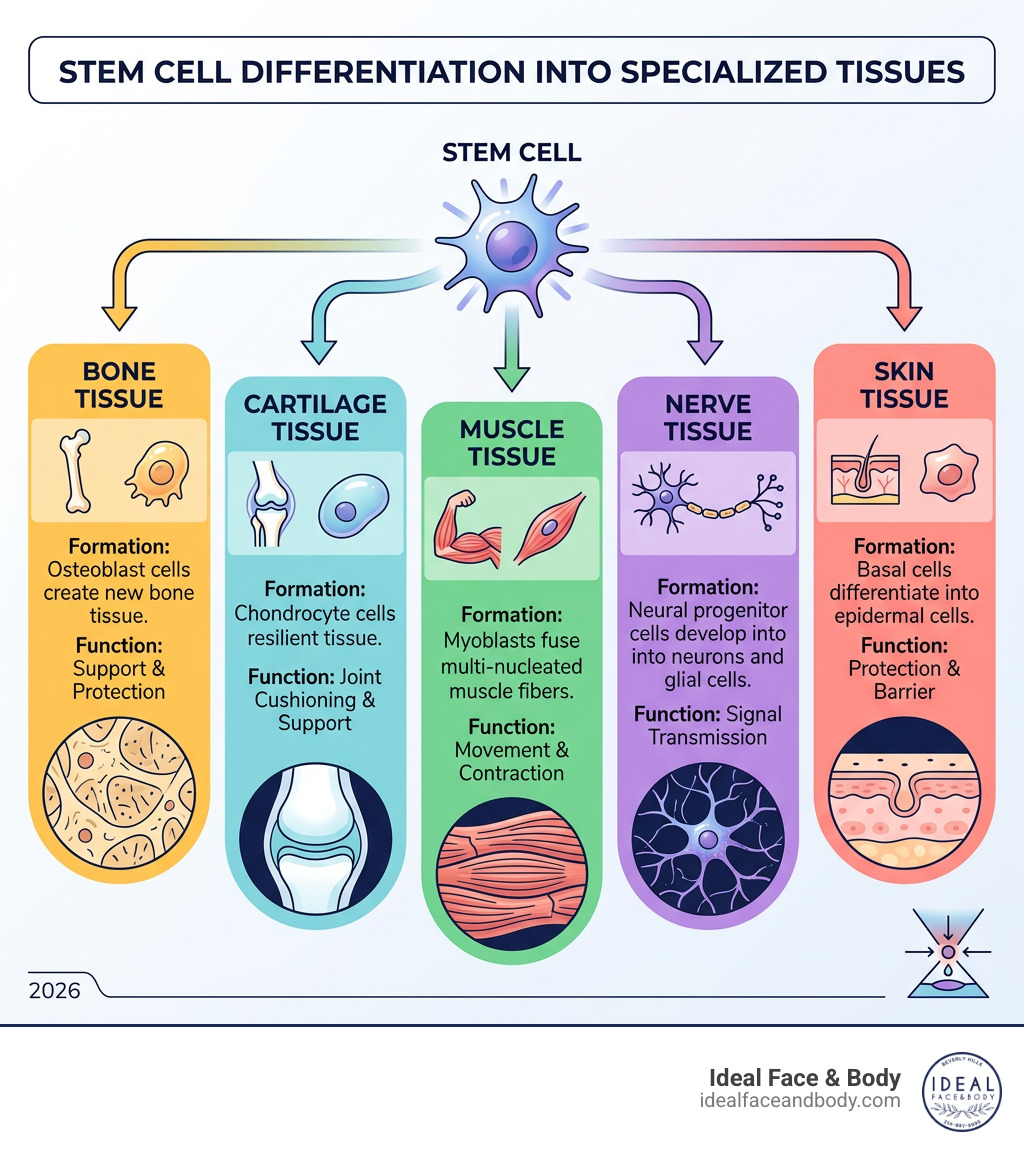
- How it works: The injected cells differentiate into specialized tissue types and release healing signals to surrounding cells
- Common uses: Joint pain, osteoarthritis, degenerative disc disease, facial rejuvenation, and hair restoration
- Who performs it: A trained physician, typically in an outpatient setting using local anesthesia
- What to expect: Results are gradual — most patients notice improvement within 6–12 weeks, with benefits continuing up to a year
- Key consideration: Not all stem cell therapies are FDA-approved — knowing the difference between proven, investigational, and unproven treatments is critical
Stem cells are, quite simply, the body’s master repair cells. They can self-renew and transform into specialized cell types — muscle, cartilage, bone, nerve — making them one of the most exciting tools in regenerative medicine. But with that excitement comes a flood of misinformation. More than 700 clinics across the U.S. are marketing unproven stem cell treatments, making it harder than ever to separate real science from predatory promises.
This guide cuts through the noise. Whether you’re exploring stem cell injections for a chronic joint issue or aesthetic rejuvenation, you’ll find clear, honest answers here.
I’m Dr. Sarah Yovino, MD, a double board-certified physician specializing in non-surgical rejuvenation at Ideal Face & Body in Beverly Hills, CA — and my background in pain management gives me a precise, evidence-informed approach to stem cell injection therapies. I’ll walk you through exactly how these procedures work, what to realistically expect, and how to make a safe, informed decision.
Stem cell injection terms to learn:
Understanding the Science of Stem Cells
To understand how a stem cell injection works, we have to look at what makes these cells so special. Most cells in your body have a specific “day job”—a heart cell beats, a skin cell protects, and a red blood cell carries oxygen. Stem cells, however, are the “undifferentiated” interns of the body. They haven’t picked a career path yet.
There are several levels of stem cell potential:
- Pluripotent cells: These are the overachievers. They can become almost any cell type in the human body. Embryonic stem cells fall into this category, but because they come from 3-to-5-day-old embryos, they are often at the center of ethical debates.
- Multipotent cells: These are more specialized. They can become several different types of cells within a specific family.
- Mesenchymal Stem Cells (MSCs): These are the stars of regenerative medicine. Found in bone marrow and fat, MSCs can transform into bone, cartilage, and fat cells. They are also excellent at “signaling”—releasing cytokines that tell your body to stop inflammation and start repairing.
In recent years, scientists have even learned how to create Induced Pluripotent Stem Cells (iPSCs). These are adult somatic cells (like skin cells) that have been “reprogrammed” in a lab to act like embryonic stem cells. It’s like taking a retired accountant and convincing them to go back to medical school.
While the science is thrilling, it is heavily regulated. The FDA guidelines on regenerative medicine are very specific about what can and cannot be done. For many of us, the goal is simply keeping our natural “repair kit” in top shape. If you’re curious about maintaining your own cellular health, you can learn more info about how to rejuvenate stem cells to support your body’s natural longevity.
Sources of Regenerative Material
Where do the cells for a stem cell injection actually come from? There are two main categories: autologous (from your own body) and allogeneic (from a donor). At Ideal Face & Body in Beverly Hills, we focus on the safest, most effective methods for our patients.
- Bone Marrow: This is often harvested from the iliac crest (the back of your hip bone). It is rich in MSCs and is the “gold standard” for orthopedic issues like joint pain.
- Adipose Tissue: Your body fat is actually a goldmine of stem cells. Using a process similar to our Precision Sculpt liposuction, we can harvest fat and extract the regenerative cells.
- Amniotic Fluid and Umbilical Cord Blood: These are “perinatal” sources. They are donated after healthy births and are rich in growth factors. However, because they are allogeneic (from someone else), they require strict screening to avoid immune rejection.
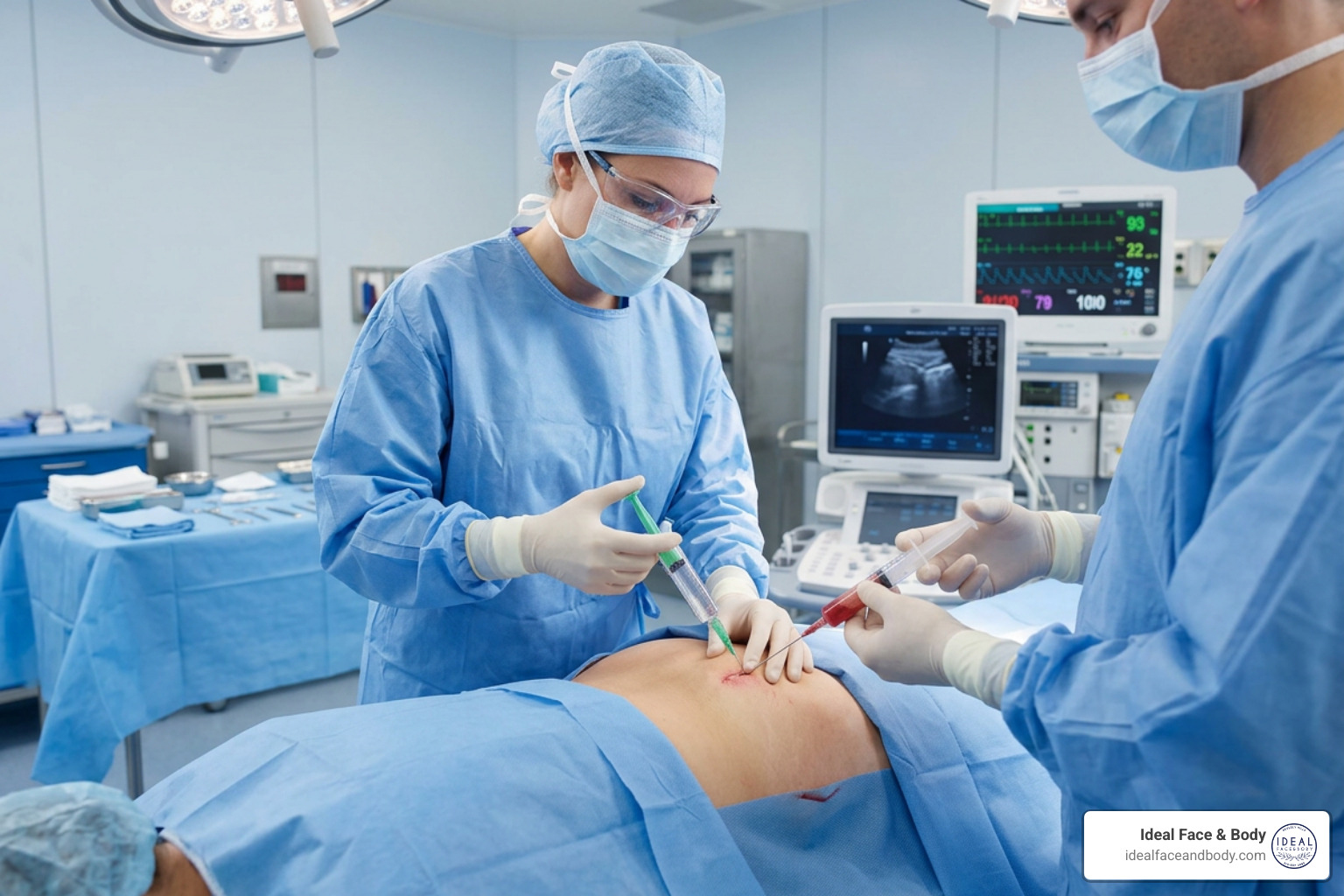
The Step-by-Step Process of a Stem Cell Injection
If you’re imagining a long, scary hospital stay, take a deep breath. A stem cell injection is typically an outpatient procedure. We perform these right here in Beverly Hills, CA, and the goal is to get you back to your life as quickly as possible.
The process generally follows a “harvest, concentrate, inject” workflow:
- Harvesting: We numb the area with local anesthesia. If we are using bone marrow, we use a specialized Jamshidi needle to gently extract the marrow. If we are using fat, we perform a mini-liposuction.
- Centrifugation: This is where the magic happens. We place the harvested material into a centrifuge—a machine that spins at high speeds. This separates the “junk” from the concentrated healing cells. The result is often called Bone Marrow Aspirate Concentrate (BMAC).
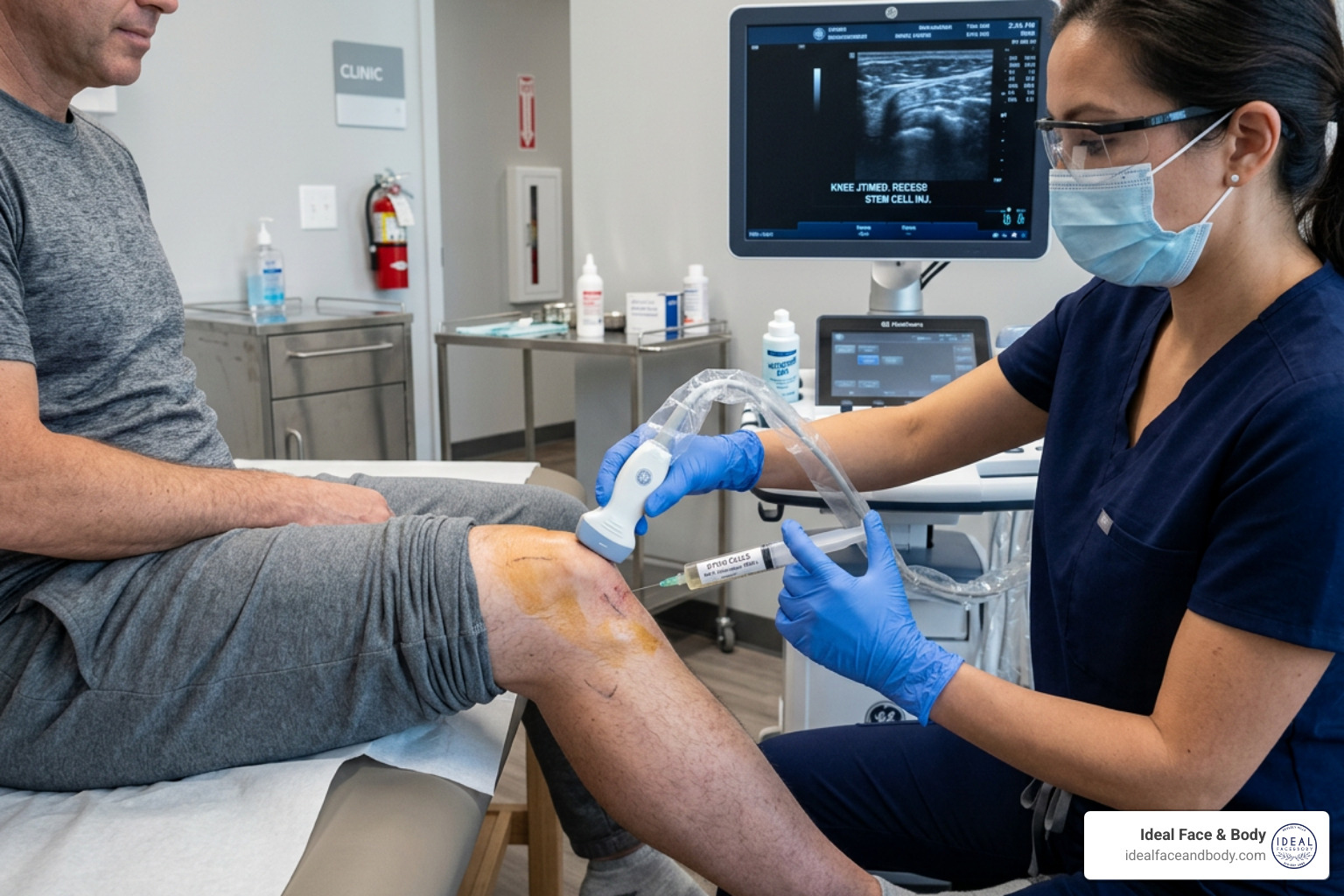
- Injection: Using precision guidance, we inject the concentrated cells directly into the area that needs help—whether that’s a knee joint, a spinal disc, or the skin of the face.
For those looking for aesthetic improvements, our stem cell rejuvenation services utilize these advanced techniques to help you look as young as you feel.
Preparing for Your Stem Cell Injection
Preparation is key to a successful outcome. We start with a thorough check of your medical history to ensure patient eligibility.
The most important rule? Avoid NSAIDs. Medications like ibuprofen (Advil, Motrin) and naproxen (Aleve) work by suppressing inflammation. But for a stem cell injection to work, we actually need a little bit of initial inflammation to “call” the stem cells to action. We usually ask patients to stop these at least two weeks before the procedure. We also recommend staying well-hydrated and following our specific numbing protocols to ensure the harvest is as comfortable as possible.
Precision Delivery and Image Guidance
We don’t just “guess” where the cells should go. To ensure the stem cell injection reaches the exact pocket of damage, we use advanced imaging.
- Fluoroscopy: This is a type of real-time X-ray often used for intradiscal injections (into the spinal discs).
- Ultrasound Guidance: This allows us to see the soft tissues, tendons, and ligaments in real-time to guide the needle with sub-millimeter accuracy.
What to Expect After a Stem Cell Injection
Don’t expect to run a marathon the next day. While the procedure is quick, the biological work is just beginning.
- Days 1–7: You might feel some post-procedure soreness or stiffness. This is normal! It’s your body’s inflammatory response kicking into gear.
- Weeks 2–6: The cells are busy “signaling.” They are releasing growth factors and cytokines that start the repair process.
- Months 3–12: This is the “healing window.” Most patients see significant improvement in pain and function around the 3-month mark, with results continuing to improve for up to a year.
During this time, we may suggest activity restrictions to let the tissue knit back together. For patients focusing on the upper body, we offer specialized protocols like stem cell for neck rejuvenation to address aging skin and tissue laxity.
Therapeutic and Aesthetic Applications
The versatility of stem cells is staggering. Because they can adapt to their environment, they are used across multiple medical disciplines.
| Application Type | Common Conditions Treated |
|---|---|
| Orthopedic | Osteoarthritis, Meniscus Tears, Rotator Cuff Injuries, Tendonitis |
| Spinal | Degenerative Disc Disease, Herniated Discs, Chronic Back Pain |
| Aesthetic | Facial Aging, Hair Thinning, Skin Laxity, Scar Revision |
| Medical (Approved) | Leukemia, Lymphoma, Blood Production Disorders |
It’s important to note that the FDA has a very short list of approved cellular and gene therapy products. Most orthopedic and aesthetic uses are considered “investigational” or are performed under specific regulatory exemptions for autologous tissue.
Orthopedic and Spinal Healing
For those suffering from chronic pain, a stem cell injection can be life-changing. In the joints, these cells work to support cartilage regeneration and reduce the “wear and tear” environment by releasing anti-inflammatory cytokines.
In the spine, researchers are looking at how stem cells can restore “cellularity” to dried-out discs. Chronic back pain affects millions and costs the U.S. economy billions annually. Traditional surgeries often have long recovery times, leading many to seek research on back pain treatments that are less invasive. Stem cells offer a way to treat the root cause—tissue degeneration—rather than just masking the pain.
Aesthetic and Anti-Aging Benefits
In Beverly Hills, we are famous for staying ahead of the curve in beauty. Stem cells are the new frontier of anti-aging. Instead of just “filling” a wrinkle, a stem cell injection helps the skin rebuild its own tissue scaffolding.
- Facial Rejuvenation: By injecting MSCs into the face, we can stimulate collagen production and improve skin texture. For a deep dive, check out our stem cells face rejuvenation guide.
- Hair Restoration: Stem cells can “wake up” dormant hair follicles, leading to thicker, more natural hair growth without the need for a full transplant.
Navigating Safety, Regulations, and Red Flags
This is the most important section of this guide. Because the “boom” of stem cell clinics has been so rapid, the market is unfortunately filled with some bad actors. As a patient, you must be your own advocate.
There is a huge difference between:
- FDA-Approved Therapies: Mostly blood stem cell transplants for cancers like leukemia.
- Investigational Trials: Legitimate scientific studies (often listed on ClinicalTrials.gov) that are testing new uses for stem cells under strict oversight.
- Unproven Procedures: Clinics that make “miracle” claims without scientific data or FDA approval.
Identifying Predatory Clinics
How do you spot a “rogue” clinic? Look for these red flags:
- The “Cure-All” Claim: If a clinic says the same stem cell injection can cure Parkinson’s, autism, AND your bad knee, run. Stem cells are smart, but they aren’t magic.
- High Upfront Fees for “Trials”: Legitimate clinical trials usually do not charge the patient tens of thousands of dollars.
- Testimonials Over Data: If their only “proof” is a video of a happy patient and no peer-reviewed studies, be skeptical.
- One-Size-Fits-All: Using the same type of cell (like fat cells) to treat a completely unrelated organ (like the brain).
When considering the stem cell therapy cost considerations, you are paying for expertise, safety, and precision. If a price seems too good to be true—or outrageously high for an unproven treatment—it probably is.
Potential Risks and Complications
While autologous injections (using your own cells) generally have a low risk of rejection, no procedure is without risk. Possible side effects include infection at the injection site or temporary pain.
However, unproven treatments from unregulated clinics carry much heavier risks. There have been documented cases of tumor formation when cells were not processed correctly. Even more frightening, some patients have suffered permanent blindness after receiving unproven eye injections at “stem cell clinics.” You can read the harrowing case study on unproven eye injections to understand why choosing a board-certified expert like Dr. Sarah Yovino or Dr. Justin Yovino is so vital.
For those undergoing approved transplants for cancer, there are also specific information on stem cell transplant side effects like graft-versus-host disease that require intense medical monitoring.
Frequently Asked Questions about Stem Cell Injections
How long does it take to see results?
We tell our Beverly Hills patients that patience is a virtue. A stem cell injection is not a “numbing” shot; it’s a “growing” shot. You might feel a little worse for a few days due to the injection itself. However, gradual improvement usually begins around the 6-week assessment mark. The real “magic” happens between 3 and 6 months, and your body can continue the healing process for a full 12-month window.
Are stem cell injections covered by insurance?
Currently, most insurance companies view stem cell injection procedures for orthopedic or aesthetic use as “experimental.” This means they are usually out-of-pocket expenses. However, insurance does typically cover FDA-approved stem cell transplants for blood cancers and certain bone marrow disorders. We always recommend checking with your provider for your specific financial planning.
Is the procedure painful?
We do everything in our power to make the experience “painless.” We use local anesthesia to numb the harvest and injection sites. Most patients describe the bone marrow harvest as a “pressure” sensation rather than sharp pain. Afterward, you might feel like you have a “deep bruise” for a few days. We recommend Tylenol management for this; remember, no Advil or Aleve!
Conclusion
At Ideal Face & Body in Beverly Hills, CA, we believe in the power of regenerative medicine, but we also believe in the power of truth. Whether you are coming to see Dr. Sarah Yovino or Dr. Justin Yovino, our goal is to provide “Precision Sculpt” excellence in every procedure we perform.
A stem cell injection represents a bridge between your body’s natural ability to heal and the cutting edge of medical technology. From joint repair to facial rejuvenation, the potential is vast—provided it is done safely, ethically, and with the highest level of surgical skill.
If you’re ready to explore how your own cells can help you live a more vibrant, pain-free life, we invite you to schedule a consultation for stem cell rejuvenation. Let’s get to the point of your health and beauty together.