The Science of Pico Lasers and Why Your Tattoo Should Be Scared
What You Need to Know About Pico Laser for Tattoo Removal
Pico laser for tattoo removal is currently the most advanced method available for breaking down unwanted tattoo ink — and it works significantly faster than older laser technologies.
Here’s a quick comparison to help you decide if it’s right for you:
| Feature | Pico Laser | Traditional Nanosecond Laser |
|---|---|---|
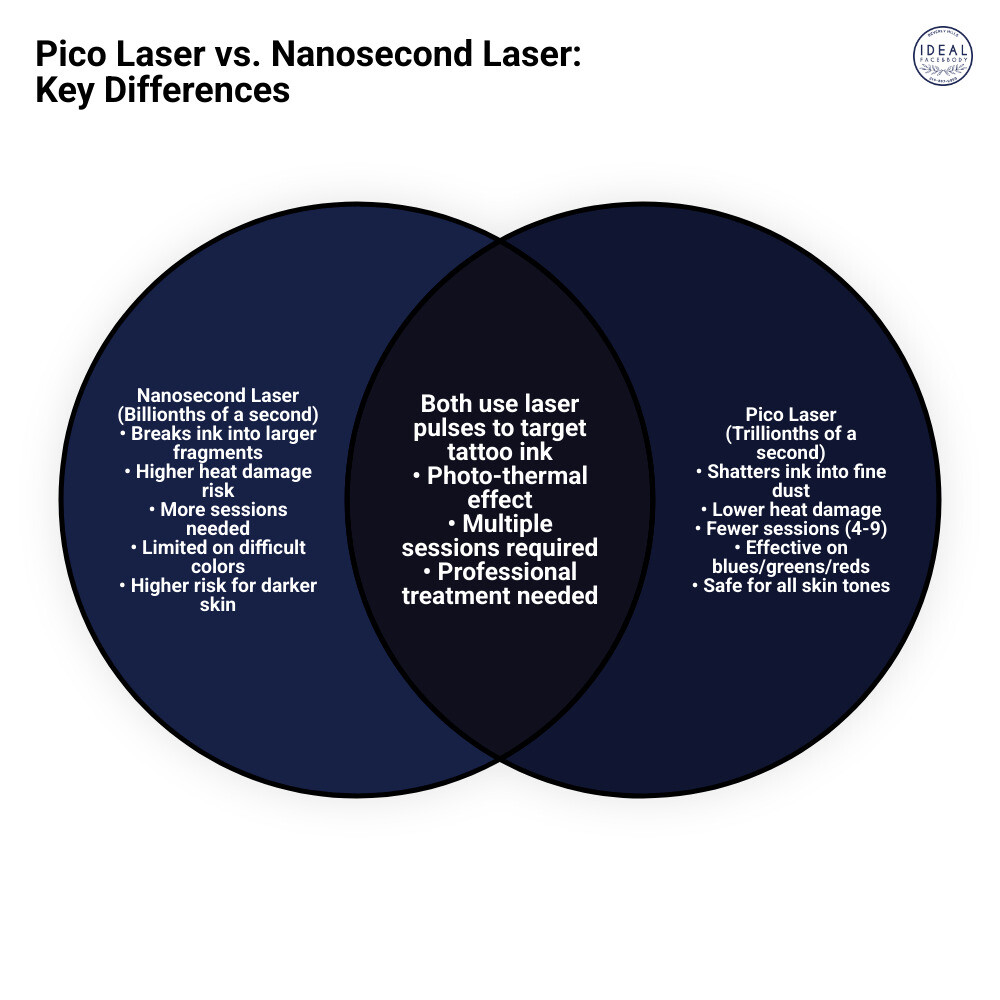
| Pulse speed | Picoseconds (trillionths of a second) | Nanoseconds (billionths of a second) |
| Ink fragmentation | Shatters ink into fine dust | Breaks into larger fragments |
| Sessions needed | Typically 4-9 | Often twice as many |
| Heat damage risk | Lower | Higher |
| Works on difficult colors | Yes (blues, greens, reds) | Limited |
| Safe for darker skin tones | Yes | More risk |
Tattoo regret is more common than most people think. And for years, the options for removing ink were slow, painful, and left too much room for scarring. The evolution of laser technology — especially the jump from nanosecond to picosecond pulses — has changed that equation entirely.
I’m Dr. Sarah Yovino, MD, a double board-certified aesthetic specialist at Ideal Face & Body in Beverly Hills, CA, with extensive training in laser-based skin treatments, including pico laser for tattoo removal. In the sections ahead, I’ll walk you through exactly how this technology works, how the leading systems compare, and what real clinical results look like.
Quick pico laser for tattoo removal definitions:
How Pico Laser for Tattoo Removal Shatters the Status Quo
When you look at a tattoo, you are seeing ink trapped in the second layer of your skin, known as the dermis. Your body’s immune system actually tries to remove this ink from the moment the needle hits your skin, but the ink particles are simply too large for your white blood cells to carry away. Traditional lasers tried to help by “cooking” these particles until they broke apart.
Pico laser for tattoo removal changes the game by moving away from simple heating. Instead of relying on high temperatures that can singe the surrounding skin, it uses speed to create a mechanical impact. This shift from thermal (heat) to acoustic (sound/pressure) energy is why modern lasers are so much more effective.
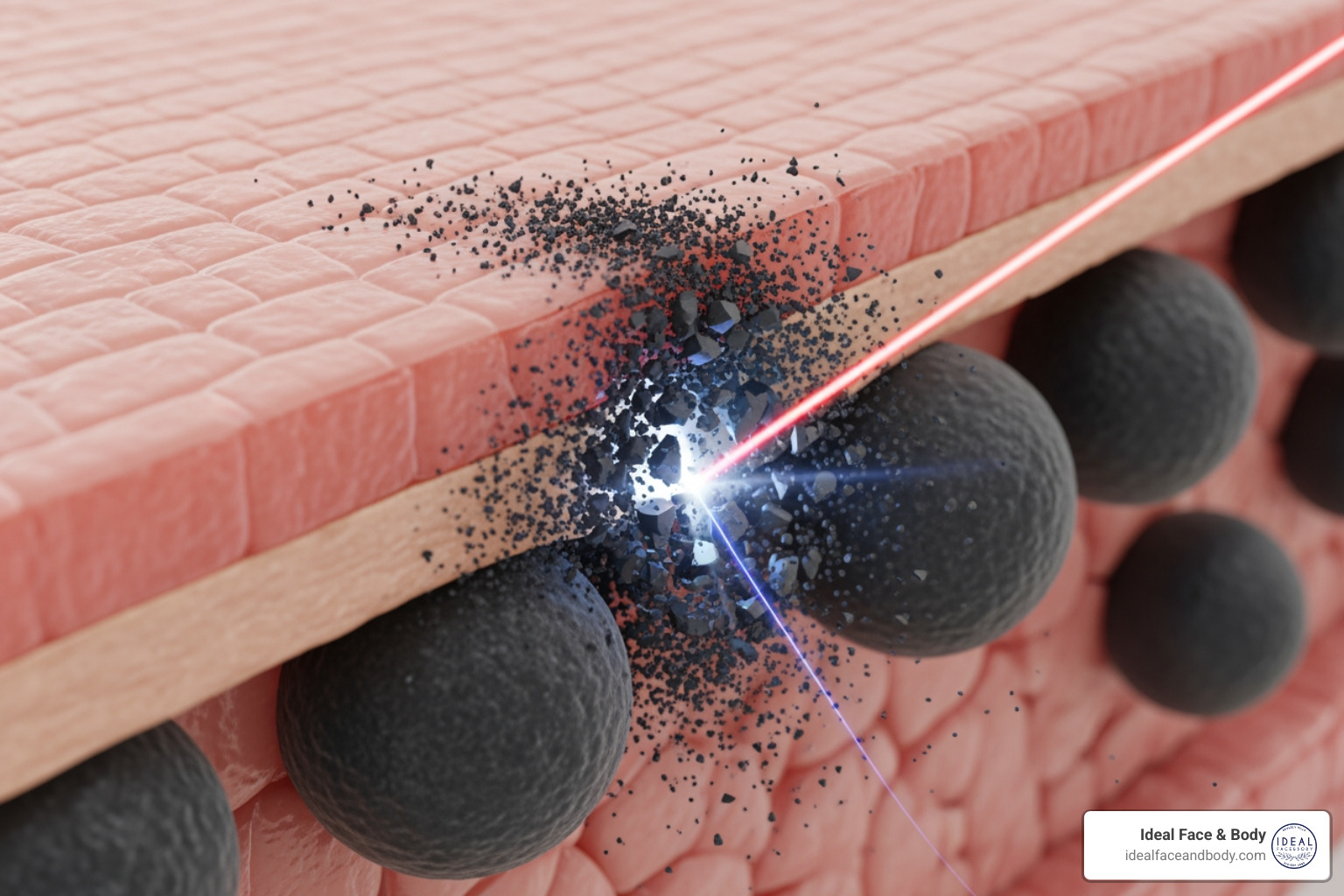
By using ultra-short bursts of energy, we can target the ink without giving the heat enough time to spread to the healthy tissue nearby. This is a cornerstone of the science of erasing ink, ensuring that the “scaring” is done to the tattoo, not your skin.
The Physics of Pico Laser for Tattoo Removal
To understand why your tattoo should be scared, we have to talk about time. A picosecond is one-trillionth of a second. To put that in perspective, a picosecond is to one second what one second is to 31,700 years.
When a laser fires this quickly, it hits the ink particle faster than the particle can transfer heat to the skin. This is known as staying within the “thermal relaxation time.” According to scientific research on picosecond efficacy, this rapid pulse duration is 1,000 times faster than the older nanosecond technology.
Because the pulse is so fast, it creates a “photoacoustic” effect. Imagine a hammer hitting a rock so fast that the rock turns into dust instantly. That is exactly what happens to the ink. This latest tattoo removal technology allows your body’s lymphatic system to flush away that “ink dust” much more easily than the “ink pebbles” left behind by older lasers.
Shattering vs. Heating: The Photoacoustic Advantage
The “Photoacoustic Advantage” is the primary reason we see fewer side effects and faster results at Ideal Face & Body. Traditional Q-switched lasers are “photothermal,” meaning they use heat to break down pigment. While effective for some, excessive heat can lead to blistering, longer recovery times, and even scarring in certain skin types.
The pico laser’s mechanical pressure shatters the ink capsule membrane non-thermally. This means we are using physics, not just fire, to clear the skin. This approach is detailed in our safe laser tattoo removal guide, highlighting how we prioritize the integrity of your skin while aggressively pursuing the ink.
Comparing Top-Tier Pico Laser Technologies
Not all pico lasers are created equal. In aesthetics, different machines offer different wavelengths, and choosing the right one is vital for success. When patients ask what is the best tattoo removal laser, the answer often depends on the colors in their specific tattoo.
| Wavelength | Target Ink Colors | Best For |
|---|---|---|
| 1064nm | Black, Dark Blue, Brown | Darker skin types, deep ink |
| 532nm | Red, Orange, Yellow | Bright “sunset” colors |
| 730nm / 755nm | Green, Light Blue, Teal | Stubborn “cool” tones |
| 785nm | Green, Blue | Recalcitrant pigments |
Multi-Wavelength Pico Laser for Tattoo Removal
Modern systems, such as the PicoWay or PicoUtilize multiple wavelengths to treat the “entire rainbow.” For instance, a 1064nm wavelength is the workhorse for black ink, while 532nm is essential for those vibrant reds and oranges that used to be nearly impossible to remove.
Stubborn greens and blues often require specialized wavelengths like 730nm or 785nm. By having a suite of wavelengths at our disposal, we can tailor each session to the specific fading of your tattoo. You can see the results of this precision in our tattoo removal before and after pictures, where multi-colored professional tattoos are gradually erased.
Safety Across All Fitzpatrick Skin Types
One of the most significant breakthroughs in pico laser for tattoo removal is its safety profile for darker skin tones. In the past, people with Middle Eastern, Mediterranean, or African American skin (Fitzpatrick types IV-VI) faced a high risk of hyperpigmentation or “ghosting” (loss of skin pigment).
Because pico lasers rely less on heat, there is a much lower risk of stimulating unwanted melanin responses. A prospective study on skin type IV efficacy showed that patients with Middle Eastern skin types achieved a mean improvement of 61% after just two sessions with minimal side effects. This makes our Beverly Hills clinic a destination for those seeking the tattoo removal near me ultimate guide for diverse skin types.
What to Expect During and After Your Treatment
We know that the idea of a laser can be intimidating, but the reality is often much faster and simpler than patients expect. Most sessions for small to medium tattoos take less than 10 to 15 minutes.
The process begins with a detailed consultation where we evaluate the age of your ink, the depth, and your skin’s health. We then map out a series of treatments, usually spaced 6 to 8 weeks apart. This gap is crucial because the laser doesn’t actually “remove” the ink; it just breaks it down so your immune system can do the heavy lifting. If you are wondering how to get rid of a tattoo, patience is your best friend.
The Sensation and Pain Management
Is it painful? Most patients describe the sensation as a quick succession of rubber band snaps against the skin. While it isn’t exactly a spa day, it is very manageable.
To ensure comfort, we use several methods of local anesthetic for tattoo removal. This often includes a high-strength topical numbing cream applied before the session. During the treatment, we utilize the Zimmer Cool device, which blows sub-zero air onto the skin. Research suggests this can reduce sensitivity by up to 75%, making the experience much more tolerable than the original tattooing process.
Recovery Timeline and Aftercare Essentials
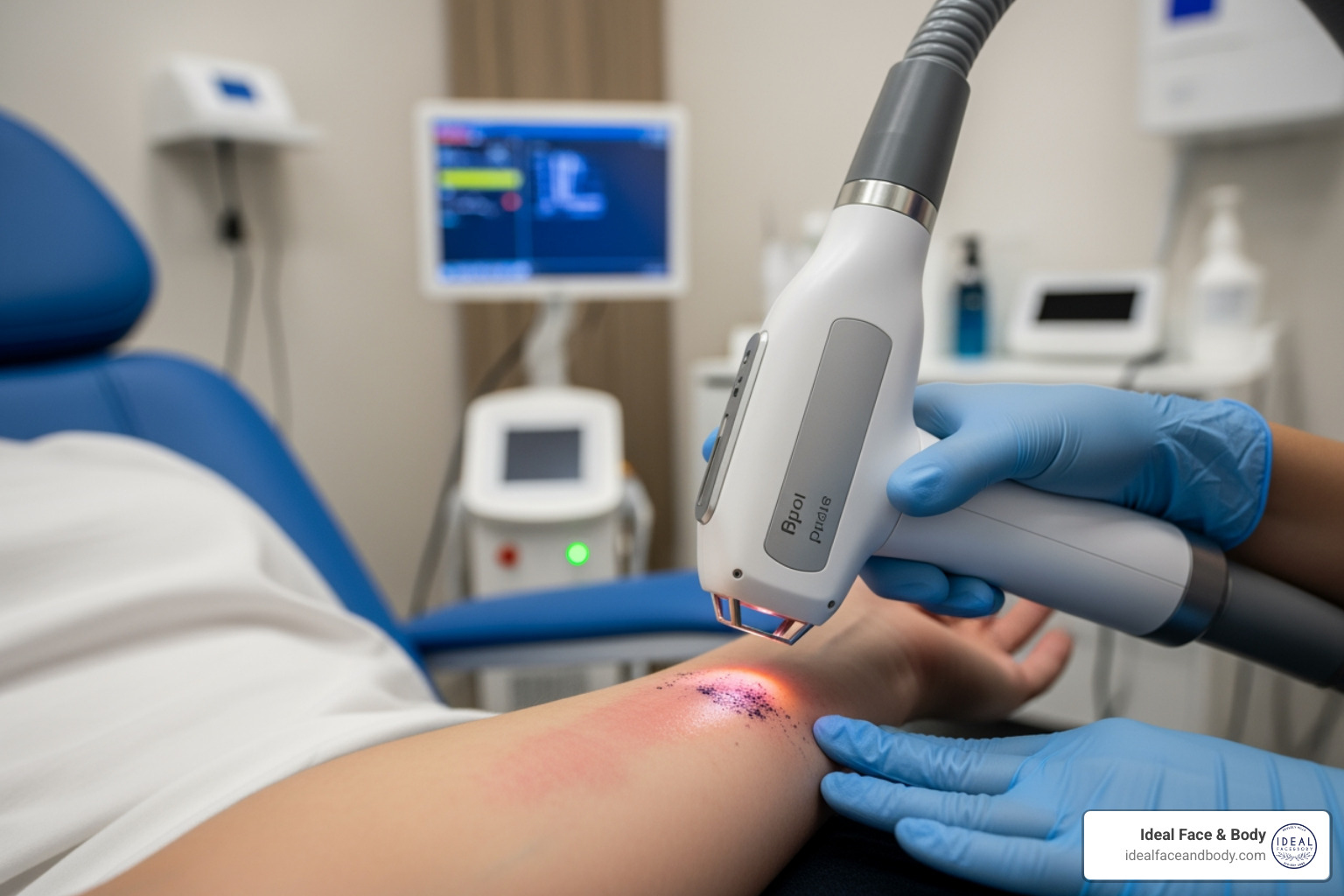
Immediately after your session, you might notice “frosting,” a temporary white appearance caused by tiny gas bubbles rising to the surface of the skin. This is a great sign—it means the laser successfully reacted with the ink.
Common side effects include:
- Erythema: Redness similar to a mild sunburn.
- Edema: Slight swelling around the treated area.
- Petechiae: Tiny red or purple spots that resolve quickly.
Recovery is generally fast. Most redness and swelling subside within 24 to 72 hours. We provide a strict aftercare regimen that includes keeping the area clean, applying a soothing ointment, and—most importantly—staying out of the sun. Sun protection is non-negotiable for achieving painless tattoo removal options with the best aesthetic outcome.
Clinical Efficacy and Real-World Results
The data behind pico laser for tattoo removal is impressive. Clinical studies show that picosecond technology can achieve up to a 75% reduction in ink after the very first session for some patients. On average, PicoWay systems are up to 4x faster than traditional nanosecond lasers.
In a study of 20 patients, 40% showed “excellent” improvement (over 75% clearance) after only two sessions. Patient satisfaction remains high, with 75% of participants reporting they were satisfied or very satisfied with the speed of their results. You can read more about these journeys in our tattoo removal success stories.
Factors Influencing the Number of Sessions
While pico lasers are fast, the exact number of sessions you’ll need depends on several “ink-stinctive” factors. We use these variables to create your personalized plan, which also influences laser tattoo removal pricing factors.
- Tattoo Age: Older tattoos are often easier to remove because the body has already begun breaking them down.
- Ink Depth and Density: Professional tattoos are usually deeper and more saturated than amateur ones.
- Location: Tattoos closer to the heart (where blood flow is strongest) tend to fade faster than those on the hands or ankles.
- Your Lymphatic System: Since your body flushes the ink, staying hydrated and healthy can actually speed up your results!
Frequently Asked Questions about Pico Laser for Tattoo Removal
How many sessions are typically needed for complete removal?
Most patients require between 4 and 9 sessions for complete clearance. However, this varies wildly based on the size and color of the piece. If you are just looking to lighten a tattoo for a “cover-up,” you might only need 2 or 3 sessions. Check out our complete guide to tattoo removal prices for more on how we structure these treatment plans.
Is the pico laser safe for older or professional tattoos?
Absolutely. In fact, pico lasers are often the only effective way to treat “recalcitrant” tattoos—those that have stopped responding to older laser technologies. Whether your tattoo is a 20-year-old amateur piece or a brand-new professional sleeve, the picosecond pulse is powerful enough to handle the ink quality.
What are the most common side effects?
The most common effects are mild swelling, redness, and a sensation similar to a sunburn. Some patients may experience temporary pigment changes (either lightening or darkening of the skin), but these usually resolve as the skin heals. Serious complications like scarring are extremely rare when the treatment is performed by qualified specialists using FDA-approved pico technology.
Conclusion
At Ideal Face & Body in Beverly Hills, we believe that you shouldn’t have to live with a choice you no longer love. Whether it’s an old flame’s name or a piece of art that no longer fits your style, pico laser for tattoo removal offers a clear path forward.
Our clinic, led by Dr. Sarah Yovino and Dr. Justin Yovino, combines the most advanced picosecond technology with a deep understanding of skin anatomy. We don’t just aim to remove ink; we aim to restore your skin to its natural, beautiful state.
If you’re ready to say goodbye to your ink, we invite you to schedule a personalized consultation at our Beverly Hills office. Let us show you why your tattoo should be scared and why you should be excited for the future of your skin.
Ready to start your journey? Learn more about Laser Tattoo Removal Beverly Hills and book your appointment today.