What Is Contouring — and Why It Changes Everything
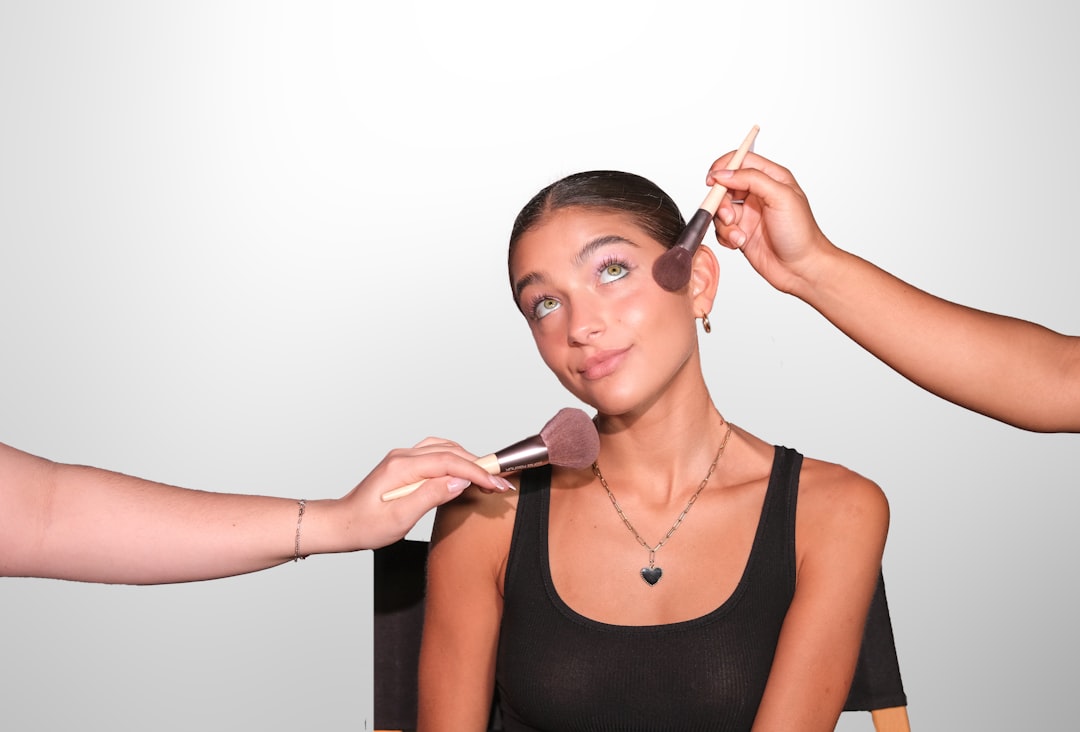
Contouring is a makeup technique that uses darker and lighter shades to create the illusion of shadows and highlights on your face, making features appear more sculpted and defined.
Here’s a quick breakdown of how it works:
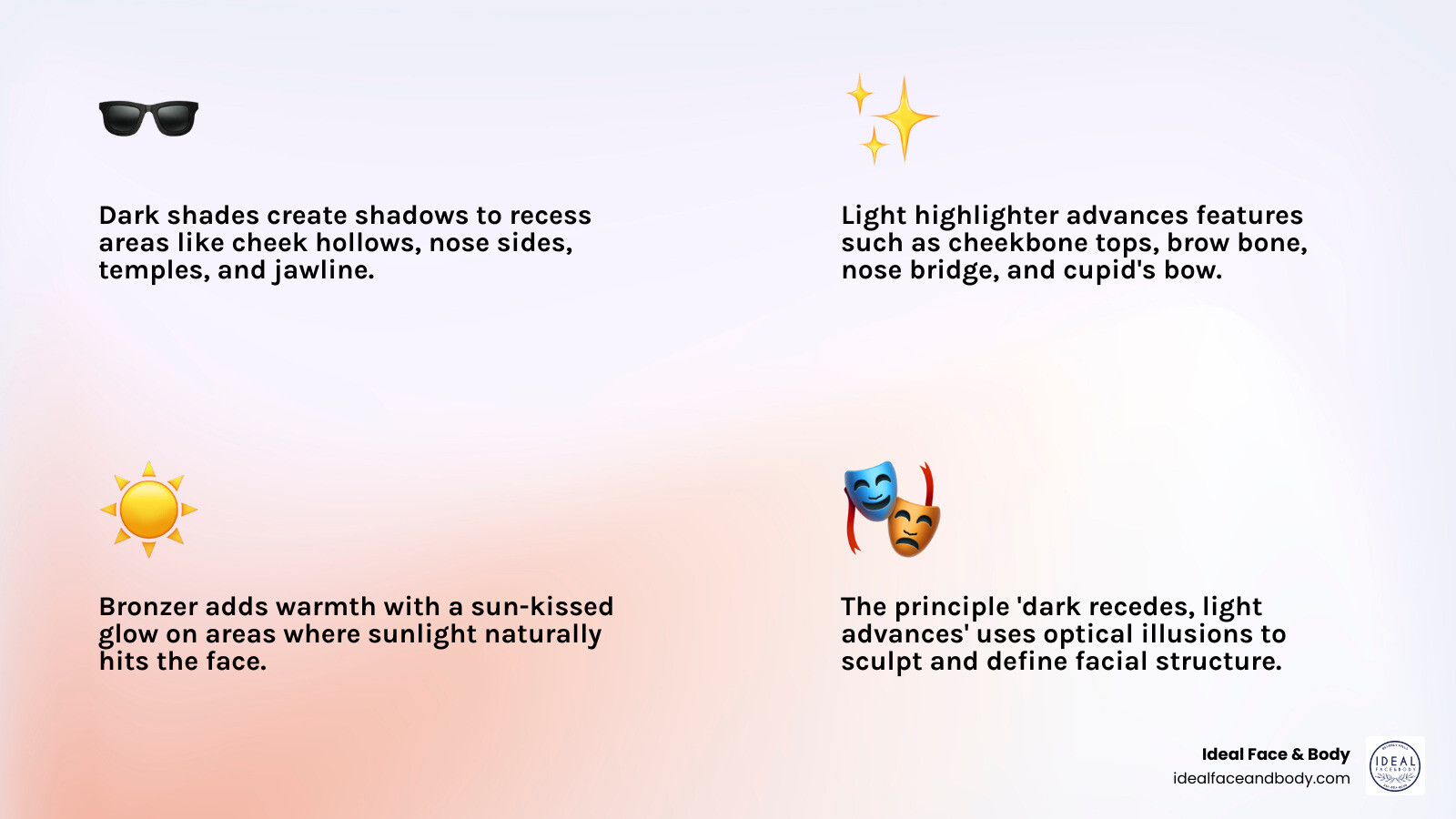
| Element | Purpose | Placement |
|---|---|---|
| Contour | Creates shadows to “recess” areas | Hollows of cheeks, sides of nose, temples, jawline |
| Highlighter | Brings areas forward into light | Cheekbone tops, brow bone, nose bridge, cupid’s bow |
| Bronzer | Adds warmth, mimics a sun-kissed glow | Where the sun naturally hits the face |
The core idea is simple: dark recedes, light advances. By placing the right shades in the right spots, you can reshape how your face looks — no surgery required.
Whether you’re a total beginner or just looking to sharpen your technique, this guide walks you through everything: choosing products, matching your shade, contouring for your face shape, and knowing when makeup alone might not be enough.
I’m Dr. Sarah Yovino, MD, a double board-certified master injector at Ideal Face & Body in Beverly Hills, CA, where I help patients achieve natural-looking facial definition through both non-surgical treatments and expert aesthetic guidance — including understanding how makeup contouring principles translate into real facial structure. My injection techniques are deeply rooted in the same light-and-shadow principles that make contouring so transformative.
Quick contouring definitions:
Understanding the Fundamentals of Contouring
To master contouring in 2026, we first have to look back at where it all began. While many of us associate the “sculpted look” with the social media boom of the 2010s, the history of contouring actually dates back to the 16th-century Elizabethan era. Stage actors would apply chalk and soot to their faces so that audiences could see their expressions under the dim candlelight of the theater.
By the late 1800s, greasepaint became the standard for actors, and as we moved into the golden age of cinema in the 1920s and 30s, stars like Marlene Dietrich began using strategic shading to ensure their faces didn’t look “flat” on the black-and-white screen. In 1945, Max Factor Sr. presented the first official tutorial on how to contour for different face shapes, a framework that we still use in Beverly Hills today.
The transition from stage to street happened largely thanks to legendary makeup artists like Kevyn Aucoin, whose 2000 book Face Forward brought professional sculpting techniques to the masses. Of course, we can’t talk about this trend without mentioning the “Kim Kardashian influence” of the early 2010s, which turned a professional secret into a global beauty standard. Today, in 2026, the trend has shifted toward a more natural, “no-makeup” finish, but the underlying principles of facial structure and optical illusions remain the same.
How to Choose the Right Shade for Contouring
One of the most common mistakes we see is choosing a shade that is too warm. To create a realistic shadow, your contouring product should be cool-toned. Think of the colors taupe, mushroom, or soft gray. Warm tones (like those found in many bronzers) mimic the sun, while cool tones mimic depth.
When swatching products, aim for a shade that is one to two shades darker than your natural skin tone. If you have very fair skin, look for a pale taupe. For deep skin tones, look for rich, cool espresso shades. The goal is to mimic the natural shadows that fall in the hollows of your cheeks or along your jawline.
Differences Between Contour, Bronzer, and Highlighter
It is easy to get these three confused, but they serve very different purposes in your beauty routine.
| Feature | Contour | Bronzer | Highlighter |
|---|---|---|---|
| Tone | Cool/Ashy | Warm/Golden | Shimmery/Luminous |
| Finish | Matte | Matte or Shimmer | Radiant |
| Goal | Recede/Sculpt | Warm/Tan | Advance/Glow |
| Placement | Hollows/Shadows | High points (where sun hits) | Highest points (bone structure) |
While contouring enhances bone structure by creating depth, bronzer provides warmth and a healthy glow. Highlighting brings prominence to the “high points” of the face, such as the tops of the cheekbones and the bridge of the nose.
Selecting the Best Products and Tools
The market is currently flooded with options — as of April 2026, retailers like Ulta Beauty list over 65 different contouring products. Choosing the right one depends entirely on your skin type and the finish you desire.
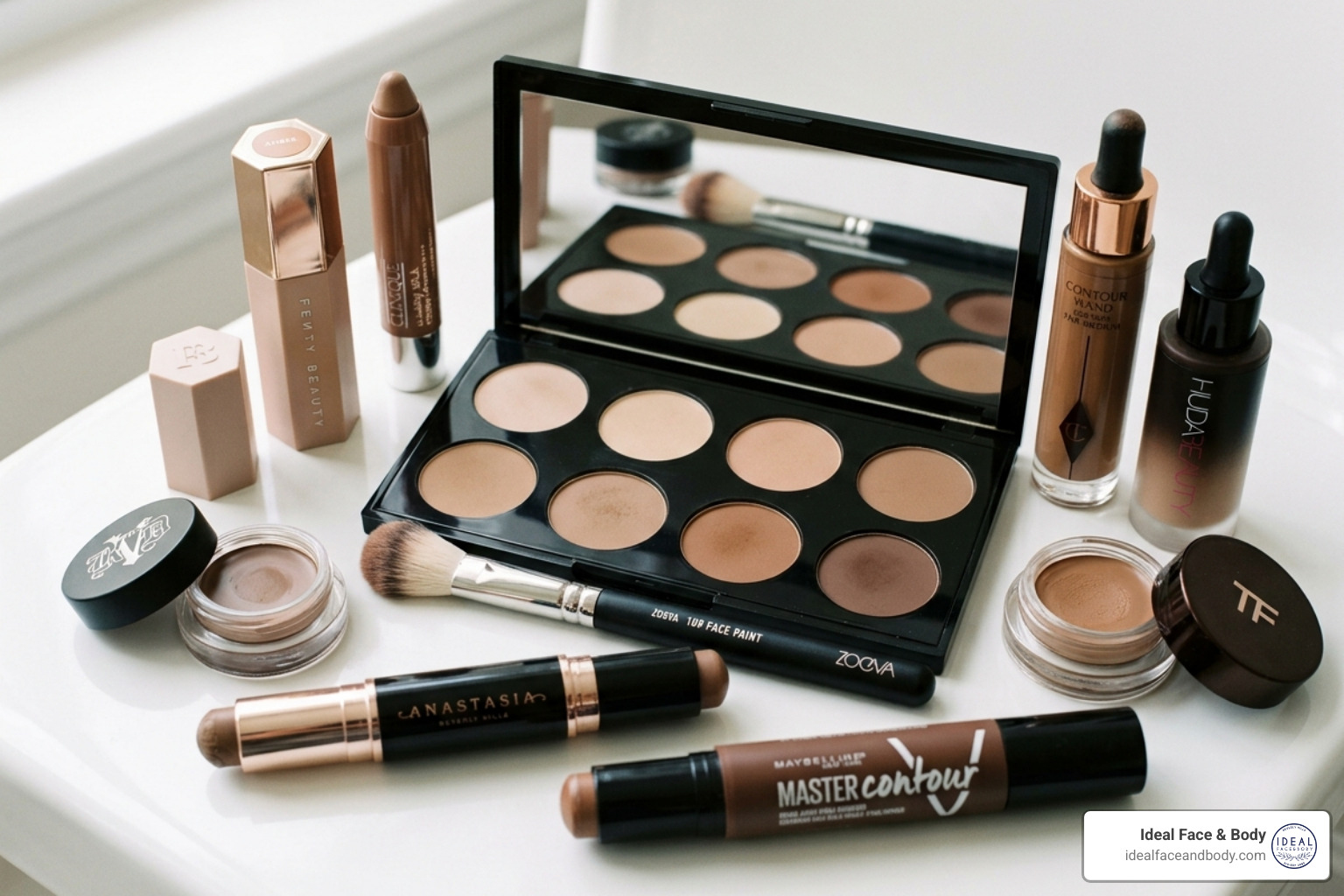
- Cream and Stick Formulas: These are ideal for dry or mature skin. They blend seamlessly into the skin for a dewy, natural finish. Products like the Ogee Crystal Contour Collection (rated 4.8/5 by over 18,000 reviewers) are popular because they include skincare-infused ingredients like jojoba oil and caffeine.
- Powder Formulas: Best for oily skin or those who want a more dramatic, matte finish. Powders are often easier for beginners to control and are great for special events where longevity is key.
- Liquid Wands: These have become viral sensations (like the e.l.f. Halo Glow Contour Beauty Wand) because they offer precise application and a lightweight feel.
When choosing products for your skin type, we always recommend looking for “clean” or vegan options if you have sensitive skin. Many modern formulas now include Sal Tree Resin to refine pores or Organic Tapioca Powder to provide a mattifying effect without clogging.
Essential Brushes and Blending Equipment
You wouldn’t paint a masterpiece with the wrong brush, and the same goes for your face.
- Angled Brushes: These are the “holy grail” for contouring. The angle intuitively follows the curves of your cheekbones and jawline.
- Beauty Sponges: A damp sponge is the best tool for blending cream or liquid products, ensuring there are no harsh “zebra stripes.”
- Small Precision Brushes: Essential for nose contouring or detailed eye socket work.
Common Mistakes to Avoid When Contouring
Even the most seasoned makeup lovers can fall into these traps:
- Using Bronzer as Contour: This often leads to an “orange” or muddy look because the warmth doesn’t mimic a natural shadow.
- Poor Blending: If you can see where the color starts and stops, it’s not blended enough. Always blend upward to create a lifting effect.
- Skipping Skin Prep: Applying contouring products to dry, flaky skin will make the makeup look patchy. Always cleanse, moisturize, and prime first.
- Over-application: Start with a small amount. You can always build up the intensity, but it’s much harder to take it away once it’s on.
If you find yourself constantly trying to “fix” your jawline or cheekbones with makeup, you might be interested in more info about precision facial sculpting through professional treatments that provide a more permanent solution.
A Step-by-Step Guide to Face Sculpting
Ready to get started? Follow this step-by-step tutorial for beginners to achieve a professionally sculpted look at home.
- Prep the Canvas: Start with clean, moisturized skin. Apply your primer and foundation as usual.
- The “Underpainting” Option: Some artists prefer to apply cream contouring before foundation for an ultra-subtle look. If you’re a beginner, we recommend applying it after foundation so you can see exactly where you need more definition.
- Map the Cheekbones: Find the hollow of your cheek (the “tooth spot” we’ll discuss later). Swipe your product from near your ear toward the center of your face, stopping about two fingers away from your mouth.
- Sharpen the Jawline: Apply a line of contour just under your jawbone, blending downward toward the neck to avoid a “mask” effect.
- Minimize the Forehead: If you want to shorten your forehead, dot the product along your hairline and temples, buffing it into the hair roots.
- Refine the Nose: Use a small brush to draw two thin, vertical lines down the sides of your nose bridge.
- The Magic of Blending: Using an angled brush or sponge, blend everything using upward, circular motions. Never blend downward, as this can make the face look saggy.
- Set and Glow: Finish with a light dusting of translucent powder and a spritz of setting spray to lock it all in.
Advanced Techniques for Every Face Shape
Not every face should be contoured the same way. The ultimate guide to contouring according to your face shape emphasizes balance and symmetry.
- Oval Face: Since this is considered the “ideal” balanced shape, focus on enhancing natural shadows. Lightly contour the forehead and cheekbones to add a bit of “chisel.”
- Round Face: The goal here is to create length. Contour the sides of the forehead and the entire perimeter of the face to make it appear more narrow.
- Square Face: Soften the sharp angles of the jaw and temples. Focus your contouring on the corners of the jaw and the temples to round out the look.
- Heart Face: To balance a wider forehead with a narrow chin, contour the sides of the forehead and the temples, while highlighting the chin to give it more prominence.
- Diamond Face: Focus on softening the area under the cheekbones and lightly shading the chin tip.
Megan Lavallie’s “Tooth Spot” Hack
A viral TikTok hack by Megan Lavallie (with over 7.5 million views!) has simplified contouring for millions. She suggests finding the spot on your cheek where, if you poked a hole through, you would touch your teeth. Apply a single dot of cream contour there and blend it out. This creates a foolproof, high-cheekbone look that works for almost everyone.
Beyond the Palette: Professional Contouring in Beverly Hills
While makeup is a fantastic tool for daily transformation, many of our clients at Ideal Face & Body seek more permanent, “awake” results. In Beverly Hills, CA, we specialize in advanced techniques that go beyond what a palette can achieve.
If you find that you are spending 20 minutes every morning trying to “hide” a double chin or “create” a jawline, professional treatments might be the answer. Dr. Sarah Yovino and Dr. Justin Yovino offer a range of solutions:
- Dermal Fillers: We can use hyaluronic acid fillers to literally build a more prominent chin or sharper cheekbones. This is often called a “liquid facelift.”
- Botox for Masseter Reduction: If you have a very wide or square jaw due to clenching, Botox can relax the masseter muscle, leading to a slimmer, more “V-shaped” face over time.
- Precision Sculpt Awake Liposuction: For those with submental fat (the “double chin”) that doesn’t respond to diet or exercise, this procedure provides a permanent, sharp jawline.
- Non-Surgical Solutions: Treatments like CoolSculpting or Kybella can target fat cells under the chin, while Ultherapy helps tighten sagging skin.
Whether it’s non-surgical jawline enhancement or our signature painless lip augmentation, our goal is to enhance your natural bone structure so you need less makeup to feel confident. We even offer body contouring for arms and other areas to ensure you feel sculpted from head to toe.
Frequently Asked Questions about Contouring
Do you apply contour before or after foundation?
For most beginners, we recommend applying contouring products after foundation. This allows you to create a smooth, even base first. However, the “underpainting” method (applying contour first) is great for achieving a very subtle, “glow-from-within” look. If you use powder contour, it must go after foundation and a light layer of setting powder to prevent patchiness.
What is the difference between contouring and “brontouring”?
“Brontouring” is a hybrid technique where you use a bronzer to do the work of a contour. It’s perfect for summer or for those who want a softer, sun-kissed version of sculpting. While traditional contouring uses cool tones to create structure, brontouring uses warmer tones to add both shape and a healthy glow.
How do I make my nose look slimmer with makeup?
The secret is in the “bridge.” Draw two very thin, straight lines down the sides of your nose using a cool-toned shade. The closer together the lines are, the slimmer your nose will appear. Add a dot of highlighter to the very tip and a thin line down the center of the bridge, then blend until the lines are almost invisible.
Conclusion
Mastering the art of contouring is about more than just following a trend; it’s about understanding your unique facial architecture and having the confidence to highlight your favorite features. Whether you prefer the quick “tooth spot” hack for a Tuesday morning or a full “Hollywood” sculpt for a Saturday night, these techniques empower you to take control of your aesthetic.
At Ideal Face & Body, we believe that beauty is a journey. Makeup is a wonderful way to experiment, but if you’re looking for long-term results that don’t wash off at the end of the day, we are here to help. From “Precision Sculpt” to non-surgical skin tightening, we can help you achieve the definition you’ve always wanted.
Learn more about permanent body contouring results and how we can help you reach your aesthetic goals in Beverly Hills, CA.