Is Dermarolling Raised Scars Safe — or Does It Make Things Worse?
Dermarolling raised scars is not generally recommended. Here’s the short answer:
- Hypertrophic scars and keloids can get worse with dermarolling
- Traditional microneedling overstimulates the skin’s healing response, potentially causing more tissue growth
- At-home dermarollers carry additional risks: infection, uncontrolled depth, and worsening scar size
- Professional evaluation is essential before attempting any needling on raised scars
You’ve probably heard that dermarolling works wonders for acne scars. And for depressed (atrophic) scars, that’s often true. But raised scars are a completely different story.
Raised scars — like hypertrophic scars and keloids — form when the skin produces too much collagen during healing. The last thing you want to do is trigger that same process again with more micro-injuries.
That’s the core problem with dermarolling raised scars. The very mechanism that makes microneedling helpful for flat or pitted scars can make raised scars larger, harder, and more stubborn.
This doesn’t mean there are no options. It means the right approach matters enormously — and choosing the wrong one can set you back significantly.
I’m Dr. Sarah Yovino, a double board-certified aesthetic physician at Ideal Face & Body in Beverly Hills, and my work with microneedling, RF treatments, and advanced scar therapies gives me a front-row seat to what actually works — and what doesn’t — when it comes to dermarolling raised scars. Let’s break it all down so you can make a truly informed decision.

Dermarolling raised scars word list:
- microneedling hypertrophic scars
- microneedling raised scars
- dermaroller for keloid scars
Understanding Hypertrophic and Keloid Scars
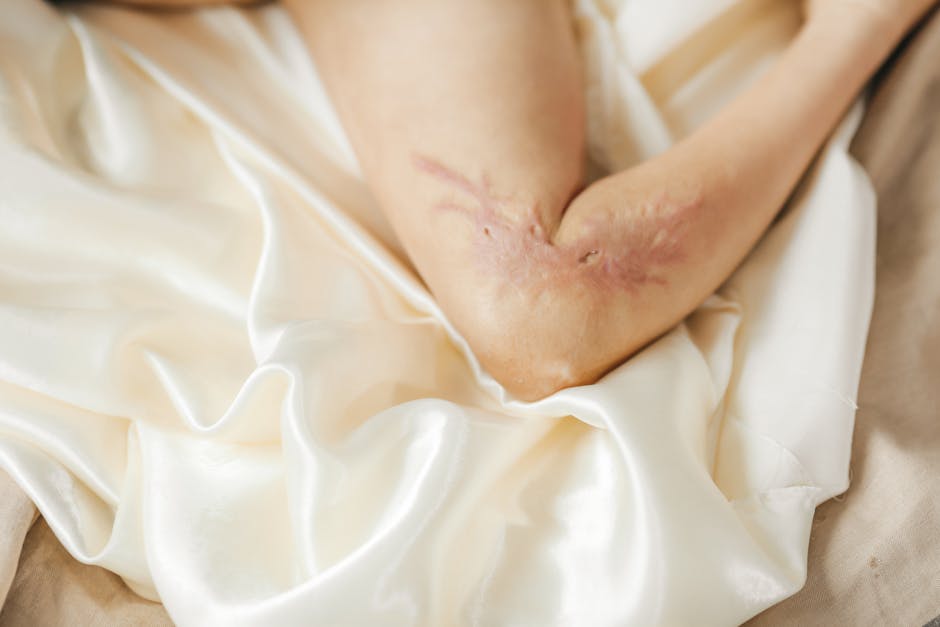
To understand why dermarolling raised scars is such a gamble, we first need to look at what these scars actually are. Unlike atrophic scars (those little pits or “craters” left by acne), raised scars are characterized by an excess of tissue.
The Biology of a Raised Scar
When your skin is injured, your body rushes to fix the gap. Fibroblasts—the construction workers of your skin—start pumping out collagen to bridge the wound. In a perfect world, they stop once the surface is level. But in the case of hypertrophic and keloid scars, the “stop” signal never quite gets through.
- Hypertrophic Scars: These stay within the boundaries of the original injury. They are often red, thick, and elevated, but they don’t spread to healthy skin.
- Keloid Scars: These are the overachievers of the scar world, and not in a good way. They grow well beyond the original wound, sometimes becoming large, rubbery nodules.

According to our deep dive into what type of raised scars microneedling can improve, the primary issue is a state of high mechanical stress within the tissue. The fibroblasts are essentially “stuck” in an active state, continuously depositing extracellular matrix. This leads to tissue dysfunction and a stiff bulge that can be itchy or even painful.
Why Your Body Overproduces Collagen
It all comes down to the mechanical communication pathway. Research shows that fibroblasts perceive mechanical force from their environment. If there is too much tension or stress, they react by producing more collagen. This is why certain areas of the body—like the chest, back, and shoulders—are more prone to keloids; they are high-tension zones.
When we look for scar solutions to fade old and new marks, we have to be careful not to add more stress to an already stressed environment. This is exactly why the physical trauma of a dermaroller can be so counterproductive.
The Risks of Dermarolling Raised Scars
If you take a dermaroller to a raised scar at home, you are essentially performing “uncontrolled injury.” While the goal of microneedling is “controlled micro-injury,” the DIY version often lacks the precision needed to avoid a disaster.
The Danger of Uncontrolled Injury
According to scientific research on microneedling safety, traditional rolling can overstimulate the skin’s healing response. Instead of remodeling the scar into smoother tissue, the needles can trigger even more fibrosis. This means the scar doesn’t just stay the same—it can actually grow larger or become more raised.
When we discuss microneedling hypertrophic scars, we have to mention the risk of an inflammatory “flare-up.” Because these scars are already reactive, the trauma of the needles can cause them to become redder and more irritated. In some cases, this inflammation leads to post-inflammatory hyperpigmentation (PIH), especially in darker skin tones common in our Beverly Hills patient base.
The Keloid Connection
Keloids are particularly dangerous to needle. Because keloids are essentially benign tumors of scar tissue, any trauma can act as “fuel for the fire.” If you have a history of keloids, most board-certified dermatologists will tell you to avoid dermarolling entirely. The risk of triggering a massive growth response is simply too high.
Furthermore, as noted in our guide on microneedling for scars, at-home devices are notoriously difficult to sterilize. If you introduce bacteria into a raised scar, the resulting infection can lead to further tissue damage and even more significant scarring. It’s a vicious cycle that we want to help you avoid.
Why Professional Microneedling Differs from At-Home Rolling
You might be wondering: “If the needles are the problem, why do professionals still use them?” The difference lies in the technology, the technique, and the environment.
Precision vs. Guesswork
At-home dermarollers use a rolling drum. As the needles enter and exit the skin at an angle, they can create “track-mark” tearing. Professional devices, like the ones we use at Ideal Face & Body, use a vertical stamping motion. This creates clean, precise channels without the unnecessary lateral trauma.
| Feature | At-Home Dermarolling | Professional Microneedling |
|---|---|---|
| Needle Motion | Rolling (can cause tearing) | Vertical Stamping (clean channels) |
| Needle Depth | Fixed and shallow (usually <0.5mm) | Adjustable (up to 3.0mm) |
| Sterility | Hard to maintain (reusable) | Single-use, medical-grade needles |
| Safety | High risk of scarring/infection | Controlled medical environment |
| Results | Subtle or potentially harmful | Significant remodeling and smoothing |
As Medical News Today explains, home rollers are generally limited to very short needles. While these are “safer” in terms of depth, they aren’t long enough to reach the deep dermal layers where raised scar tissue lives. Conversely, if a DIY-er uses a long needle (1.5mm+), they risk hitting nerves or causing permanent damage.
The Sterilization Factor
One of the biggest benefits of professional microneedling is the use of FDA-approved, single-use needle cartridges. At home, people often reuse rollers, which can become dull and contaminated with skin cells and bacteria. Dull needles don’t pierce; they “punch” and tear.
When you look at micro-needling before and after scars, the success stories almost always come from a clinical setting where the depth was customized to the specific thickness of the scar tissue.
Advanced Alternatives for Smoothing Raised Scars
If dermarolling raised scars is off the table, what can you do? Thankfully, technology has moved far beyond the simple hand-roller.
RF Microneedling: Heat Meets Healing
Radiofrequency (RF) microneedling is a game-changer for raised tissue. Instead of just using needles, this device delivers thermal energy (heat) deep into the dermis. This heat helps to constrict collagen fibers and “tighten” the scar from the inside out.
In our guide to microneedling for scar treatment, we explain that the heat also helps to shut down the overactive blood vessels that keep raised scars looking red and angry.
PRP and Mechanotherapy
We often combine microneedling with Platelet-Rich Plasma (PRP)—often called “liquid gold.” PRP uses your own growth factors to signal the skin to heal more “normally.” This can be a vital component in scar wars and other top treatments for smooth skin.
Other professional options include:
- Steroid Injections: These are the gold standard for flattening keloids and hypertrophic scars by breaking down the excess collagen bonds.
- Silicone Therapy: Using medical-grade silicone sheets or gels can help hydrate the scar and provide “pressure” that signals fibroblasts to slow down.
- Laser Resurfacing: Lasers can target the pigment in red scars and vaporize thin layers of excess tissue.
- Mechanotherapy: Experimental techniques, such as silk fibroin microneedle patches, have shown promise in research. In rabbit models, these patches decreased scar thickness by 20.5% and reduced scar hardness by 35.3% by disrupting the mechanical stress field of the scar.
For a full list of options, check out our best scar healing treatments guide.
Frequently Asked Questions about Dermarolling Raised Scars
Can dermarolling raised scars make them larger?
Yes, absolutely. Because raised scars are caused by an overactive healing response, adding more trauma (micro-injuries) can signal the body to produce even more collagen. This leads to tissue proliferation, potentially making the scar wider, thicker, and harder. This is especially true for keloids, which are genetically predisposed to overgrowth. If you are wondering if microneedling results are permanent for acne scars, the answer is usually yes—but that permanence applies to the worsening of a raised scar if treated incorrectly.
How does professional microneedling for raised scars work?
When performed by an expert like Dr. Justin Yovino, microneedling for raised scars focuses on remodeling rather than just “injuring.” By using precise depths and often combining the treatment with specialized serums or RF energy, we can break up the dense, disorganized collagen bundles. Scientific research on microneedling efficacy suggests that this “re-shuffling” of collagen helps the tissue move closer to a normal skin ratio (Type I to Type III collagen). We may also use MCA needling (Multichannel Activation) to specifically target the “stiffness” of the scar.
When should I see a specialist in Beverly Hills?
You should consult a specialist the moment you notice a scar is becoming raised, itchy, or painful. Early intervention is key. If you have a scar that is thicker than the original wound or has been red for more than six months, it’s time for a professional skin examination. At Ideal Face & Body, we want to help you make your scars a memory in Beverly Hills. We can determine if your scar is hypertrophic or a keloid and design a safe, effective plan that avoids the “dice roll” of at-home dermarolling.
Conclusion
At the end of the day, dermarolling raised scars is a high-risk move with very little reward when done at home. The biology of hypertrophic and keloid scars makes them reactive to trauma, and without the precision of professional medical devices, you’re more likely to see growth than smoothing.
At Ideal Face & Body in Beverly Hills, we specialize in helping patients navigate the complex world of scar revision. Whether it’s through RF microneedling, precision injections, or advanced laser therapy, our goal is to provide results that are both safe and beautiful. Don’t leave your skin to chance.
If you’re ready to stop “rolling the dice” and start seeing real improvement, we invite you to schedule a personalized consultation with us. We can explore the best scar solutions and fade those marks for good.
Learn more about Microneedling at Ideal Face & Body and take the first step toward the smooth, confident skin you deserve.