Tummy Tuck Recovery Time: 4 Weeks to Smooth Healing
Understanding Your Recovery Timeline
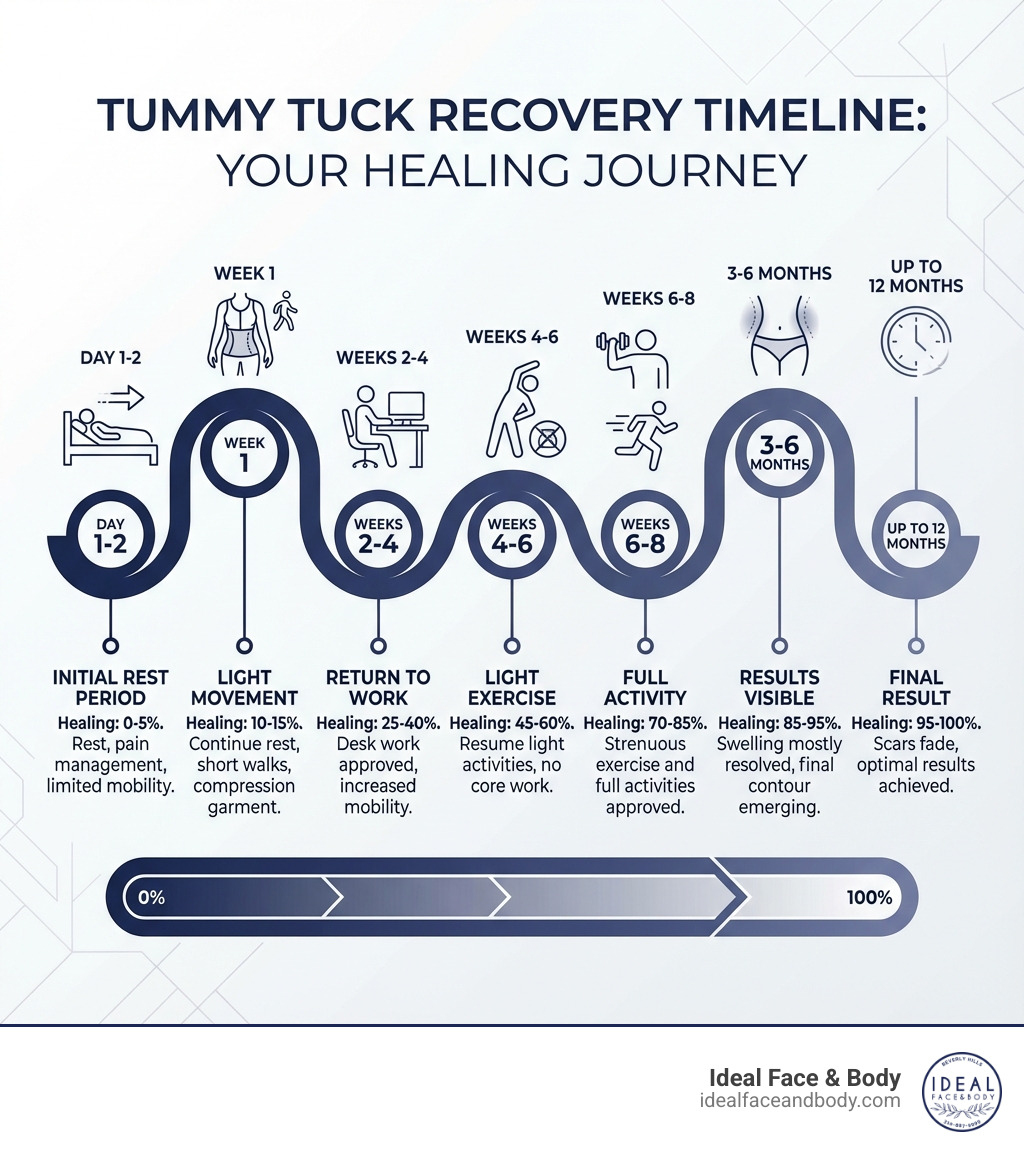
Tummy tuck recovery time varies by individual, but most patients follow a similar healing path. Here’s what to expect:
Quick Recovery Overview:
- First 24-48 hours: Rest, manage pain, limited mobility with assistance needed
- Week 1: Continue resting, light walking, wear compression garment constantly
- Weeks 2-4: Return to desk work, driving approved, increased mobility
- Weeks 4-6: Resume light exercise (no core work yet), most swelling resolved
- 6-8 weeks: Cleared for strenuous exercise and full activities
- 3-6 months: Final results visible as swelling fully resolves
- Up to 1 year: Scars continue to fade and flatten
Despite the popularity of abdominoplasty, many people don’t fully understand what recovery actually entails. The first few weeks require significant rest and help with daily tasks, but the investment pays off with long-lasting results. Modern surgical techniques have made the process more manageable than ever before, though patience remains essential.
Recovery isn’t just about waiting—it’s about active healing. You’ll need to balance rest with gentle movement, follow specific care instructions for your incisions and drains, and gradually reintroduce activities as your body heals.
As Dr. Sarah Yovino, I’ve guided countless patients through their post-operative journeys at Ideal Face & Body in Beverly Hills. Understanding the tummy tuck recovery time helps my patients prepare mentally and physically for each stage of healing, leading to better outcomes and more confident recoveries.
Understanding the Tummy Tuck Recovery Time: A Week-by-Week Timeline
Your journey to a smoother, firmer midsection begins the moment your tummy tuck procedure is complete. While each patient’s healing is unique, we’ve outlined a general timeline to help you steer your tummy tuck recovery time with confidence. This section breaks down the healing journey into manageable stages, from the first 24 hours to several months post-op, so you know exactly what to expect.
Immediately After Surgery (First 24-48 Hours)
The first day or two after your tummy tuck is all about rest and careful management. You’ll likely feel groggy from the general anesthesia, and it’s normal to experience some discomfort. We’ll ensure you have appropriate pain management strategies in place, usually involving prescribed medications to keep you comfortable.
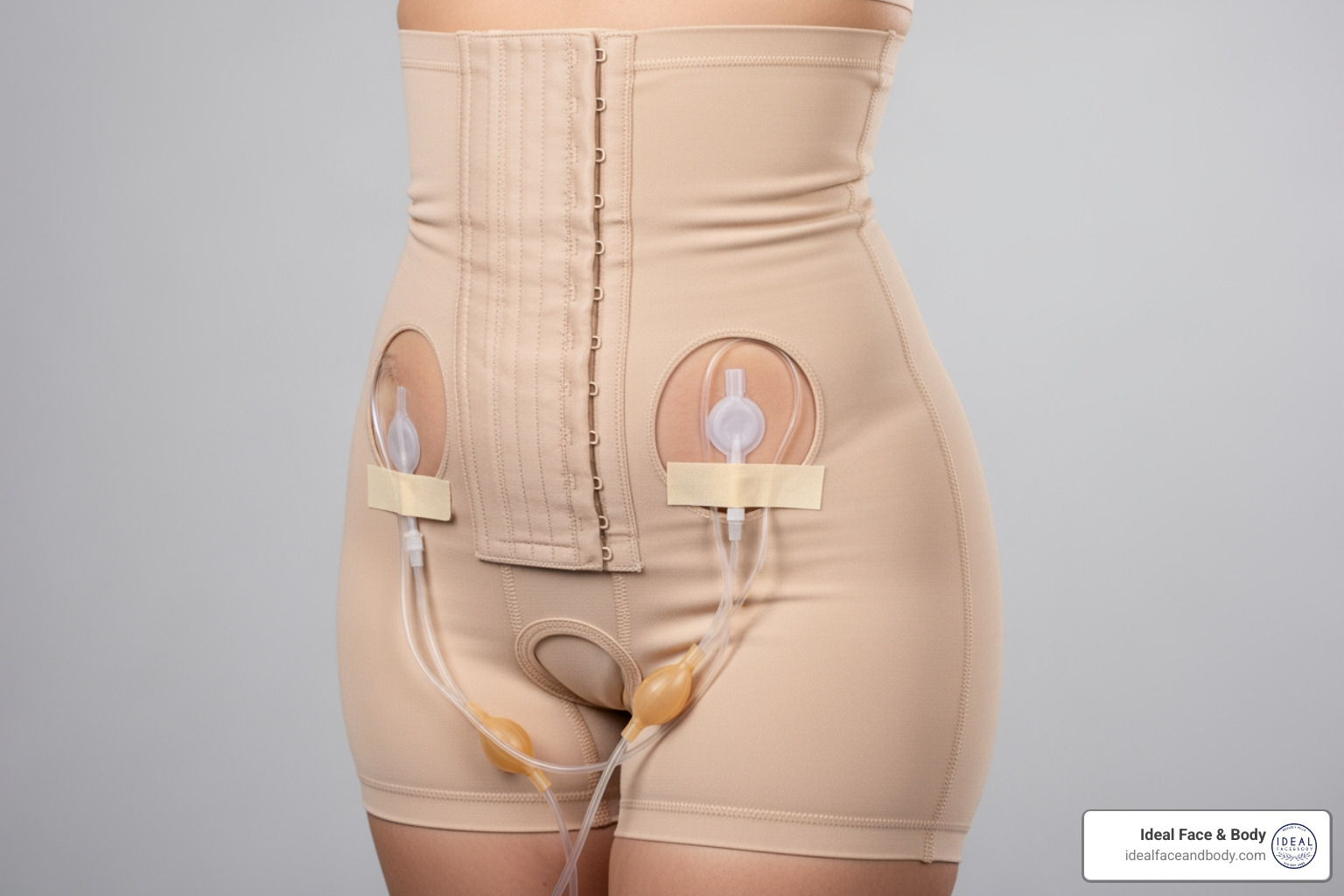
Expect to wake up with bandages covering your incisions and a compression garment wrapped around your abdomen. Small, thin tubes, known as drains, may also be placed under your skin to collect any excess fluid. These are temporary but crucial for preventing fluid buildup and promoting healing.
For the first 24-48 hours, your mobility will be quite limited. We encourage very light movement, such as carefully shifting in bed, but strenuous activity is out of the question. You’ll likely need assistance with even simple tasks like getting up and moving around. Many patients find it most comfortable to rest in a slightly bent or reclined position to avoid putting strain on their abdominal area.
An important step we encourage right away is to start walking after a tummy tuck. This might sound daunting, but taking very short, gentle walks around the house within 24 hours of your tummy tuck is vital. It helps prevent blood clots and promotes healthy circulation, which is key for a smooth recovery. Of course, this will be done with assistance and under our careful guidance.
The First Week: Prioritizing Rest and Light Movement
As you enter the first week of your tummy tuck recovery time, the focus remains on rest and gentle care. You’ll likely still feel sore, and swelling will be noticeable, but the initial intensity of pain should begin to subside with medication.
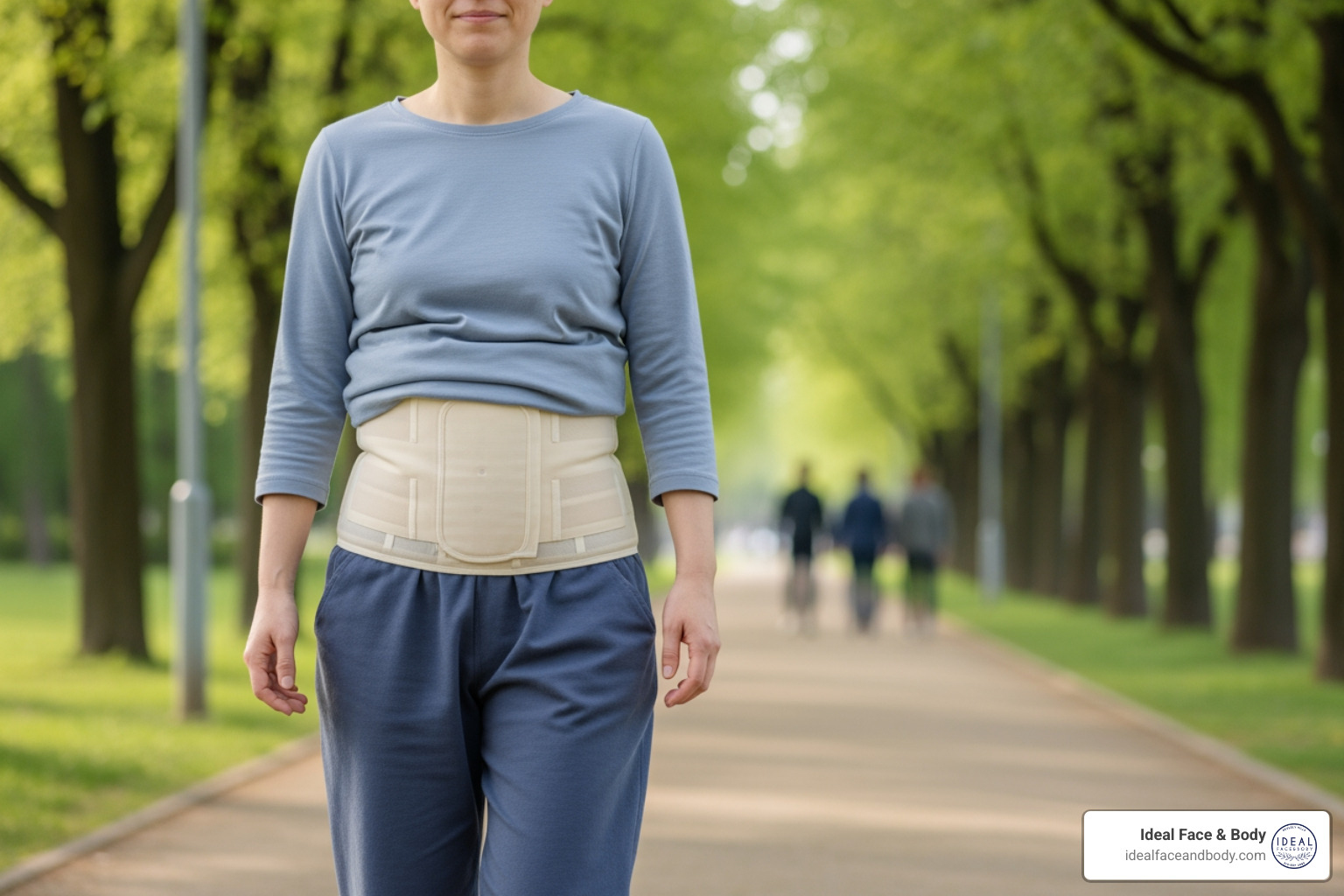
Continuing to wear your compression garment is essential during this period. It helps reduce swelling, provides support to your healing tissues, and improves your comfort. We’ll provide detailed instructions on how to care for your incisions, including how to replace bandages and gently clean the area, typically every other day. If you have drains, we’ll teach you how to manage them, emptying them a few times a day and tracking the output. Drains are usually removed around day 5, depending on fluid levels.
Light walking remains a priority. Gradually increasing the distance of your short walks several times a day will continue to promote blood flow and prevent complications like blood clots. You may still need help around the house for the first few days, as bending, lifting, or standing for long periods will be challenging.
Staying hydrated and maintaining a low-sodium diet are also important. This helps reduce swelling and supports your body’s natural healing processes. We’ll schedule a follow-up appointment within this first week to check on your progress, remove any drains, and answer any questions you may have. While significant recovery is still ahead, most patients can resume light, non-strenuous activities by the end of this week. For more detailed insights into what to expect during this crucial period, explore our comprehensive guide on Tummy Tuck Beverly Hills.
Weeks 2-4: Returning to a “New Normal”
By weeks 2-4, you’ll generally start feeling significantly better and more like your “new normal.” The initial post-surgical pain should have substantially reduced, allowing you to rely less on prescription pain medication and potentially switch to over-the-counter options. Swelling and bruising will also continue to decrease, though some residual swelling might still be present, especially towards the end of the day.
Your mobility will steadily improve. Most people find they can stand up straighter and move with greater ease. For those with desk jobs, returning to work within 1-2 weeks is often feasible, provided your job doesn’t involve strenuous activity or heavy lifting. We’ll also discuss when it’s safe for you to resume driving, which is typically once you’re off prescription pain medication and can comfortably operate your vehicle without discomfort or restricted movement.
Continuing your light walks is still beneficial, but you’ll need to remain cautious about avoiding any activities that cause strain on your abdomen. This means no heavy lifting, no strenuous exercise, and definitely no core workouts. While you’re feeling better, your internal tissues are still healing, and protecting them is paramount.
This period marks a significant step forward in your tummy tuck recovery time, as you regain more independence and comfort in your daily life. It’s a great time to reflect on your journey and consider if a tummy tuck was the right choice for you. If you’re still in the decision-making phase, our resources on Am I a Good Candidate for a Tummy Tuck? can offer valuable insights.
Weeks 4-8: Reintroducing More Activity
As you transition into weeks 4-8 of your tummy tuck recovery time, you’ll notice significant improvements in your energy levels and overall comfort. Most of the prominent swelling should have resolved, though some lingering subtle swelling can persist for several months. It can take 5 to 6 weeks for your energy to fully return, so be patient with yourself.
This is often the stage where we can begin to reintroduce light exercise. However, it’s crucial to understand that “light exercise” does not include core workouts. Your abdominal muscles are still healing, especially if muscle repair was part of your procedure. Gentle activities like brisk walking, cycling on a stationary bike, or using an elliptical machine are usually acceptable. We typically advise patients that they may resume exercising 6 weeks post-operatively, ensuring the muscle repair site has healed well by this stage.
Scar care usually begins around this time, as the incisions start to mature. We’ll provide specific recommendations for scar treatments, such as silicone sheets or creams, to help them fade as much as possible. It’s a continuous process, and patience is key, as scars can take up to a year or more to fully refine.
While you’re feeling much better and more active, full strenuous activity, including heavy lifting and intense core exercises, is still on hold until cleared by Dr. Yovino. For more information on safely getting back to physical activity, you can review general guidelines on when to resume exercise after surgery. If you’re also considering or have undergone other body contouring procedures, understanding the Recovery Time From Liposuction can be helpful for a holistic view of your aesthetic journey.
Managing Your Recovery: Essential Tips for a Smooth Heal
A successful tummy tuck recovery isn’t just about waiting; it’s about actively participating in your healing process. Following your surgeon’s instructions precisely is crucial for optimal results and minimizing complications. This section provides actionable advice on managing common post-operative symptoms and adhering to necessary restrictions.
Pain, Swelling, and Bruising
Managing discomfort is a top priority during your tummy tuck recovery time. We’ll provide you with prescriptions for pain medication, which you should take as directed, especially in the first few days when pain is most acute. As the discomfort subsides, you may transition to over-the-counter pain relievers.
Swelling and bruising are normal and expected. Your compression garment is your best friend here; it plays a vital role in reducing swelling and supporting your healing tissues. Cold compresses can also help alleviate initial swelling and discomfort. While post-surgical pain typically subsides within a few days, residual swelling can take a few weeks to clear up, and some subtle swelling might linger for months.
You might also experience numbness or a pulling sensation around your abdomen. This is a common part of the healing process as nerves regenerate and tissues settle. This sensation usually diminishes over time, but it can take weeks or even months to fully resolve. Staying well-hydrated also contributes to overall healing and helps manage swelling.
Activity: What to Do and What to Avoid
Balancing rest with gentle movement is key during your tummy tuck recovery time.
What to Do:
- Light Walking: We cannot stress this enough! Gentle, short walks from day one are incredibly beneficial. They boost circulation, help prevent blood clots, and promote overall healing. Think of it as a leisurely stroll, not a power walk.

What to Avoid for 4-6 Weeks (or as advised by your surgeon):
- Strenuous Exercise: This includes running, high-impact aerobics, and anything that significantly raises your heart rate or puts pressure on your abdomen.
- Heavy Lifting: For 6 weeks, avoid lifting anything that would make you strain. This means no groceries, no toddlers, and certainly no gym weights. Let friends and family pamper you!
- Abdominal Exercises: Crunches, planks, and any movements that engage your core directly are strictly off-limits until cleared. Your internal muscle repair needs time to heal securely.
- Smoking: Smoking severely impairs healing and increases the risk of complications. We require patients to stop smoking well before and after surgery.
- Alcohol: Alcohol can interfere with medications and prolong swelling. Avoid it for at least the first month.
- Bending and Standing: While you’ll gradually stand straighter, avoid deep bending or twisting that puts strain on your incision. Maintain a slightly hunched posture initially to protect your healing abdomen.
Listen to your body, and when in doubt, always err on the side of caution. For a deeper dive into choosing the right procedure for your body goals, you might find our article on Lipo or Tummy Tuck: What’s Best For Me? helpful.
Incision and Drain Care
Proper incision and drain care are fundamental to preventing infection and ensuring optimal healing during your tummy tuck recovery time. We will provide you with precise instructions custom to your specific needs.
Generally, you’ll need to keep your incision sites clean and dry. We’ll guide you on when and how to shower – typically 24 to 48 hours after surgery or once drains are removed. Pat the incision areas gently dry; avoid rubbing. Do not take a bath for at least the first two weeks or until cleared by Dr. Yovino to prevent submersion of the healing wounds.
If you have surgical drains, you’ll learn how to empty them and monitor the fluid output. Drains are typically required for the first few days and are usually removed about 5 days after surgery, or once the drainage consistently tapers to a low amount. Removing them is a quick and relatively painless process.
It’s crucial to watch for any signs of infection, such as increased redness, warmth, swelling, severe pain, pus, or fever. If you notice any of these, contact us immediately. We may also recommend specific ointments or scar treatments to apply once your incisions have closed, helping to minimize scarring in the long term. For more detailed guidance on post-operative care, refer to Tummy Tuck Recovery guidance.
Factors Influencing Recovery and Potential Complications
While we provide a general roadmap for tummy tuck recovery time, every patient’s journey is unique. Several factors can influence your healing process, and understanding potential complications helps us prepare and respond effectively.
How the Type of Tummy Tuck Affects Recovery
The extent of your tummy tuck procedure directly impacts your recovery. We offer various types, each designed to address specific concerns:
| Tummy Tuck Type | Incision Length | Muscle Repair | Typical Recovery Period (Initial) |
|---|---|---|---|
| Mini Tummy Tuck | Shorter, above pubic area | Often none, or minimal lower muscle repair | Generally quicker, 1-2 weeks off work |
| Full Tummy Tuck | Hip-to-hip, around belly button | Yes, full abdominal wall tightening | Moderate, 2-4 weeks off work |
| Extended Tummy Tuck | Hip-to-hip, extending to flanks/hips | Yes, full abdominal wall tightening | Longer, 3-6 weeks off work |
A mini tummy tuck, ideal for minor skin laxity below the belly button, typically involves a shorter incision and often no muscle repair. This usually translates to a quicker, less intensive tummy tuck recovery time compared to a full abdominoplasty. If you’re considering a less extensive procedure, you might explore our Best Mini Tummy Tuck Surgeons Beverly Hills resources.
A full tummy tuck addresses skin and fat from the rib cage to the pubic area and includes muscle repair (plication) to tighten separated abdominal muscles. This more comprehensive procedure naturally requires a longer healing period. For cases with excess skin extending to the sides and back, an extended tummy tuck is performed, which, due to its larger scope, will have the longest recovery.
It’s also worth noting that some patients may benefit from a What is a Tummy Tuck with No Muscle Repair?, which can also impact recovery duration and intensity, as muscle repair is often the most significant source of post-operative discomfort.
Key Factors That Influence Your Tummy Tuck Recovery Time
While the type of tummy tuck is a major factor, several other elements play a crucial role in your individual healing journey:
- Age and General Health: Younger, healthier patients typically heal faster. Pre-existing conditions can affect your body’s ability to recover efficiently.
- Skin Quality and Elasticity: Good skin elasticity can lead to better contouring and potentially smoother healing.
- Smoking Status: Smoking significantly hinders blood flow and oxygen delivery to tissues, drastically prolonging healing and increasing complication risks. We require patients to stop smoking well in advance of surgery.
- Diet and Nutrition: A healthy, balanced diet rich in protein, vitamins, and minerals provides the building blocks for tissue repair. Proper hydration is also vital.
- Following Post-Op Instructions: Adhering strictly to Dr. Yovino’s instructions regarding activity restrictions, wound care, and medication is paramount. Deviating from these guidelines can lead to complications and a longer tummy tuck recovery time.
- Extent of Surgery: As discussed, more extensive procedures involving greater skin removal or muscle repair will require more time to heal.
Understanding Potential Complications
While rare, it’s important to be aware of potential complications during tummy tuck recovery time. We take every precaution to minimize these risks, but recognizing the signs allows for prompt intervention:
- Seroma (Fluid Collection): This is a buildup of clear fluid under the skin. Drains are used to prevent this, but if a seroma forms after drains are removed, it may need to be drained in the office.
- Hematoma: A collection of blood under the skin, which may require drainage.
- Infection: Though uncommon with proper sterile technique and antibiotics, an infection can occur. Signs include increased redness, swelling, warmth, pain, pus, or fever.
- Poor Wound Healing: This can be influenced by factors like smoking, poor nutrition, or excessive tension on the incision.
- Blood Clots (DVT): Deep vein thrombosis (DVT) in the legs, which can potentially travel to the lungs (pulmonary embolism), is a serious but rare complication. Early ambulation (light walking) is our primary defense against this.
- Scarring Issues: While all tummy tucks result in scars, some individuals may develop thick, raised (hypertrophic or keloid) scars. We’ll discuss scar management techniques to minimize their appearance.
We prioritize your safety and will thoroughly discuss all potential risks during your consultation. If you’re concerned about what could go wrong with a tummy tuck or notice any unusual symptoms during your recovery, contact us immediately.
Seeing Your New Shape: Long-Term Results and Scar Maturation
The initial tummy tuck recovery time focuses on immediate healing, but the journey to your final, beautiful results extends over several months. Patience truly is a virtue here, as your body continues to refine and settle.
Long-Term Tummy Tuck Recovery Time and Final Results
While you’ll notice an immediate improvement in your abdominal contour after surgery, the true beauty of your results will emerge as swelling gradually subsides. Lingering swelling around the abdomen can take 4-6 months to fully resolve, revealing your slimmer, firmer profile. By 3 to 6 months post-op, most patients are enjoying their permanent results.
Scar maturation is another long-term aspect of recovery. Your tummy tuck scar will be noticeable initially, but it will continue to improve and fade over time. It could take up to three months to see the final result, and the scar will continue to improve further for up to one year, sometimes even two. We’ll provide guidance on scar care techniques to help them flatten and become less conspicuous.
Any numbness or pulling sensations you experienced in the early stages will also typically resolve over several months as nerve endings regenerate. The feeling gradually returns, though some subtle changes in sensation might be permanent. Seeing your final contours unfold is a rewarding part of the journey, and we love celebrating these milestones with our patients. To see examples of the transformative outcomes, we invite you to browse our Gallery: Tummy Tuck.
Maintaining Your Tummy Tuck Results
A tummy tuck provides permanent changes by removing excess skin and tightening muscles. However, the longevity of your results depends significantly on your lifestyle moving forward.
- Stable Weight: Significant weight fluctuations after your surgery can stretch the skin and muscles again, potentially diminishing your results. Maintaining a stable weight is crucial.
- Healthy Diet: A nutritious, balanced diet not only supports your overall health but also helps you maintain your weight and keeps your skin looking its best.
- Regular Exercise: Once fully recovered and cleared by Dr. Yovino, regular exercise helps maintain muscle tone and a healthy body composition.
- Future Pregnancies: If you plan on future pregnancies, we generally recommend postponing a tummy tuck. While a tummy tuck doesn’t prevent pregnancy, a subsequent pregnancy can stretch the abdominal muscles and skin, compromising your results and potentially requiring revision surgery.
Your tummy tuck is an investment in yourself, and maintaining a healthy lifestyle is key to protecting that investment. We’re here to support you in achieving and Trim Your Figure with a Tummy Tuck in Beverly Hills for years to come.
Frequently Asked Questions about Tummy Tuck Recovery
Navigating your tummy tuck recovery time often comes with many questions. Here are some of the most common inquiries we receive from our patients at Ideal Face & Body:
When can I stand up straight after a tummy tuck?
Immediately after a tummy tuck, it’s common and often necessary to walk and stand with a slight hunch. This is because the skin and muscles in your abdomen have been tightened, and standing perfectly straight can put undue tension on your incision line. You may not be able to stand up straight when you first come home, but this will improve day by day. We’ll encourage you to gradually straighten up over the first week or two. Supporting your incision with your hands or a pillow when you move can also help reduce discomfort and protect the healing area. Most patients find they can stand relatively straight within 1-2 weeks, though it might still feel a bit tight for a while longer.
How long do I need to wear the compression garment?
The compression garment is a vital part of your tummy tuck recovery time. Its primary purposes are to reduce swelling, provide continuous support to your healing tissues, and help your skin conform to its new contours. We typically advise patients to wear the compression garment at all times during the first week, removing it only for showering or wound care. After that, it’s usually recommended to wear it as often as possible for the following 6-8 weeks, or even longer depending on your individual healing and the extent of your surgery. Dr. Yovino will provide you with specific instructions custom to your needs, so always follow her guidance.
When can I return to work after a tummy tuck?
The timeline for returning to work depends largely on the nature of your job and your individual healing progress.
- Desk Jobs (Sedentary Work): Most patients with office-based or sedentary jobs can return to work within 1-2 weeks following a tummy tuck. This is often after the initial discomfort has subsided and drains (if any) have been removed. On average, you’ll need at least one week off work after the surgery.
- Physically Demanding Jobs: If your job involves heavy lifting, strenuous activity, or prolonged standing, you’ll need a longer period of recovery. This could be anywhere from 4-6 weeks or even more. We might also discuss options for modified duties to ease you back into your role without compromising your healing.
Dr. Yovino will provide personalized recommendations based on your recovery and the specific demands of your profession. The goal is always to ensure a safe and complete recovery before resuming your full work schedule. Most patients return to work after a tummy tuck within 7-10 days, but this is a general guideline.
Begin Your Change Journey in Beverly Hills
Your tummy tuck recovery is a journey of change, requiring patience and careful adherence to post-operative care. While the initial weeks involve significant rest and activity modification, the result is a smoother, firmer abdominal profile that can last a lifetime with a stable, healthy lifestyle. At Ideal Face & Body, Dr. Sarah Yovino and Dr. Justin Yovino guide our patients through every step of this process. To learn more about addressing loose abdominal skin and starting your own journey, explore our comprehensive resources. Learn more about treating excess skin on the lower abdomen.