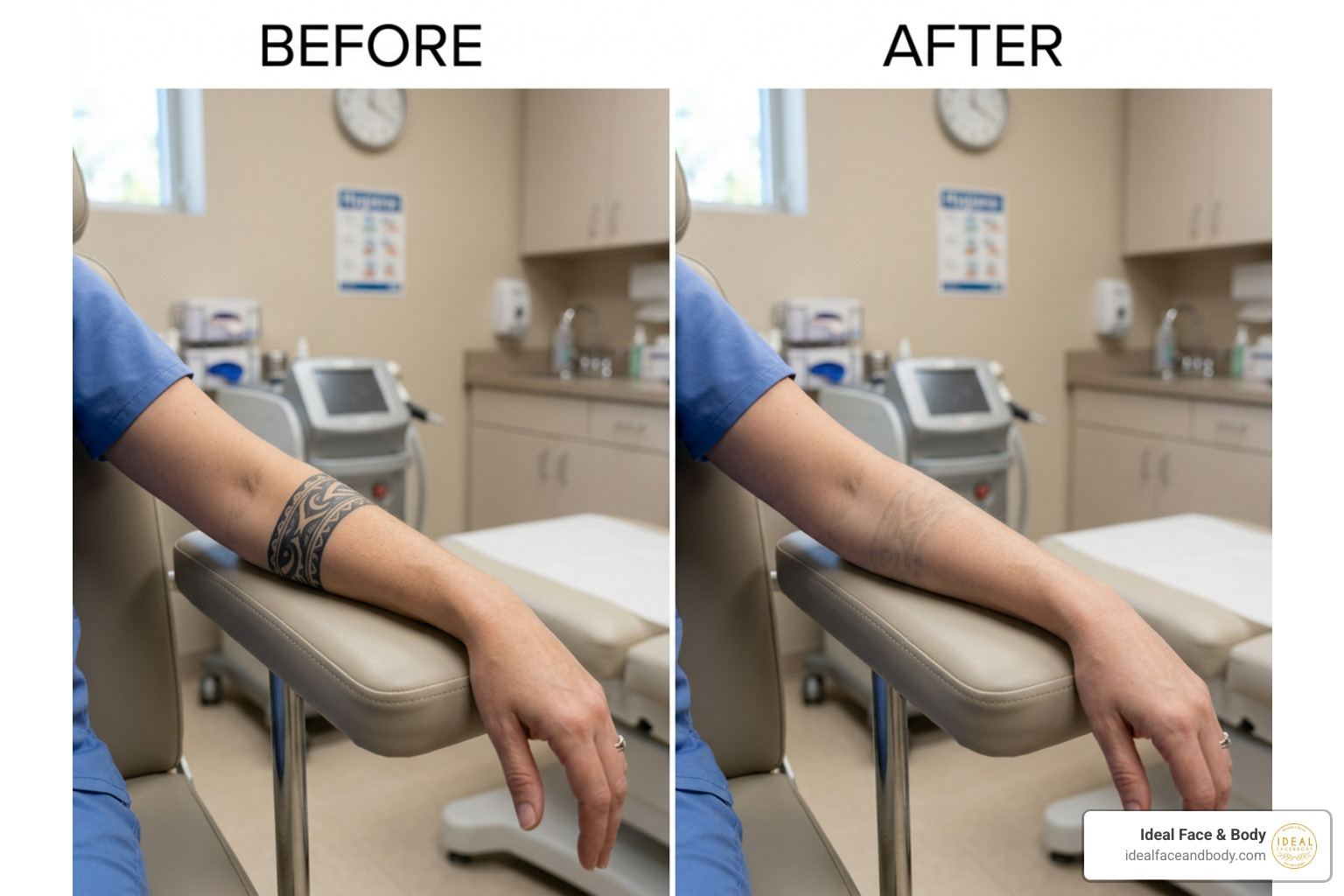
What to Know About Before and After Laser Tattoo Removal Scars
Before and after laser tattoo removal scars are a real concern — but the good news is that permanent scarring is rare when treatment is done correctly.
Here is a quick overview of what most patients experience:
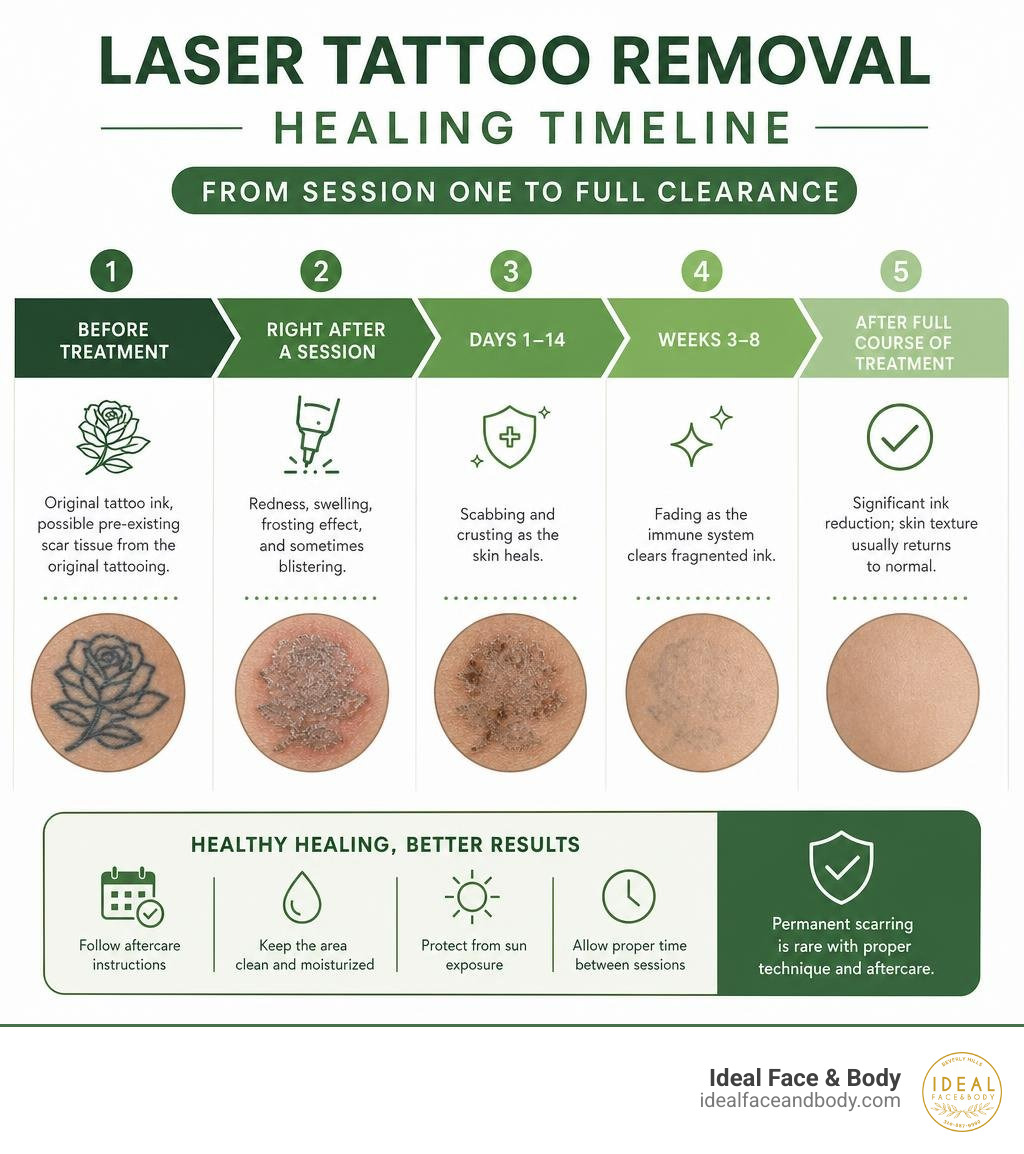
| Stage | What You See |
|---|---|
| Before treatment | Original tattoo ink, possible pre-existing scar tissue from the original tattooing |
| Right after a session | Redness, swelling, frosting effect, and sometimes blistering |
| Days 1–14 | Scabbing and crusting as the skin heals |
| Weeks 3–8 | Fading as the immune system clears fragmented ink |
| After full course of treatment | Significant ink reduction; skin texture usually returns to normal |
Permanent scars are uncommon with proper technique and aftercare. The biggest risk factors are aggressive laser settings, poor wound care, and not allowing enough time between sessions.
That said, some patients do notice changes in skin texture or pigmentation — especially if they have a history of keloid scarring or darker skin tones. And if the original tattoo itself left scar tissue, that may become more visible as the ink fades.
This article walks you through exactly what to expect — session by session — and how to protect your skin throughout the process.
I’m Dr. Sarah Yovino, MD, a double board-certified master injector specializing in non-surgical medical aesthetics, including facial rejuvenation with lasers and advanced skin treatments at Ideal Face & Body in Beverly Hills, CA. My hands-on experience with laser-based procedures gives me a close-up view of how patients’ skin responds before and after laser tattoo removal scars form — and how to minimize that risk at every stage. Read on for a practical, no-fluff guide to what the process actually looks like.
What Causes Scarring During Tattoo Removal?
Laser tattoo removal works by sending focused light energy into the dermis, where tattoo ink sits. The ink absorbs that energy, breaks into smaller particles, and your immune system gradually clears those particles through the lymphatic system.
Scarring can happen when the skin is injured beyond the normal, controlled healing response. The most common causes include:
- Too much laser heat in the skin
- Overly aggressive settings for the tattoo or skin type
- Treating again before the skin has fully healed
- Infection after treatment
- Picking scabs or popping blisters
- Sun exposure during healing
- A personal history of keloids or hypertrophic scars
- Pre-existing scar tissue from the original tattoo
The key idea is simple: laser tattoo removal should target ink, not “cook” the surrounding skin. When done carefully, the surrounding tissue is protected as much as possible. For a deeper safety overview, read our guide to safe laser tattoo removal.
The Role of Laser Technology and Heat
Not all lasers interact with skin and ink the same way.
Traditional Q-switched lasers deliver energy in nanosecond pulses. They have been used for tattoo removal for decades and can be very effective, especially for black ink. Picosecond technology delivers energy in even shorter bursts. In general, shorter pulse durations can create more of a photoacoustic effect, meaning the ink is shattered with less heat spread into nearby tissue.
That matters for scarring because excess thermal damage is one of the main things we try to avoid.
However, the laser itself is only part of the story. The provider’s judgment matters just as much. A skilled laser provider adjusts settings based on:
- Skin tone
- Tattoo color
- Ink density
- Tattoo location
- Prior scarring
- How the skin reacted to previous sessions
A Q-switched laser used properly is safer than an advanced laser used recklessly. Technology helps, but experience drives the result.
If you want the science behind how lasers break up ink, we explain it in more detail here: the science of erasing ink.
Clinical research also shows that technique and protocol affect outcomes. For example, a comparative clinical study on black tattoo removal evaluated Q-switched Nd:YAG treatment alone versus a combined approach and reported differences in clearance and side effects such as hypopigmentation and pinpoint bleeding. You can review the study here: scientific research on laser efficacy.
Pre-existing Scars from the Original Tattooing Process
Sometimes the “tattoo removal scar” was actually there before removal started.
Tattooing involves needles placing ink into the dermis. If the original tattoo artist went too deep, overworked the skin, packed in heavy ink, or caused trauma during healing, scar tissue may already be present. While the tattoo ink is dark and dense, that scar can be camouflaged. As the laser clears the ink, the underlying texture may become more obvious.
This can look like:
- Raised lines where the tattoo needle caused trauma
- Shiny or slightly thickened skin
- Uneven texture
- A faint “ghost image” of the tattoo shape
- Areas where ink fades but the skin pattern remains
This is not always caused by the removal process. Sometimes removal simply reveals the history written underneath the ink. Sneaky little tattoo, right?
For more on removal expectations, see our page on removing unwanted tattoos.
Analyzing Before and After Laser Tattoo Removal Scars
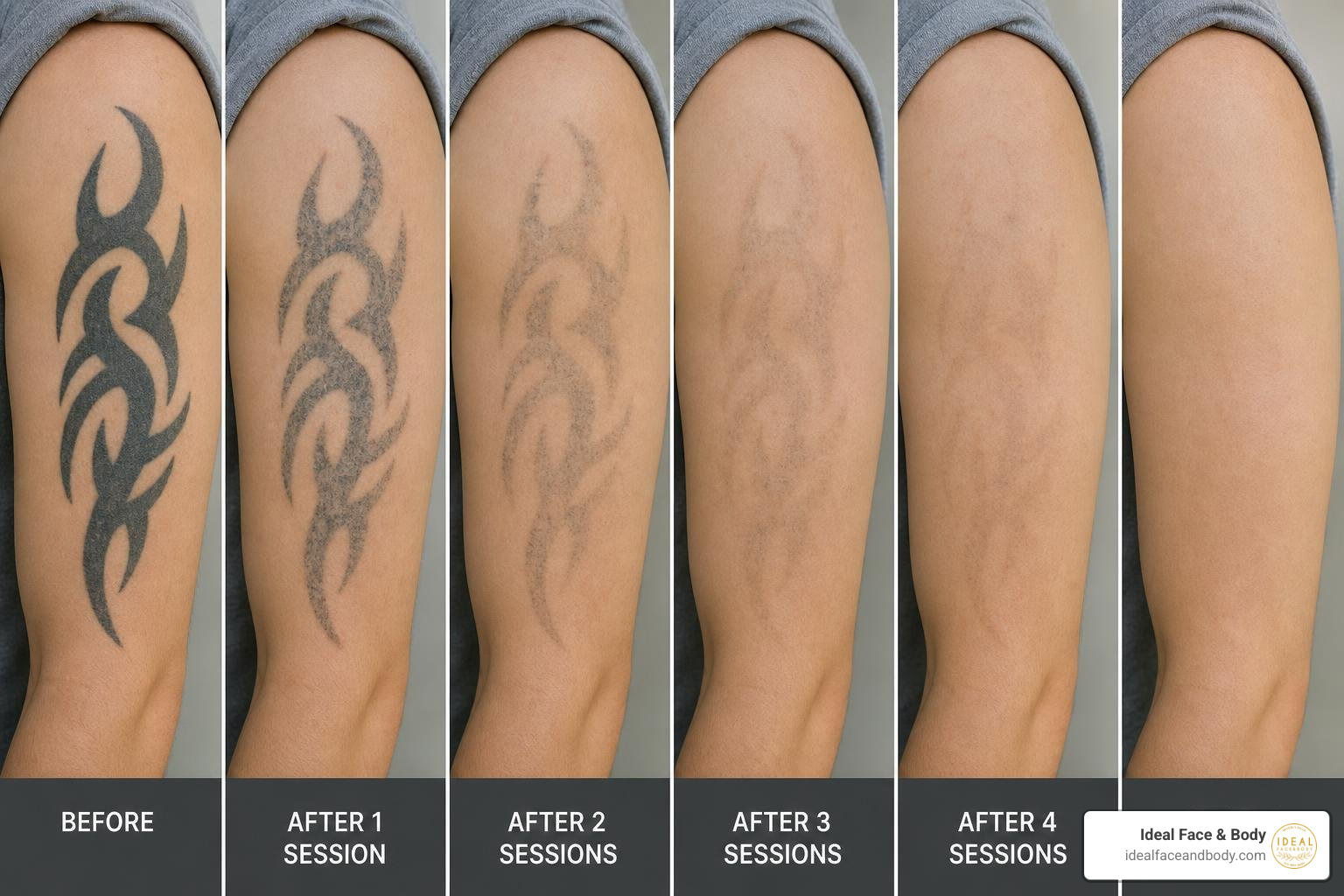
Good before-and-after photos do more than show fading. They help you understand how the skin healed between sessions.
When reviewing before and after laser tattoo removal scars, look for three separate things:
- Ink clearance: How much pigment is gone?
- Color change: Is there hyperpigmentation or hypopigmentation?
- Texture change: Is the skin smooth, raised, indented, shiny, or firm?
Temporary pigment changes are more common than permanent scarring. Hyperpigmentation means the skin becomes darker after inflammation. Hypopigmentation means it becomes lighter. Both can improve over time, but they are more likely in patients with medium-to-deeper skin tones or when the skin gets too much sun during healing.
Textural scarring is different. That means the skin itself has changed in thickness, smoothness, or contour.
Here is how laser removal compares with surgical excision:
| Factor | Laser Tattoo Removal | Surgical Excision |
|---|---|---|
| How it works | Breaks ink into particles cleared by the body | Physically cuts out tattooed skin |
| Scarring risk | Low when done properly, but not zero | Expected, because an incision is made |
| Best for | Many tattoo sizes, colors, and locations | Usually smaller tattoos or select cases |
| Healing style | Gradual fading over multiple sessions | Wound closure and incision healing |
| Final appearance | Often significant fading with normal texture | Linear scar or surgical scar pattern |
| Downtime | Usually limited, varies by reaction | Depends on size and closure method |
Laser removal is usually preferred when the goal is to fade or remove ink while preserving as much natural skin as possible.
What Do Before and After Laser Tattoo Removal Scars Look Like?
True laser tattoo removal scars can appear in several ways.
Hypertrophic scars are raised, firm scars that stay within the treated area. They may look pink, red, or darker than the surrounding skin at first. Keloids are more aggressive raised scars that grow beyond the original injury. People with a known keloid history need a more cautious treatment plan.
Atrophic scars are indented or depressed areas. These are less common after laser tattoo removal but may happen if the skin has deeper tissue damage or if scabs are picked repeatedly.
Other visible changes may include:
- Shiny patches
- Slightly thickened skin
- Uneven texture
- Brown discoloration
- Pale or white spots
- Persistent redness
- A faint tattoo shadow after ink fades
A “ghost image” is not always a scar. Sometimes it is residual pigment. Other times it is the original tattoo pattern reflected in subtle skin texture.
This is why photos should be reviewed carefully. A single dramatic result can be misleading if you do not know the session count, timing, skin type, laser type, and whether the photo was taken while the skin was still healing.
You can view real examples here: tattoo removal before and after pictures.
How to Prevent Before and After Laser Tattoo Removal Scars
Scar prevention starts before the laser ever touches your skin.
The biggest prevention steps are:
- Choose an experienced provider.
- Make sure your skin type is evaluated.
- Tell your provider if you form keloids.
- Avoid tanning before treatment.
- Do not treat irritated, infected, or sunburned skin.
- Follow aftercare exactly.
- Give your skin enough time between sessions.
Aftercare is not glamorous, but it is powerful. Think of it as the “don’t mess this up” phase.
Important aftercare steps include:
- Keep the area clean.
- Use a gentle cleanser.
- Pat dry instead of rubbing.
- Apply a recommended ointment or moisturizer.
- Cover the area if instructed.
- Do not pick scabs.
- Do not pop blisters.
- Avoid swimming, saunas, and heavy sweating early in healing.
- Protect the area from sun exposure.
- Use broad-spectrum sunscreen once the skin has closed.
- Stay hydrated.
- Avoid smoking if possible.
Smoking is a major healing problem because it reduces oxygen delivery and affects immune function. Research cited in tattoo removal literature has reported that smoking can reduce the success of tattoo removal after repeated treatments by as much as 70%. That does not mean every smoker will have poor results, but it does mean smoking stacks the odds against your skin.
For a broader removal overview, visit our guide on how to get rid of a tattoo.
The Healing Timeline and Session Spacing
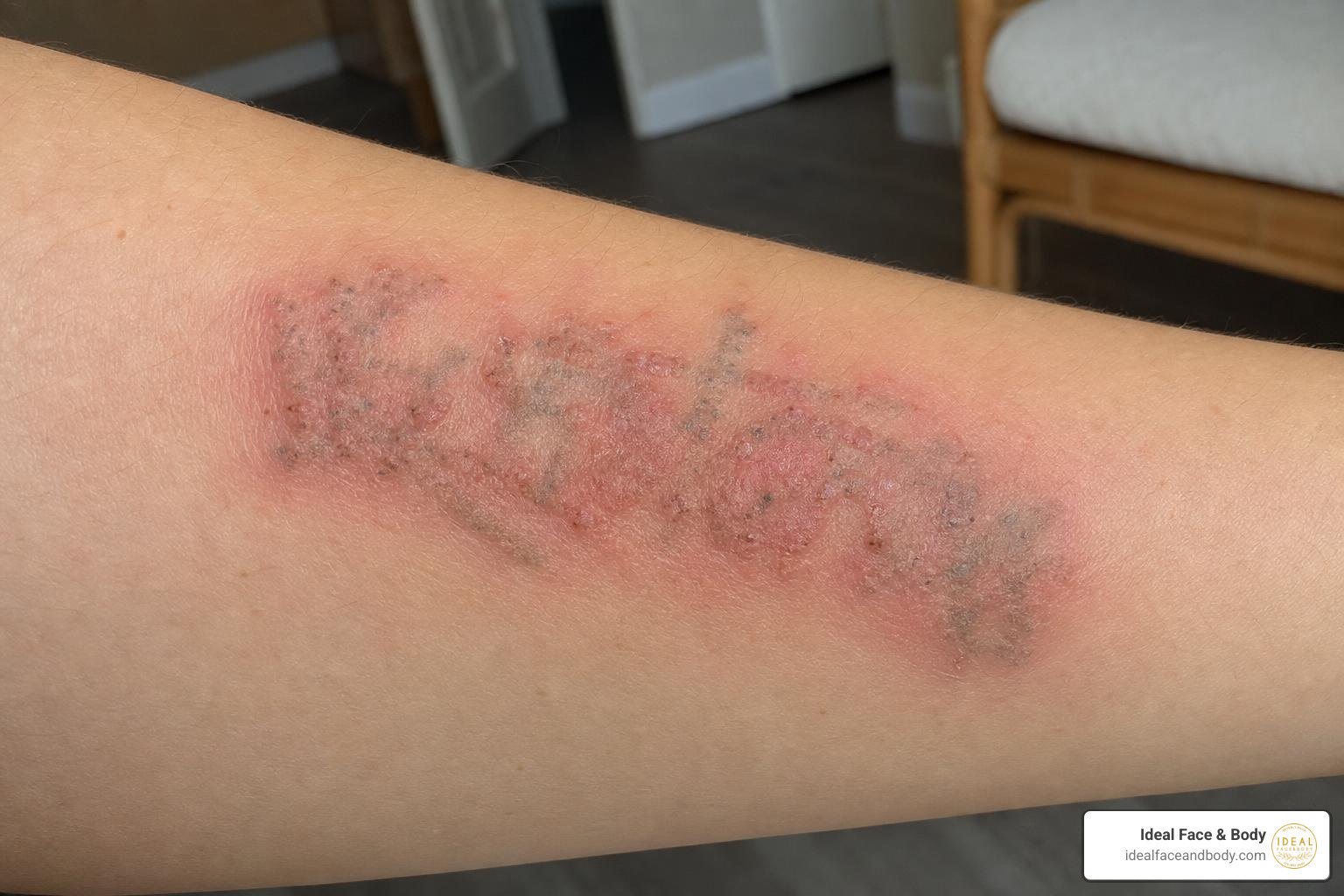
Laser tattoo removal is not a one-and-done event. Most tattoos require a series of treatments, commonly around 7 to 10 sessions for significant fading or removal. Some need more, depending on size, colors, ink depth, location, skin type, and immune response.
Your skin also heals on two timelines:
- Surface healing: redness, swelling, blisters, scabs, and crusting resolve.
- Internal clearing: your immune system continues removing ink particles for weeks.
That is why patience matters. If we rush the process, the skin can become inflamed, irritated, and more vulnerable to scarring.
Immediate Skin Reactions vs. Long-Term Healing
Right after treatment, the tattoo may turn white or chalky. This is called frosting. It usually fades quickly and is caused by gas or steam bubbles forming in the skin as laser energy hits the ink.
In the first 24 hours, common reactions include:
- Redness
- Swelling
- Warmth
- Tenderness
- A sunburn-like feeling
- Frosting
- Mild pinpoint bleeding in some cases
During days 1 to 14, you may see:
- Blistering
- Scabbing
- Crusting
- Itching
- Dryness
- Pink new skin as scabs fall away
Blistering can look scary, but small blisters can be a normal part of healing. The important rule: do not pop them. Blisters act like a natural bandage. Once they are opened, infection risk goes up.
From weeks 3 to 8, the fading process continues under the surface. Macrophages, which are immune cells, help carry away fragmented ink through the lymphatic system. This is why a tattoo may not look dramatically different the day after treatment, then gradually fade weeks later.
Sometimes the tattoo looks darker before it looks lighter. This can happen as swelling decreases and the remaining ink appears more defined. It does not automatically mean the treatment failed.
For a more complete clinical walkthrough, read what to expect during laser tattoo removal.
Why Session Spacing Matters for Scar Prevention
Waiting between sessions is one of the simplest ways to reduce scarring risk.
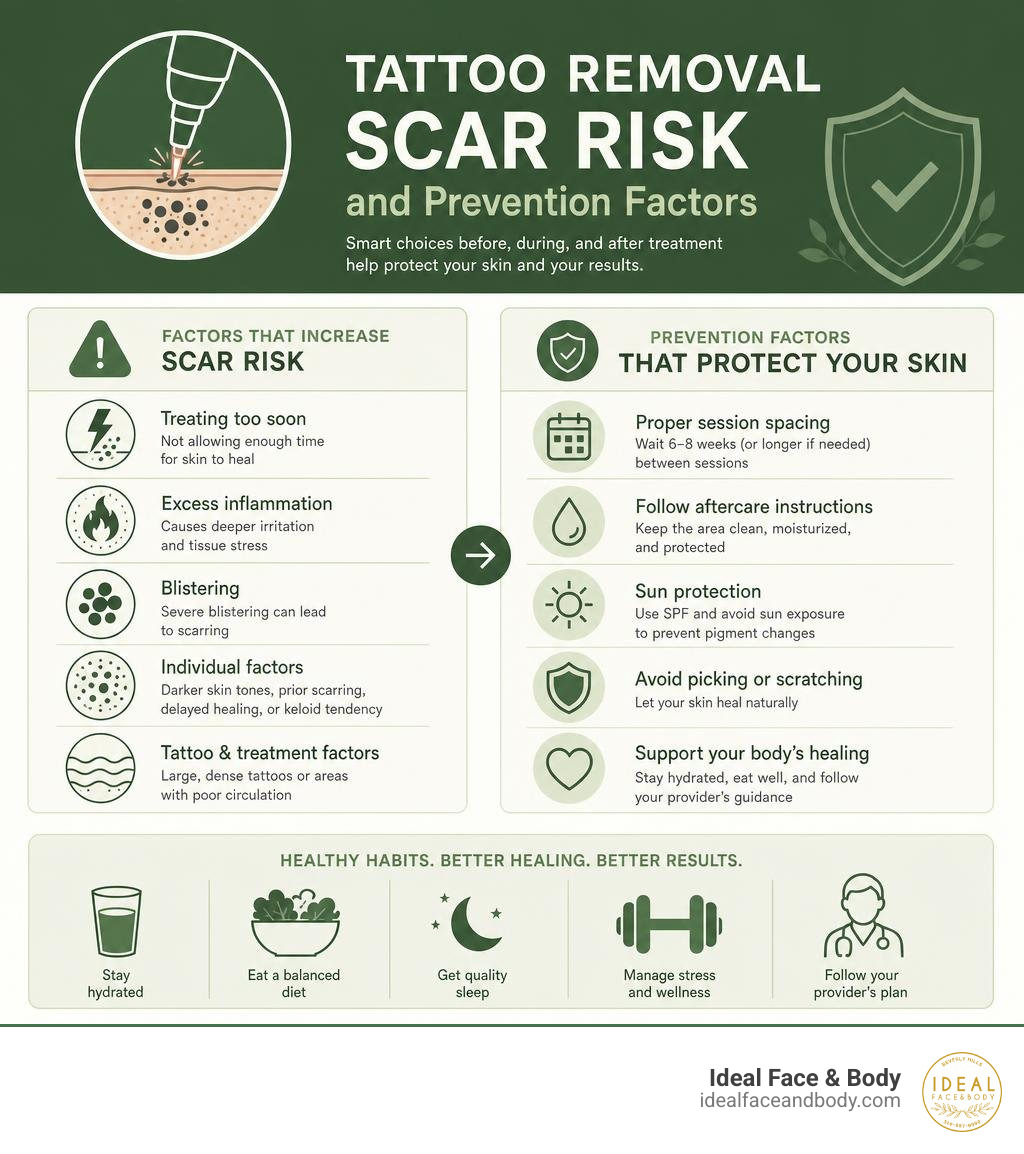
Most patients need at least 6 to 8 weeks between laser tattoo removal sessions. This gives the skin time to repair and gives the body time to clear ink. Treating too soon can cause “skin fatigue,” meaning the area becomes increasingly irritated and less resilient.
Spacing helps prevent:
- Excess inflammation
- Delayed healing
- Pigment changes
- Blistering that becomes more intense
- Textural changes
- Scarring
It also helps results. More laser energy is not always better. More frequent treatment is not always faster. The body needs time to do its part. The laser breaks the ink; your immune system takes out the trash.
Treatment spacing may be longer for:
- Darker skin tones
- Large tattoos
- Dense professional tattoos
- Areas with slower circulation
- Patients with delayed healing
- Prior scarring or keloid tendency
For session planning expectations, see our page on tattoo removal session expectations.
Advanced Treatments for Existing Tattoo Removal Scars
If scarring does occur, there are treatments that may improve color, texture, thickness, or indentation. The right option depends on the type of scar.
Common scar treatments include:
- Silicone gel or silicone sheets: Often used for raised scars to help flatten and soften them over time.
- Steroid injections: May help hypertrophic or keloid scars become flatter and less firm.
- Fractional laser resurfacing: Creates controlled micro-injuries to stimulate collagen remodeling and improve texture.
- Vascular lasers: May help reduce persistent redness in some scars.
- Microneedling: Can improve mild textural irregularity in select cases.
- Topical pigment treatments: May be used for certain discoloration patterns.
- Surgical scar revision: Reserved for select scars when non-surgical options are not enough.
Atrophic scars may require collagen-stimulating treatments or resurfacing. Raised scars may require anti-inflammatory treatment first. Pigment issues may need a completely different plan from texture issues.
A case report on combined laser protocols for atrophic scars showed how multiple laser approaches can be layered to address color, structure, and texture. While tattoo removal scars are not identical to traumatic scars, the principle is useful: scar treatment is often best when customized. You can read more here: research on combined laser protocols for scar treatment.
If you are comparing removal methods and scar tradeoffs, we also explain the topic here: surgical tattoo removal alternatives.
Frequently Asked Questions About Tattoo Removal Scars
Tattoo removal scarring questions are completely normal. We hear them all the time, and honestly, we like when patients ask. A cautious patient is usually a better-healing patient.
Does laser tattoo removal leave permanent scars?
Usually, no. Permanent scarring is uncommon when laser tattoo removal is performed with proper settings, appropriate technology, good spacing, and careful aftercare.
But “low risk” does not mean “zero risk.” Scarring is more likely if:
- The skin is treated too aggressively.
- The patient picks scabs.
- Blisters are popped.
- The area becomes infected.
- Sessions are too close together.
- The patient has a keloid history.
- The original tattoo already caused scarring.
Most normal reactions, such as redness, swelling, scabbing, and temporary pigment changes, are not permanent scars. They are part of the healing process.
How does skin type affect the risk of scarring?
Skin type matters a lot.
The Fitzpatrick scale classifies skin by how it responds to ultraviolet light, ranging from very fair skin to deeply pigmented skin. Medium-to-deeper skin tones have more active melanocytes, which means inflammation can more easily trigger pigment changes.
This does not mean darker skin cannot be treated safely. It means settings, wavelength selection, cooling, spacing, and aftercare need to be especially thoughtful.
Patients with darker skin tones may have a higher risk of:
- Post-inflammatory hyperpigmentation
- Hypopigmentation
- Longer-lasting discoloration
- Keloid or hypertrophic scarring if they are genetically prone
Sun protection is especially important. Treating recently tanned skin or exposing healing skin to sun can increase pigment complications.
If this applies to you, read our guide on tattoo removal for dark skin.
Does smoking affect the healing process and scarring risk?
Yes. Smoking can make tattoo removal harder and healing less predictable.
Nicotine and other chemicals in tobacco can reduce blood flow and oxygen delivery to the skin. Since tattoo removal depends on inflammation, immune clearance, and tissue repair, anything that weakens circulation can slow progress.
Smoking may contribute to:
- Slower wound healing
- Higher infection risk
- Less efficient ink clearance
- More inflammation
- Increased risk of poor skin quality after treatment
As noted earlier, tattoo removal research has reported a major reduction in removal success among smokers after multiple sessions. If you are serious about getting the best result, reducing or stopping smoking before and during your treatment series can make a meaningful difference.
Treatment costs and timelines vary because healing, ink clearance, and session needs vary by person. We explain the factors that affect outcomes here: tattoo removal cost and outcome factors.
Conclusion
So, does laser tattoo removal scar?
Most of the time, no permanent scar forms when the treatment is performed correctly and aftercare is followed. The more realistic answer is this: temporary redness, swelling, scabbing, blistering, and pigment changes are common; permanent textural scarring is uncommon, but possible.
The best way to protect your skin is to choose a careful, experienced team, follow aftercare, avoid sun exposure, stop picking at healing skin, and give your body enough time between sessions. Your skin is doing a lot behind the scenes, even when it looks like nothing is happening.
At Ideal Face & Body in Beverly Hills, CA, Dr. Sarah Yovino and Dr. Justin Yovino focus on personalized, medically informed aesthetic care. We evaluate your tattoo, skin type, healing history, and goals before recommending a plan, because safe tattoo removal is never one-size-fits-all.
If you are worried about before and after laser tattoo removal scars, we would be happy to help you understand your options and what your skin is likely to do next.