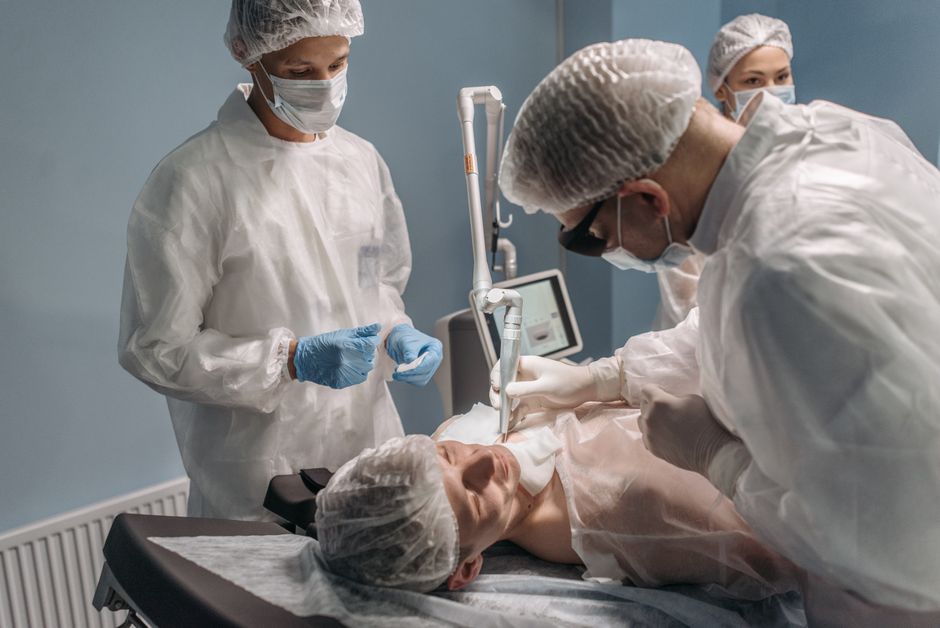
What to Expect from a Laser Tattoo Removal Aesthetic Clinic
Visiting a laser tattoo removal aesthetic clinic is the safest, most effective way to fade or fully erase unwanted ink — without surgery, scarring, or significant downtime.
Here’s a quick snapshot of what you need to know:
| Question | Quick Answer |
|---|---|
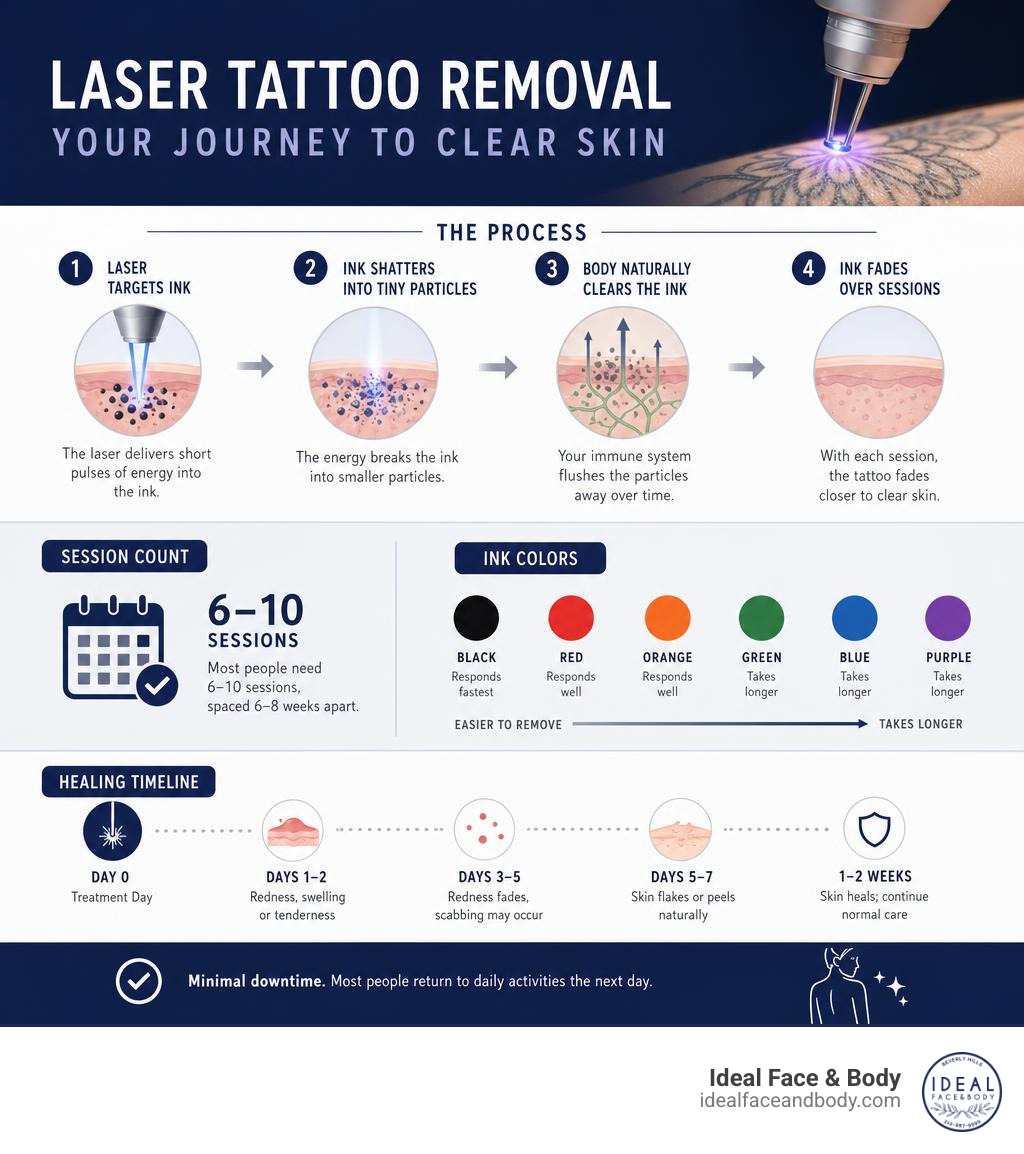
| How does it work? | Laser pulses shatter ink into tiny particles the body flushes out naturally |
| How many sessions? | Most people need 6–10 sessions, spaced 6–8 weeks apart |
| Does it hurt? | Feels like a rubber band snap; numbing cream is available |
| Is it safe for all skin tones? | Yes, when performed by a trained provider with the right settings |
| Is there downtime? | Minimal — redness and swelling typically resolve within a few days |
| Can all ink colors be removed? | Most colors, yes — black responds fastest; greens and blues take longer |
Tattoo regret is more common than most people think. Over 25% of Americans with tattoos have considered removal at some point. Whether it’s a name that no longer fits your life, a design you’ve outgrown, or ink that’s holding you back professionally, modern laser technology has made clean, safe removal more accessible than ever.
But not all clinics — or lasers — are created equal. The provider’s training, the technology used, and the treatment plan they build around your specific skin tone and tattoo all determine how well your results turn out.
I’m Dr. Sarah Yovino, a double board-certified physician and medical aesthetics specialist at Ideal Face & Body in Beverly Hills, CA, where I focus on advanced, minimally invasive treatments including laser tattoo removal aesthetic clinic services tailored to each patient’s unique skin and goals. In this guide, I’ll walk you through everything you need to make a confident, informed decision about your removal journey.
Choosing the Right Laser Tattoo Removal Aesthetic Clinic
Selecting where to undergo your treatment is the single most important decision you will make on your journey to clear skin. Tattoo removal is not merely a cosmetic routine; it is a highly specialized medical procedure that requires a deep understanding of laser physics, skin biology, and wound healing. When you search for options, you will find a wide variety of facilities, but choosing a dedicated, medical-grade clinic ensures your safety and the efficacy of your treatment.
At Ideal Face & Body in Beverly Hills, CA, we understand that every tattoo has a unique story, and every skin type requires a bespoke approach. We do not believe in one-size-fits-all protocols. Instead, we design customized treatment plans that respect the integrity of your skin while aggressively targeting unwanted pigment.
To explore how we customize our local treatments, you can read More info about Beverly Hills treatments or check out our comprehensive Tattoo Removal Near Me Ultimate Guide to help you navigate your local options.
What to Look for in a Laser Tattoo Removal Aesthetic Clinic
When evaluating potential clinics, your priority should always be safety and clinical expertise. Aesthetic treatments are medical procedures and should ideally be performed under the supervision of board-certified dermatologists, plastic surgeons, or highly trained licensed practitioners.
Key factors to look for include:
- Provider Credentials: Ensure the practitioners are specifically licensed and certified in laser mechanics and safety. At our office, Dr. Sarah Yovino and Dr. Justin Yovino oversee our clinical protocols to maintain the highest standards of safety.
- Medical-Grade Equipment: The clinic must utilize FDA-approved, medical-grade lasers rather than low-powered, salon-grade devices that only fade ink partially and increase the risk of thermal burns.
- Sterile Environment: The clinical space should adhere to strict medical hygiene standards to eliminate any risk of post-treatment infection.
To learn more about what sets a premier medical spa apart, read our guide on Choosing a Trusted Beverly Hills Clinic.
Advanced Technology at Our Laser Tattoo Removal Aesthetic Clinic
The type of laser technology a clinic uses directly dictates how fast, safe, and comfortable your removal process will be. Traditional nanosecond lasers (often called Q-switched lasers) have been the industry workhorse for decades. While effective, they rely heavily on thermal energy to heat up and break down ink.
Modern clinics have upgraded to ultra-fast picosecond lasers, which deliver energy in trillionths of a second. This incredibly rapid delivery creates a photoacoustic effect rather than a purely thermal one, shattering ink into microscopic, dust-like particles with minimal heat transfer to the surrounding skin.
To keep our patients comfortable, we pair our advanced laser systems with specialized skin-chilling systems like the Zimmer cooling device. This machine blows continuous, sub-zero cold air onto the treatment area before, during, and after the laser pulses, significantly reducing nerve sensitivity and minimizing discomfort.
For an in-depth breakdown of the machinery we use, explore our articles on What Are the Best Lasers for Tattoo Removal? and the Latest Tattoo Removal Technology.
The Science of Erasing Ink: How Laser Technology Works
To understand how a laser removes a tattoo, it helps to understand why tattoos are permanent in the first place. When you get a tattoo, the needle injects ink deep into the dermis (the second layer of your skin). Your immune system immediately recognizes these ink molecules as foreign invaders and sends white blood cells (macrophages) to eat them and carry them away.
However, the pigment particles in tattoo ink are far too large for your tiny white blood cells to engulf. Because they cannot move the heavy ink particles, the macrophages simply surround them, trapping the pigment in the dermis permanently.

This is where our medical-grade lasers come in. The laser emits ultra-short, highly concentrated pulses of light energy that pass safely through the top layer of skin (the epidermis) and are selectively absorbed by the trapped ink particles.
When the ink absorbs this intense light energy, it undergoes a rapid expansion and sudden collapse. This photoacoustic shockwave shatters the large ink blobs into microscopic fragments. Once the ink is broken down into tiny, dust-like pieces, your white blood cells can finally grab them, transport them through your lymphatic system, and naturally flush them out of your body over the coming weeks.
For general information about how medical lasers are regulated and used in clinical settings, the U.S. Food and Drug Administration offers an overview of medical lasers. To read more about the physics behind this process, check out The Science of Pico Lasers and Why Your Tattoo Should Be Scared and The Science of Erasing Ink: A Deep Dive into Tattoo Removal Lasers.
Picosecond vs. Nanosecond Lasers
The main difference between older nanosecond lasers and modern picosecond systems is pulse duration.
- Nanosecond Lasers (Q-Switched): Deliver light pulses in billionths of a second. They rely on heating the ink until it cracks. This thermal approach requires more sessions and carries a slightly higher risk of heat damage to surrounding tissue.
- Picosecond Lasers (PicoSure/PicoWay): Deliver light pulses in trillionths of a second. The speed is so extreme that the ink shatters from pressure rather than heat. This allows for faster clearance, fewer overall sessions, and a much safer profile for various skin tones.
While picosecond lasers represent a significant technological leap, the right laser for you depends on your specific tattoo. To understand how these technological details affect your treatment plan, read about PicoSure Session Cost Factors (Costs Vary) and stay informed on New Tattoo Removal Methods.
Ink Colors and Treatment Efficacy
Different ink colors absorb different wavelengths of light. To target a specific color, the laser must be set to a wavelength that the color is capable of absorbing. If the wavelength is incorrect, the light will simply reflect off the ink without breaking it down.
Black ink is the easiest color to remove because it absorbs all laser wavelengths. Conversely, vibrant colors like green, sky blue, yellow, and orange are highly reflective and require specialized wavelengths to target them effectively.
| Laser Wavelength | Primary Target Ink Colors | Difficulty Level |
|---|---|---|
| 1064 nm | Black, dark blue, dark brown | Easiest to remove |
| 532 nm | Red, orange, warm tones | Moderate |
| 755 nm / 785 nm | Green, blue, purple | High (requires advanced picosecond lasers) |
| 650 nm | Yellow, light green | Very high |
Our advanced multi-wavelength systems allow us to customize the laser settings for multicolored tattoos, ensuring every hue is addressed safely and effectively. Learn more about your options in our guide on Laser Tattoo Removal Options.
Safety, Skin Tones, and Aftercare Protocols
One of the most common myths about laser tattoo removal is that it is unsafe for people with darker complexions. While it is true that darker skin tones require a higher level of clinical expertise, modern lasers have made the process safe and effective for all Fitzpatrick skin types when performed correctly.
The primary challenge with darker skin is that the laser must distinguish between the melanin (natural pigment) in your skin and the ink pigment in your tattoo. If the wrong wavelength or energy setting is used, the laser may accidentally target your skin’s melanin, leading to hypopigmentation (light spots), hyperpigmentation (dark spots), or thermal scarring.
By utilizing longer wavelengths (like 1064 nm) that bypass surface melanin and penetrate deeper into the dermis, we can safely treat darker skin tones with minimal risk. To explore our safety protocols, read our Safe Laser Tattoo Removal Complete Guide and our clinical overview on the Removal of Unwanted Tattoos.
Preparing for Your Laser Session
Proper preparation is essential to ensure a safe, uncomplicated laser session. We advise all our patients to follow these pre-treatment steps:
- Avoid Sun Exposure: Do not tan or expose the treatment area to direct sunlight for at least two to four weeks prior to your session. Sunburned or tanned skin is highly sensitive and cannot be treated safely.
- Keep the Skin Clean: Arrive at your appointment with clean skin, completely free of lotions, perfumes, body oils, or makeup.
- Shave the Area: Shave any hair from the treatment site the day before your session to prevent the laser from singeing the hair follicles.
- Avoid Retinols and Acids: Stop using harsh exfoliants, retinoids, or salicylic acids on the treatment area for at least three days prior.
For a detailed checklist, read our guide on Preparing for Your Tattoo Removal Session.
Post-Treatment Care and Healing Timeline
What you do after your session is just as important as the treatment itself. Laser tattoo removal essentially creates a controlled micro-injury, and your body needs the right environment to heal without scarring.
Immediately after treatment, you may notice “frosting” — a temporary white reaction on the skin caused by rapid gas release. This resolves within minutes. Over the next few days, you can expect mild redness, swelling, and occasionally minor blistering or scabbing.
Essential Aftercare Steps:
- Keep the area clean and dry for the first 24 hours.
- Apply a thin layer of recommended healing ointment (like Aquaphor) and cover with a sterile bandage as directed.
- Do not pop blisters or pick at scabs; doing so increases the risk of infection and permanent scarring.
- Wear loose clothing to prevent friction against the treated skin.
- Apply broad-spectrum sunscreen once the skin has completely closed to protect the healing tissue from UV damage.
For a step-by-step recovery plan, check out our Tattoo Removal Aftercare Guide.
Frequently Asked Questions
How many sessions are typically needed for complete tattoo removal?
On average, significant fading or complete removal requires 6 to 10 sessions, though some complex multicolored tattoos may require more. The exact number of treatments depends on several key variables:
- Ink Depth and Density: Professional tattoos have deeper, more densely packed ink than amateur tattoos, requiring more sessions.
- Tattoo Location: Areas with high blood flow (like the chest, neck, and arms) fade much faster than extremities (like fingers, ankles, and toes) because the lymphatic system can flush the shattered ink away more easily.
- Tattoo Age: Older tattoos are already slightly faded by the body’s natural defense systems and generally clear faster than brand-new ink.
To read about real-world timelines and recovery journeys, explore How Many Laser Sessions? and browse our Tattoo Removal Success Stories.
Is laser tattoo removal safe for darker skin tones?
Yes, absolutely. By utilizing advanced picosecond lasers and selecting longer wavelengths (such as 1064 nm), we can bypass the melanin in the epidermis and target the ink pigments safely. It is crucial to seek out an experienced provider who understands how to adjust the laser’s pulse duration and spot size to protect your skin.
To learn more about how we protect your skin’s integrity, read our resource on Safe Tattoo Removal for All Skin Tones.
What does the treatment feel like and is there downtime?
Most patients describe the sensation of laser tattoo removal as similar to a warm rubber band snapping against the skin, accompanied by a warm, prickling feeling. While it is uncomfortable, the sessions are incredibly fast — often lasting only a few minutes for small to medium-sized tattoos.
To make the experience as painless as possible, we offer topical numbing creams and utilize our Zimmer cooling system to numb the skin with cold air. There is virtually zero downtime; you can return to your normal daily activities immediately after your session, provided you protect the treated area from friction and sun exposure.
For more details on managing comfort and understanding what to expect, read Tattoo Removal Cost Factors (Costs Vary).
Conclusion
Laser tattoo removal is a highly effective, scientifically proven method to clear your skin of unwanted memories, outdated designs, or pigment that no longer fits your personal aesthetic. While the journey requires patience and multiple sessions, modern advancements in picosecond lasers and cooling technologies have made the process safer, faster, and more comfortable than ever before.
At Ideal Face & Body in Beverly Hills, CA, Dr. Sarah Yovino and Dr. Justin Yovino are dedicated to helping you achieve your aesthetic goals with precision, care, and state-of-the-art medical technology. Whether you want to completely erase a tattoo or simply fade it to make room for a beautiful new cover-up, we are here to support you every step of the way.
If you are ready to take the first step toward a fresh start and clean skin, we invite you to read our Tattoo Removal Cost Guide (Costs Vary) to learn more about how we structure our customized clinical plans, and schedule your personalized consultation with us today.