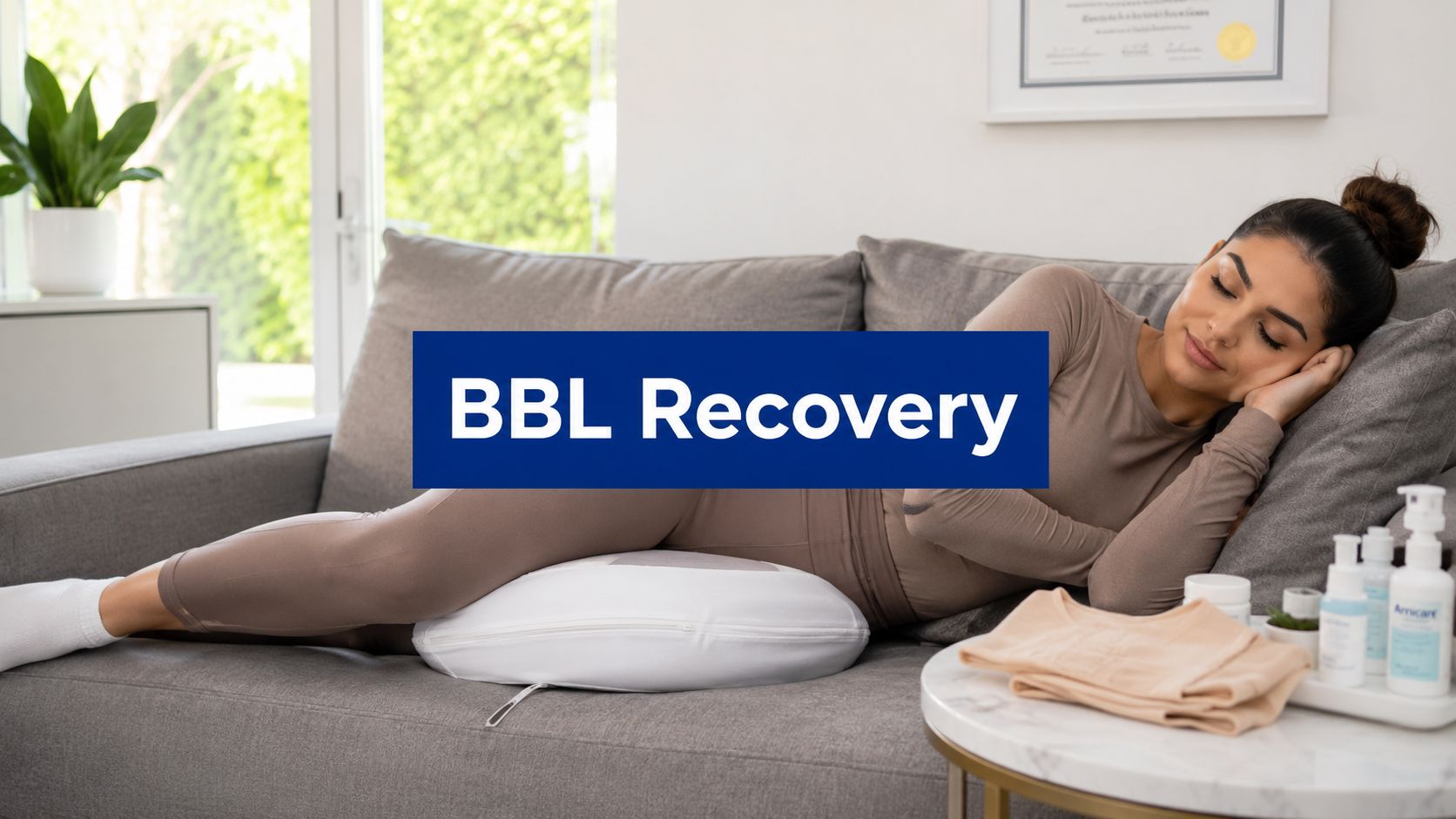
You're home, the garment is on, and the mirror already looks different than it did this morning. That's normal, and it's not the moment to judge your result. Fat transfer to buttocks recovery is where your outcome is protected, shaped, and allowed to settle into something that looks natural rather than swollen.
If you had an Awake Butt Lift in our Beverly Hills office, the first thing to understand is that recovery isn't passive. The way you sit, sleep, walk, and manage your workday all affect how well the transferred fat survives while it revascularizes, which is why the early rules matter so much. The good news is that the process is predictable when you treat the first weeks like a careful routine instead of a forced vacation.
Table of Contents
- Your BBL Recovery Journey Begins Now
- The First 48 Hours Post-Procedure Care
- Weeks One and Two Protecting Your Investment
- Weeks Three to Six Resuming Normal Activities
- Long-Term Care and Maximizing Your Final Results
- Frequently Asked Questions About Awake BBL Recovery
Your BBL Recovery Journey Begins Now
A patient often says the ride home is the hardest part, not because pain is severe, but because every small movement suddenly matters. She feels tired, a little swollen, and unsure whether she can lie on her side, how long she can stand at the counter, or whether one quick sit will undo the work. The mindset has to shift from “the procedure is done” to “the protection phase has started.”
The first several weeks are about guarding the fat cells while they establish blood supply. That is why sitting restrictions, the compression garment, and side or stomach sleeping guidance are part of recovery planning after buttock fat transfer, as outlined in gender confirmation recovery guidance. Swelling often improves before the final contour appears, so early fullness is not your final shape.
Practical rule: treat the first few weeks as graft-protection time, not appearance-judgment time.
That perspective matters at home too. If you are managing meals, children, remote work, or errands, plan your day around offloading the buttocks instead of trying to push through discomfort. A gentle postpartum-style routine, like the one described in these new mom wellness tips, can be a useful model because it respects rest, positioning, and pacing without turning recovery into something dramatic.
For patients who want a clearer overview of the procedure itself, the main Brazilian Butt Lift page explains the basic concept, but the actual work starts after you leave the office. Awake, office-based recovery can feel more immediate and more practical than hospital-based surgery under general anesthesia, because you are alert enough to notice pressure, fatigue, and positioning right away. That means discipline matters from the first evening home, especially when you are balancing recovery with work from home or household tasks.
The First 48 Hours Post-Procedure Care
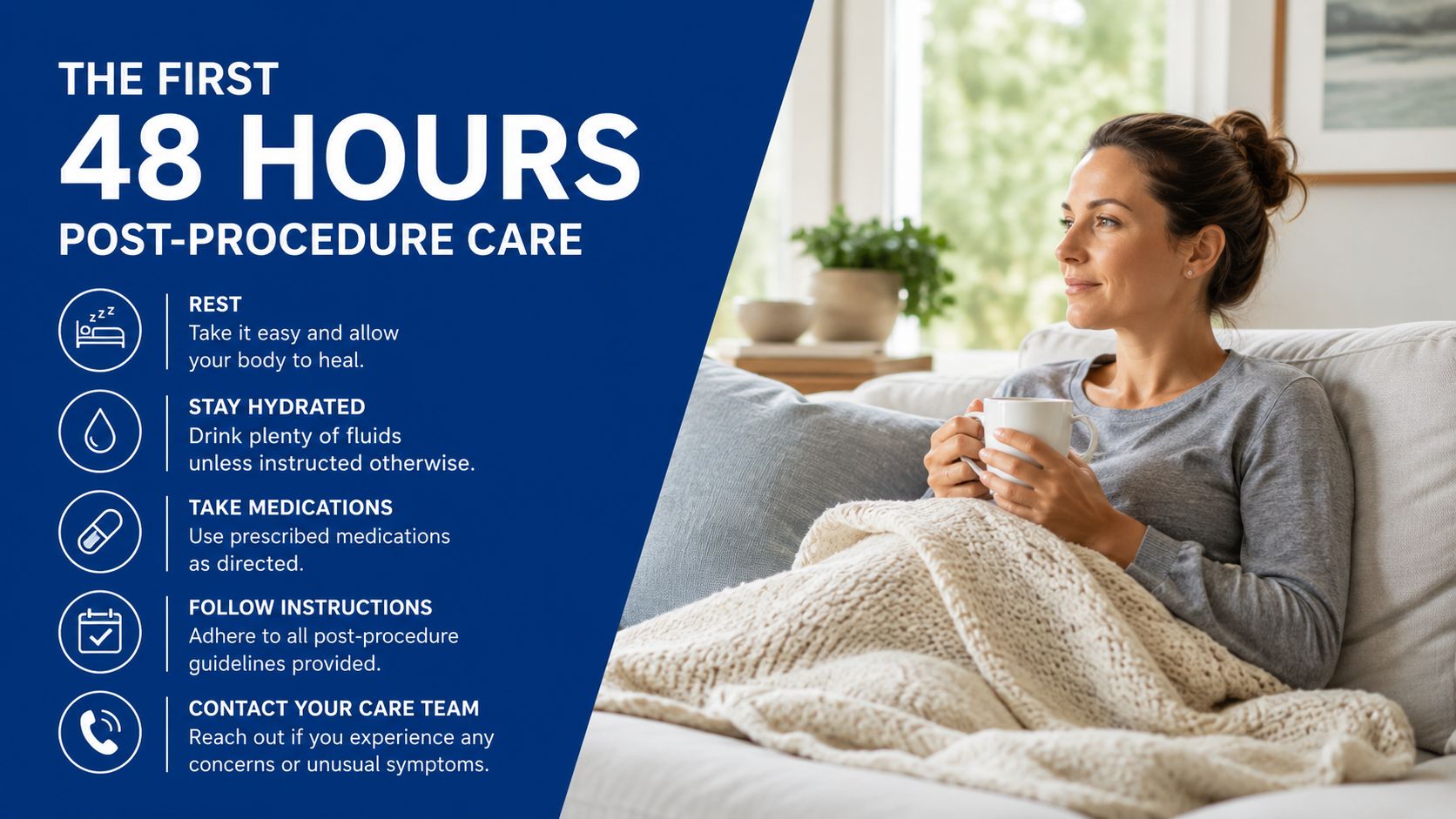
The first two days are about comfort, circulation, and keeping pressure off the grafts. If you had an office-based, awake procedure, you may feel more clear-headed than someone waking up from hospital anesthesia, but that doesn't mean you should do more. The body still needs rest, and the donor sites from liposuction often create more soreness than the buttocks themselves.
What to do first
- Take pain medication exactly as prescribed. Stay ahead of discomfort instead of waiting until pain is intense.
- Expect some drainage from incision sites. Light drainage can be part of normal early healing, so keep dressings clean and change them the way you were shown.
- Wear the compression garment as directed. It helps control edema and supports the areas treated with liposuction, which is why garment use is commonly emphasized in postoperative recovery guidance (why the post-lipo garment matters).
- Walk slowly and briefly every so often. Gentle movement helps circulation without loading the buttocks.
The key is to keep everything simple. Use a pillow only where your team instructed, keep transfers from bed to standing controlled, and avoid the instinct to “test” the area by sitting longer than necessary. The transferred fat is still vulnerable, and pressure is the enemy in this phase.
Keep the first 48 hours boring on purpose. Boring is healing.
At home, think in short cycles. Rest, stand, take a few careful steps, hydrate, and return to a protected position. If you're working from home, don't try to answer a full inbox from the couch. Sit only if your instructions allow it, and if they do, keep the buttocks offloaded exactly as shown. The goal is to arrive at day three with less swelling, less strain, and no unnecessary setbacks.
Weeks One and Two Protecting Your Investment
The first two weeks are when discipline matters most. The transferred fat is still trying to establish its blood supply, so direct buttock pressure can compromise the grafts and slow the result you want. Recovery guidance consistently warns against sitting on the area too soon because pressure can damage newly transferred fat while it is still settling into place (gender confirmation recovery guidance).
How to live normally without sitting normally
Sleep on your stomach or side, and use the setup your surgeon gave you for offloading. That can feel awkward after a long day, especially after an awake, office-based procedure when you are alert enough to notice every change in position, but this is the trade-off that protects the grafts while the tissue stabilizes. If you wake up on your back, just reposition and return to the offloading plan without worrying about the setback.
Work is where recovery becomes practical. Desk work, emails, phone calls, and household coordination are often harder than patients expect because they all encourage too much sitting. Some people can return to desk tasks in roughly 7 to 14 days with a BBL pillow or another pressure-shifting strategy, while other guidance recommends avoiding sitting except for brief bathroom use during the first two weeks (gender confirmation recovery guidance). The exact routine depends on your instructions, but the bigger point is the same, your work setup has to be changed, not just your calendar.
A few habits make the day easier:
- Use a standing setup when possible. Short standing blocks are gentler on the grafts than casual sitting while you answer messages.
- Work in timed bursts. Handle a task, stand, walk a little, then return if your instructions allow it.
- Keep bathroom trips efficient. Move deliberately and avoid lingering on the toilet.
- Use the thigh support strategy correctly. A BBL pillow is meant to shift pressure away from the buttocks, not turn sitting into a normal habit.
At home, the same rule applies to ordinary chores. Carry only what you can manage safely, avoid repeated bending and twisting, and accept that a few tasks need to wait. If you are trying to work from home, do not settle into the couch or “just check one more thing” from a soft surface that puts pressure where it should not be. Use the position your surgeon recommended, keep transfers from bed to standing controlled, and save the multitasking for later.
Normal during these two weeks means protected, not unrestricted. It means you can eat, sleep, answer essential messages, and move around your home without forcing the area that was treated. The compression garment also stays part of the routine, and many recovery protocols ask patients to wear it most of the time, removing it only for showering. If it feels irritating, that is common. If it feels painfully tight or seems off in fit, call the office and have it checked.
Weeks Three to Six Resuming Normal Activities
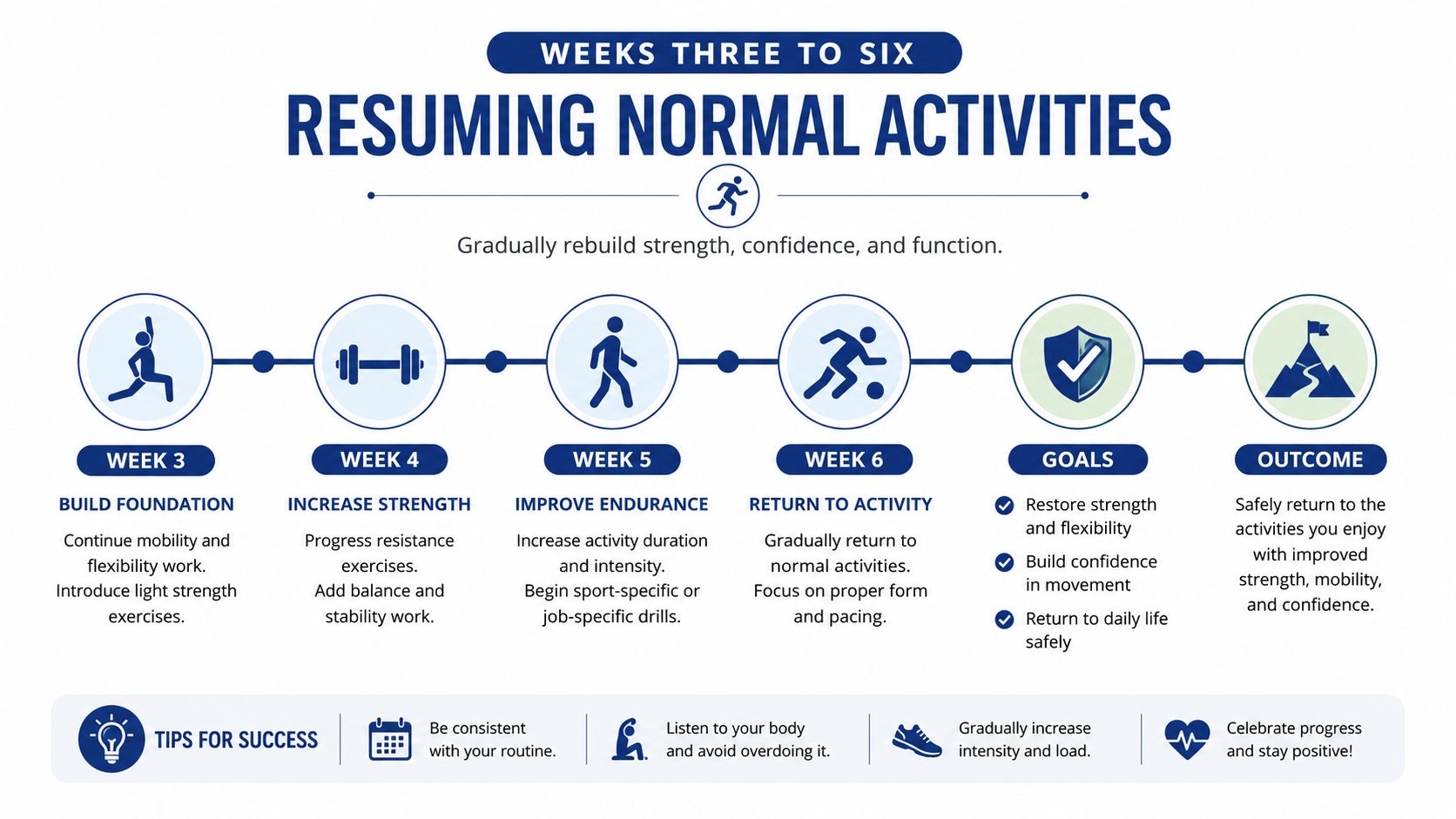
By weeks three to six, the recovery routine usually feels more manageable, but healing is still underway. Swelling often keeps fading during this phase, while the final contour can take several months to settle. That gap between how you feel and how the result will eventually look is one of the more frustrating parts of buttock fat transfer recovery.
What better actually looks like
You will usually notice that standing, walking, and getting through the workday become easier before the shape looks finished. The grafted fat and the surrounding tissues are still settling, so the body can feel more functional long before it looks fully stable. For patients having an awake, office-based procedure, this phase often means you can do more at home and at work, but only if you stay deliberate about pressure and pacing.
Here is what that transition often feels like:
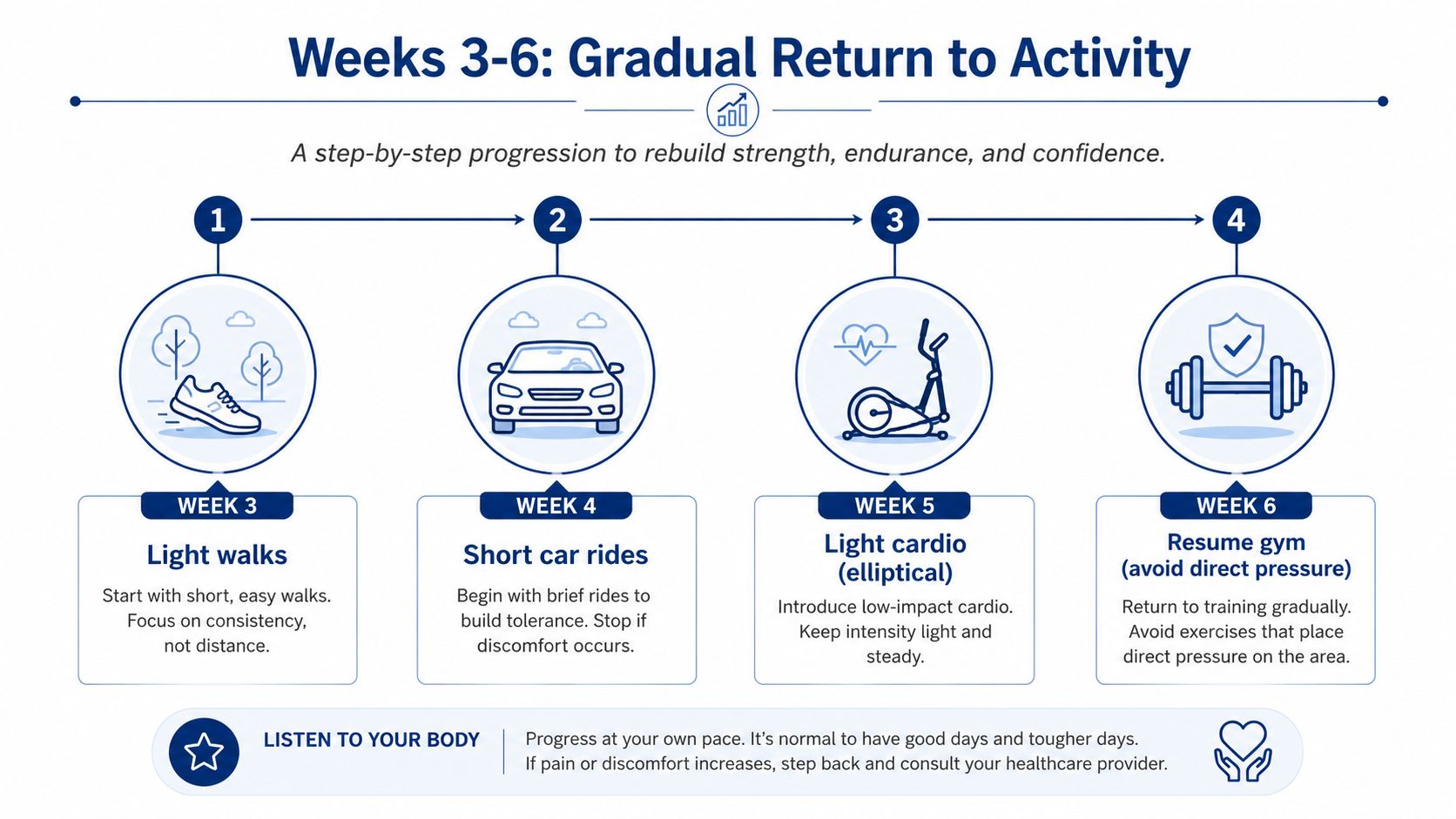
- Longer walks start to feel more comfortable before exercise feels ready.
- Short car rides are less awkward than they were during the first week.
- Brief sitting periods become more tolerable, although time still matters.
- Light exercise can begin cautiously, as long as it does not put direct pressure on the buttocks or ask the glutes to work hard.
The primary challenge is often psychological. Early swelling can make the buttocks appear fuller than the final result, so one day the contour may seem great and the next day it may look different. That change is part of recovery, not a sign that the fat transfer has failed.
The milestone in weeks three to six is getting back to more without loading the grafts.
If you are trying to work from home, the day-to-day details matter. A soft couch, a long video call, or a half-hour of catching up on email can create more pressure than patients expect, especially after an awake procedure where you go home the same day and immediately have to manage ordinary tasks. Use counters instead of low seats, ask for help with laundry or groceries, and avoid the urge to turn a protected recovery window into a productive catch-up week. The same approach helps with driving, lifting children, and other household tasks that force you to sit too long or brace through the buttocks.
Normal during this phase means protected, not unrestricted. You should be able to eat, sleep, answer important messages, and move around the house without stressing the treated area. The compression garment usually remains part of the routine, and many recovery plans ask patients to wear it most of the time, removing it only for showering. If it feels irritating, that is common. If it feels painfully tight or seems poorly fitted, call the office and have it checked. For patients who want a practical reminder of how transfer results settle over time, our guide on how long fat transfer results last explains the longer arc of healing, while good protein intake can also support recovery, including products such as Maximum Health Products recovery protein.
Long-Term Care and Maximizing Your Final Results

The long game starts once the swelling stops dominating the mirror. By that stage, the question is no longer just how you feel day to day, but how well the transferred fat is settling and how carefully you protect it. Clinical review data describe buttock fat grafting as having a mean complication rate of about 7% to 10%, with serious complications in fewer than 1% of cases, and common issues include seroma, pain, and contour irregularity (PMC review). That figure is not meant to scare you. It is a reminder to stay observant and keep your surgical team informed if anything changes in a way that does not fit the expected recovery pattern.
What protects the result after the early recovery
The final contour can take 3 to 6 months to fully stabilize, even though swelling usually improves much earlier. During that period, the surviving fat becomes part of your own tissue, and the shape becomes more predictable (PMC review). Weight stability matters here. If your weight swings up or down, the transferred fat can change with it just like other fat on the body.
Day-to-day habits matter more than patients expect. For an awake, office-based procedure, recovery often happens around work calls, school pickups, meal prep, and ordinary chores, so the practical challenge is keeping pressure off the buttocks while still living your life. That means using counters instead of low seats, asking for help with laundry or groceries, and avoiding long stretches of sitting that flatten the area before it has had time to settle. It also means planning for posture changes at work, especially if you work from home and tend to drift into a chair without thinking about it.
Nutrition should support healing without becoming a project of its own. Eat in a way that keeps protein steady, stay hydrated, and do not undereat while tissue is still settling. If you want a simple reference point for recovery-friendly nutrition, the discussion around Maximum Health Products recovery protein is useful because it focuses on protein support during recovery without turning the process into a fad.
Exercise returns in stages. Hard workouts belong back only after the early protection phase and with surgeon clearance, especially anything that loads the glutes directly or puts prolonged pressure on the area. Heavy lower-body training too soon can work against the shape you are trying to preserve. The better strategy is patience first, then consistency.
For patients who want to plan ahead, the discussion of how long fat transfer results last comes down to habits, not shortcuts. The fat that survives becomes part of you, so what you do after surgery has a real effect on the result you keep.
What to watch for
Call the office if swelling suddenly gets worse instead of gradually easing, if one side stays noticeably different, or if pain feels stronger than the usual recovery pattern. Redness, warmth, drainage, fever, or a hard area that keeps enlarging also deserve a call. Those signs do not always mean something serious, but they do mean you should not wait and hope they pass on their own.
The best long-term mindset is straightforward. Protect the contour, keep your weight steady, and treat the final result as something you maintain through routine choices, not something you finish and forget.
Frequently Asked Questions About Awake BBL Recovery
Patients who choose an awake, office-based procedure often ask whether recovery is easier than after surgery done under general anesthesia. The immediate experience is usually different, not magically shorter. You may avoid the fog of general anesthesia, but the grafted fat still needs the same protection, and the transferred fat is most vulnerable during the first six weeks (Plastics Surgery overview).
Common questions we hear
Is the recovery really different when the procedure is awake?
Yes, in the sense that many patients feel more present and less groggy right away. No, in the sense that the buttocks still cannot tolerate casual sitting or pressure early on.
How do I handle work and family life if I can't sit normally?
Plan around the restrictions instead of fighting them. Desk work may require standing intervals, childcare may require more help than usual, and driving should wait until you can do it without compromising positioning or comfort. The practical recovery timeline for comfort is often shorter than the 3 to 6 months needed for full integration and final results (Plastics Surgery overview).
What should make me call Dr. Yovino's office?
Increasing redness, warmth, fever, drainage that seems unusual, a new hard area, or pain that feels worse instead of better all deserve a check-in. I'd rather hear from you early than have you guess at home.
When can I judge my result?
Not in the first few weeks. Swelling can disguise shape changes, and the contour keeps refining for months. Early photos are useful for tracking progress, but they're not the final answer.
What's the biggest mistake patients make?
Testing the limits too soon. A few extra minutes of sitting, skipping the garment, or resuming household work before the tissue is ready can undo good healing.
The awake setting can be a real advantage for many patients because it keeps the experience office-based and focused, but the recovery rules don't get looser just because the procedure felt more manageable. The fat still has to survive, and your habits still decide how well it does.
If you're planning fat transfer to buttocks recovery and want a team that treats recovery as seriously as the procedure itself, Ideal Face & Body can walk you through awake, office-based body contouring with practical aftercare guidance. If you're ready to talk through your timeline, daily responsibilities, and what your first weeks will look like, schedule a consultation and get a recovery plan built around real life.