
If a breast looks lower after surgery, does that mean the lift has failed, or that you're comparing a healing breast with a result that hasn't settled yet?
A revision breast lift, also called secondary mastopexy, corrects selected shape, position, skin, or scar concerns after previous breast surgery. The important question isn't whether the breast looks different. It's what has changed, whether that change is continuing, and which tissue or implant-related problem is responsible. A useful assessment starts with comparable photographs and measurements, not a single disappointing view in the mirror.
Table of Contents
- Signs That Point to a Revision Breast Lift
- How Long to Wait Before Judging Your Result
- Why a Revision Breast Lift Can Fail Again
- Who Qualifies for Revision and What Imaging Shows
- Technique Choices Across Incisions, Support and Staging
- Risks and What the Numbers Mean
- Confirm the Revision Plan Before You Book
Signs That Point to a Revision Breast Lift
Signs of a failing breast lift and their likely causes
| Sign | Likely cause | What it suggests |
|---|---|---|
| Nipple and areola sitting below the breast crease | Recurrent ptosis or stretched skin envelope | Revision lift may be needed |
| Upper breast flat with fullness at the lower pole | Lower-pole descent or implant malposition | Check implant position first |
| Lower breast looks heavier and bottom-heavy | Descent of gland tissue without internal support | Lift with deeper support |
| Loose or wrinkled skin at the lower pole | Skin envelope laxity | Skin tailoring may be required |
| Breasts uneven in height | Asymmetry from original surgery or healing | Measure both sides before planning |
| Widened or tethered scar | Poor scar healing or excess tension | Scar assessment before planning |
| Shape change after pregnancy or weight change | Volume and tissue change | Wait for stability, then reassess |
These are possible explanations, not diagnoses. The breast crease is the fold where the underside of your breast meets the chest. The lower pole is the portion below the nipple, and the skin envelope is the skin surrounding the breast tissue.
A lower nipple and a heavier lower breast aren't necessarily the same problem. Say the nipple remains in a reasonable position, but more breast tissue hangs below it. That pattern may require reshaping and support of the gland rather than moving the nipple higher.
Similarly, an implant that has shifted can make the breast look droopy even when excess skin isn't the main issue. Removing more skin without identifying that distinction may leave the underlying cause untreated.
Settling versus a continuing downward trend
Normal settling involves a healing breast becoming softer and less swollen. Recurrent ptosis means renewed downward descent of the breast tissue, nipple, or both. Early shape change is expected during the first months, but a continuing downward trend deserves assessment.
Use these checks before your consultation:
- Compare matching views. Put current photographs beside your first postoperative photographs, using the same angle. Treat those early images as a starting record, not a final-result standard.
- Check the pattern. Note whether the change affects one breast or both, and whether it appeared gradually or suddenly.
- Track the nipple. Record whether it appears lower relative to the crease than in earlier photographs.
Practical rule: A photograph can document a concern. It can't tell you which operation will correct it.
A scar that pulls inward may distort shape without true recurrent drooping. A breast that lost volume after pregnancy may look flatter without substantial nipple descent. These signs justify a consultation, but the cause decides the operation.
How Long to Wait Before Judging Your Result
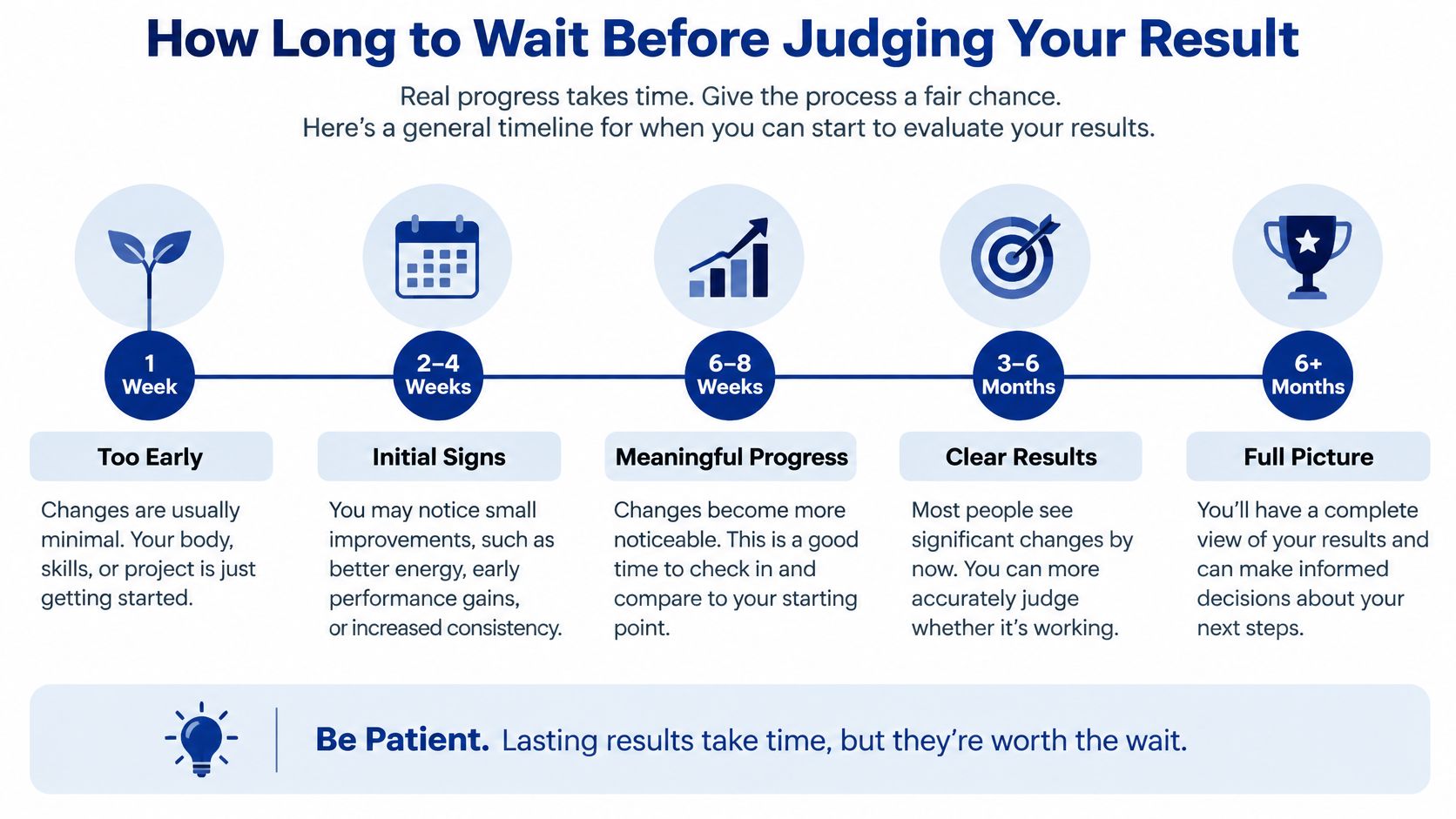
When is breast position stable enough to judge? Usually, the answer requires months of observation rather than a judgment during the first weeks. Swelling, tissue relaxation, and scar maturation change different parts of the breast at different speeds.
Follow the healing phases
- During the first weeks, swelling, bruising, and temporary asymmetry can obscure the shape. Follow your surgeon's schedule for suture removal when needed, scar care once the incision is ready, and support-garment wear.
- Around three months, shape may begin to settle while scars remain firm. This is a progress check, not a deadline for deciding on another operation.
- Around six months, photographs may provide a more useful comparison if healing has been uncomplicated. Use the same lighting, camera distance, posture, and angles.
- At one year, breast position can serve as a practical durability benchmark. Your surgeon may recommend a different assessment schedule for your particular operation.
These are checkpoints, not promises that every breast stabilizes on the same schedule. Our explanation of recovery from breast lift and augmentation provides additional context for postoperative care.
Gradual softening and a slight early drop differ from continued descent across successive photo sets or a nipple that measures lower at later visits. Waiting can clarify the mechanism and prevent unnecessary correction, provided there's no medical problem requiring earlier treatment.
A large secondary augmentation-mastopexy series reported an 8.7% reoperation rate over a mean 47-month follow-up, with recurrent ptosis prompting reoperation in 3.4% of cases. That follow-up matters because an immediate result cannot establish durability.
Keep a consistent record
- Date and view: Label each photograph and repeat the same angles.
- Measurements: Record the measurements your surgeon uses rather than estimating from clothing.
- Body changes: Note weight changes, pregnancy, and breastfeeding since the previous assessment.
Don't wait for a routine photo session if you develop sudden swelling, increasing redness, drainage, fever, or abrupt new asymmetry. Contact your surgical team promptly.
Why a Revision Breast Lift Can Fail Again
Skin that has already stretched works like worn elastic: you can shorten it, but you cannot give it back its original recoil. A lift repositions the breast, yet the remaining skin and supporting tissue still carry the load afterward.
Recurrence happens when that envelope stretches again under the same forces that stretched it the first time. Earlier surgery can also leave scarred, thinner, or less predictable tissue, which narrows what a surgeon can safely rearrange. A durable revision depends on matching the plan to the quality of what remains.
Pregnancy and weight change alter breast volume and load the envelope anew. Aging changes how the tissue behaves. In combined lift-and-implant cases, the implant adds continuous weight. An overly aggressive first lift creates a different problem: a very tight closure can impair healing while still failing to build durable deeper support.
What measurements reveal
According to the university repository summary of mastopexy durability findings, a prospective pilot study of 10 patients recorded average nipple-areola elevation of 6.3 cm immediately after mastopexy and 4.6 cm at one year, an average loss of 27.5% with individual losses from 12.5% to 41.7%, while a separate review of 150 mastopexy cases found an 8.6% revision rate over an average 36 months, with poor scarring responsible for 75% of revisions.
This was a small study, not a universal recurrence rate. Part of that early drop reflects the envelope settling under load, which is exactly why a revision plan should rest on measurements taken at comparable points over time rather than on the position seen in the first weeks. Most of the revisions in the larger review addressed scarring rather than renewed drooping.
A higher immediate nipple position isn't necessarily a better long-term result.
Choose a goal the tissues can support
A durable, proportionate breast may be a better goal than the highest or tightest possible breast. Removing additional skin can increase closure tension, particularly where incisions meet. The trade-off may include wider scars, wound-healing difficulty, or a shape that relaxes despite the tighter starting position.
The location of the descent should drive the technique. If the recurrent sag sits mainly in stretched skin over a well-shaped gland, skin revision may suffice. If the gland itself has slid downward, skin excision alone repeats the original failure because the same tissue loads the same weak envelope.
Consider a breast with thin skin and substantial tissue hanging in its lower portion. Skin removal might improve the outline temporarily, but the surgeon should explain whether the gland also needs reshaping or fixation. Ask whether the proposed revision uses deeper parenchymal fixation, meaning support of the breast's own glandular tissue, or another form of internal support. The answer should identify the examination finding that justifies it. A technique name alone does not explain why it suits your anatomy.
Who Qualifies for Revision and What Imaging Shows
Prior history and what it changes in a revision plan
| Prior history | What it changes | Planning question |
|---|---|---|
| Earlier lift without implants | Skin and gland envelope may have stretched | Is the descent in the skin, the gland, or both? |
| Lift with an implant still in place | Implant position and capsule must be checked | Is MRI or ultrasound current? |
| Implant removed together with a lift | Capsule may need removal; replacement is optional | Lift alone or lift with fat transfer? |
| Nipple-sparing mastectomy and staged reconstruction | In a historical reconstruction cohort, 10 of 155 patients, or 6.5%, needed a later Wise-pattern mastopexy involving 14 breasts to correct ptosis and improve shape | Is the envelope descending or uneven? |
| Earlier fat transfer to the breast | Volume may change as transferred fat settles | Is the change due to volume or skin support? |
Revision lifting isn't limited to dissatisfaction after cosmetic surgery. After reconstruction, a retained breast envelope may descend or become uneven, creating a different planning problem from recurrent drooping after a conventional lift. The reconstruction figure above describes that particular pathway, not the likelihood that any patient will need revision.
Imaging can change the operation
A silicone implant rupture can be silent. The breast may look and feel unchanged, and physical examination alone may not detect it. The FDA's breast-implant risks guidance identifies MRI as the most effective method for detecting silent silicone-gel rupture and accepts ultrasound for screening patients without symptoms.
An older FDA patient-information document recommended MRI beginning 3 years after implantation and every 2 years thereafter. That is historical guidance, not a schedule to adopt automatically today; have your clinician confirm the current surveillance recommendations for your implant and circumstances.
That document also identifies breast hardness, breast pain, and changes in breast shape or size as reasons for MRI assessment. If rupture is confirmed, the plan may involve removal with or without replacement, and sometimes removal of surrounding capsule tissue. A presumed lift-only procedure can therefore become a different operation.
Candidacy includes more than breast position
Your surgeon should assess smoking status, general health, healing capacity, and the condition of existing scars. Stable weight and a discussion of future pregnancy or breastfeeding help determine whether this is a sensible time to operate. Our breast-lift candidacy guide explains the broader assessment.
Nipple sensation and blood supply also matter, especially after repeated operations. Prior incision patterns and the way the nipple was supported during earlier surgery may limit safe repositioning.
Bring the following to make that assessment more useful:
- Operative reports: Include previous lift, augmentation, removal, and reconstruction procedures.
- Implant records: Provide device information and any known history of rupture or capsule problems.
- Photographs: Include images before surgery, during healing, and after the change became noticeable.
- Imaging history: Record the date and findings of your last ultrasound or MRI.
A reasonable goal must fit the tissue available, not just a preferred photograph. Sometimes postponing surgery, choosing a smaller correction, or changing the sequence offers a more appropriate path.
Technique Choices Across Incisions, Support and Staging
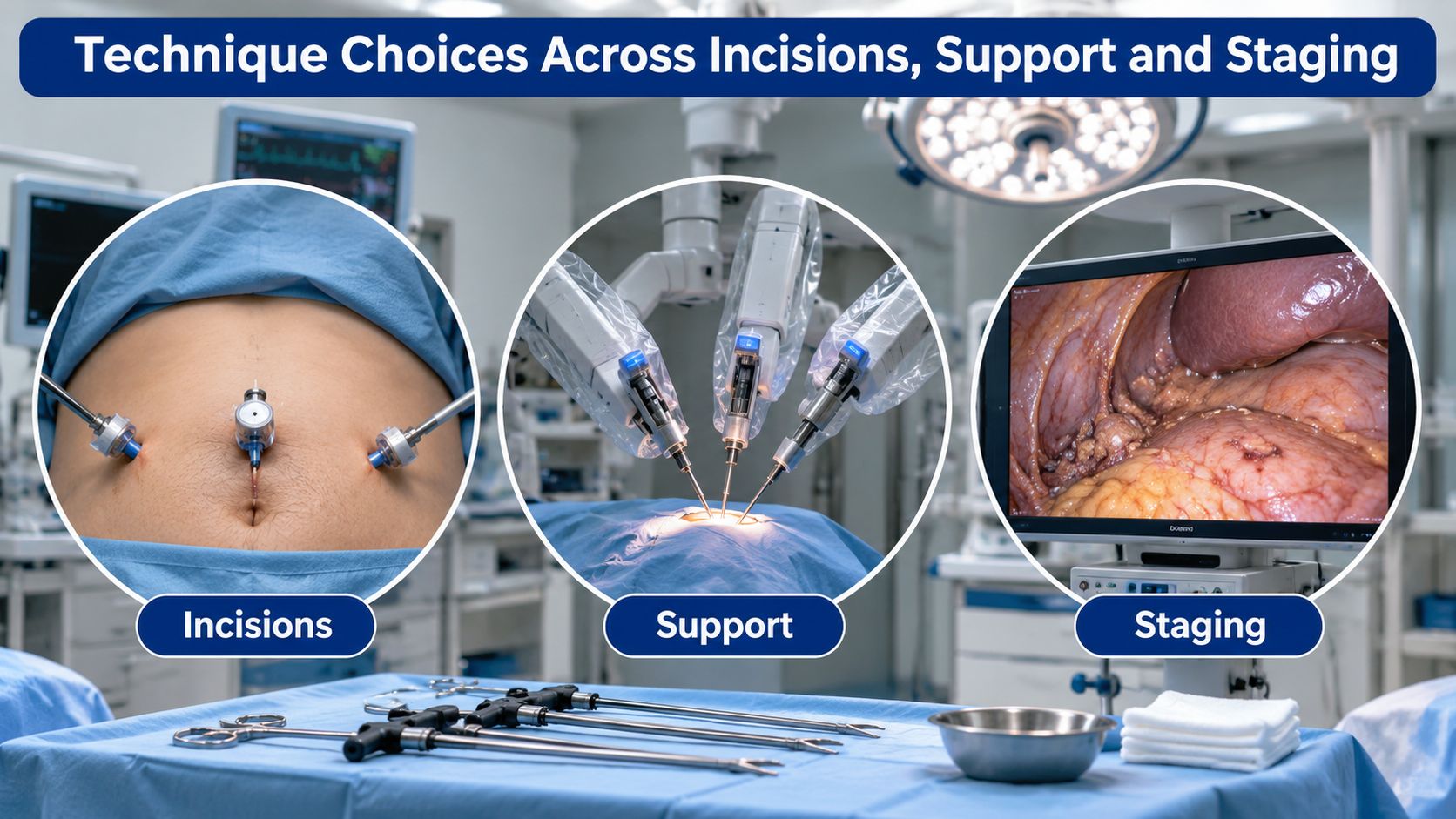
A revision breast lift rests on three separate decisions: where to remove skin, how to support the breast from within, and whether to stage the work. Each follows from a different cause of recurrence. Skin that stretched again calls for a different answer than a lower pole that lost its internal support, which is why comparable photographs taken over time matter more than any single disappointing result.
Incisions and deeper support
Incision options include crescent, circumareolar, vertical, short-scar inframammary extensions, Wise-pattern, and customized designs. The choice follows the amount and location of excess skin and the scars already present. A Wise-pattern design adds an incision along the breast crease, while a vertical pattern runs downward from the areola. When the mechanism is a stretched skin envelope, more skin has to be removed, and that usually means accepting a longer incision in exchange for a durable shape.
Published secondary augmentation-mastopexy guidance describes a 53-patient study using an inferior-based dermoglandular flap with partial subpectoral implant coverage; over a mean 3.6-year follow-up, small T-junction wound separation occurred in 2.83% of breasts and mild hypertrophic scarring in 4.72%.
Plainly, the surgeons built a sling from the patient's own tissue to hold the lower breast up, then placed part of the implant beneath chest muscle. That pairing targets a cluster of linked findings: lower-pole widening, tissue descent, capsule tightening, rippling, and implant visibility.
A small secondary breast-procedure series reported 100% flap survival at one year in 30 cases. A series this size shows a technique is feasible. It cannot show superiority over alternatives.
Staging and recovery planning
Implant removal is sometimes separated from the lift when tissue is thin, blood supply is uncertain, or the planned capsule surgery is extensive. The sequence decision mirrors the support decision: the surgeon weighs nipple sensation, existing scars, and the likely blood-supply pathway before committing to one operation or two.
Our discussion of breast lifting years after implants explains how timing and implant history shape that choice. Ideal Face & Body offers breast augmentation with implants as well as breast implant revision, so the implant-based techniques described above serve as educational context. The practice's own Awake Breast Lift, a technique pioneered at Ideal Face & Body, uses no general anesthesia, no intravenous catheter, and no implants.
For practical home preparation, the DME Superstore post-surgery recovery tips can supplement, but never replace, your surgeon's instructions.
Bring these questions:
- Which incision is planned, and which change in your photos does it address?
- Does the plan add internal or deeper support, and for which tissue finding?
- Will procedures be staged, and what does that mean for recovery?
Risks and What the Numbers Mean
Reported complication and revision rates after lift-based revision surgery
The rows below describe different surgical populations. Reoperation and recurrent descent aren't interchangeable outcomes, and the augmentation-mastopexy review is not a revision-only estimate.
| Outcome | Reported rate | Study context | Source |
|---|---|---|---|
| Overall complications, single-stage augmentation-mastopexy, 23 studies and 3,865 patients | 13.12% | Pooled review | ASJ Open Forum |
| Pooled reoperation | 10.65% | Not a revision-only rate | ASJ Open Forum |
| Recurrent ptosis | 5.2% | Most common reported complication | ASJ Open Forum |
| Capsular contracture | 2.97% | Implant-related | ASJ Open Forum |
| Asymmetry | 2.94% | Pooled | ASJ Open Forum |
| Seroma and hematoma | 1.42% and 1.37% | Fluid collection and bleeding | ASJ Open Forum |
| Infection | 0.93% | Pooled | ASJ Open Forum |
| Revision after implant removal with mastopexy, 841 patients | 4.63% | Explant population | Retrospective series published in 2026 |
| Overall complications, secondary mastopexy, 74 patients | 6.76% | Revision-only cohort | Prospective cohort published in 2026 |
A patient can develop measurable descent and still be satisfied enough not to request surgery. Conversely, a patient may undergo another procedure for a scar or asymmetry without recurrent ptosis. Some publications count clinical changes; others count only patient-driven revisions.
Read the definition before the percentage
The same ASJ Open Forum summary describes a separate long-term series with 11.7% cumulative complications, falling to 6% in its final 88 cases as the technique matured. Nipple-to-fold distance lengthened by 1.0 to 2.2 cm during follow-up, yet recurrent ptosis did not require reoperation in that series.
Two details sit inside those numbers. The complication rate fell as the surgeons refined their technique, so a single pooled average can hide improvement over time. And because the same patients were measured repeatedly, the figures describe how support held up rather than how the breasts looked at one early visit. Follow-up length and the working definition of a complication matter as much as the headline percentage.
Ask for context: Does the surgeon's rate include minor wound care, scar treatment, an office procedure, or only another operation?
Your own risk needs an examination
Population figures can identify which problems are worth discussing. They cannot predict how your previously operated tissue will heal.
Ask for the surgeon's own complication information for comparable revision cases, along with a follow-up schedule built around consistent, comparable photographs. Recurrence is a gradual loss of support, so single snapshots taken months apart under different conditions can exaggerate it or hide it. Discuss wound separation, altered nipple sensation, blood-supply problems, scars, asymmetry, and the possibility of further surgery. A low published average should never substitute for an explanation of your individual risk factors.
Confirm the Revision Plan Before You Book
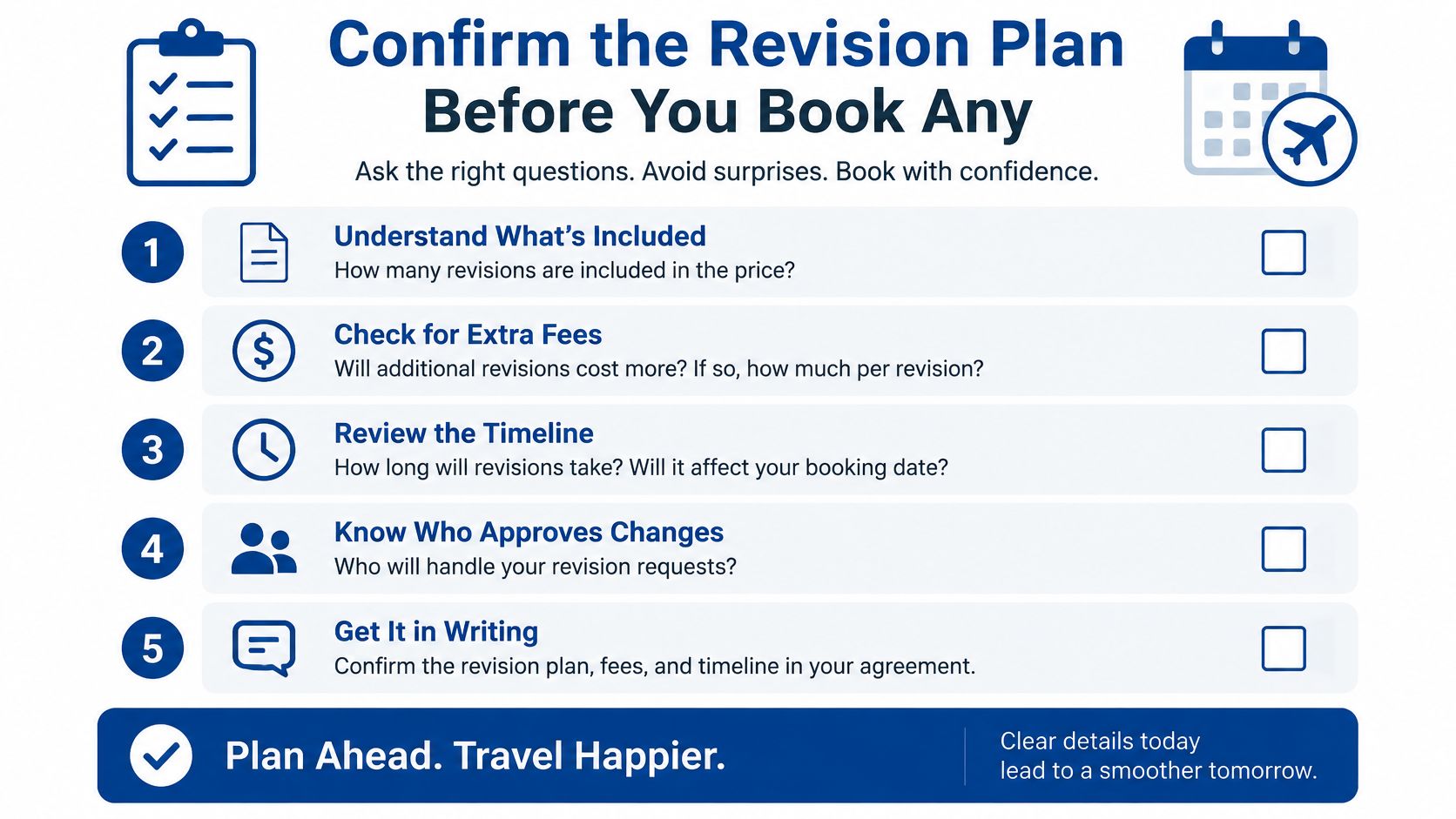
A revision consultation should explain why support failed, not just promise a higher breast position. Use this checklist to judge whether the surgeon is planning a correction for previously operated tissue.
- Documented secondary-mastopexy experience: Ask how the surgeon evaluates problems involving old scars, altered support, and previous nipple repositioning.
- Board certification in plastic surgery: Verify the qualification instead of relying on a general cosmetic-surgery description.
- Review of previous records: The surgeon should want to examine operative reports, implant information, and dated photographs.
- A defined implant-status plan: If an implant is present, clarify imaging, removal, exchange, and capsule management, including what falls outside the practice's services.
- Standardized photographs: Look for comparable views with consistent posture and lighting. Recurrence is measured across time, not in a single flattering image.
- A candid trade-off discussion: The explanation should address scar risk, achievable lift height, healing limitations, and the possibility of staged treatment.
Confirm what the practice currently offers
Ideal Face & Body in Beverly Hills offers breast augmentation with implants and breast implant revision, alongside implant-free options such as the Awake Breast Lift, Awake breast reduction, explant surgery, and Raise Your Cup fat transfer. The practice's overview of the pros and cons of breast augmentation explains how implant-based and implant-free approaches differ.
The Awake Breast Lift is performed in the office with the patient fully numbed under freshly mixed local anesthesia, with no general anesthesia, no IV, and no implants. The technique was pioneered at Ideal Face & Body. Whether an awake approach suits a revision case depends on what the examination shows.
Look for an explanation of shape, not just height
In the practice's documented Awake Breast Lift case, the patient's own tissue was repositioned for projection, giving a natural, round result instead of a boxy one. That describes one primary case, not a guaranteed outcome or proof that the same approach suits a revision patient.
Your consultation should leave you able to explain the proposed correction in ordinary language: which structure lost support, what the surgeon intends to move, remove, or reinforce, and what limitations remain. Each finding should connect to a mechanism, because stretched skin, weakened internal support, and implant weight each call for a different operative plan. You should also know what happens if surgery reveals less reliable tissue than expected.
Bring your photographs, operative and implant records, imaging history, and a dated description of changes. Choose a surgeon who answers each checklist item in terms of your anatomy.
Ideal Face & Body offers consultation about implant removal, breast lift, and fat transfer options for patients whose breast shape has changed after previous surgery, subject to individual evaluation. Visit Ideal Face & Body to book a consultation, and bring your records and comparable photographs so the discussion can focus on the cause of the change and the appropriate next step.