
If you're researching gynecomastia surgery cost with insurance, you're probably already running into the same problem most patients do. One website says coverage is possible. Another says it almost never happens. Then you call your insurance plan and get an answer that sounds incomplete, overly broad, or both.
That confusion is understandable. Gynecomastia claims sit in a gray zone where insurers often start from the assumption that surgery is cosmetic, while patients are trying to explain that the issue affects comfort, movement, confidence, and daily life. The difference between those two views is what shapes everything that follows.
The good news is that this process gets easier once you know what insurers are looking for, how to document your condition properly, and what steps to take before surgery is ever scheduled.
Table of Contents
- Why Is Insurance for Gynecomastia Surgery So Complex
- Defining Medically Necessary Gynecomastia for Insurers
- How to Document Your Case for Insurance Coverage
- Understanding the Full Scope of Potential Costs
- Navigating the Preauthorization and Appeal Process
- Frequently Asked Questions About Gynecomastia and Insurance
Why Is Insurance for Gynecomastia Surgery So Complex
Insurance confusion usually comes down to one core issue. Insurers don't approve procedures because a patient wants a change. They approve procedures when the medical record shows that the surgery treats a health problem under that plan's rules.
A simple way to think about it is a home repair. Repainting a room is usually a preference. Fixing a roof leak is a structural need. Gynecomastia surgery can look similar from the outside, but the insurer is trying to decide which category your case fits into.
That distinction is why the same procedure may be described in two completely different ways. A patient might experience chest tenderness, embarrassment in fitted clothing, and limits during exercise. An insurer may still label the request cosmetic unless the file clearly proves ongoing symptoms, true glandular tissue, and medical necessity criteria that match the policy.
For many men, that feels unfair. It also explains why casual conversations with an insurance representative rarely settle the issue.
Why policy language creates so much frustration
Most plans treat gynecomastia surgery as excluded by default unless there is enough evidence to move it into a reconstructive or medically necessary category. That means your claim doesn't just need a diagnosis. It needs a persuasive medical record.
This is why a consultation alone usually isn't enough. The insurer often wants a paper trail that shows the condition has persisted, has caused real impact, and isn't better explained by weight-related fullness, medication effects, or another untreated issue.
Practical rule: If the chart only describes appearance concerns, the insurer is likely to see the case as cosmetic.
That doesn't mean approval is impossible. It means the burden of proof is high.
What patients should focus on first
Before worrying about timing, appeals, or billing, focus on classification. If you don't know how your case would be framed medically, you're trying to solve the wrong problem first.
Start by learning how surgeons evaluate male breast reduction and gynecomastia treatment in clinical terms. The key question isn't just "Do I have enlarged chest tissue?" It's "Can my medical team document this in a way the insurer recognizes as medically necessary?"
Once that piece is clear, the rest of the insurance path becomes much more manageable.
Defining Medically Necessary Gynecomastia for Insurers
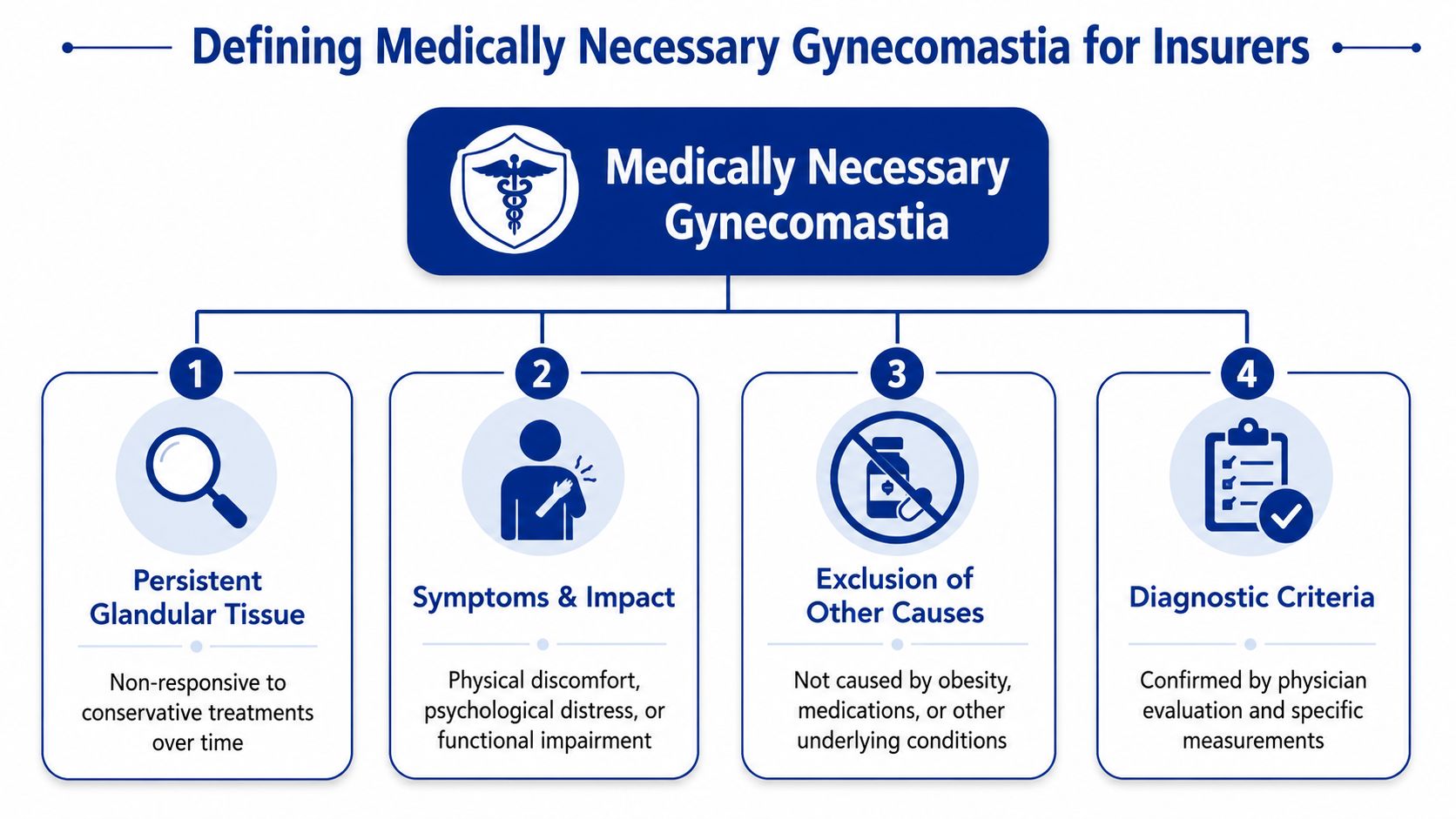
Insurers usually begin with a skeptical posture. They often classify gynecomastia surgery as cosmetic unless the record shows a medical reason to cover it. One clear summary appears in this explanation of insurance criteria for gynecomastia surgery, which notes that health plans usually require evidence of physical discomfort, functional impairment, or psychological distress before they consider coverage.
What insurers are trying to separate
The insurer is usually trying to answer one question: is this true gynecomastia or is this a request for cosmetic chest contouring?
That distinction matters because true gynecomastia involves glandular tissue. Cosmetic chest contouring may involve fullness that the insurer sees as aesthetic rather than medically driven. If your file doesn't make that distinction clearly, the claim can stall before it really begins.
A medically necessary case often looks more like this:
- Persistent glandular tissue: The enlargement hasn't resolved over time and isn't just fluctuating with routine weight changes.
- Documented symptoms: The record describes pain, tenderness, chafing, activity limits, or daily discomfort.
- Meaningful impact: The condition affects exercise, work tasks, clothing tolerance, or emotional well-being in a way your clinicians have documented.
- Evaluation of other causes: The team has assessed whether hormones, medications, or another condition could be driving the enlargement.
The checklist most plans care about
Some patients get tripped up because they assume embarrassment alone will carry the claim. Emotional impact does matter, but it usually works best when it's part of a broader, medically documented picture.
Here are the criteria that often strengthen a case:
| Insurer concern | What helps support the claim |
|---|---|
| Is this real gynecomastia? | Physician exam, imaging, or diagnostic workup showing glandular tissue |
| Is it affecting the patient physically? | Notes about pain, tenderness, skin irritation, or functional limitations |
| Has it persisted? | Ongoing records showing the issue didn't quickly resolve |
| Were other causes addressed? | Hormone testing, imaging, medication review, or other clinical evaluation |
Medical necessity isn't about how frustrating the condition feels. It's about whether the chart proves a health-related reason for surgery in language the insurer accepts.
Another point that often causes confusion is duration. Some policies may require proof that the condition has persisted over time, sometimes for an extended period, along with documented pain and contributing medical factors. That doesn't mean every plan uses the same rule, but it does mean patients should review their own policy carefully and ask their surgeon's office what documentation is usually expected.
How to Document Your Case for Insurance Coverage
The strongest gynecomastia surgery cost with insurance strategy isn't persuasive wording. It's documentation. Insurers want a file that reads like a complete medical case, not a short request for approval.
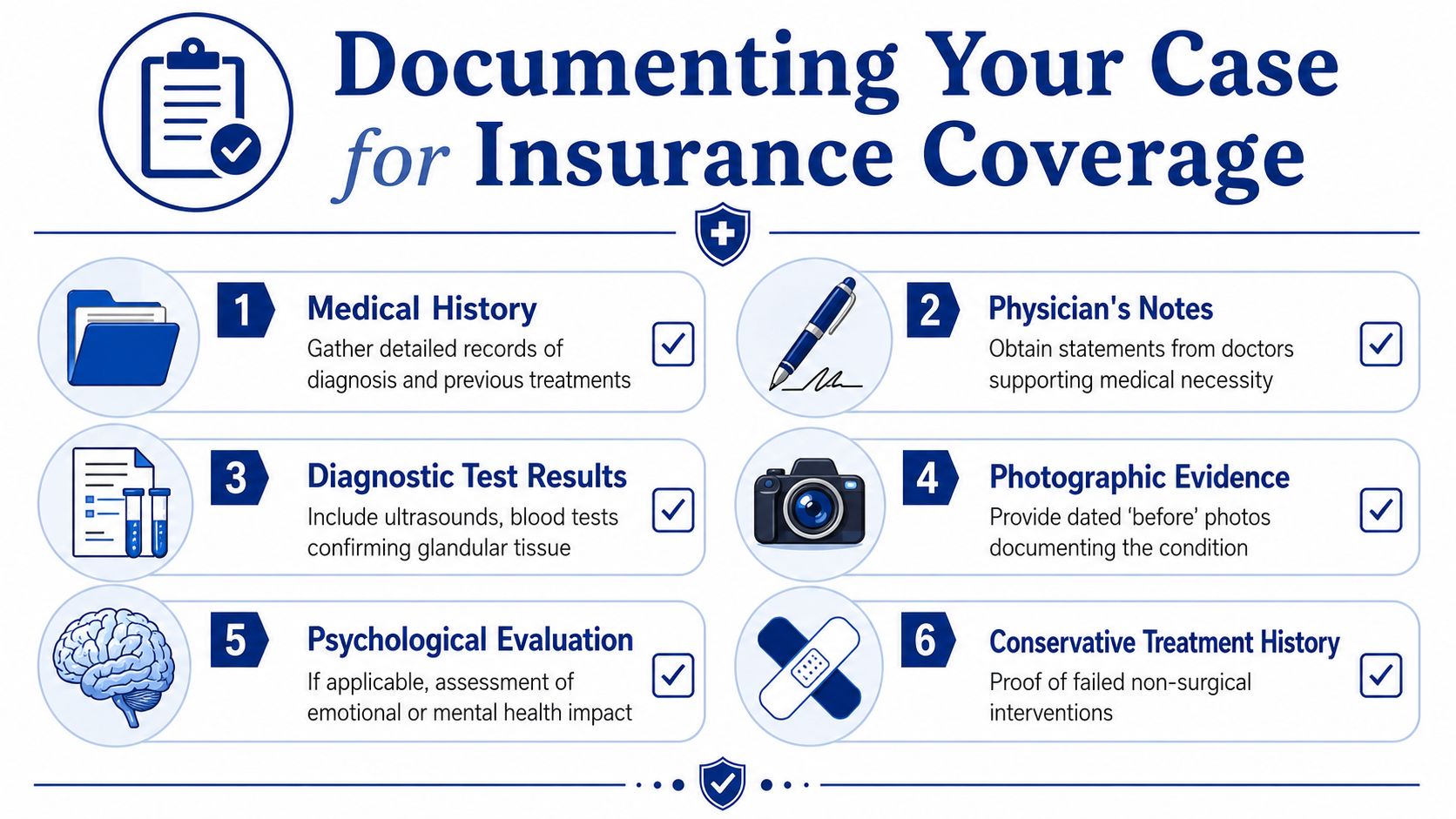
A useful clinical summary from this medical necessity guide for gynecomastia claims explains that coverage often depends on documented evidence of persistent glandular tissue, symptoms such as pain or functional limits, psychological distress, failed conservative treatment, and a detailed medical letter using proper ICD-10 and CPT codes.
Build a case file, not a single form
Think in layers. Each document should support the others.
Your case file may include:
- Primary care notes that show when the condition was first discussed and how long it has persisted.
- Specialist evaluation from a surgeon, endocrinologist, or other physician who can describe the tissue and symptoms clearly.
- Diagnostic testing such as hormone studies, imaging, or biopsy when clinically appropriate.
- Photographic evidence that documents the chest appearance in a standardized, dated way.
- Conservative treatment history showing what was tried before surgery was recommended.
- A formal letter of medical necessity tying all of the above together.
Patients often underestimate that last item. The letter needs to connect symptoms, diagnosis, treatment history, and the proposed procedure in a way that matches the policy language.
Why coding and organization matter
Correct coding is one of the least visible but most important parts of the process. If the diagnosis and procedure aren't presented correctly, the insurer may categorize the request as cosmetic even when the clinical evidence is strong.
That doesn't mean patients need to become coders. It does mean you should ask the surgeon's office whether the diagnosis code, procedure code, and narrative explanation are aligned before the packet is submitted.
A practical way to avoid avoidable delays is to organize your records before anyone starts sending forms. Many patients find that structured folders, checklists, and secure upload workflows make the process easier. If you need help keeping records in one place, these effective document gathering solutions can help you think through collection and organization without scrambling at the last minute.
What helps most: dated records, consistent symptom descriptions, and notes from multiple visits that tell the same medical story.
Another good habit is writing your own symptom timeline. Keep it factual. Note when the issue began, what physical problems it causes, what you've already tried, and how it affects ordinary activities like exercise, work, or changing clothes in public settings. That personal timeline won't replace medical records, but it can help your doctors write more accurate notes.
If you want another example of how insurance often separates aesthetic goals from medical coverage, this discussion of chin liposuction and insurance shows why detailed justification matters anytime a procedure may be viewed as elective.
Understanding the Full Scope of Potential Costs
Many patients researching gynecomastia surgery cost with insurance are really asking a broader question: "If my plan doesn't cover everything, what am I responsible for?" That's the right question.

The safest mindset is to assume the insurer will only pay for services it explicitly approves, under the exact terms of your plan. Everything else may become out-of-pocket responsibility.
According to GoodRx's overview of gynecomastia surgery expenses, patients without insurance coverage are responsible for the full expense, and that may include compression garments, medications, and lab work in addition to the surgery itself. The same source also notes that the surgeon's fee is only one part of the total, and doesn't include anesthesia or operating room costs.
What out-of-pocket really includes
When patients hear "surgery cost," they often picture one bill. In reality, there are usually several moving parts.
Those may include:
- Professional surgical fees: The surgeon's work, planning, and follow-up structure.
- Anesthesia-related charges: If anesthesia services are used, those may be billed separately depending on the setting.
- Facility fees: Charges related to the operating environment, staff, equipment, and supplies.
- Pre-op and post-op items: Lab work, garments, prescriptions, and routine recovery needs.
- Insurance gaps: Deductibles, exclusions, non-covered items, or out-of-network differences.
Why your final responsibility can vary
Two patients can have the same diagnosis and still face very different financial responsibility. The difference often comes from plan language, network status, case complexity, and whether the insurer approves only part of the care pathway.
This is especially important in a market like Beverly Hills, where surgical setting, technique, and provider experience can influence how a procedure is planned and billed. That's why patients should ask for a written breakdown of what is included, what may be billed separately, and what happens if insurance approves one part of care but not another.
A practical comparison can help:
| Question to ask | Why it matters |
|---|---|
| Is the surgeon in-network or out-of-network? | It may affect reimbursement and your share of the bill |
| Is preauthorization required? | Missing it can trigger denial even for otherwise valid claims |
| Are garments, labs, and medications included? | These are common areas of surprise |
| What happens if the insurer reclassifies the case? | It helps you understand your exposure before surgery |
For men also comparing procedure approaches, this article on chest liposuction and male chest contouring helps clarify why technique and tissue type can change the overall plan.
Navigating the Preauthorization and Appeal Process
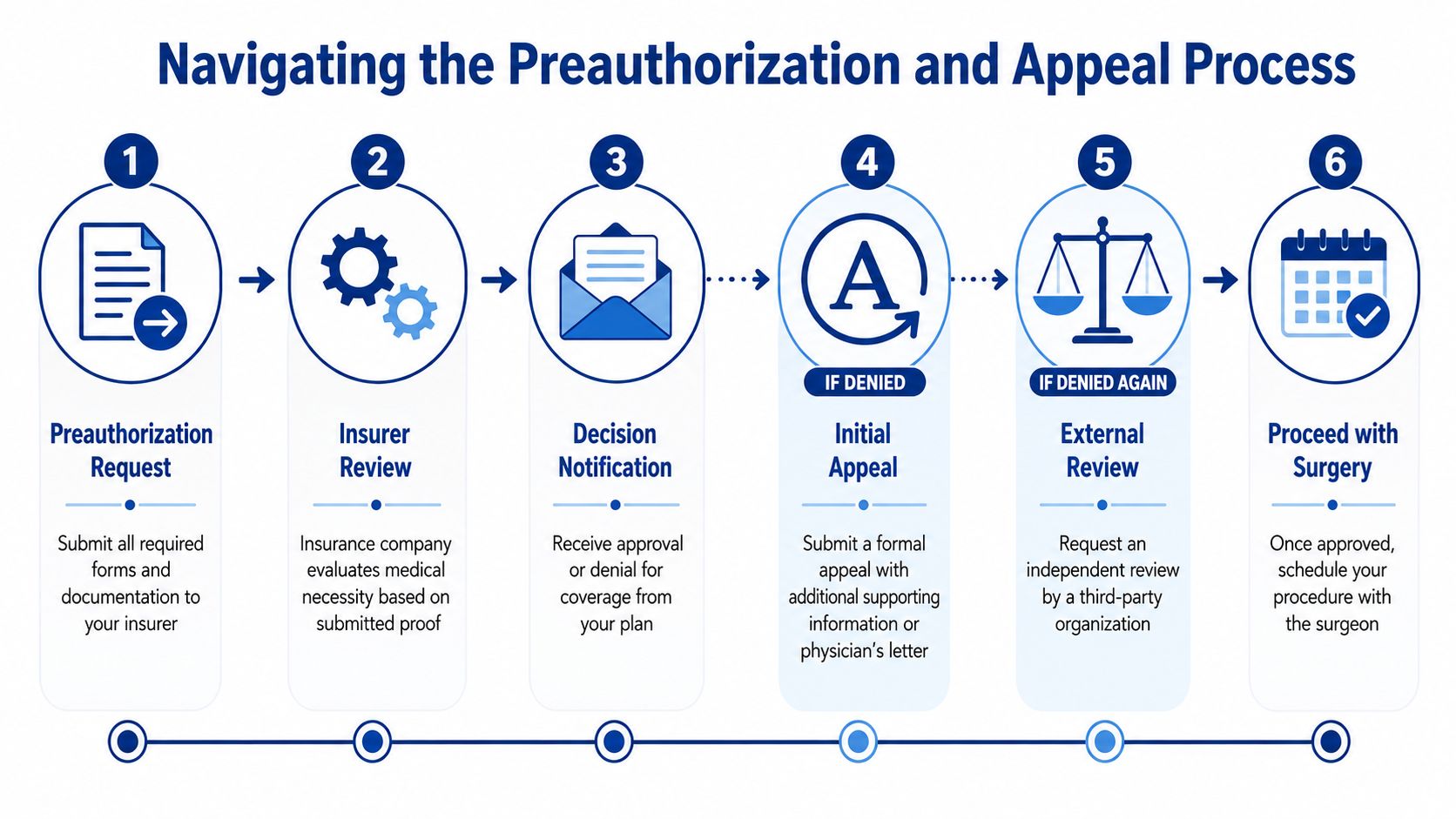
Preauthorization is where the insurance process becomes real. Until the insurer reviews your records and issues a decision, everything is still conditional.
A patient resource from CareCredit on gynecomastia surgery and insurance coverage notes that patients usually need detailed medical documentation, including tests such as hormone measurements, imaging studies, or biopsy results, and that coverage remains very rare because the procedure is often considered elective and cosmetic.
What happens before surgery is approved
A good preauthorization packet is complete, organized, and easy for a medical reviewer to follow. If something important is missing, the insurer may deny first and ask questions later.
Here is the usual flow:
- Your surgeon's office verifies benefits. They check whether the plan ever covers gynecomastia surgery under medical necessity rules.
- Clinical records are collected. That includes physician notes, diagnostic support, photos, and prior treatment history.
- The office submits preauthorization. The insurer reviews the request under plan-specific criteria.
- You receive a decision. That may be approval, denial, or a request for more information.
When approval comes through, don't stop at "approved." Ask exactly what was approved, whether the authorization applies to the surgeon and facility, and whether there are exclusions buried in the notice.
How to respond if your claim is denied
A denial isn't the end of the road. It's a sign that the insurer believes something is missing, unclear, or outside policy language.
Start with the denial letter. Read every line. Look for the exact reason the claim was rejected.
Common patterns include:
- Cosmetic classification
- Insufficient documentation of glandular tissue
- Missing preauthorization
- Lack of symptom detail
- Failure to show conservative management or diagnostic workup
Then build the appeal around that reason, not around general frustration.
If the denial says the record doesn't prove functional impairment, your appeal should add chart notes, physician statements, and examples that directly address functional impairment.
Administrative support can make a difference. If you want a plain-language reference for organizing an appeal, these Happy Billing claim denial solutions offer a useful framework for understanding how appeal packets are usually structured.
For an appeal to be persuasive, it should include:
- A focused cover letter responding to the denial point by point
- Updated physician notes with clearer clinical language
- Additional testing or photos if the reviewer questioned the diagnosis
- Any missed records that weren't part of the original packet
- A request for external review if internal appeals fail and your plan allows it
Stay organized. Save every notice, call reference, portal message, and submission confirmation. In insurance disputes, documentation doesn't just support medical necessity. It also proves process compliance.
Frequently Asked Questions About Gynecomastia and Insurance
Insurance questions tend to get more specific once patients understand the basics. These are the issues that usually come up next.
What is the worst-case financial risk if a claim is denied late
The hardest part for many patients isn't just whether coverage is approved. It's not knowing the practical ceiling of their own financial exposure if a claim changes course.
That concern is well recognized. A patient-focused discussion from Greenberg Cosmetic Surgery on insurance uncertainty for gynecomastia notes that patients often can't find a clear explanation of the "out-of-pocket ceiling" when a claim is denied mid-process or only partially covered.
The most realistic answer is this: your worst-case risk depends on what services were performed, which parts were preapproved, what your plan excludes, and whether any related testing or facility use falls outside covered benefits. That's why it is so important to ask for written financial policies before surgery and to confirm whether authorization is still active on the procedure date.
Ask for the scenario nobody wants to think about: "If my insurer denies this after submission, what charges become my responsibility?"
Does the surgeon you choose affect insurance approval
Yes, sometimes indirectly and sometimes very directly.
Insurers may care about network status, facility eligibility, coding accuracy, and documentation quality. A surgeon who routinely works through medically necessary cases may have a stronger process for charting symptoms, assembling records, and handling authorization requirements. That doesn't guarantee approval, but it can reduce preventable mistakes.
From a patient perspective, it's also wise to choose a surgeon who can explain the difference between cosmetic chest contouring and documented gynecomastia treatment in plain English. At a minimum, ask whether the office has a standard insurance workflow for these cases and who handles denials or appeals.
For patients considering care with experienced plastic surgeons in Beverly Hills, CA, that conversation may include how Dr. Justin Yovino and Dr. Sarah Yovino approach documentation, surgical planning, and patient education around awake procedures and office-based care.
How does an awake procedure affect the insurance process
An awake procedure can affect setting, logistics, and how some fees are structured, but it doesn't automatically change the insurance classification. The insurer still looks at medical necessity, documentation, coding, and plan benefits.
What may change is the way patients experience the process. In a private surgical setting, communication about what is included, what is separate, and what is considered elective can sometimes be clearer than it is in a larger hospital system. That can make budgeting and informed consent easier, even if insurance still treats the surgery cautiously.
If you're trying to prepare for billing questions after treatment, this guide for healthcare providers on disputing a medical bill is a helpful reference for understanding how billing disputes are typically documented and escalated.
The key takeaway is simple. Don't assume a less traditional surgical setting means easier coverage. Don't assume it means worse coverage either. Ask exactly how the case will be coded, whether preauthorization is required, and which parts of care your plan is likely to review separately.
If you want personalized guidance on gynecomastia surgery, awake surgical options, and what questions to ask before moving forward, Ideal Face & Body in Beverly Hills, CA can help you understand your options clearly. Dr. Justin Yovino and Dr. Sarah Yovino focus on an informed, patient-centered experience so you can make decisions with realistic expectations and a better grasp of the insurance process.