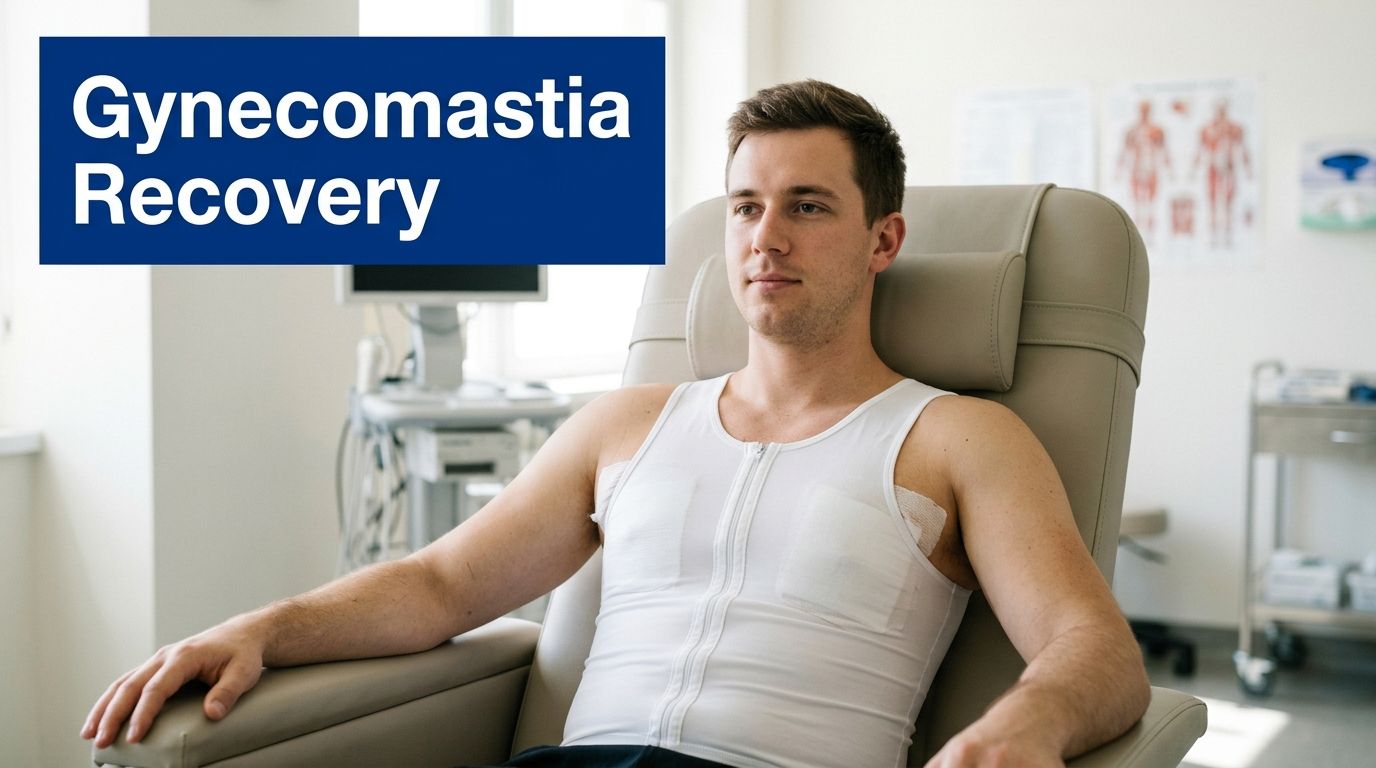
You've likely already made the biggest decision. You looked in the mirror, thought about how long this has bothered you, and decided to fix it. Now the next question becomes more practical: what will recovery feel like, and how soon can you get back to normal life without compromising your result?
That's where most patients need clear guidance, not vague reassurance. Gynecomastia surgery recovery is usually very manageable, but it goes more smoothly when you know what's normal, what requires patience, and what can set healing back. That's especially true with modern awake surgery under local anesthesia, where the early experience can feel different from the generic recovery advice you may have read online.
Table of Contents
- Your Guide to a Smooth Recovery Journey
- The First Week What to Expect Day by Day
- Your Recovery Timeline Weeks Two to Six
- A Smart Return to Activity and Exercise
- Scar Care and Optimizing Your Final Results
- Awake Surgery and When to Call Your Surgeon
Your Guide to a Smooth Recovery Journey
Patients often expect recovery to be one straight line. It usually isn't. You may feel better quickly, then notice swelling later in the day. Bruising may look worse before it fades. Your chest contour may look impressively flatter early on, then seem uneven as swelling shifts. None of that means something has gone wrong.
The most useful way to think about recovery is in layers. The first layer is immediate comfort. The second is safe return to daily life. The third is tissue settling, scar maturation, and final contour. If you judge your result too early, you'll almost always judge it unfairly.
Modern awake gynecomastia surgery under local anesthesia can make the early phase easier for many patients because they avoid the grogginess and hangover effect that often comes with general anesthesia. That doesn't mean you should treat it like a minor event. It still requires discipline. Rest, compression, movement limits, and patience matter.
A strong recovery plan also starts before surgery. Set up a comfortable place to rest. Keep water, medications, and easy meals nearby. Choose loose shirts that won't rub the chest. If you want broader recovery habits that apply to almost any procedure, this expert guide to surgical recovery is a useful general reference.
The mindset that helps most
A good recovery comes from doing simple things consistently.
- Protect the chest early: The first days are for rest, not testing your range of motion.
- Respect the timeline: Feeling better and being fully healed are not the same thing.
- Expect swelling to linger: The chest refines gradually, not overnight.
- Stay in contact with your surgical team: Small questions are easier to solve early than late.
Practical rule: If an activity creates pulling, bouncing, chest strain, or friction, it's probably too much for that stage of healing.
What works and what doesn't
What works is boring but effective. Sleep propped up if your surgeon recommends it. Wear your compression garment properly. Walk lightly. Take medications as directed. Keep follow-up visits.
What doesn't work is trying to speed biology up by “pushing through.” Patients get into trouble when they lift too soon, stretch overhead aggressively, stop compression early, or assume that less pain means full readiness. Recovery rewards restraint.
The First Week What to Expect Day by Day
The first week is the most hands-on part of gynecomastia surgery recovery. Your job is simple: reduce strain, control swelling, and let the chest start healing in a stable position.

According to this gynecomastia recovery overview, the critical first three postoperative days require full rest at home, with patients advised to lie in bed or sit on the couch while avoiding shoulder movement to prevent strain. While initial discomfort improves within a week, residual swelling can persist for 3–6 months.
Days One to Three
These first days are about containment. Expect soreness, tightness, swelling, and bruising. The chest often feels firm and compressed rather than sharply painful. If your plan includes drains, follow the instructions exactly and keep track of output as directed by your surgeon.
Short walks around the house are helpful, but this is not the time for errands, long outings, or stretching because you're restless.
Avoid lifting your elbows high, reaching into cabinets, pushing yourself up forcefully from bed, or trying to “open up” the chest with stretches.
A few practical basics matter a lot here:
- Take medications correctly: Stay ahead of discomfort instead of waiting until you're miserable.
- Keep dressings clean and dry: Don't improvise wound care.
- Wear compression as directed: It helps support the chest contour and limit swelling.
- Move gently: Small walks help circulation, but the chest should stay protected.
Days Four to Seven
By this point, most patients notice that discomfort is easing. That's good, but it can create false confidence. Bruising often looks more dramatic before it starts fading. The same recovery source notes that bruising can intensify over the first several days, then gradually turn yellowish and usually resolve over the following weeks.
Your energy may improve before your tissues are ready for more activity. That's why the second half of week one still requires restraint. Light self-care is fine. A calm walk is fine. Heavy chores are not.
Here's a simple first-week reference:
| Timeframe | What's usually normal | What to do |
|---|---|---|
| First 48 hours | Peak soreness, tightness, swelling | Rest, hydrate, take meds, keep movements minimal |
| Days 3 to 4 | Bruising may look worse before better | Stay in compression, continue gentle walking |
| Days 5 to 7 | Improved comfort, lingering swelling | Resume only light daily tasks if cleared |
Common mistakes in week one
Patients usually struggle with the same few temptations.
- Doing too much because you feel decent: Early comfort doesn't mean deep healing is complete.
- Taking the garment off too often: Consistency matters more than comfort preference.
- Judging the shape too early: Swelling can make one side look different from the other.
- Using the arms normally right away: Chest tension often comes from shoulder movement more than patients expect.
The first week should feel controlled, not productive.
Your Recovery Timeline Weeks Two to Six
This stretch is when life starts to feel familiar again, but healing is still active under the surface. The chest looks better, bruising fades, and basic routines come back. What matters now is gradual progression, not sudden freedom.
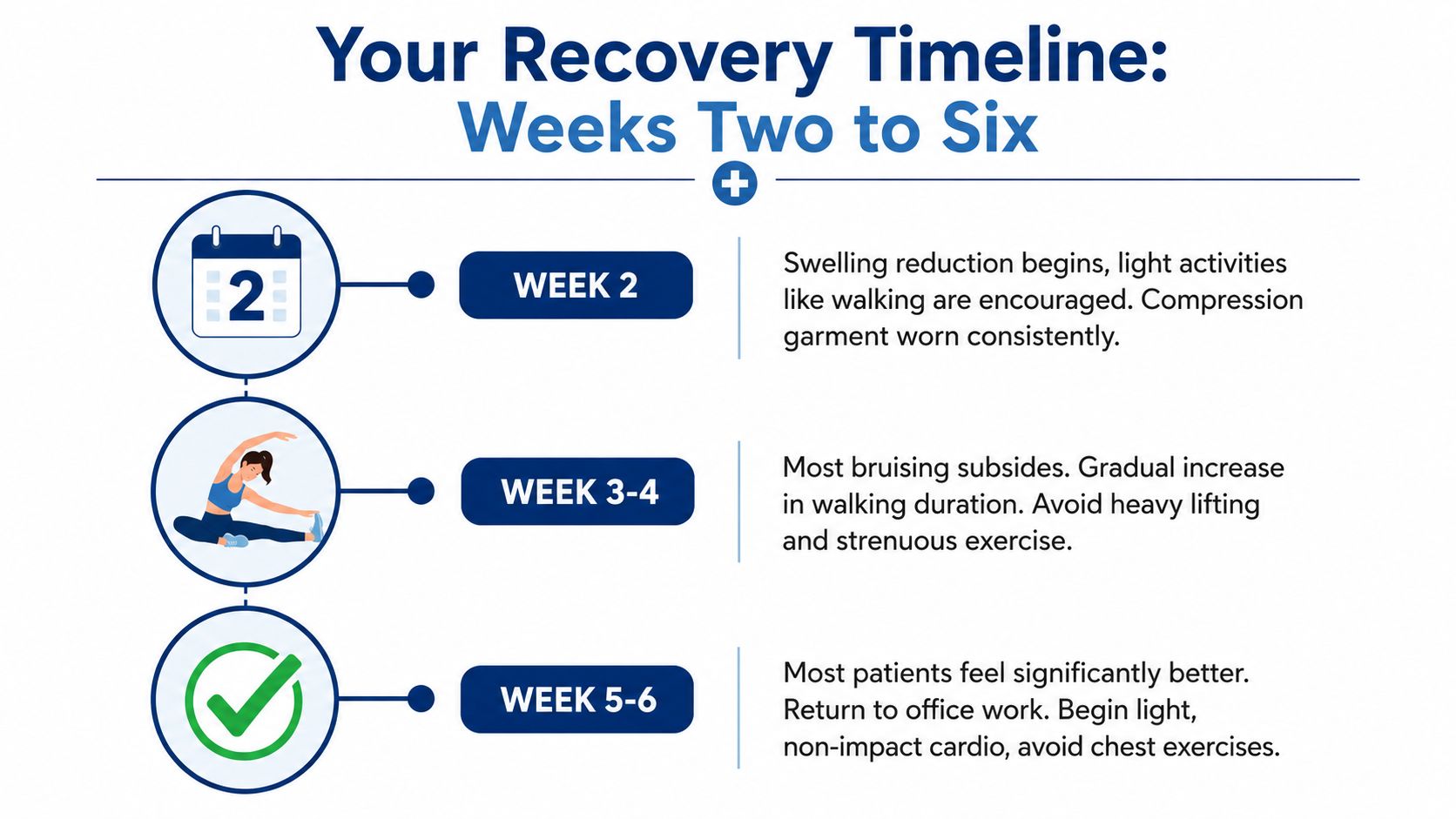
A detailed postoperative recovery timeline notes that patients must wear a compression vest continuously for approximately six weeks to reduce swelling and adapt the chest to its new shape. Most individuals return to desk jobs within one to two weeks, but strenuous upper-body and chest workouts must be avoided for six to seven weeks to prevent complications.
Week Two regaining your footing
Week two is usually the point when cabin fever sets in. Most patients are moving around the house more easily and may be ready for desk work if their job is not physically demanding. That return depends on how you feel, what your procedure involved, and whether your work requires lifting or repetitive arm movement.
Compression still matters. This isn't optional. It helps the skin settle against the new chest contour and limits excess swelling during the phase when you're naturally becoming more active.
Focus on:
- Walking more regularly: Light movement is useful and usually well tolerated.
- Keeping upper-body effort low: Avoid carrying, pushing, or pulling.
- Following garment instructions: Don't downgrade support on your own.
- Watching the trend, not the mirror at one moment: Morning and evening can look different.
Weeks Three and Four steady progress
This stage is often psychologically easier. Bruising usually fades substantially. The chest starts looking more like a result and less like a healing site. Even so, it can still feel firm, numb, swollen, or uneven in spots.
That combination is common after tissue removal. Patients sometimes think firmness means a problem. More often, it means the tissues are still remodeling.
A helpful way to think about weeks three and four is that daily function improves before athletic function does.
Your chest may look socially presentable before it's ready for gym-level stress.
Weeks Five and Six looking more normal
By weeks five and six, many patients feel significantly more like themselves. Clothing fits better. Movement feels less guarded. Social confidence is improving. The chest is usually flatter, but not finished.
What still needs caution is anything that creates repetitive chest contraction, bouncing, impact, or strain through the arms and shoulders.
- Office work: Usually comfortable by this stage if it wasn't earlier.
- Long walks and light non-impact movement: Often more comfortable now.
- Heavy lifting and chest training: Still need surgeon clearance.
- Garment use: Continue exactly as instructed through the recommended period.
The biggest mistake here is assuming “almost healed” means “healed enough.” That's when patients start testing pushups, heavy bags, or spontaneous workouts. Those are common ways to prolong swelling.
A Smart Return to Activity and Exercise
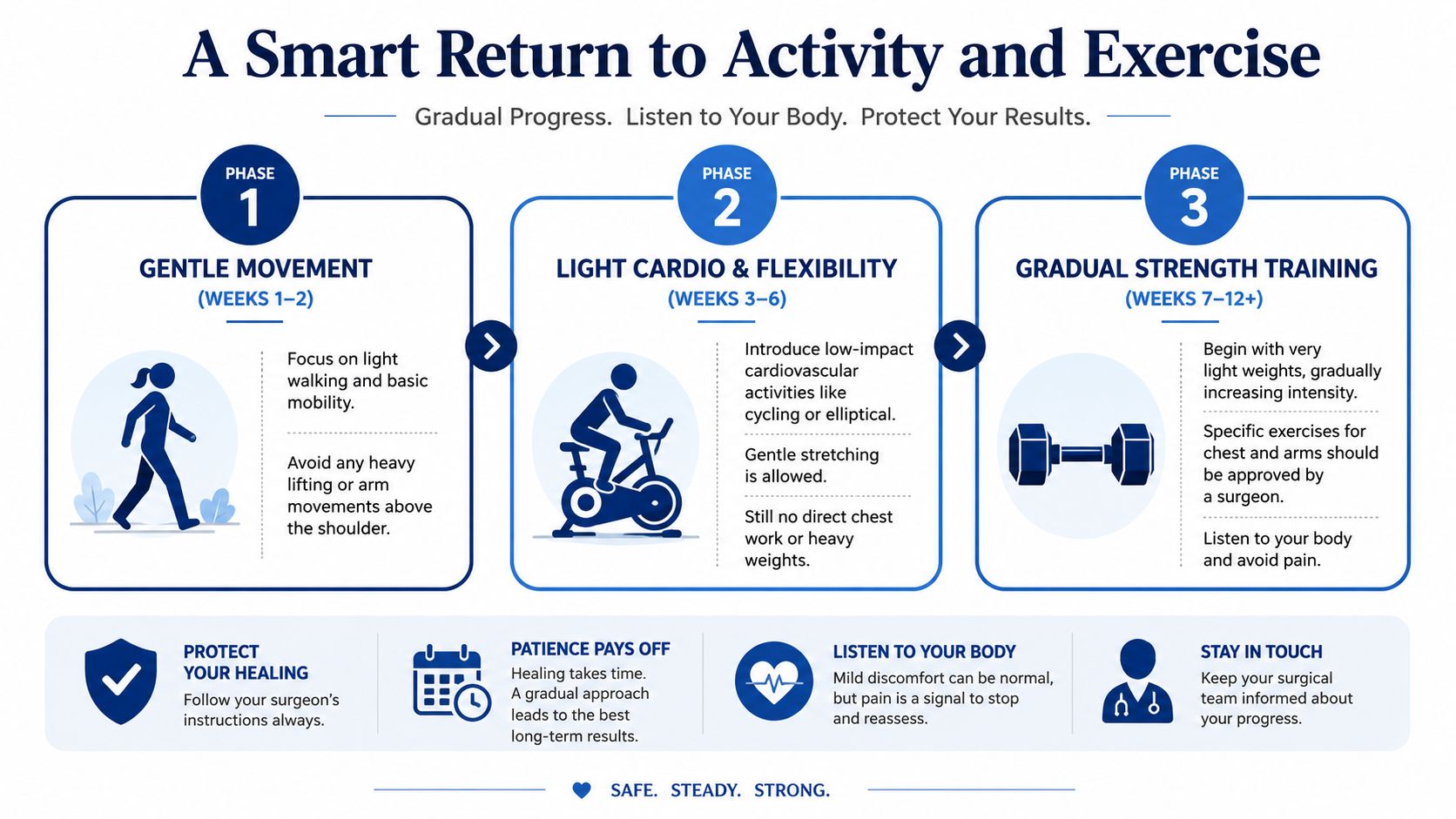
Exercise is where patients most often sabotage a good result. Not because they're careless, but because they feel better before the internal healing is strong enough for training stress. The smartest return is not the fastest one. It's the one that protects contour, reduces swelling flare-ups, and avoids scar tissue problems.
Why technique changes the exercise timeline
This is one detail generic recovery articles often miss. Not every gynecomastia procedure creates the same tissue trauma.
A surgical discussion of technique-specific recovery notes that glandular excision often delays bench press recovery to 5-6 weeks due to deeper tissue trauma, whereas liposuction-only patients may resume power walking and squats within 7-10 days without upper body strain in this technique-focused explanation.
That distinction matters. Liposuction-only recovery often allows earlier lower-body movement because the chest hasn't undergone the same depth of dissection as gland removal. But once glandular excision is involved, the tissue has more reason to become irritated by pressing, pulling, or strong arm drive.
For patients who want a broader example of how structured rehab progressions work after surgery, even outside chest procedures, BionicGym's post-op knee exercises show the same core principle. You don't jump back to full intensity. You layer it in.
How to build back safely
Use symptoms as feedback, not as a challenge.
- Start with walking: This is the safest bridge back to movement.
- Add lower-body work carefully: If your surgeon clears it and your procedure was liposuction-only, simple leg work without chest strain may return earlier.
- Delay chest loading: Pressing movements, dips, pushups, and heavy machine work can irritate healing tissue.
- Advance in stages: More duration first, then more range, then more resistance.
A simple decision frame helps:
| Activity type | Liposuction-only patients | Patients with glandular excision |
|---|---|---|
| Walking | Usually earlier | Usually earlier |
| Squats without upper-body strain | May return sooner if cleared | More caution if chest bracing is involved |
| Bench press and direct chest work | Later | Often delayed further |
If you've had body contouring before, you may recognize some overlap in movement restrictions. This overview of recovery time from liposuction is useful for understanding how swelling and activity progression often interact after contouring procedures.
If an exercise causes chest tightness, increased swelling later that day, or tenderness the next morning, scale back. That's useful information, not failure.
Scar Care and Optimizing Your Final Results
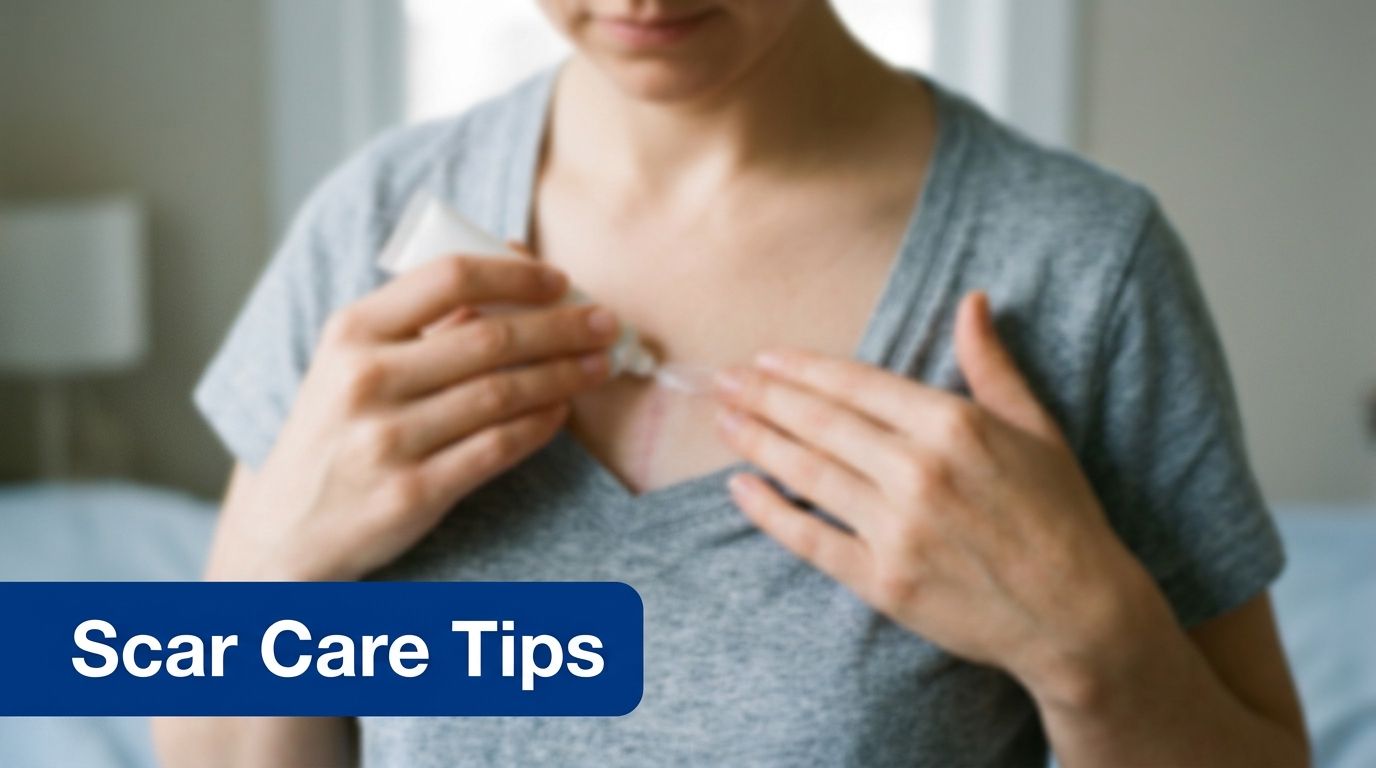
Once incisions are closed and your surgeon says the skin has sealed, the focus shifts from protection to refinement. This is the phase where patients can actively help scars mature well and give the final contour time to declare itself.
Clinical data published in this patient satisfaction study found a 92.6% total success rate for patient satisfaction regarding breast size, with 96.5% of patients reporting perfect, good, or satisfying outcomes, and 100% of patients completely satisfied with the absence of excessive chest wall skin after 6 months.
What good scar care actually looks like
Scar care isn't about attacking the scar. It's about giving it the right environment to mature.
Once cleared by your surgeon, patients are often advised to start some combination of silicone-based scar care, gentle massage, and consistent sun protection. The order and timing depend on how the incision is healing, so don't start early just because the surface looks closed.
Key habits make the difference:
- Be consistent: Occasional scar care doesn't do much.
- Massage gently, not aggressively: The goal is softening and mobility, not irritation.
- Protect from sun: Fresh scars can darken if exposed.
- Stay patient: Scars improve gradually, not week to week.
For patients who want a broader overview of scar support options, this guide to best scar healing treatments offers a practical starting point.
When your final result becomes clear
One of the hardest parts of recovery is that you'll see improvement long before you see the final answer. The chest may already look flatter in a shirt, while still holding residual swelling or firmness underneath.
That's normal. Patients often interpret lingering fullness as remaining breast tissue when it's really postoperative swelling or scar-related firmness. The visual endpoint takes time.
A few realistic expectations help:
- Early contour is encouraging, not final
- Small asymmetries during healing are common
- Firmness does not automatically mean recurrence
- Final refinement takes patience
The best-looking result is often the one you stop checking every day.
Awake Surgery and When to Call Your Surgeon
Awake gynecomastia surgery under local anesthesia changes the experience in a way patients appreciate immediately. You avoid general anesthesia, you typically recover in a more controlled way, and the transition home is often smoother. That doesn't make aftercare less important. It makes good aftercare easier to follow.
A large review summarized in this gynecomastia safety discussion reported that nearly 5,000 patients were studied, with a 91% same-day discharge rate and a 4.4% complication rate within the first 30 days, supporting the overall safety of the procedure.
Why awake surgery changes the recovery experience
When surgery is performed under local anesthesia, patients often feel more alert sooner and can skip some of the side effects that come with deeper anesthesia. That can make eating, drinking, walking, and settling in at home more straightforward.
If you're curious about how local anesthetics work in general, this short article on understanding this anesthetic gives useful background. The exact medications and technique depend on the surgeon's plan, but the larger point is simple: awake surgery is designed to support comfort while avoiding unnecessary recovery burden.
Technique selection also matters. Some patients mainly need fat removal. Others have dense glandular tissue that won't respond to liposuction alone. A surgeon's job is to choose the method that matches the anatomy, not the method with the easiest sales pitch.
If you want a fuller overview of the local-anesthesia approach, this guide to awake surgery explains why many patients prefer an office-based experience.
When to contact your surgeon
Most recoveries are smooth. Problems are easiest to manage when they're addressed early. Don't sit on a concern because you don't want to “bother” the office.
Call your surgeon if you notice:
- Pain that suddenly worsens: Especially if it's much more intense on one side.
- Rapid swelling or new asymmetry: A chest that changes quickly deserves attention.
- Redness that spreads or warmth at the incision: Infection concerns should be evaluated promptly.
- Drainage that looks unusual or smells foul: Normal healing fluid and problematic drainage are not the same.
- Fever or feeling unwell: Systemic symptoms matter.
- Compression issues: If the garment is painfully tight, digging in, or creating numbness, ask before adjusting on your own.
Patients do best when they report changes early. Waiting rarely makes a true complication easier to treat.
Awake surgery can make the beginning of recovery feel more comfortable and less disruptive, but true success still comes from the same fundamentals: thoughtful technique, disciplined aftercare, and fast communication if something doesn't seem right.
If you're considering male breast correction and want an experienced team focused on awake, office-based procedures under local anesthesia, Ideal Face & Body can help you understand your options and what recovery is likely to look like for your specific anatomy and surgical plan.