When Loose Lower Belly Skin Becomes More Than a Cosmetic Concern
Lower belly skin removal is a surgical solution for excess, hanging skin on the lower abdomen — skin that often won’t respond to diet or exercise.
Here’s a quick overview of your main options:
| Option | What It Does | Best For |
|---|---|---|
| Panniculectomy | Removes hanging skin and fat (“apron”) | Medical necessity, post-weight loss |
| Tummy Tuck (Abdominoplasty) | Removes skin + tightens abdominal muscles | Cosmetic and functional improvement |
| Belt Lipectomy | Removes skin around the full waistline | Circumferential loose skin after major weight loss |
| Fleur-de-Lis Abdominoplasty | Removes skin vertically and horizontally | Severe laxity in multiple directions |
That hanging skin — sometimes called an “apron” or pannus — is incredibly common. It affects people who have lost significant weight, gone through pregnancy, or simply experienced the natural effects of aging and genetics.
The impact goes beyond appearance. Excess lower belly skin can cause chronic rashes, hygiene problems, back pain, and difficulty moving comfortably day to day.
The good news? Several proven surgical techniques can address it — and understanding your options is the first step.
I’m Dr. Sarah Yovino, MD, a double board-certified master injector and aesthetic specialist at Ideal Face & Body in Beverly Hills, where I work alongside Dr. Justin Yovino to offer personalized body contouring solutions, including guidance on lower belly skin removal. My background in non-surgical rejuvenation and whole-body aesthetics gives me a unique perspective on helping patients choose the right path — surgical or otherwise — for lasting, natural-looking results.
Lower belly skin removal terms simplified:
Understanding Lower Belly Skin Removal: Panniculectomy vs. Tummy Tuck
When we talk about lower belly skin removal, the two most frequent terms you’ll hear are “panniculectomy” and “tummy tuck” (abdominoplasty). While they might sound similar, they serve very different purposes.
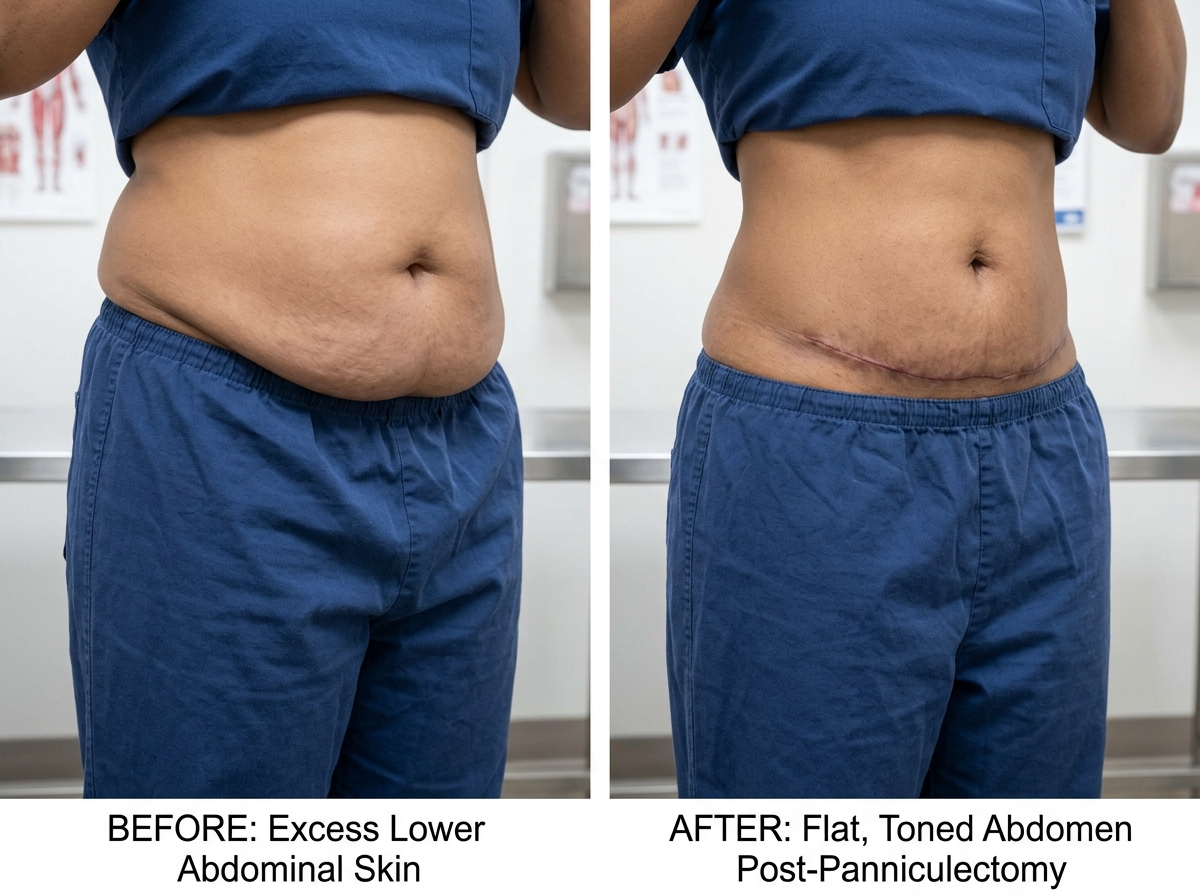
A panniculectomy is primarily a functional or reconstructive procedure. It focuses on removing the pannus—the overhanging “apron” of skin and fat that can result from massive weight loss. This procedure does not involve tightening the underlying abdominal muscles. It is often performed to alleviate medical issues like skin infections or mobility restrictions.
On the other hand, a tummy tuck is a more comprehensive contouring procedure. Not only do we remove the excess skin, but we also perform muscle repair (tightening the fascia) to address issues like rectus diastasis—where the abdominal muscles have separated, often due to pregnancy.
| Feature | Panniculectomy | Tummy Tuck (Abdominoplasty) |
|---|---|---|
| Primary Goal | Remove hanging skin/fat (“apron”) | Aesthetic contouring & muscle repair |
| Muscle Tightening | No | Yes |
| Belly Button Move | Sometimes (if necessary) | Usually |
| Focus | Functional/Medical | Cosmetic & Functional |
If you are wondering which is right for you, it often comes down to whether your goals are strictly to remove the “hang” or if you want a flatter, more toned abdominal profile. You can learn about loose skin removal in more detail to see which category your concerns fall into. For those interested in the medical specifics, Panniculectomy: What to Know provides a deep dive into the reconstructive side, while you can find more info about tummy tuck options for aesthetic refinement right here at our Beverly Hills office.
Why Excess Skin Occurs and the Medical Benefits of Removal
Why does the skin stay loose even after you’ve put in the hard work to lose weight? The answer lies in elasticity. When you lose a significant amount of weight—often 100 pounds or more—the skin has been stretched for so long that the collagen and elastin fibers are damaged. They simply lose the ability to “snap back.”
Common causes include:
- Massive Weight Loss: Often following bariatric surgery or intensive lifestyle changes.
- Pregnancy: The rapid expansion of the abdomen can overstretch the skin and separate muscles.
- Aging: Natural loss of collagen makes skin thinner and less resilient.
- Genetics: Some people naturally have less elastic skin than others.
The benefits of lower belly skin removal aren’t just about fitting into a smaller pair of jeans. There are significant medical advantages. An “apron belly” creates deep skin folds that are difficult to keep dry and clean. This often leads to chronic fungal infections, rashes (intertrigo), and even sores. Furthermore, the weight of the hanging skin can pull on the lower back, causing persistent pain and making physical activity difficult.
Removing this excess tissue can improve hygiene, eliminate painful friction, and restore a person’s ability to walk and exercise comfortably. You can read more info about excess skin in the lower abdomen or check out our loose skin guide to understand how these factors affect your health.
Surgical Options and Advanced Techniques

Modern surgery offers several ways to address loose skin. Most lower belly skin removal procedures are performed under general anesthesia and involve a hip-to-hip incision placed low enough to be hidden by most underwear or swimwear.
During a standard procedure, we carefully excise the redundant skin and fat. If we are performing a full tummy tuck, we also tighten the abdominal wall muscles and reposition the belly button to ensure a natural look. For patients with less severe laxity, a mini tuck might be an option, involving a smaller incision and no belly button repositioning. You can view our mini tummy tuck gallery to see the subtle yet impactful results this technique offers.
Advanced Techniques for Lower Belly Skin Removal
For patients who have experienced extreme weight loss, a standard horizontal incision might not be enough. In these cases, we look toward more “360-degree” or vertical approaches:
- Belt Lipectomy (Lower Body Lift): This is a circumferential procedure. It removes a “belt” of skin from around the entire waist, addressing the abdomen, hips, and lower back. This is the gold standard for patients with loose skin that wraps all the way around the torso. You can read more about this at Johns Hopkins Medicine.
- Fleur-de-Lis Abdominoplasty: If you have significant vertical laxity (skin hanging down) and horizontal laxity (skin that can be pinched from the sides), a Fleur-de-Lis might be necessary. It adds a vertical incision to the standard horizontal one, creating a T-shape that allows for maximum skin removal.
These customised approaches for lower body readjustment ensure that every patient gets the specific contouring they need.
Preparing for Your Lower Belly Skin Removal Procedure
Preparation is the key to a safe surgery and a beautiful result. At Ideal Face & Body, we emphasize several lifestyle factors:
- Weight Stability: You should be at a stable weight for at least six to twelve months before surgery. If you are still losing weight, the skin will likely become loose again after the procedure.
- Smoking Cessation: This is non-negotiable. Smoking severely restricts blood flow, which is vital for healing these large incisions. We require patients to stop smoking several weeks before and after surgery.
- BMI Requirements: Surgeons generally look for a BMI below a certain threshold to minimize the risk of complications like wound separation or infection.
- Medication Review: We will go over all supplements and medications, especially blood thinners or anti-inflammatory drugs, which must be paused.
Determining the right approach starts with a consultation. Some patients ask, “Do I need a tummy tuck or just lipo?” If skin laxity is the primary issue, liposuction alone may make the skin look worse. However, our “Precision Sculpt” awake liposuction can often be a great companion to skin removal for the best possible contour. Explore tummy tuck options in Beverly Hills to learn more about our local expertise.
Recovery, Risks, and Maintaining Your Results
Recovery from lower belly skin removal is a journey, not a sprint. You can expect to spend about two days in the hospital for major procedures like a belt lipectomy, though many tummy tucks are performed as outpatient surgeries in Beverly Hills.
The Recovery Timeline:
- Weeks 1-2: You will likely have surgical drains to prevent fluid buildup (seroma). You’ll be walking “hunched over” to protect the incision and wearing a compression garment 24/7.
- Weeks 4-6: Most patients can return to desk work and light activities. Drains are usually out by now.
- 6 Months: Swelling has largely subsided, and you can see your new shape clearly.
- 1-2 Years: Scars begin to fade from red/pink to a thin, silver or skin-colored line.
Managing Risks: As with any major surgery, there are risks, including infection, bleeding, and blood clots. Complication rates for panniculectomies can range from 8% to over 50% depending on the patient’s health and the extent of the tissue removed. Following our “cheat sheet” and post-op instructions is vital. You can find a cheat sheet for lower abdomen skin removal on our site to help you prepare for the healing phase.
Regarding the financial aspect, the investment varies greatly based on the complexity of the case. While we don’t list specific numbers, you can find more info about the cost to remove excess skin to understand the factors that influence the final quote.
Frequently Asked Questions about Lower Belly Skin Removal
Will insurance cover the surgery?
Insurance coverage for lower belly skin removal is a common question. Generally, insurance companies consider tummy tucks to be cosmetic and will not cover them. However, a panniculectomy may be covered if it is deemed “medically necessary.”
To qualify, you usually need documentation of:
- Chronic rashes or infections that haven’t responded to 3 months of medical treatment.
- The skin hanging below the level of the pubic bone.
- Interference with daily activities like walking or hygiene.
- Significant weight loss (often 5 BMI points or more).
If you are interested in a procedure that focuses solely on skin without muscle repair, you might want to look into what is a tummy tuck with no muscle repair? to see if that aligns with your needs and potential insurance criteria.
What happens if weight changes after surgery?
Maintaining a stable weight is the most important factor in the longevity of your results. While the skin we remove is gone forever, the remaining skin can still stretch if you gain significant weight. One small study found that patients who had these procedures after weight loss surgery gained an average of 4% of their weight back over 12 years—which is quite stable! However, drastic fluctuations can diminish the aesthetic “flatness” of the abdomen. If you’re unsure about your current weight status, we can help you decide: Lipo or tummy tuck: what is best for me?
How long does the recovery take?
As mentioned, you should plan for at least 2 to 4 weeks off work, depending on how physical your job is. You must avoid strenuous activity and heavy lifting for at least 6 weeks to prevent the internal stitches from popping or the incision from opening (dehiscence). For a visual look at the healing process and final outcomes, view our full tummy tuck gallery.
Conclusion
At Ideal Face & Body in Beverly Hills, we understand that lower belly skin removal is a life-changing decision. Whether you are dealing with the aftermath of a 100-pound weight loss journey or looking to restore your pre-pregnancy shape, our team is here to guide you.
Dr. Sarah Yovino and Dr. Justin Yovino combine surgical precision with an artistic eye to ensure your results are both functional and beautiful. From our “Precision Sculpt” awake liposuction to advanced abdominoplasty techniques, we tailor every plan to the individual.
If you’re ready to take the next step and feel comfortable in your own skin again, we invite you to schedule a personalized consultation. Say goodbye to excess skin today and start your journey toward a more confident you.