The most popular advice about skincare for mature skin is often the least useful: add another serum, another acid, another device, and keep layering until your face feels tight. That isn't a strategy. It's a fast route to irritation on skin that already retains less water and reacts more easily.
A better routine is shorter and more deliberate. Every product should address one of four practical concerns, barrier weakness, dehydration, pigmentation, or laxity. The foundation remains daily sun protection, followed by a tolerable retinoid or a gentler alternative, and a moisturizer that helps the barrier rather than merely creating a temporary dewy finish. For a useful distinction between professional formulas and ordinary shelf products, review this guide to medical-grade skincare.
Table of Contents
- Why Mature Skin Needs a Different Playbook
- How Skin Actually Changes After 40
- The Four Ingredients Worth Your Money
- A Simple Morning and Night Routine
- Smart Product Selection and What to Skip
- In-Office Procedures That Complement Home Care
- Red Flags and When to Book a Consultation
Why Mature Skin Needs a Different Playbook
A long anti-aging routine can look impressive on a bathroom counter and still be poorly designed. Mature skin often has less tolerance for aggressive exfoliation, repeated cleansing, fragrance, and several competing actives applied in the same week. The result is frequently redness, flaking, tightness, and a weakened barrier, not smoother-looking skin.
The correction is simple: use fewer products, but make each one earn its place. A cleanser removes residue. A moisturizer supports hydration and barrier function. A retinoid addresses collagen support and texture. Sunscreen prevents additional UV injury. Everything else is optional until those basics are working comfortably.
The four problems worth solving
Think in terms of the problem in front of you rather than the marketing name on the bottle.
- Barrier weakness: Choose a moisturizer with ceramides, cholesterol, fatty acids, humectants, and protective emollients.
- Dehydration: Add water-binding ingredients such as hyaluronic acid, then seal them in with a richer cream.
- Pigmentation: Prioritize daily broad-spectrum sunscreen, then consider a targeted brightening ingredient.
- Laxity: Topicals can improve surface quality and the appearance of fine lines, but they can't replace structural correction when skin has significantly descended.
The Skin Cancer Foundation identifies sun protection as a central anti-aging measure. It reports that an estimated 80% of visible skin aging in Caucasian women is caused by the sun, and that daily sunscreen use with SPF 15 or higher is associated with 24% less skin aging than not using it daily. Read the Skin Cancer Foundation's sun-aging and sunscreen guidance for the full context.
Practical rule: If a new product makes your skin sting, peel, or feel unusually tight, stop adding actives. Repair the barrier first.
The rest of the routine should follow that logic. Don't chase every trend. Choose ingredients that match the visible changes, then consider procedures only when home care has reached its reasonable limit.
How Skin Actually Changes After 40
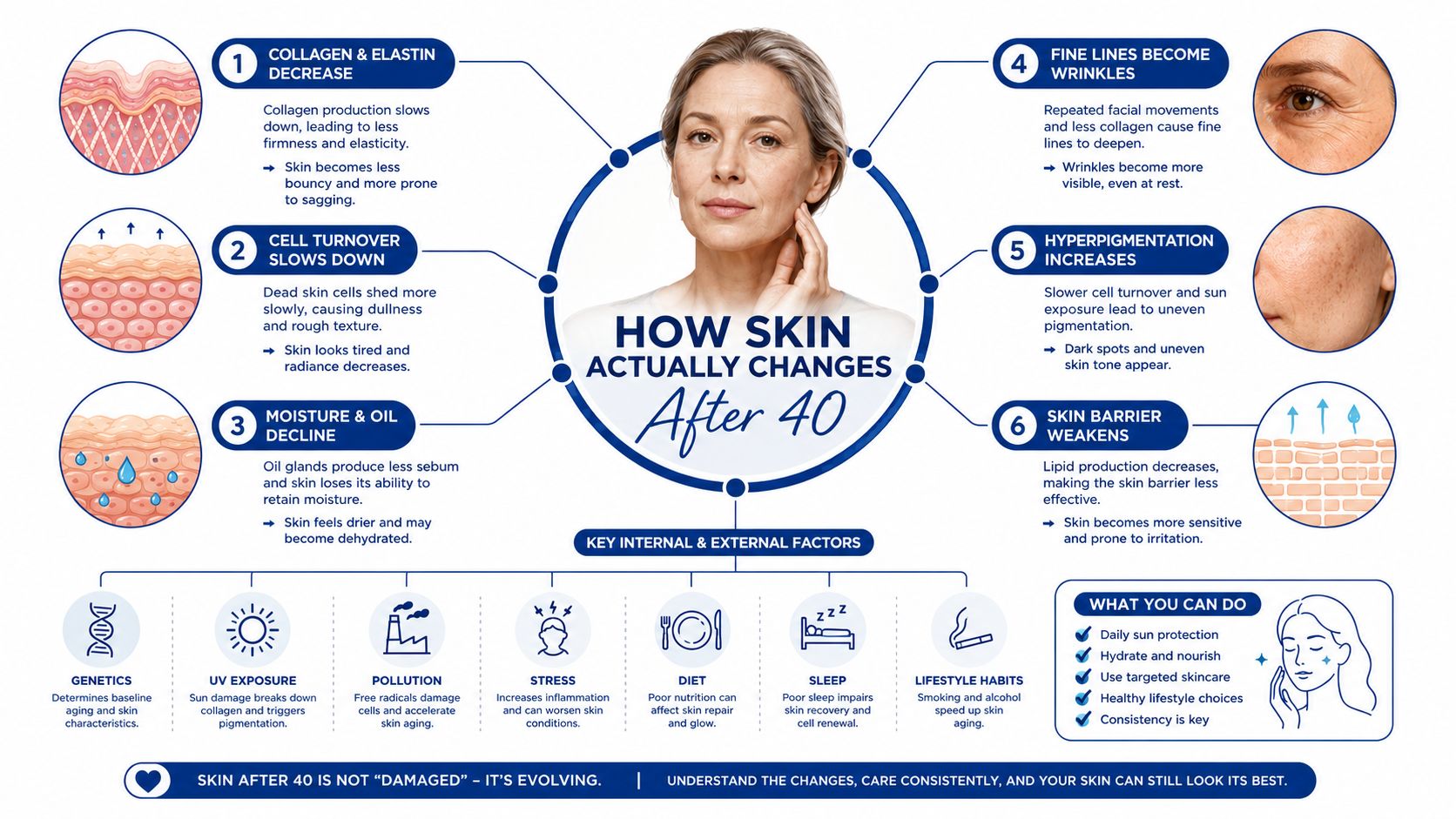
Mature skin doesn't age through one single process. It changes through slower renewal, reduced structural support, and a less efficient protective barrier. Those shifts explain why the same routine that worked earlier in adulthood can suddenly produce dryness or irritation.
Renewal becomes less efficient
In younger skin, surface cells are replaced more efficiently. After 40, slower turnover can leave the complexion looking dull and can make uneven texture more noticeable. Think of a kitchen floor: if old residue isn't cleared regularly, each new layer sits on top of the last, and the surface loses its clean reflection.
A retinoid helps provide a more reliable signal for renewal, but aggressive scrubbing isn't the answer. Physical particles can create irritation without addressing the underlying biology, especially when the barrier is already fragile.
Collagen behaves like an aging rubber band
Collagen and elastin provide much of the skin's support and recoil. With time, that network becomes less dense and less springy. A stretched rubber band offers the right visual: it may still return toward its original shape, but it no longer snaps back with the same force.
Sun exposure accelerates this structural wear. The Skin Cancer Foundation's lifetime exposure figures show why prevention must continue throughout adulthood. Only about 23% of lifetime sun exposure occurs by age 18, while 47% occurs by ages 19–40, 74% by ages 41–59, and 100% by ages 60–78, according to the same Skin Cancer Foundation reference. The point is practical, not frightening: sunscreen still matters after midlife because cumulative exposure continues.
The lipid barrier loses its mortar
The outer layer of skin relies on lipids, including ceramides, cholesterol, and fatty acids, to keep cells organized and water contained. Age and sun exposure can reduce those lipids, increasing transepidermal water loss and leaving the skin more reactive to weather and products. Imagine bricks without enough mortar. The wall may remain standing, but gaps allow moisture to escape more easily.
A mature-skin routine should therefore address more than wrinkles. Retinoids support renewal and collagen-related changes, peptides offer a lower-irritation firmness option, hyaluronic acid helps bind water, and sunscreen limits further UV stress. Ceramides reinforce the barrier that allows the rest of the routine to function comfortably.
The Four Ingredients Worth Your Money
The best ingredient is the one that addresses your main concern without destabilizing your skin. These four categories cover the essentials, but they shouldn't all be introduced at once.
Retinoids for texture and collagen support
Topical retinoids remain among the most evidence-supported actives for mature skin. They increase epidermal cell proliferation, stimulate collagen type I synthesis, and inhibit collagen-degrading enzymes, including metalloproteinases. Clinical literature describes benefits for fine lines, dyspigmentation, rough texture, epidermal thickness, and hydration support in consistent use. A dermatology review records the formal incorporation of retinoids into anti-photoaging strategies in the 1980s, with the first article on tretinoin for photoaged skin published in 1986. The historical and scientific background appears in this review of retinoids and photoaging and this broader anti-aging dermatology review.
Reactive skin needs a slower start. A low-strength prescription such as 0.025% tretinoin, or a gentle retinal product, can be introduced gradually. Apply it over moisturizer if dryness develops, and don't combine it casually with exfoliating acids.
Peptides for a gentler firmness step
Peptides are a reasonable choice for someone who can't tolerate a retinoid or wants a non-retinoid evening. They support the look of firmness without relying on exfoliation. Their role is supportive, not magical. A peptide serum won't lift descended tissue, but it can fit a barrier-conscious routine.
Hyaluronic acid for dehydration
Hyaluronic acid attracts water and can temporarily make fine lines look softer by improving surface hydration. Apply it to damp skin, then cover it with a moisturizer containing occlusives or emollients. Used alone in a dry environment, a water-binding serum may not provide enough lasting comfort.
For readers sorting through the broader category of nutrients involved in repair, this resource on how to find your skin repair vitamin offers additional ingredient context. It shouldn't replace a personalized clinical assessment, but it can help clarify terminology.
Broad-spectrum sunscreen for prevention
Sunscreen is the essential step because it prevents the damage that every corrective product is trying to manage. The FDA states that only broad-spectrum sunscreens with SPF 15 or higher can claim to reduce the risk of skin cancer and early skin aging when used as directed, and the label must identify the product as “Broad Spectrum SPF” with the SPF number. Its FDA sunscreen guidance explains what to look for.
Mineral formulas may suit people who find chemical filters irritating, while chemical formulas may feel lighter or leave less visible residue. The correct option is the one you'll apply consistently and generously.
| Ingredient | Targets | Best For | Tolerability Note |
|---|---|---|---|
| Retinoid | Renewal, fine lines, collagen support | Texture, pigment, early laxity | Introduce gradually and buffer with moisturizer |
| Peptides | Supportive firmness | Retinoid-intolerant or reactive skin | Usually easier to layer |
| Hyaluronic acid | Dehydration | Tight, dull, water-depleted skin | Apply damp, then seal with cream |
| Broad-spectrum sunscreen | UV-driven aging | Every mature-skin routine | Choose a comfortable formula for daily use |
Skip noisy actives that duplicate these functions while increasing irritation. If you want a practical explanation of retinoid use, see whether everyone should use retinol.
A Simple Morning and Night Routine
A routine for mature skin should be easy to repeat on an ordinary day. If it requires constant troubleshooting, it has too many moving parts.
Morning
Start with a gentle cleanser or rinse if your skin is dry and comfortable. Follow with vitamin C if you want an antioxidant step for uneven tone, but treat it as optional rather than mandatory.
Apply a moisturizer with hyaluronic acid, ceramides, or both. Finish with a broad-spectrum sunscreen, ideally one that feels comfortable around the eyes and on the neck. SPF is the final skincare layer, not an afterthought.
Use this order:
- Cleanse or rinse: Remove overnight residue without leaving the skin tight.
- Optional antioxidant serum: Apply vitamin C if your skin tolerates it.
- Moisturizer: Support hydration and the lipid barrier.
- Sunscreen: Apply as the final step before makeup.
Night
Remove sunscreen with an oil or cream cleanser, then apply your treatment only after the skin is dry enough to minimize unnecessary stinging. Use a retinoid two or three nights per week at first, increasing toward nightly use only when your skin remains calm. On alternate nights, use a peptide or growth-factor serum, followed by a richer occlusive moisturizer.
Choose just one optional add-on based on the problem you want to solve:
- Azelaic acid: For uneven pigment and redness.
- Low-strength lactic acid: For dullness when the barrier is stable.
- Niacinamide: For redness and barrier support.
Apply products from thinnest to thickest. If the retinoid causes irritation, place moisturizer underneath it or mix the treatment into your evening cream. Stop active products the night before an in-office procedure, and follow the treating clinician's instructions about when to restart them afterward.
Smart Product Selection and What to Skip
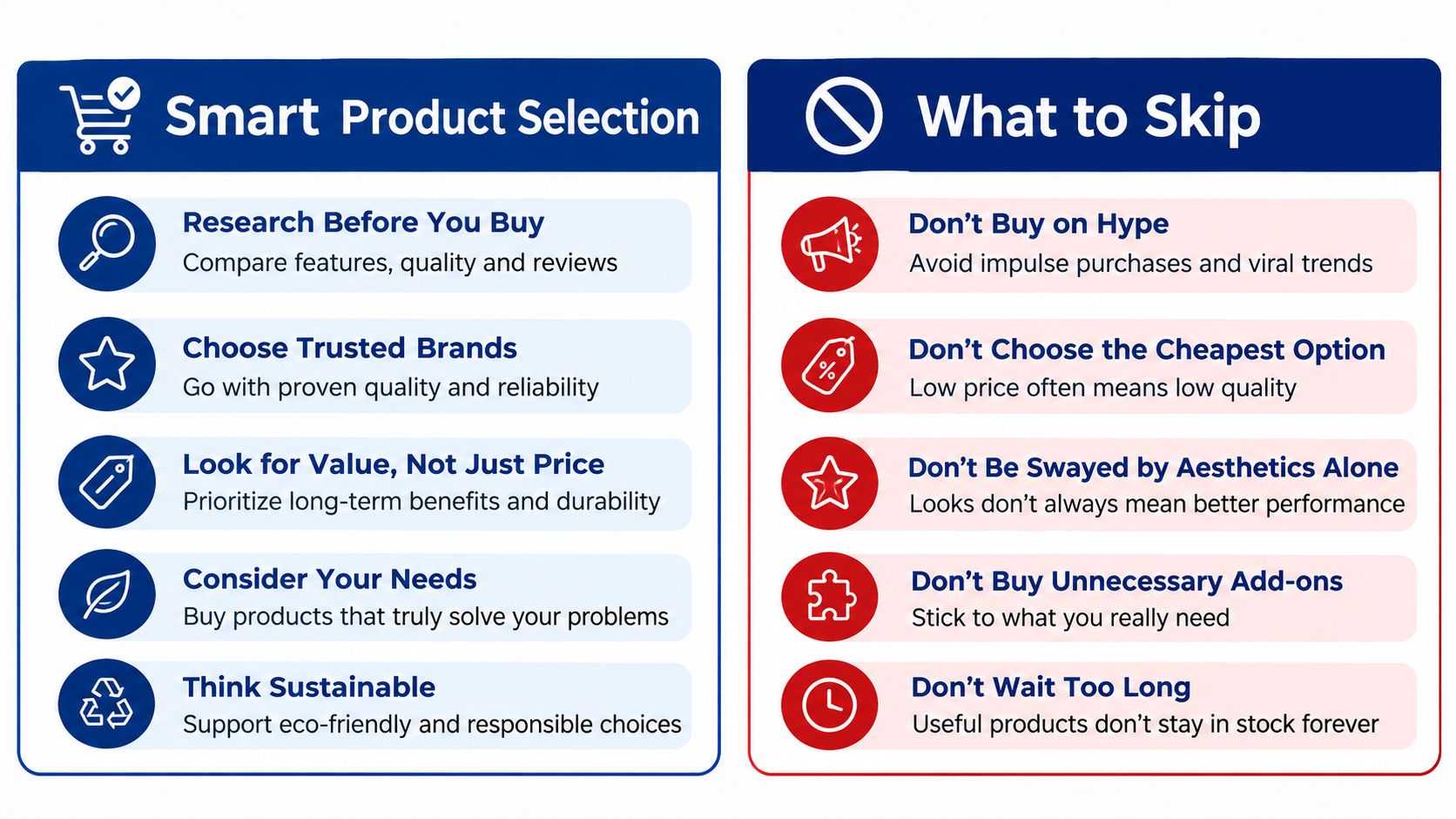
More products don't create a more intelligent routine. They create more opportunities for ingredient conflicts, irritation, and confusion about what is helping.
The short skip list
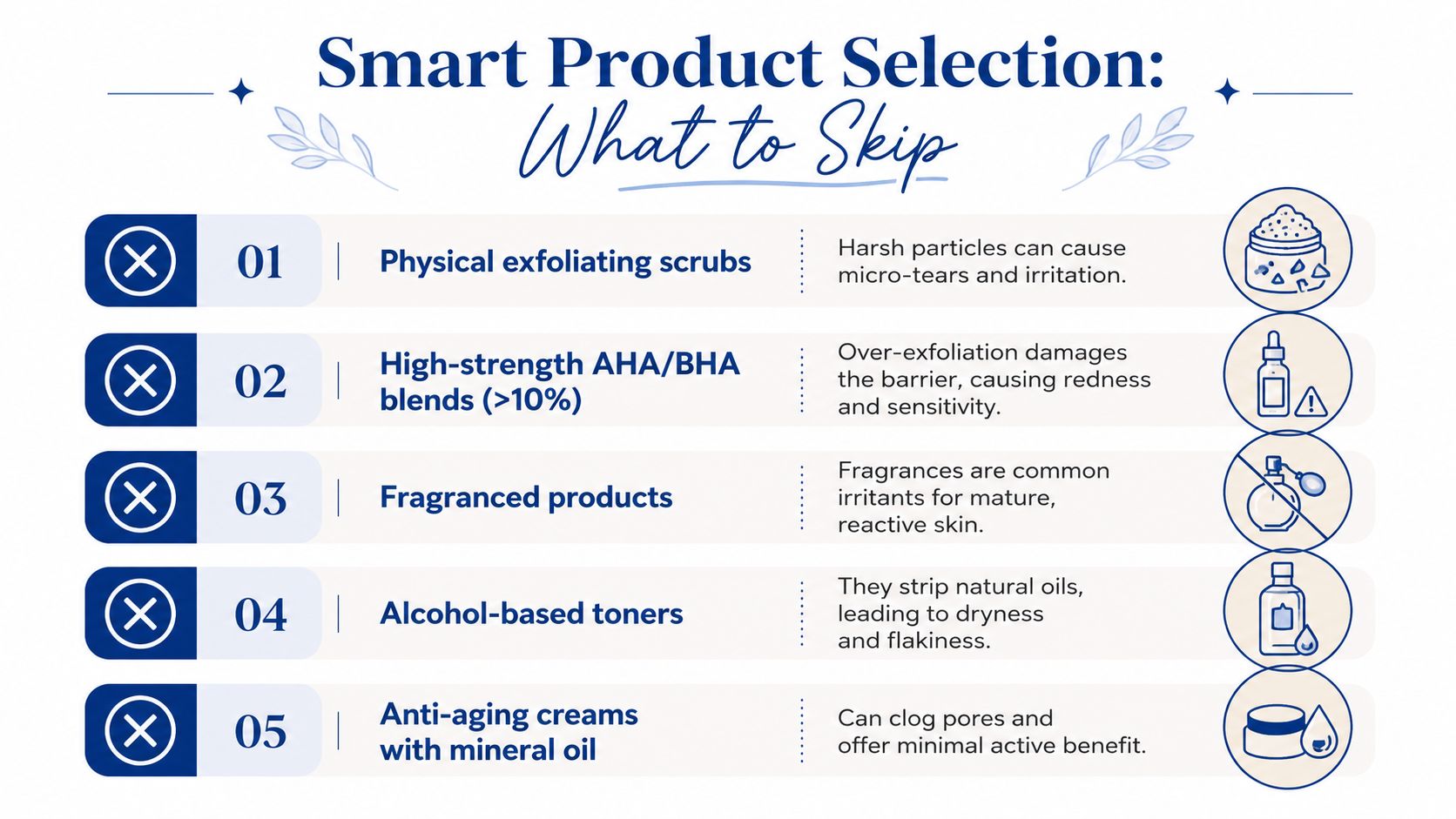
Avoid physical scrubs with jagged particles. They can aggravate reactive skin and offer no special solution for collagen loss or laxity. High-strength AHA and BHA blends, particularly formulas exceeding 10% combined, are another poor default for thin, dry skin. Use an exfoliant selectively, not as daily punishment for visible texture.
Be skeptical of fragrance-heavy or essential-oil-heavy creams marketed as anti-aging. Scent doesn't repair a barrier, and irritation can make mature skin look rougher and more inflamed. Collagen-infused topicals also deserve restraint because collagen molecules applied to the surface are generally too large to act like injectable or dermal collagen.
Multi-active serums that stack a retinoid with acids are rarely necessary. Separating treatments makes it easier to identify the cause of a reaction and gives the barrier a better chance to recover.
Three checks before buying
- Patch test: Apply the product along the jawline and watch the area for 72 hours before placing it across the entire face.
- Read the formula: Use an ingredient-list reference such as INCI Decoder to identify the actual ingredients rather than relying on front-label language.
- Inspect the package: Prefer opaque, airless pumps for oxidation-sensitive antioxidants instead of clear jars that expose formulas to repeated light and air.
Claims such as “clinically proven” mean little without a cited trial. Trade-name ingredients ending in “complex” may describe a real blend, but the name alone doesn't establish meaningful performance. Before-and-after images can also mislead when lighting, expression, camera distance, or makeup changes between photographs.
For a broader framework on choosing a radiant skin moisturizer guide, focus on hydration and barrier ingredients rather than the promise of instant transformation.
A routine that needs more than five steps to explain is probably the wrong routine for your skin.
In-Office Procedures That Complement Home Care
Home care improves skin quality gradually. Procedures make sense when the concern is more localized, more structural, or less responsive to topical products. The right choice depends on whether the problem is pigment, texture, dynamic movement, volume loss, or true laxity.
Surface tone and texture
Chemical peels can address superficial dullness and uneven pigment. Glycolic, TCA, and mandelic peels differ in strength and suitability, so the clinician should select the formula and depth rather than treating the label as a guarantee. Downtime can range from minimal dryness to visible peeling, and results generally require maintenance because new sun exposure continues to affect the skin.
Energy-based treatments are more targeted. IPL is commonly selected for brown spots and diffuse redness, while non-ablative fractional treatments focus on texture with less disruption than fully ablative resurfacing. Ablative CO2 resurfacing can create a more substantial texture change but demands more recovery. Radiofrequency microneedling addresses texture and modest laxity through controlled heat and needle injury, with recovery varying by intensity. Information about this treatment category is available through Morpheus 8 treatment options.
Movement, volume, and laxity
Neuromodulators soften dynamic lines by reducing muscle activity. Hyaluronic acid fillers restore selected areas of volume, while skin boosters such as Skinvive are intended for hydration and crepey texture rather than lifting descended tissue. None of these treatments replaces sunscreen or a tolerable retinoid.
Surgery remains the durable option for significant laxity. Blepharoplasty can address excess eyelid skin, a brow lift changes brow position, and a facelift or neck lift treats descended facial and neck tissue more directly than topical products can. For people comparing non-surgical approaches to jawline laxity, this overview of jowl lift cost and outcomes provides general decision context, although exact treatment suitability varies.
| Procedure | Best For | Downtime | Longevity | Price Tier |
|---|---|---|---|---|
| Chemical peel | Superficial dullness and pigment | Minimal to visible peeling | Maintenance-based | Varies |
| IPL | Brown spots and diffuse redness | Usually limited, depending on settings | Maintenance-based | Varies |
| Non-ablative fractional treatment | Texture and fine lines | Shorter recovery than ablative resurfacing | Maintenance-based | Varies |
| Ablative CO2 | More pronounced texture change | More substantial healing | Longer-lasting than surface hydration treatments | Varies |
| Radiofrequency microneedling | Texture and modest laxity | Several days can occur | Gradual, maintenance-based | Varies |
| Neuromodulator | Dynamic expression lines | Usually limited | Temporary | Varies |
| Hyaluronic acid filler | Selected volume loss | Swelling or bruising may occur | Temporary | Varies |
| Blepharoplasty, brow lift, facelift | Significant structural laxity | Surgical recovery | More durable structural change | Varies |
Pause retinoids and exfoliating acids before treatment when directed, and restart only after the clinician confirms that the surface has recovered. Procedures can improve a specific concern, but daily UV protection remains the maintenance plan.
Red Flags and When to Book a Consultation
Not every skin change is cosmetic. A product routine is the wrong response to a lesion that needs medical evaluation.
Book a board-certified dermatology consultation for:
- A changing mole: Any mole that changes in size, shape, or color.
- A nonhealing patch: Pigment that bleeds, crusts, or fails to heal.
- A sudden texture change: New thickening, scaling, or a lesion that looks unlike the others.
- Persistent irritation: Itching or a rash that doesn't resolve after stopping active products.
- Unexpected facial changes: Sudden loss of elasticity or muscle weakness around the face.
A board-certified dermatologist or plastic surgeon can examine the skin, decide whether monitoring or biopsy is appropriate, and separate a medical issue from ordinary photoaging. An aesthetician or med-spa provider may help with cosmetic maintenance, but suspicious lesions and sudden changes require medical judgment first.

Bring a concise record to the appointment:
- Current medications: Include prescriptions, supplements, and treatments that affect healing or bruising.
- Recent products: Make a 90-day product list, including anything you stopped after irritation.
- Clear photographs: Take daylight photos of the area without makeup.
- Diagnostic questions: Ask whether biopsy or monitoring is appropriate.
- Training credentials: Before resurfacing or injectable work, ask which procedure-specific credentials the clinician holds.
Ideal Face & Body offers medical-grade skincare, peels, energy-based resurfacing, microneedling, injectables, and facial procedures for patients who need more than topical care. Visit Ideal Face & Body to explore treatment options and request a consultation for your skin's barrier, pigment, texture, or laxity concerns.