How Laser Tattoo Removal Works to Clear Ink
To understand why tattoo removal before and after pics look the way they do, it helps to understand the science of how ink leaves your body. When you get a tattoo, the needle deposits ink pigment deep into the dermis. These ink particles are far too large for your body’s natural immune system to remove on its own, which is why tattoos are permanent.
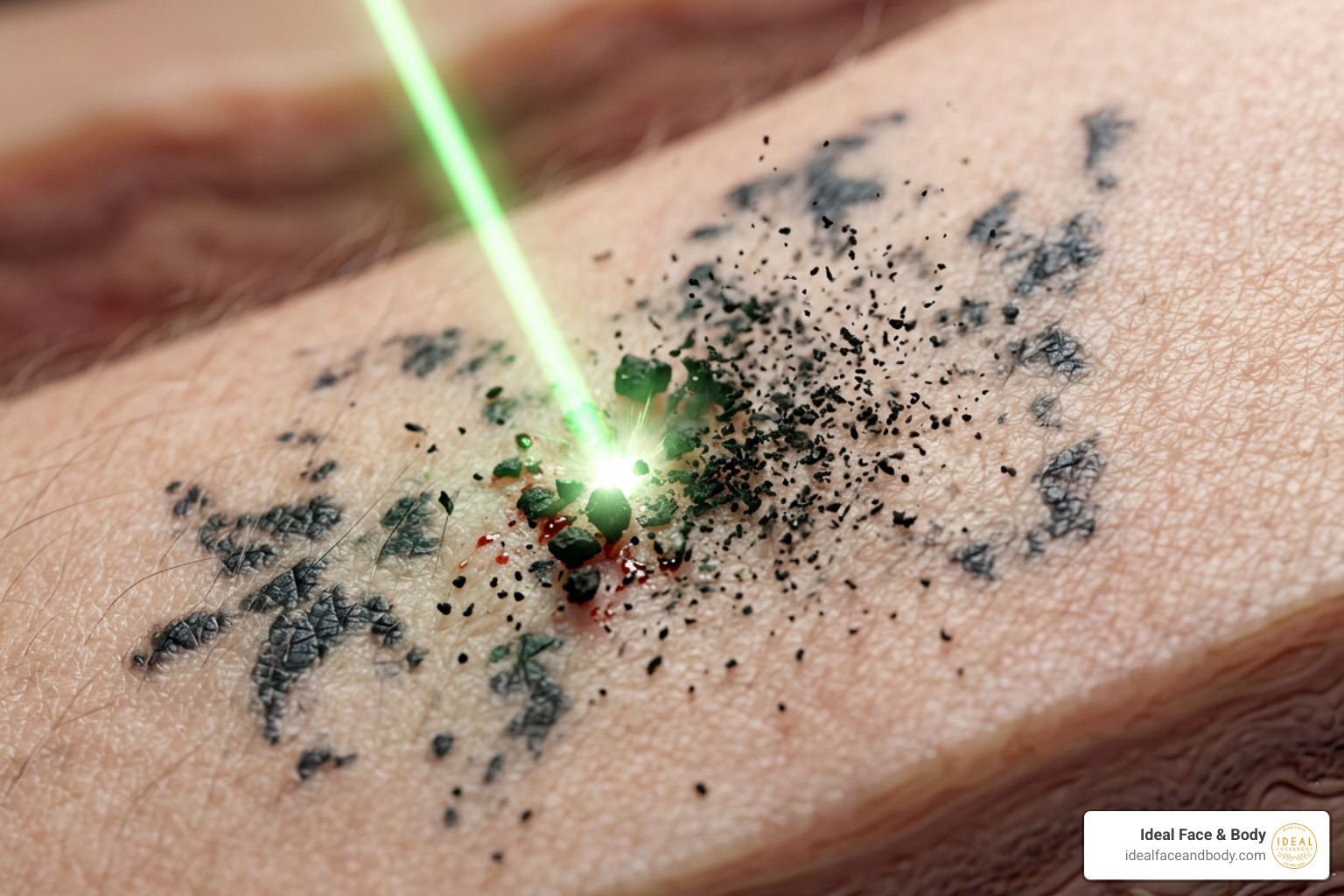
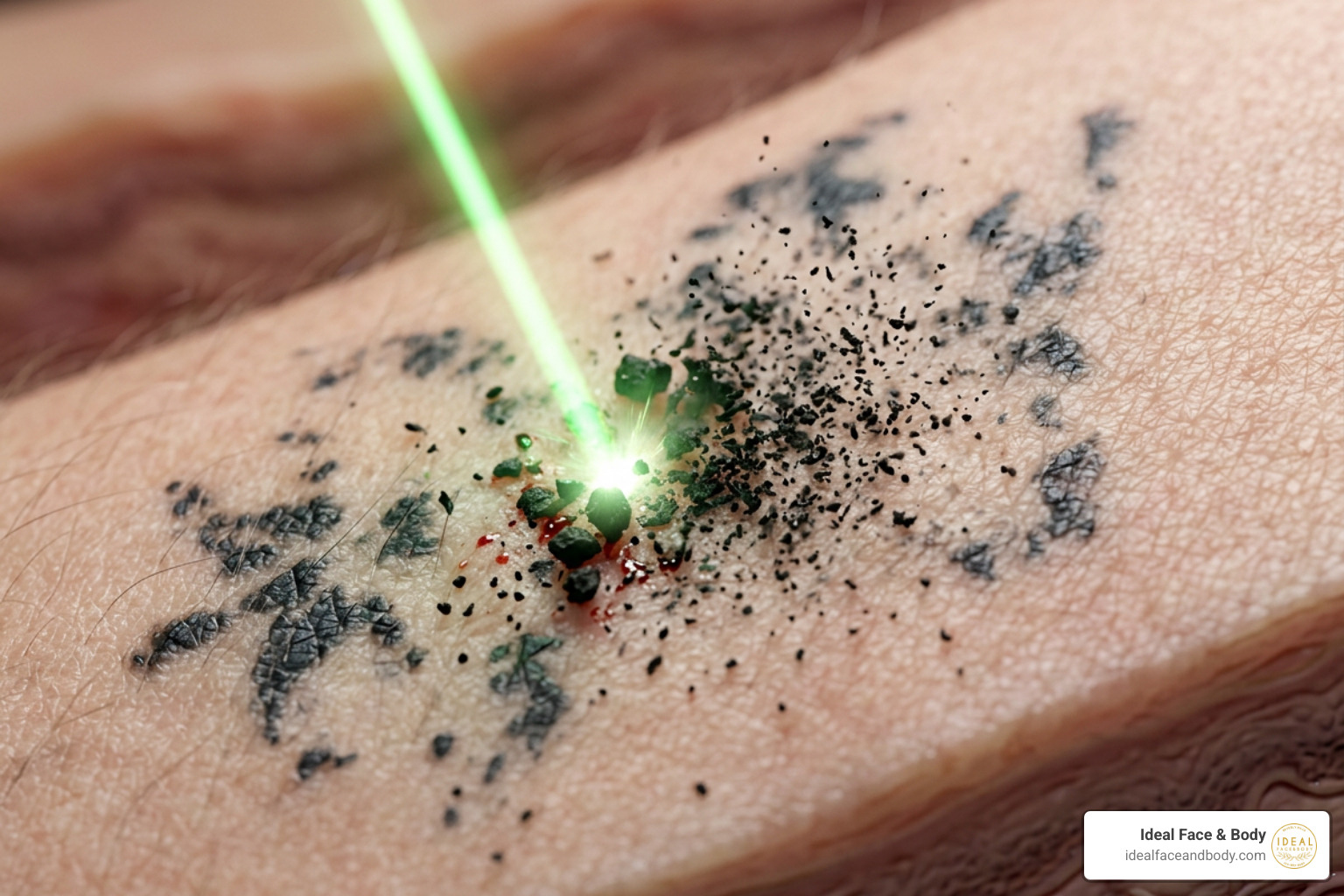
Laser tattoo removal changes this dynamic entirely. The laser delivers ultra-fast, high-intensity light pulses into the skin. When the laser hits the ink, the pigment absorbs the light energy and instantly shatters into microscopic particles.
Once the ink is broken down, your body’s lymphatic system takes over. White blood cells engulf the tiny ink fragments and carry them away, flushing them out of your system naturally over the following weeks. To dive deeper into how this process works at a microscopic level, check out More info about laser technology.
PicoWay vs. PicoSure: The Best Laser Technologies
When evaluating tattoo removal before and after pics, the technology used plays a massive role in the final result. The most advanced systems available today are picosecond lasers, which deliver energy in trillionths of a second (picoseconds) rather than billionths of a second (nanoseconds).
The two leading technologies in this space are PicoWay and PicoSure. While both are highly effective, they utilize different wavelengths and mechanisms to target ink:
| Feature | PicoWay Laser | PicoSure Laser |
|---|---|---|
| Pulse Duration | Ultra-short picosecond pulses | Picosecond pulses |
| Primary Mechanism | Photo-acoustic (pure pressure wave) | Photo-thermal and pressure |
| Key Wavelengths | 1064nm, 532nm, 785nm, 730nm | 755nm |
| Best For | Wide array of colors, including stubborn blues/greens and dark skin tones | Target-specific colors like red, yellow, and blue/green |
| Heat Generation | Minimal heat, highly safe for surrounding tissue | Low heat, though slightly more thermal than PicoWay |
Because the PicoWay laser relies almost entirely on photo-acoustic pressure rather than heat, it shatters ink into even smaller particles with less thermal risk to the surrounding skin. This makes it exceptionally safe and highly effective at clearing residual ink that other lasers might leave behind.
Traditional Q-Switched Lasers vs. Picosecond Lasers
Before picosecond technology took over the industry, Quality-Switched (Q-Switched) lasers were the gold standard for tattoo removal. Q-switched lasers operate in nanosecond pulses. While they are still used today, they rely heavily on photothermal action—meaning they heat up the ink particles until they fracture.
The downside to this heat generation is an increased risk of thermal damage to the surrounding skin, which can lead to longer recovery times, more discomfort, and a higher risk of scarring or pigmentation issues. Picosecond lasers, by comparison, use pure pressure to blast the ink apart. This results in faster clearance, fewer overall treatment sessions, and a much more comfortable recovery process. To learn more about these advantages, explore the best laser benefits.
What to Expect from Tattoo Removal Before and After Pics
When you look at tattoo removal before and after pics, you are looking at a journey of transformation. It is rare to see a tattoo completely vanish after a single session. Instead, a realistic gallery shows progressive fading, step by step, until the skin is restored to its natural state.
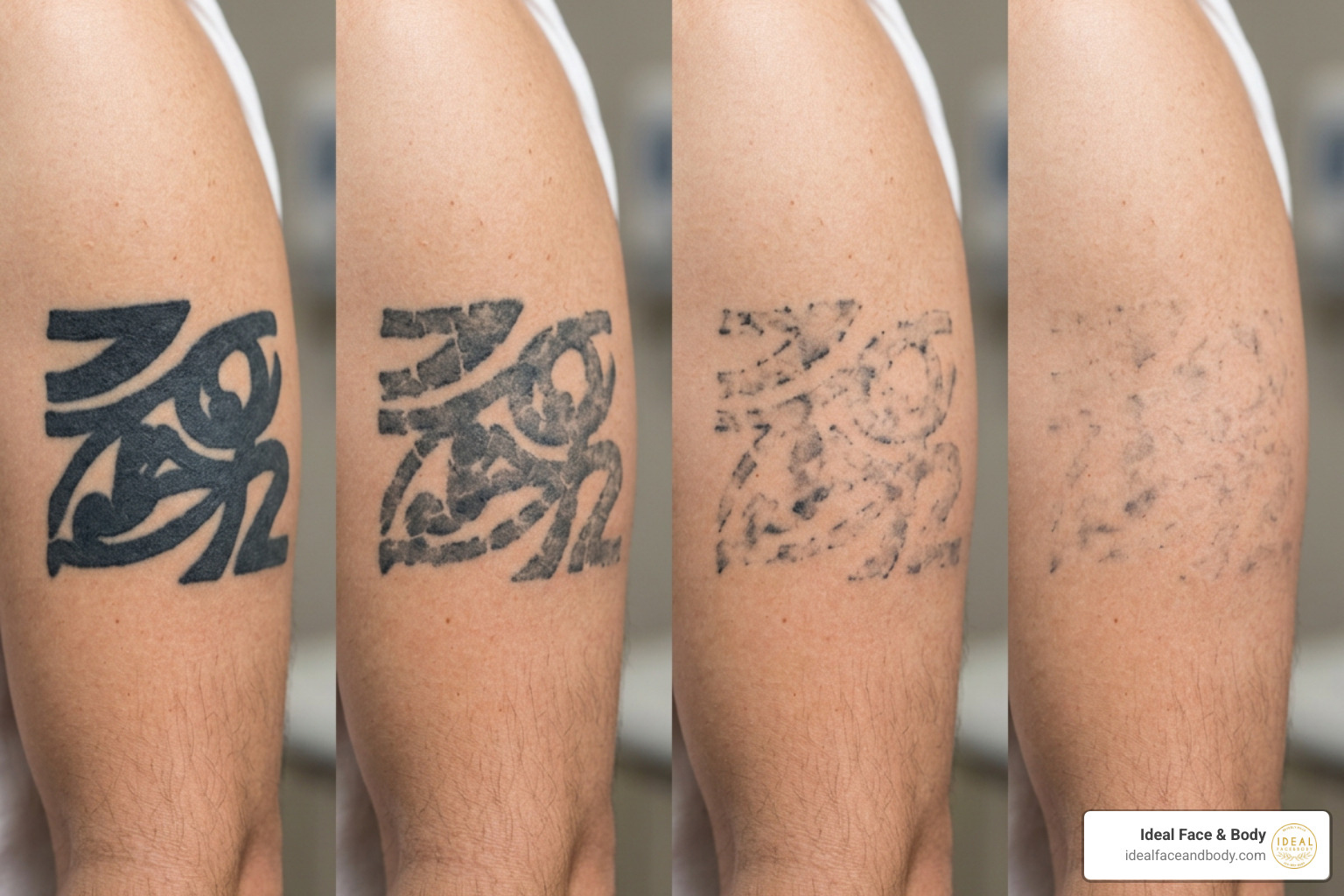
Initially, you might notice the tattoo looks slightly blurred or lighter in certain areas. Over subsequent sessions, the lines break apart, and the density of the ink visibly thins. To see real-world examples of this progressive fading, view these Tattoo Removal Before and After Pictures.
Analyzing Tattoo Removal Before and After Pics by Ink Color
Not all ink colors are created equal. When analyzing tattoo removal before and after pics, you will notice that certain pigments clear much faster than others:
- Black Ink: This is the easiest color to remove. Because black pigment absorbs all laser wavelengths, it responds beautifully to treatment and typically clears in fewer sessions.
- Red Pigment: Red ink responds very well to specific wavelengths, such as the 532nm wavelength, making it relatively straightforward to clear.
- Blue and Green Ink: Historically, these were incredibly difficult to treat. However, modern wavelengths like the 785nm and 755nm specifically target these stubborn pigments, allowing them to fade completely in before-and-after galleries.
- Yellow and Orange: These light pigments can still be challenging and may require a few extra fine-tuning sessions to fully erase.
Tattoo Removal Before and After Pics for Different Skin Tones
A common misconception is that laser tattoo removal is only safe or effective for light skin tones. This is no longer true. Thanks to modern picosecond technology, we can safely treat a diverse range of skin types without causing damage.
On darker skin tones, the primary concern is avoiding hyperpigmentation (darkening of the skin) or hypopigmentation (lightening of the skin). By using longer wavelengths (like 1064nm) that bypass the melanin in the surface of the skin to target the ink beneath, we can achieve beautiful, scar-free results. For a detailed guide on how we customize this process, read our resource on Tattoo Removal For Dark Skin.
Key Factors That Influence Your Tattoo Removal Journey
Your tattoo removal progress depends on several unique variables. No two tattoos are identical, and your body’s natural physiology plays a major role in how quickly you see results.
- Tattoo Age: Older tattoos are generally easier to remove because the body has already spent years naturally breaking down and shedding some of the ink.
- Ink Depth and Density: Professional tattoos are placed deeper in the dermis and contain more concentrated ink, requiring more sessions than amateur tattoos.
- Tattoo Location: Areas with high blood circulation—such as the chest, neck, and head—heal faster and fade more quickly. Tattoos on the hands, feet, or lower legs take longer to clear because circulation is slower at the extremities.
- Immune Response: Because your lymphatic system does the heavy lifting of carrying the shattered ink away, a healthy immune system, regular exercise, and staying hydrated can actually speed up your results.
For residents in our local area looking to start their journey, we provide tailored treatment plans designed for your specific skin type and goals. Learn more about our specialized approach to Laser Tattoo Removal Beverly Hills.
Number of Sessions and Treatment Intervals
Most patients require multiple sessions to achieve complete removal. While some simple tattoos can clear in a few treatments, more complex, multicolored designs may take several sessions.
Sessions must be spaced at least six to eight weeks apart. This interval is crucial because it gives your lymphatic system enough time to flush out the shattered ink and allows the skin to heal completely before the next laser pass.
In some cases, advanced protocols like the R20 method can speed up the process. This multi-pass technique involves performing multiple laser passes during a single office visit, with 20-minute breaks in between to allow gas bubbles in the skin to dissipate. While highly effective for certain tattoos, it requires careful assessment by an experienced specialist to ensure skin safety.
Pain Management and the Sensation of Laser Removal
Many patients compare the sensation of laser tattoo removal to a rubber band snapping against the skin, accompanied by a warm, prickly feeling. While the procedure is incredibly fast—often lasting only a few minutes per session—we prioritize your comfort at every step.
To make the experience as comfortable as possible, we offer several pain management options:
- Topical Numbing Cream: Applied before the session to desensitize the skin.
- Chilled Air Devices: Blowing cold air onto the treatment area during the laser application to soothe the skin instantly.
- Lidocaine Injections: For patients seeking a virtually painless experience, localized lidocaine injections can completely numb the area, ensuring you feel nothing but mild pressure.
To understand how we make this process comfortable and what to expect regarding overall investment, check out our guide on Painless Tattoo Removal Cost.
Healing, Aftercare, and Safety Considerations
Immediately after a laser session, you will notice a temporary phenomenon known as “laser frosting.” The treated area will look white and slightly puffy. This is a completely normal reaction caused by rapid heating, which releases tiny gas bubbles within the skin. Frosting typically subsides within 10 to 30 minutes.
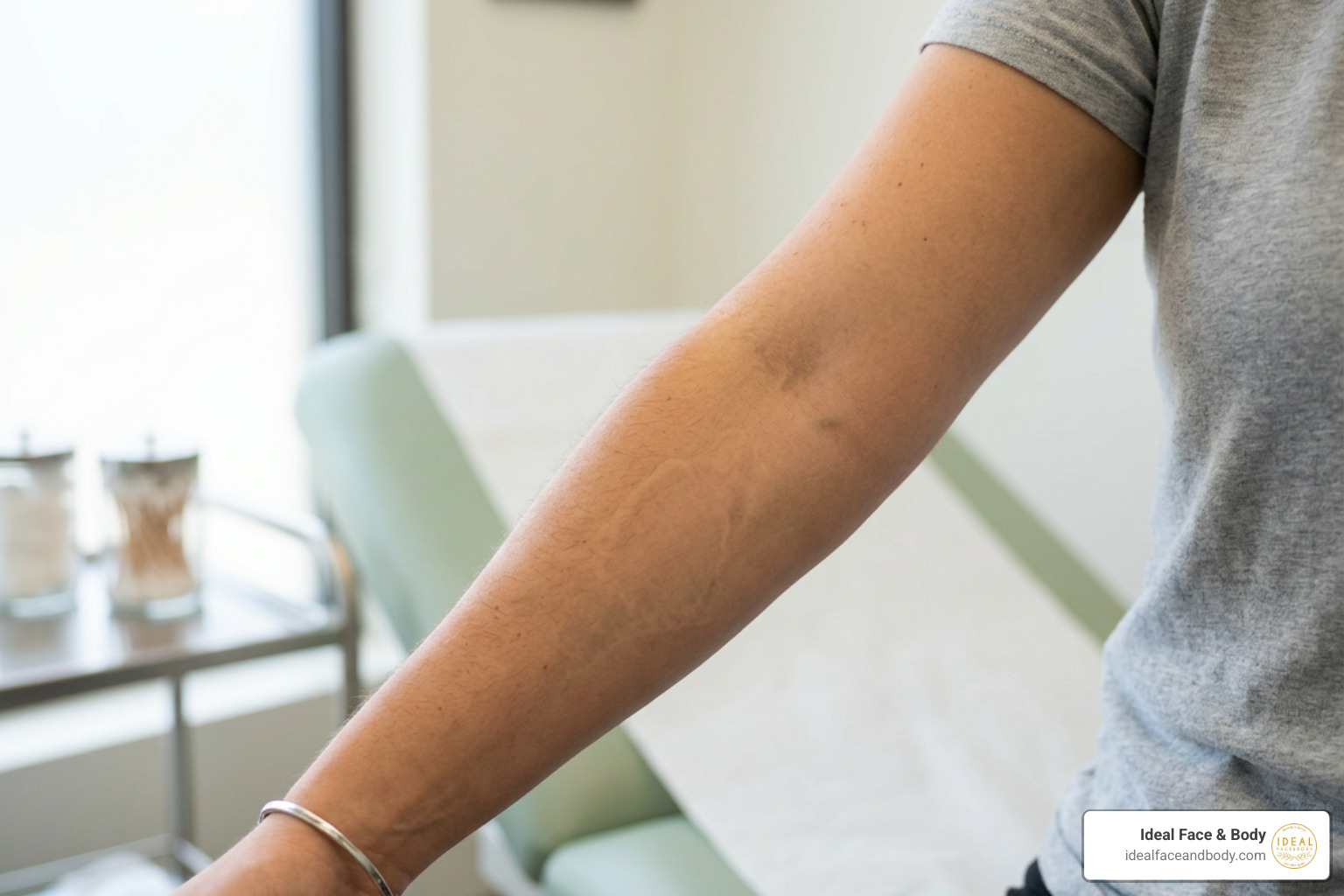
Over the next few days, you may experience mild swelling, redness, and occasional pinpoint blistering. These are all signs that your body’s healing response has been activated. When performed by skilled professionals using advanced technology, the risk of permanent scarring is incredibly low. To learn more about what to expect during the recovery phase, read Does Laser Tattoo Removal Scar Here Is What To Actually Expect.
Essential Aftercare Steps for Optimal Results
Your aftercare routine is just as important as the laser session itself. Proper post-treatment care protects your skin, prevents infection, and helps your body clear the ink efficiently:
- Keep It Clean and Dry: Gently wash the area with mild soap and water, and keep it dry for the first 24 hours.
- Moisturize: Apply a thin layer of Aquaphor or a recommended healing ointment twice daily for the first week to keep the skin hydrated.
- Protect from the Sun: Sun exposure can increase the risk of pigmentation changes. Keep the area covered or apply a high-SPF physical sunscreen once the skin has closed.
- Do Not Pick or Scratch: If blisters or scabs form, let them heal naturally. Picking at them can lead to infection or scarring.
Getting a Cover-Up or New Tattoo Over the Treated Area
You don’t always have to aim for 100% clearance. Many of our patients use laser removal as a creative tool to fade an old design so a tattoo artist can seamlessly place a new, high-quality cover-up over the area. Fading a tattoo for a cover-up typically requires far fewer sessions than complete removal.
Whether you want complete clearance or just enough fading for a fresh design, you must wait at least eight weeks after your final laser session before tattooing the area again. This ensures the deeper dermal layers are fully healed and ready to hold new pigment beautifully.
Frequently Asked Questions About Tattoo Removal
How much does laser tattoo removal cost?
The cost of laser tattoo removal varies widely depending on several factors. Because every tattoo is unique, pricing is customized to the individual. Key variables that influence the overall investment include:
- The physical size of the tattoo
- The complexity and variety of the ink colors used
- The total number of sessions required to achieve your desired outcome
- The specific laser technology utilized (such as advanced picosecond systems)
Because of these variables, we recommend a personalized consultation to receive an accurate estimate tailored to your specific goals. For a comprehensive look at how these elements are calculated, check out our Tattoo Removal Cost Ultimate Guide.
Can cosmetic tattoos like lip liner or microblading be removed?
Yes, cosmetic tattoos can be removed, but they require specialized expertise. Many cosmetic inks contain iron oxide or titanium dioxide. When hit by certain laser wavelengths, these metallic compounds can undergo a chemical reaction and turn dark brown or black.
An experienced practitioner knows how to test the ink and adjust the laser parameters safely to prevent unwanted color shifts. To learn more about the delicate process of clearing cosmetic pigment, read our guide on From Bold To Bare Navigating Laser Lip Tattoo Removal.
Is surgical tattoo removal an option?
Surgical excision is an alternative for patients seeking immediate removal of a small tattoo. Unlike laser removal, which fades the ink progressively over several months, surgical removal physically excises the tattooed skin and sutures the remaining tissue back together.
While this offers instant results, it will leave a surgical scar in place of the tattoo. It is generally reserved for very small designs where a linear scar is preferable to the original ink. To weigh the pros and cons of this approach, explore Surgical Tattoo Removal Seeing The Scar-Free Truth.
Conclusion
Looking at tattoo removal before and after pics is the first step toward reclaiming your skin. Whether you want to completely erase a memory, fade a design for a stunning new cover-up, or correct a cosmetic tattoo, modern laser technology makes the process safer, faster, and more comfortable than ever before.
At Ideal Face & Body in Beverly Hills, CA, we combine advanced medical aesthetics with a warm, patient-first approach. Led by Dr. Sarah Yovino and Dr. Justin Yovino, our team is dedicated to helping you achieve clear, beautiful skin using state-of-the-art technology tailored to your unique skin type.
Ready to start your transformation? View our complete tattoo removal gallery to see real patient results, and schedule your personal consultation with us in Beverly Hills today.