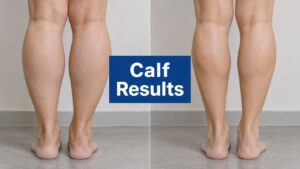
The most common advice about BBL reversal is also the least useful: “just remove the fat.” That sounds simple until you look at where the fat was placed, how the tissue healed, and whether the underlying issue is extra volume, asymmetry, firmness, or loose skin. A safer way to think about it is not as one undo button, but as a set of contouring decisions, and the first decision is whether reversal is even physically possible.
The quiet rule that changes everything is the fat plane. If fat was placed above the muscle, some reduction or reshaping may be possible. If it was placed inside the muscle, it cannot be safely removed, and that immediately changes the conversation from full reversal to a compromise plan focused on what can be corrected without causing harm. That single detail is why two people can use the same search term and need completely different surgery.
Table of Contents
- What BBL Reversal Actually Means
- Why Patients Seek a Reversal or Reduction
- Surgical and Non-Surgical Correction Options
- Who Is a Candidate and How Surgeons Evaluate You
- Risks and Complications of BBL Revision
- Recovery Timelines and What to Expect
- Choosing a Qualified Surgeon for Your Revision
- Consultation Checklist and Common Questions
What BBL Reversal Actually Means
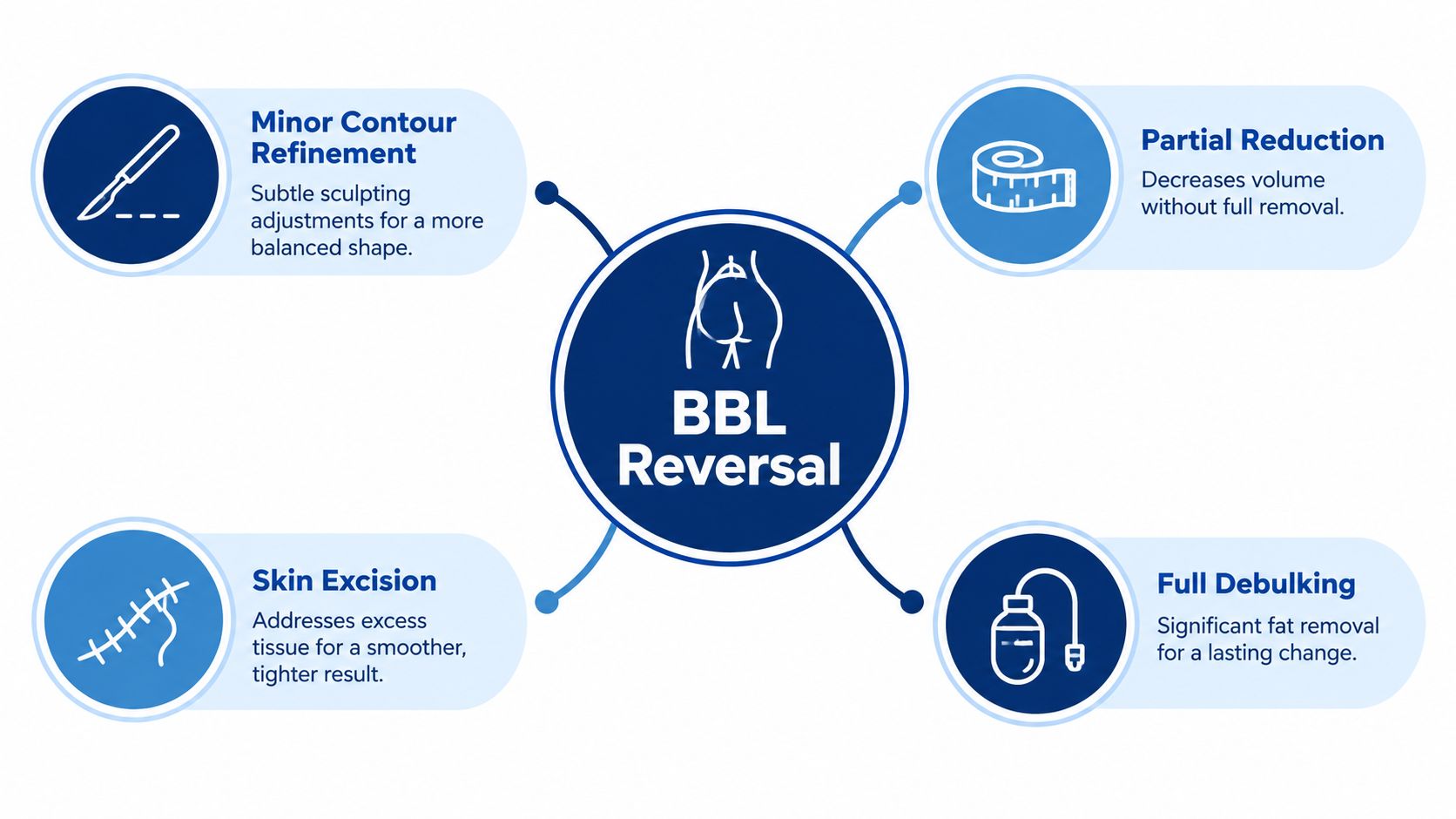
BBL reversal is not one operation. It's a spectrum that ranges from subtle contour refinement to partial reduction, full debulking, and, in some patients, skin excision when the tissue has been stretched enough that fat removal alone would leave a worse shape. The goal isn't always to erase the original surgery. Sometimes it's to restore balance, soften a harsh projection, or make clothing fit more naturally.
The key feasibility rule
The most important question is where the fat sits. The American Society of Plastic Surgeons states that reversal can only be performed when fat was injected above the muscle layer, because intramuscular fat cannot be safely removed. That's not a minor technicality, it's the line between a true reduction and a limited contouring revision.
Practical rule: if the old fat is deep, scarred, or near critical structures, the plan usually shifts from “remove it all” to “improve what can be improved safely.”
That's why surgeons talk about subcutaneous debulking first. When the grafted fat is superficial, the operation can focus on reshaping the outer layer. If there's skin laxity, a staged tightening or excision plan may be needed later, because removing volume doesn't automatically restore support. The best revision plan is the one that matches the tissue you have, not the tissue you wish you had.
For readers who want a plain overview of the original operation, the basics of a Brazilian butt lift are outlined in this BBL procedure guide.
Why Patients Seek a Reversal or Reduction
Patients asking for BBL reversal are not usually seeking to return to exactly what they looked like before. They want a narrower, smoother contour that fits clothing better and feels easier to live with. In a recent series summarized in study summary, the common complaints were residual adiposity, skin laxity, and asymmetry. That pattern matches what comes up in revision consultations when the shape feels too full, uneven, or hard to balance.
The conversation is usually practical. Patients may want less side projection, better symmetry between the two sides, or less firmness in areas that still look swollen long after healing. Sometimes the concern is not size alone, but the way the tissue sits on the body and how it behaves in motion, in clothing, or under touch.
| Common Reasons Patients Request BBL Revision | Approximate Frequency in Revision Consults | Typical Surgical Response |
|---|---|---|
| Residual adiposity | 10.6% | Debulking, redistribution, or staged reduction |
| Skin laxity | 6.5% | Skin tightening, staged excision, or combined contouring |
| Asymmetry | 6.5% | Selective contour correction and balancing |
All three figures come from one recent series of revision consultations.
Cosmetic regret versus medical symptoms
Cosmetic dissatisfaction and medical symptoms call for different thinking. A person who dislikes the silhouette may need careful reshaping. A person with palpable firmness, suspected fat necrosis, or ongoing pain needs a more cautious workup before any plan for debulking.
That difference changes the surgical goal. If the concern is mainly visual, the plan can focus on proportion and symmetry. If there are lumps or areas that feel fixed and tender, the surgeon has to assess tissue quality, possible necrosis, and whether the area can be revised safely at all. In revision surgery, a “reversal” may really mean correcting a contour problem, not erasing every trace of the original procedure.
Surgical and Non-Surgical Correction Options
The two main surgical paths are subcutaneous liposuction debulking and staged excision. Debulking works best when the problem is too much superficial volume. Excision enters the picture when there's meaningful excess skin, redundant tissue, or a shape that won't settle acceptably after fat removal alone.
Side by side comparison
| Factor | Liposuction Debulking | Staged Excision |
|---|---|---|
| Best for | Excess superficial fat, contour heaviness, mild asymmetry | Loose skin, residual tissue folds, major contour excess |
| Scarring | Small access points, usually limited | More visible scars, depends on how much skin is removed |
| Recovery | Usually simpler and more predictable | More involved, especially if tightening is staged |
| Main tradeoff | Less scar burden, but limited if skin is lax | Better for excess skin, but scar and healing burden rise |
| Ideal indication | The issue is volume, not skin redundancy | The issue is shape plus skin excess |
Non-surgical options can be adjuncts, but they're not magic fixes. Skin-tightening devices may help mild laxity, and muscle stimulation or ultrasound-based approaches can support contour management in selected cases, but they can't remove grafted fat in the way surgery can. That's why marketing language often overpromises, while revision planning stays tied to what the tissue can do.
Awake tumescent liposuction is often useful in revision work because the surgeon can fine-tune contour while the patient is positioned and responding. That matters in a smaller, more precise case where symmetry and shape count more than sheer volume removed. For patients considering a office-based option, BBL revision surgery at Ideal Face & Body is one example of how awake correction can be approached when the anatomy is appropriate.
A good revision plan doesn't start with the biggest reduction possible. It starts with the amount of change the skin, scar tissue, and original plane can safely tolerate.
Who Is a Candidate and How Surgeons Evaluate You
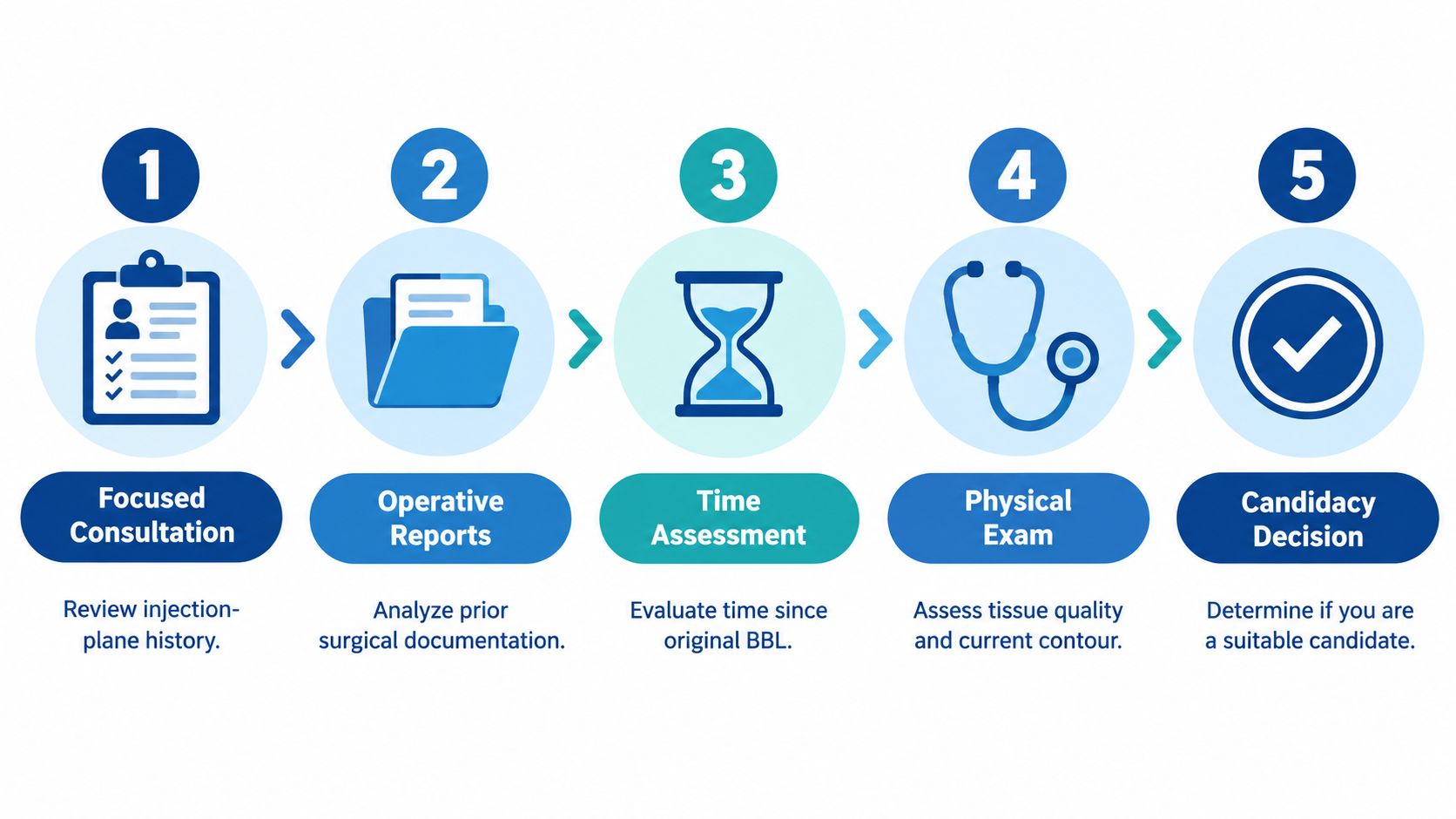
A real candidacy review starts with the history of the original operation. The surgeon wants to know when it was done, who performed it, what plane was used if that's known, and whether the result ever stabilized or kept changing. That history matters because the same visible shape can come from very different tissue problems.
What the physical exam is looking for
The exam usually focuses on four things, subcutaneous thickness, skin quality, firmness, and symmetry. A pinch test helps estimate how much superficial fat is present. Palpation can reveal fixed firmness that raises concern for deeper graft placement or scarred tissue. Skin that feels thin or lax may need a different strategy than skin that still has good recoil.
Imaging can help localize the grafted volume, especially when the surgeon needs to confirm whether the fat is above the muscle. Ultrasound is the most practical tool for that job because it can help map where the contour problem sits without guessing from the surface alone. That is the step that often decides whether a patient is a candidate for true reduction or only for limited debulking.
Red flags before revision
Active infection, unresolved fluid collection, and breathing-related symptoms all need attention before anyone plans elective revision. So do major health issues that make healing less predictable. A surgeon who moves too quickly past those problems is skipping the part of evaluation that keeps revision from turning into a second complication.
The candidacy question also includes expectations. If a patient wants a completely flat result but has stretched skin and old scarred fat, that goal may not be realistic in one procedure. If the concern is mainly excess subcutaneous fullness, the plan is usually more straightforward. Either way, the evaluation is about matching goals to tissue, not forcing the anatomy to obey the wish list.
Risks and Complications of BBL Revision
Revision risk depends on the plane being treated. Subcutaneous debulking is a different conversation from revision in a buttock with prior deep injection, fibrosis, or scar tissue near nerves. The same operation name can hide very different levels of difficulty.
The safety literature on gluteal fat grafting shows that serious complications are tied to depth and plane control. A systematic review of intramuscular fat grafting reported a pooled complication rate of 6.2%, with fat embolism identified as the most serious event and a mortality estimate of 1:3000 cases (pubmed review). Ultrasound-guided approaches had lower major complication rates than non-guided approaches, with 0.02% major complications versus 0.08%, and minor complications at 2.82% versus 3.70%, in the same review.
What patients still need to understand
Even when revision stays in the superficial layer, the usual risks remain. Contour irregularity, dimpling, prolonged swelling, seroma, asymmetry, and fat necrosis can still occur, sometimes with oil cysts or firm nodules. A broad fat-grafting review notes that higher volumes in poorly vascularized regions can increase fat necrosis, and that necrotic tissue may require imaging or biopsy when the exam is unclear (fat-grafting review).
Important distinction: a safer approach does not mean an easy recovery. It means the surgeon is reducing the chance of a catastrophic problem while still accepting the ordinary revision risks of swelling, asymmetry, and scar response.
Anesthesia also matters. Awake, tumescent local anesthesia avoids the added exposure that comes with general anesthesia, while giving the surgeon and patient more immediate feedback during shaping. The tradeoff is direct, awake revision can offer tighter contour control, but the anatomy still limits how much can be safely removed.
| Complication Risk by Plane and Technique | Subcutaneous Debulking | Intramuscular Plane History |
|---|---|---|
| Major embolic risk | Lower when fat stays superficial, as noted in the review cited above | Higher concern because depth is the core hazard |
| Contour irregularity | Still possible, especially after uneven grafting | More difficult to predict because of scarred deep planes |
| Fat necrosis | Can occur after overfilling or poor distribution | More concerning when the original placement was deep |
| Surgical feasibility | Often feasible if fat is above the muscle | Full reversal is usually not feasible if fat was intramuscular |
Recovery Timelines and What to Expect
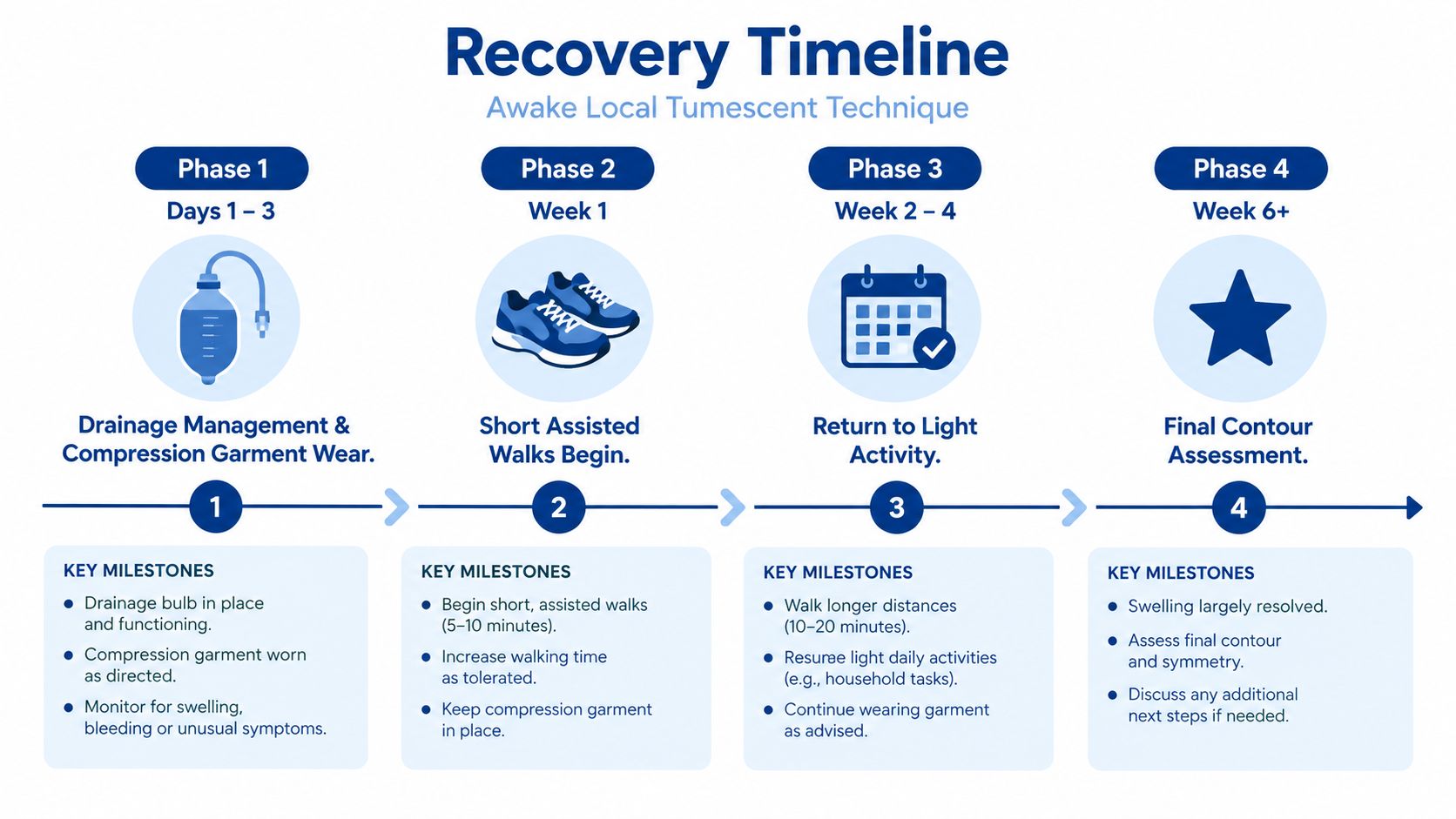
Recovery after BBL reversal is usually built around swelling control, garment support, and protecting the contour while it settles. In the first few days, drainage management and compression matter most. Short assisted walks help circulation without loading the operative area too early.
The recovery arc
By the end of the first week, many patients are adding lymphatic massage if it's part of the plan, and they're still wearing compression consistently. A gradual return to desk work is often possible around this stage, but sitting still for long periods isn't the same as resuming normal life. Pressure has to be managed carefully so the revised contour doesn't get flattened while the tissue is still adapting.
Weeks two through six are where the body does most of the visible settling. Light activity comes back first, then more normal movement, and finally exercise. If skin is lax, this is also when the surgeon can see whether a staged tightening step is needed.
For patients who want a broader framework on postoperative habits, active recovery techniques can be a useful general reference for safe movement, rest, and return-to-activity planning.
The reason sitting restrictions still get discussed is simple. Even after reduction, some grafted fat or recently treated tissue remains vulnerable to pressure-related change. That's why recovery planning is part of the surgery, not an afterthought.
A more detailed postoperative overview is available in this recovery guide for fat transfer to the buttocks.
Choosing a Qualified Surgeon for Your Revision
Surgeon selection should focus on revision experience, not just general body contouring volume. You want someone who can explain the fat plane, show real before-and-after examples of reduction cases, and describe how they decide between liposuction, excision, or a staged plan. If they can't speak plainly about those tradeoffs, they're probably not thinking about revision the way a revision patient needs them to.
A strong candidate should also be comfortable discussing whether the procedure can be done awake under local anesthesia when appropriate. That doesn't make every case easier, but it does show that the practice has experience with office-based contouring and understands how to work precisely in selected revision cases. The right question isn't “Can this always be awake?” It's “Can this be done awake safely in my anatomy?”
What to ask before you commit
- Do you review the original injection plane? This tells you whether the surgeon is assessing feasibility.
- Can you show revision cases, not just primary augmentations? You need to see the kind of problem you have.
- Will you explain what can't be removed safely? Honest limits matter more than optimistic promises.
- How do you handle skin laxity if volume removal leaves looseness? That's a key planning question.
- Do you perform awake revision when the case is appropriate? The answer should be specific, not vague.
Ideal Face & Body in Beverly Hills offers awake, office-based body contouring, including BBL reduction, correction, and reversal for selected cases when the anatomy supports it. It's one example of a practice that works within the limitations of the plane, rather than pretending every result can be completely undone.
Consultation Checklist and Common Questions
Bring a written history to the consultation. Include the date of the original BBL, the surgeon's name, the plane of injection if you know it, the amount transferred, and any complications that followed. Bring photos too, both of your current shape and of the result you want, because “smaller” can mean very different things to different people.
The best questions are direct. Ask whether your fat is subcutaneous or intramuscular, whether one awake session could realistically achieve your goal, what scarring might look like, and how skin laxity would be handled if reduction reveals looseness. Also ask for written consent forms, emergency protocols, and a clear explanation of what happens if the result needs staged follow-up.
Questions patients often leave with
- Can you evaluate my original plane? This is the feasibility question.
- How much can be removed in one session? The answer should be individualized, not generic.
- What happens if my skin doesn't retract enough? You need the backup plan before surgery.
- Will I need a second stage? Some bodies need staged correction, and that's not a failure.
- Can I get the full financial breakdown in writing? Clarity matters before anyone signs consent.
If answers feel rushed, evasive, or pressured, get a second opinion. A careful surgeon will welcome that, because BBL reversal should be decided on anatomy, goals, and safety, not urgency.
If you're considering revision or reduction after a prior BBL, Ideal Face & Body can help you sort out what's feasible and what would be too risky to promise. Visit Ideal Face & Body to learn how an awake, anatomy-based consultation can clarify your options and help you decide on the next step with confidence.