Bye Bye Baby Face: A Guide to Buccal Fat Removal
Why Cheekbones Fat Is So Hard to Lose — And What Actually Works
Cheekbones fat — the soft fullness sitting below your cheekbones and along your lower face — is one of the most frustrating cosmetic concerns to address. Why? Because it often has nothing to do with your weight.
Here’s a quick breakdown of what’s really going on:
| Cause | Can Diet/Exercise Fix It? |
|---|---|
| Buccal fat pads (deep fat pockets) | No — these don’t shrink with weight loss |
| Water retention from sodium or alcohol | Yes — lifestyle changes help |
| Overall body fat | Yes — general fat loss affects the face |
| Genetics / facial bone structure | No — structural issues need other solutions |
| Masseter muscle size | No — but Botox can slim it |
If you’re at a healthy weight but still have round, full cheeks, the culprit is likely your buccal fat pads — deep pockets of fat that sit between your cheekbones and jawbones. These are largely determined by genetics and don’t respond to diet or exercise.
The good news: there are targeted solutions, both surgical and non-surgical, that can help.
I’m Dr. Sarah Yovino, MD, a double board-certified master injector specializing in non-surgical medical aesthetics and whole-body rejuvenation at Ideal Face & Body in Beverly Hills, CA. I work closely with patients every day who are frustrated by persistent cheekbones fat that no amount of healthy eating or cardio seems to touch — and I’m here to walk you through every real option available.

Essential cheekbones fat terms:
What Causes Excess Cheekbones Fat and Facial Fullness?
When we talk about “chubby cheeks” or a “baby face,” we are often looking at a combination of different types of fat and structural elements. Scientifically, fat cells are stored throughout the body and act as fuel reservoirs. However, the fat in your face doesn’t always behave like the fat on your waistline.
Facial fullness is primarily driven by three things: genetics, lifestyle factors, and your unique anatomy. While some people carry subcutaneous fat (the pinchable fat just under the skin), others have prominent buccal fat pads. These are encapsulated pockets of fat located deep within the cheek, nestled between the buccinator muscle and the masseter muscle.
In many cases, what looks like cheekbones fat is actually temporary puffiness. Water retention is a major contributor to facial bloating. If you’ve ever woken up with a rounder face after a salty sushi dinner or a few glasses of wine, you’ve seen this in action. Alcohol dehydrates the body, causing the skin to hold onto every drop of water it can find, leading to a swollen appearance. If you are looking for ways to slim down without surgery, it is helpful to understand how to remove cheek fat naturally by addressing these inflammatory triggers.

The Role of Genetics in Cheekbones Fat
You can thank (or blame) your parents for your facial structure. Genetics dictate where your body prefers to store fat and how prominent your bone structure is. Some individuals are born with a “weak” cheekbone structure or a recessed jawline. When the underlying bone doesn’t provide enough “shelf” for the soft tissue to sit on, the face can appear bottom-heavy or overly round.
Furthermore, the size of your buccal fat pads is an inherited trait. Unlike other fat stores, these pads are remarkably stable. They don’t typically grow or shrink significantly with weight fluctuations. This explains why even marathon runners or fitness enthusiasts can struggle with a “chipmunk” look. Understanding this genetic blueprint is the secret to a heart shaped face, as it allows us to identify whether the fullness is something that can be dieted away or if it requires a structural change.
Medical and Lifestyle Factors
Beyond genetics, several medical and lifestyle factors can contribute to an overly full face.
- Sodium Intake: Research shows that over 75% of dietary sodium comes from processed foods. High salt intake causes the body to conserve water, which often manifests as puffiness in the cheeks and under the eyes.
- Sleep Deprivation: Lack of sleep can disrupt hormones like ghrelin (which increases appetite) and leptin (which signals fullness). Chronic exhaustion also leads to systemic inflammation and “tired” facial volume.
- Medications: Certain drugs, such as prednisone or other corticosteroids, can cause “moon face,” a condition where fat deposits specifically in the sides of the face.
- Medical Conditions: Rare conditions like Cushing’s syndrome can cause excessive facial roundness due to high cortisol levels.
Can You Lose Face Fat Through Lifestyle Changes Alone?
The short answer is: yes, but with a major catch. You can reduce subcutaneous fat through a caloric deficit and consistent exercise, but you cannot target the deep buccal fat pads that often define cheekbones fat.
To see a difference in your face naturally, you must focus on overall body fat reduction. There is no such thing as “spot reduction.” When you lose weight, your body pulls energy from fat cells globally. However, a 2019 review found that water-based interventions—like drinking more water before meals—contributed to an average 5.15% weight loss over 12 weeks. Proper hydration helps flush out excess sodium, reducing that “bloated” cheek look.
Cardiovascular exercise is also vital. The CDC recommends adults get at least 150 minutes weekly of moderate-intensity aerobic activity. This helps lower your total body fat percentage, which eventually thins out the face. For those who have reached their goal weight but still see fullness in the lower face, cheek liposuction may be a more effective path than further dieting.
Non-Surgical Contouring for Cheekbones Fat
If surgery isn’t your first choice, we have several “tweakments” at Ideal Face & Body in Beverly Hills that can create a slimmer profile.
- Masseter Botox: Sometimes, “fat” cheeks are actually overdeveloped jaw muscles. If you grind your teeth or clench your jaw, your masseter muscles can bulk up. Relaxing these with Botox slims the lower face significantly.
- Kybella: While primarily FDA-approved for double chins, Kybella can sometimes be used off-label to dissolve small, stubborn pockets of fat along the jawline.
- Dermal Fillers: It sounds counterintuitive to add volume to a full face, but placing dermal fillers for cheekbone definition can lift the tissues. By enhancing the upper “cheekbones fat” area, we create an optical illusion of a slimmer lower face.
- Radiofrequency (RF) Treatments: Devices that use heat can tighten the skin and slightly reduce fat volume, providing a subtle contour.
The Myth of Spot Reduction
We’ve all seen the YouTube videos promising that “facial yoga” or specific jaw exercises will melt away your double chin. Unfortunately, research on facial exercises for rejuvenation suggests they may help tone muscles and improve blood flow, but they don’t actually burn the fat in those areas.
Fat loss is systemic. You cannot do “cheek crunches” to burn cheekbones fat. While toning the muscles underneath can provide a slightly more lifted appearance, it won’t remove the buccal fat pad. For a truly natural cheek contour, you need to address the actual fat volume rather than just the muscle tone.
The Deep Dive into Buccal Fat Removal Surgery
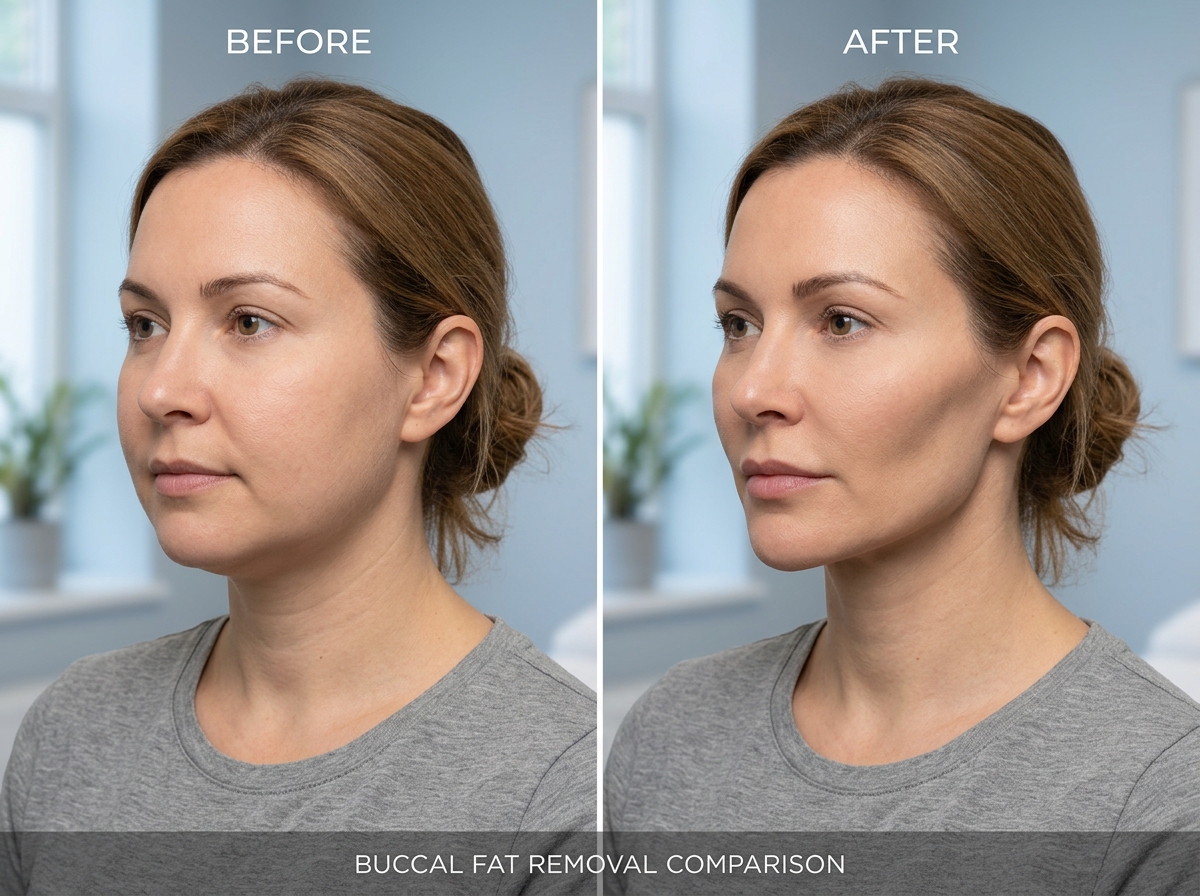
When lifestyle changes and fillers aren’t enough, buccal fat removal is the gold standard for permanent facial thinning. This is a surgical procedure that specifically targets the buccal fat pad to create a more “sculpted” or “hollowed” look in the mid-face.
At Ideal Face & Body, we prioritize patient comfort. The buccal fat pad removal procedure is typically performed using local anesthesia, meaning you are awake but completely numb and relaxed. Dr. Justin Yovino performs this through tiny intraoral incisions—meaning the cuts are made inside your mouth. There are no external scars.
The process is quick, often taking less than 45 minutes. We use a “Precision Sculpt” approach to carefully tease out the right amount of fat. It’s important not to remove the entire pad, as some fat is necessary to maintain a youthful look as you age. For a step-by-step breakdown, you can check out our buccal fat removal surgery guide.
Who is a Good Candidate for Surgery?
Not everyone with full cheeks should run to get this surgery. The ideal candidate:
- Has distinct fullness in the lower cheeks (the “sub-zygomatic” area).
- Is at a stable, healthy weight.
- Has realistic expectations about their bone structure.
- Does not have a naturally thin or narrow face (which could look “gaunt” after surgery).
Age is also a major factor. Because we naturally lose facial fat as we get older, we are very selective when performing this on younger patients. You can read more about buccal fat removal age considerations to see if you’re in the right window for this procedure.
Recovery, Risks, and Long-Term Considerations
Recovery from buccal fat removal is surprisingly straightforward. Since the incisions are inside the mouth, we use dissolvable sutures that go away on their own.
- The First 48 Hours: You’ll be on a liquid or very soft food diet to avoid irritating the incisions.
- Swelling: Expect some swelling—you might actually look rounder for the first week before the slimming kicks in.
- Downtime: Most of our Beverly Hills patients return to work within 1 to 3 days. You can find more details on buccal fat removal downtime here.
As with any surgery, there are risks, including potential asymmetry or injury to the facial nerves that sit near the fat pads. This is why choosing an experienced surgeon like Dr. Justin Yovino is critical. It’s also important to weigh the buccal fat removal pros and cons regarding how your face will look 20 years from now.
Comparing Alternatives for a Slimmer Face
If you’re trying to decide which route to take, it helps to see the options side-by-side.
| Feature | Buccal Fat Removal | Facial Liposuction | Masseter Botox |
|---|---|---|---|
| Target | Deep buccal fat pads | Subcutaneous (surface) fat | Jaw muscles |
| Result | Permanent | Permanent | Temporary (4-6 months) |
| Incision | Inside the mouth | Tiny poke under chin/ears | None (injection) |
| Best For | Lower cheek fullness | Double chin/jowls | Wide, square jawline |
For men, the goals are often slightly different. We focus on creating a more “chiseled” and masculine jawline. You can learn more about buccal fat removal for men and how we tailor the technique for male anatomy.
Permanent Results vs. Temporary Fixes
One of the most common questions we get is: can buccal fat come back? The answer is no. Once those fat cells are surgically excised, they do not regenerate. This makes the procedure a permanent structural change to your face.
However, aging is still a factor. As we age, our skin loses elasticity and our facial fat pads naturally shrink. If a surgeon removes too much fat in your 20s, you might look hollow in your 50s. At Ideal Face & Body, we use a conservative approach to ensure you look defined now and rejuvenated later.
Frequently Asked Questions about Facial Contouring
Is spot reduction of facial fat possible?
No. You cannot burn fat from just your cheeks through exercise. You can only reduce overall body fat, which may eventually lead to a slimmer face, or use surgical methods to remove specific fat deposits.
How do I know if I have large buccal fat pads or just high sodium intake?
Try a “salt detox” for 72 hours—drink plenty of water and avoid processed foods. If your face slims down significantly, your issue was likely water retention. If the fullness remains despite a clean diet and a healthy weight, you likely have large buccal fat pads.
What is the difference between buccal fat removal and cheek liposuction?
Buccal fat removal targets a deep, encapsulated pocket of fat through an incision inside the mouth. Cheek liposuction uses a small cannula to suction out the “pinchable” fat just under the skin of the jawline and lower cheeks.
Conclusion
At Ideal Face & Body, we believe that everyone deserves to feel confident in their own skin—and their own “selfie.” Whether you are looking for a non-surgical lift with Dr. Sarah Yovino or a permanent contour with Dr. Justin Yovino, our Beverly Hills office is equipped with the latest “Precision Sculpt” technology to help you achieve your goals.
Don’t let persistent cheekbones fat keep you from the defined, sculpted look you’ve always wanted. Every face is unique, and the best way to determine which procedure is right for you is through a one-on-one evaluation.
Ready to say goodbye to the baby face? Since the investment varies for every individual, schedule a consultation to discuss buccal fat removal cost and custom treatment plans today.