Why Buccal Fat Is So Hard to Lose — And What You Can Actually Do About It
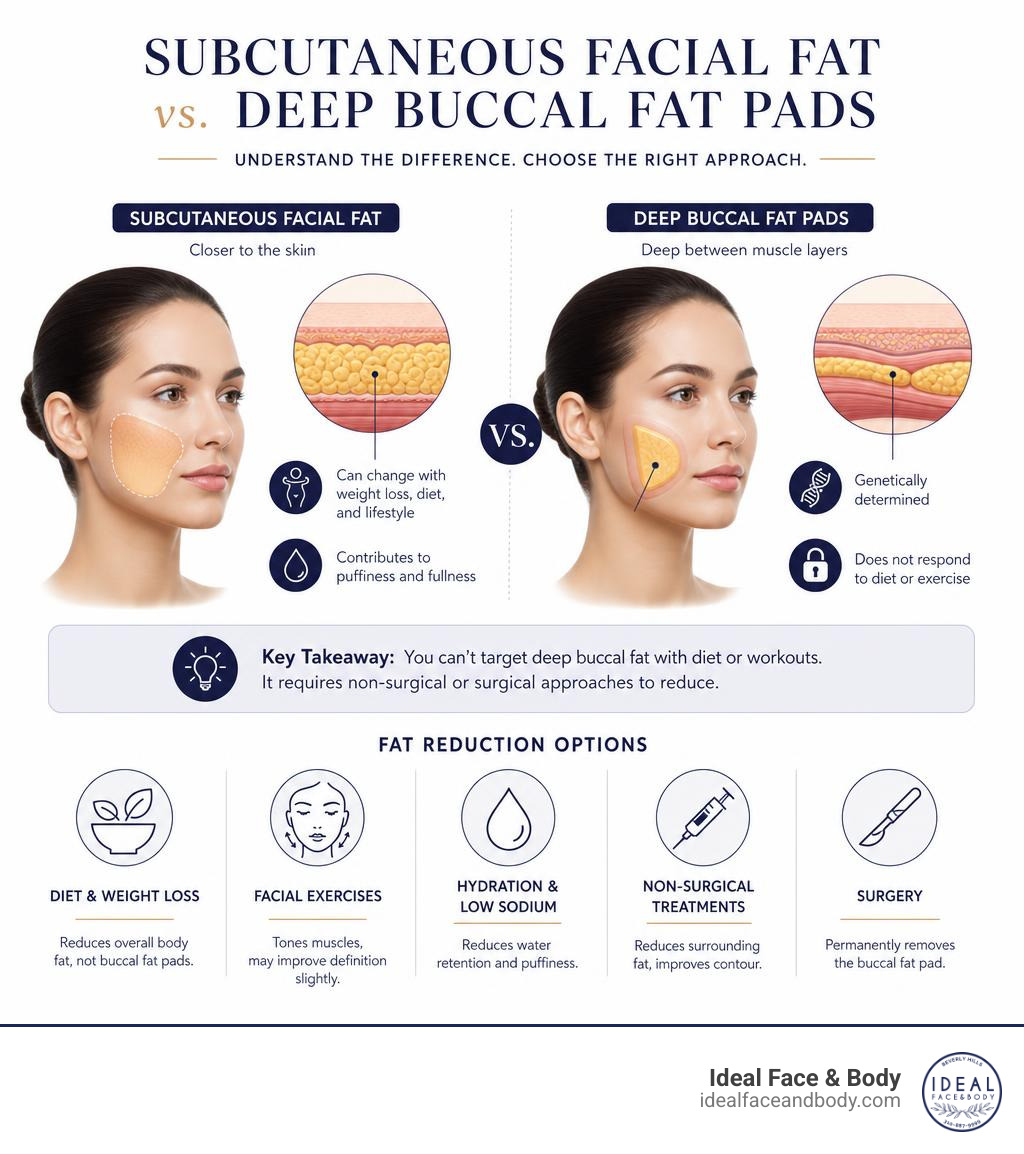
Can you lose buccal fat naturally? The short answer: not directly. Here’s what you need to know:
| Method | Does It Reduce Buccal Fat? | What It Actually Does |
|---|---|---|
| Diet and weight loss | No | Reduces overall body fat, not the buccal fat pad |
| Facial exercises | No | Tones muscles, may improve definition slightly |
| Hydration and low sodium | No | Reduces water retention and puffiness |
| Non-surgical treatments | Partially | Reduces surrounding fat, improves contour |
| Surgery (buccal fat removal) | Yes | Permanently removes the buccal fat pad |
Buccal fat pads are deep, genetically determined structures. They sit between your cheekbones and jawline — and unlike the fat on your hips or belly, they don’t respond well to diet or cardio. Many people who lose 10, 20, or even 30 pounds are frustrated to find their cheeks look almost exactly the same.
That’s not a willpower problem. It’s anatomy.
The good news? There are real options — from lifestyle changes that reduce facial puffiness, to non-surgical treatments, to a quick in-office procedure that delivers permanent results.
I’m Dr. Sarah Yovino, MD, a double board-certified master injector specializing in non-surgical aesthetics and facial rejuvenation at Ideal Face & Body in Beverly Hills. I’ve helped countless patients navigate the exact question of can you lose buccal fat naturally — and I’ll walk you through exactly what works, what doesn’t, and when it makes sense to consider a clinical solution.
Can you lose buccal fat naturally vocab explained:
What is Buccal Fat and Where is it Located?
To understand why “spot-reducing” your cheeks is such a challenge, we have to look under the hood—or in this case, beneath the skin.
The buccal fat pad is a specialized, encapsulated pocket of fat located deep within the lower mid-face. Structurally, it sits nestled in a hollow space between your cheekbones and jawbone. Specifically, it is positioned between the buccinator muscle (the deep muscle you use to blow out your cheeks or chew) and the masseter muscle (the heavy-lifting muscle responsible for clenching your jaw).
Unlike subcutaneous fat, which sits directly beneath your skin and is easily “pinchable,” the buccal fat pad is deep structural fat. It serves an important functional purpose during infancy, cushioning the jaw muscles to assist with sucking and chewing. As we grow, this fat pad typically shrinks slightly, helping the face transition from a soft, rounded “baby face” to a more defined, adult facial structure.
However, the ultimate size of your buccal fat pads is almost entirely determined by your genetics. If your parents or grandparents carried soft, round cheeks well into adulthood, you are highly likely to do the same. For a deeper dive into how this anatomy shapes your overall appearance, check out the Cleveland Clinic’s guide on buccal fat and explore our insights on the secret to a heart-shaped face.
Can You Lose Buccal Fat Naturally?
If you have embarked on a dedicated fitness journey, you have likely noticed that your body loses fat in a highly systematic, genetically programmed order. You might see your collarbones pop or your waist shrink, yet your lower cheeks remain as stubbornly round as ever.
This brings us to the core of the issue: can you lose buccal fat naturally through diet and exercise?
The biological reality is that you cannot target weight loss to a specific spot on your body. When you maintain a caloric deficit, your body burns subcutaneous fat from all over. However, because buccal fat is a highly encapsulated, structural fat pad rather than loose subcutaneous fat, it behaves differently. In fact, some clinical studies indicate that buccal fat has properties similar to brown fat, displaying a high stem cell ratio and a structure designed to resist metabolic fluctuations.
This means that even if you reach your goal weight, your buccal fat pads will largely maintain their volume. For individuals with genetically large buccal fat pads, traditional weight loss will not deliver the sculpted, hollowed look under the cheekbones that they desire. To understand the balance between natural limitations and clinical interventions, read up on the buccal fat removal pros and cons and see what clinical resources like Apollo 24/7 on reducing buccal fat have to say about this structural resistance.
Below is a quick comparison of what you can realistically expect from natural lifestyle adjustments versus a targeted clinical approach:
| Feature | Natural Fat Loss & Lifestyle | Surgical Buccal Fat Removal |
|---|---|---|
| Target Area | Overall body and superficial face fat | Deep, encapsulated buccal fat pad |
| Permanence | Temporary (requires constant diet/exercise maintenance) | Permanent (the removed fat cells do not regenerate) |
| Effect on Buccal Pad | Minimal to none | Complete or partial physical removal |
| Recovery Time | None | 2 to 3 weeks for swelling to subside |
| Primary Result | Reduced overall puffiness and bloating | Sculpted, snatched lower mid-face contour |
Natural Methods to Reduce Overall Facial Puffiness and Cheek Fat
While you cannot physically shrink the deep buccal fat pads without clinical help, you can dramatically change your overall facial silhouette by addressing the layers of tissue surrounding them. Superficial subcutaneous fat, muscle tension, and fluid retention all contribute to a rounder, softer facial appearance. By managing these elements, you can minimize overall cheek fullness and reveal more of your natural bone structure.

To de-puff your face and achieve the slimmest natural contour possible, focus on these foundational lifestyle habits:
- Hydrate Consistently: It sounds counterintuitive, but drinking too little water causes your body to hold onto fluids defensively, leading to facial bloating. Aiming for at least eight glasses of water daily helps flush out excess sodium and waste.
- Execute a Salt Detox: Over 75% of dietary sodium comes from processed foods. High sodium levels pull water into your tissues, causing you to wake up with a swollen, puffy face. Try cutting out processed foods and cooking fresh meals for 72 hours to see a rapid reduction in facial bloating.
- Limit Alcohol and Smoking: Alcohol is a systemic dehydrator that triggers rapid fluid retention and blood vessel dilation, which shows up directly in your cheeks and jawline. Smoking degrades collagen and elastin, causing the skin to sag and make facial fat look heavier.
- Prioritize Sleep and Stress Management: Chronic stress and lack of sleep spike your cortisol levels. Cortisol is a hormone that actively signals your body to store fat and retain water, often presenting as a rounded, inflamed facial appearance. Aim for 7 to 9 hours of quality sleep nightly.
Do facial exercises help you lose buccal fat naturally?
The internet is full of tutorials promising that facial yoga, “mewing,” or chewing special gum can melt away cheek fat. But is there any scientific backing to these claims?
The truth is a mixed bag. A study tracking individuals who performed facial exercises twice daily for 8 weeks did show a measurable increase in muscle thickness and mild facial rejuvenation. However, these exercises do not burn or reduce the deep buccal fat pads.
What they can do is tone the surrounding facial muscles—like your zygomaticus (cheek-lifting muscles)—making your cheekbones appear slightly more prominent. Exercises like “fish faces” (sucking your cheeks in tightly and holding for 15 seconds) or “cheek puffs” (filling your mouth with air and moving it from cheek to cheek) can improve local circulation and muscle tone, but they will not physically eliminate the fat. For more expert perspectives on these DIY techniques, read Ruli’s FAQs on natural solutions.
Dietary and lifestyle changes to lose buccal fat naturally
To maximize your natural facial slimming, you must focus on systemic subcutaneous fat loss. Creating a modest daily caloric deficit of about 500 calories through a nutrient-dense diet—rich in lean proteins, fibrous vegetables, and whole grains—will encourage your body to burn stored fat.
Pairing your diet with 150 to 300 minutes of moderate-to-vigorous cardiovascular exercise weekly, alongside full-body strength training, boosts your metabolism. While this lifestyle overhaul won’t dissolve the deep buccal pad itself, it will reduce the superficial subcutaneous fat layer sitting on top of it, resulting in a significantly more defined, sculpted jawline and cheek area.
Non-Surgical and Surgical Alternatives for Facial Contouring
When natural methods reach their biological limit, modern aesthetic medicine offers highly effective alternatives to help you achieve a snatched, contoured look. Whether you prefer a non-invasive treatment with zero downtime or a permanent surgical contour, we can customize a plan to fit your goals.
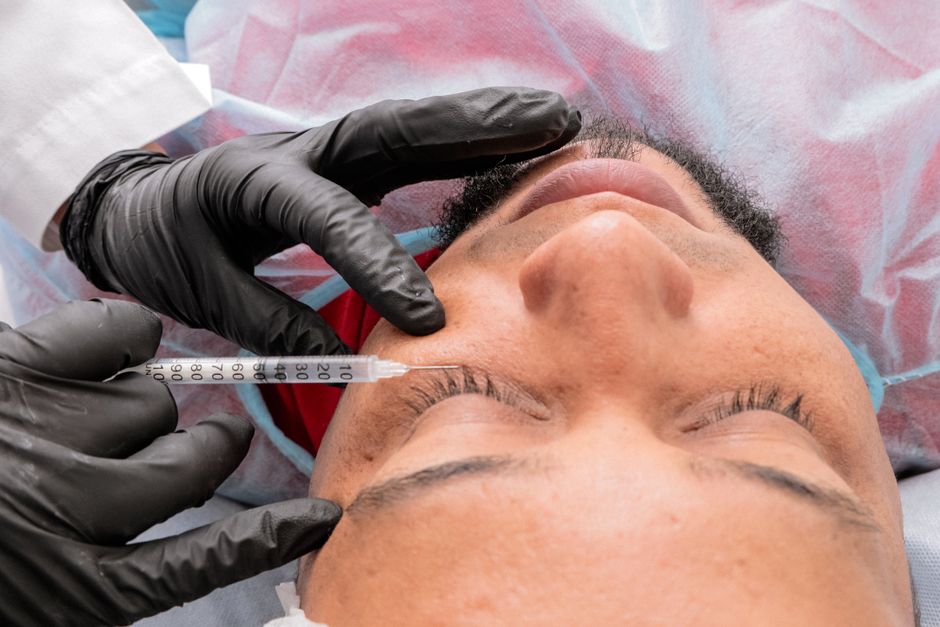
At Ideal Face & Body in Beverly Hills, we utilize advanced technologies and techniques to sculpt the lower face. Non-surgical contouring options include:
- CoolSculpting (Cryolipolysis): This FDA-cleared technology uses controlled cooling to freeze and eliminate subcutaneous fat cells in the submental (double chin) and jawline areas. While it cannot target the deep buccal fat pad, reducing the surrounding jawline fat creates a much slimmer lower face.
- Kybella (Deoxycholic Acid): An injectable treatment that permanently destroys fat cells. It is highly effective for sculpting the area under the chin and along the jawline, helping to emphasize your upper cheek structure.
- Radiofrequency & FaceTite: These treatments deliver thermal energy deep into the skin to tighten loose tissue and gently reduce localized fat, providing a non-surgical lift to the lower cheeks.
- Masseter Botox: If your facial fullness is partially caused by overdeveloped jaw muscles (often from teeth grinding), injecting neurotoxins into the masseter muscles slims the lower face, creating a beautiful, soft V-shape.
- Dermal Fillers: Sometimes, the secret to a slimmer-looking face isn’t removing fat, but adding structure. Strategically placing fillers along the cheekbones and jawline creates an optical illusion of a more contoured, lifted face.
To see real, dramatic transformations utilizing these precise contouring techniques, explore our awake buccal fat removal gallery.
Surgical Buccal Fat Removal: The Permanent Solution
For patients seeking a dramatic, permanent reduction in lower cheek fullness, surgical buccal fat removal (also known as a buccal lipectomy) is the gold standard.
This elegant, straightforward procedure is performed entirely from the inside of the mouth. A tiny, half-inch intraoral incision is made inside the cheek, allowing the surgeon to gently tease out and remove a precise portion of the encapsulated buccal fat pad. Because the incisions are internal, there are absolutely no external scars.
At Ideal Face & Body, we specialize in performing this procedure under local anesthesia—often as an “awake” treatment—meaning you are completely comfortable, pain-free, and can walk out of our Beverly Hills clinic immediately afterward. Our board-certified plastic surgeon, Dr. Justin Yovino, MD, meticulously tailors the amount of fat removed to match each patient’s unique facial anatomy, ensuring a balanced, naturally beautiful result. To learn more about the step-by-step process, read our comprehensive buccal fat removal surgery guide.
Who is a Good Candidate for Surgery?
Buccal fat removal is a highly personalized procedure, and proper candidate selection is crucial for a beautiful, long-term outcome.
An ideal candidate is someone who:
- Is at a stable, healthy weight but struggles with persistent lower cheek fullness (“baby face” or “chipmunk cheeks”).
- Has good skin elasticity to ensure the tissue drapes smoothly over the newly sculpted contours.
- Has realistic expectations about their cosmetic goals.
Conversely, individuals with naturally narrow or thin faces should avoid this procedure. As we age, we naturally lose facial volume. Removing too much buccal fat in a patient who is already lean or who has reached an advanced age can lead to a severely gaunt, hollowed, or prematurely aged appearance later in life. To understand how age plays a role in your candidacy, review our guide on buccal fat removal age considerations.
Recovery, Risks, and Downtime
One of the greatest benefits of buccal fat removal is the relatively straightforward recovery process. The procedure itself typically takes less than an hour, and because we prioritize advanced, gentle surgical techniques, downtime is minimal.
During the first few days, you will experience mild to moderate swelling, which often peaks around day three (making your cheeks look temporarily rounder). You will need to adhere to a soft or liquid diet for the first 24 to 48 hours and use a prescribed antiseptic mouth rinse after meals to keep the intraoral incisions clean and prevent infection.
Most patients feel comfortable returning to work or light daily activities within 3 to 5 days, though full healing and the resolution of residual swelling can take several weeks to months. While complications are rare when performed by an experienced, board-certified surgeon like Dr. Justin Yovino, potential risks include temporary numbness, minor asymmetry, or infection. For a detailed breakdown of what to expect, read through our buccal fat removal recovery timeline and learn more about managing buccal fat removal downtime.
Frequently Asked Questions about Facial Contouring
FAQ 1: How do I know if I have large buccal fat pads or just high sodium intake?
A great way to tell the difference is to perform a simple 72-hour “salt detox.” For three days, drink at least 8 to 10 glasses of water daily and strictly avoid processed foods, takeout, and added salt. If your face slims down dramatically by the end of the third day, your fullness was likely due to temporary water retention. If your lower cheeks remain consistently round despite a clean diet and a stable, healthy weight, you are likely dealing with genetically prominent buccal fat pads.
FAQ 2: Does buccal fat removal make you look older?
It can if it is performed on the wrong candidate or if too much fat is removed. Facial volume is a key marker of youth, and our faces naturally lose fat as we get older. However, for patients with excessively heavy lower cheeks, conservative buccal fat removal can actually prevent the heavy tissues from sagging downward over time. The key is choosing a skilled, conservative surgeon who understands facial harmony and preserves enough volume to ensure you age gracefully.
FAQ 3: Can buccal fat grow back after weight gain?
No. Once the buccal fat cells are surgically excised, they are gone forever—they do not regenerate. If you experience significant weight fluctuations in the future, your remaining subcutaneous fat cells throughout your face and body may expand, but the specific hollow beneath your cheekbones created by the buccal fat removal will remain relatively stable.
Conclusion
While the internet may offer endless DIY hacks, the anatomical reality is that you cannot lose deep buccal fat naturally. If you are ready to move past the frustration of stubborn cheek fullness and want to explore a safe, highly customized solution, we are here to guide you.
At Ideal Face & Body in Beverly Hills, Dr. Sarah Yovino and Dr. Justin Yovino combine advanced aesthetic artistry with medical precision to deliver beautifully balanced, natural-looking results. Whether you are interested in non-surgical jawline sculpting or a permanent, awake buccal fat removal procedure, we will design a treatment plan tailored specifically to your unique anatomy.
Please note that treatment costs vary depending on your customized plan and surgical goals; you can read more about options and variables in our guide to buccal fat removal cost.
Ready to redefine your profile? Contact our Beverly Hills office today to schedule your personalized consultation!