You've decided that your implants no longer belong in your body, but you're worried about what will remain after they're removed. Many patients picture loose skin, a flattened upper breast, or a sudden loss of the shape they've lived with for years. That concern is understandable, and it's why fat transfer after implant removal has become an important option for restoring contour without placing another implant.
Fat transfer uses your own tissue, but it isn't a one-to-one replacement for an implant. The goal is usually to soften deflation, improve hollows, and create a more balanced breast shape. The final result depends less on chasing a specific cup size and more on the condition of the breast envelope, the quality of the skin, the capsule, and the amount of donor fat available.
Table of Contents
- Introduction What Fat Transfer After Implant Removal Can Achieve
- Understanding How Autologous Fat Transfer Restores Breast Contour
- Timing Your Procedure Simultaneous Versus Staged Fat Transfer
- Candidacy and How Much Volume You Can Realistically Expect
- What to Expect From an Awake Office Based Approach in Beverly Hills CA
- Risks Retention and Imaging Follow Up After Fat Grafting
- Planning for Revision and Long Term Results
Introduction What Fat Transfer After Implant Removal Can Achieve
A patient may arrive for an explant consultation with two goals that seem to conflict. She wants the implants out, yet she doesn't want to feel as though her breasts have disappeared. Fat transfer can help address that transition by adding living tissue to areas that look hollow or deflated after removal.
The process is best understood as contour restoration, not implant substitution. An implant provides a defined volume and projection through a contained device. Fat behaves differently. It can soften the upper pole, fill an indentation, improve side-to-side balance, and add gentle fullness, but the amount that can be transferred safely depends on how much the breast tissue can accommodate and nourish.
A prospective clinical series published in the Aesthetic Surgery Journal helped establish immediate explant plus fat grafting as a single-stage option. The study included 80 patients and 160 breasts, with 300 to 600 mL injected per breast. One session was sufficient for all patients in that series, and follow-up included mammography and ultrasonography, allowing surgeons to monitor breast shape and volume objectively in the original clinical series on immediate fat transfer after implant removal.
That finding doesn't mean every patient can receive the same volume or achieve the same shape. A tight, thin, or heavily scarred envelope may accept less fat at one time. A patient with significant drooping may need a lift to remove excess skin and reposition the breast mound rather than relying on fat alone.
The useful question isn't “Can fat replace my implant?” It's “What can my own tissue safely contribute to a stable, natural-looking contour?”
The decisions ahead involve timing, donor-fat availability, skin elasticity, capsule condition, possible mastopexy, and long-term imaging. Understanding those factors helps you evaluate whether immediate transfer, staged grafting, a lift, or a combination offers the most sensible path.
Understanding How Autologous Fat Transfer Restores Breast Contour
Autologous fat transfer means moving fat from one part of your body to another. In this setting, the surgeon harvests fat from a suitable donor area, processes it, and reinjects it into carefully selected breast layers.
The process has three basic stages:
- Harvesting: Fat is removed from a donor area using liposuction.
- Processing: The collected tissue is prepared so the surgeon can place the fat in a controlled, usable form.
- Reinjection: Small amounts are layered into areas that need volume, contour support, or improved symmetry.
Fat isn't an inert object that sits where it's placed. It's living tissue that needs to connect with a blood supply in its new location. A useful analogy is transplanting seedlings into a garden. If the soil is healthy and the seedlings are spaced carefully, more can establish themselves. If the soil is tight, scarred, or poorly vascularized, fewer may survive.
That's why recipient tissue quality matters. Skin elasticity, breast thickness, scar tissue, capsule changes, and the size of the post-explant space all influence how much fat can be placed safely. Donor-fat availability matters, too. The abdomen, flanks, thighs, arms, or other areas may provide usable tissue, but the amount and quality vary from person to person.
Fat transfer also differs from implant volume in how it creates shape. The surgeon can distribute fat across several areas instead of placing one device behind the breast. This can be helpful for softening an upper-pole hollow or correcting a localized depression, but it generally creates a more gradual contour rather than the fixed projection associated with a larger implant.
Some transferred fat will be absorbed by the body. The largest change in retained volume generally occurs during the first 12 months, which is why surgeons may initially account for expected loss or discuss a later refinement session. The decision to overcorrect or stage treatment must be conservative, because adding too much fat to a tight envelope can increase pressure and compromise the result.
Timing Your Procedure Simultaneous Versus Staged Fat Transfer
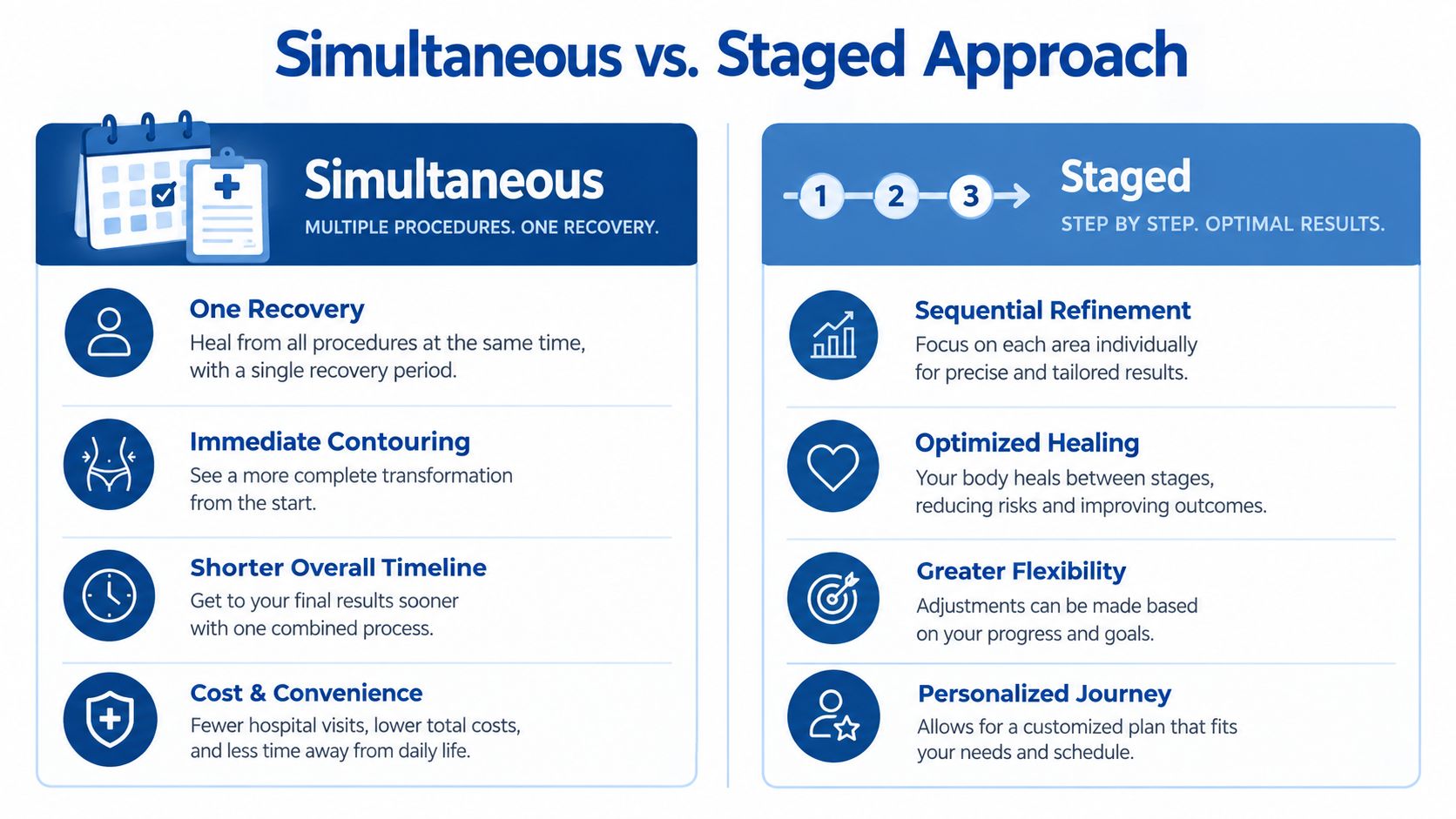
The timing decision usually comes down to how much control the surgeon has over the breast envelope at the time of explant. Simultaneous treatment removes the implant and transfers fat during the same operative stage. Staged treatment allows the breast to heal first, after which the surgeon reassesses the skin, shape, scarring, and residual volume before planning grafting.
Immediate transfer offers a clear practical advantage. You avoid living through an interval of post-explant deflation before addressing contour, and the surgeon can use the same surgical episode to remove the implant, treat the capsule when indicated, perform a lift if appropriate, and add fat. The trade-off is that the breast's final post-explant behavior isn't fully visible yet, particularly when there's substantial inflammation, laxity, or scarring.
A staged approach creates more information. Once the tissues settle, the surgeon can see which areas remain hollow and how much the envelope has contracted or stretched. That can make later grafting more targeted, though it means another procedure and another recovery period.
| Factor | Simultaneous Transfer | Staged Transfer |
|---|---|---|
| Main benefit | One operative stage with immediate contour support | Later refinement based on healed anatomy |
| Useful when | The envelope can safely accommodate fat and the plan is clear | Skin, capsule, or volume response is difficult to predict |
| Lift considerations | Can be combined with mastopexy when indicated | Allows lift and grafting decisions after healing |
| Potential limitation | Less opportunity to evaluate the final post-explant shape first | Requires a separate treatment stage |
| Planning emphasis | Safe initial correction | Adjustable reconstruction over time |
Capsule condition is one of the deciding variables. A thick or contracted capsule may limit expansion, while a loose envelope may need skin removal rather than added volume alone. If the breast is significantly drooped, a mastopexy incision may provide a better shape than an inframammary fold incision. In a recent clinical study of 38 patients and 76 breasts, satisfaction was significantly higher when explantation was combined with a mastopexy incision than with an inframammary fold incision, with p = 0.037 as reported in the recent clinical study of immediate fat transfer after implant removal.
Neither pathway is automatically superior. The right choice depends on whether the priority is immediate contour, staged precision, skin removal, capsule management, or minimizing the number of operative stages.
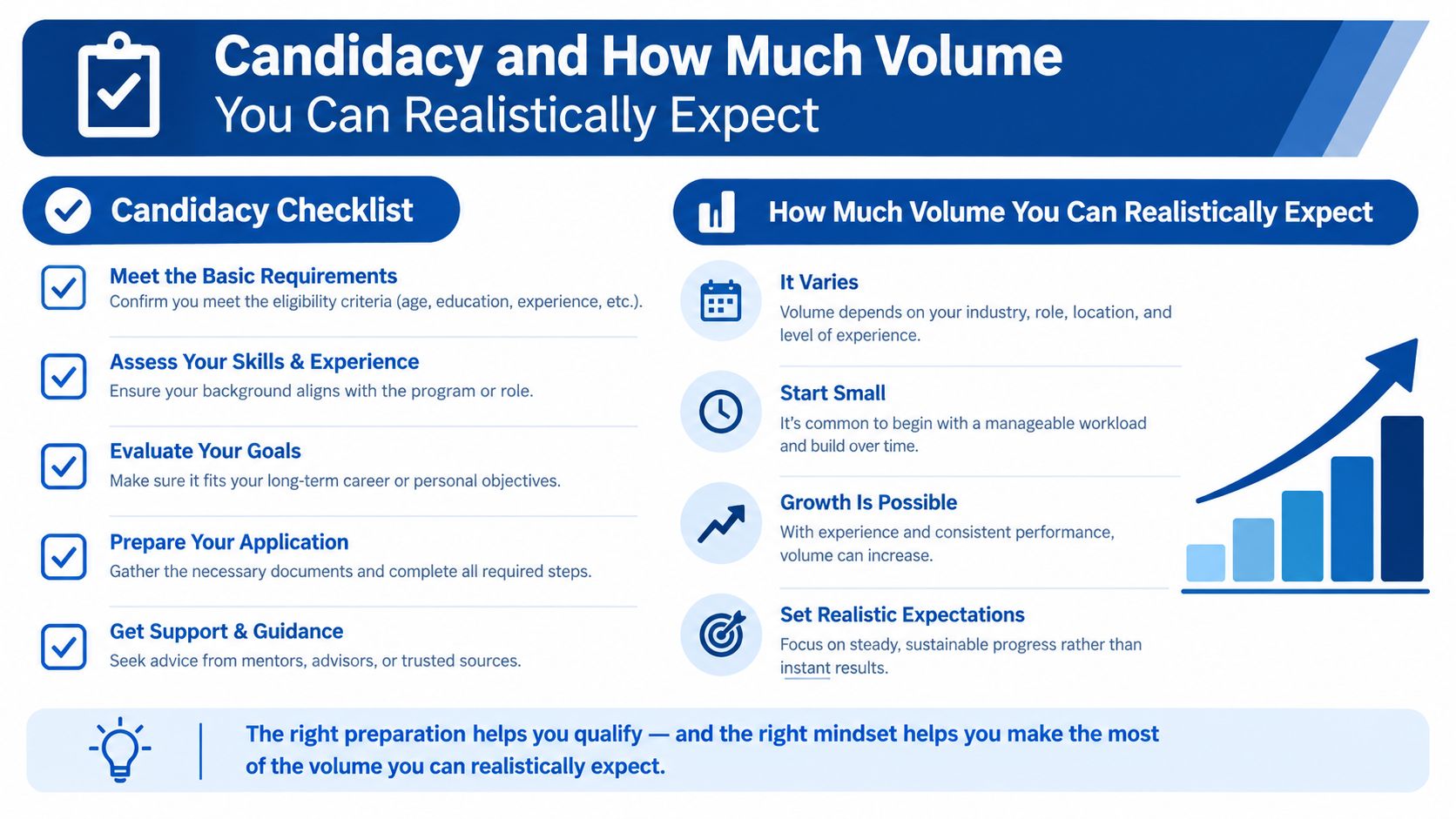
Candidacy and How Much Volume You Can Realistically Expect
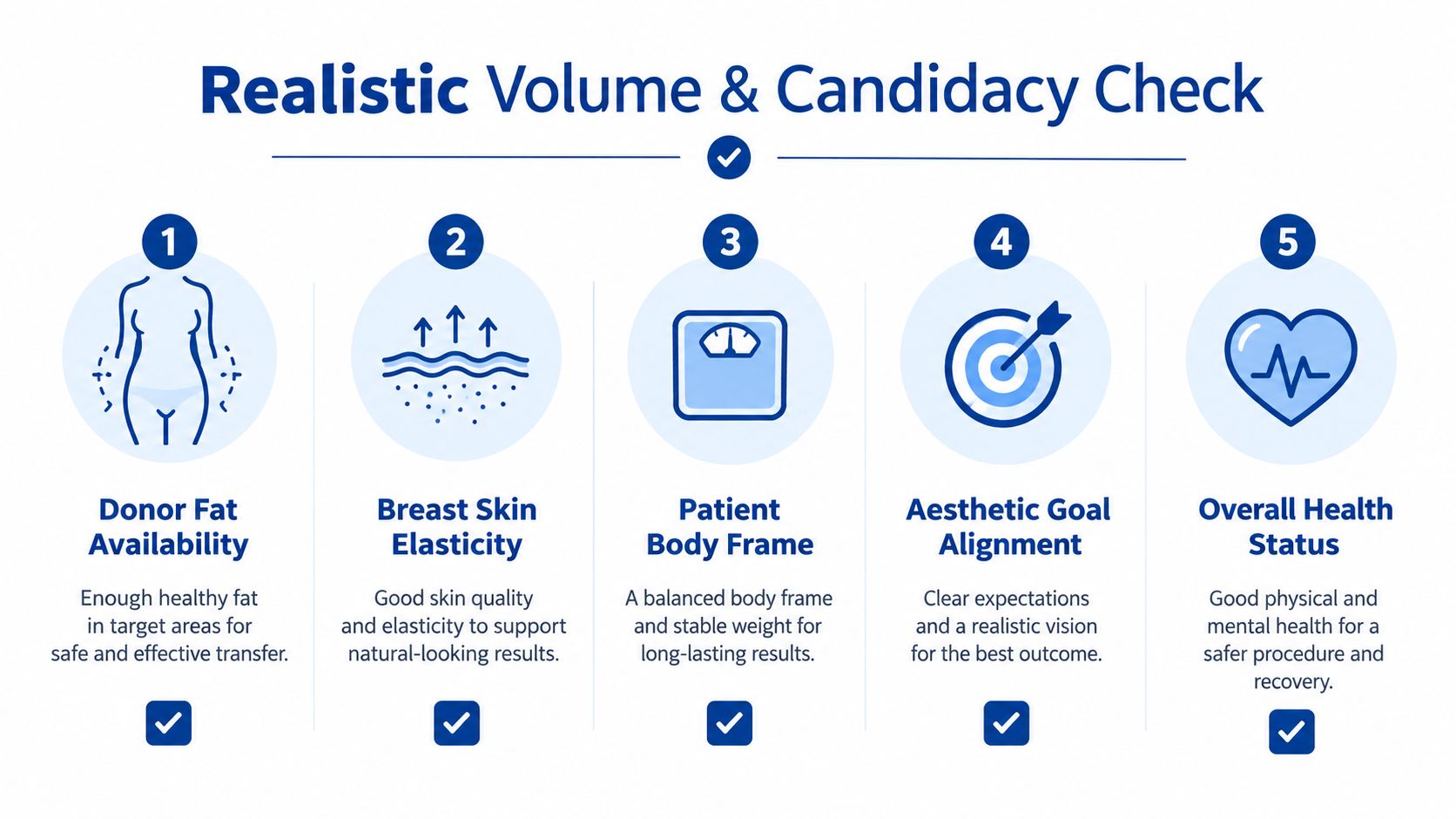
Candidacy starts with tissue, not a target cup size. A patient may be healthy and motivated yet still need a staged plan because the breast envelope is thin, tight, scarred, or unable to accept the desired amount of fat in one session.
The factors that shape suitability
Donor-fat availability places a practical limit on the amount of tissue that can be harvested. The surgeon also considers whether the donor areas can be contoured without creating new irregularities.
Skin elasticity and ptosis determine whether added volume will improve the breast or add weight to loose skin. When the nipple and breast mound sit too low, a lift may be needed to reposition tissue and remove excess skin.
Capsular scarring can restrict the recipient space. A scarred envelope may require a more cautious grafting plan because the transferred tissue needs room and blood supply.
Weight stability and smoking status matter for healing and predictability. Weight changes can alter both the donor areas and the breast, while nicotine exposure can impair wound healing and tissue perfusion. Your surgeon will assess these issues rather than treating fat transfer as a purely cosmetic volume decision.
What published volumes can and can't tell you
The historical prospective series used 300 to 600 mL per breast during immediate transfer, and one session was sufficient for every patient in that group according to the prospective explant plus fat transfer study. A more recent study reported a mean graft volume of 222.8 cc per breast, with a standard deviation of 63.25 and a range of 80 to 350 cc per breast in its patient cohort receiving immediate bilateral treatment.
Those figures illustrate what has been performed in clinical settings. They aren't a promise for an individual patient. The safe volume for you may be lower or higher depending on your skin, capsule, donor tissue, breast dimensions, and whether a lift is performed at the same time.
A retrospective study of 27 patients found that mean breast thickness increased from 8.5 mm after explantation to 13.1 mm after fat grafting, a 154% increase, while the overall complication rate was 22.2%, or 6 of 27 patients in the study evaluating breast thickness after implant removal and fat grafting. The result is meaningful contour improvement, not guaranteed restoration of the previous implant silhouette.
What to Expect From an Awake Office Based Approach in Beverly Hills CA
An awake, office-based pathway is designed around local anesthesia rather than a general anesthesia experience. It isn't appropriate for every patient or every combination of procedures, so the consultation begins with medical screening, anatomy review, and a discussion of whether the planned work can be performed safely in that setting.
The consultation and surgical plan
The surgeon reviews your implant history, breast shape, skin quality, capsule concerns, donor areas, and aesthetic goals. Photographs and examination help identify whether the primary need is contour support, a lift, fat transfer, or a combination.
The donor area is selected according to both tissue availability and body proportions. For suitable candidates, PRECISION SCULPT laser liposculpting may be used as part of the harvesting approach. The collected fat is then prepared for careful placement into the breast.
What the awake experience involves
During the procedure, local anesthesia numbs the treatment areas while you remain awake. The office-based protocol described by Ideal Face & Body is intended to avoid general anesthesia and IV lines for appropriate candidates, with recovery taking place in the office environment.
The surgeon places fat in layers and distributes it according to the contour plan rather than depositing one concentrated pocket. This helps address specific areas such as an upper-pole hollow, a lateral depression, or asymmetry. The proprietary Raise Your Cup approach may be discussed when it fits the patient's anatomy and goals, but it doesn't remove the need for individualized screening.
Patients who want a broader explanation of the setting can review this guide to awake surgery. It's important to distinguish an office-based option from a guarantee that every explant and reconstruction plan can be completed there. Extensive capsule work, significant skin removal, medical conditions, or combined procedures may change the recommended setting.

Risks Retention and Imaging Follow Up After Fat Grafting
Fat transfer can improve contour, but the result isn't perfectly predictable because transferred fat must establish a new blood supply. The recipient site, the amount placed, the quality of the tissue, and the length of follow-up all affect how much volume remains.
The most common concerns tend to involve contour and palpability rather than systemic problems. Published reviews describe asymmetry, skin irregularity, hypertrophy, prolonged swelling, fat necrosis, infection, redness, visible small vessels, and palpable nodularity among documented complications in the review of complications after breast fat grafting. A broader systematic review found an overall clinical complication incidence of 3.9% across 21 studies, with induration or palpable nodularity representing 60.0% of reported complications across 60 studies and deep infection representing 12.3% in the systematic review of breast fat grafting outcomes.
What changes on imaging
Patients often ask whether fat grafting will make mammograms harder to interpret or increase the chance of a biopsy. Benign findings can appear, including fat necrosis, oil cysts, and calcifications. In a large cohort, oil cysts occurred in 6.5%, calcifications in 4.5%, and fat necrosis in 1.2%; 16.4% of patients were referred for additional imaging and 3.2% underwent biopsy in the cohort examining imaging after breast fat grafting.
A systematic review and meta-analysis reported benign radiologic findings including fat necrosis in 8.8% and calcifications in 1.1%, while finding no evidence that fat grafting impaired cancer detection in the review of breast autologous fat grafting and imaging. That's reassuring, but it doesn't mean every image will be straightforward or that follow-up can be skipped.
Bring your surgical history to every breast-imaging appointment. Radiologists interpret findings more accurately when they know about explantation, fat transfer, prior biopsies, and baseline breast density.
Screening should be individualized according to breast density, personal and family history, prior procedures, and the recommendation of your medical team. For a focused discussion of how retained volume evolves, review how long fat transfer results can last.
Planning for Revision and Long Term Results
A good explant-to-fat plan includes the possibility that the first procedure may not be the final contour adjustment. A second grafting session can refine a localized hollow, improve symmetry, or add modest fullness after the breast has demonstrated how much transferred fat it retains. A lift may also be considered when skin excess or nipple position remains the dominant issue.
Weight stability supports a more consistent long-term appearance. Transferred fat behaves like fat elsewhere in the body, so substantial weight gain or loss can affect breast volume. Continue self-awareness of your breasts, attend routine screening, and report a new lump, persistent change, skin alteration, or concerning symptom to your clinician.
Questions to bring to consultation
- Tissue plan: Will the breast need fat transfer, a lift, capsule treatment, or a combination?
- Timing: Is immediate grafting appropriate, or would healing first provide a safer and more accurate plan?
- Volume: What range is realistic for my envelope, and what would make staged grafting more likely?
- Donor area: Which area can provide tissue without creating an unwanted contour change?
- Imaging: How should I document the procedure for future mammograms and diagnostic studies?
- Recovery: What restrictions apply to the breast and donor sites, and what support is available if stiffness or movement limitations develop?
Patients recovering from breast surgery may also benefit from appropriately guided rehabilitation. This resource on physical therapy after breast surgery offers general education about movement and recovery considerations, though your own surgeon should determine when therapy is appropriate.
Ideal Face & Body no longer offers breast implant placement, implant-based breast augmentation, or breast implant revision procedures. Its current pathway for patients considering explant-related contour restoration centers on implant removal, autologous fat transfer, and awake lift options when clinically appropriate. You can review the practice's approach to breast implant removal and reconstruction before your consultation.
If you're considering fat transfer after implant removal, Ideal Face & Body can evaluate your breast envelope, donor-fat availability, skin quality, and whether an awake lift or staged plan fits your goals. Visit Ideal Face & Body to request a personalized consultation in Beverly Hills, CA and discuss a reconstruction plan based on your anatomy rather than a promised cup size.