Upper blepharoplasty typically lasts 5 to 10 years, while lower blepharoplasty often lasts decades or even permanently. That difference surprises people because the two procedures sound similar, but they age on very different timelines.
What matters most is not just the cut or the scar, it's the part of the eyelid being treated. The upper lid keeps changing as the brow drops and skin loosens, while the lower lid often changes more slowly after fat has been removed or repositioned.
Table of Contents
- Understanding Blepharoplasty Longevity Basics
- Why Upper and Lower Blepharoplasty Age Differently
- Evidence-Based Time Ranges for Blepharoplasty Results
- Factors That Influence How Long Your Results Last
- Recovery Timeline and When Results Stabilize
- Maintenance Strategies and When Revision Becomes Necessary
- How Awake Office-Based Techniques Affect Long-Term Outcomes
Understanding Blepharoplasty Longevity Basics
How long does blepharoplasty last? The short answer is that it's generally long-lasting, not temporary, but it doesn't stop aging. For many patients, upper eyelid surgery needs reassessment years later, while lower eyelid surgery tends to hold its change much longer. Cleveland Clinic notes that upper eyelid surgery can last five to seven years to an entire lifetime, and lower eyelid surgery rarely needs to be done more than once (Cleveland Clinic).
The key distinction is simple. The upper lids are heavily influenced by ongoing brow descent and skin laxity, so even a well-done surgery can look less dramatic over time as the surrounding anatomy keeps aging. The lower lids often behave differently because removing or repositioning fat changes the contour in a way that doesn't just bounce back.
Practical rule: blepharoplasty should be thought of as a long-term reset, not a freeze button.
That framing helps patients make smarter decisions. If the goal is to look less tired and more open-eyed for the long run, the operation can be very durable. If the goal is to make the eyelids look exactly the same forever, that expectation doesn't match how human tissue ages.
A useful way to think about it is this. Upper blepharoplasty is more exposed to the forces of time, gravity, and forehead-brow changes. Lower blepharoplasty is often closer to a structural correction, so the improvement may stay visible much longer.
For readers who want a basic overview of the procedure itself, our eyelid lift blepharoplasty guide gives a helpful starting point. For skin-support habits that can complement long-term eyelid care, our collagen eye cream tips are worth a look as well.
Why Upper and Lower Blepharoplasty Age Differently
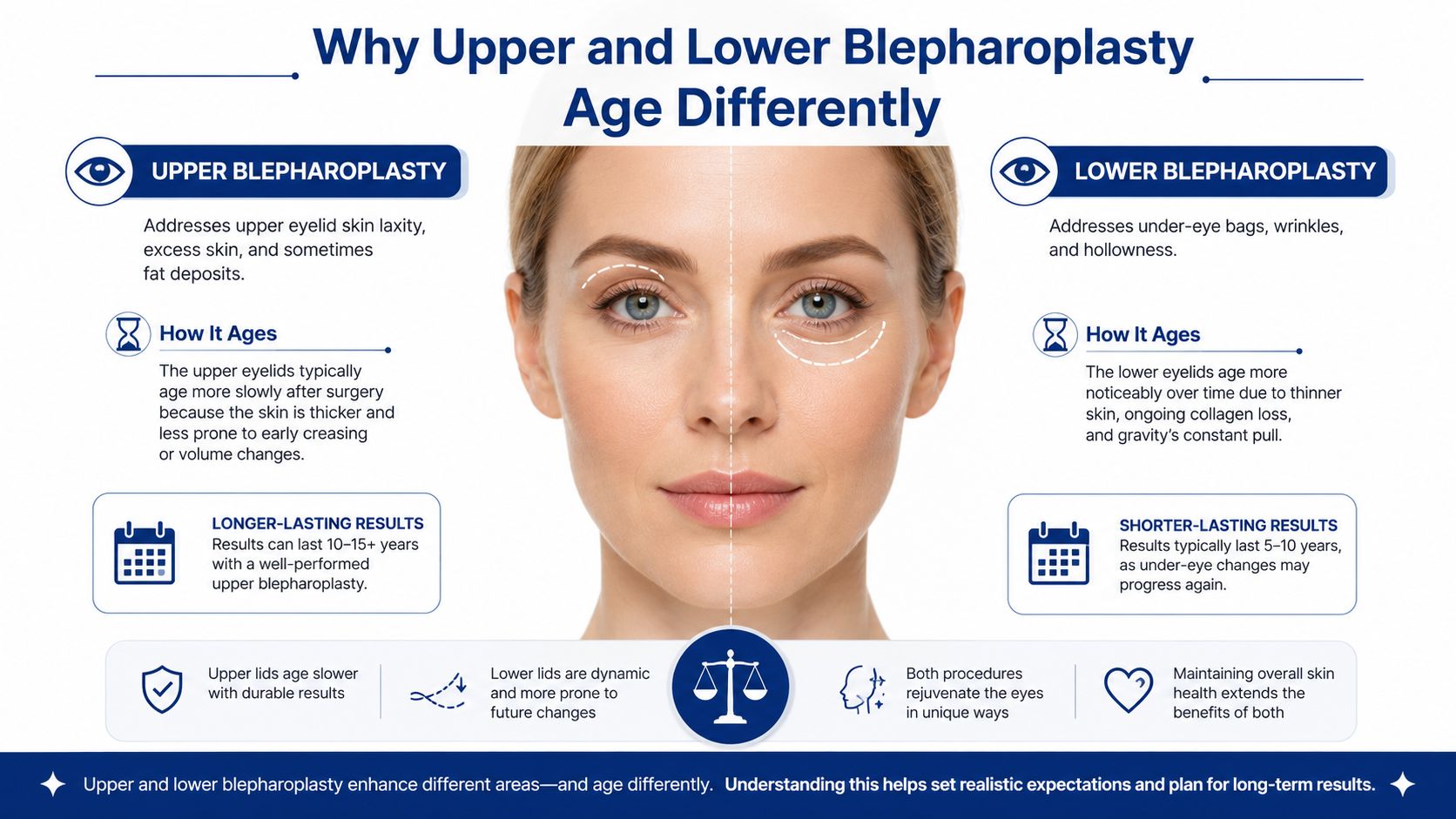
The durability gap starts with anatomy. Upper eyelid surgery and lower eyelid surgery both remove or reposition tissue that doesn't regenerate in the same way aging skin does, but the surrounding structures keep changing after the operation. That's why the result can be durable without being permanent.
The upper lid is pulled by surrounding change
The upper eyelid sits under the influence of the brow. If the brow continues to descend after surgery, the lid can start to look heavy again even if the eyelid work itself still holds up. Dr. Angela Sturm describes this mechanism clearly, noting that ongoing brow descent can shorten upper blepharoplasty benefits to 3 to 5 years or less, while lower blepharoplasty can last for the rest of a patient's life because removed fat doesn't come back (Dr. Angela Sturm video transcript).
The lower lid changes less after correction
Lower blepharoplasty tends to behave differently because the operation often removes, moves, or smooths fat that creates the under-eye bulge. Once that contour is corrected, the specific fullness that bothered the patient may not return in the same way. That's why many surgeons describe lower-lid results as far more durable than upper-lid results.
A major clinical review helps explain why long-term certainty is limited. Across 44 studies, the mean photographic follow-up for lower-lid blepharoplasty was only 15.3 months, and only 0.094% of patients had postoperative photographs beyond 24 months (PubMed review). In other words, a lot of the long-term conversation is built from anatomy and surgeon experience, not decades of high-quality follow-up data.
The operation is durable because the tissue changes are real. The eyelids still age because the face still ages.
That's the central idea readers need to keep in mind. Similar names don't mean similar longevity. Upper and lower eyelid surgery solve different problems, and they age according to different rules.
Evidence-Based Time Ranges for Blepharoplasty Results
Specialist guidance varies, but the pattern is consistent. Upper blepharoplasty is often placed in the range of 5 to 10 years or 7 to 10 years, while lower blepharoplasty is frequently described as lasting decades or being effectively permanent in many patients. One clinical source says upper-lid results typically last 5 to 10 years and lower-lid results can last for decades, if not permanently. Another reports averages of 7 to 10 years for upper lids and more than a decade for lower lids, with revision sometimes considered after 10 to 15 years if aging changes return.
That spread matters because it reflects what surgeons see in practice. The upper lid often needs a fresh look in middle age, especially if brow position or skin quality continues to change. The lower lid usually holds its improvement longer, so repeat intervention is less common.
What those ranges mean in real life
If you're trying to plan around work, family, and long-term appearance goals, the point isn't to chase a perfect expiration date. It's to understand that upper lids often behave like a multi-year procedure, while lower lids often behave like a long-horizon procedure. The result is still durable either way, but the timeline isn't identical.
Useful expectation: a good blepharoplasty doesn't promise a frozen face, it promises a better version of your eyes that ages more gracefully.
The range is wide because anatomy varies so much. Skin elasticity, bone structure, prior surgery, and whether fat was removed or repositioned all affect how long the result stays fresh-looking. That's why two patients can have similar surgery and very different timelines.
A practical reading of the evidence is this. Upper-lid results are often measured in years. Lower-lid results are often measured in years too, but with a much longer tail, sometimes decades. That difference should shape how patients think about maintenance and future revision.
| Procedure Type | Typical Duration | Revision Timeline | Key Factors |
|---|---|---|---|
| Upper Blepharoplasty | About 5 to 10 years, sometimes longer | Often reconsidered if aging changes return after several years | Brow descent, skin laxity, eyelid anatomy |
| Lower Blepharoplasty | Often decades, sometimes effectively permanent | Revision is less common | Fat repositioning or removal, support of the lower lid, tissue quality |
Factors That Influence How Long Your Results Last
Longevity isn't only about which lid was treated. It also depends on who had surgery, what their tissues were like before surgery, and how the procedure was performed. The same operation can look fresh for a long time in one person and soften earlier in another.
Biology sets the baseline
Age at surgery matters because younger patients often start with better skin quality, but they also have more years of future aging ahead. Skin thickness and elasticity matter too. Thicker, more elastic skin usually holds a smoother result better than thin, fragile skin that creases easily.
Genetics also count. If your family tends to develop brow heaviness, eyelid hooding, or under-eye changes early, your own timeline may follow a similar pattern. That doesn't mean surgery fails, it means the face continues on its inherited path.
Lifestyle and technique shape the finish line
Sun exposure can accelerate skin laxity, and smoking is a major problem for healing and long-term skin quality. Overall health matters as well, because tissue quality, inflammation, and recovery all influence how the eyelids mature over time. Surgical technique matters too. A surgeon who removes too much, removes too little, or fails to support the lower lid may create a result that doesn't age as well.
- Sun protection: Daily protection helps preserve skin quality around the eyes, where skin is thin and easily damaged.
- Smoking avoidance: Smoking harms healing and makes skin look older faster.
- Procedural planning: Fat removal, fat repositioning, and added support each age differently.
- Baseline anatomy: Existing brow position and lid laxity influence how quickly results change.
For readers who like skincare as part of a long-term strategy, natural skin firming oils can be an interesting adjunct to a broader skin-care routine, as long as expectations stay realistic.
The most helpful mindset is to separate what you can control from what you can't. You can protect skin, avoid smoking, and follow postoperative instructions carefully. You can't stop brow descent, collagen loss, or time itself.
Recovery Timeline and When Results Stabilize
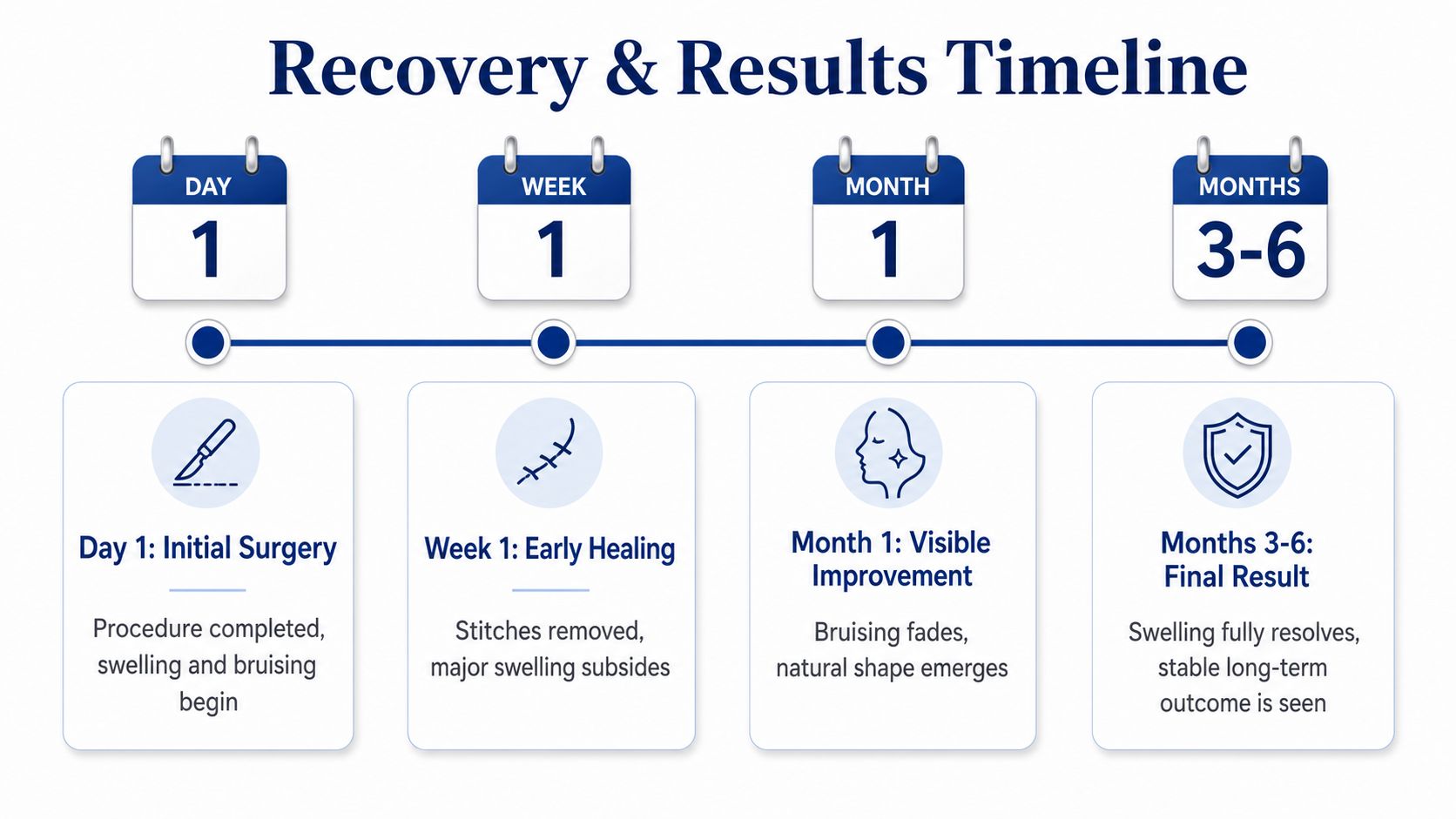
The recovery period is not the same thing as the longevity period, but patients often confuse the two. Early swelling can make a strong result look uneven or too tight, and that can cause unnecessary worry. Final results usually take months to settle fully, even when the surgery itself went smoothly.
What the first months usually feel like
The first phase is mostly about visible healing. Initial swelling and bruising are common, then the eyes start to look more natural as those changes fade. Many patients are surprised by how much the eyelid shape continues to refine after the obvious recovery window has passed.
A practical recovery pattern often looks like this, with swelling and bruising settling early, then smaller changes continuing as tissues soften. By around 3 to 6 months, the results are typically much more stable, because the tissues have settled and scars have matured enough to reveal the long-term outcome.
Why patience matters
Judging longevity too early is a mistake. A lid that looks slightly puffy in the first weeks isn't telling you how long the result will last years later. It's only telling you where the tissue is in healing.
Wait for the swelling to leave before you judge the shape.
For a more detailed overview of healing expectations, our eyelid lift recovery time guide lays out the process clearly. That can help separate normal healing from the small subset of changes that deserve an in-person look.
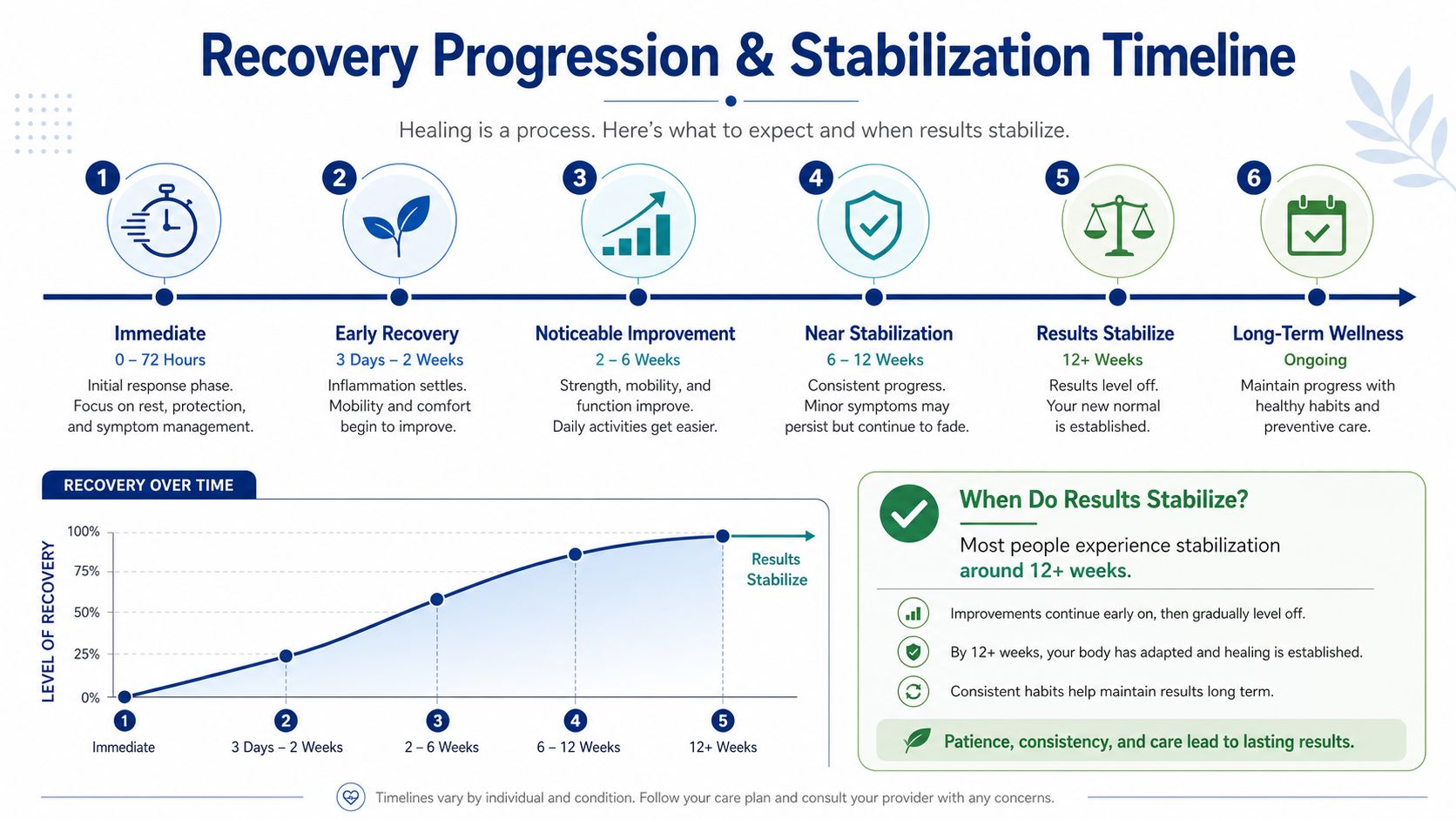
If something looks off early, it doesn't automatically mean the surgery will age poorly. Persistent asymmetry, worsening swelling, or a lid position that keeps changing deserve attention, but most early variation is just part of recovery. Stable long-term judgment belongs in the later phase, not the first few weeks.
resilient skin before facelift is a useful reminder that skin quality affects how facial surgery settles, including around the eyes.
Maintenance Strategies and When Revision Becomes Necessary
Blepharoplasty lasts longer when the skin around it stays healthy. That sounds obvious, but it matters because surgery can improve eyelid contour without stopping the slow march of aging. Good maintenance doesn't preserve the exact same look forever. It helps the result age in a cleaner, more balanced way.
What helps preserve the result
Daily sun protection is one of the simplest habits with the biggest payoff for the thin skin around the eyes. A consistent skincare routine can also support skin quality over time, especially if it's chosen for the eyelid area and not too irritating. Retinoids, when appropriate, and medical-grade products can be part of that conversation, but they should be used carefully near the eyes.
Non-surgical maintenance can also stretch the interval before another operation is needed. Injectables, laser treatments, and other energy-based treatments may help manage small changes as the years go by. They won't replace surgery, but they can help bridge the gap when aging changes are mild.
When revision becomes a real question
Revision is usually about function, contour, or new aging changes that have returned. For the upper lids, that can mean recurrent skin laxity or brow descent that changes the eyelid shape again. For the lower lids, revision is less common because the original change often lasts so long. If the under-eye contour starts to look tired again, it's usually because the surrounding face has aged, not because the original fat change disappeared.
A careful patient notices the difference between normal aging and a true recurrence. If the eyelid still looks better than before surgery, but not as crisp as it once did, maintenance is often the next step. If the excess skin or heaviness is clearly back, revision may be reasonable, especially in the upper lids.
Good planning means expecting aging, then deciding how you want to respond to it.
For people who want a broader approach to skin support, the ideas in natural skin firming oils can be part of a larger maintenance mindset, as long as they're seen as supportive rather than corrective.
How Awake Office-Based Techniques Affect Long-Term Outcomes
Technique affects longevity because precision affects healing, contour, and how naturally the result ages. In an awake, office-based setting, the surgeon can adjust tissue removal and positioning with the patient able to give real-time feedback. That can be especially helpful around the eyes, where tiny changes make a big difference.
Why awake surgery can help with durability
When local anesthesia is used, patients can open and close their eyes during the procedure. That gives the surgeon a more direct view of eyelid contour and eyelid closure, which can support more anatomically appropriate tissue handling. Conservative surgery matters here. Removing too much tissue can make the area look hollow or dry over time, while balanced correction tends to age more naturally.
Dr. Justin Yovino's double board-certified background and experience with revision procedures are relevant because long-term eyelid work rewards restraint and precision. A surgeon who thinks about revision cases tends to respect what the eyelid can and can't tolerate. That approach generally favors durability over overcorrection.
Why the setting matters too
An office-based procedure in Beverly Hills' Golden Triangle can be comfortable without sacrificing surgical focus. Patients often appreciate the calm setting, but the bigger issue is the surgical plan itself. The best long-term outcomes usually come from careful anatomy, conservative tissue management, and realistic expectations from the start.

For a deeper look at the awake-surgery approach, our awake surgery complete guide explains the broader philosophy behind local-anesthesia procedures. In practice, the patients who do best long term are usually the ones who understand that eyelid surgery should look smooth, rested, and believable as it ages.
If you're comparing upper and lower blepharoplasty or trying to decide how long your result might realistically last, Ideal Face & Body can help you think through the anatomy, the recovery, and the long-term plan. A consultation can clarify whether your eyelids are better suited to a short- or long-horizon result, and what kind of maintenance makes sense for your goals.