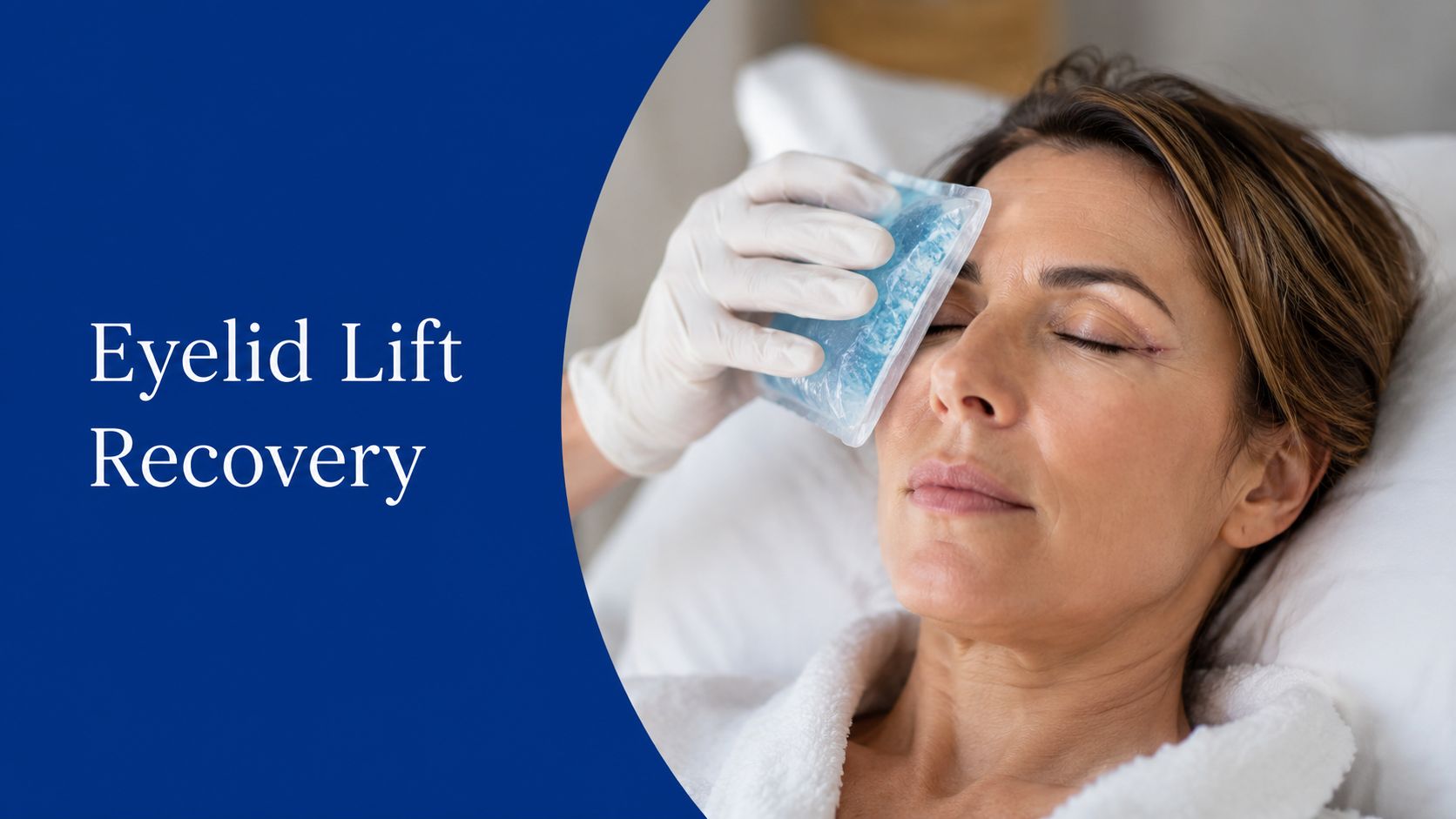
Most patients feel comfortable going back out in public or returning to work in 10 to 14 days after an eyelid lift, but full functional recovery, including contact lenses and strenuous exercise, takes closer to 3 weeks or more. The first few days usually feel tighter and puffier than people expect, then the eyelids start looking more like themselves even though healing is still underway.
You might be planning surgery around a work calendar, a wedding, a school pickup routine, or perhaps a week when you can hide out at home. That's the right way to think about eyelid lift recovery time, because it isn't one number, it's a sequence of milestones that move at different speeds.
Table of Contents
- What to Expect From Eyelid Lift Recovery
- The First 72 Hours After Surgery
- Your Week-By-Week Healing Timeline
- Upper Versus Lower Eyelid Recovery Differences
- Wound Care and Activity Restrictions
- Visible Recovery Versus Functional Recovery
- Red Flags and When Final Results Appear
What to Expect From Eyelid Lift Recovery
A patient usually comes in thinking about one question, “When can I look normal again?” In real life, that question has layers. You may be able to answer emails, sit in a meeting, or step into a restaurant long before every bruise has faded, and that distinction matters if you're planning around work, social events, or family obligations.
The most useful benchmark is still 10 to 14 days. Cleveland Clinic says most patients feel comfortable going out after 10 to 14 days, while the NHS says patients typically take about 2 weeks off work after eyelid surgery, and Alberta Health notes that stitches are typically removed in 5 to 10 days, swelling and bruising can last 1 to 3 weeks, and appearance may keep improving for 1 to 3 months. Those timelines line up with the practical reality patients experience, especially when they're trying to judge when they look presentable versus when they're fully back to baseline. Cleveland Clinic eyelid surgery recovery guidance
What the timeline really means
A good comparison is recovering from jaw surgery, where people also discover that visible healing and functional healing are not the same thing. Eyelid surgery is much less disruptive, but the same principle applies. You can look acceptable to others before your eyes feel entirely settled.
That's why procedure type matters. Upper eyelid surgery usually settles faster than lower or combined blepharoplasty, and office-based, awake surgery under local anesthesia can make the first hours feel easier because patients don't have to shake off the lingering grogginess that often comes with general anesthesia. At Ideal Face & Body, that awake, office-based approach is part of the recovery experience, because you can begin the post-op protocol promptly instead of spending the day recovering from anesthesia side effects. If you're still deciding whether surgery makes sense for your eyelids, the overview at Ideal Face & Body's eyelid lift page is a useful starting point.
Practical rule: if you're asking for one date to circle on the calendar, use the two-week mark for social readiness, then plan for several more weeks of quiet refinement.
The key is not to treat recovery as a single finish line. It's better to think in stages, first the swollen phase, then the public-facing phase, then the functional phase, and finally the cosmetic settling phase.
The First 72 Hours After Surgery
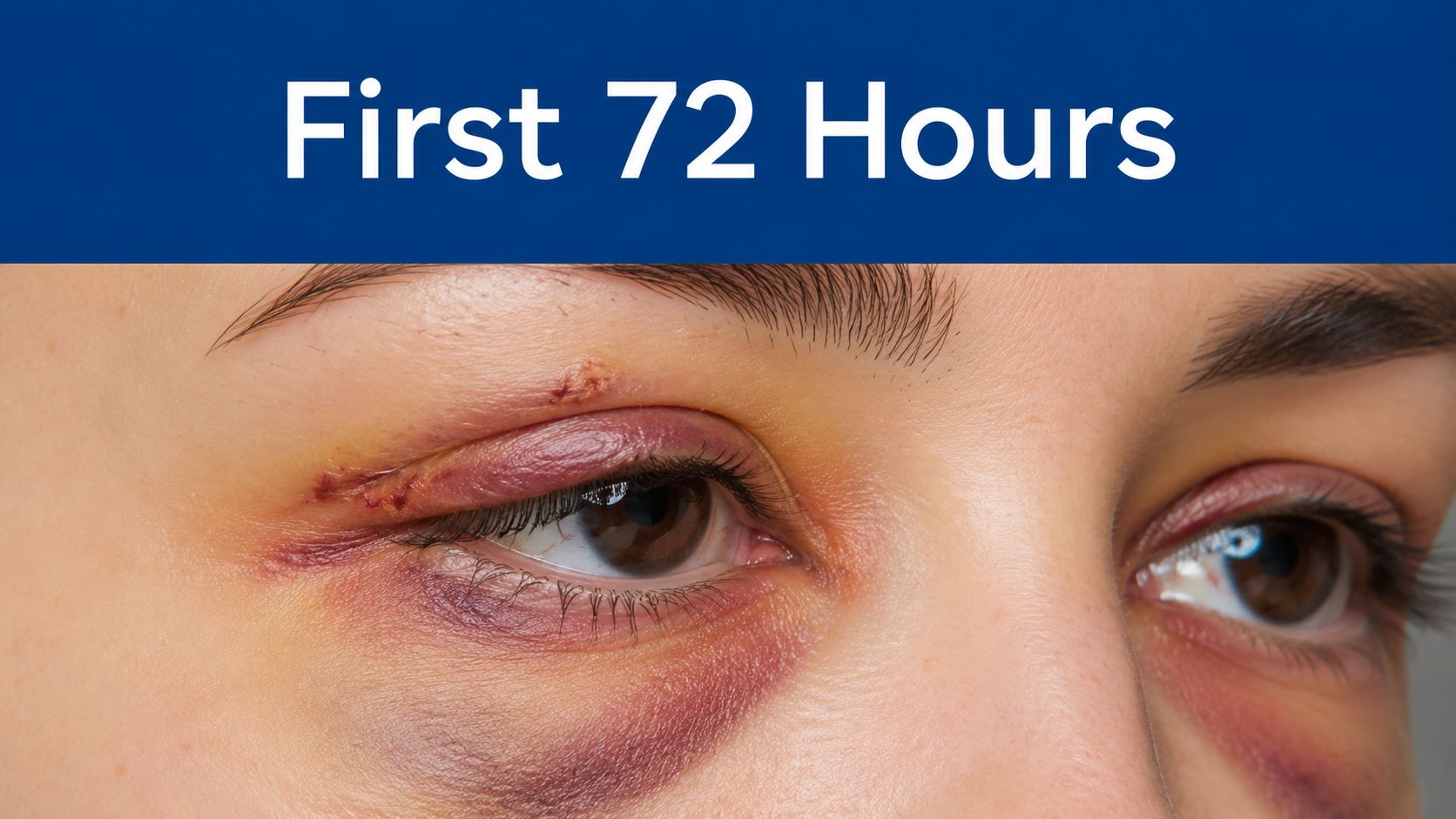
The first day is about getting home safely, getting comfortable, and doing less than you think you should. With eyelid surgery done awake under local anesthesia in an office setting, many patients avoid the foggy, nauseated feeling that can follow general anesthesia. That gives you a practical advantage right away, because you can start your recovery instructions without waiting for anesthesia side effects to clear.
What the first day feels like
Your eyes may feel tight, blurry, dry, or extra sensitive to light. That is expected early on, and it usually comes from swelling, ointment, and the eye area's normal reaction to surgery. Have a driver ready, because you should not manage the ride home yourself, and set up a recovery station before you leave with extra pillows, ice packs, water, tissues, and anything else you want within reach.
Cold compresses help because they limit early swelling. The usual pattern is to apply them in 20-minute intervals, then rest the skin and repeat. Keep your head raised while sitting and sleeping, since gravity helps reduce fluid build-up around the eyelids.
What happens from day two to day three
By the second and third day, the visible swelling and bruising often look worse before they look better. MedlinePlus notes that swelling and bruising typically peak in the first few days, and that matches what patients see in the mirror. MedlinePlus eyelid surgery aftercare
Keep the head up, keep the compresses gentle, and avoid the urge to test the eyelids by overusing your eyes.
This is also when patients start wondering whether they should push through normal tasks. Do not. The first 48 to 72 hours are the worst of the visible swelling, and the recovery plan is built to prevent a rise in blood pressure that can worsen bleeding and prolong edema. If you want a simple comparison with another facial procedure's downtime pattern, recovery after lip fillers follows a similarly staged, swelling-first pattern even though the details are different.
The best mindset is boring on purpose. Rest, hydrate, keep the area protected, and let the early inflammation settle before asking your face to do more.
Your Week-By-Week Healing Timeline
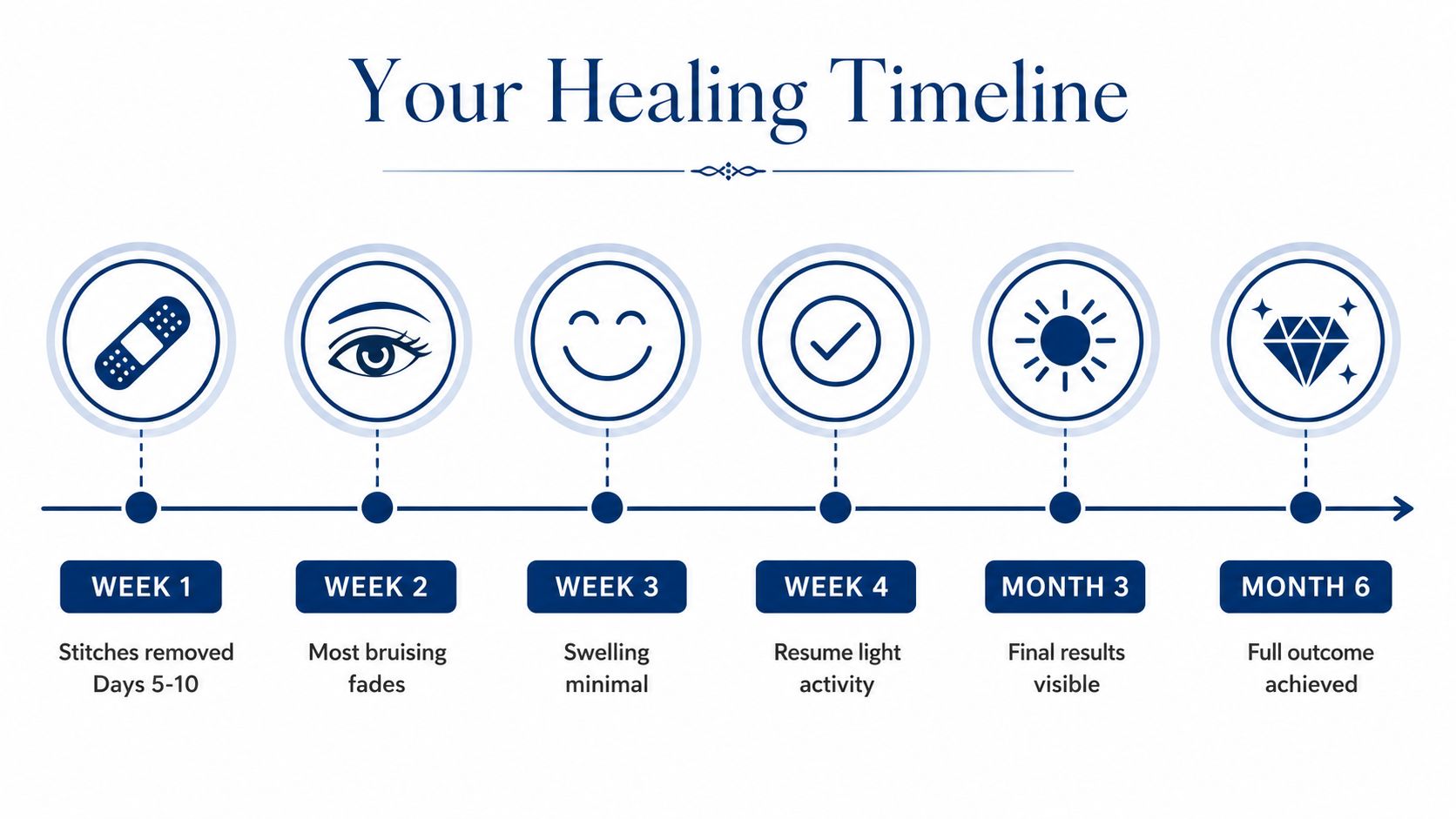
The cleanest way to think about eyelid lift recovery time is as a ladder, not a leap. Each rung has a different job, and the goal is to know what belongs to each stage so you don't expect week one to behave like month three. A useful way to picture that progression is to compare the early healing window with the more gradual contouring phase described in this eyelid surgery recovery overview.
Week one
The first week is about swelling control, incision care, and patience. Stitches are commonly removed in 5 to 10 days according to Alberta Health, and MedlinePlus notes stitch removal around 5 to 7 days in many cases. By the end of the week, bruising is usually no longer intensifying, even if it's still obvious. Cleveland Clinic eyelid surgery recovery guidance
Week two
This is the stretch where many people become socially comfortable again. The typical benchmark of 10 to 14 days fits here, which is why so many patients schedule surgery around a planned break from work or public obligations. Bruising can still linger, but it's usually more coverable and less dramatic than it was the first week.
Weeks three and four
At this stage, swelling is usually much lighter, and the face stops looking “post-op” to most casual observers. MedlinePlus recommends avoiding strenuous activity that raises blood pressure for about 3 weeks, which lines up with the idea that exercise should wait longer than simple desk work. Dry eye symptoms for many patients improve within the first two weeks, but the eyes may still feel a little unpredictable with prolonged screen time or windy conditions.
Months two through six
This is the refinement phase. Alberta Health says appearance may continue improving for 1 to 3 months, the NHS says bruises and redness may take several weeks to fade, and final cosmetic refinement can continue for 3 to 6 months or longer. Scar tissue softens, the eyelids settle into their new resting position, and the small asymmetries that are part of early healing usually calm down.
| Recovery Comparison by Procedure Type | Upper Blepharoplasty | Lower Blepharoplasty | Combined |
|---|---|---|---|
| Early swelling | Often settles faster | Often lingers longer | Usually the slowest |
| Public readiness | Commonly around 1 week to 2 weeks | Commonly around 10 to 14 days or about 2 weeks | Often longer than either alone |
| Stitch removal | Often in the first week | Often in the first week to second week | Depends on the operative plan |
| Final contour | Continues over months | Continues over months | Continues over months |
The timeline is reassuring once you stop expecting every milestone to happen at once.
That's why the late months matter. Patients often feel relieved well before the eyelids are fully refined, and that's normal, not a sign that anything is wrong.
Upper Versus Lower Eyelid Recovery Differences
Upper eyelid surgery and lower eyelid surgery do not heal on the same clock. Upper lids generally recover more quickly because the tissue planes are different, the swelling pattern is often lighter, and the social downtime is usually easier to hide. Lower lids tend to look more dramatic in the early phase because the area around the tear trough and cheek junction is delicate and more prone to visible puffiness.
Why the lower lids usually take longer
Lower blepharoplasty often asks more of the surrounding tissues. That doesn't mean the surgery is worse, it means the eye area has less margin for error in the first days, so bruising and edema can look heavier even when the operation is going exactly as planned. Combined procedures extend the recovery window again, because both areas are healing at the same time and the face has more widespread swelling to resolve.
Practical rule: if both upper and lower lids are treated together, plan your calendar around the slower side of the equation.
How individual factors change the plan
Dry eye tendency, frequent contact lens wear, screen-heavy work, and public-facing jobs all make the practical recovery window feel longer. MedlinePlus recommends keeping contact lenses out for at least 2 weeks, so lens-dependent patients need a realistic bridge plan before surgery day. The same is true for people whose jobs demand close, uninterrupted screen use, because light sensitivity and dryness can make the first week more annoying than painful.
| Scenario | Practical recovery feel | What usually matters most |
|---|---|---|
| Upper blepharoplasty | Faster public readiness | Less visible swelling, quicker return to routine |
| Lower blepharoplasty | Slower visible calm-down | Bruising near the lower lid and cheek can linger |
| Combined surgery | Longest downtime | More widespread swelling and a longer social recovery |
| Lens-dependent patient | Function may lag appearance | Contact lens restrictions and dry eye control |
| Public-facing work | Appearance matters early | Coverability, redness, and confidence in daylight |
A lot of patients are surprised that the “hard part” isn't pain, it's timing. The key decision is whether you need a short window to look acceptable, or a longer window to feel fully back to normal in day-to-day life.
Wound Care and Activity Restrictions
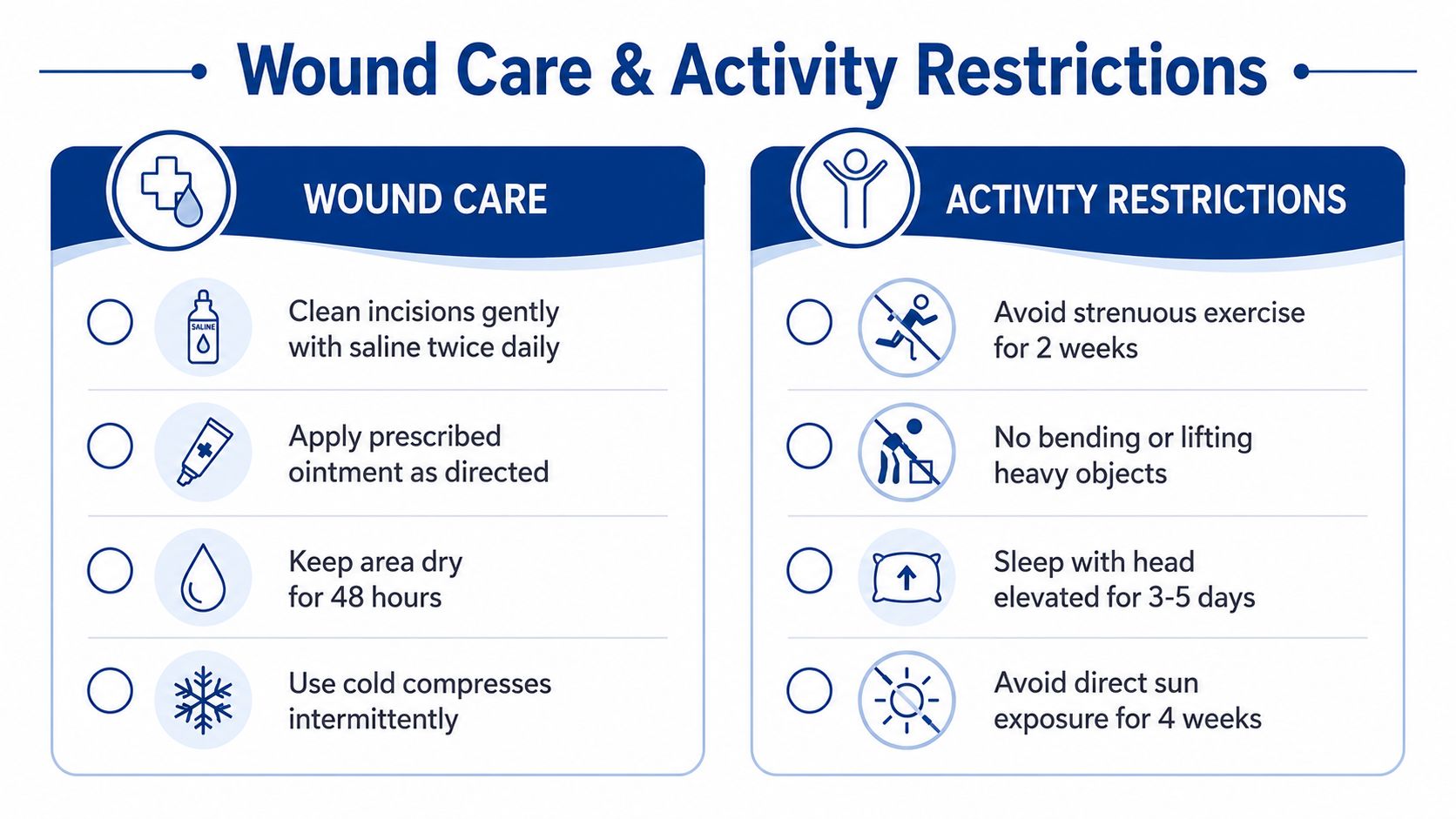
Good wound care keeps the eyelids from getting irritated while the incision seals. The goal is simple, keep the area clean, keep swelling down, and avoid anything that pulls, rubs, or raises pressure around the eyes. At Ideal Face & Body, awake, office-based blepharoplasty often makes this part of recovery easier to manage because patients go home sooner and with more direct aftercare guidance, rather than dealing with the added downtime that can come with traditional hospital-based surgery.
What to do
- Clean gently: Use sterile saline or the cleansing method your surgeon gives you, and move slowly with every pass. In many office-based protocols, that means a light rinse or a careful wipe with clean gauze rather than scrubbing the lids.
- Use ointment exactly as directed: A thin layer of antibiotic ointment or plain lubricating ointment may be recommended depending on the incision and skin condition. Too much can blur vision and make the lids feel greasy, while too little can leave the incision dry and uncomfortable.
- Keep the area protected early: The first 48 hours are usually the time to be the most careful about moisture, friction, and accidental touching. If the lids feel sticky, resist the urge to peel at them.
- Use cold compresses intermittently: Short, repeated sessions are better than holding ice on the eyelids continuously. The skin around the eyes is delicate, and too much cold can irritate it.
What to avoid
- Skip strenuous exercise for about 3 weeks: Activity that raises blood pressure can worsen swelling and invite bleeding. That includes hard workouts, heavy lifting, and anything that gets you straining.
- Don't bend or lift heavy objects: A sudden pressure change can make the eyelids look puffier and feel tighter for the rest of the day.
- Avoid contact lenses for at least 2 weeks: The eye surface needs time before anything goes back in, especially if dryness or irritation is present.
- Limit direct sun exposure: Fresh incisions heal better when they are shielded, and the eyelid skin is especially reactive in early recovery. Sunglasses and careful shade are usually easier than trying to manage a sunburned incision line later.
What happens after the first few weeks
Tightness, itching, and a little numbness can be part of normal scar maturation. The appearance usually keeps settling gradually over time, even after the early swelling is gone. A small amount of firmness along the incision line is common while the tissue remodels.
That slower change is normal, and it is one reason recovery has two tracks. You may look presentable before the lids feel fully normal, and the scar itself can still be softening long after the bruising has faded.
Visible Recovery Versus Functional Recovery
People often say, “I just need to know when I can go back to work.” That question is useful, but it hides the bigger issue. You can look presentable before you're fully ready to drive comfortably, wear contacts, return to workouts, or tolerate long stretches of screen time.
Looking ready is not the same as doing everything normally
The public-facing recovery window is usually around 10 to 14 days, which is why many patients feel comfortable being out in the world again by then. Functional recovery can lag behind appearance. MedlinePlus recommends no contact lenses for at least 2 weeks, and avoiding strenuous activity for about 3 weeks, which means a person may look fine while still needing to protect the eyes and body from routine habits that would feel normal on any other week.
Driving deserves special caution. Vision must be clear enough for safe reaction time, and narcotic pain medication, if used, can make driving inappropriate. Screen-heavy work can also be tiring in the first week because dryness and light sensitivity make the eyes work harder than usual.
How to plan your return
Best approach: schedule your life around the most restrictive milestone, not the most optimistic one.
That means counting separately for appearance, driving, contacts, workouts, and workday stamina. For some patients, the biggest early limitation is not pain, it's the small but annoying tasks that depend on reliable eye comfort, like reading small text, sitting under bright lights, or wearing lenses all day.
A recovery plan works best when it respects the slowest part of the process. If the eyes look good before the body feels ready, that's progress. It just isn't the same as full readiness.
Red Flags and When Final Results Appear
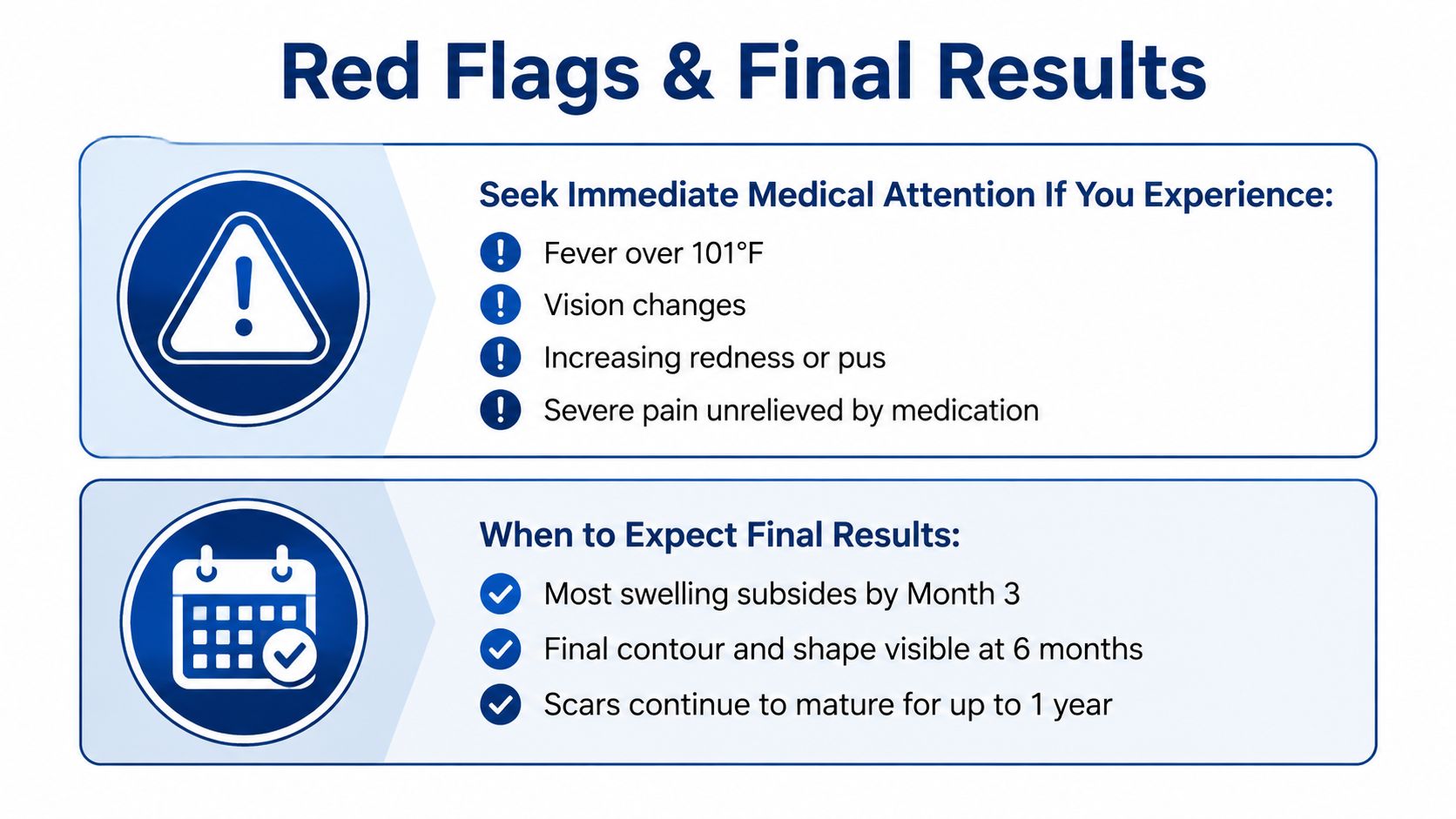
Some variation is normal after eyelid surgery. What isn't normal is a sudden change that doesn't fit the expected pattern of swelling and bruising. If the pain is severe or getting worse instead of gradually easing, or if redness and discharge are increasing, that deserves prompt attention. Learn more about eyelid surgery risks
What should raise concern
- Sudden vision changes
- Severe or worsening pain not controlled by prescribed medication
- Increasing redness or discharge
- Excessive bleeding
- Sudden asymmetry rather than the uneven puffiness that can happen early on
Dry eye often improves within the first two weeks for many patients, but lingering irritation alone is not the same thing as an emergency. MedlinePlus also notes that numbness can last longer after upper eyelid surgery, and some sensory changes can take time to resolve. The key is to watch the trend, not just the presence of a symptom.
When the result really looks finished
Most swelling fades over the first few months, but final cosmetic refinement takes longer. Alberta Health says appearance may continue improving for 1 to 3 months, while broader recovery guidance places final cosmetic settling at 3 to 6 months or longer. The scar line keeps maturing in the background, and the eyelid shape becomes softer and more natural as the tissue relaxes.
That patience pays off. The most natural eyelid lift results usually appear after the face stops reacting to the surgery and starts living in its new shape.
If you're thinking about eyelid surgery and want a recovery plan that feels realistic from day one, visit Ideal Face & Body to learn more about awake, office-based blepharoplasty in Beverly Hills, CA. A consultation can help you match the procedure to your schedule, your eye comfort, and the kind of downtime you can manage.