Jawline liposuction cost commonly falls within a broad range, with reported patient pricing from $2,000 to $7,500 and an average of $4,056 based on 194 reviews. Your actual quote depends on the surgeon, setting, anesthesia, technique, add-ons, and geography, so an in-person evaluation is the only reliable way to establish your number.
You're probably looking at two quotes right now. One may appear surprisingly affordable, while the other seems dramatically higher for what sounds like the same jawline procedure. That gap doesn't automatically mean one office is overcharging or the other is offering a bargain. It usually means the quotes include different decisions.
In Beverly Hills, I tell patients to stop asking for one headline price and start asking what the price contains. A jawline liposuction quote is a stack, not a single figure. Once you separate the surgeon's work, facility, anesthesia, technology, aftercare, and possible add-ons, the difference becomes much easier to understand.
Table of Contents
- Why Two Jawline Liposuction Quotes Can Look Nothing Alike
- The Anatomy of a Jawline Liposuction Cost Stack
- How Technology and Technique Change the Price
- Why Geography Moves the Number So Much
- Comparing Surgical and Non-Surgical Options on Total Spend
- Recovery Costs and the Price of Complications
- Getting a Personalized Quote and Planning the Budget
Why Two Jawline Liposuction Quotes Can Look Nothing Alike
A patient recently described the classic situation. She had one quote from an office-based practice and another from a surgery-center practice. Both offices used the words “chin liposuction,” but the totals looked nothing alike. She wanted to know which surgeon was charging fairly.
The right first question wasn't “Which quote is cheaper?” It was “What exactly does each quote include?”
One practice may price a focused, awake procedure under local anesthesia. Another may include an operating-room fee, a separate anesthesia provider, more extensive contouring, and a different technology platform. A third may quote only the surgeon's professional fee and leave the remaining charges for later. These aren't interchangeable offers, even when the marketing language sounds similar.
Independent patient-review data illustrate the spread. RealSelf's jawline and chin liposuction pricing data report an average of $4,056, based on 194 patient reviews, with reported prices ranging from $2,000 to $7,500. Those figures are useful as a market reference, but they aren't a substitute for an examination.
The American Society of Plastic Surgeons reported an average surgeon fee of $2,852 in 2022, $3,194 in 2023, and a published 2024 range of $3,000 to $5,500 for submental or chin liposuction. The ASPS 2024 fee data also makes an important distinction, surgeon fees are only one part of the final bill.
Practical rule: If a quote doesn't clearly identify the surgeon fee, facility, anesthesia, supplies, and follow-up care, you don't yet have a usable quote.
The rest of the evaluation should focus on the vocabulary behind the number. You need to know whether you're paying for a small pocket of fat or broader neck contouring, local or general anesthesia, standard or specialized technology, and basic or concierge-style aftercare. Exact pricing shifts with the individual and the market, but the logic behind the quote stays consistent.
The Anatomy of a Jawline Liposuction Cost Stack
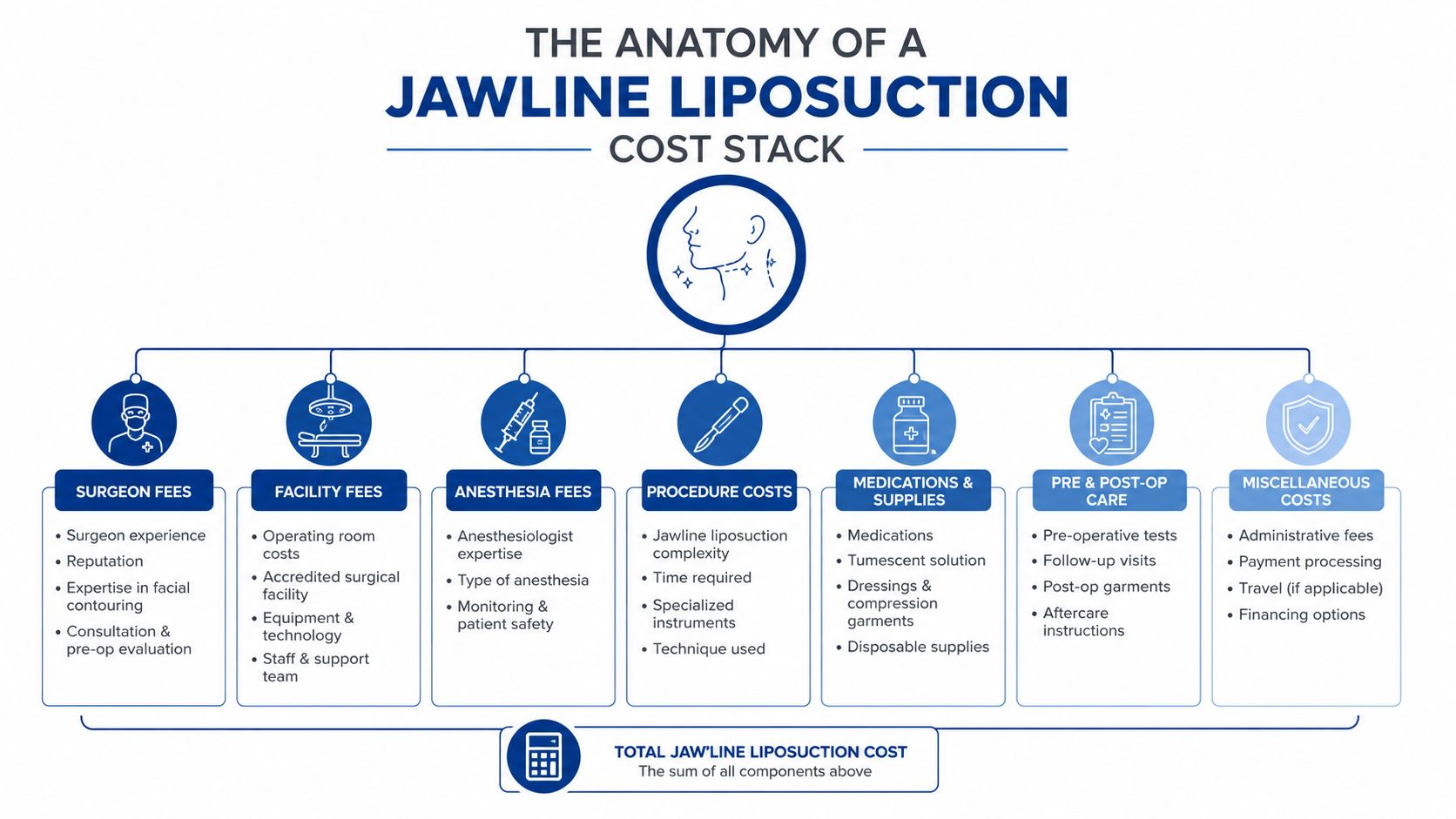
Think of your quote as a custom suit. The surgeon is the tailor, the facility is the workshop, the materials determine the finish, and the fittings make sure the result matches your body. A low advertised price may cover only the tailoring, while the complete garment requires several separate charges.
Surgeon fee
This is the professional fee for the operating surgeon's judgment, technical skill, time, and responsibility. Facial contouring requires more than removing visible fat. The surgeon must assess the relationship between the chin, neck, jawline, skin elasticity, and facial proportions.
A quote should state whether the surgeon fee covers the entire planned treatment area or only a limited submental zone. Ask whether contouring along the jawline, upper neck, or nearby areas changes the fee.
Facility and anesthesia
An office-based procedure may have a lower facility burden than treatment performed in a hospital or ambulatory surgery center. A U.S. liposuction cost guide describes chin and neck liposuction as commonly priced around $2,000 to $4,500 all-in, with surgeon fees often around $1,500 to $3,000. It also explains that local anesthesia in an office can reduce anesthesia and operating-room charges.
Anesthesia isn't one generic line item. Confirm whether local anesthesia is included, whether an anesthesia professional is involved, and whether any monitoring or medication charges are separate.
The smaller line items
Preoperative testing and medical clearance may be required based on your health history and the practice protocol. Some offices include these services, while others list them separately.
Compression garments, prescriptions, dressing supplies, and postoperative visits also belong on the checklist. Ask whether your quote includes routine follow-ups and what happens financially if you need an additional evaluation for prolonged swelling or an unexpected concern.
For a plain-language overview of the procedure itself, review this guide to chin liposuction. Then compare its treatment description with the written scope in your own quote.
A strong estimate should tell you what's included, what's optional, and what could change after examination. Don't accept “starting at” language as a complete financial plan.
How Technology and Technique Change the Price
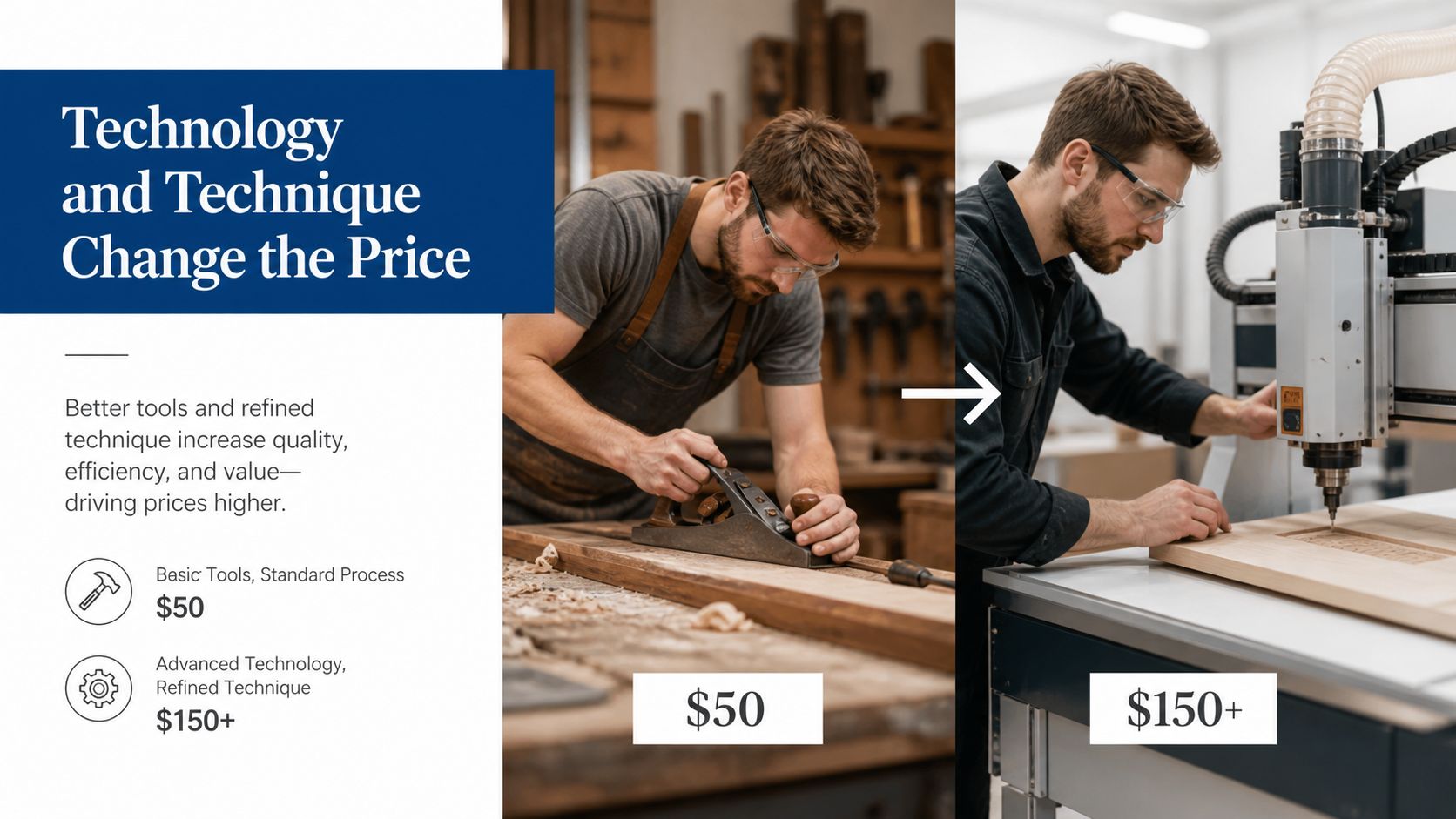
Technology changes more than the equipment line. It can affect how the surgeon approaches the fat, how much precision the anatomy demands, what training is required, and how the practice organizes recovery.
Conventional tumescent liposuction remains a familiar approach. The surgeon uses small cannulas to remove targeted fat after infiltrating the treatment area with tumescent fluid. The cost may be comparatively straightforward when the case is limited and performed under local anesthesia.
Laser-assisted methods add a heat-based energy component intended to support fat disruption and tissue remodeling. PRECISION SCULPT laser liposculpting is one example of a proprietary approach used for chin, neck, and jawline contouring. A practice that invests in specialized equipment, training, protocols, and follow-up may build those resources into its professional fee.
What you're actually paying for
Patients often focus on the device name, but the meaningful cost question is broader. You're paying for:
- Equipment and maintenance: Specialized platforms require capital investment, upkeep, and trained staff.
- Surgeon experience: The value lies in how the surgeon selects settings, controls depth, and adapts the technique to your anatomy.
- Treatment design: A narrow submental treatment differs from a carefully blended jawline and neck contour.
- Recovery protocol: A defined wrapping, dressing, and follow-up plan can be part of the practice model.
Ultrasound-assisted chin liposuction has also been described in peer-reviewed literature as potentially reducing discomfort, swelling, and bruising compared with conventional liposuction when performed under local anesthesia, while avoiding general-anesthesia side effects such as postoperative nausea and vomiting. The peer-reviewed discussion of ultrasound-assisted chin liposuction supports evaluating the technique as part of the overall treatment plan, not as a marketing label alone.
Read the comparison between traditional lipo and laser lipo before treating technology as an automatic upgrade. My recommendation is simple, ask what the technique adds for your anatomy. If the answer is vague, the technology may be functioning as a sales feature rather than a clinical rationale.
Why Geography Moves the Number So Much
A jawline liposuction quote from Beverly Hills can look nothing like one from another city. The procedure may carry the same name, yet the local market changes the surgeon's fee, office overhead, staffing, facility costs, and expected level of service.
| Metro Area | Average Reported Price | Reported Range |
|---|---|---|
| Los Angeles | $3,500 | Not reported in the dataset |
| New York City | $4,500 | Not reported in the dataset |
| Nashville | $6,000 | Not reported in the dataset |
| Dallas-Fort Worth | $2,450 | Not reported in the dataset |
| Washington, DC | $2,875 | Not reported in the dataset |
The patient-reported figures show a broad geographic spread, with state-level costs ranging from $2,017 in Michigan to $5,933 in Nevada, according to RealSelf's patient-reported cost data. Geography can shift the total by thousands of dollars, so a quote should always be judged within its local market.
Beverly Hills operates as a high-overhead, high-demand market. Real estate, specialized staff, insurance, administrative support, and patient-service expectations all affect what a practice must charge. A surgeon focused heavily on facial contouring may also price differently from a general cosmetic practice that performs jawline liposuction less often.
Price and service aren't identical
A higher quote may include longer consultations, direct surgeon involvement, a dedicated office team, garment guidance, closer follow-up, or specialized equipment. Those additions can justify part of the difference, but an expensive quote is not automatically a better one. Ask for an itemized explanation of each component.
A lower quote can make sense for straightforward anatomy, limited treatment, and an office setting with controlled fixed costs. It deserves closer review if it excludes facility fees, anesthesia, supplies, compression garments, or postoperative care.
Use this guide to liposuction cost in the Los Angeles market to organize your pricing questions. Then pressure-test the quote with the operating surgeon. Geography sets the market context, while your anatomy, treatment scope, setting, and selected add-ons determine the case-specific price.
Comparing Surgical and Non-Surgical Options on Total Spend
A patient may choose the lowest first-appointment price, then spend more after repeat treatments, recovery needs, and maintenance enter the plan. Judge each option by the complete treatment path and the result you want, including whether the contour change is intended to last.
Awake, office-based jawline liposuction can reduce fixed overhead when local anesthesia replaces a hospital or surgery-center setting. It remains surgery, but the quote may carry a lower facility and anesthesia burden. Office-based facial procedure guidance identifies submental liposuction as a lower-face treatment that can be performed under local anesthesia.
Traditional surgical liposuction in a hospital or surgery center can fit a broader treatment plan, a different anesthesia approach, or a practice built around that setting. The added cost may come from facility and anesthesia services rather than the amount of fat removed. Ask the practice to separate the surgeon, facility, anesthesia, supplies, and follow-up charges.
Non-surgical treatment has a different math
Injectable deoxycholic acid is often presented as a lower-commitment alternative. A 2026 comparison guide cites approximately $1,200 to $1,800 per session and $3,000 to $6,000 across a full course for this treatment. The full-course figure matters more than the introductory appointment. If your plan requires repeated sessions, budget for the entire series before comparing it with surgery.
| Option | Main financial question | Permanence and recovery |
|---|---|---|
| Awake office-based lipo | What does the bundled office quote include? | Surgical result, with short-term swelling and bruising |
| Surgery-center lipo | How much do facility and anesthesia add? | Surgical result, with a more involved setting |
| Injectable treatment | How many sessions are likely? | Gradual improvement, without surgical incisions |
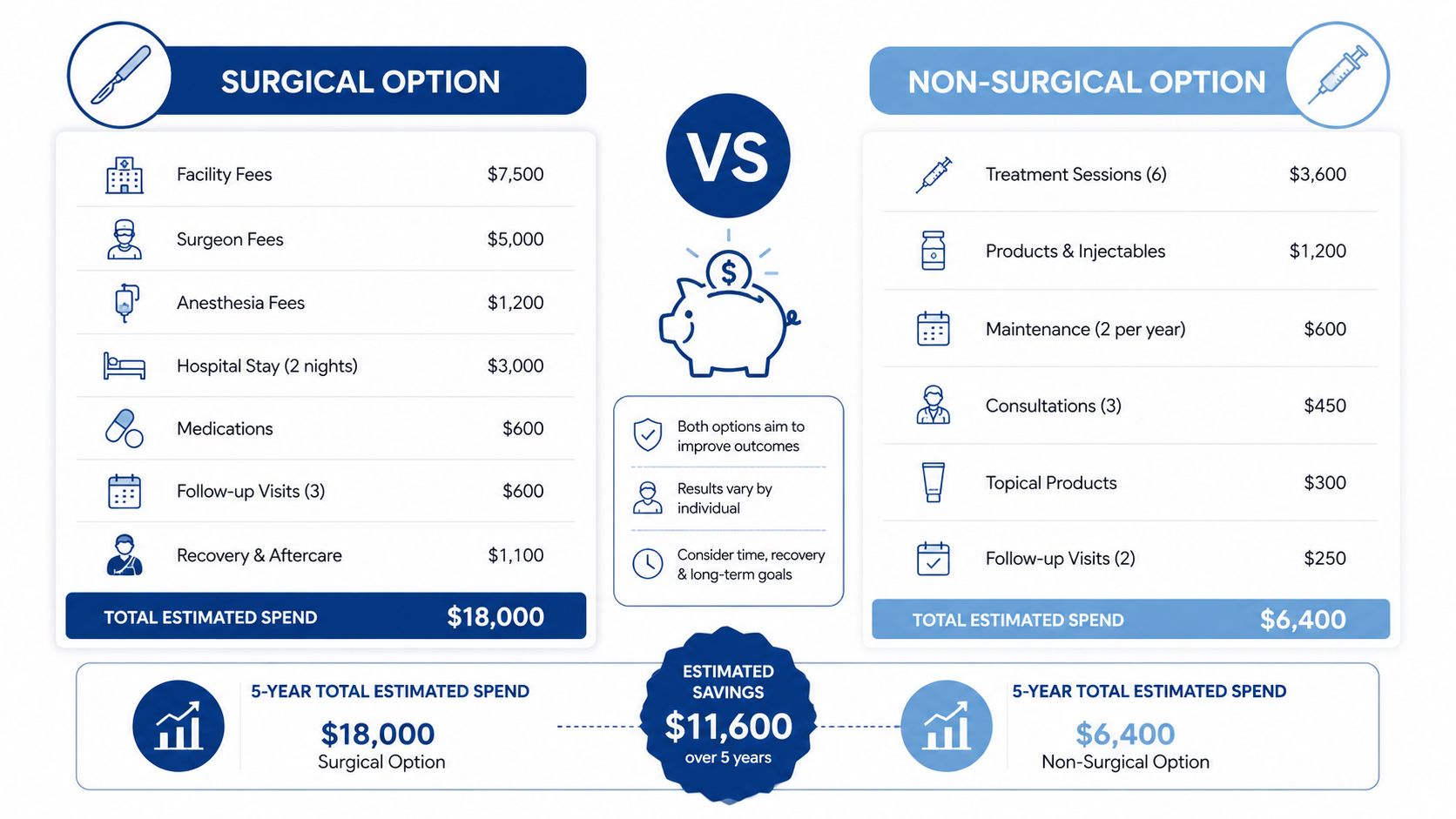
My recommendation is to choose based on the endpoint. If you want one contouring procedure and have suitable skin quality, surgery may provide stronger value over the full course. If you prefer gradual change and want to avoid surgery, injectable treatment can fit, but reserve funds for every planned session rather than only the first visit. A pressure-tested quote should show the setting, technique, number of treatments, and included services separately.
Recovery Costs and the Price of Complications
The procedure quote is only one part of your financial plan. Recovery can involve prescriptions, replacement compression garments, dressing supplies, transportation, follow-up travel, and time away from work. Most of these costs are manageable, but they should be visible before you commit.
Visible bruising and swelling commonly improve within roughly 7 to 14 days, and many patients return to work within days to a week. Compression dressings are often recommended for several days to a few weeks. Facial liposuction recovery guidance supports planning around that recovery pattern, although your surgeon's instructions should control.
Budget for the ordinary expenses
Ask these questions before surgery:
- Garments: Is the first compression garment included, and can you purchase another through the practice?
- Medication: Are prescriptions included, or will you pay the pharmacy separately?
- Follow-up: Are routine postoperative visits bundled into the surgical fee?
- Work planning: How will swelling, bruising, and garment use affect your schedule?
- Travel: If you're coming to Beverly Hills from outside the area, who handles an in-person concern after you return home?
An awake office-based approach may simplify recovery logistics because it avoids general-anesthesia-related effects and the infrastructure of a hospital or surgery center. It doesn't eliminate surgical recovery, and it doesn't make postoperative instructions optional. The cost advantage only matters if the clinical plan remains appropriate for your anatomy.
The expensive mistake
Complications and revisions are uncommon, but they can create real expense. A low quote becomes less attractive if it excludes follow-up access, leaves contour concerns unresolved, or offers no clear process for evaluating prolonged swelling, asymmetry, infection, or dissatisfaction.
A defined perioperative protocol matters here. Custom head and neck wrapping, clear activity guidance, and scheduled follow-up can help patients understand what normal healing looks like and when to call the office. Ask whether the practice manages these services directly and whether additional visits carry separate charges.
The cheapest quote is only a bargain if it includes the care you'll need after the procedure.
Getting a Personalized Quote and Planning the Budget
A personalized quote should begin with the operating surgeon's examination, not a generic online form. The surgeon needs to assess the fat distribution, skin elasticity, jawline anatomy, neck structure, medical history, and the degree of definition you're seeking.
Bring a written list of questions. A strong consultation should leave you knowing what will happen, who will perform each part, where it will occur, and what happens after you leave the office.
Use this consultation checklist
- Confirm the treatment area. Ask whether the plan covers only the submental pocket or also blends the upper neck and jawline.
- Identify every fee. Request a written breakdown of the surgeon, facility, anesthesia, supplies, medication, and follow-up charges.
- Ask why the technique was selected. The explanation should connect the technology to your anatomy, skin quality, and desired contour.
- Clarify the recovery plan. Confirm compression, restrictions, follow-up timing, and who answers questions outside office hours.
- Discuss add-ons separately. Skin tightening, chin projection, neck lifting, or other contouring should never be hidden inside an ambiguous package.
- Verify credentials and responsibility. Confirm that the operating surgeon evaluates you personally and remains responsible for the surgical plan.
The quote should also distinguish bundled services from optional services. Bundling can make the financial plan easier to understand, but only if the office lists what the bundle contains. Itemization is valuable because it lets you compare two practices fairly.
Finance the decision carefully
Aesthetic practices may offer third-party medical financing or in-house payment arrangements. Review the interest rate, promotional period, required deposit, late-payment terms, cancellation policy, and total repayment amount. A monthly payment can look comfortable while the full obligation remains higher than expected.
Don't finance a procedure before confirming the final surgical plan. If the treatment area or anesthesia approach changes after examination, the balance may change too. Keep a separate reserve for recovery-related needs and travel rather than committing every available dollar to the procedure itself.

Ideal Face & Body offers awake, office-based facial contouring in Beverly Hills, including PRECISION SCULPT laser liposculpting for the chin, neck, and jawline under local anesthesia. Visit Ideal Face & Body to request a consultation, review the treatment approach, and receive a quote built around your anatomy rather than an advertising headline.