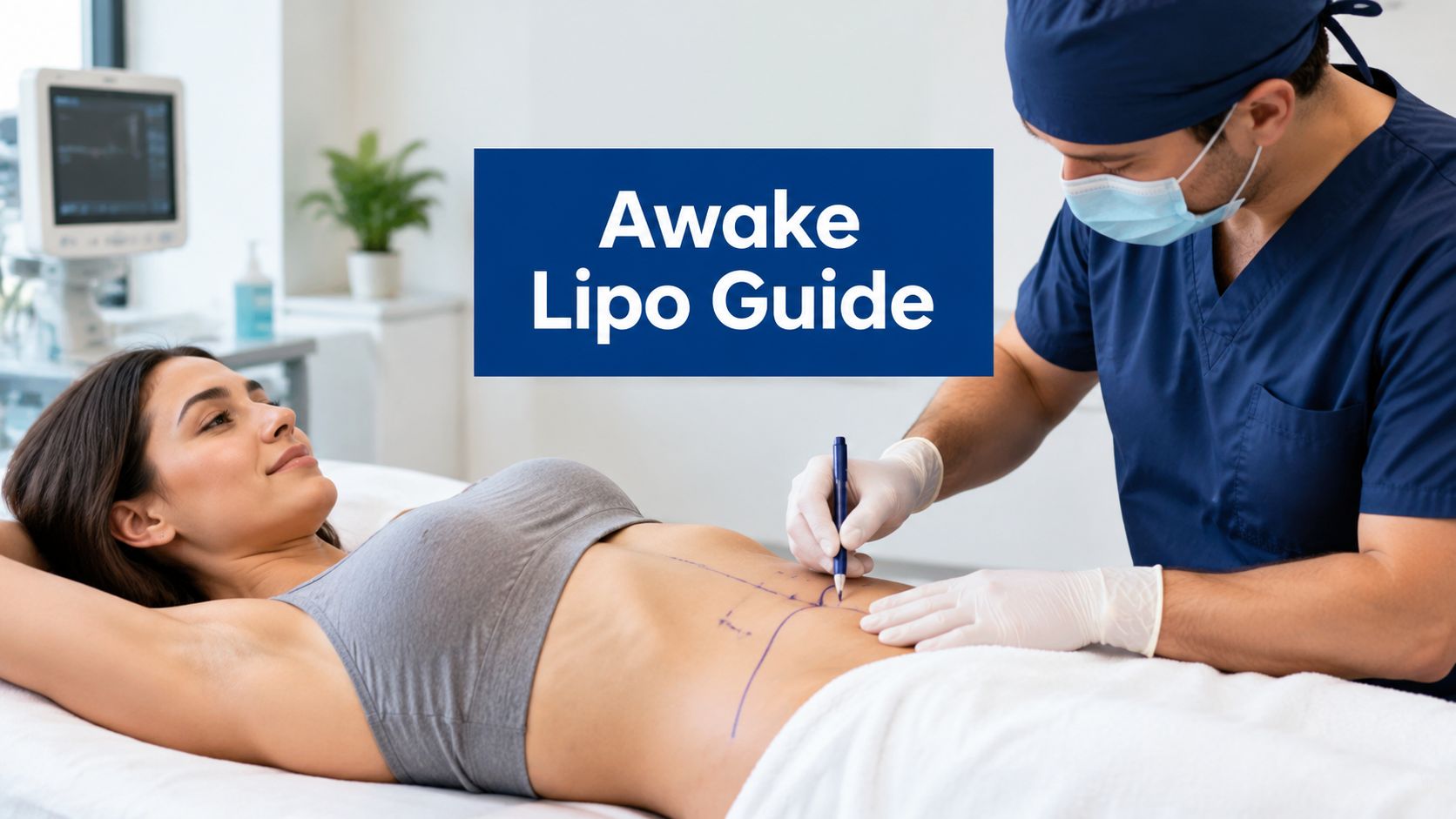
You may be eating well, exercising consistently, and still notice a pocket of fat beneath the chin, along the flanks, or at the back of the neck. That frustration is common because body contouring isn't the same as weight loss. Some fat deposits remain resistant to lifestyle changes, even when your overall weight is stable.
The phrase minimally invasive liposuction describes more than a smaller instrument or a shorter appointment. It reflects a clinical philosophy built around precision, limited tissue disruption, local anesthesia, careful patient selection, and a recovery plan that fits ordinary life. The important question isn't whether a technique removes fat. It's whether the method, setting, treatment area, and expected result are appropriate for you.
Table of Contents
- The Evolution of Body Contouring
- The Meaning of Minimally Invasive Liposuction
- Comparing Modern Minimally Invasive Techniques
- The Awake Advantage Office-Based vs OR Procedures
- Are You an Ideal Candidate for This Procedure
- Navigating Your Recovery and Seeing Results
- A Modern Approach to Personalized Body Contouring
The Evolution of Body Contouring
Consider a person whose waistline has changed after weight loss, but whose lower abdomen still has a distinct fold. Or someone who sees a soft fullness beneath the chin in photographs despite being near a stable weight. Diet and exercise may improve overall health, but they can't selectively remove every localized deposit.
Modern liposuction developed in response to that problem. Early attempts at surgical fat removal date to 1921, when Dujarrier operated on a dancer's knees and calves. The modern era began in 1975 with Arpad and Fischer's blunt cannulas and suction curettage, followed by a major safety milestone in 1977, when Illouz introduced the wet technique. That approach used hypotonic saline and hyaluronidase to reduce bleeding risk and remains foundational to suction-based body contouring. These milestones are described in the clinical history of liposuction.
The evolution matters because today's procedure isn't just an older operation performed through smaller openings. Surgeons can plan treatment around anatomy, use thin cannulas, limit the treated area, and select local tumescent anesthesia when appropriate. The intention is to sculpt a transition between regions, not to remove fat indiscriminately.
A practical overview of the difference between liposuction and liposculpture is available in this guide to how body contouring procedures are demystified.
The central idea: Minimally invasive doesn't mean “effortless.” It means the surgeon is deliberately reducing unnecessary disruption while preserving the precision needed for a controlled contour.
That distinction also explains why awake, office-based treatment has become important. For carefully selected, limited procedures, remaining alert under local anesthesia can reduce the burden associated with general anesthesia and allow a more direct, individualized experience. It doesn't eliminate surgery's responsibilities. It makes the planning and selection process even more important.
The Meaning of Minimally Invasive Liposuction
A patient may picture a small skin opening and assume the procedure is automatically minor. In practice, minimally invasive describes the entire treatment strategy, not the incision alone. A small opening can still lead to an overly aggressive or poorly planned operation. The relevant factors include access, tissue handling, anesthesia, treatment volume, and monitoring.
Small access points and controlled movement
Traditional open surgery may use a longer incision so the surgeon can see and handle a broad area directly. Minimally invasive liposuction follows a different logic. Through small access points, the surgeon uses specialized instruments and creates the contour through controlled movement rather than wide exposure.
A thin cannula passes through small openings in the skin. I guide it through the fat layer with measured passes in several directions, while protecting the overlying skin and deeper structures. The work is closer to fine architectural detailing with a pen than sweeping a broad paintbrush across the body.
The distinction matters in areas where modest changes alter the visible profile, including the chin, neck, arms, and a localized abdominal pocket. Controlled passes also help blend treated and untreated regions, reducing the risk of a sharply outlined contour.
Why tumescent anesthesia changed the procedure
Tumescent liposuction places dilute lidocaine and epinephrine into the subcutaneous fat. The fluid creates tumescence, vasoconstriction, and hydrodissection. In plain language, it gently expands the treatment layer, narrows small blood vessels, and helps separate fat so the cannula moves with less resistance. This combination lowers blood loss and supports fat removal with local anesthesia, as explained in this review of the tumescent technique.
Local anesthesia also changes what you experience. You may notice pressure, movement, or pulling without being unconscious. Remaining responsive lets the clinical team communicate with you throughout the procedure and monitor how you are doing. For a limited treatment, an awake office-based approach can reduce the burden associated with general anesthesia, provided your health and treatment plan make that setting appropriate.
The limits are part of the definition
Minimally invasive liposuction remains surgery. It does not automatically correct severe loose skin, replace a major excisional procedure, or make a large treatment plan risk-free. Lidocaine absorption can continue rising for up to 16 hours, so careful dosing and follow-up remain necessary in office-based treatment, as noted in the tumescent liposuction safety review.
A focused plan is often safer and more predictable. I may recommend treating one region, staging procedures, or pairing fat removal with a separate skin-retraction strategy instead of addressing every contour concern in one session. That is the clinical meaning of minimally invasive: less unnecessary disruption, with no compromise in planning, precision, or patient safety.
Comparing Modern Minimally Invasive Techniques
“Minimally invasive” describes more than a smaller incision or a newer device. It should describe a treatment plan that limits unnecessary tissue disruption, matches the technology to the anatomy, and remains appropriate for an awake, office-based setting when the treatment area is limited. Different techniques change different parts of liposuction, so the best choice depends on the area, tissue characteristics, fat volume, skin quality, and the surgeon's judgment.
Tumescent liposuction
Tumescent liposuction uses dilute local anesthetic and epinephrine to prepare the fat before suction. The fluid helps numb the treatment area and constrict small blood vessels. The surgeon can then remove fat directly with relatively low blood loss while the patient remains awake. This approach often suits localized deposits when excess fat is the main concern and the skin still has enough elasticity to adapt.
The awake setting does not remove the need for careful planning. Fluid selection, dosing, treatment sites, and the amount of aspirate all affect safety. Professional guidance for office-based treatment may cap aspirate volume at 5,000 mL, as discussed in the tumescent liposuction literature. That limit reinforces an important point: remaining conscious is a benefit for selected patients, not permission to expand the procedure without boundaries.
Ultrasound-assisted liposuction
Ultrasound-assisted liposuction applies energy to help disrupt or emulsify fat before suction. A surgeon may consider it for denser, more fibrous fat or for an area where additional tissue preparation could improve control. The energy must be managed carefully. Excessive heat or prolonged contact can injure surrounding tissue, so the device does not replace anatomical judgment or a focused treatment plan.
A defined dorsocervical fat pad, sometimes called a “buffalo hump,” illustrates why technology should be selected for the problem rather than for its novelty. Recent literature describes a standardized ultrasound-assisted approach for this specific area, with attention to limited tissue trauma, bleeding, recovery, and complications in a 57-patient series, as reported in the recent literature on dorsocervical fat pad treatment. Results from a focused fat pad should not be treated as proof that the same method will correct generalized skin laxity.
Laser-assisted liposuction and PRECISION SCULPT
Laser-assisted liposuction places a fiber-optic laser in the subcutaneous layer. The energy helps loosen or liquefy fat before suction and creates a controlled thermal effect in nearby tissue. For small to moderate treatment areas, a laser approach may offer a recovery and skin-retraction profile that differs from suction alone. Its value still depends on skin quality, fat distribution, treatment goals, and appropriate energy control.
At Ideal Face & Body, PRECISION SCULPT is described as a laser-assisted liposuction approach associated with Dr. Justin Yovino. The device is only one part of the method. The plan combines targeted fat removal with controlled energy delivery when the patient's tissue characteristics and goals support that choice. Patients who want to understand the mechanics can review how laser liposuction is performed.
| Technique | How It Works | Primary Benefit | Best For |
|---|---|---|---|
| Tumescent liposuction | Local anesthetic fluid prepares the fat before suction | Direct removal with low blood loss under local anesthesia | Localized fat with adequate skin elasticity |
| Ultrasound-assisted liposuction | Ultrasound energy helps disrupt or emulsify fat | Assistance in selected fibrous or anatomically challenging areas | Carefully selected areas such as a defined dorsocervical fat pad |
| Laser-assisted liposuction | A laser fiber delivers controlled energy before suction | Fat removal with a potential skin-retraction benefit | Small to moderate deposits with mild laxity |
| PRECISION SCULPT | A targeted laser-assisted liposculpting approach | Precision contouring with attention to skin quality | Selected areas such as the chin, neck, arms, abdomen, flanks, thighs, and calves or ankles |
Technology cannot correct a mismatch between the procedure and the anatomy. If significant loose skin is the dominant problem, removing additional fat can make laxity more visible. The surgeon must determine whether minimally invasive liposuction alone is suitable, whether treatment should be staged, or whether a different approach belongs in the discussion.
The Awake Advantage Office-Based vs OR Procedures
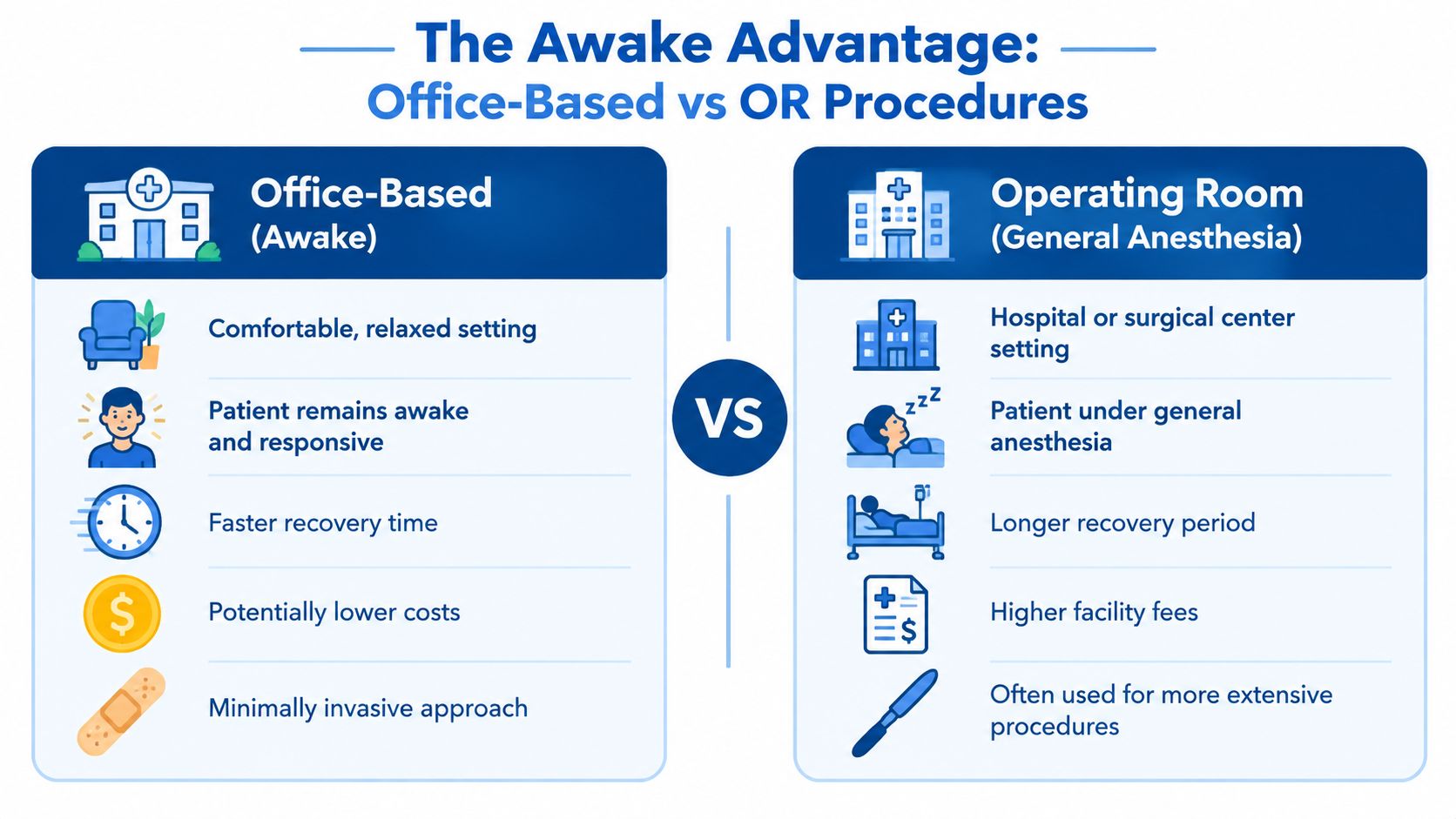
The same liposuction plan can feel very different in an office and an operating room. In an awake, office-based procedure, local tumescent anesthesia numbs the treatment area while you remain alert and responsive. In a hospital or surgical center, general anesthesia leaves you unconscious and adds anesthesia management, airway support, monitoring, and recovery requirements.
For limited contouring, staying awake can simplify the patient experience. You may avoid the nausea and grogginess sometimes associated with general anesthesia, leave the office after treatment instead of waking in a recovery room, and communicate with the surgical team throughout the procedure. That communication is useful, but awake treatment does not replace careful planning. The surgeon still needs to limit the treatment area and match the procedure to the patient's anatomy and health.
What awake surgery does and doesn't mean
Awake surgery should not involve uncontrolled pain. Tumescent fluid places local anesthetic throughout the treatment layer, much like creating a temporary protective buffer around the area being treated. You may still notice pressure, movement, or pulling, because numbness does not erase every sensation. The goal is a comfortable experience without putting you fully to sleep.
“Minimally invasive” describes more than a small incision or a convenient setting. Clinically, it means limiting tissue disruption while maintaining appropriate safety controls. An office is not automatically suitable for every patient or treatment plan. Complication risk can increase with the number of sites treated and the amount of aspirate. Potential problems include lidocaine toxicity, fluid overload, thermal injury, pulmonary embolus, and fat embolus, as outlined in the clinical safety information on liposuction.
What the safety evidence shows
A large safety series of tumescent liposuction under local anesthesia reported no fatal complications and no reported injury to deeper structures, including nerves, blood vessels, muscles, lungs, or abdominal organs. It also recorded rare minor events, including seroma at 0.04% and deep vein thrombosis at 0.01%. Other uncommon events included allergic drug reaction, large hematoma, erysipelas, transient acrocyanosis, skin necrosis, and generalized edema, as reported in the large tumescent liposuction safety series.
These findings are reassuring, not a reason to treat office surgery casually. A properly accredited office, trained personnel, emergency protocols, accurate lidocaine calculations, sterile technique, and suitable postoperative observation all contribute to patient safety.
A useful distinction: Awake treatment can reduce the burden of general anesthesia, while surgeon experience, medical screening, conservative planning, and emergency readiness remain necessary.
Patients who want a fuller explanation of the experience can read this guide to awake surgery. The appropriate setting depends on the procedure's complexity and your health profile, not solely on which option sounds more convenient.
Are You an Ideal Candidate for This Procedure
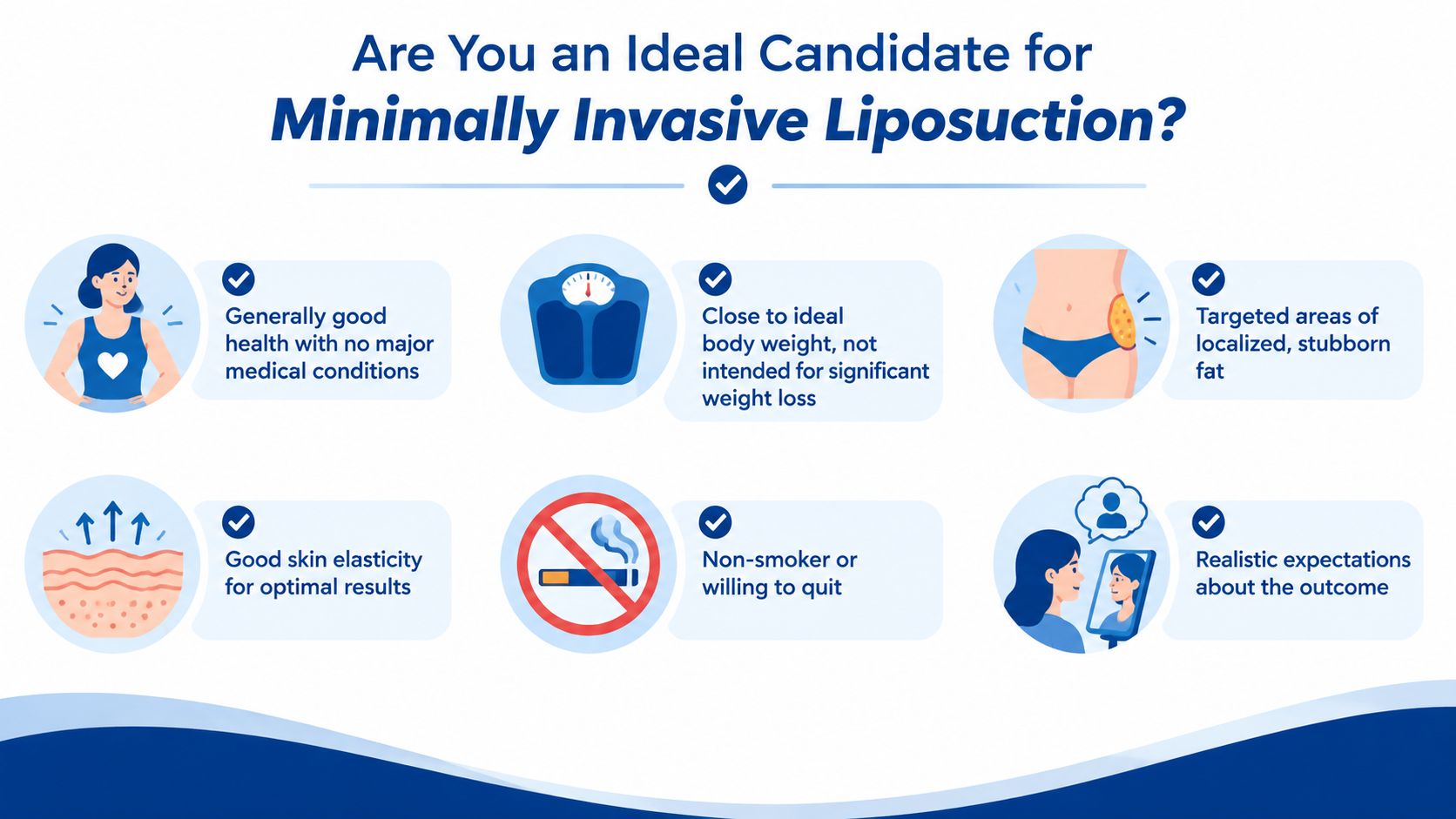
A patient may seek a sharper jawline, less fullness in the upper arms, or a smaller bulge at the back of the neck. Candidacy depends on the anatomy behind that concern, your health, and the result you expect. The strongest candidates usually have a localized fat deposit, stable health, enough skin elasticity, and a clear understanding that contouring changes proportions rather than producing major weight loss.
Start with the problem area
A minimally invasive approach is most useful when the treatment target is clearly defined. Common examples include:
- Submental fullness: Fat beneath the chin can blur the line between the jaw and neck. Removing a limited deposit may improve definition, while marked skin laxity may require another strategy.
- Arms: Localized fullness may respond well when the skin can contract after fat removal. Loose, hanging skin represents a separate anatomical issue.
- Dorsocervical fat pad: A prominent “buffalo hump” may be treated with a focused plan when the fullness is mainly fatty tissue. Literature on this area describes minimally invasive treatment in terms of limited trauma, less bleeding, and faster recovery, as discussed in the dorsocervical fat pad technique literature.
- Small or moderate deposits: Laser-assisted methods may suit a limited treatment area, especially when the plan also considers how the skin may retract.
The word “minimally invasive” describes the access and tissue disruption. It does not mean every patient is suitable for an office procedure, or that the operation has no tradeoffs. A focused area may allow treatment while you are awake, but safe planning still depends on medical screening, precise anesthetic dosing, sterile technique, and a setting prepared to respond if a problem occurs.
Skin quality matters
Skin acts like a fitted covering over the underlying contour. With useful elasticity, it can contract toward the new shape. If it is thin, heavily stretched, or affected by major weight changes, removing fat alone may make looseness more noticeable.
During consultation, the surgeon assesses skin recoil, folds, scars, asymmetry, muscle structure, and the thickness and distribution of fat. These details help determine whether limited liposuction is appropriate, whether another procedure should be considered, or whether treatment should be deferred.
Expectations should be specific
A realistic goal could be a cleaner jawline, a smoother waist transition, or reduced fullness at the back of the neck. Localized liposuction is not a substitute for overall weight management, and it cannot remove every sign of loose skin.
Smoking, medications, healing conditions, and general medical history also affect candidacy. The best candidates are selected because the procedure can remain limited and controlled, not because minimally invasive technology has removed the underlying surgical decisions.
Navigating Your Recovery and Seeing Results
Awake, office-based liposuction often allows basic activities to resume within days, but the treated area will not look finished right away. Swelling, bruising, drainage, temporary numbness, and firmness can hide the emerging contour. Recovery is better understood as a gradual settling process, similar to fabric smoothing after it has been reshaped.
The first days
Many patients return to desk work within 1 to 2 days, wear support garments for 3 days, and begin cautious exercise after 3 to 4 days, according to the clinical review of recovery after tumescent liposuction. Your schedule may change based on the treatment area, the amount treated, your work demands, and your surgeon's instructions.
Walking is generally encouraged immediately. Patients often remain alert without nausea or grogginess after tumescent liposuction. The local anesthetic may last about 24 hours, and exercise may resume in 3 to 7 days, while the contour becomes clearer as swelling decreases, according to this patient guide to tumescent liposuction.
A practical recovery map
- Procedure day: Expect numbness, pressure, swelling, and detailed instructions for walking, wound care, medication, and garment use.
- Early recovery: Keep activity light and follow the garment plan. Temporary numbness may continue for up to 18 hours, as described in the clinical review linked above.
- Return to routine: Desk work and gentle movement may be possible within days. Strenuous activity should wait until your surgeon confirms that healing is adequate.
- Contour refinement: Swelling resolves gradually. Early improvement can be encouraging, but the final sculpted appearance takes time and should not be judged during the first few days.
Contact your surgical team promptly for worsening pain, spreading redness, fever, shortness of breath, unusual swelling, or any symptom that concerns you. Your recovery plan is individualized because the safest timing depends on what was treated and how your body responds.
Patient advice: Judge the trend, not a single morning in the mirror. Early swelling can make a successful contour look uneven before the tissues settle.
A Modern Approach to Personalized Body Contouring
A patient may want a flatter abdomen, smoother back, or a more defined neck, yet the visible concern is not always caused by fat alone. Minimally invasive should describe a clinical philosophy, not only small access points or a device label. The plan must limit unnecessary tissue disruption while matching anesthesia, treatment area, and recovery needs to the individual.
A focused area may require only targeted fat reduction. Another patient may need a broader body-remodeling plan that considers fat distribution, skin retraction, and the transitions between neighboring regions. This approach treats the body like a connected map rather than a collection of isolated spots. Clinical evidence on body-remodeling workflows supports designing treatment around anatomy and patient selection, rather than choosing a device first.
An awake, office-based procedure can also change the experience of care. Local anesthesia allows appropriate patients to remain responsive, avoids the routine effects associated with deeper anesthesia, and places the procedure in a controlled setting without treating every contour concern like major hospital surgery. Safety still depends on candidacy, monitoring, technique, and a clear plan for managing unexpected findings.
For readers considering appearance alongside broader wellness and aging, the Podcast on how to feel younger offers a complementary perspective on confidence and comfort in your body.
Dr. Justin Yovino and Ideal Face & Body in Beverly Hills, CA, provide awake, office-based body contouring under local anesthesia, including targeted laser liposculpting and buffalo hump removal. Consultation clarifies whether the concern involves localized fat, skin laxity, or both, and whether an awake approach is appropriate.
If you are considering liposuction minimally invasive, schedule a consultation with Ideal Face & Body to review the treatment area, skin quality, anesthesia options, and realistic recovery plan.