You've probably searched “how is laser liposuction done” after seeing a tiny-incision treatment described as if it were almost effortless. The practical question is more specific: what happens while you're awake, what goes beneath the skin, whether suction is used, and how the team prevents heat from becoming an injury.
Laser liposuction can mean different procedures. The incision-based version, also called laser-assisted lipolysis, uses tumescent local anesthesia, a thin fiber, and often a narrow suction cannula. External laser fat reduction doesn't break the skin and doesn't suction anything. Understanding that distinction is the foundation for realistic expectations.
Table of Contents
- What Laser Liposuction Actually Is
- Minimally Invasive vs Noninvasive Laser Fat Reduction
- Preparing for an Awake Laser Lipo Procedure
- Inside the Treatment Room
- Recovery and Visible Results Timeline
- Risks, Burns, and Honest Outcome Expectations
- Choosing the Right Practice and Asking Smart Questions
What Laser Liposuction Actually Is
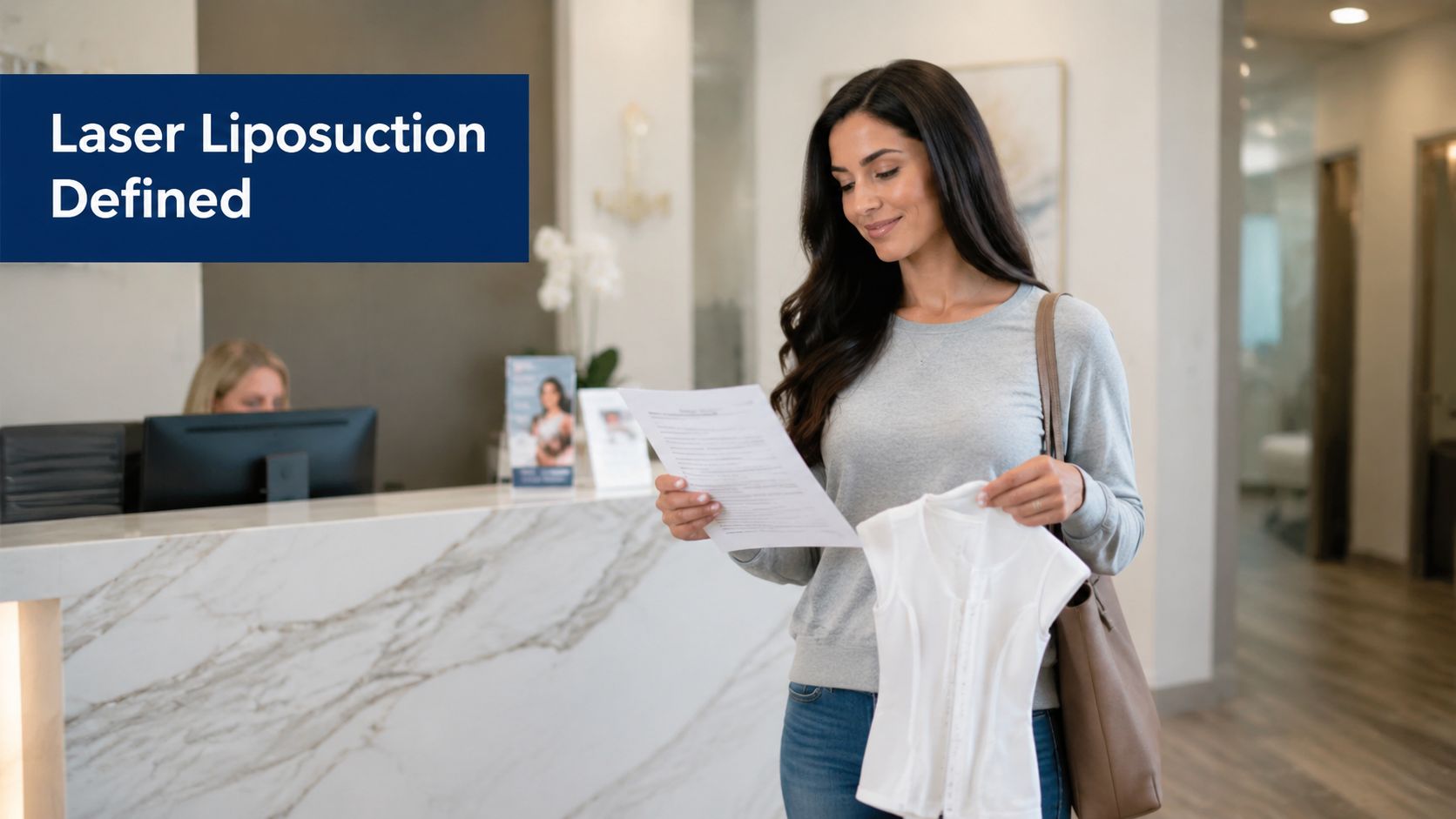
A patient having an awake procedure may arrive at a private office suite with paperwork complete, a compression garment in hand, and the treatment area ready to be numbed. The person is conscious throughout, but the skin and underlying fat are gradually made insensitive before the laser fiber enters.
Laser-assisted lipolysis is a minimally invasive body-contouring procedure. A surgeon places a small optical fiber beneath the skin, where laser energy is converted into heat and disrupts fat cells. The treated fat may then be removed with suction, or in a small zone it may be left for the body to clear. The procedure addresses subcutaneous fat, the layer between the skin and muscle, rather than deep internal fat.
Common treatment areas include:
- Abdomen and flanks, where localized fullness can interrupt the waistline.
- Inner thighs and knees, where small deposits may be difficult to change through exercise.
- Submental chin and neck, where a narrow fiber can provide precise contouring.
- Upper arms and bra-line areas, when skin quality and fat distribution make the patient a suitable candidate.
The wavelength and energy settings are selected according to the tissue and treatment depth. Reviews describe the technology's progression from early experimental work to broader clinical use, including systems using 980 nm, 1064 nm, and 1320 nm wavelengths (review of laser-assisted lipolysis development).
Why suction may or may not be used
The laser doesn't magically remove every fat cell through a small puncture. In many minimally invasive treatments, the fiber liquefies fat and a cannula then aspirates the material. For a small, carefully selected area, a surgeon may use laser energy without formal aspiration and allow the body to process the disrupted fat.
That choice depends on the size of the zone, the desired contour change, the tissue thickness, and the surgeon's technique. A useful overview of equipment and body-contouring applications is Omega Lasers on body contouring, but device descriptions shouldn't replace a consultation about how your own treatment will be performed.
Laser energy also creates heat in surrounding tissue. That heat may encourage collagen remodeling, but skin tightening isn't guaranteed and shouldn't be treated as an automatic feature of every laser procedure. For a plain-language comparison with conventional treatment, see the difference between traditional lipo and laser lipo.
Minimally Invasive vs Noninvasive Laser Fat Reduction
The label laser lipo can describe two very different patient experiences. One involves a puncture, anesthesia, and a fiber beneath the skin. The other uses an external applicator over intact skin, with no incision and no suction.
| Factor | Minimally Invasive Laser Lipo | Noninvasive Laser Fat Reduction |
|---|---|---|
| Skin access | A small puncture allows a fiber or microcannula to enter the fat layer. | The skin remains intact. |
| Anesthesia | Usually tumescent local anesthesia for the treatment zone. | Anesthesia generally isn't needed, although warmth or tingling may occur. |
| Suction | Often used to remove liquefied fat, but it can be technique-dependent in small areas. | Not used. |
| Contouring effect | Can provide more direct and noticeable sculpting in a selected area. | Usually aims for gradual, modest change. |
| Downtime | Expect soreness, drainage, swelling, and garment use during early recovery. | Many patients return to normal activity promptly, but temporary redness or tenderness can occur. |
| Scarring | Small access marks are possible. | No incision means no surgical access scar. |
| Main trade-off | More control and fat removal, with surgical and thermal risks. | Easier recovery, with less direct contour control. |
Minimally invasive treatment is appropriate for someone with a localized deposit who wants a more substantial contour change than an external device can usually provide. It still isn't a weight-loss procedure, and poor skin elasticity can limit the visual result even when fat is removed effectively.
Noninvasive treatment may suit someone who prioritizes avoiding incisions and recovery. The trade-off is that the clinician can't physically sculpt the fat layer with a cannula, and treatment may be staged rather than completed in one operative session. Your candidacy also depends on health, fat distribution, skin laxity, and expectations, not only on the name of the device.
The key question: Ask whether the planned procedure places a fiber under your skin. If it does, clarify whether the surgeon will suction the liquefied fat or leave the treated area to clear it naturally.
Preparing for an Awake Laser Lipo Procedure
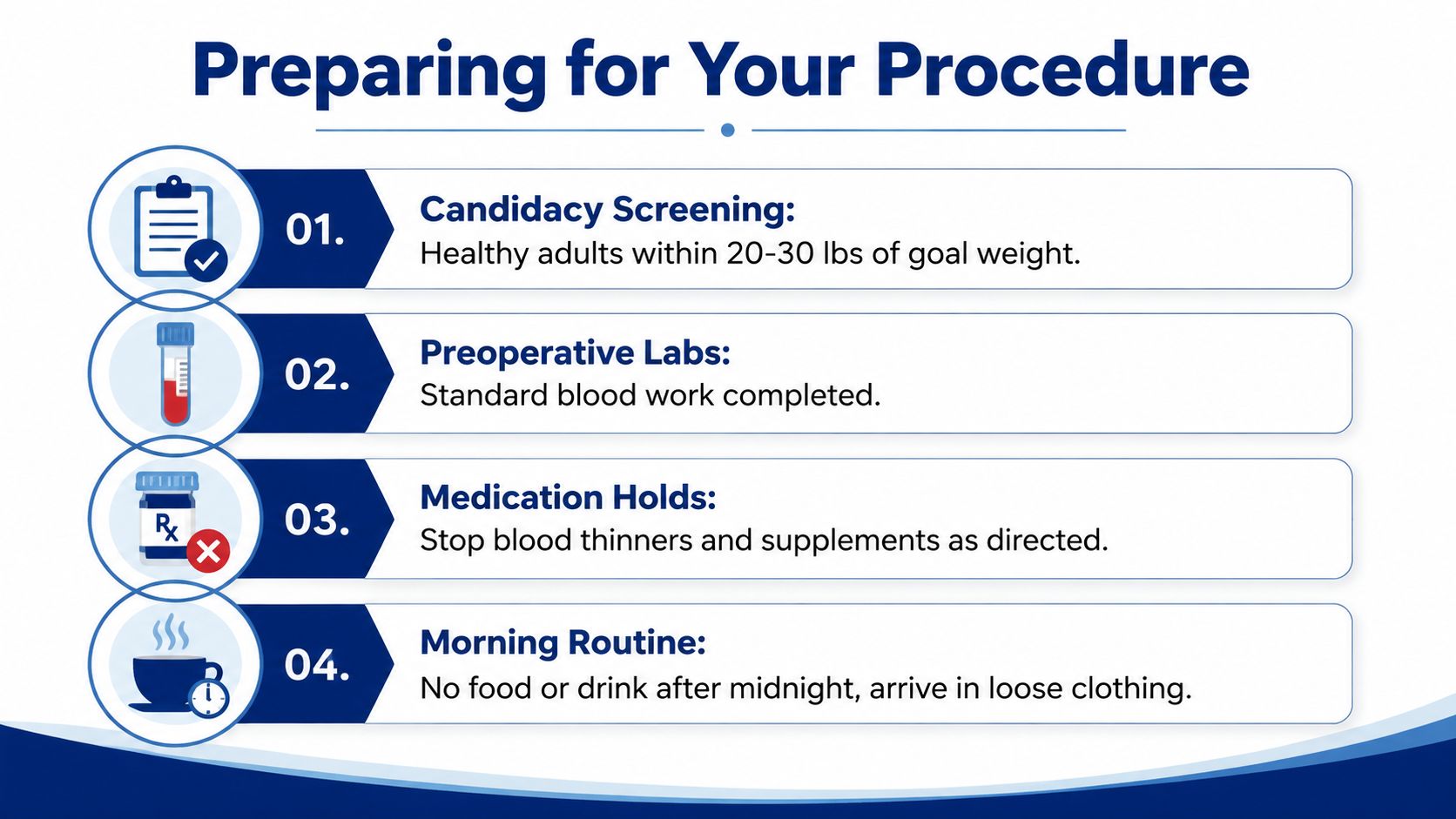
A safe awake procedure starts before the treatment day. During consultation, the surgeon evaluates your medical history, medications, fat distribution, skin tone, and goals. A suitable patient is generally a healthy adult near their goal weight, with a localized deposit and enough skin quality to contract after contouring.
The plan may change, or treatment may be deferred, when a patient has uncontrolled diabetes, a bleeding disorder, pregnancy, an active infection, or another condition that could make elective body contouring unsafe. Laser lipo won't correct generalized weight gain or severe loose skin. Candidacy is more important than the marketing name attached to the laser.
What happens before you arrive
Your practice may request standard laboratory testing and written clearance when your history calls for it. You'll need to disclose prescription medicines, over-the-counter pain relievers, vitamins, herbal products, nicotine use, and allergies. Blood thinners and supplements may need to be held, but only according to the surgeon's specific instructions.
The morning routine is deliberately simple. Wear loose clothing that won't rub the access sites, follow the fasting instructions you've been given, and arrange transportation if medication for anxiety is planned. Some offices offer an oral anxiolytic or inhaled analgesia, but awake doesn't mean unsupported. The team should monitor you, answer questions, and stop if your comfort or safety requires a change.
How tumescent anesthesia feels
Tumescent anesthesia combines diluted lidocaine and epinephrine in saline. The clinician places the solution into the subcutaneous tissue until the area becomes swollen and firm. Published descriptions note that laser-assisted liposuction can be performed with tumescent local anesthesia without general anesthesia or sedation (clinical series using local tumescent anesthesia).
You'll feel pressure, cool fluid, and sometimes a brief sting during infiltration. As the solution spreads, tingling gives way to numbness. The treated tissue may feel tight or unusually firm, but sharp pain should be addressed rather than accepted as normal.
The anesthetic dose is calculated carefully. A review estimates a maximum safe lidocaine dose with epinephrine for liposuction at about 35 to 55 mg per kilogram, and reports that serum lidocaine levels can peak 12 to 16 hours after infiltration (review of tumescent anesthesia safety). That's why medical history, dosing records, and postoperative instructions matter even when you're not having general anesthesia. More detail about the awake approach is available through awake liposuction at Ideal Face & Body.
Inside the Treatment Room
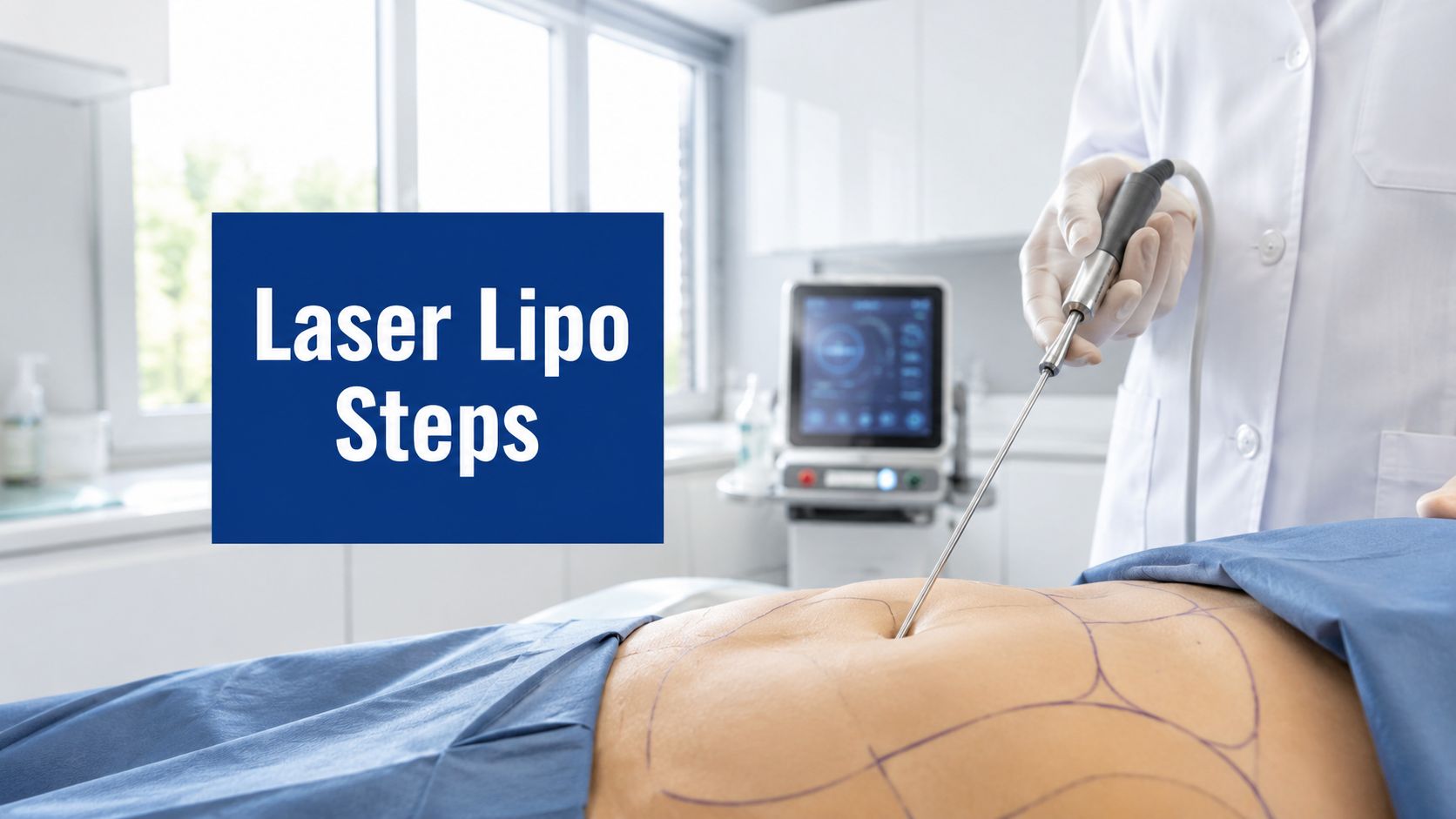
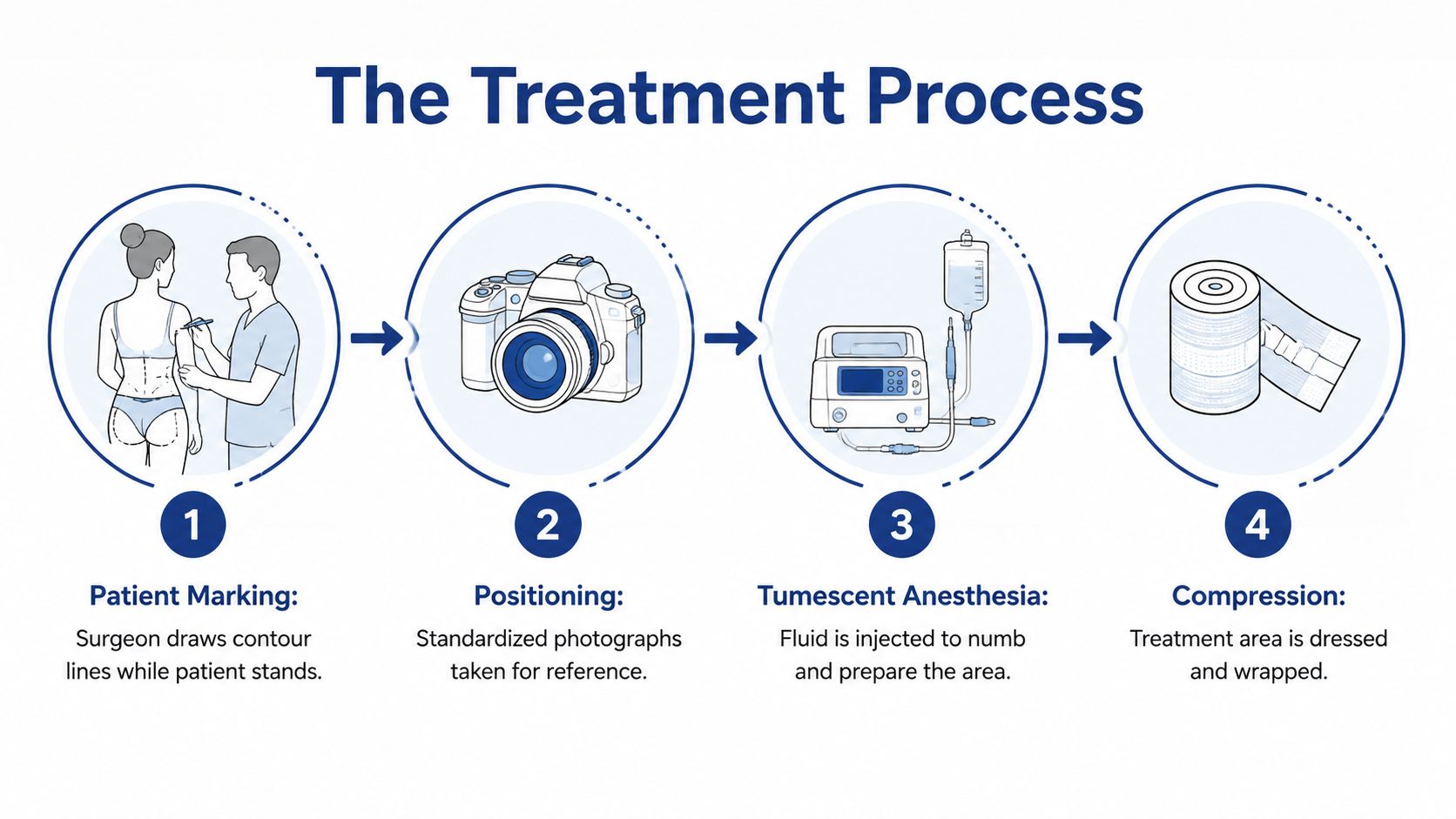
The procedure begins while you're standing. The surgeon marks the body from multiple angles, drawing contour boundaries, transition zones, and areas where a cannula should not overwork the tissue. Standardized photographs document those markings and provide a reference for later review.
You then lie on the treatment bed. The skin is cleaned, sterile drapes frame the access points, and protective eyewear is used for everyone exposed to the laser. The access points are small, often placed in a natural crease or an inconspicuous location when anatomy allows.
Creating the working plane
A tumescent cannula delivers the anesthetic solution into the fat layer. The tissue becomes swollen, firm, and pale as the solution spreads. This firmness gives the surgeon a consistent plane in which to work and helps separate the treatment from the skin surface.
A microcannula or optical fiber then enters through the puncture. In a standard workflow, the fiber tip extends only a short distance beyond the cannula, and the surgeon moves it slowly in controlled, back-and-forth fanning passes. The deeper fat is treated before the more superficial layer, which helps the surgeon build a smoother transition instead of concentrating heat in one spot. A technical review describes this fiber arrangement and movement pattern in detail (current practices in laser lipolysis).
Delivering energy and deciding on suction
The surgeon uses a fanning or cross-hatched pattern rather than holding the fiber still. Laser energy is absorbed by tissue and converted into heat, which disrupts adipocytes and coagulates small blood vessels. That mechanism is one reason clinical reviews describe low blood loss and low morbidity in selected cases (review of laser lipolysis mechanisms).
Heat control is active, not assumed. The surgeon monitors the skin surface, often with an infrared thermometer, while adjusting energy delivery, movement speed, and treatment depth. If the tissue feels or measures too warm, the surgeon pauses, changes the pattern, or stops treating that area.
Some zones need aspiration because the goal is immediate physical removal of liquefied fat. In other small areas, the surgeon may decide that additional suction would add unnecessary trauma and allow the body to clear the treated material. That decision should be explained before treatment, not presented as an unexpected change during the procedure.
At the end, the access sites may be left open for controlled drainage or closed with a small suture. Absorbent pads and a compression garment go on before you stand. The team checks your comfort, walking ability, and dressings before discharge.
Recovery and Visible Results Timeline
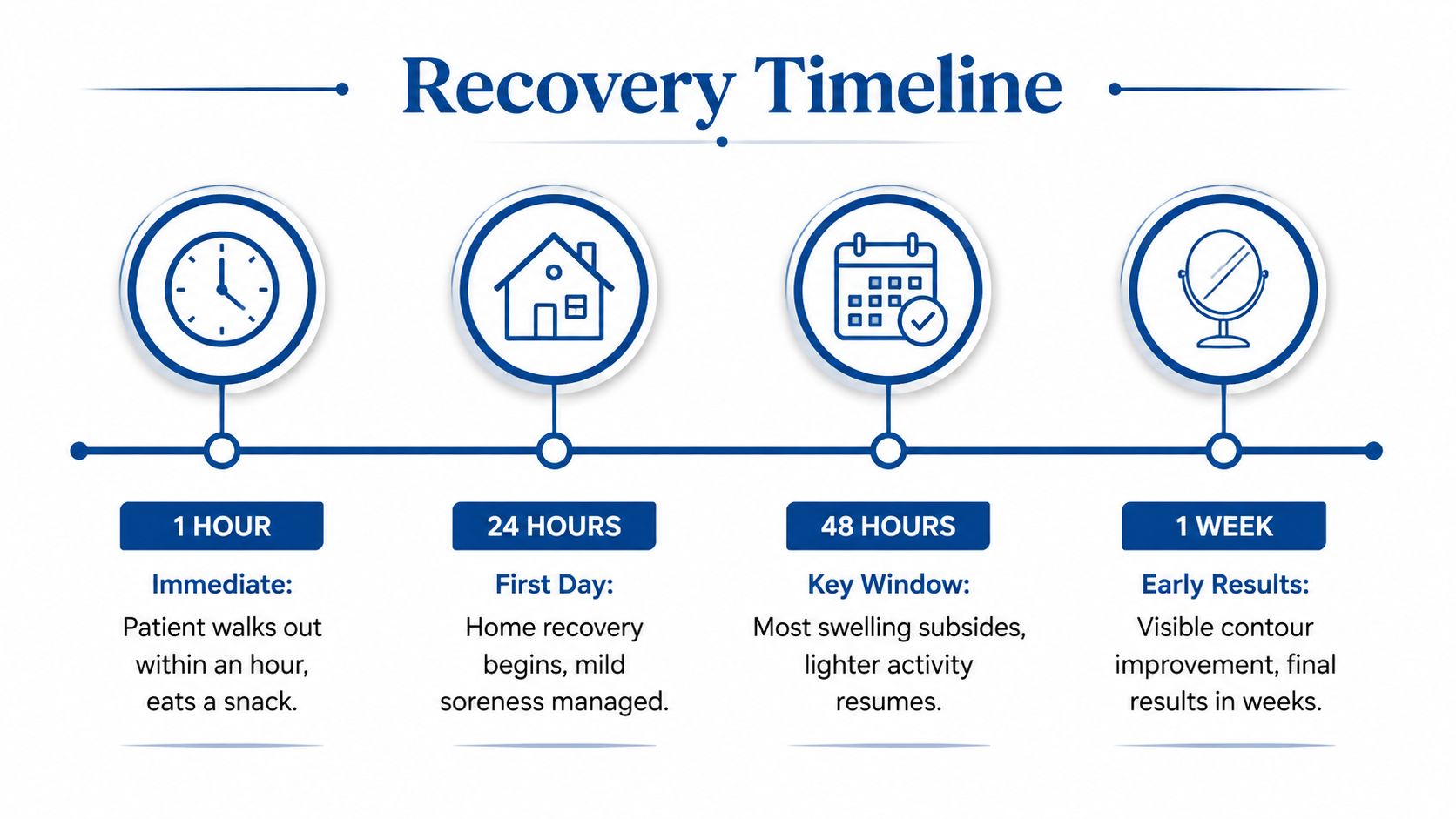
Awake treatment changes the first part of recovery because you haven't had general anesthesia. After observation, many appropriately selected patients can walk out within about one hour, eat a light snack, and leave with a driver while wearing compression over absorbent pads. The absence of a general anesthetic doesn't eliminate recovery. You've still had tissue treatment and may have fluid draining from the access sites.
Drainage is expected during the early period, often for 24 to 48 hours. It can look alarming on the garment, but your practice should explain what is normal, how to change dressings, and which appearance or odor requires a call. Keep the sites clean and follow the written instructions rather than improvising wound care.
The first days
Discomfort usually feels deeper than a surface cut. Patients often describe muscle-like soreness, tightness, bruising, or tenderness when moving from sitting to standing. Walking helps circulation and mobility, while prescribed or approved anti-inflammatory medication may make the discomfort easier to manage.
Swelling can be more noticeable around 48 hours, then may plateau through the early healing period before gradually receding. Some practices introduce gentle lymphatic massage around the third day, but the timing must be individualized, particularly if drainage or tenderness remains significant.
Compression and contour changes
Compression supports the healing tissue and helps manage swelling. A typical plan may involve full-time garment use for one to two weeks, followed by part-time wear for another two weeks, although the surgeon may modify that schedule according to the area treated and your examination.
Early mirror changes aren't final results. Contour improvement often becomes easier to judge around four to six weeks, as edema settles. Skin texture and any potential tightening effect should be assessed later, commonly around three to six months, when collagen remodeling and tissue maturation have had time to develop.
For more detail on activity, garments, drainage, and follow-up, review recovery time from liposuction.
Risks, Burns, and Honest Outcome Expectations
Laser doesn't automatically tighten skin, and it hasn't been proven broadly superior to conventional liposuction. The evidence base includes varied techniques, wavelengths, treatment areas, and study designs. A recent systematic review of 88 studies found burns, seromas, hematomas, infections, and scars among the common complications, while serious events remained rare at less than 0.1% (systematic review of liposuction-assisted technologies).
Thermal injury deserves particular attention. Too much energy, a fiber held too close to the skin, slow movement, or inadequate temperature monitoring can produce burns and blisters. Older prospective data involving 537 cases reported five local complications, including one infection and four burns, for a 0.93% complication rate, along with a 3.5% touch-up rate (published clinical series and complication data). Another series involving 1,000 cases reported no major complications and no mortalities, but a favorable series doesn't make heat management optional.
| Risk Category | Traditional Tumescent Lipo | Laser-Assisted Lipo |
|---|---|---|
| Thermal injury | Not created by laser heat, though other surgical injuries remain possible. | Specific concern because energy is converted into heat. |
| Seroma or hematoma | Possible after tissue disruption and fat removal. | Also possible, even when bleeding appears limited. |
| Infection | Possible wherever skin is punctured. | Possible at fiber and cannula access sites. |
| Contour irregularity | Can occur if fat removal is uneven. | Can occur if energy delivery or suction is uneven. |
| Skin tightening | Not a guaranteed feature. | May occur through thermal remodeling, but results vary and evidence isn't conclusive. |
| Numbness or altered sensation | Possible during healing. | Possible in treated zones as nerves recover. |
Ask directly: What energy settings do you use, how do you monitor skin temperature, and what is your plan if a burn or fluid collection develops?
Your candidacy may matter more than the technology label. Loose skin, unrealistic expectations, untreated medical conditions, and a desire for major weight reduction can all produce disappointment. The most honest consultation explains what laser may add, what suction accomplishes, and what neither technique can guarantee.
Choosing the Right Practice and Asking Smart Questions
A careful consultation should feel like a medical evaluation, not a sales appointment. Verify the surgeon's board certification, confirm who will perform the procedure, and ask whether the treatment is carried out under tumescent local anesthesia or requires a different anesthetic plan. You should also know whether the practice is equipped for emergencies and whether the facility meets appropriate accreditation standards.
Bring a written question list:
- Technique: Which laser wavelength and energy settings are planned for my treatment area?
- Suction: Will the liquefied fat be aspirated, left to clear naturally, or handled differently by zone?
- Heat control: How do you monitor skin temperature and reduce the chance of a thermal injury?
- Complications: What complications have you seen, and how are burns, seromas, infections, asymmetry, or contour irregularities managed?
- Aftercare: What garment will I wear, how will drainage be handled, and when will you examine me?
- Follow-up: Is a visit scheduled within 24 to 48 hours after treatment?
- Results: Can I see before-and-after photographs of patients with similar anatomy and skin quality?
- Corrections: If a touch-up or revision is medically appropriate, how does the practice handle that process?
Warning signs include a consultation focused only on price, no meaningful preoperative assessment, dismissal of your medical history, vague answers about energy delivery, and no clear compression or emergency plan. A reputable practice should provide written aftercare instructions and tell you which symptoms require immediate contact.
Ideal Face & Body offers PRECISION SCULPT awake laser liposuction and other office-based body-contouring procedures under local anesthesia, with candidacy and technique determined during consultation. The practice also states that it no longer offers breast implant placement, implant-based breast augmentation, or breast implant revision procedures.
If you're considering awake laser liposuction, visit Ideal Face & Body to request a consultation focused on your treatment area, anesthesia plan, suction options, and recovery expectations. Bring your questions about heat monitoring and follow-up so the discussion can address the physical details of the procedure, not just the marketing description.