You've probably had the same thought in front of a mirror or while buckling your jeans, the waist looks close to where you want it, but the soft pockets over the hips still sit there no matter how disciplined you've been. That frustration is real. Love handle removal only makes sense when you first understand what kind of fullness you're dealing with, because flank fat, deeper abdominal fat, and loose skin all call for different solutions.
The fastest way to get clearer is to stop asking, “How do I burn this off?” and start asking, “What am I looking at?” If the tissue is pinchable and localized, contouring may help. If the fullness is broader and deeper, the smarter path may be whole-body fat loss, a procedure, or both. The sections below walk through that decision in order, from anatomy to non-surgical options to liposuction and awake laser lipo, so you can see where your own body fits.
Table of Contents
- Why Love Handle Removal Is Worth Thinking About Carefully
- What Love Handles Actually Are and Why They Stick Around
- Non-Surgical Options for Smaller Fat Pockets
- Surgical Contouring and Awake Laser Liposuction
- What the Procedure Day and First Weeks Actually Look Like
- Comparing Non-Surgical and Surgical Approaches Side by Side
- Candidacy, Risks, and How to Choose a Qualified Practice
- Bringing This to Your Consultation at Ideal Face & Body
Why Love Handle Removal Is Worth Thinking About Carefully
You tighten your belt one notch, the shirt fits better, and yet the same pockets still sit over the hips. That pattern is common, and it's one reason people get discouraged. The issue isn't always a lack of effort, it's often that flank fat behaves differently from the rest of the body.
Start With the Right Question
The first question isn't whether you should “do something.” It's whether the fullness is mostly subcutaneous fat, something you can pinch, or whether it reflects deeper abdominal fullness that won't respond to contouring in the same way. That distinction matters because liposuction is the gold standard for targeted pocket-fat reduction, while milder, pinchable deposits are often where non-surgical options fit best. Credible patient guidance also frames the choice around this exact split, contouring for smaller deposits, surgery for more dramatic single-session change, as summarized in the skinrio review of love handle removal options and the practical guidance on why body composition matters.
Practical rule: If you can clearly pinch the pocket and your weight is already fairly stable, you're looking at a contouring problem more than a weight-loss problem.
That's why I encourage patients to think in steps. First, confirm what tissue you're trying to change. Second, decide whether lifestyle work is still the right foundation. Third, choose between non-surgical shaping and a surgical contouring procedure if the pocket is stubborn enough to justify it. That framework keeps people from chasing a treatment that can't match the actual anatomy in front of them.
What Love Handles Actually Are and Why They Stick Around
Love handles are the subcutaneous fat that sits over the flanks, the layer you can usually pinch between your fingers. That's different from visceral fat, which lies deeper in the abdomen and is tied to broader metabolic risk. The two can coexist, but they don't behave the same way, and they're not treated the same way. Liposuction can refine the outline of localized flank fat, but it does not address deeper central fat or general health risk.
Why Some Waistlines Resist Change
People often blame themselves for not doing enough oblique work or for “failing” at core exercises. That's not how this works. Spot reduction isn't possible, so side planks, Russian twists, bicycle crunches, and woodchoppers can strengthen the muscles underneath the fat, but they won't selectively burn the layer above them. The most reliable non-procedural levers are overall fat loss, sleep, activity, and stress management, and the NASM guidance on love handles emphasizes sustained 300 to 500 kcal/day deficit, 1.2 to 1.6 g/kg/day protein, and 150 to 300 minutes/week of cardio as the broad framework for reducing body fat while preserving lean mass.
Hormones, genetics, and stress also shape where the body stores fat, which is why one person's waist leans out while another person's flanks stay stubborn. That's not a character flaw. It's biology.
A Simple At-Home Self-Check
Use a mirror, then use your hands. If the tissue along the side of the waist feels thick, soft, and easy to pinch, it's more likely to be the kind of flank fat that contouring can improve. If the area feels deeper, broader, or more like a central belly issue than a side pocket, the solution may be more about whole-body fat loss than a procedure.
If the waist looks fuller from the front and the sides, don't assume the flanks are the only issue. That's when a consultation should separate local contouring from broader abdominal management.
That distinction is the whole foundation for choosing the right treatment.
Non-Surgical Options for Smaller Fat Pockets
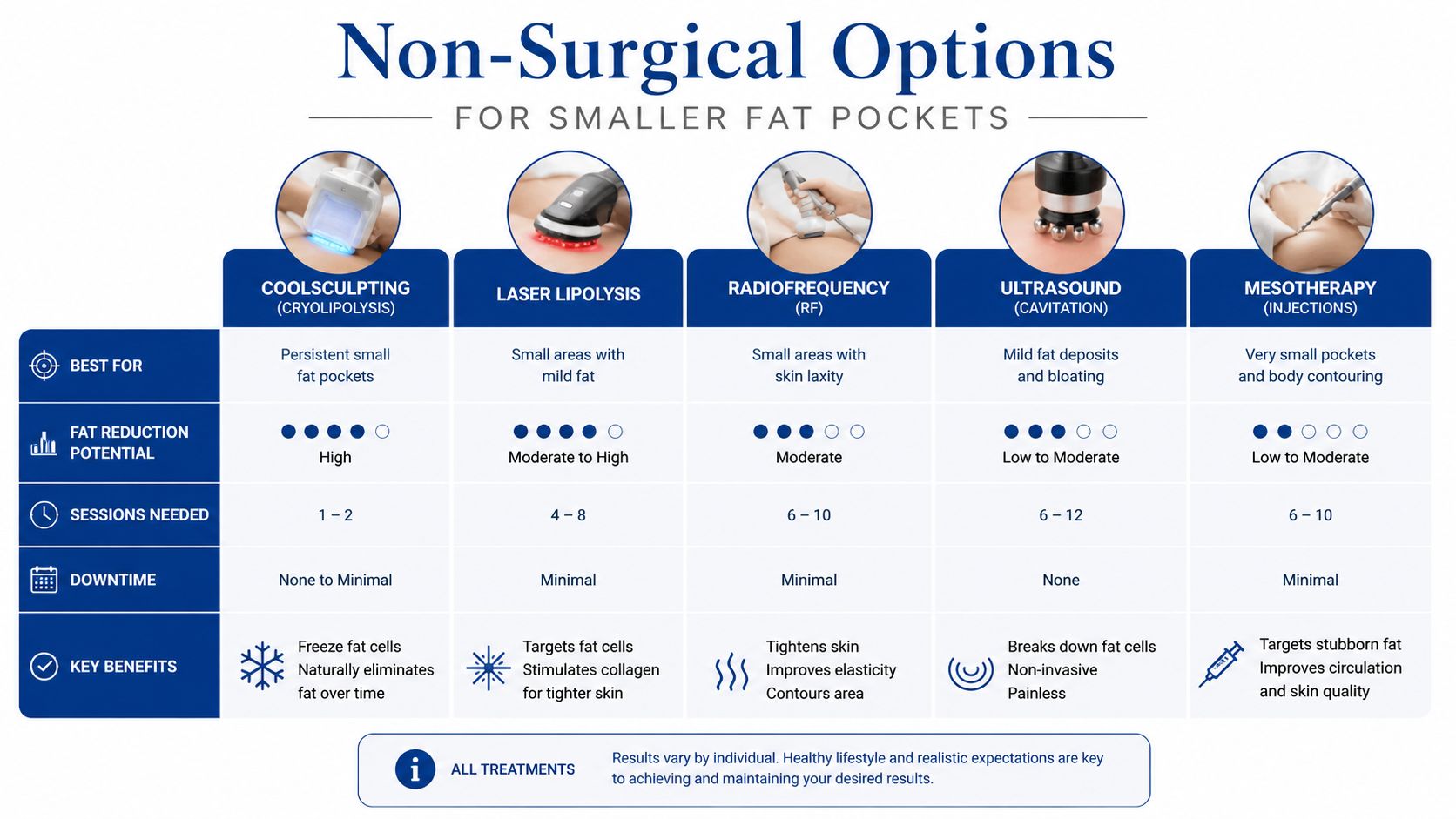
Non-surgical treatment makes the most sense when the pocket is small, well-defined, and pinchable. That's because these devices are designed for gradual contour refinement, not dramatic debulking. Patients usually come in hoping for a waistline change without downtime, then learn that the price of convenience is a more modest result.
What the Main Non-Surgical Paths Can Do
Cryolipolysis is the best-known option in this category. In the verified data, it's described as producing about 20% fat reduction per session in the treated area, with final results typically visible at around three months. That's why it's often discussed for people who are near their goal weight and want staged improvement rather than a one-time change. The practical tradeoff is simple, less disruption, less immediate change.
Radiofrequency-based treatments take a different route. They use thermal energy and are often chosen when mild laxity is part of the picture, because the skin response can matter as much as the fat response. Ultrasound and HIFEM-style devices also fit into the broader non-surgical conversation, but the key idea stays the same, these are contouring tools, not substitutes for a meaningful weight-loss plan.
If you're comparing options and want a practical overview of how office-based fat reduction is framed, this internal resource on non-invasive fat reduction is a useful place to start.
What Reputable Consultations Screen For
A good consultation doesn't focus only on how thick the fat is. It also looks at skin laxity, because skin that has lost snap may not retract the way a patient expects after fat reduction. That's where people get disappointed if they choose a non-surgical path for a problem that needs tightening or removal.
For readers who want to look into injectable fat reduction, a separate overview on learn about fat dissolving can help clarify how that category is usually presented. Just keep the main principle in mind, if the concern is a larger flank pocket, non-surgical treatment may underdeliver.
Surgical Contouring and Awake Laser Liposuction
A patient can have good habits, stable weight, and still be left with a stubborn flank pocket that does not respond the way they expect. In that setting, liposuction remains the gold standard for love handle removal because it removes a larger volume of fat in one session and gives the surgeon direct control over the waistline and flank transitions. For the right candidate, that precision matters more than trying to coax a small change from tissue that is already resistant. For a closer look at why many patients and practices treat this approach as the smart choice for laser liposuction, the decision usually comes down to anatomy, not hype.
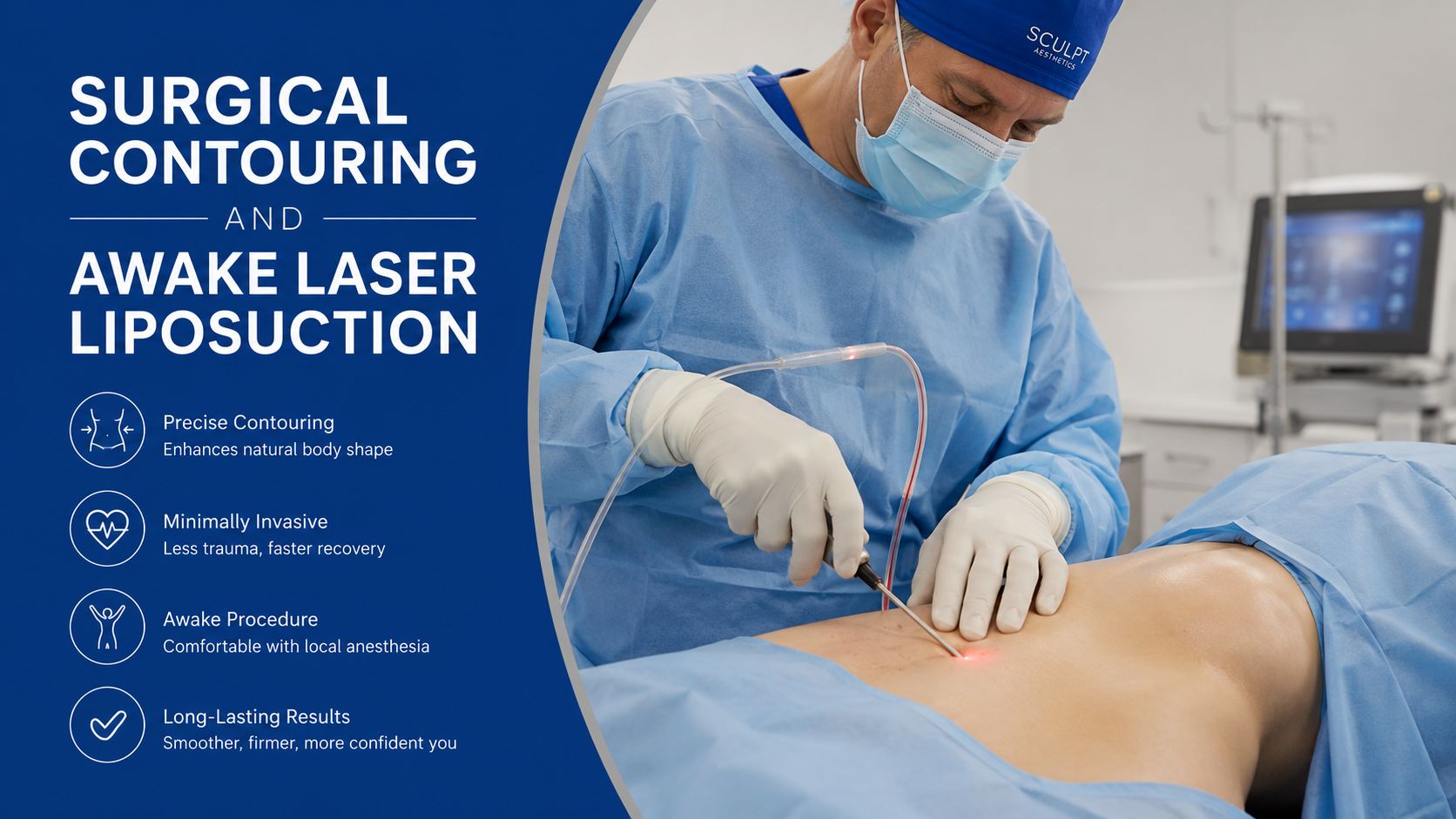
Awake laser liposuction keeps the procedure in an office-based setting and uses local anesthesia rather than a fully anesthetized hospital-style experience. The patient stays awake, comfortable, and able to change position when needed, which helps the surgeon refine the contour from different angles. That kind of feedback can be useful around the flanks, where the goal is not just to remove fat, but to keep the waist smooth as it tapers into the back.
Energy-based liposuction adds another layer of control. It can support skin tightening and help the surgeon shape the transition more cleanly, which matters when the flank needs to look soft and natural instead of scooped out. In Beverly Hills, CA, this is often discussed with patients who want a more refined waistline without the anesthesia profile of a larger operation.
One example is the office-based PRECISION SCULPT laser liposculpting used by Ideal Face & Body, paired with Awake 360 Body Sculpting for selected patients. For surgeons and clinics choosing equipment, the capital decision for your clinic often includes questions about energy delivery, contour precision, and how the workflow fits an awake setting.
Why the Surgical Path Isn't One-Size-Fits-All
The right plan depends on the tissue in front of the surgeon. A pocket of thicker fat with decent skin tone may respond well to awake laser lipo, while a smaller area may not need that much intervention. Loose skin changes the equation again, because fat removal alone cannot make tissue retract in a way it is no longer able to do.
That is why consultation should separate anatomy from aspiration. Some patients do well with awake laser lipo, some need plain liposuction, and some need a different procedure entirely. The correct choice comes from the shape and quality of the tissue, not from the device name or the marketing around it.
What the Procedure Day and First Weeks Actually Look Like
A typical awake flank procedure starts long before the first incision. The consult includes a physical exam, photographs, and careful marking while the patient is standing, because waist shape changes when you lie down. That standing map matters. It shows where the surgeon wants more smoothness, where the transition should be feathered, and where leaving a little fullness protects a natural curve.
During the Procedure
Once the area is prepped, tumescent local anesthesia is used to numb the tissue and make the fat easier to remove. Patients usually feel pressure, movement, and vibration more than sharp pain. Sedation may be offered in some practices, but the core awake approach is that the patient stays comfortable without general anesthesia. The actual contouring can be surprisingly calm for people who expected a much more dramatic hospital-style experience.
What surprises most patients: the emotional part is often bigger than the physical part. Once the area is numb, the procedure is usually more about pressure and awareness than pain.
Afterward, patients leave the office the same day with instructions for compression, walking, and wound care. Bruising and swelling are expected, and the early shape often looks fuller than the final result because fluid and inflammation temporarily blur the contour.
Recovery in Real Life
For surgical liposuction, verified guidance places recovery at 1 to 2 weeks for the initial phase, with strenuous activity often avoided for 4 to 6 weeks. Final contour is usually not obvious right away. The waist tightens gradually as swelling settles, and the full change can take time to declare itself. The internal guide on recovery time from liposuction is useful if you want a more detailed sense of the pacing.
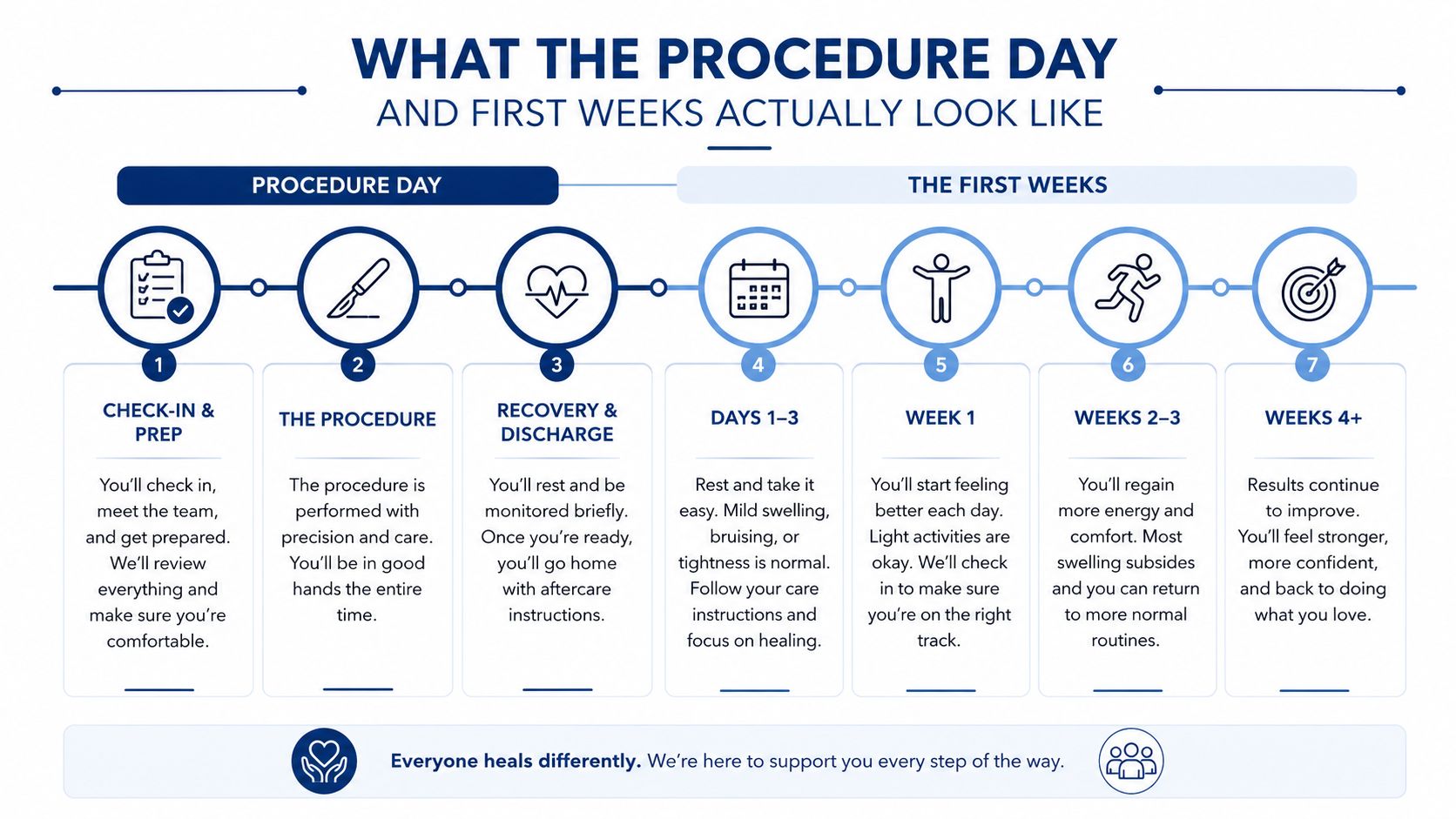
A small surprise for many patients is that soreness often feels more like a deep muscle ache than sharp pain. Another is that swelling can be uneven side to side before it evens out. Patience matters here, because the final silhouette doesn't show up all at once.
Comparing Non-Surgical and Surgical Approaches Side by Side
The choice comes down to what you're trying to solve. If the pocket is small and you want minimal interruption to life, non-surgical treatment can be reasonable. If the pocket is larger or you want a one-time, more visible change, surgery usually makes more sense.
| Factor | Non-Surgical Fat Reduction | Surgical Liposuction |
|---|---|---|
| Best for | Mild to moderate, pinchable fat | More noticeable flank fat and contour reshaping |
| Expected change | Gradual, modest refinement | Larger single-session contour change |
| Sessions | Often multiple treatments | Usually one procedure |
| Downtime | Little to none | Real recovery, especially in the first 1 to 2 weeks |
| Longevity | Permanent on treated fat cells, if weight stays stable | Permanent on removed fat cells, if weight stays stable |
| Skin consideration | Works best when skin elasticity is good | Can be paired with skin-focused planning when needed |
The table makes one thing obvious. Convenience and magnitude of change rarely live in the same lane. Non-surgical care is attractive because it's easy to fit into life. Surgical care is attractive because it does more in one sitting.
A patient who wants subtle refinement and no time off may be happy with a staged plan. A patient who wants the waist reshaped in one procedure usually won't be satisfied with a device plan.
A good decision comes from three questions. How much change is enough. How much downtime can you accept. Is this a single stubborn pocket, or is the waist shape more of a broader contour issue?
Candidacy, Risks, and How to Choose a Qualified Practice
Strong candidates for awake flank contouring are usually adults near a stable goal weight, with good skin elasticity and localized pinchable fat. People whose abdominal fullness is driven mainly by visceral fat are usually better served by a different plan, because contouring won't solve the deeper issue. That's where honest screening matters more than enthusiasm.
The risk profile is real but usually manageable. The main concerns are contour irregularities, asymmetry, fluid collections, and skin laxity in poor candidates. Serious complications are uncommon when the procedure is done by an experienced, qualified surgeon, but they're not zero. That's why the consultation should feel more like a diagnostic visit than a sales meeting.
Choose a practice that can show its own before-and-after gallery, explain the anesthesia plan clearly, and perform awake procedures in an accredited office setting. Credentials matter, but so does the actual conversation. If the plan is vague, rushed, or built around the same answer for every body, that's a warning sign.
Good informed consent should answer this plainly: what will change, what might not change, what recovery really looks like, and what the revision path is if the result doesn't match the plan.
The cheapest option is rarely the safest one in body contouring. The right surgeon is the one who understands when to remove fat, when to leave it alone, and when the better answer is not liposuction at all.
Bringing This to Your Consultation at Ideal Face & Body
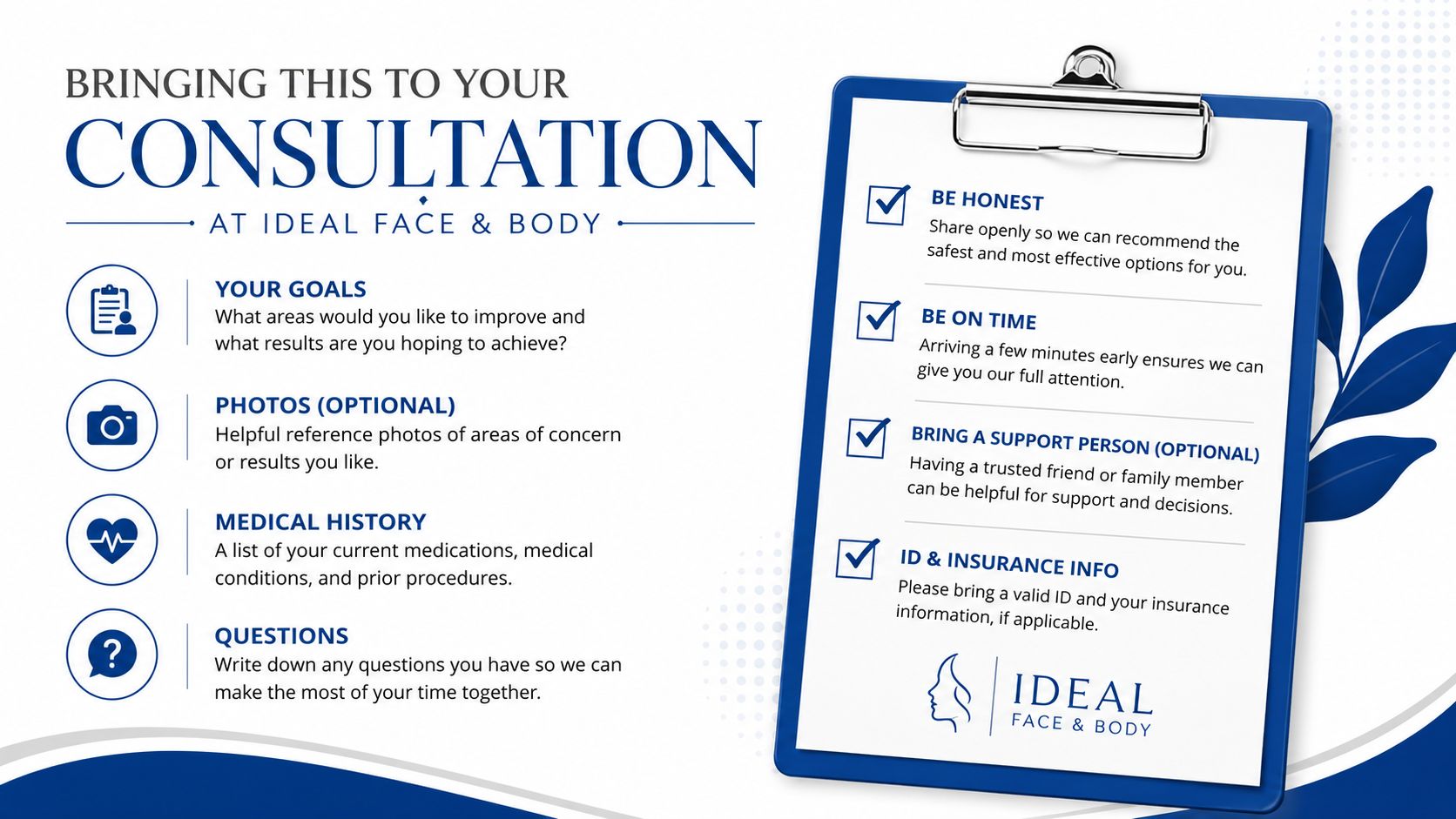
If you're near Beverly Hills, CA, and trying to decide whether your waistline is a non-surgical case, an awake contouring case, or a “lose a little more overall fat first” case, a consultation can answer that quickly. Ideal Face & Body is a Beverly Hills practice led by Dr. Justin Yovino and Dr. Sarah Yovino, and its office-based approach centers on awake procedures under local anesthesia, including PRECISION SCULPT laser liposculpting and Awake 360 Body Sculpting for selected body contouring patients. The practice serves patients from Beverly Hills and the surrounding Los Angeles area, with virtual and out-of-town consultations available.
Bring a simple question list. Ask whether your flanks are pinchable fat, whether skin laxity changes the plan, and whether awake contouring fits your goals better than a staged non-surgical route. A good consult should leave you with a realistic answer, not a canned recommendation.
If you want a straightforward evaluation of your options, visit Ideal Face & Body and book a consultation to find out whether your flanks are a good fit for awake contouring or whether another path makes more sense for your body.