Most advice about male plastic surgery before after photos starts in the wrong place. People are told to look for the most dramatic transformation, but in men, the most persuasive gallery isn't always the most trustworthy one. Subtle contouring in the jawline, chest, neck, and abdomen can look brilliant in one frame and ordinary in another, depending on how the image was made, not just how the surgery went.
That's why the question isn't, “Which result looks biggest?” It's, “Which result is photographed consistently enough to tell me what the surgeon achieved?” Men are often researching procedures that change shape in quiet ways, and the gallery has to prove the change without using tricks that exaggerate it.
Table of Contents
- Why Polished Gallery Photos Can Be Misleading
- How to Evaluate Before and After Photos Critically
- Common Male Procedures and Realistic Outcomes
- Recovery Timelines and When Results Become Visible
- Awake Surgery Versus Traditional Anesthesia Approaches
- Candidacy, Risks, and Insurance Considerations
Why Polished Gallery Photos Can Be Misleading
A polished gallery can be impressive and still be unhelpful. In male plastic surgery before after comparisons, the biggest problem is that a dramatic-looking change can come from lighting, posture, hair, or editing rather than from the operation itself. That risk is especially high in men, because the most common visual goals are often small but meaningful, like sharpening a jawline or flattening a chest.
The national trend data show why these galleries exist in the first place. Male procedures have grown over time, with ASPS-based reporting showing 28% growth since 2000, more than 1.3 million cosmetic surgeries in men by 2017, and a later peer-reviewed analysis summarizing ASPS trend data reporting a rise of about 55% from 1997 to 2018. That same analysis also found large volumes in 2020, with 289,360 aesthetic surgical procedures and 820,123 aesthetic nonsurgical procedures in men, alongside rising interest in facial refinement and body contouring such as jawline filler, Botox, microneedling, and CoolSculpting. The takeaway is simple, men are now looking for visible change across a wider range of procedures, which makes honest photography more important than ever. ASPS male procedure trend reporting
The polish problem
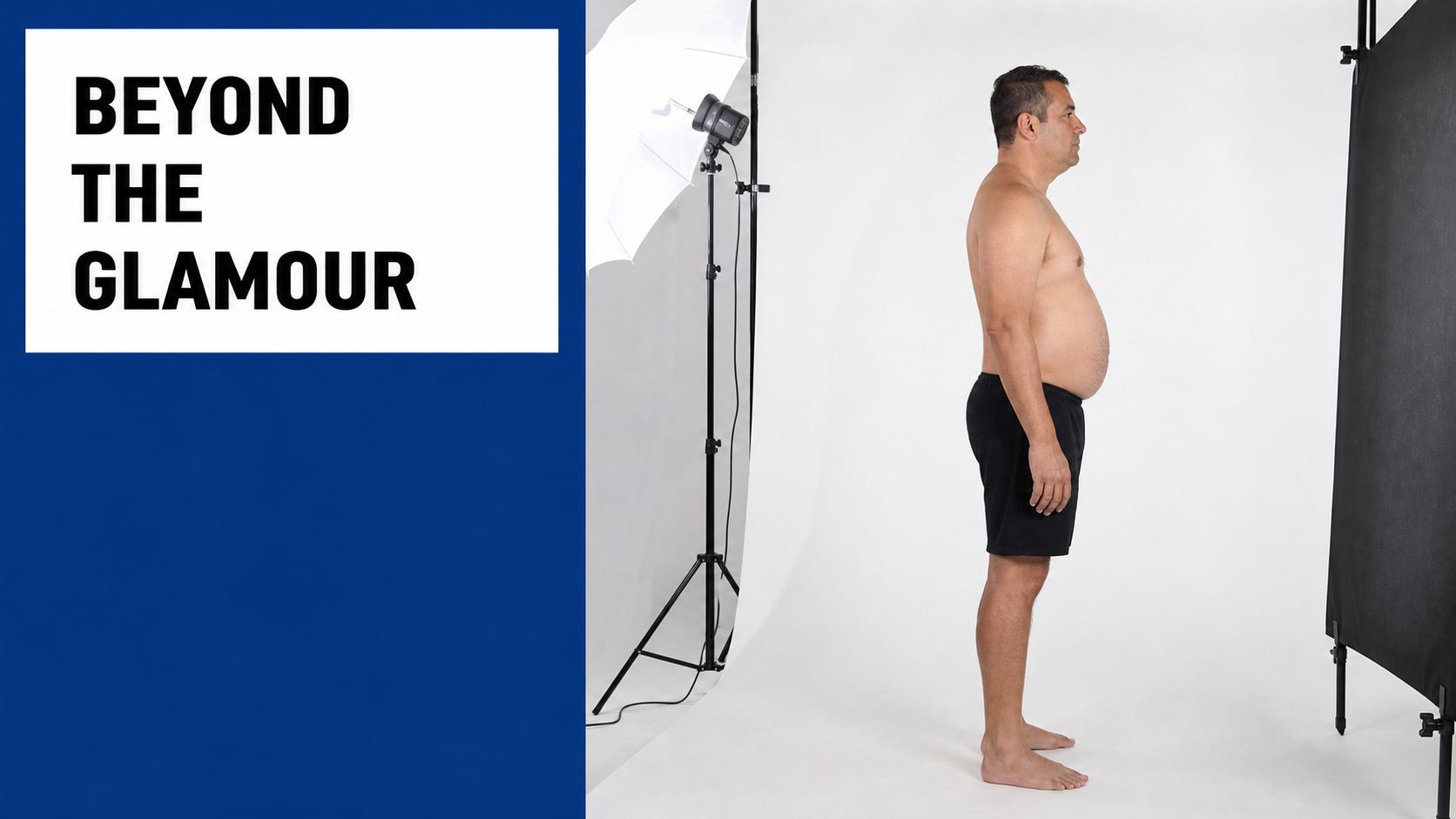
The most polished photos often hide the very details you need to judge. A chest can look flatter just because the shoulders are rolled back. A neck can look tighter if the head is tilted differently. Facial hair can soften or sharpen a jawline, which makes the after photo seem more dramatic than the anatomy really is.
A gallery is most useful when it looks a little boring. Consistent images tell you more than dramatic ones.
One helpful habit is to look for galleries that show the same person in multiple views, not just a single flattering angle. A clinician-facing guide on evaluating male plastic surgery photos specifically warns readers to check for consistent lighting, patient positioning, clothing, and possible digital manipulation, and to be skeptical of single-image “reveal” style posts. If you want a practical outside tool for verifying whether a photo has been manipulated, verify a photo is authentic with PeopleFinder is a reasonable place to start.
For a closer look at how galleries are organized on a practice site, the Ideal Face & Body photo gallery intro is worth reviewing as a structural reference. A good gallery should help you compare, not just admire.
How to Evaluate Before and After Photos Critically
Treat every gallery like evidence, not advertising. The best photos answer a few basic questions right away, whether the procedure is gynecomastia surgery, neck contouring, or facial work. If those answers are unclear, the image is marketing, not decision support.
Start by checking whether the background, light source, and camera distance stay consistent. If the after photo is brighter, more zoomed in, or taken from a lower angle, the result can appear cleaner than it is. Facial hair matters too, because stubble, a close shave, or a fuller beard can hide or sharpen the edges of the jaw and neck.
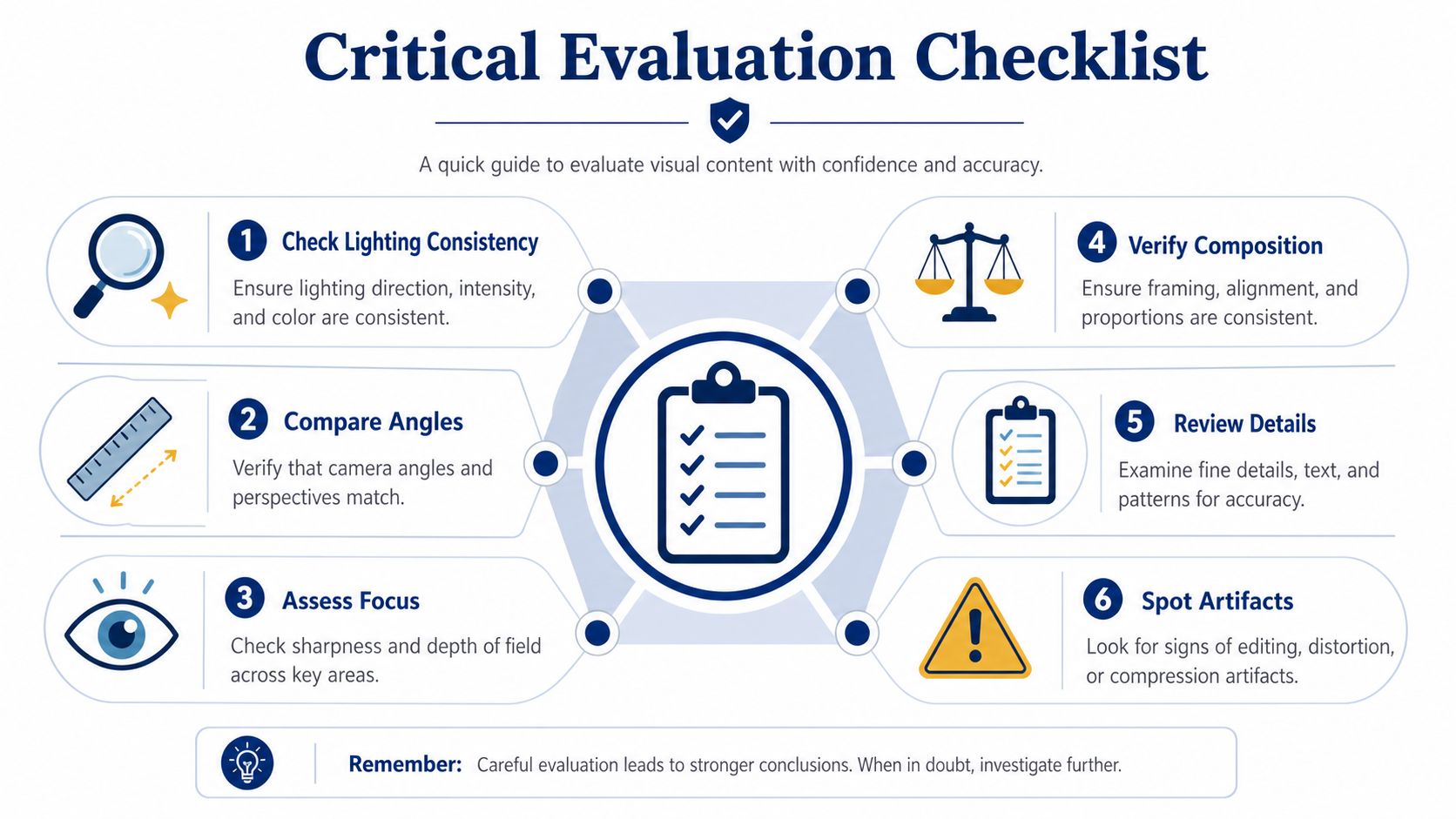
A simple checklist
Use this when you scan any male gallery:
- Check lighting consistency. If shadows vanish in the after photo, the result may look better than it is.
- Compare camera angle. A small tilt of the head can change the jawline and neck.
- Match clothing and grooming. Different shirts, open collars, or beards can distort the visual story.
- Look for multiple views. Front, oblique, and side images are more useful than a single dramatic pose.
- Watch for posture changes. Standing straighter can fake a flatter abdomen or chest.
- Prefer later photos. Early images may still reflect swelling rather than a settled outcome.
Those rules matter because men's procedures often depend on subtle contour changes. A modest reduction in chest fullness, a cleaner neck angle, or a more balanced lower face can be real and still easy to hide with camera tricks. Less polished photos are often more clinically useful, even if they are less exciting to look at.
For a visual contrast on consistency, see the NYC Laser Hair Removal photo gallery and compare it with our tattoo removal before and after pics. The point is not that one treatment proves another. The point is to train your eye to notice when the photo is carrying the story instead of the surgery.
A useful gallery also shows the patient from the same distance and in the same pose on both sides of the comparison. If the framing changes, the eye fills in gaps that are not really there. That problem is common in male chest, neck, and lower-face photos, where a small shift in angle can change how strong the result seems.
If the after image looks too perfect, ask what changed besides the body.
For male patients, that question matters around the jawline, chest, and abdomen, where even small photographic differences can create a false sense of success.
Common Male Procedures and Realistic Outcomes
Men usually want one of two things, a cleaner shape or a less tired face. The photos that matter most show those changes plainly. The strongest before-and-after galleries match each procedure to a believable result, not a polished version of masculinity that no real patient will reach.
Chest and torso work
Gynecomastia surgery is the clearest example. National ASPS data show 26,430 breast reduction procedures in males in 2024, and the category was 100% male. In practical terms, a man with moderate glandular fullness often sees a flatter, more masculine chest line in photos, while someone with more skin laxity may need additional contour refinement before the chest fully settles. The same ASPS male-procedure report for 2020 also recorded 18,575 total male breast reduction procedures and no male breast augmentation, which reinforces that this is about correction and contour, not implant-based enlargement. ASPS 2024 male cosmetic procedure statistics ASPS 2020 cosmetic procedures in men
Liposuction of the abdomen and flanks can be just as visible, but only when the skin has enough elasticity to redrape. If the patient is already lean but lacks definition, the after photo may show sharper lines. If the patient has loose skin, the change can be real without looking dramatic in a single still photo.
Face and neck work
Facial surgery is different because the change is often social as much as structural. In a blinded-photo study of 24 men who had facial cosmetic surgery, 145 lay raters judged the postoperative photos more favorably for attractiveness, likeability, social skills, and trustworthiness. That means the “after” does more than look different, it has to read as more approachable and balanced to other people. Blinded-photo perception study
Blepharoplasty, facelifts, and neck contouring usually settle into a cleaner, less fatigued appearance rather than a theatrical makeover. Hair restoration can improve framing and density, but the strongest photos are usually the ones that show the hairline under the same lighting and hairstyle, not a completely different grooming setup.
A quick realism check
If the result looks like a different person, the gallery may be overselling the change.
That is especially true with body and face procedures meant to preserve masculinity while refining specific problem areas. A strong before-and-after set should show what the operation can reliably improve, not what a photographer can make look extreme.
Recovery Timelines and When Results Become Visible
A lot of confusion in male plastic surgery before after photos comes from timing. An image taken too early can make the result look better than it will look later, or worse, depending on swelling and bruising. Final appearance matters more than the first impression, and the first impression is often the least reliable.
Early recovery versus stable outcome
For many male procedures, the first stage looks messy. Swelling, bruising, and a tight feel are normal early on, especially after chest or body contouring. That means a photo taken at one or two weeks can be useful for showing incision position or immediate contour direction, but it is not the final answer.
The clearest long-term timelines in the provided research come from gynecomastia recovery and penile enhancement outcomes. A gynecomastia recovery guide notes that full healing usually takes 3 to 6 months, with most patients returning to normal activities in 4 to 6 weeks, and that final contour and scar maturation continue to improve over that period. Gynecomastia recovery timeline In a separate retrospective series of 355 cosmetic penile enhancement cases, mean flaccid length increased from 8.8 cm at baseline to 11.6 cm at 2 months, 11.5 cm at 6 months, and 11.4 cm at 12 months, while other objective measures and sexual-function scores also improved significantly. Penile enhancement outcomes study
What to trust in a gallery
A strong photo set should show the timeline, not just the finish line. If you're comparing results, prioritize later images when available, because swelling has settled and the body is closer to its real contour. Early after photos can be useful, but only if the gallery labels them clearly and keeps the angles consistent.
For men considering office-based awake procedures, the early appearance can be different from traditional surgery because the treatment is often more targeted. There may be less overall surgical trauma, but there's still swelling and a short period where the result looks temporarily firmer or fuller than it will later. The important point is that the photo should match the phase of healing it claims to represent.
The best “after” photo is the one taken when the tissue has stopped changing quickly.
If a gallery has only early post-op images, treat it as a teaser, not proof. When later images are available, they usually tell a much better story about how the result will hold up in real life.
Awake Surgery Versus Traditional Anesthesia Approaches
Awake, office-based procedures change the experience of surgery more than they change the physics of contouring. For a man who wants targeted refinement, local anesthesia can mean a simpler day of surgery, but the visible goal is still the same, a natural-looking improvement that fits his anatomy. The trade-off is not “awake versus good.” It's “awake versus a more traditional operating-room experience.”
What awake procedures tend to offer
Awake contouring avoids general anesthesia and the IV-heavy setup that comes with it, which many patients appreciate for practical reasons. It is often well suited to targeted liposuction, selected gynecomastia cases, and smaller facial or neck refinements where the surgeon is working on a limited area. The benefit is a more direct recovery experience and a procedure that can feel less disruptive to daily life.
A useful reference point is the publisher's own approach to office-based surgery, which centers on awake, local-anesthesia procedures in Beverly Hills, CA, including male breast correction and body contouring. That model aligns with the broader point here, which is that the anesthetic setting can change comfort and downtime, but not the need for careful candidate selection and honest photography.
What still requires caution
Traditional surgery may still be better for more extensive tissue removal, major skin excess, or cases where the anatomy is complex. Awake surgery doesn't erase swelling, and it doesn't guarantee a more dramatic visible result. It just changes how the procedure is delivered.
Convenience matters, but contour quality still depends on surgical judgment.
For patients comparing options, the useful question is whether the case is localized and well defined, or broader and more reconstructive. That matters more than the marketing language around the anesthesia choice. If you want a fuller walkthrough of the format, Ideal Face & Body's awake surgery guide is a relevant example of how office-based care is presented to patients.
The bottom line is that awake procedures can be a strong fit when the target is clear and the patient wants a comfortable experience. They're not a shortcut, and they're not automatically the right choice for every body or face.
Candidacy, Risks, and Insurance Considerations
The strongest candidate is the man whose anatomy fits the operation being considered. Good skin quality helps with liposuction and chest contouring, while clearer structural concerns make facial procedures easier to plan. Stable weight, realistic expectations, and a willingness to follow recovery instructions matter just as much as the operation itself.
Who tends to do well
Men with localized fat, modest skin laxity, or isolated chest fullness often see the most predictable improvements. Men with significant loose skin, mixed glandular and fatty breast tissue, or asymmetry can still do well, but their galleries deserve closer scrutiny because the final photo depends on more variables. The more moving parts there are, the more important it is to look for consistent photography and later follow-up images.
Risks are real, even when results look good. Scarring, asymmetry, numbness, contour irregularity, and revision surgery remain part of the discussion. Clinical data from a multicenter cosmetic procedure cohort found that men most commonly had operations on the face, and major complications in men were uncommon overall, which supports the practical point that results are usually favorable while standard surgical caution still applies. Multicenter cosmetic procedure cohort
Insurance and documentation
Insurance is often the most confusing part for men deciding between cosmetic care and medically necessary treatment. Medicare says it usually does not cover cosmetic surgery, except in cases such as accidental injury or malformed body parts, and notes that some procedures like blepharoplasty and panniculectomy may require prior authorization. Public guidance also shows that some insurers may treat gynecomastia differently from purely appearance-driven procedures, but approval usually depends on symptoms, function, and documentation rather than the photo gallery alone. Medicare cosmetic surgery coverage guidance
If you are sorting out deductibles and trying to understand what portion of a covered procedure might still fall to you, this deductible tips for self-employed can help frame the financial side without pretending that every case is the same.
The practical decision rule is direct. If the goal is cosmetic refinement, focus on candid photos, recovery time, and the surgeon's plan. If there may be a medical component, ask what documentation is needed before you assume coverage will apply.