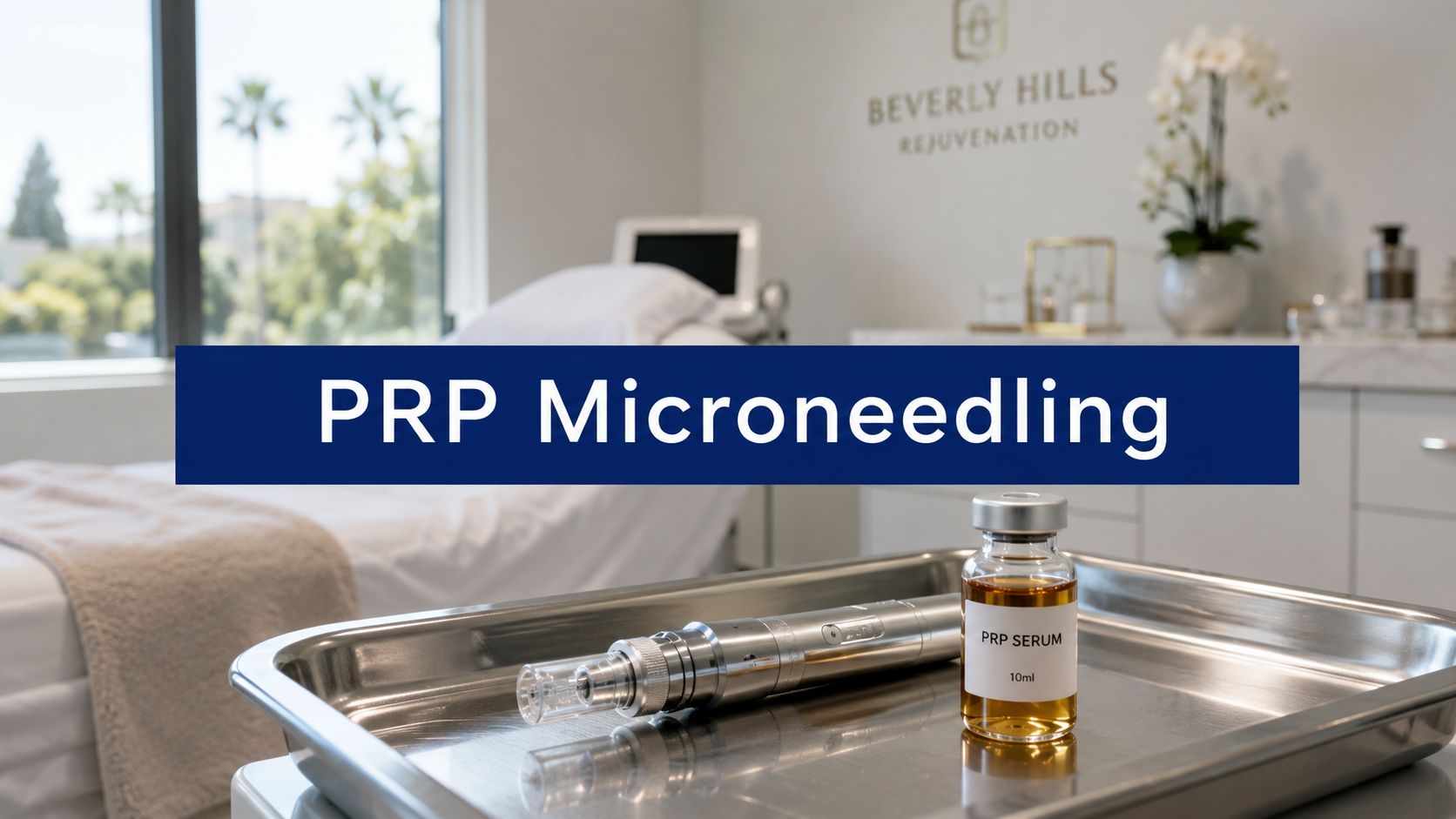
If you're reading about microneedling with PRP, you may already be at a familiar point in your skincare journey. Your products are good. Your routine is consistent. But your skin still looks a little tired in certain light, makeup doesn't sit as smoothly as you'd like, and the texture or fine lines you're noticing don't seem to respond to creams alone.
That's usually when patients start looking for a treatment that works beneath the surface, not just on top of it. A Microneedling PRP treatment can be a strong next step because it combines controlled collagen stimulation with your body's own healing components. For many people, that feels more approachable than jumping straight to a more aggressive resurfacing procedure.
What often puts people at ease is understanding what the appointment is like. You're awake. The process is methodical. The blood draw is simple. Numbing is part of the experience. And the visit is designed to feel comfortable, not intimidating.
Table of Contents
- The Next Step in Your Skincare Journey
- Understanding Microneedling with PRP
- Your In-Office Treatment Experience
- The Benefits and Results You Can Expect
- Who Is an Ideal Candidate for This Treatment
- Comparing PRP Microneedling with Other Treatments
- Frequently Asked Questions
The Next Step in Your Skincare Journey
At a certain point, skin concerns stop feeling like a simple product problem. You may be using quality cleansers, sunscreen, and active ingredients, but your skin still doesn't reflect how healthy you feel. Texture can linger. Fine lines can look etched in when your face is at rest. Dullness can make skin seem flat even when it's well moisturized.
That's where in-office treatments start to make sense. They don't replace a good home routine. They build on it. If you already use medical-grade skin care, you're likely supporting your skin well on the surface. Microneedling with PRP aims deeper, where collagen remodeling and tissue repair happen.
Why creams can only go so far
Topical products help maintain the skin barrier, improve hydration, and address certain visible concerns over time. But they can't recreate what happens when the skin is prompted to repair itself in a controlled, intentional way.
A Microneedling PRP treatment is often appealing to patients who want improvement that still looks like them. The goal isn't to make your face look treated. The goal is smoother texture, fresher tone, and a healthier quality to the skin.
Practical rule: If your concern is skin quality rather than volume loss alone, regenerative treatments are often worth discussing.
In a consultation setting, this treatment is usually framed as a middle ground. It's more advanced than relying on serums alone, but it still feels natural because it uses your own platelet-rich plasma as part of the process. For patients who value awake, office-based care in Beverly Hills, that combination of comfort and science is often what makes the treatment feel approachable.
Understanding Microneedling with PRP
The name sounds technical, but the concept is simpler than it first appears. There are two parts. First, microneedling creates tiny controlled openings in the skin. Second, PRP is applied to support healing and regeneration.
Once you separate those two pieces, the treatment makes much more sense.
How the two parts work together
Think of your skin like a lawn that needs renewal. Microneedling is like aerating the soil. It creates tiny, controlled channels that signal the skin to begin a repair response. That repair response is what encourages fresh collagen and elastin activity, which is why microneedling is so often used for texture, fine lines, and acne scar softening.
PRP, or platelet-rich plasma, works like a concentrated natural fertilizer. It comes from your own blood. After a small blood draw, the sample is processed so the platelet-rich portion can be separated and used during treatment. That plasma contains growth factors that support the body's healing process.
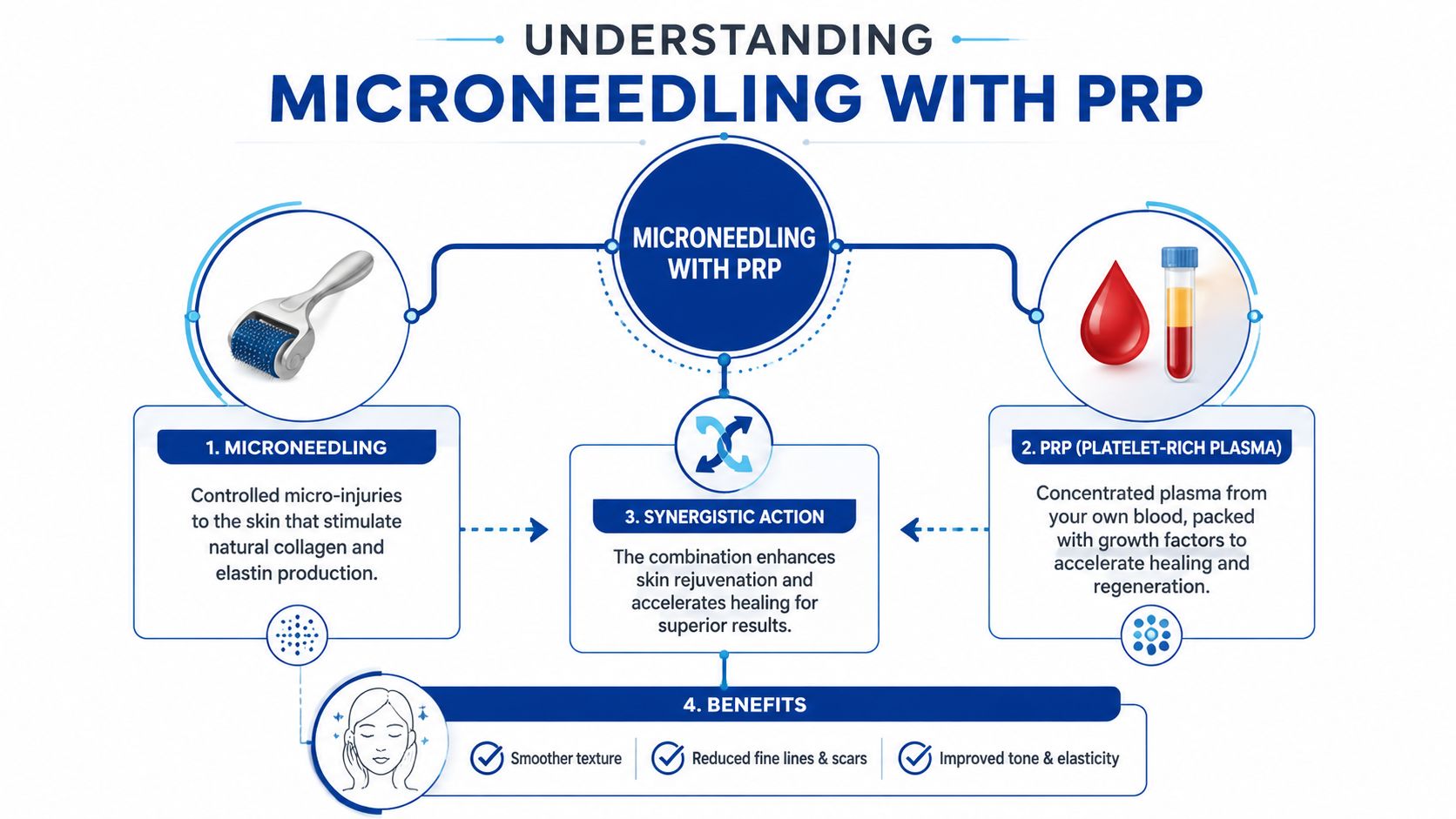
When these two steps are combined, the freshly treated skin is in an ideal state to receive the PRP. The microchannels created by microneedling help the plasma contact the treated areas efficiently, and the skin's natural repair mode is already switched on. That's why many patients and providers view the pairing as more regenerative than microneedling alone.
You can also learn more about the regenerative side of the procedure through this overview of a PRP facial.
What patients usually notice conceptually
Patients sometimes get confused about whether PRP is a filler, a medication, or something synthetic. It isn't any of those. It's prepared from your own blood and then used topically during the treatment process.
That matters for two reasons:
- It's familiar to your body: Because the PRP comes from you, people often like the idea that the treatment is using their own healing biology.
- It supports regeneration: The focus isn't on adding bulk or freezing movement. It's on helping the skin repair and renew.
- It complements the needling step: Microneedling creates the controlled stimulus. PRP helps support the response.
The easiest way to think about it is this. Microneedling starts the conversation with your skin, and PRP helps that conversation stay productive.
The result is a treatment designed to improve skin quality gradually. Not overnight, and not in an artificial-looking way.
Your In-Office Treatment Experience
For many patients, this is the section that matters most. They don't just want to know what the treatment does. They want to know what it feels like to be in the room, step by step, while it's happening.
That question is especially important if you're nervous about needles, blood draws, or discomfort.
What happens when you arrive
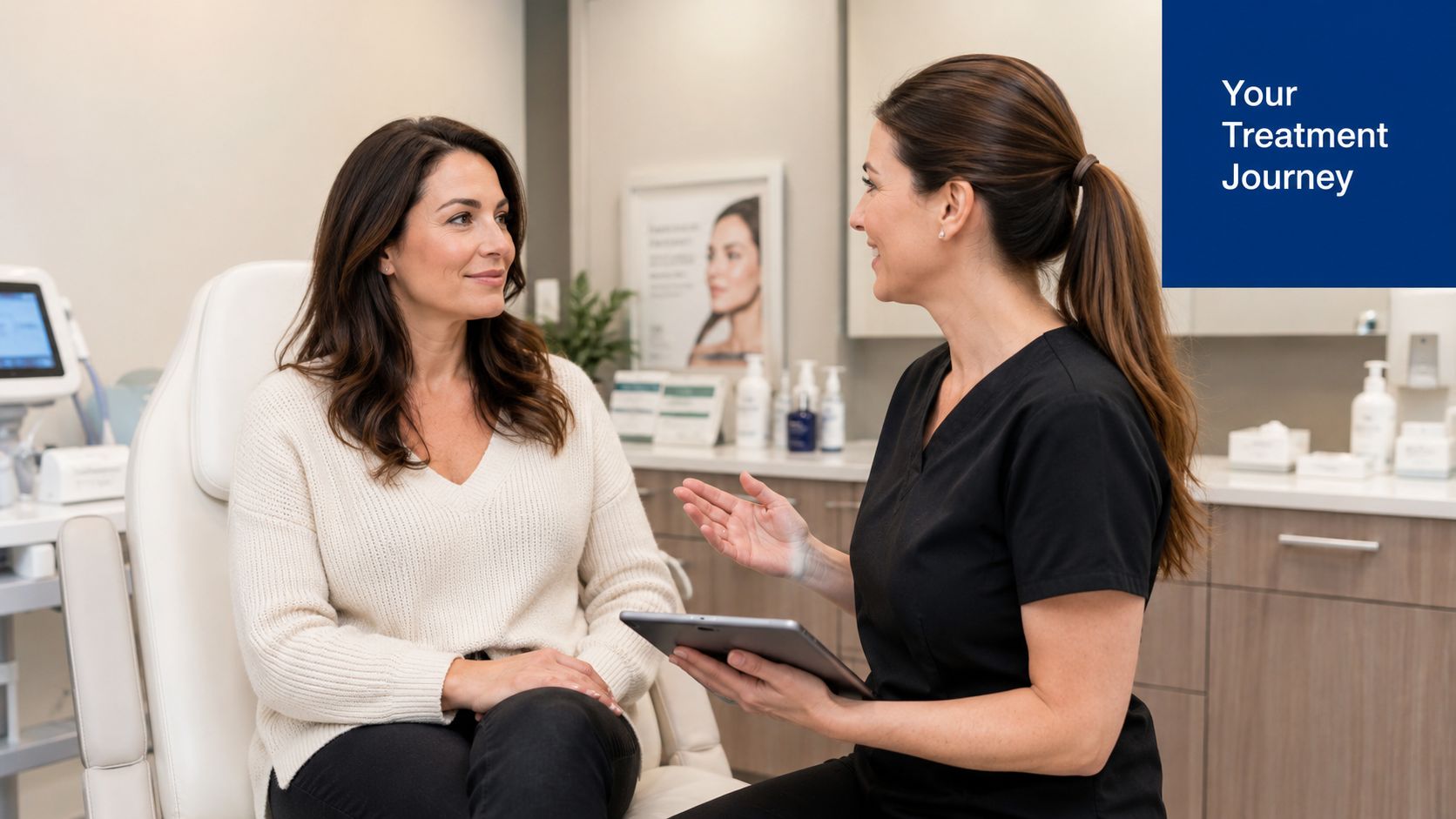
A typical visit starts with a consultation and skin assessment. Your provider looks at texture, tone, acne scarring, fine lines, and the areas that bother you most. Just as important, they review your health history to make sure PRP is appropriate and safe for you.
Then comes the blood draw. Patients often expect this part to be dramatic, but it usually feels very routine, much like a standard lab draw. A small sample is taken and placed into a tube for processing.
That tube goes into a centrifuge. In plain language, the centrifuge spins the sample so its components separate. The platelet-rich portion is then prepared for use during your treatment.
Most people are relieved by how ordinary the early part of the appointment feels. It doesn't feel surgical. It feels organized, calm, and medical.
During the awake procedure
Before the microneedling starts, a strong topical numbing cream is applied. This is one of the biggest reasons patients describe the procedure as manageable. You're awake the whole time, but the skin is prepared carefully for comfort.
Once the skin is numb, the microneedling device is passed across the treatment area in a controlled pattern. You may feel pressure, vibration, or a scratchy sensation in certain spots where the skin is thinner, but it shouldn't feel like untreated needling. Some areas are naturally more sensitive than others, so your provider adjusts technique and pacing as needed.
After microneedling, the prepared PRP is applied to the skin. At that point, the treatment often feels less intense because the skin has already been numbed and the procedure is moving into its final phase.
If you like reading about products used around treatment windows, this complete guide to microneedling serums offers helpful context on why post-procedure product selection matters.
Before you leave the office
By the end of the appointment, your skin will usually look flushed, similar to a fresh sun-exposed glow, but more deliberate and even. Some patients describe warmth or tightness. That's expected. The feeling is usually more like sensitivity than pain.
You'll leave with clear aftercare instructions, and this is where experienced guidance matters. Dr. Sarah Yovino typically emphasizes simple, gentle care right away:
- Keep the skin clean: Use a mild cleanser when you're told it's appropriate to wash.
- Protect the barrier: Stick to bland, hydrating products rather than active ingredients.
- Avoid friction and heat: Heavy workouts, hot environments, and picking at the skin can interfere with recovery.
- Take sun protection seriously: Freshly treated skin is more vulnerable, so shade and appropriate sunscreen matter.
At Ideal Face & Body, this kind of treatment fits into a broader awake, office-based approach to aesthetics. For patients, that often translates into a visit that feels personal, carefully paced, and far less intimidating than they expected.
The Benefits and Results You Can Expect
The best way to understand results is to think by concern, not by buzzword. Microneedling with PRP doesn't improve every issue equally. It tends to shine when the goal is better skin quality.
What improves first
Texture is often the first category patients talk about. Skin can start to feel smoother and look more refined as the surface heals and renews. Makeup may apply more evenly. Areas that once looked rough or uneven in side lighting may appear softer.
Tone and radiance are another common reason people seek treatment. Dull skin often reflects light poorly. When the skin surface becomes more uniform and recovery is well supported, the complexion can look fresher and more luminous. If brightness is one of your goals, this best skin brightening guide gives useful background on how daily care supports an in-office plan.
A broader explanation of collagen-focused improvements is also covered in these benefits of micro-needling.
What takes more patience
Fine lines and acne scars usually require more patience because they involve structural change. The treatment encourages the skin to rebuild gradually, and that process doesn't happen all at once. Early glow is one thing. Remodeling is another.
This is why realistic expectations matter:
| Concern | What to expect |
|---|---|
| Uneven texture | Often improves in a progressive, visible way as the skin renews |
| Dullness | Skin may look fresher once healing settles and hydration is restored |
| Fine lines | Softening tends to be gradual and depends on line depth |
| Acne scars | Indented scars may look less sharp over time, not instantly disappear |
Clinical perspective: The most satisfying results are usually the ones that look natural enough that other people notice your skin looks better, but can't tell exactly what you had done.
A Microneedling PRP treatment is often less about a sudden transformation and more about healthier-looking skin that continues to improve as your skin rebuilds from within.
Who Is an Ideal Candidate for This Treatment
This treatment tends to appeal to people who want visible improvement without looking overdone. If your goal is refreshed skin quality rather than a dramatic change in facial shape, you may be a good fit.
People who usually do well with this treatment
The ideal candidate often has one or more of these concerns:
- Textural irregularity: Skin feels rough, makeup catches, or pores appear more noticeable.
- Mild lines: Early fine lines are starting to stay visible even when the face is relaxed.
- Post-acne marks or shallow scarring: The skin surface doesn't look as smooth as you'd like.
- General dullness: Your skin lacks radiance even when you're consistent with skincare.
- Preference for natural regeneration: You're drawn to treatments that use your own platelet-rich plasma rather than adding volume.
People who also value an awake, in-office approach often find this treatment especially appealing because the experience is controlled, local, and relatively easy to fit into a busy schedule.
When treatment may need to wait
Not everyone is a candidate right away. A consultation is important because your provider needs to know whether the treatment is safe for your skin and your overall health.
Common reasons to postpone or avoid treatment can include:
- Active skin infection or irritation: Inflamed skin should be treated first.
- Certain blood-related conditions: PRP depends on your own blood components, so some medical conditions can affect suitability.
- Pregnancy or breastfeeding: Many providers prefer to delay elective regenerative treatments during this time.
- Open wounds or active breakouts in the planned area: The skin should be calm before treatment.
- Medical history that raises healing concerns: This needs individual review.
If you're unsure where you fall, that's normal. Most patients don't know whether they're an ideal candidate until they talk it through with a qualified physician. Dr. Sarah Yovino and Dr. Justin Yovino use that consultation process to decide whether microneedling with PRP is appropriate or whether another direction makes more sense.
Comparing PRP Microneedling with Other Treatments
Patients often ask a practical question. If several treatments can improve skin, how do you choose the right one?
The answer depends less on trends and more on your main goal. Surface texture, pigment, scarring, and skin laxity don't all respond best to the same approach.
If your main goal is surface refinement
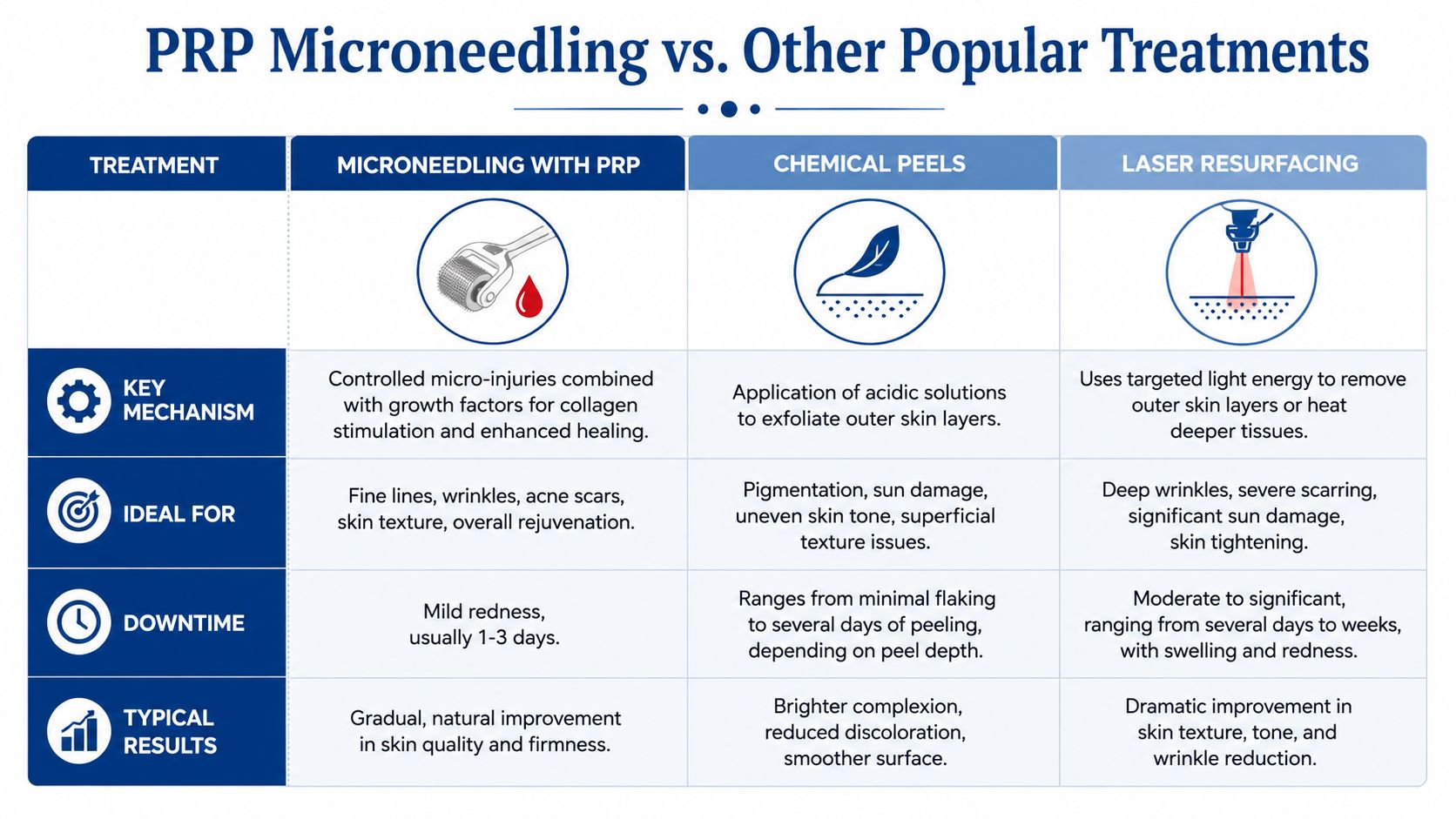
If you're choosing between microneedling alone and microneedling with PRP, the key difference is regenerative support. Microneedling by itself creates the collagen-stimulating trigger. Adding PRP brings in your own platelet-rich plasma to support the healing environment. Patients who want a more extensive rejuvenation approach often prefer the combination.
If you're considering a chemical peel, that usually makes more sense when the concern is more superficial and focused on outer-layer turnover. Peels can be useful for visible dullness and uneven tone near the surface. A microneedling PRP treatment, by contrast, is often selected when texture and collagen support are central to the plan.
A simple way to think about it:
- Choose microneedling alone if you want collagen stimulation without the added PRP step.
- Choose microneedling with PRP if you want a regenerative treatment built around controlled injury plus growth-factor support.
- Choose a peel if the issue is more about surface discoloration or shallow roughness.
If your main goal is tightening or deeper resurfacing
Laser resurfacing works through light energy rather than mechanical needling. It can be a strong option when more significant resurfacing or a more aggressive correction is needed, but it often comes with a different recovery experience and a different level of intensity.
Morpheus8 combines microneedling with radiofrequency energy. That added heat targets deeper tissue and may be considered when skin tightening is a larger priority. If someone says, "My main issue isn't just texture, it's laxity," that's usually a cue to discuss whether a deeper energy-based treatment is more appropriate.
Here is a quick decision guide:
| Goal | Treatment category that may fit |
|---|---|
| Smoother texture and refreshed tone | Microneedling with or without PRP |
| More superficial pigment or dullness | Chemical peel |
| More aggressive resurfacing | Laser treatment |
| Deeper tightening | Radiofrequency microneedling such as Morpheus8 |
The best consultation conversations aren't about which treatment is "better." They're about which one matches the problem you're trying to solve.
Frequently Asked Questions
Patients usually ask very direct questions about comfort, timing, recovery, and planning. Those are the right questions to ask.
Does the treatment hurt
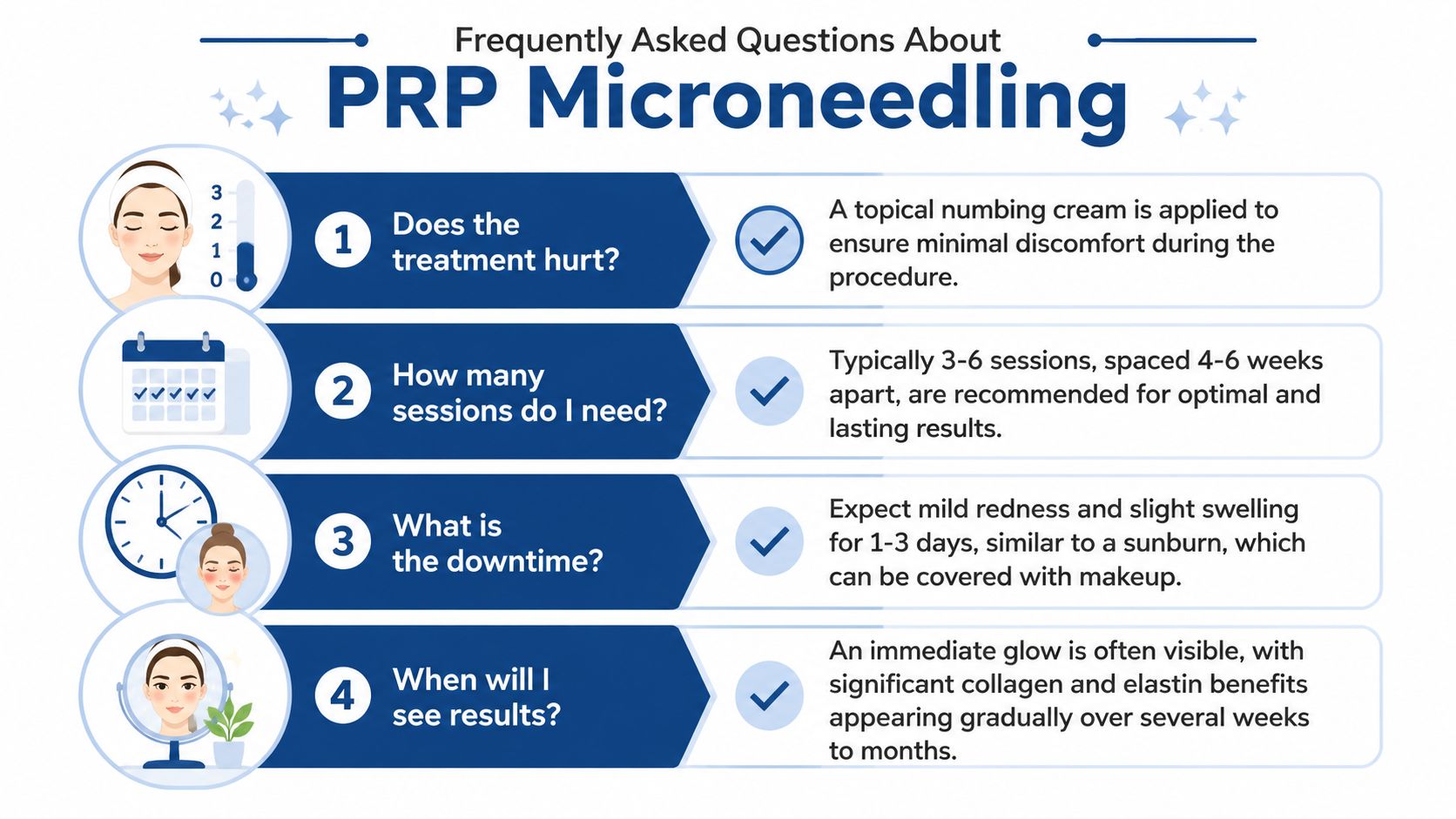
Most patients say it's much more comfortable than they expected because a topical numbing cream is applied before treatment. You're awake, but the skin is carefully prepared so the procedure feels tolerable and controlled. Certain areas can feel more sensitive, though discomfort is usually brief and manageable.
How many sessions are typically needed
That depends on your skin goals and what you're treating. Someone focused on general refreshment may need a different plan than someone treating acne scars or more established textural change. Your provider will usually recommend a series or maintenance schedule based on your skin response rather than a one-size-fits-all formula.
What is the recovery and aftercare like
Expect the skin to look pink to red and feel warm or tight right after treatment. Gentle skincare, hydration, sun protection, and avoiding harsh active products are the main priorities. Individuals can typically return to normal non-strenuous activity quickly, but your skin will need a short period of careful handling.
"Treat the skin like it's healing, because it is. Gentle care gives you a better result than trying to rush back to your full routine."
When will I see results
Some patients notice an early glow once the initial sensitivity settles. More meaningful improvement develops gradually as the skin goes through its repair process. This treatment rewards patience.
What is the general cost range
The cost varies based on the treatment plan, the areas treated, and whether it's being done as part of a broader skin-rejuvenation approach. The most accurate way to understand pricing is through a personalized consultation.
If you're considering a Microneedling PRP treatment and want a clear, physician-guided plan, Ideal Face & Body offers consultation-based treatment planning focused on awake, office-based aesthetic care in Beverly Hills.