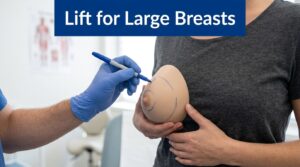
You're probably reading this while toggling between excitement and nerves. One tab has before-and-after photos. Another has a long forum thread that made recovery sound confusing, dramatic, or both. Most patients feel the same way before surgery. They want a clearer answer to one practical question: what will daily life look like after a breast lift and augmentation?
That question matters even more now because many online guides still focus on general anesthesia and implant-based recovery. Patients considering an Awake Breast Lift under local anesthesia, or a fat transfer augmentation such as Raise Your Cup®, often have to piece together their expectations from information that doesn't fully match their procedure. A calmer recovery starts with a more accurate map.
Table of Contents
- Preparing for Your Combined Breast Surgery Recovery
- Your Week by Week Recovery Timeline
- Managing Comfort and Supporting Healing
- A Guide to Wound Care and Scar Management
- Recovery for Fat Transfer Augmentation
- The Awake Breast Lift Advantage in Your Recovery
- Protecting Your Investment and Enjoying Long-Term Results
Preparing for Your Combined Breast Surgery Recovery
The smoothest recovery usually starts before surgery day. Not because you need to overprepare, but because simple choices make the first week much easier. Set up a resting area, place essentials within easy reach, and plan for help with meals, pets, children, or anything that involves lifting or stretching. Recovery feels more manageable when your home already supports it.
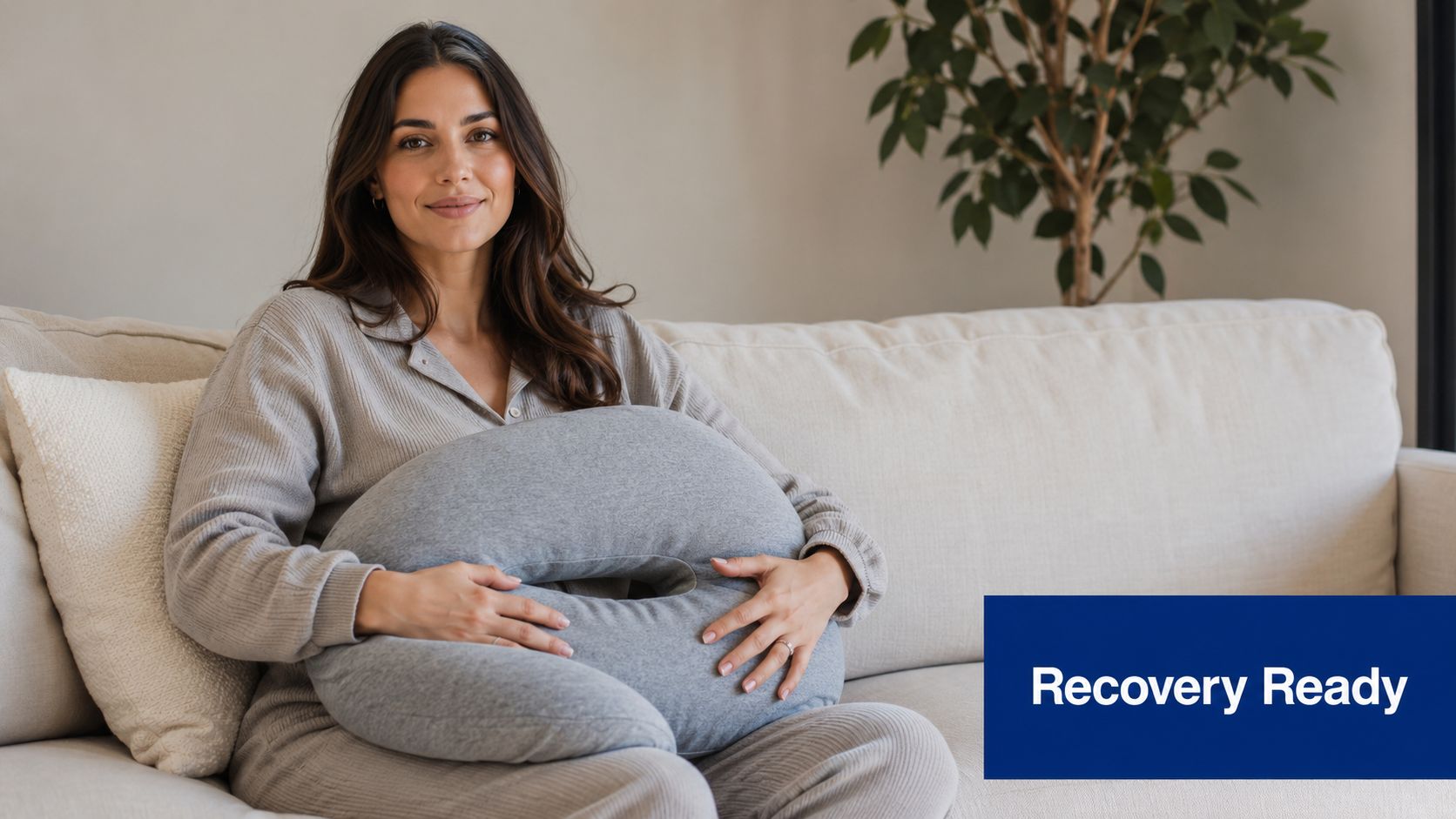
A lot of anxiety comes from not knowing what's normal. Patients often worry that swelling means something is wrong, or that feeling tired means they're “behind.” In reality, recovery from breast lift and augmentation happens in stages. The body responds to swelling, tissue adjustment, and incision healing on its own timetable.
What to arrange before surgery
- Resting space: Use extra pillows or a recovery pillow so you can rest on your back with your upper body supported.
- Clothing: Choose loose tops that open in the front. Pulling clothing overhead can feel awkward early on.
- Daily help: Have someone available to drive, stay nearby, and help with tasks that use chest and arm strength.
- Simple supplies: Keep water, medications, gauze if instructed, lip balm, and easy snacks in one place.
Practical rule: If an item requires reaching high, pulling hard, or carrying weight, move it before surgery.
The emotional part matters too. Some patients expect to wake up and instantly see their final result. That's not how healing works. Early breasts can look high, swollen, tight, or uneven. None of that means the outcome is off track. It means your tissues are healing.
The best mindset is simple. Think in phases, not perfection. Focus on comfort, protection, and patience during the early stretch.
Your Week by Week Recovery Timeline
Most patients do better when they stop thinking of recovery as one long block and start seeing it as a sequence of milestones. For a combined breast lift and augmentation, the average full recovery period requiring avoidance of strenuous exercise and heavy lifting is 4 to 6 weeks, with most patients returning to non-strenuous daily activities and desk work within 1 to 2 weeks. Residual swelling can persist for 5 to 6 months, and breasts typically require 3 to 6 months to fully settle, according to Healthline's breast augmentation recovery overview.
Breast Lift & Augmentation Recovery Milestones
| Timeframe | Expected Feeling | Activity Level | Key Focus |
|---|---|---|---|
| First several days | Tight, swollen, tired, protective of chest | Rest, short walks, basic self-care only | Control swelling, protect incisions, stay supported |
| Week 1 | Soreness improving, still limited | Light home activity | Follow instructions, avoid strain |
| Weeks 1 to 2 | More mobile, more comfortable | Return to desk work and non-strenuous tasks if cleared | Steady routine, no heavy lifting |
| Weeks 3 to 6 | Less swelling, more normal energy | Gradual increase in light activity | Protect healing tissues, avoid strenuous exercise |
| Months 3 to 6 | Softer shape, settling continues | Normal routine if cleared | Patience with swelling and shape changes |
The first several days
This is the most protective phase. You'll likely feel tightness, pressure, swelling, and fatigue. Even patients who are pleasantly surprised by how manageable the discomfort is still need to respect the fact that their tissues are healing.
Your main job is to rest without becoming completely still. Gentle walking around your home supports circulation and helps you avoid getting stiff. What you don't want is chest strain. That includes lifting, pushing, pulling, vigorous household chores, or trying to “test” your range of motion.
The first few days are about doing less than you feel capable of, not more.
Weeks 1 through 2
By this point, many patients start to feel more like themselves. That can be helpful, but it can also be misleading. Feeling better doesn't mean the internal healing is finished. It just means the hardest early soreness is easing.
This is often the window when patients return to desk work or non-strenuous daily activity if their surgeon clears them. That lines up with the broader timeline above. It's also the stage when routines matter most. Taking medications as directed, sleeping in a supportive position, and wearing your post-op bra consistently all help reduce unnecessary setbacks.
Common questions during this phase include:
- “Why do I still look swollen?” Because swelling resolves gradually, not all at once.
- “Why do the breasts sit high?” Tissue needs time to relax and settle.
- “Why do I feel fine one hour and sore the next?” Activity often catches up with you later in the day.
Weeks 3 through 6
This stretch is when patients often become impatient. You're moving more easily. Bruising is usually less noticeable. Daily life feels closer to normal. But healing tissue is still vulnerable to excess force.
Avoiding strenuous exercise and heavy lifting through the full early recovery window matters because skin, internal support, and incision lines are still reorganizing. Overdoing it too soon can increase swelling and place more tension on healing areas. You may feel tempted to restart workouts, deep cleaning, or lifting bags because your energy is back. That's where discipline protects results.
A few changes are encouraging here:
- Swelling often looks less dramatic
- Breast shape starts looking less “post-op”
- Comfort improves with basic movement
- Normal routines feel easier to resume
Months 3 through 6 and beyond
This is the phase patients don't always expect. You may look socially presentable long before your final result is visible. Settling and softening continue well after the first several weeks. That's especially important if your procedure includes volume enhancement.
Residual swelling can persist for months, and the breasts may continue changing in shape, softness, and position during that time. If one side seems to settle a little faster, that can happen too. Healing isn't always perfectly symmetrical from week to week.
What helps most here is not comparing one day to the next. Compare month to month.
Managing Comfort and Supporting Healing
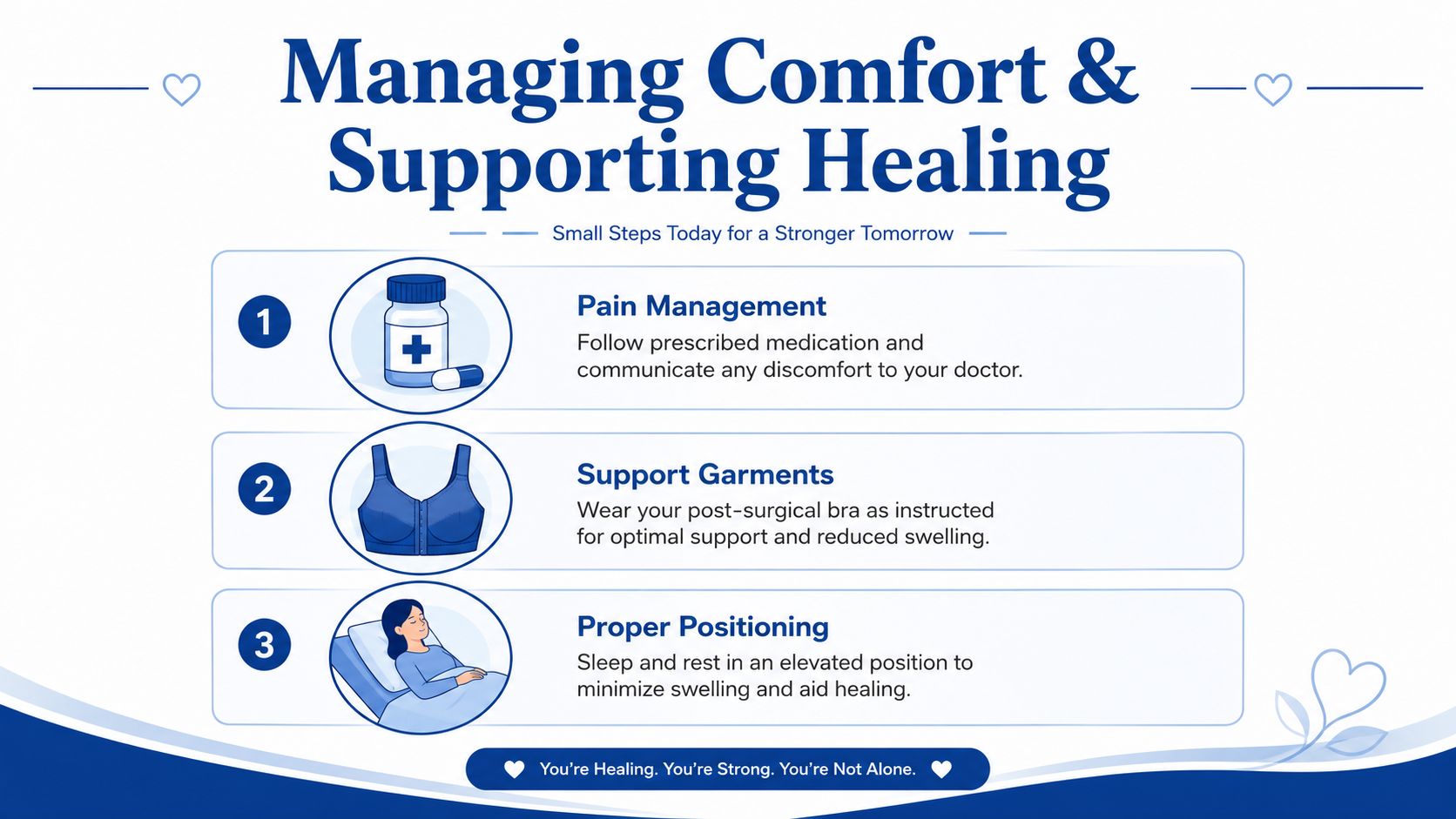
Comfort after surgery isn't just about pain medication. It comes from several small decisions working together. When patients feel supported, they rest better. When they rest better, they usually move through recovery more smoothly.
Pain control that makes sense
Pain is often strongest when swelling is strongest. The goal isn't to “tough it out.” The goal is to stay ahead of discomfort so you can breathe normally, rest, walk short distances, and avoid unnecessary tension in the chest and shoulders.
A practical approach usually looks like this:
- Take medication on schedule: Don't wait until discomfort builds.
- Keep movement gentle: Short walks are helpful. Strain is not.
- Use your supports: Bras, pillows, and positioning all reduce stress on healing tissue.
- Call if pain changes sharply: Sudden worsening deserves attention.
The internet often makes recovery sound like a contest between “easy” and “awful.” Most recoveries are neither. They're a gradual improvement with some uneven days mixed in.
Why garments and positioning matter
Support garments aren't just a dress code after surgery. They help control swelling, reduce unnecessary motion, and support the new breast shape while tissues heal. For breast augmentation alone, patients are commonly advised to wear compression or surgical bras for 4 to 6 weeks, as described in this breast augmentation recovery timeline. Your surgeon may tailor those instructions based on your exact procedure.
Sleeping position can make a bigger difference than patients expect. Resting on your back with your upper body raised can reduce pressure across the chest and make it easier to get up without straining. Side sleeping and stomach sleeping usually feel too direct and can place pressure where you don't want it.
A supportive bra and a supportive sleep setup do different jobs, but together they often make the first week far easier.
Other comfort habits that help:
- Hydration: Dryness, constipation, and fatigue all feel worse when you're dehydrated.
- Simple meals: Bland, easy foods are often better tolerated early on.
- Loose routines: Give yourself extra time. Rushing is how people accidentally overreach, twist, or lift.
A Guide to Wound Care and Scar Management
Incision care is where patience pays off. Early healing is about keeping the area clean, dry as instructed, and protected from friction or unnecessary stretching. Later healing is about scar quality, which changes much more slowly than most patients expect.
Early incision care
Your surgeon will give you specific instructions, and those details matter more than anything generic online. In general, patients do best when they avoid touching incisions unnecessarily, avoid soaking before clearance, and resist the urge to inspect every tiny change multiple times a day. Healing skin often looks uneven before it looks refined.
Watch for changes that feel different from the normal pattern of gradual improvement. Call your care team if you notice increasing redness, drainage, a new odor, or worsening discomfort rather than slowly improving soreness. Those changes are more useful than trying to decide whether a single spot looks “perfect.”
Helpful habits include:
- Keep follow-up appointments: A trained set of eyes can reassure you or catch a problem early.
- Wear garments correctly: Friction from poor fit can irritate healing areas.
- Protect the area from tension: Sudden reaching and lifting can pull on fresh incisions.
How scars change over time
Scar maturation is slow. Most sources state scars may remain pink or raised for months, with a full maturation window of 6 to 12 months. This timeline can be influenced by the combined tension from a lift (skin excision) and the method of augmentation, as noted in this discussion of breast augmentation recovery and scar questions.
That point is important because patients often assume that once the skin is closed, the scar is “done.” It isn't. A closed incision is only the start of remodeling. The body is still reorganizing collagen, softening the scar, and gradually reducing redness.
Once your surgeon says the incisions are fully closed, scar care may include silicone-based options and other treatments selected for your skin and healing pattern. If you want a deeper overview of timing and treatment choices, this guide to scar healing treatments is a helpful next step.
Early scars often look more noticeable than they will later. That's normal, and it's one reason consistency matters more than quick fixes.
Recovery for Fat Transfer Augmentation
Many patients find this distinction challenging. Most online content about augmentation recovery centers on implants. Fat transfer is different. The breast recovery can feel gentler in some ways, but you're also healing from the donor area where fat was removed.
Two recovery zones instead of one
With fat transfer, one part of recovery happens in the breasts and another happens where liposuction was performed. Patients sometimes expect to feel all their recovery in the chest. Then they're surprised that the donor area feels bruised, swollen, or tight as well.
That split matters for planning. You may need compression for the liposuction area while also protecting the breasts from pressure. You'll want clothing that doesn't squeeze the chest too aggressively and doesn't rub donor sites. Resting positions may need slight adjustments based on where fat was harvested.
How fat transfer healing feels different
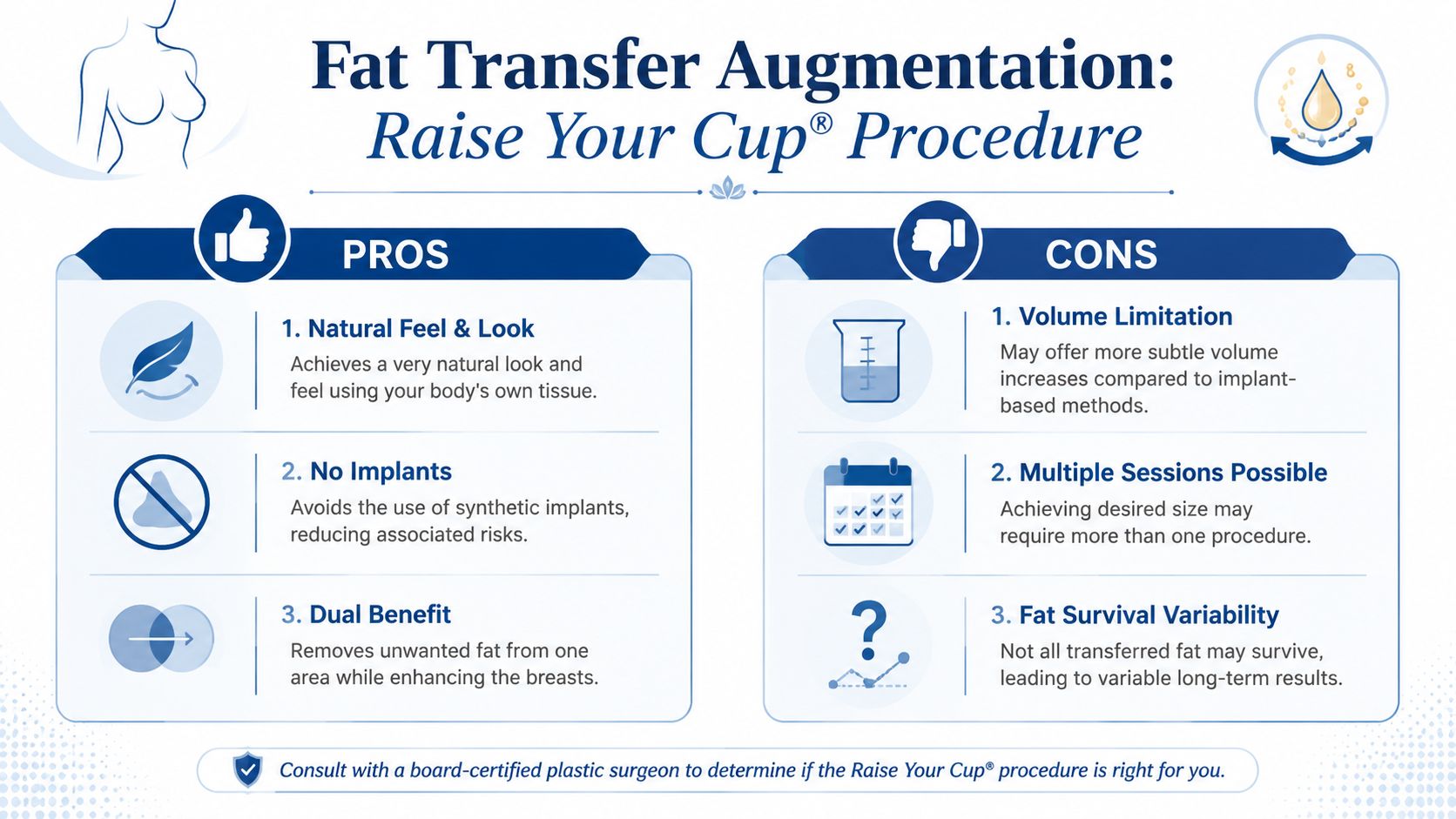
For the Raise Your Cup® procedure, the breasts settle from swelling into a stable, soft enhancement over four to six weeks, and patients may undergo hyperbaric oxygen therapy during this period to support fat cell viability, according to Ideal Face & Body's natural breast augmentation overview.
That timeline helps explain why the first look after surgery isn't the final answer. Some of what you see early is swelling. Some is newly transferred fat. The body then moves through a settling phase as the transferred cells establish themselves.
Another point patients appreciate knowing upfront is retention. For Raise Your Cup®, the average long-term fat retention rate is approximately 50%, based on the same natural breast augmentation information. That doesn't mean the result disappears. It means fat transfer is a biologic process, not a fixed implant volume.
Patients often describe the recovery differences this way:
- Breasts may feel more natural early on: There isn't the same implant-related adjustment process.
- Donor sites demand attention: The liposuction areas can be the most noticeable part of recovery day to day.
- Protection matters: Pressure, compression choice, and follow-up care all influence comfort.
- Settling takes patience: The early fuller look can change as swelling resolves.
If you're comparing expected outcomes and longevity, this article on what to expect with breast fat transfer results gives a useful patient-focused explanation.
The Awake Breast Lift Advantage in Your Recovery
Anesthesia changes the recovery experience more than many patients realize. Not just in the operating room, but in those first several hours when people are trying to stand, think clearly, drink water, and settle back in at home.
Why anesthesia type changes the early experience
Most published recovery content bundles everything under a broad post-op timeline. But there's a meaningful gap here. Most content aggregates recovery timelines based on general anesthesia, and a major gap exists in quantifying the specific reduction in recovery days for office-based local anesthesia procedures like the Awake Breast Lift, as explained in the American Society of Plastic Surgeons discussion of breast augmentation recovery.
That gap matters because patients often value the immediate recovery experience highly, even when exact day-by-day comparisons aren't available. Avoiding general anesthesia can mean avoiding some of the groggy, hungover feeling patients commonly worry about after surgery. It can also make the first trip home feel less disorienting.
What patients usually find easier
A local-anesthesia approach doesn't erase the need to heal. You still have swelling, tissue recovery, and restrictions. What it may change is how the first phase feels.
Patients often value:
- Clearer immediate recovery: They don't feel as mentally foggy afterward.
- Earlier comfort with basic movement: Standing, walking, and settling at home may feel more straightforward.
- Less concern about anesthesia “after-effects”: That part of the experience can feel simpler.
If you want a closer look at how the procedure is designed, this Awake Breast Lift guide explains the approach in more detail.
The key distinction is simple. Local anesthesia may improve the early experience, even though the tissue still needs time to complete the deeper healing process.
That's an important expectation to hold onto. Better immediate comfort does not mean you should rush your activity restrictions.
Protecting Your Investment and Enjoying Long-Term Results
Recovery is temporary. Your habits afterward shape how long your result continues to look lifted, supported, and balanced. Breast lift outcomes don't stay frozen in time because skin, gravity, weight changes, pregnancy, and natural aging all continue to affect the body.
According to this breast lift recovery and longevity guide, breast lift results typically last 10 to 15 years on average, and that longevity is influenced by skin elasticity, lifestyle habits, weight changes, pregnancy, and natural aging. The same source notes that patients should avoid strenuous exercise for 4 to 6 weeks after surgery to prevent stretching healing tissue.
Long-term protection usually comes down to a few steady habits:
- Keep weight stable: Repeated stretching and shrinking of the skin can affect shape.
- Wear support during impact: A good bra helps during workouts and high-motion activity.
- Care for scars consistently: Sun protection and scar care matter long after the skin closes.
- Stay realistic: Breasts will continue to age normally, even after a beautiful result.
Patients who do best long term usually aren't the ones chasing perfection. They're the ones who respect healing early, then support their result over time with practical habits. That combination gives the surgery its best chance to age well.
If you're considering a breast lift or fat transfer augmentation and want guidance suited for awake, office-based recovery, Ideal Face & Body offers consultations with Dr. Justin Yovino and Dr. Sarah Yovino in Beverly Hills, CA. A personalized plan can help you understand what recovery may look like for your anatomy, your procedure choice, and your schedule.