Body sculpting treatment is a broad category of surgical and non-surgical procedures designed to remove localized fat, tighten skin, and refine body proportions. The global body contouring market was estimated at USD 1.33 billion in 2023, reached USD 1.46 billion in 2024, and is projected to reach USD 2.58 billion by 2029.
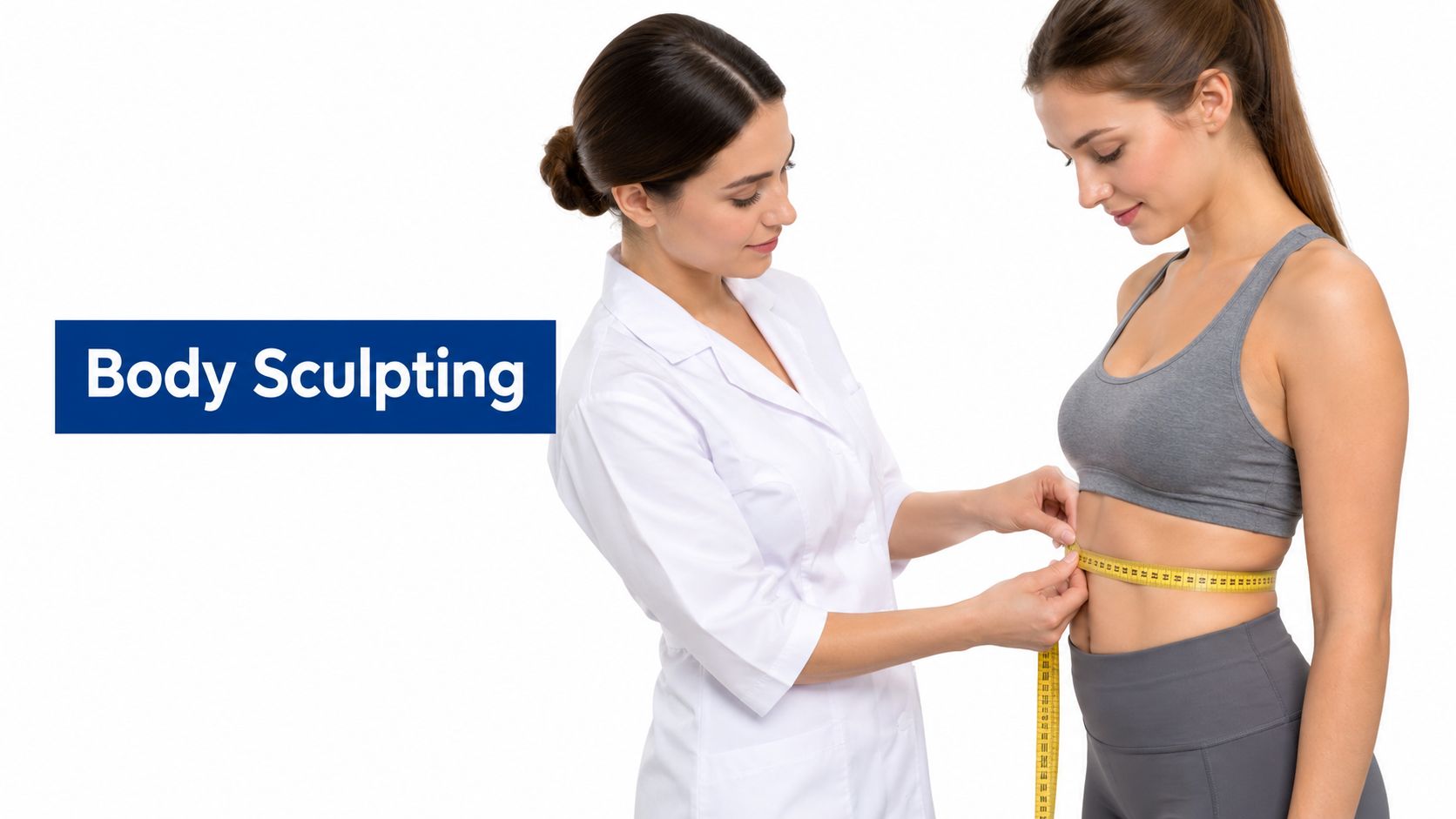
You may be asking this after noticing a stubborn area that hasn't changed with consistent eating habits or exercise. Perhaps it's the lower abdomen, flanks, upper arms, chin, or skin that feels looser after weight change or pregnancy. The important distinction is that body sculpting is a contouring tool, not a weight-loss solution. It refines selected areas rather than reducing your overall body mass.
Table of Contents
- Defining Modern Body Sculpting and Contouring
- Surgical Versus Non-Surgical Approaches
- Awake Surgical Techniques and Laser Liposculpting
- Non-Surgical Injectables and Skin Resurfacing
- Candidacy Safety and Realistic Expectations
- The Ideal Face and Body Awake Advantage
- Planning Your Body Sculpting Journey
Defining Modern Body Sculpting and Contouring
Body sculpting describes procedures that change the shape and proportion of a particular body area. Some treatments remove localized fat. Others tighten skin, improve surface texture, or restore volume in a way that creates better balance. Surgical contouring may combine several of these goals, while non-surgical treatment usually focuses on a more limited change.
A useful analogy is tailoring a garment. A tailor doesn't try to shrink the entire garment to correct one loose section. They adjust the specific area that affects the fit. Body sculpting follows a similar principle. It can refine a fat pocket or improve skin laxity, but it doesn't replace a comprehensive approach to weight management.
The field has developed considerably since the late-20th-century advancement of liposuction. Historical summaries describe earlier body-shaping efforts, including tissue-removal approaches used in the 1920s, but the major breakthrough came in the late 1970s when Italian surgeon Giorgio Fischer developed suction-assisted liposuction using cannulas. That technique established the targeted fat-removal principle still used in many contouring procedures today. This history of body sculpting surgery also describes how these procedures became popular from the 1970s onward.
Practical rule: If your primary goal is substantial weight reduction, start with medical weight-management guidance rather than a contouring procedure.
Three different goals often use the same label
Patients often use “body sculpting” to describe several distinct objectives:
- Fat reduction removes or reduces localized subcutaneous fat, such as a resistant abdominal pocket or fullness beneath the chin.
- Skin tightening addresses laxity and may use surgical excision or energy-based remodeling, depending on how much redundant skin is present.
- Proportion refinement combines changes in one or more areas so the body looks more balanced overall.
These goals overlap, but they aren't interchangeable. A non-invasive treatment may reduce a small amount of localized fat without correcting substantial loose skin. Conversely, a skin lift can remove redundant tissue without being a weight-loss procedure. The Cleveland Clinic explanation of body contouring distinguishes surgical contouring, including liposuction, tucks, and lifts, from non-surgical lipolysis methods that use cold, heat, lasers, or other energy.
If you're comparing device categories before speaking with a clinician, Omega Lasers sculpting devices can provide background on the technologies used in the broader body-sculpting market. The device is only one part of the decision. Your anatomy, skin quality, medical history, and desired degree of change matter just as much.
Surgical Versus Non-Surgical Approaches
The central decision is not just whether a treatment uses a particular device. It's whether your concern requires physical removal of fat and skin or whether a more modest, gradual change is appropriate.
Surgical contouring can remove fat directly and, when necessary, remove redundant skin. This makes it more suitable for a patient with a larger contour concern, significant skin excess, or a need for a more substantial reshaping procedure. Non-surgical lipolysis generally targets subcutaneous adipose tissue through cold, heat, laser energy, radiofrequency, or focused ultrasound. These options can be appealing when lower downtime is a priority, but their contour changes are usually more limited.
Evidence reviews identify cryolipolysis, low-level laser therapy, radiofrequency, and high-intensity focused ultrasound among the better-supported non-surgical platforms. Across studies, circumference reduction is often around 2 cm or more, and one review reported clinical effects in the range of 2 to 4 cm after treatment sessions. The evidence review of non-surgical body contouring also describes these treatments as attractive because they generally involve less downtime and favorable safety profiles, while producing less change than surgical liposuction.
Surgical vs Non-Surgical Contouring
| Feature | Surgical Contouring | Non-Surgical Lipolysis |
|---|---|---|
| Primary action | Physically removes localized fat and may remove redundant skin | Uses energy or cooling to target subcutaneous fat |
| Skin laxity | Can remove excess skin or combine fat removal with a lift | May provide modest tightening, but doesn't remove substantial skin excess |
| Degree of contour change | Usually greater when the patient is an appropriate candidate | Typically mild to moderate |
| Anesthesia | May use local, regional, or general anesthesia depending on technique and patient factors | Usually uses topical or other non-surgical comfort measures |
| Incisions | May require small access points or larger incisions, depending on the procedure | Usually no surgical incision |
| Recovery | Requires a planned recovery period and postoperative monitoring | Usually involves less downtime, though temporary tenderness, swelling, bruising, or numbness can occur |
| Best suited to | Localized fat with significant contour or skin concerns | Smaller fat pockets or mild laxity when a gradual change is acceptable |
A person with a small, stable fat pocket and good skin elasticity may reasonably consider a non-surgical approach. Someone with a substantial amount of loose skin may be disappointed by a treatment that only reduces fat. The right question is not “Which option is easiest?” but “Which option can address the tissue causing my concern?”
For readers evaluating how treatment information is presented online, Leaping Lemur Media services offer a broader look at how healthcare and aesthetic service information can be organized for patient understanding. For a patient-focused overview of non-operative refinement, this guide to sculpting without going under the knife provides another perspective.
Awake Surgical Techniques and Laser Liposculpting
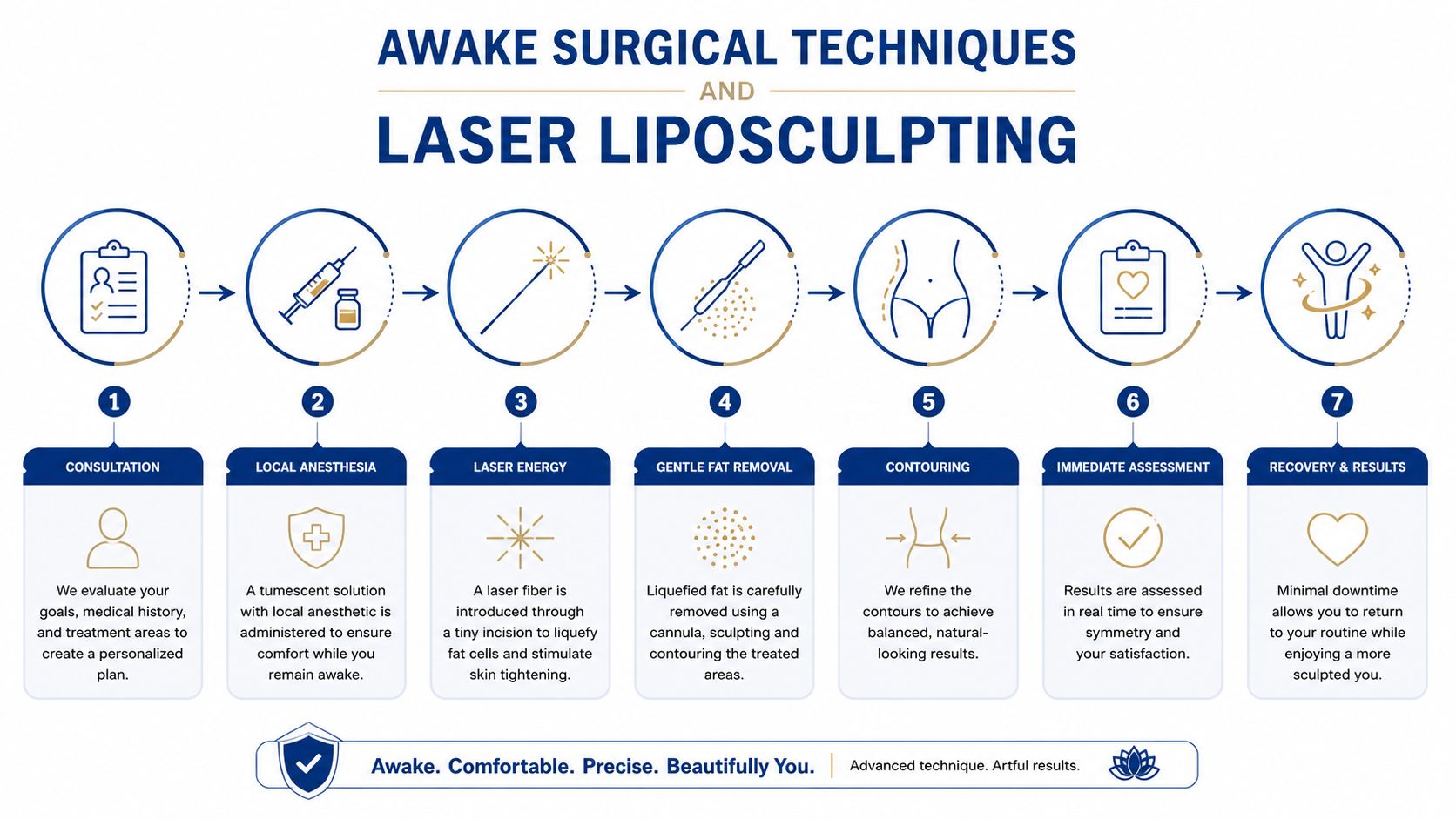
Awake surgery changes the patient experience, but it doesn't eliminate the need for careful surgical planning. In an office-based model, the treatment area is numbed with tumescent local anesthesia, and the surgeon can work while the patient remains awake and responsive.
Tumescent anesthesia uses a large, dilute solution of lidocaine and epinephrine infiltrated into the subcutaneous tissue. The epinephrine helps reduce bleeding, while the local anesthetic provides comfort during the procedure and may improve pain control afterward. The safety of this approach depends on accurate calculation, monitoring, and patient selection. A widely cited recommendation places total lidocaine exposure in the range of 35 to 55 mg per kilogram to reduce the risk of local anesthetic systemic toxicity. This technical review of tumescent anesthesia explains the dosing concern in detail.
What laser-assisted sculpting is intended to do
In laser-assisted liposculpting, a small fiber delivers energy beneath the skin to help disrupt or liquefy targeted fat before the surgeon removes it through cannulas. The technique is intended to support controlled fat removal and may contribute to skin contraction. The surgeon still has to judge how much fat to remove, how to preserve smooth transitions, and how to account for the patient's existing skin quality.
The awake surgical options described by the practice include PRECISION SCULPT laser liposuction and Awake 360 Body Sculpting. Treatment may be directed toward the abdomen, flanks, arms, chin, neck, jawline, thighs, calves, or ankles, depending on the patient's anatomy and goals. The practice also describes an Awake Breast Lift, fat transfer through Raise Your Cup, and an Awake Butt Lift for selected patients.
A breast lift, or mastopexy, doesn't automatically require implants. If breast volume is sufficient, a lift alone can reposition the nipple-areola complex and improve breast shape. A peer-reviewed review explains that implants should be added only when volume is insufficient, not as an automatic part of every lift. This review of mastopexy without implants provides further context.
For a closer explanation of the operative sequence, this guide to laser liposuction discusses how the technique is performed. A consultation should still determine whether laser assistance is appropriate, because energy-assisted treatment isn't a universal answer for every skin type, fat distribution, or degree of laxity.
Local anesthesia is still a medical procedure
Awake doesn't mean casual. The clinician must review medications, allergies, prior procedures, bleeding risks, cardiovascular conditions, and the total planned anesthetic dose. Some office-based protocols use dilute lidocaine without additional intravenous or inhaled anesthesia, while other surgical settings may use different anesthesia plans. A review of office-based anesthesia in plastic surgery emphasizes that safety depends on technique, dosing, and patient selection.
Non-Surgical Injectables and Skin Resurfacing
Not every patient who wants a more sculpted appearance needs fat removal. Sometimes the issue is skin texture, mild laxity, cellulite, muscle activity, or a lack of balanced volume. A complete aesthetic plan may address the fat layer, muscle behavior, skin quality, and volume separately rather than treating every concern with liposuction.
Injectables can create subtle changes in proportion. Neurotoxins relax selected muscles, while dermal fillers restore or shape volume in appropriate areas. These treatments are generally more about refinement than dramatic body-volume change. The clinician must assess whether the visible concern comes from excess tissue, a deficiency of volume, muscular movement, or the quality of the overlying skin.
Skin treatments address a different layer
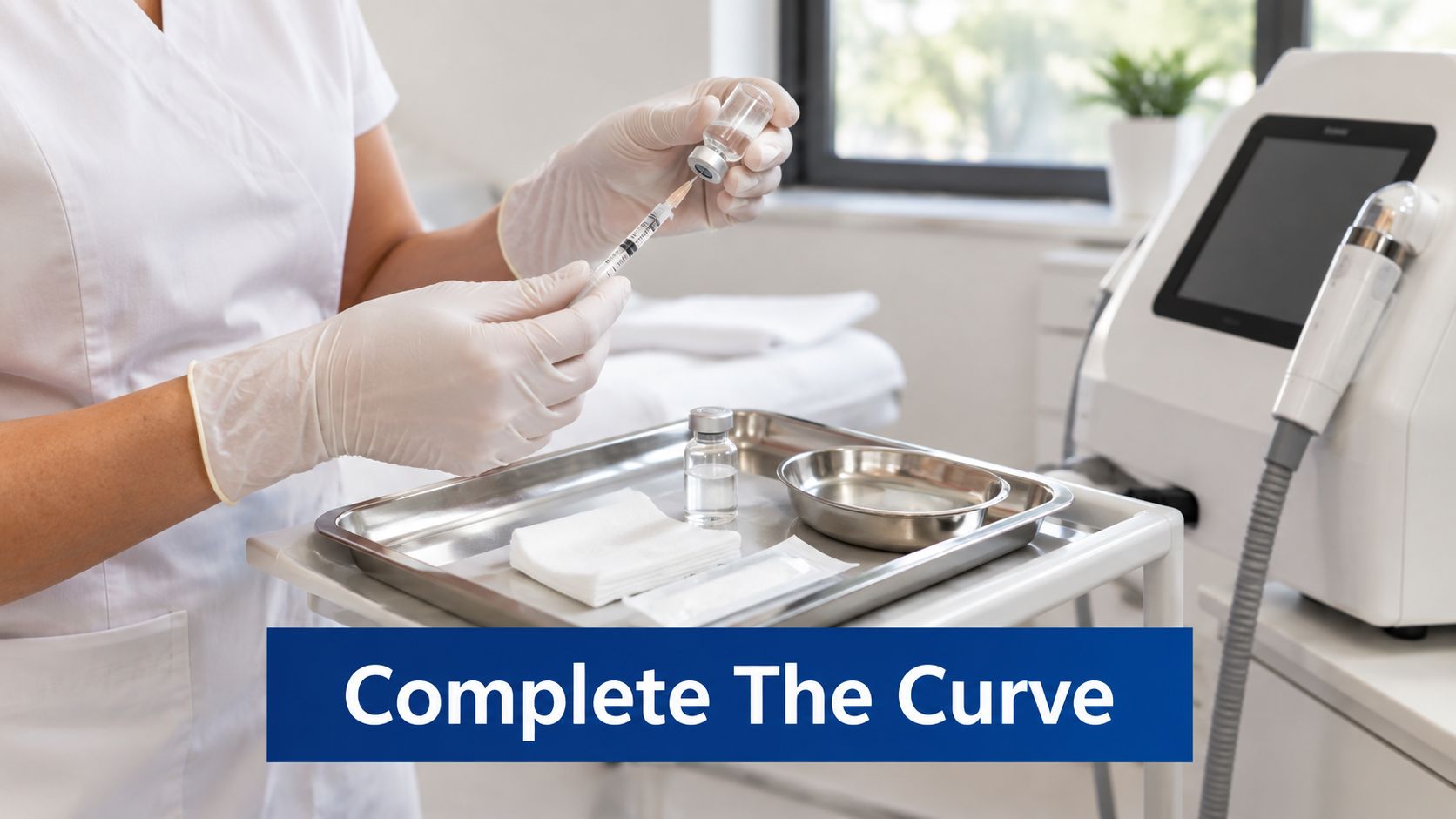
Energy-based skin treatments work on the skin and tissues beneath it rather than physically removing a larger fat pocket. Radiofrequency microneedling systems such as Morpheus8 can be used to encourage collagen remodeling and improve the appearance of lax or uneven skin. Venus Viva and other energy-based treatments may also be considered for texture and surface refinement. CO2 resurfacing uses controlled energy to renew the skin surface and stimulate a healing response.
These approaches can complement contouring when the patient has mild laxity or textural concerns. They aren't equivalent to removing redundant skin. If a fold of skin hangs significantly after weight change, an energy treatment may not provide the degree of correction that surgical excision can offer.
Matching treatment to the visible problem
A practical consultation separates the concern into questions:
- Is there a localized fat pocket? Fat reduction may be relevant.
- Is the main problem loose skin? Skin tightening or surgical removal may be more appropriate.
- Is the surface uneven? Resurfacing, microneedling, or cellulite treatment may help refine texture.
- Is the shape affected by volume loss? A carefully selected filler or fat-transfer discussion may be more useful.
- Is muscle activity contributing to the appearance? A neurotoxin may be considered in an appropriate treatment area.
This overview of dermal filler types can help explain how fillers differ by composition and intended use. The safest plan treats the correct anatomical layer instead of adding more treatment just because a device or injectable is available.
Candidacy Safety and Realistic Expectations
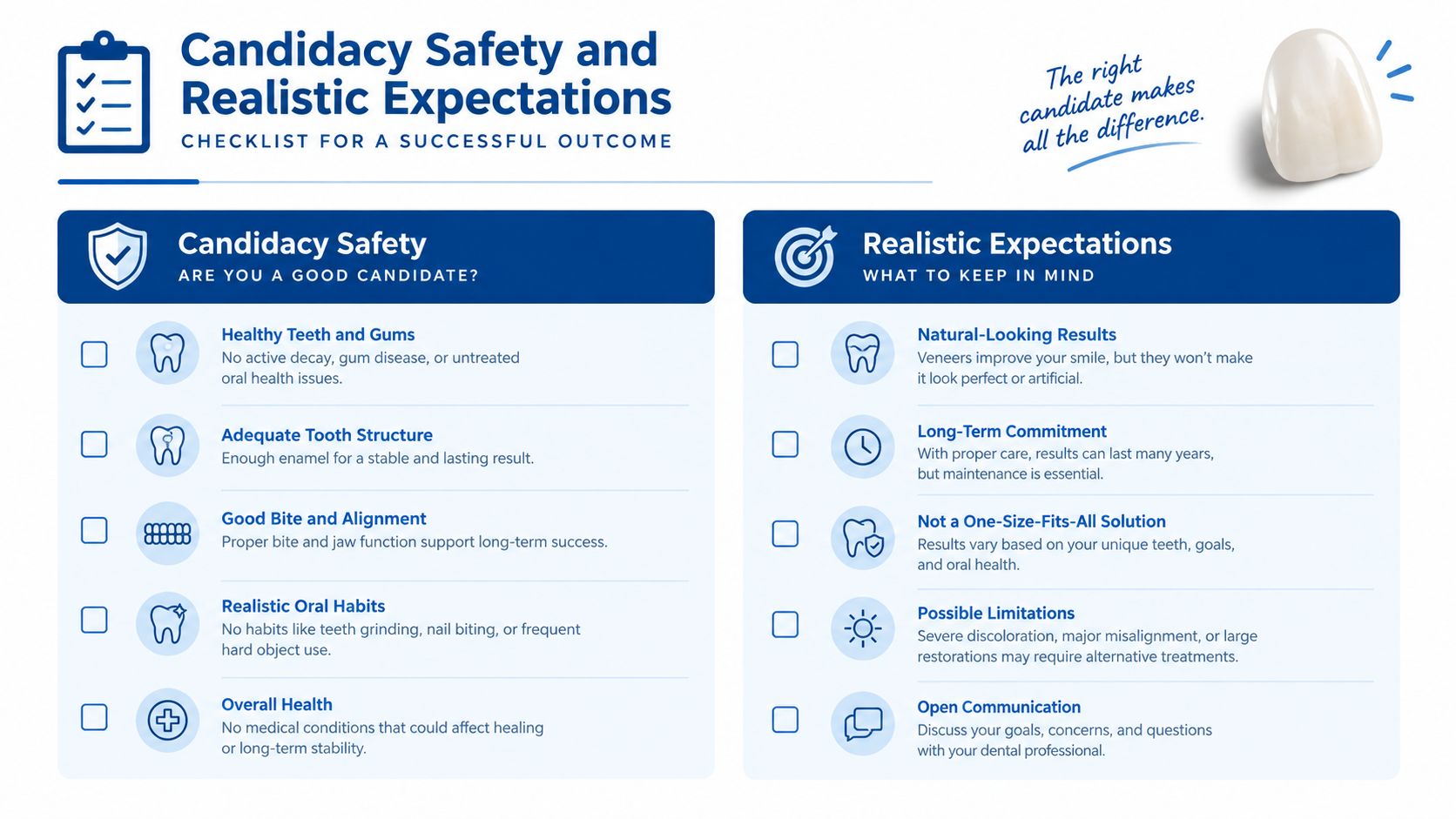
Body sculpting begins with patient selection, not a device. A responsible consultation reviews weight stability, skin elasticity, medical conditions, tobacco use, medications, previous operations, and the technique being considered. “Minimally invasive” describes access, not the absence of risk.
A stronger candidate usually has a relatively stable weight, a localized concern, and expectations that match what the treatment can change. The clinician must also assess whether the skin can contract after fat reduction. Removing fat beneath skin with limited elasticity may reveal more laxity instead of creating a tighter contour.
Risk changes with the procedure
Surgical contouring can involve bleeding, infection, wound-healing problems, fluid collections, contour irregularities, nerve or vessel injury, and scarring. Abdominal procedures may also carry risks such as bowel perforation, while fat embolism is a serious but uncommon concern. Obesity, tobacco use, diabetes, and hypertension can increase risk. The clinical review of body-contouring complications covers short-term complications and longer-term concerns, including edema, lymphedema, scar formation, and skin laxity.
Liposuction adds risks tied to fat removal and the cannula itself. The surgeon must control the depth and distribution of suction to reduce contour problems, while also considering internal puncture, seroma formation, fluid and electrolyte changes, fat embolism, and lidocaine toxicity. Numbness or infection can occur with liposuction, but these are shared surgical concerns rather than separate reasons to repeat the entire complication list. Mayo Clinic's liposuction guidance notes that some procedures use local or regional anesthesia instead of general anesthesia.
Non-surgical treatments involve a different set of decisions. Pain, redness, swelling, bruising, numbness, nodules, and problems involving active implants may occur depending on the technology. Cooling-based treatments also require discussion of paradoxical adipose hyperplasia, in which treated fat becomes enlarged rather than reduced. The treatment plan should identify the relevant risk before the procedure, not after an unexpected result.
What results can and can't do
Non-invasive body sculpting generally produces a modest circumference change, not major weight loss. A review of cryolipolysis found reductions in local circumference and fat thickness without a significant effect on overall weight. The review of cryolipolysis outcomes and risks also supports discussing procedure-specific complications and realistic expectations.
Durability depends on the treatment, body site, skin quality, and future weight changes. Reduced fat does not prevent remaining fat cells from enlarging after weight gain. Skin laxity can also change with aging, pregnancy, or substantial weight fluctuation.
Safety question to ask: “What tissue are you treating, what result is realistic for my anatomy, and what happens if the skin doesn't contract as expected?”
The Ideal Face and Body Awake Advantage
An awake, office-based model places the anesthesia conversation at the center of the consultation. Instead of assuming that every surgical contouring procedure requires general anesthesia, the team evaluates whether local anesthesia is appropriate for the planned treatment and the patient's health profile.
At the Beverly Hills practice, Dr. Justin Yovino and Dr. Sarah Yovino use an awake approach for selected procedures. The model is designed to keep the patient conscious and comfortable while avoiding general anesthesia and, for many procedures, intravenous lines. The patient can communicate during treatment, which may help the surgeon assess comfort and positioning in real time.
That approach has practical advantages, but it isn't automatically safer for every patient or every operation. A local-anesthesia procedure still requires a sterile setting, accurate dosing, emergency preparedness, appropriate monitoring, and a surgeon who can recognize when a patient's anatomy or medical history calls for a different plan.
The office setting affects the patient experience
An office-based environment may feel less intimidating than a hospital-based surgical model. Patients may avoid the grogginess associated with deeper anesthesia and can receive a recovery plan specific to the treatment area. The practice also describes custom head and neck wrapping after contouring, which is intended to support postoperative care in selected cases.
The awake model can be particularly relevant for patients who prioritize local anesthesia, want to remain responsive, or are considering targeted contouring rather than a larger operation. It still requires preparation. Patients need to follow medication and eating instructions, arrange appropriate transportation or support when advised, and understand that swelling and temporary discomfort are part of recovery.
The practice no longer offers breast implant placement, implant-based breast augmentation, or breast implant revision procedures. Breast-related options discussed with patients may instead include an awake breast lift, breast reduction, implant removal where appropriate, or fat-transfer procedures, depending on the clinical situation.
Technique should follow anatomy
A proprietary name doesn't determine candidacy. The surgeon must decide whether a patient needs fat removal, skin excision, tightening, volume restoration, or a combination. For one person, awake laser liposculpting may address localized fat. For another, a lift or a non-surgical skin treatment may better match the problem.
That distinction is central to informed consent. The awake advantage is not only the absence of general anesthesia. It's the combination of local-anesthesia planning, careful treatment selection, direct communication, and a recovery protocol that fits the actual procedure.
Planning Your Body Sculpting Journey
A productive consultation begins with a specific concern rather than a device name. You might say, “My lower abdomen remains full even though my weight is stable,” or, “My upper arms have both fat and loose skin.” That description gives the surgeon a starting point for examining the tissue involved.
During a virtual or in-person consultation, the medical team should review your goals, medical history, prior procedures, medications, and recovery needs. The physical examination evaluates fat distribution, skin elasticity, asymmetry, scars, and the relationship between the treatment area and the rest of the body. Before-and-after galleries can help you understand the surgeon's aesthetic approach, but they can't promise that your result will look identical.
Questions that improve the decision
Bring questions that reveal the reasoning behind the recommendation:
- Which tissue is causing my concern? Ask whether the issue is fat, skin, volume, muscle activity, or a combination.
- Why is this technique appropriate? The answer should relate to your anatomy and goals, not only to the availability of a device.
- What anesthesia will be used? Ask about local anesthesia, sedation, general anesthesia, dosing, monitoring, and what would change the plan.
- What risks apply to me? Discuss medical conditions, tobacco use, medications, previous surgery, and wound healing.
- What recovery should I plan for? Ask about compression, activity restrictions, swelling, follow-up visits, and signs that require immediate contact.
- What happens if I lose or gain weight later? A realistic plan includes maintenance and the possibility of future changes.
A good consultation should leave you with a plan, not pressure. You should understand what will change, what won't change, and why the recommended treatment fits your anatomy.
Before scheduling, confirm who will perform the procedure, where it will take place, how complications are handled, and what follow-up is included. If you're considering an awake procedure, ask specifically how the team calculates local-anesthetic dosing and what monitoring is used.
Body sculpting can be a thoughtful way to refine a stable, localized concern when the treatment matches the tissue involved. It can't replace weight management, and it can't make every type of loose skin disappear. The safest path is a personalized consultation that sets a realistic endpoint before any treatment begins.
Ideal Face & Body offers awake, office-based body contouring under local anesthesia, including laser liposculpting and selected breast and fat-transfer procedures, along with non-surgical injectables and skin-resurfacing treatments. Visit Ideal Face & Body to review the available options and request a virtual or in-person consultation focused on your anatomy, goals, anesthesia preferences, and recovery plan.