
Yes, you can often breastfeed after a breast lift, but the answer depends on the surgical technique and how much glandular tissue and ductal continuity were preserved. Milk supply may be reduced, and supplementation may be needed. In one analysis of patients who had a superior-pedicle mastopexy, the reported breastfeeding success rate was 43%; another comparison reported success of 82% before surgery and 41% after breast reduction or mastopexy (clinical analysis of breastfeeding after breast surgery).
So the useful question isn't, "Can you breastfeed after a breast lift?" It's what your operation preserved, what it changed, and how you'll support feeding if your milk supply is limited. Those study figures aren't personal predictions: patient selection, surgical details, prior breastfeeding experience, follow-up, and definitions of success vary. The anatomy and your feeding plan matter more than a single percentage.
Table of Contents
- What Happens to Your Milk Ducts During a Breast Lift
- How Different Mastopexy Techniques Affect Lactation Potential
- Pedicle Patterns and Why the Nipple's Connection Matters
- Timing Pregnancy After a Lift and What Lactation Can Change
- Building a Feeding Plan When Supply May Be Reduced
- The Supply-and-Demand Reality of Milk Production After Surgery
- Questions to Ask at Your Consultation and the Awake Lift Context
What Happens to Your Milk Ducts During a Breast Lift
Yes, breastfeeding after a breast lift is often possible. To understand why it may still be challenging for some patients, think of the breast as a reservoir connected to pipes: glandular tissue makes milk, and ducts carry it toward the nipple. The nipple-areola complex is the outlet, but it also plays a role in the nerve signals involved in lactation.
A lift, or mastopexy, reshapes the breast by removing excess skin and repositioning the nipple. The name of the procedure alone doesn't tell you whether the milk-making tissue and ducts stayed connected. The important question is how the surgeon handled those structures while lifting and reshaping the breast.
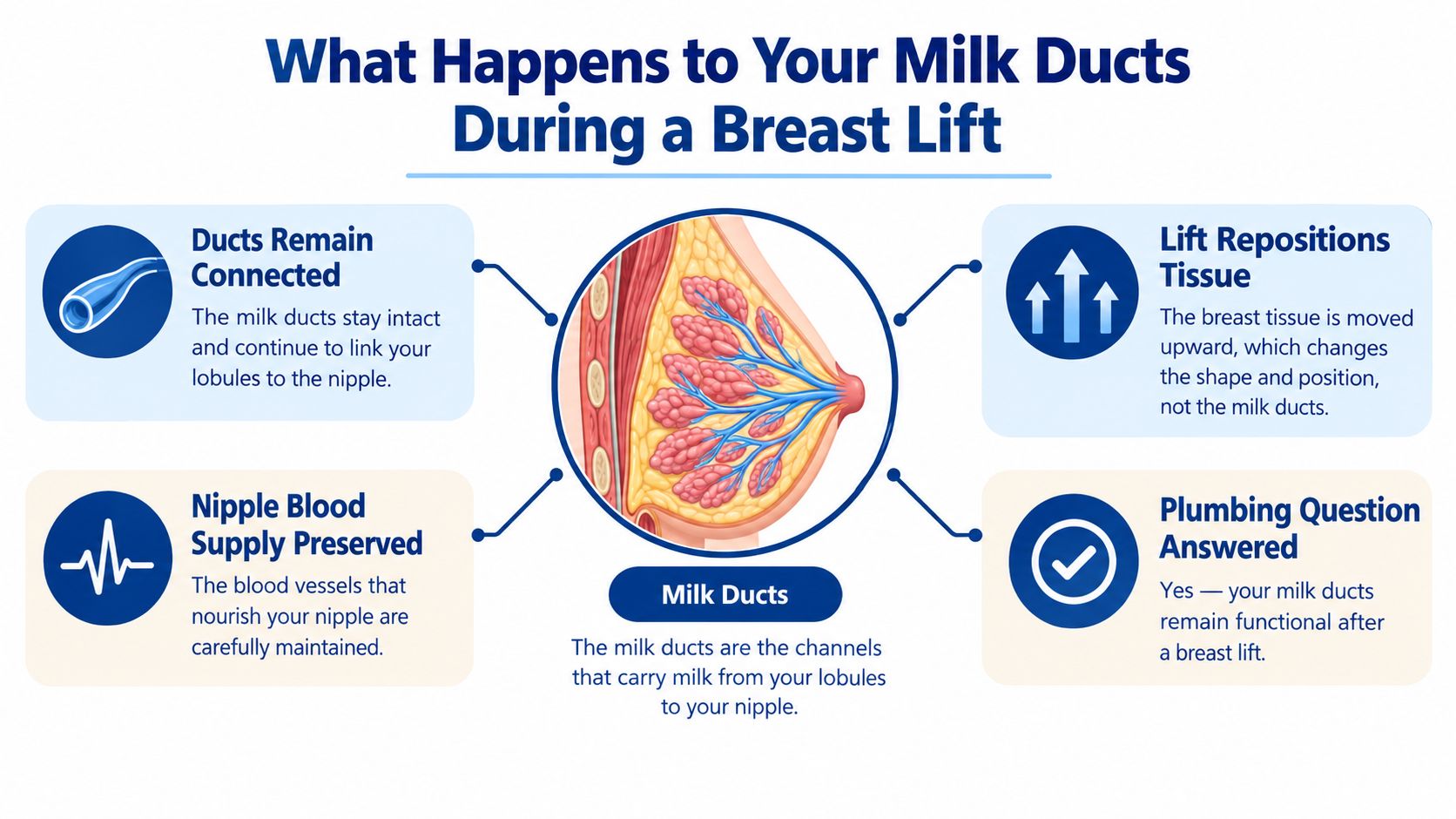
The reservoir and the pipes
A skin-focused lift may leave much of the glandular tissue in place, while a procedure that removes or rearranges more tissue can affect the pathways milk uses to reach the nipple. Scarring or duct disruption may reduce milk transport even when some milk is being produced. If the nipple's nerve pathways are affected, the signals involved in milk production and let-down may also be altered.
That's why two operations both called “breast lifts” can have different implications for lactation. One may mainly tighten the skin envelope and reposition the nipple on attached tissue. Another may involve substantial glandular reshaping or removal, making it more like a reduction in how it affects milk-producing capacity.
The practical question: Did the nipple remain connected to functional breast tissue and ducts, and how much of that tissue was preserved?
A breast lift doesn't automatically sever the milk ducts, and an incision around the areola doesn't by itself tell you whether breastfeeding will be possible. Ask about the internal tissue handling, not just the scar pattern. If you've already had surgery, the operative report may document the technique, the tissue bridge used to move the nipple, and any tissue removed.
How Different Mastopexy Techniques Affect Lactation Potential
How much a breast lift may affect feeding depends partly on what the surgeon does beneath the skin. A skin-focused lift can tighten the outer envelope while leaving more milk-producing tissue in place. If the operation also removes or extensively reshapes glandular tissue, less functional tissue may remain, or milk pathways may be disrupted. The scar pattern alone cannot show which approach is planned.
Consider two patients seeking a similar breast shape. One may need mainly skin removal; another may need tissue removed or repositioned to achieve the same contour. Their lactation prospects may differ, even if their incisions look alike. Your anatomy and the amount of tissue handled help shape an individual prediction, though neither can promise a particular supply.
| Technique | Tissue Handling | Nipple Attachment | Lactation Impact |
|---|---|---|---|
| Skin-focused lift | Primarily removes excess skin, with limited glandular handling | May remain attached to underlying tissue | May preserve more lactation potential, but cannot guarantee supply |
| Lift with glandular rearrangement or resection | Repositions or removes some milk-producing tissue | May remain on a pedicle, depending on the plan | Greater potential for reduced supply or interrupted milk transport |
What the evidence can and can't tell you
A clinical comparison found breastfeeding success was 82% before surgery and 41% after breast reduction or mastopexy. Exclusive breastfeeding rates also fell after surgery, with the largest reductions associated with procedures that removed glandular tissue (clinical comparison of breastfeeding outcomes). These results combine different procedures and patient circumstances, so they cannot predict an individual outcome. They do show why the amount of tissue removed matters when discussing the possibility of partial rather than exclusive breastfeeding.
A study result describes a group, not your personal odds. Your anatomy, the planned tissue handling, and how much milk your body produces all affect what feeding may look like. The aim of the consultation is to understand those factors before surgery, not to treat a technique label as a guarantee.
Before surgery, ask what tissue the surgeon expects to remove or rearrange, and how that choice may affect lactation. The breast lift overview from Ideal Face & Body can help you prepare questions about the procedure. If pregnancy is in your plans, discuss a feeding plan with your care team before delivery, including how you would monitor whether your baby is getting enough milk.
Pedicle Patterns and Why the Nipple's Connection Matters
A pedicle is a bridge of tissue that keeps the nipple-areola complex connected to the breast as the surgeon moves it into a higher position. Depending on the technique, that bridge may preserve some combination of blood supply, nerves, glandular tissue, and ducts. Its design is one of the key details to discuss when future breastfeeding matters to you.
A superior, superomedial, or central pedicle describes where the supporting tissue comes from. These are not guarantees of a particular feeding outcome. The amount of tissue preserved, your anatomy, and the details of the operation all matter.
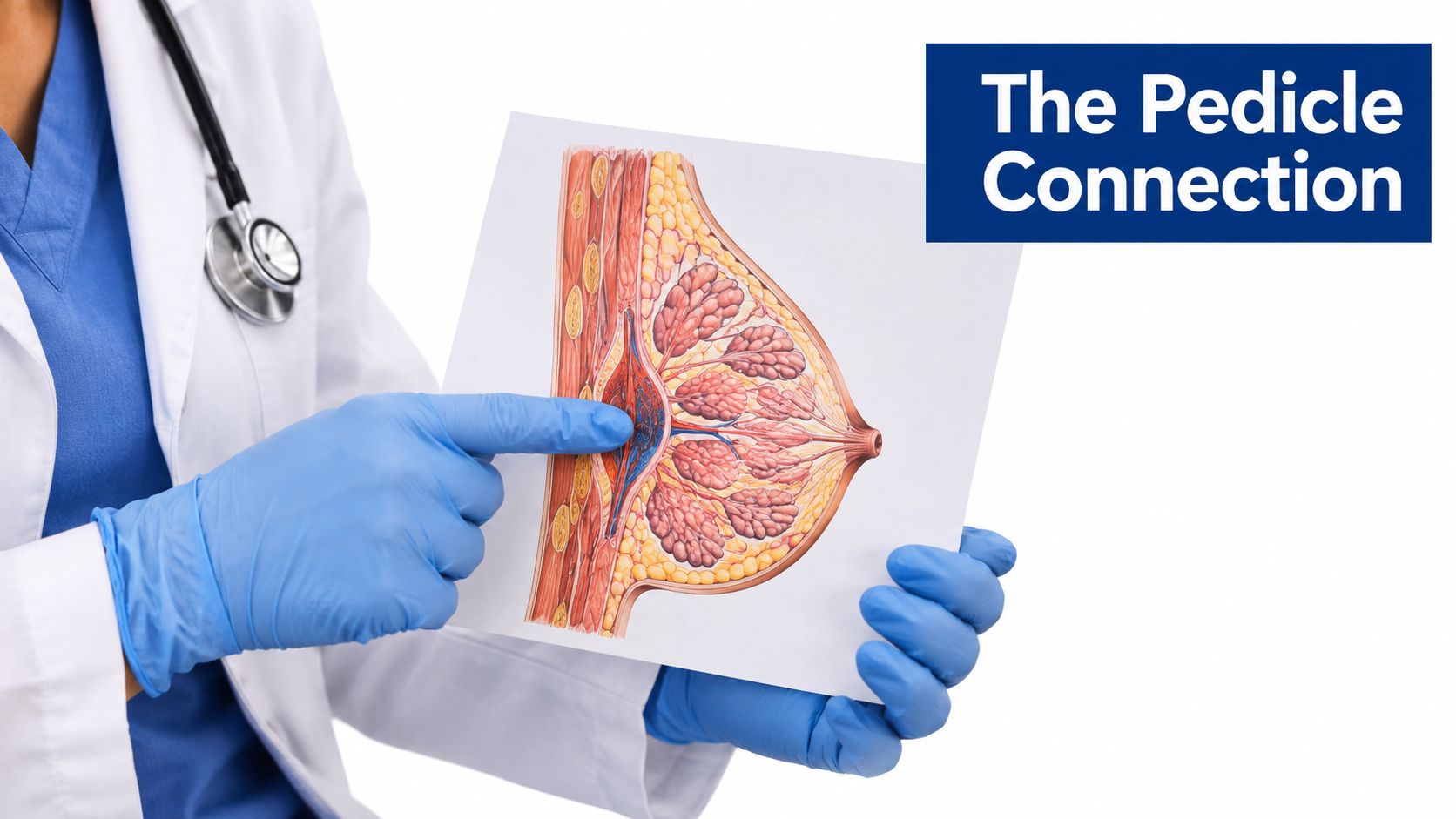
Attached tissue versus a free nipple graft
With a pedicled transposition, the nipple remains attached to a segment of tissue as it is repositioned. That can preserve some ductal continuity and lactation potential, though it can't guarantee enough milk for exclusive feeding. A free nipple graft is different: the nipple is detached and placed in a new position, severing its connection to the underlying ducts. Direct breastfeeding from that nipple is generally incompatible with this approach.
Reported early breastfeeding rates have differed by pedicle type, with a surgical review reporting 61% for superior-pedicle techniques versus 43% to 55% for several other pedicle approaches (review of breastfeeding after breast surgery). Such comparisons have limits: the studies vary in technique, patient group, and how they define breastfeeding success. These are study findings, not personal odds.
A “minimal scar” label doesn't tell you whether the milk ducts remained connected. Ask what tissue supports the nipple, not only where the incisions will be.
The most useful consultation question is specific: which pedicle is planned, and will it keep the nipple connected to meaningful amounts of glandular tissue and ducts? Ask, too, whether the surgeon anticipates changes in nipple sensation. Sensation matters because nerve pathways contribute to the signals involved in milk production and let-down.
Timing Pregnancy After a Lift and What Lactation Can Change
There isn't a single evidence-based waiting interval after a breast lift that applies to every patient planning a pregnancy. Your surgeon can advise when your healing is complete and how the timing fits your anatomy and goals. If pregnancy is part of your near-term plans, bring it up before surgery so the discussion can account for both lactation potential and the possibility of changes to the cosmetic result.
Pregnancy and lactation can change breast volume and skin. The breasts may stretch during pregnancy and later lose volume, which can alter the lifted shape even if breastfeeding is possible. That change doesn't mean breastfeeding itself automatically undoes a lift; it reflects the breast's response to pregnancy and the shifts in volume that can accompany feeding and weaning.
Separate the feeding question from the cosmetic question
It helps to make two decisions explicit with your surgeon. First, how will the planned technique affect the structures involved in milk production and delivery? Second, how might a future pregnancy affect the appearance of the result? The answers are related to planning, but they aren't the same question.
If you're considering more than one type of breast procedure, a guide to breastfeeding considerations for breast surgery can help frame what to discuss. Your own planned operation, rather than a general label, should guide individualized advice.
You may decide that preserving future options is your priority, or you may choose to proceed knowing that pregnancy could change the result and that milk supply could be reduced. Neither choice can guarantee a particular feeding experience. Ask your surgeon to document the planned technique and expected tissue handling so your future care team has useful information.
Building a Feeding Plan When Supply May Be Reduced
The most useful plan doesn't stop at “breastfeeding may be possible.” It also prepares for the possibility that you'll produce some milk but not enough for every feed. Partial breastfeeding and exclusive breastfeeding are different outcomes, and needing supplementation doesn't mean that nursing has failed.
Start the conversation during pregnancy with a lactation professional and your obstetric care team. Tell them you've had a breast lift, and share the operative details if you have them. That gives them context to help you assess feeding and make a plan for monitoring your baby.
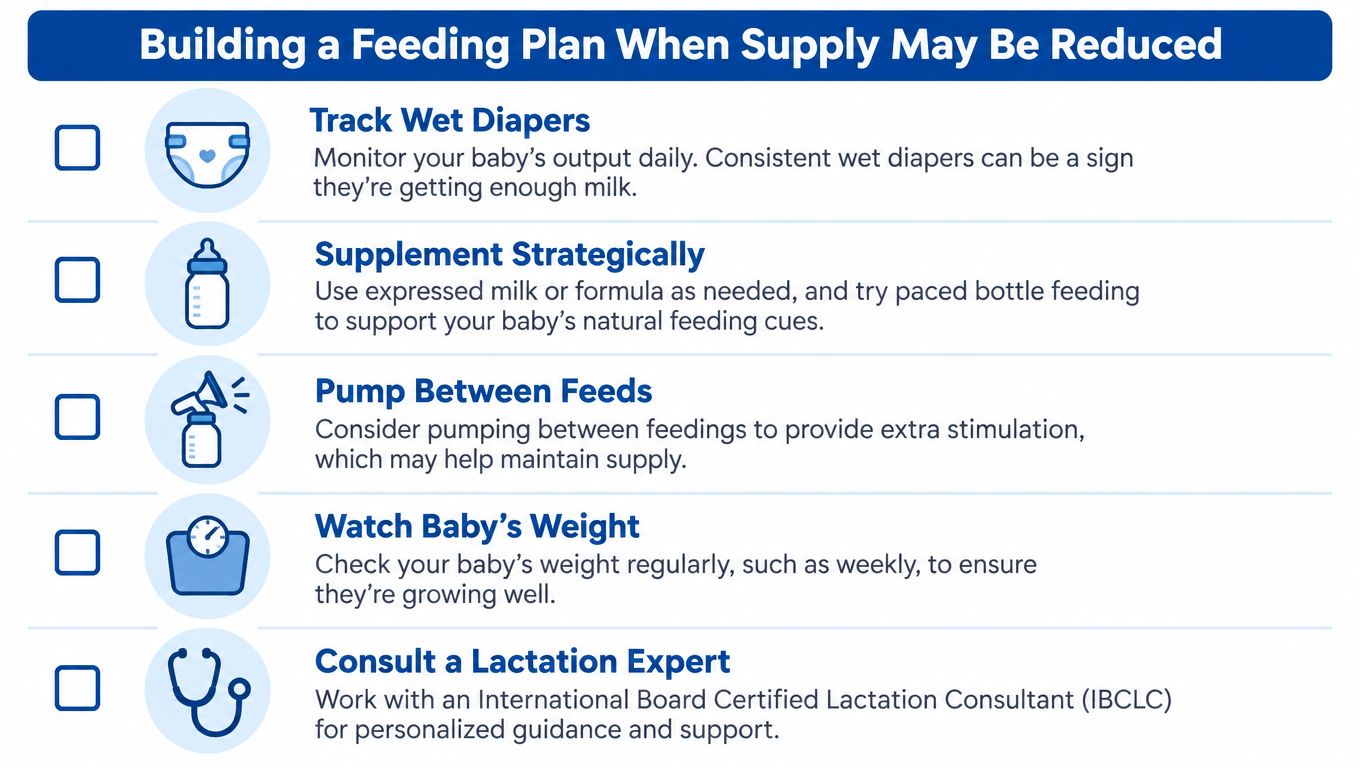
A practical plan for early feeding
- Arrange support early. Identify a lactation consultant before delivery, and let them know about the surgery and any known details about the technique.
- Monitor the baby's feeding and growth. Follow guidance from your care team on weight checks and signs that the baby is getting enough milk. Seek help promptly if feeding or weight gain raises concern.
- Use supplementation when medically indicated. Your clinician can advise whether formula or donor milk is appropriate and how to combine it with breastfeeding.
- Consider pumping when advised. Pumping or hand expression may help provide stimulation and remove milk, especially when a baby isn't transferring milk effectively. Ask for a strategy that fits your situation.
- Talk through the emotional side. Feeding challenges can feel stressful. For supportive ideas alongside clinical guidance, these breastfeeding stress relief tips may offer a helpful starting point.
There isn't one supplementation threshold that fits everyone after surgery. The decision should reflect the baby's health, weight trend, feeding effectiveness, and your milk production, as assessed by your care team. Ask in advance who to contact if you're worried, and what signs should prompt timely evaluation.
Keep your surgical history in the conversation after birth. A feeding plan can be adjusted as your baby grows and your milk production becomes clearer. The goal is a safe, sustainable approach that supports the baby and respects what your body can provide.
The Supply-and-Demand Reality of Milk Production After Surgery
Milk production responds to stimulation and milk removal. Nipple stimulation helps trigger hormonal signals involved in lactation, and regularly removing milk can help maintain production. When milk remains in the breast, local feedback can suppress further secretion.
The CDC describes relactation as requiring frequent nipple stimulation and frequent, complete milk extraction to build or rebuild milk supply (CDC guidance on relactation). For someone who can produce milk after a lift, regular feeding or pumping may help protect or build that supply. The response varies, so a lactation professional can help tailor a practical approach.
What stimulation can and can't do
Frequent milk removal can support the tissue and ducts that remain functional. It can't restore glandular tissue that was removed or reconnect ducts that were substantially interrupted during surgery. That's why effort matters, but it can't replace the information you need about the operation itself.
If you're already pumping or nursing and concerned about supply, discuss the pattern with a qualified lactation professional rather than increasing stimulation without guidance. They can help review feeding effectiveness and whether supplementation is needed. A practical increase milk supply guide can also offer general strategies to discuss with your care team.
A realistic expectation is neither “surgery makes breastfeeding impossible” nor “pumping solves every supply problem.” You may produce some or substantial milk, and you may still need additional feeding support. The plan should respond to your baby's needs and your body's actual output.
Questions to Ask at Your Consultation and the Awake Lift Context
A consultation should give you a clear account of what the surgeon plans to do, not just the name of the procedure. If breastfeeding is important to you, say so directly. Then ask questions that connect the aesthetic plan to the anatomy involved in lactation.
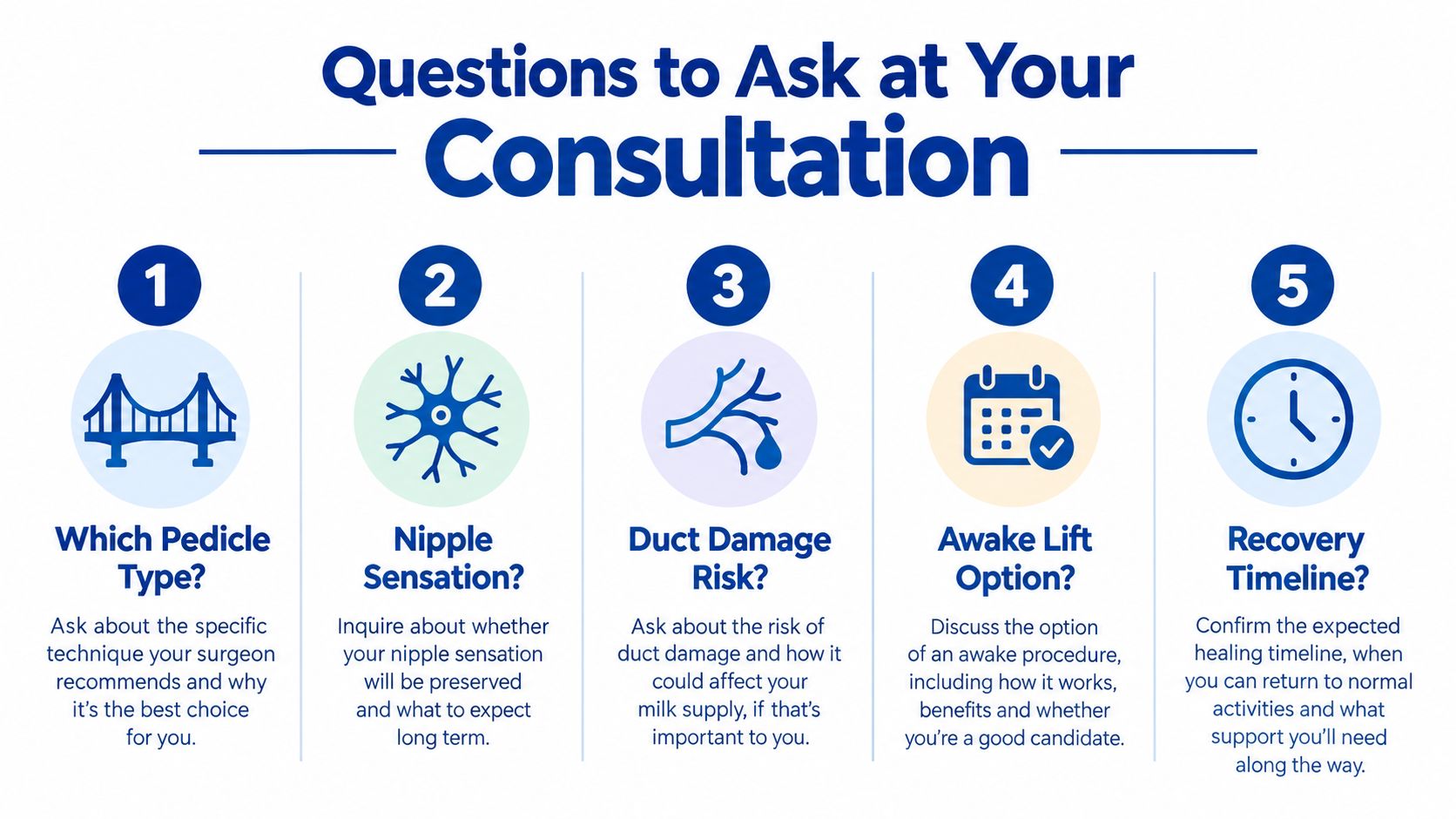
Use this checklist to make the discussion specific:
- Which pedicle is planned? Ask how the nipple will stay connected to the breast tissue as it's repositioned.
- Will glandular tissue be removed or rearranged? The amount and location of tissue handling can affect the milk-producing tissue and ducts.
- Will the nipple remain attached, or is a free nipple graft being considered? Clarify what that means for direct breastfeeding.
- What sensation changes are possible? Ask how the technique may affect nipple sensation and the nerve signals involved in lactation.
- What will the operative record document? Request a record of the pedicle, nipple repositioning, and tissue removed or rearranged. That information can help an obstetrician and lactation consultant plan individualized support.
Discussing an awake lift
Ideal Face & Body offers an office-based Awake Breast Lift under local anesthesia, performed by Dr. Sarah Yovino and Dr. Justin Yovino in Beverly Hills, CA. The anesthesia setting doesn't change the anatomical questions that matter for lactation: tissue preservation, duct continuity, and how the nipple is repositioned. You can learn more about the awake breast lift approach and discuss how a proposed technique fits your goals.
A tissue-preserving plan may leave a real opportunity to breastfeed, but no technique can promise exclusive breastfeeding. The most useful outlook is informed and prepared: understand the surgical details, share them with your future care team, and make a feeding plan that can adapt to your milk supply.
Ideal Face & Body offers consultations for awake, office-based breast lifts, with discussion of technique and breastfeeding goals as part of planning. If you're weighing surgery against future pregnancy or nursing, visit Ideal Face & Body to explore the procedure and prepare questions for a personalized consultation.