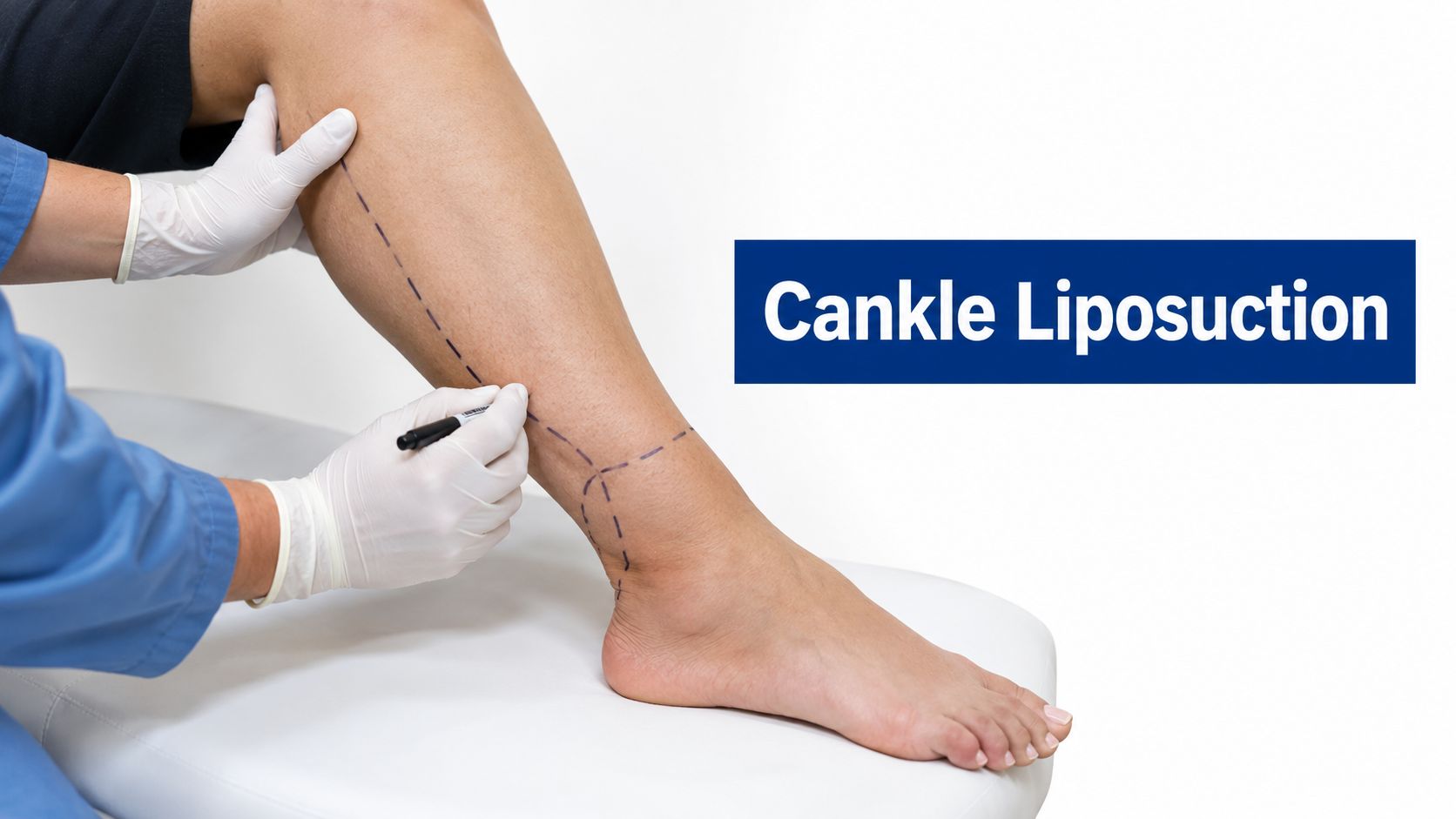
You notice it when pants fit oddly over your lower legs, or when you catch your reflection and think the ankle should taper more than it does. That frustration is common, but the fix isn't always cosmetic suction. Liposuction for cankles only makes sense when the width is driven by removable fat, not by swelling, calf shape, or something medical that needs a different workup.
Table of Contents
- Why Cankles Are a Distinctive Cosmetic Concern
- What Makes an Ankle Look Thick
- How Surgeons Decide Who Is a Good Candidate
- How Laser-Assisted Awake Liposuction Works
- What Recovery and Results Look Like
- Risks and Limits Most Consumer Articles Soften
- When Liposuction Is the Wrong Tool for the Job
- Bringing the Right Questions to a Consultation
Why Cankles Are a Distinctive Cosmetic Concern
A patient usually doesn't walk in saying, “My ankles are wide.” They say the whole lower leg looks heavy, the calf never seems to narrow, and no amount of exercise gives them the clean transition they want. That visual complaint has a shorthand, cankles, meaning the calf and ankle seem to merge into one continuous shape.
The problem is that the appearance can come from several very different sources. A lower leg can look thick because of subcutaneous fat, but it can also look thick because of fluid retention, venous disease, lymphedema, lipedema, muscle bulk, or skeletal proportions. That's why a cosmetic label doesn't tell you what's going on.
A thick ankle is a description, not a diagnosis.
The distinction matters because treatment follows cause. If the fullness is mostly fat, contouring can help. If the size changes during the day, or if swelling is part of the picture, suctioning fat won't solve the main issue and can even leave the leg looking less balanced.
That's why I think of this area as a diagnostic question first and a procedure second. A narrow calf-to-ankle transition can be a beautiful surgical target, but only after you've ruled out the reasons that make the contour look broad in the first place. For the right patient, the operation can sharpen shape and restore definition. For the wrong patient, it's the wrong tool entirely.
What Makes an Ankle Look Thick
The five contributors I look at first
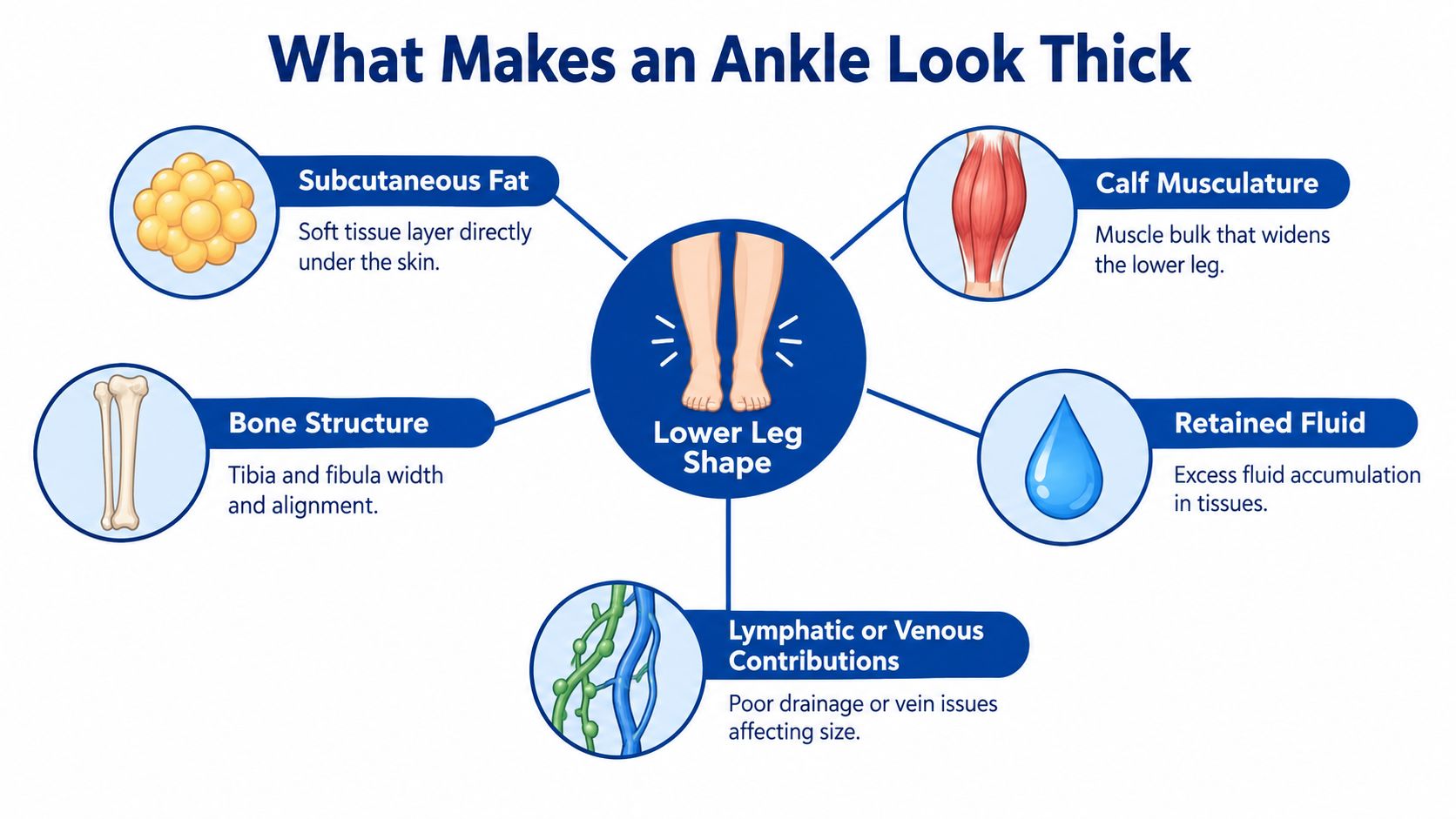
Two ankles can look equally broad for completely different reasons. That is why I break the exam into five contributors before I talk about liposuction. The visible width may come from fat, calf musculature, bone structure, retained fluid, or venous or lymphatic dysfunction.
Fat sits in the subcutaneous layer. It is usually soft, pinchable, and fairly stable from one part of the day to another. Calf musculature creates bulk higher and farther back on the leg, and it can blunt the calf-to-ankle transition even in a lean patient. Liposuction does not make muscle smaller.
Bone structure sets the frame. Some patients have a wider ankle skeleton or a shorter, less tapered lower leg, and no contouring technique can turn that into a narrow-boned shape. Then there is retained fluid, which behaves differently. Swelling often shifts with standing, heat, activity, salt intake, or elevation.
The fifth category is venous or lymphatic contribution. In those cases, the leg looks larger because fluid return is impaired, not because there is a removable pocket of fat. The pattern matters. Ankle-predominant swelling, pitting, heaviness, discomfort, and day-to-day fluctuation all point the evaluation in a different direction, as described in clinical patterns of lower-leg swelling and common causes.
Why the distinction changes treatment
Treatment follows the dominant cause. If the fullness is mostly adipose tissue, liposuction can refine contour. If the lower leg is enlarged by edema, lipedema, lymphedema, muscle bulk, or skeletal proportions, suction either will not help or will help far less than the patient expects.
This is an unforgiving area. Aggressive fat removal around the ankle can expose irregularities, leave the transition looking unnatural, or worsen imbalance if swelling or structure was the actual driver in the first place. Conservative laser-assisted contouring tends to work better here because the goal is not maximum volume removal. The goal is a cleaner outline in the patient who has a genuine, stable fat component.
Practical rule: If the shape changes through the day, swelling moves higher on the list than fat.
A thick ankle becomes a surgical problem only when stable, localized fat is the main reason it looks thick.
How Surgeons Decide Who Is a Good Candidate
What I'm checking in the exam room
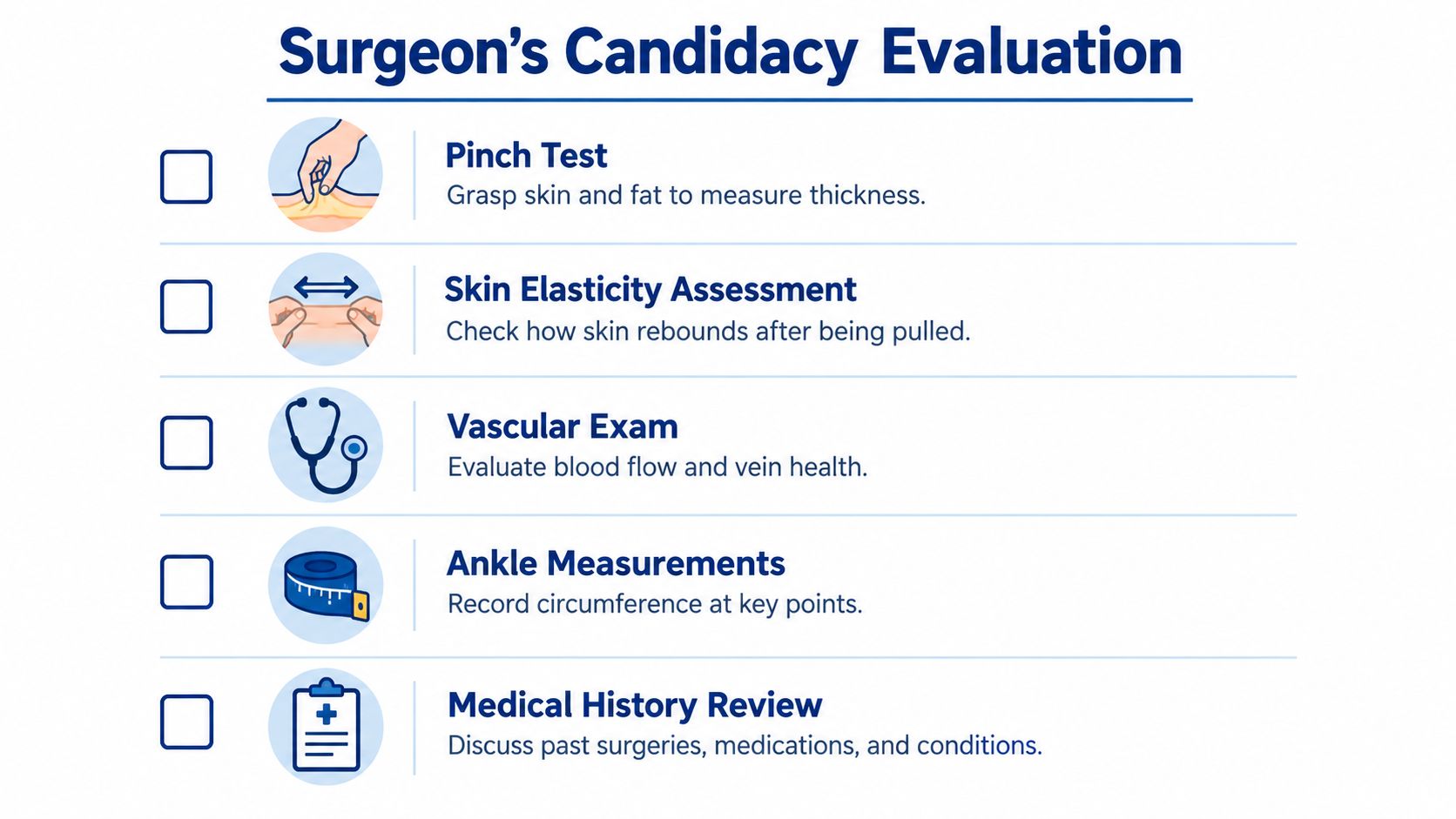
I start by asking whether the ankle fat feels pinchable and soft, or whether the lower leg looks broad because of deeper anatomy. I examine skin quality, the calf-to-ankle transition, and how the tissue compresses. I also ask whether the appearance remains fairly stable from morning to evening. A stable contour supports fat as the main contributor, while noticeable daily change raises concern about swelling.
I then screen for vascular and edema-related problems. The history may point toward venous disease, lymphedema, lipedema, medication effects, or systemic heart, kidney, or liver conditions. A vascular exam helps determine whether cosmetic suction is appropriate or whether medical evaluation should come first. Lower-extremity enlargement can have several causes, and removing fat will not correct impaired fluid drainage or an untreated medical condition.
I document the ankle-calf transition in standing and relaxed positions, because proportion changes with posture. Three-dimensional marking shows where the contour should be softened rather than targeting the smallest possible circumference.
Findings that should make you pause
Unilateral swelling, pain, or sudden enlargement requires medical attention before elective contouring. Non-pitting swelling, skin changes, heaviness, or a history suggesting lymphatic or venous disease should also slow the process. These findings can indicate that the visible fullness is not primarily a stable pocket of removable fat.
If the lower leg is swollen for a medical reason, removing fat won't fix the core problem.
The strongest candidate has localized, stable fat, reasonable skin quality, and goals focused on a cleaner taper rather than dramatic size reduction. Conservative laser-assisted contouring generally suits this area better than aggressive suction because the ankle has little room for technical error. The aim is controlled refinement, not maximum removal. That trade-off matters, since overcorrection can create hollows, irregular transitions, or an imbalance between the calf and ankle.
How Laser-Assisted Awake Liposuction Works
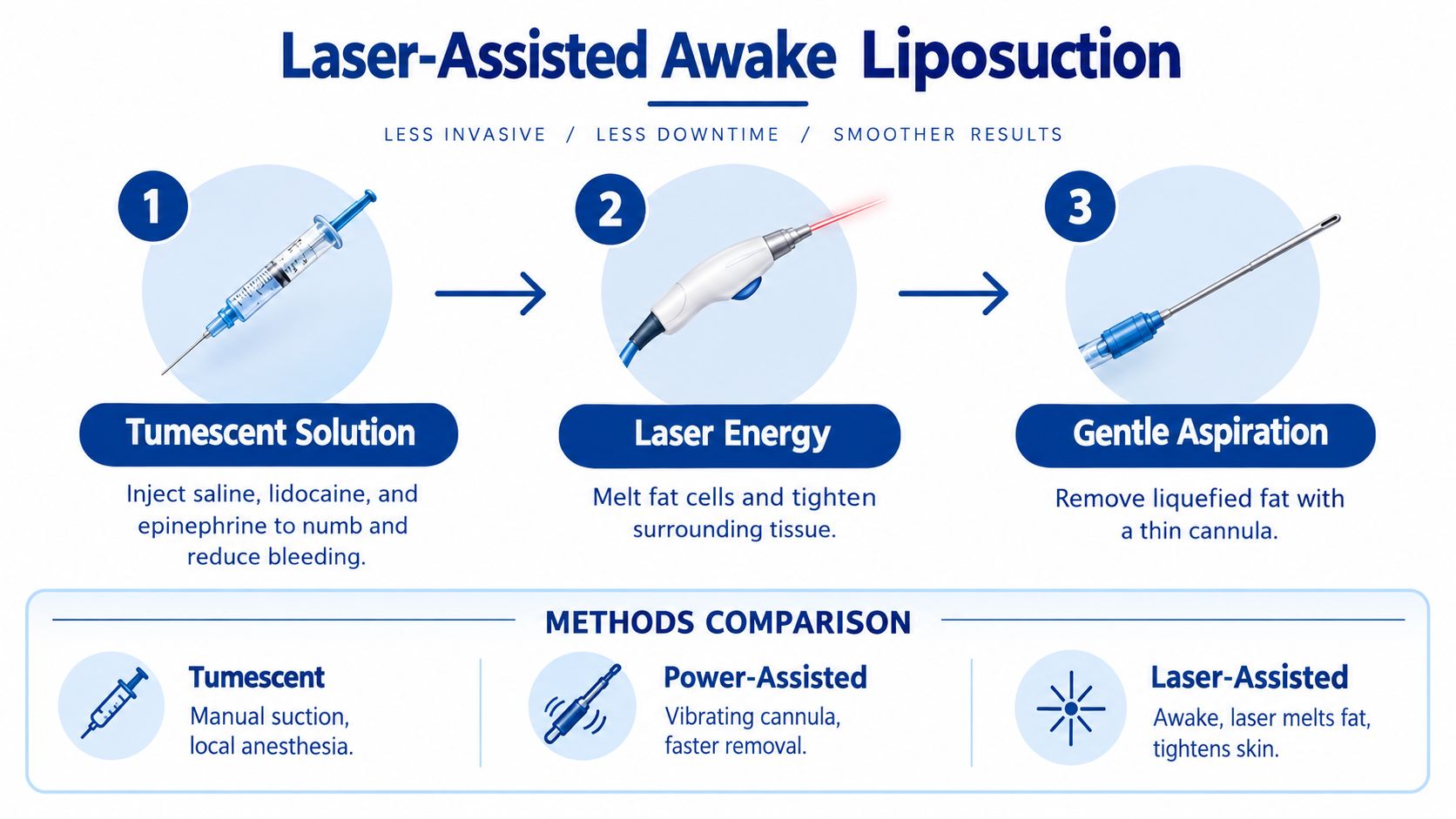
Awake lower-leg contouring usually starts with tumescent infiltration, which numbs the area and helps limit bleeding. A laser-assisted technique then applies energy to loosen fat and support tissue contraction before gentle aspiration with a fine cannula. This overview of how laser liposuction is done explains the sequence in more technical detail.
Why the ankle needs a conservative hand
The ankle is unforgiving because the soft tissue is thin, and superficial nerves and vessels sit close to the surface. Small irregularities can therefore become visible, while aggressive suction may create a hollow, groove, or carved-looking transition.
Fine-cannula work and conservative laser-assisted contouring often suit this region better than forceful removal. The objective is a smoother calf-to-ankle taper while preserving a consistent layer of fat. Chasing the smallest possible measurement can produce an unnatural contour and leave too little tissue to soften the transition.
What awake surgery changes in practice
With properly administered local anesthesia, office-based awake surgery can be more comfortable than patients expect. The patient can reposition, and the surgeon can assess the contour while the leg retains more natural muscle tone than it would under deep anesthesia. That visual and tactile feedback is useful in the narrow zone around the calf and ankle.
Awake treatment does not make the procedure minor or eliminate surgical risk. It changes how the surgeon monitors comfort, position, and shape during contouring. In a patient with a small, localized fat deposit, that control can support measured removal. It is a poor match for generalized lower-leg enlargement, swelling from an underlying condition, or a goal of dramatic size reduction. Conservative energy-assisted work fits this area because aggressive suction has little margin for error.
What Recovery and Results Look Like
The first days and weeks
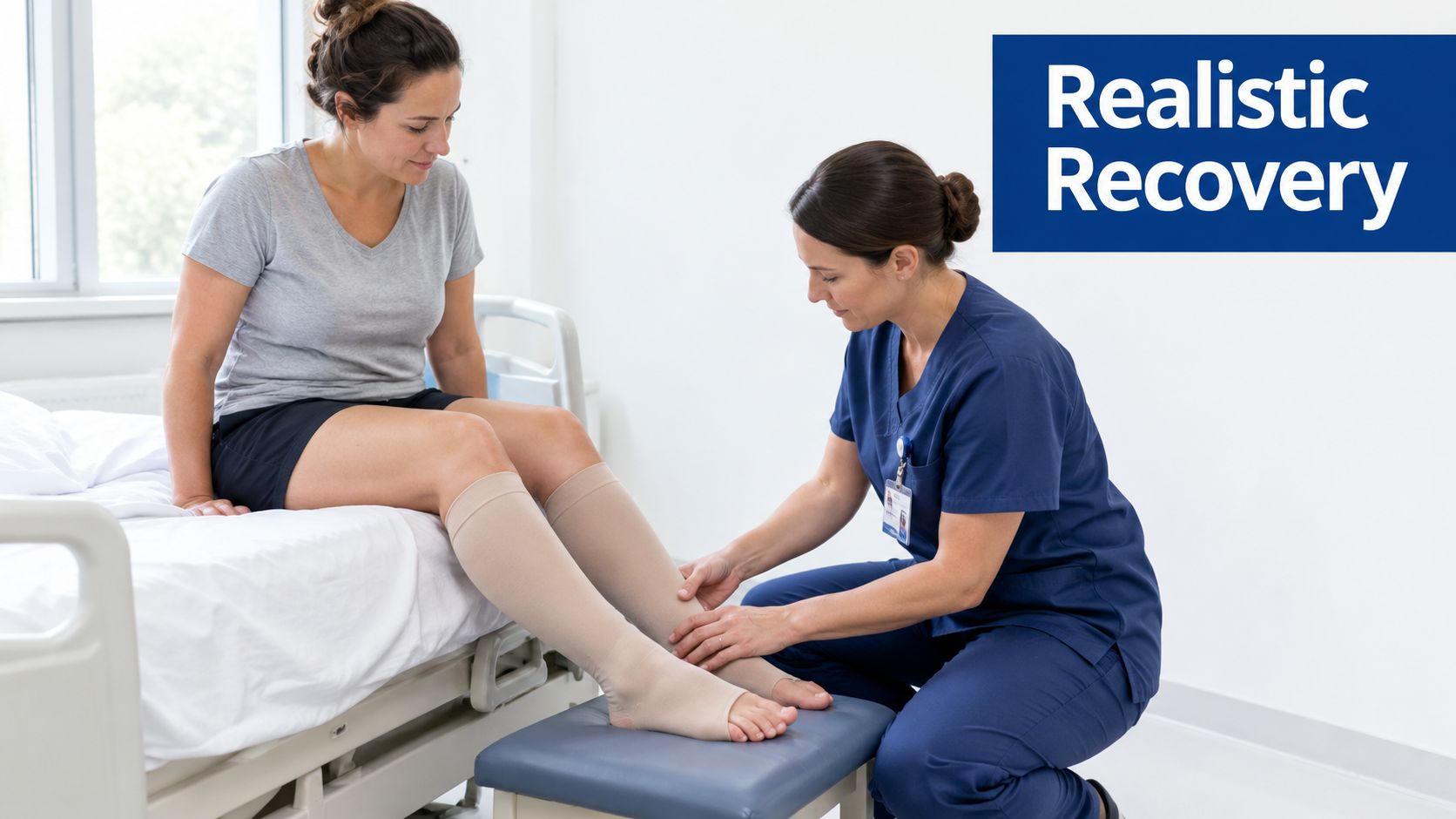
The early recovery centers on compression, elevation, walking as advised, and allowing fluid to settle. Swelling is expected, and the lower leg may feel tighter than anticipated. That sensation usually reflects the normal tissue response to surgery, although increasing pain, marked redness, or other concerning changes warrant prompt contact with the surgical team.
A prospective study of ankle-focused laser-assisted lipolysis reported that swelling resolved within 4 weeks in 9 patients, or 30% of the sample, and within 6 weeks in the remaining 21 patients, or 70%. The same study found that 29 of 30 patients, approximately 96.7%, said they would recommend the treatment 2014 prospective study. These findings offer a useful short-term reference, but the sample was small and cannot establish that every thick ankle will respond well to surgery.
For a week-by-week walkthrough of the healing timeline, see this awake liposuction recovery guide.
What a good result means
A good result usually brings a smoother calf-to-ankle transition, clearer definition around the ankle bone, and a lighter-looking contour in clothing and profile. It does not justify pursuing the smallest possible ankle at the expense of a natural taper. The lower leg can settle more slowly than the abdomen or flanks because fluid clearance is slower and the tissue envelope is tighter.
The technical series on calf-and-ankle liposculpture illustrates the measured approach this region requires. In a 70-patient retrospective series, the mean combined aspirate was 1,395 mL and mean operative time was 98 minutes. No major hematoma, infection, skin necrosis, deep-vein thrombosis, or pulmonary embolism was observed, although 30% developed minor ecchymoses that resolved over several weeks retrospective calf-and-ankle series.
A separate lower-leg review reported 30 cases, a mean aspirate of 793 ± 418 mL per leg, and three complications, including hyperpigmentation, scar thickening, and pressure injury with cellulitis and prolonged edema lower-leg review.
Expect a gradual change rather than a quick reveal. The contour may improve before the final shape settles.
Risks and Limits Most Consumer Articles Soften
The lower leg punishes technical errors. If suction is too aggressive or uneven, the result can be dimples, grooves, asymmetry, contour irregularity, or overcorrection case-based evidence on lower-leg liposuction complications. In the reported cases, the problem was not a minor mismatch, it was a surface defect that could look worse than the original contour.
Complication reviews also show why restraint matters. A lower-leg analysis found visible problems such as hyperpigmentation, scar thickening, and pressure injury with cellulitis and prolonged edema, which is why compression choice, pressure points, and contour mapping deserve as much attention as the suction itself.
Practical rule: More suction does not equal better ankle shape.
The broader safety literature is reassuring in selected patients, but it does not erase the lower leg's limits. A nationwide analysis reported an overall complication occurrence of approximately 1.5%, with 1.16% among liposuction alone, hematoma at 0.5%, infection at 0.3%, and pulmonary embolism at 0.05% overall nationwide liposuction analysis. Even so, the ankle and calf are less forgiving than many other areas, and the published position statement on cosmetic foot and ankle surgery warns that evidence remains limited and that pigmentation changes, chronic pain, nerve injury, wound complications, and iatrogenic edema are real concerns.
Medical factors such as anemia also change the risk calculus, which we cover in our guide on liposuction safety for anemic patients.
If a consultation promises dramatic narrowing without trade-offs, that is a warning sign. Conservative technique lowers risk, but it cannot remove the lower leg's tendency to swell or show contour problems.
When Liposuction Is the Wrong Tool for the Job
A thick ankle is not always a fat problem. If the fullness comes from venous insufficiency, lymphedema, lipedema, medication effects, or systemic heart, kidney, or liver disease, the first step is medical evaluation, not contour surgery. The pattern matters, whether the swelling is one-sided or both-sided, sudden or long-standing, pitting or non-pitting, painful or painless.
Compression therapy can help when fluid retention is driving the shape. Manual lymphatic drainage may belong in a swelling-focused plan, and a medication review can matter when a drug is part of the problem. Some patients also need physical therapy and strengthening, because calf function and posture can change the silhouette more than a cosmetic procedure can.
That does not dismiss the aesthetic concern. It means the treatment has to match the cause. A patient with lipedema or lymphatic disease may still improve, but the right starting point is often a vascular or lymphatic specialist rather than suction.
When I evaluate a patient with broad lower legs, I want the diagnosis clear before I discuss surgery. If fluid, drainage, or systemic disease is driving the shape, treatment should begin there, and contour surgery waits until the medical picture is clear.
Bringing the Right Questions to a Consultation
A useful consultation for liposuction for cankles should feel specific, not sales-driven. Ask how the surgeon decided the enlargement is fat rather than fluid, muscle, or bone. Ask what the anesthesia setting will be, whether a fine cannula is planned, and how the surgeon protects the contour transition at the ankle.
You should also ask what the surgeon expects to remove, how compression is handled, and what they do if swelling hangs on longer than expected. If they talk about a precise taper but can't explain how they avoid grooves, overcorrection, or pressure injury, keep looking. The lower leg rewards restraint.
Before you commit, get clear on these points:
- Cause first: What makes them confident the fullness is localized fat and not edema, lipedema, or venous disease?
- Technique choice: Why do they recommend laser-assisted, power-assisted, or another approach for your anatomy?
- Recovery plan: How long should compression stay in place, and what swelling pattern should you expect?
- Complication plan: What happens if you develop persistent edema, pigmentation change, or contour irregularity?
- Realistic goal: Are they trying to slim the ankle, sharpen the taper, or both?
In the right candidate, lower-leg contouring can be subtle and meaningful. In the wrong candidate, it can be a detour. The best consult gives you the truth before it gives you the procedure.
If you're trying to decide whether your lower-leg fullness is a contour issue or a medical one, Ideal Face & Body can evaluate the anatomy and discuss awake, office-based body contouring when fat is the main problem. Visit Ideal Face & Body to learn how their approach to calf and ankle liposuction fits patients who want a conservative, technically careful plan.