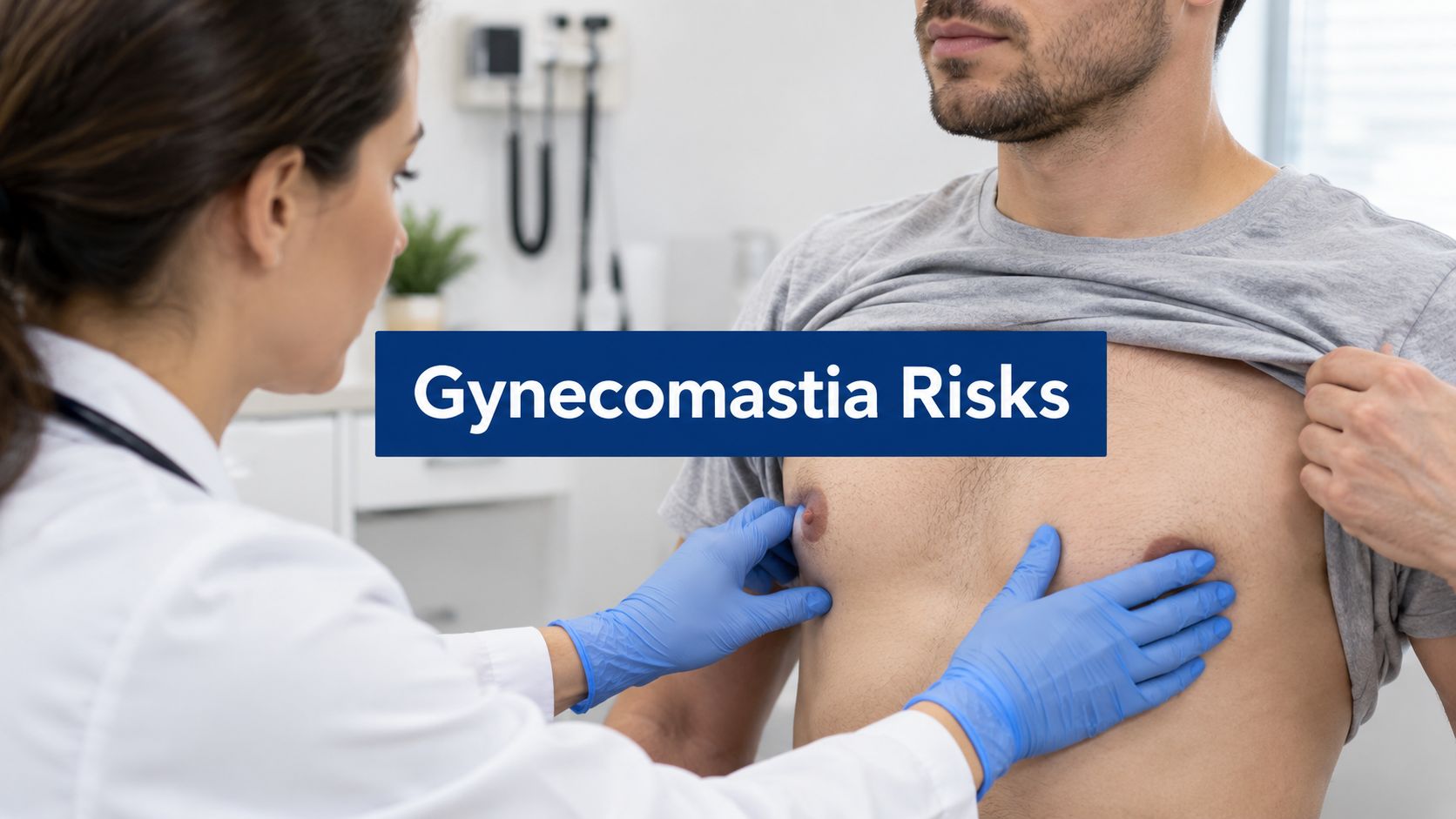
Major complications occur in 4.7% of gynecomastia surgery patients, and many side effects are temporary. The risk changes substantially, however, depending on whether the procedure uses liposuction alone or requires tissue excision.
That distinction is often lost in polished surgery marketing. “Gynecomastia surgery” sounds like one standardized operation, but liposuction, excision, and combined treatment create different wounds, different dead spaces, and different opportunities for bleeding, fluid collection, contour irregularity, and sensory change. Your personal risk depends not only on the surgeon's technique, but also on what type of tissue must be removed.
Table of Contents
- Understanding Gynecomastia Surgery Side Effects
- The Recovery Timeline Explained
- Comparing Surgical Approaches and Their Risks
- Preventing Complications After Surgery
- Long-Term Side Effects and Late Complications
- Making an Informed Decision About Your Surgery
Understanding Gynecomastia Surgery Side Effects
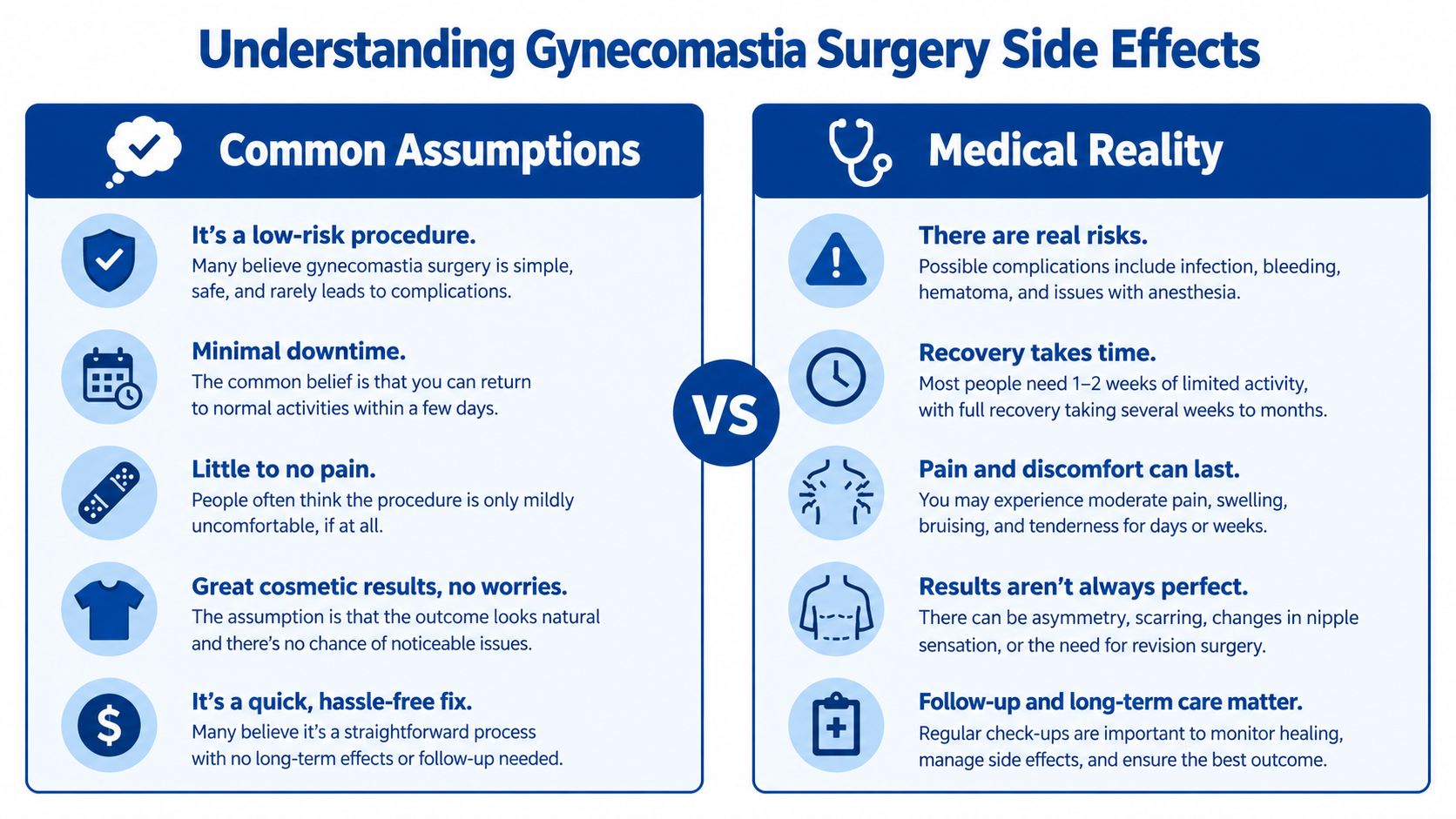
A reassuring headline can be misleading if it combines every surgical technique and every follow-up period into one complication rate. In a recent 10-year, single-center series of 128 patients and 239 treated breasts, 24 patients developed complications, an overall rate of 18.8%. Yet the rate varied sharply by technique, from 0% after liposuction alone to 31.4% after excision, while combined excision and liposuction had a rate of 3.7%. Grafting had the highest reported rate in that series, at 37.5%. These figures are reported in the peer-reviewed surgical series on gynecomastia outcomes.
The same study reported major complications in 4.7% of patients, and those major events were hematomas requiring reoperation. That doesn't mean every patient faces a high likelihood of a serious problem. It means the phrase “low risk” needs context. A mild, temporary sensory change and a hematoma requiring another operation shouldn't be treated as equivalent outcomes.
Why reported rates differ
A systematic review of 94 gynecomastia surgery studies reported complication rates of 14.87% after aspiration, 30.64% after excision, and 11.76% after combined approaches. It also recorded 322 hematoma cases, representing 22.88% of the complications in that review. A separate 30-day study reported surgical complication rates of 3.9% and 1.9% in its comparison groups, with medical complications of 0.0% and 0.3%, illustrating how much the result changes with follow-up length, technique mix, and the definition of a complication. The figures are summarized in this systematic review of gynecomastia surgery complications.
| Technique | Reported complication rate | Primary risk |
|---|---|---|
| Liposuction or aspiration alone | 0% in the recent series, 14.87% in the systematic review | Residual glandular tissue or contour irregularity |
| Excision alone | 31.4% in the recent series, 30.64% in the systematic review | Hematoma, seroma, scarring, sensory change |
| Combined excision and liposuction | 3.7% in the recent series, 11.76% in the systematic review | Fluid collection, contour adjustment, temporary numbness |
The practical lesson is simple. Before accepting a quoted complication rate, ask which operation produced it and what counted as a complication. A useful explanation of the operation itself is available in this guide to what gynecomastia surgery involves.
The Recovery Timeline Explained
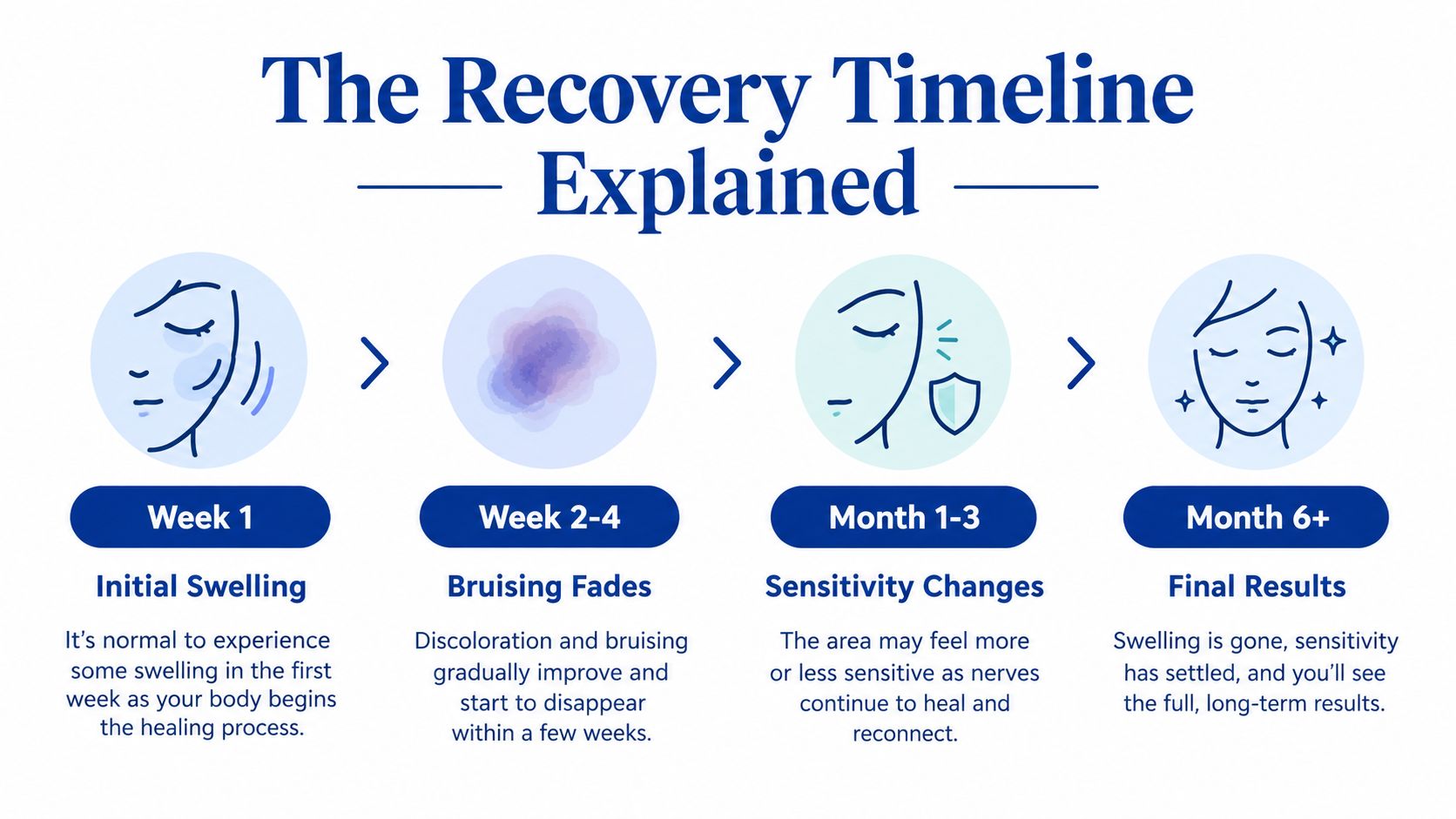
The first time many patients see their chest after surgery, it looks larger than expected. The skin feels tight, the chest may be bruised, and one side can appear fuller than the other. That early appearance doesn't represent the final contour. It reflects inflammation, bruising, compression garments, and the temporary space left after fat or glandular tissue has been removed.
The early recovery period
During the first days, your priorities are rest, compression, wound protection, and observation. A diffuse tight feeling and broad bruising can be normal. The important change to watch for is a sudden shift, especially swelling that expands on one side, becomes tense, or comes with increasing pain.
Bleeding-related problems deserve particular attention because the recent clinical series found that the major complications were hematomas requiring reoperation. You shouldn't try to diagnose a hematoma at home, but rapidly increasing swelling or pressure is a reason to contact the surgical team promptly.
Practical rule: A chest that is generally swollen and gradually settling is different from a chest that becomes suddenly larger, tighter, darker, or more painful.
By the end of the first week, bruising may still look dramatic even as discomfort begins to improve. The compression garment can make the chest feel restricted, and numbness around the nipple or areola may be unsettling. Don't judge the result from the mirror at this stage. The tissues haven't finished adhering or softening.
The following weeks
Over the next several weeks, bruising usually fades and swelling becomes less diffuse. You may notice firm areas beneath the areola or along the liposuction paths. These areas can represent normal healing and scar maturation, but a new, one-sided, fluid-like fullness should be reported rather than assumed to be routine.
Your surgeon will decide when you can return to work, driving, lifting, and exercise. Light movement is often introduced before strenuous activity, but reaching, pushing, pulling, and chest training can place stress on healing tissue. Follow the individualized instructions in the gynecomastia surgery recovery guide rather than using another patient's schedule.
The emotional part of recovery matters too. Many patients expect immediate relief when the tissue is removed, then feel disappointed when swelling temporarily hides the result. That reaction doesn't mean the operation failed. It means the visible improvement often arrives gradually, while the discomfort and uncertainty arrive first.
Comparing Surgical Approaches and Their Risks
The central technical question is whether your chest fullness comes mainly from soft fat, firm glandular tissue, or both. Liposuction can contour fat through small access points, but it can't reliably remove a dense glandular disc behind the nipple. Excision removes that tissue directly, but it creates more dissection and a larger potential space for blood or fluid to collect.
The choice isn't about selecting the procedure with the lowest number in a table. It's about choosing the least invasive method that can adequately correct the tissue causing the problem.
Liposuction alone
Liposuction alone is most suitable when the fullness is predominantly fatty and the skin can contract after contouring. The approach generally involves less direct tissue dissection, which can reduce the opportunity for bleeding associated with gland removal. Its limitation is equally important. If firm glandular tissue remains beneath the areola, liposuction may leave persistent nipple projection or fullness.
A patient who has soft, diffuse fullness may therefore have a favorable risk profile with liposuction. A patient with a firm central mass may trade a shorter procedure for an incomplete result if the technique doesn't address the actual cause.
Excision alone
Excision is used when the surgeon needs to remove firm glandular tissue directly. It can provide a more complete correction in appropriate cases, but the tissue removal and dissection create a larger healing surface. That helps explain why excision-only groups show higher complication rates in the published literature.
The principal concerns are hematoma, seroma, contour depression, scarring, and altered nipple sensation. Removing too much tissue directly under the nipple can create a hollow or crater-like contour, while removing too little can leave residual fullness.
Combined treatment
Combined excision and liposuction addresses both components when gland and fat contribute to the chest shape. The surgeon can remove the dense central tissue while blending the surrounding fat to avoid a sharp transition. In the recent series and the systematic review cited earlier, combined approaches had lower reported complication rates than excision alone, although those figures shouldn't be treated as a guarantee for an individual patient.
| Approach | Best for | Complication risk | Primary concerns |
|---|---|---|---|
| Liposuction alone | Predominantly fatty fullness with adequate skin elasticity | Often lower when no gland requires removal | Residual gland, nipple projection, uneven fat removal |
| Excision alone | Firm glandular tissue requiring direct removal | Higher when dissection and dead space are extensive | Hematoma, seroma, contour depression, scar, numbness |
| Combined treatment | Mixed fat and glandular enlargement | Can balance correction and tissue preservation | Fluid collection, contour transition, sensory change |
A detailed discussion of the different gynecomastia surgery types should include why one approach fits your anatomy better than another. Ask what tissue is being removed, what will remain beneath the nipple, and how the surgeon plans to prevent a visible step-off or depression.
Preventing Complications After Surgery
You can't eliminate every surgical risk, but your behavior during recovery can influence bleeding, fluid accumulation, wound healing, and the final contour. The most effective plan is usually not complicated. It requires consistency.
Protect the surgical space
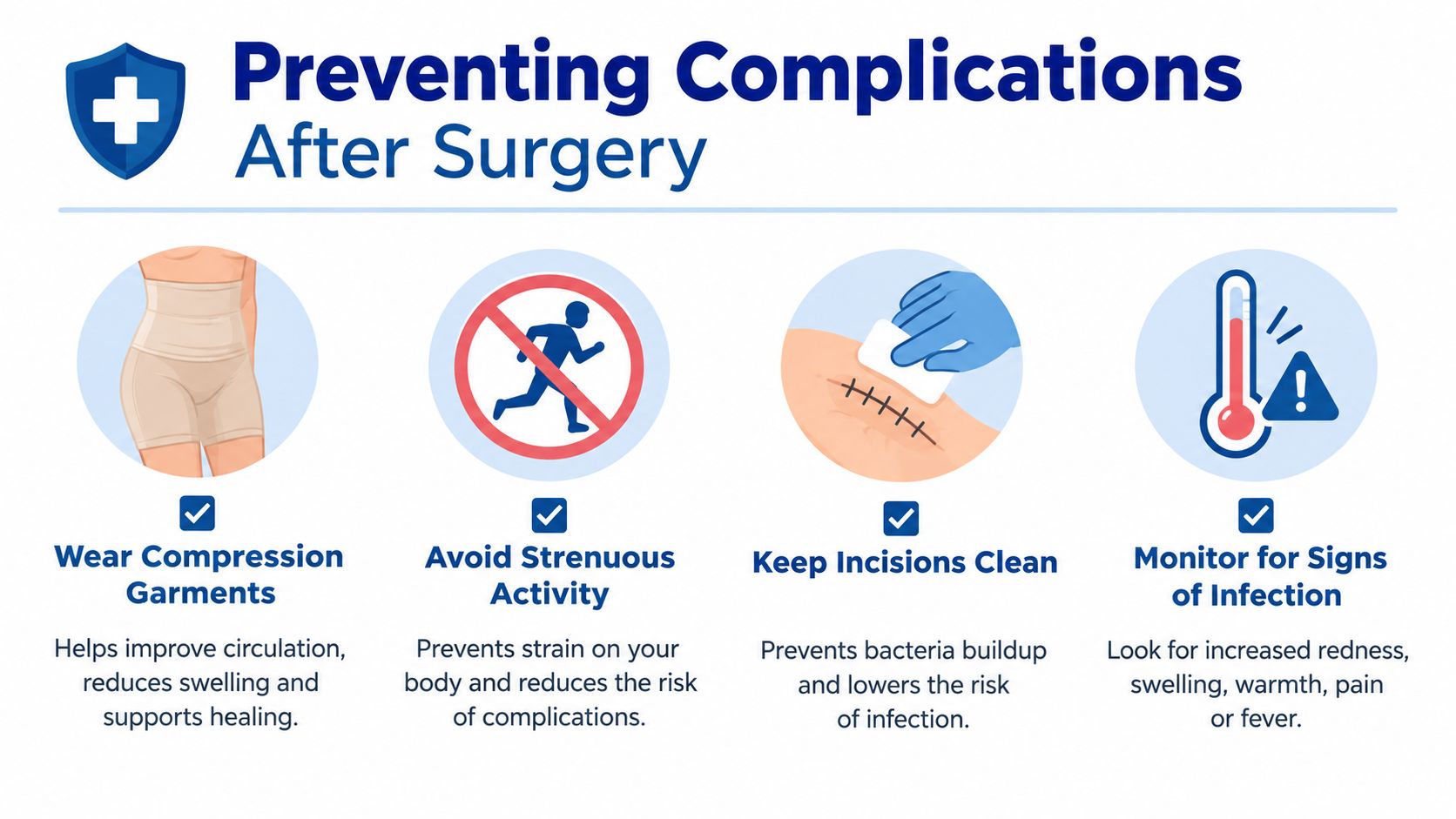
Wear the compression garment exactly as directed. Its purpose is to keep the skin close to the chest wall while the tissues adhere and to limit the space where blood or clear fluid can collect. It should feel supportive, not so tight that it causes severe pain, breathing difficulty, or unusual pressure.
Avoid strenuous activity until your surgeon clears it. Sudden arm movements, lifting, pushing, pulling, and early chest exercises can increase pressure in healing tissues. Gentle walking may be appropriate when your team permits it, but walking isn't permission to resume a normal workout.
Follow medication and wound instructions
Don't add aspirin, supplements, or other medication without asking your surgical team. Some products can affect bleeding or interact with prescribed treatment. Keep the incisions clean and follow the instructions for showering, dressings, drains, and garment use.
If your procedure takes place while you're awake under local anesthesia, staying still and communicating clearly during the procedure can help the surgeon work precisely. The experience also means your recovery plan should account for the fact that local anesthesia doesn't remove the need for careful post-operative observation.
Know which changes require a call
Contact your surgical team promptly if you notice:
- Rapid enlargement: A swelling that grows over a short period, particularly on one side, may require examination for bleeding.
- Increasing pressure or pain: Pain that intensifies instead of easing deserves assessment.
- Spreading redness or drainage: Warmth, worsening redness, foul-smelling drainage, or an opening incision can indicate infection.
- Persistent fluid fullness: A soft, shifting area that appears while the rest of the chest improves may be a seroma.
- Skin or nipple color changes: Dusky, very pale, or unusually dark skin requires urgent guidance.
A compression garment can't treat an expanding hematoma, and rest can't correct an infected collection. When the pattern changes quickly, contact the people responsible for your care rather than waiting for the next scheduled visit.
Long-Term Side Effects and Late Complications
The end of visible bruising isn't necessarily the end of healing. Patients can still notice firmness, altered sensation, asymmetry, scar thickening, or residual contour concerns after the early recovery period. These issues are often more important to long-term satisfaction than ordinary swelling during the first few days.
An eight-year clinical series reported complications in 16.16% of patients, including hematoma, seroma, recurrence, hypertrophic scars, asymmetry, and chronic axillary nerve irritation. Recurrence occurred in 17 cases, or 8.59%, while a separate 2025 comparative outcome study reported a 21% complication rate and 9% revision rate. The series and comparison study are discussed in this peer-reviewed report on longer-term outcomes.

Sensation and scars
Numbness, decreased nipple sensitivity, tingling, or heightened sensitivity can follow subareolar dissection. In a recent surgical series, transient cutaneous sensory changes occurred in four patients and generally diminished or resolved by two months. Broader surgical guidance still recognizes that sensation changes can be temporary or permanent, as explained by the Cleveland Clinic's overview of gynecomastia surgery.
Scars can also remain noticeable after the chest has settled. Raised or thickened scars may benefit from a clinician-approved silicone treatment once the incision is fully closed. Some patients ask about practical options such as silicon scar removal patches, but you shouldn't place any product on an open, draining, or irritated incision without clearance.
Recurrence and revision
Recurrence doesn't always mean that the original operation was unsuccessful. Residual tissue can respond to an ongoing hormonal stimulus, while weight change can add fat to the chest. A contour concern may instead reflect uneven healing, residual gland, skin laxity, or a depression created by over-resection.
Don't rush into revision while swelling and scar tissue are still changing. The better approach is to document the concern, attend follow-up visits, and ask whether the issue is expected maturation, persistent asymmetry, or a problem that may eventually require correction.
Making an Informed Decision About Your Surgery
A responsible consultation should answer more than “Will I look flatter?” It should explain what tissue is present, which technique is proposed, what can go wrong, and how the surgeon will respond if healing isn't perfectly even.
Start with the anatomy. Ask whether your fullness is primarily fat, gland, or a combination. Ask whether liposuction alone could address it, and if not, why excision is necessary. If excision is planned, ask how the surgeon will preserve a natural transition beneath the nipple and how they manage the space left after tissue removal.
Questions that improve the consultation
Bring specific questions rather than relying on general reassurance:
- Technique: What exactly will be removed, and why is this approach appropriate for my chest?
- Bleeding control: What symptoms suggest a hematoma, and who should I contact after hours?
- Fluid management: Will compression or a drain be used, and what should I do if swelling becomes one-sided?
- Sensation: How might nipple sensitivity change, and how will persistent symptoms be evaluated?
- Contour: How will you address asymmetry, skin laxity, or the risk of a depression?
- Follow-up: When should I judge the contour, and what happens if a revision becomes appropriate?
Awake surgery under local anesthesia may be relevant for patients who want an office-based approach and wish to discuss the experience of avoiding general anesthesia. It isn't automatically safer for every person or every anatomy. The appropriate setting depends on the planned operation, medical history, tissue volume, and the surgeon's assessment.
Body image also deserves attention before and after surgery. A thoughtful mind-body approach to body image can help you separate a specific contour concern from broader distress about appearance. Surgery can change the chest, but it can't guarantee that every insecurity will disappear.
The practice's current offerings no longer include breast implant placement, implant-based breast augmentation, or breast implant revision procedures. For gynecomastia patients, the relevant discussion is chest contouring, technique selection, recovery support, and whether an awake procedure under local anesthesia is appropriate. Consultations are available with Dr. Sarah Yovino or Dr. Justin Yovino in Beverly Hills, CA, where the decision should be based on your anatomy and goals rather than a generic complication statistic.
Ideal Face & Body offers gynecomastia surgery and awake, office-based body contouring under local anesthesia, with care focused on technique selection and realistic recovery expectations. Visit Ideal Face & Body to request a consultation with Dr. Sarah Yovino or Dr. Justin Yovino and discuss your individual side-effect profile.