Hand rejuvenation cost averages about $1,966 overall, with a broad range from $630 to $4,999, while combination protocols commonly fall around $1,000 to $3,000. The final figure varies widely by procedure mix, provider expertise, anesthesia setting, facility, geography, and how many concerns you're treating at once.
You may be researching hand rejuvenation after noticing that your hands look older than your face. The backs of the hands can lose volume, develop visible veins and tendons, show sun-related discoloration, and take on a crepey texture. Then you search online and find pricing that seems impossible to reconcile. Which number applies to you?
The honest answer is that hand rejuvenation is rarely one procedure with one universal fee. A consultation may involve volume restoration, skin resurfacing, pigment correction, collagen stimulation, fat transfer, or a combination of these options. Each choice adds a different layer of clinical expertise, materials, facility time, recovery planning, and follow-up.
This guide breaks down the pricing logic step by step. You'll learn what each treatment does, why provider and facility choices matter, how longevity compares, what financing usually involves, and what a Beverly Hills consultation should include before you commit.
If your concern is mostly dryness or sensitivity between treatments, a consistent topical routine still matters. ALODERMA's guide to comfortable hands offers practical guidance for supporting the skin barrier at home, although no cream can replace treatment for deeper volume loss or pronounced texture changes.
Table of Contents
- Why Hand Rejuvenation Cost Is Hard to Pin Down
- The Core Hand Rejuvenation Procedures Explained
- Key Cost Drivers That Shape the Final Price
- Comparing Procedures by Result and Longevity
- Financing and Insurance Considerations
- What to Expect at a Beverly Hills Consultation
- Planning Your Next Steps With Ideal Face and Body
Why Hand Rejuvenation Cost Is Hard to Pin Down
A prospective patient may start with a simple question: “How much does hand rejuvenation cost?” The search produces a wide range, and every number appears to describe the same service. It doesn't. The treatment may be a small filler session at one practice, a laser protocol at another, or a staged plan combining volume and pigment correction.
Independent pricing data place the overall average at about $1,966, with reported figures ranging from $630 to $4,999. Combination protocols commonly land around $1,000 to $3,000, because surface correction and structural restoration require additional treatment time, consumables, devices, and visits. These figures come from independent hand rejuvenation pricing data, but they shouldn't be treated as a personal quote.
Start with the concern, not the menu
The first useful step is identifying what bothers you most. If the back of your hands looks hollow and veiny, a volume-focused treatment may be the logical starting point. If the dominant issue is sun damage, a light-based treatment or resurfacing approach may make more sense. If the skin looks thin and crepey, collagen stimulation may deserve priority.
The second step is asking whether one modality can address the problem. Often, it can't. A patient may need one treatment for lost volume and another for pigmentation or texture. That combination is where the hand rejuvenation cost usually moves upward.
Practical rule: A credible quote should explain what each treatment addresses, why it belongs in the plan, and what can wait.
Ask for a treatment map
A thorough plan should separate the consultation, procedure, materials, facility, anesthesia, follow-up, and possible maintenance visits. That structure lets you compare proposals without reducing the decision to the lowest advertised number.
The rest of the evaluation should follow that same order. First define the procedure. Then examine the forces that change the quote, compare expected longevity, review payment logistics, and assess whether the consultation provides enough detail to make an informed decision.
The Core Hand Rejuvenation Procedures Explained
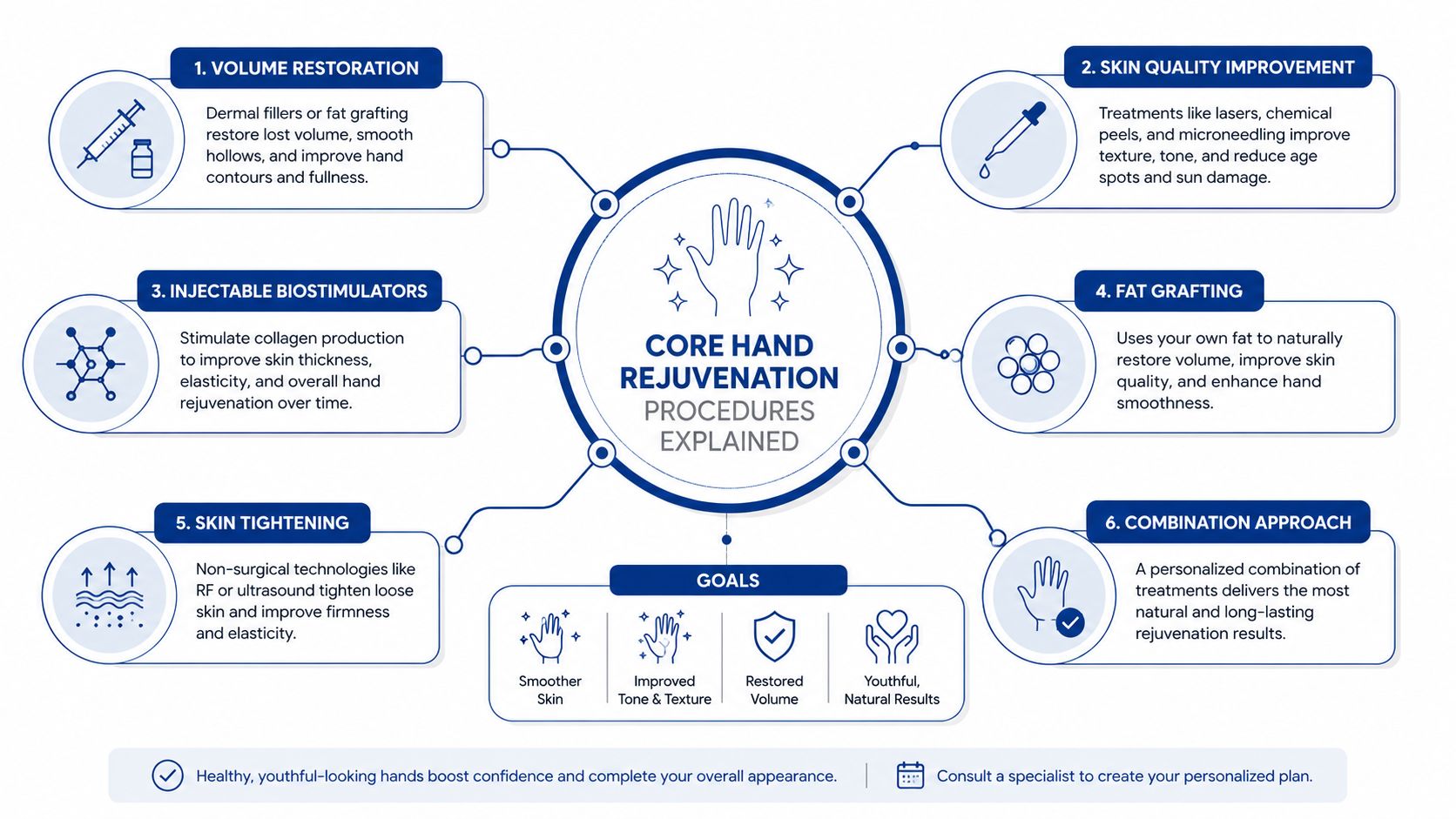
A patient with hollow-looking hands, visible veins, and rough texture rarely needs one universal treatment. The right plan depends on whether the main concern is lost volume, thin skin, pigment, or surface damage. That distinction also affects the final hand rejuvenation cost, especially when combination protocols are appropriate.
Dermal fillers restore volume beneath the skin on the back of the hands. The added cushion can soften prominent veins, tendons, and sunken contours, with improvement often visible soon after treatment. Swelling may temporarily hide the final result.
Biostimulatory injectables stimulate collagen production rather than placing volume. Improvement develops over weeks, making this approach suitable for patients who want better skin thickness and contour without an immediately overfilled appearance.
Surface correction for texture and pigment
Laser and light-based resurfacing address sun damage, uneven tone, and crepey texture. Device selection and settings must account for skin type, pigment history, and acceptable downtime. Patients focused on roughness should understand how a skin resurfacing laser works before assuming every device produces the same result.
Chemical peels remove controlled layers of damaged skin to improve pigmentation and uneven texture. The formulation and strength must match the patient's skin and the severity of discoloration.
Structural restoration and maintenance
Autologous fat transfer uses the patient's own fat to restore hand volume and can address deeper hollowing. A systematic review found postoperative edema in nearly all patients, while reported complications were uncommon. It reported infection at 0.67%, cysts or irregularities at 1.3%, temporary dysesthesia at 5.3%, and ecchymosis at 7%, with no major complications reported. Those findings appear in the systematic review of autologous fat transfer for hand rejuvenation.
Topical maintenance, sun protection, and barrier support help preserve skin quality between visits. They cannot replace structural treatment when volume has significantly diminished. Combination protocols pair surface correction with volume restoration or collagen stimulation, so the clinician can address several aging signs without forcing one modality to do everything. Treatment options are also outlined in these hand rejuvenation procedures.
Key Cost Drivers That Shape the Final Price
The hand rejuvenation cost reflects more than the product placed or the device used. Five variables usually create the largest differences between quotes.
Provider expertise
Hand anatomy is unforgiving. The clinician works around veins, tendons, nerves, and thin skin, so technique matters. A highly experienced, board-certified specialist in a high-demand market may charge more because the consultation, treatment selection, injection technique, and complication management all require judgment.
You can reasonably compare credentials, before-and-after documentation, treatment philosophy, and follow-up access. You shouldn't negotiate away the qualifications of the person performing the procedure.
Materials and treatment volume
Branded fillers, biostimulators, and energy-based platforms don't carry identical material or operating costs. The amount of product needed also varies between hands and between patients. Someone with mild volume loss may need a focused protocol, while someone with pronounced hollowing may require a broader restoration plan.
The same principle applies to resurfacing. Device time, preparation, consumables, and post-treatment care can all affect the quote.
Anesthesia setting
Many hand procedures can be performed while the patient is awake in an office under local anesthesia. That setting generally involves fewer anesthesia-related resources than a sedated or operating-room approach. If a patient requests sedation, or if another procedure is being performed at the same time, anesthesia staffing and monitoring can change the total.
Facility overhead
A luxury office and a hospital outpatient suite carry different overhead. Staffing, equipment, sterile supplies, recovery space, monitoring, and administrative support all contribute to the final fee.
Geography
Beverly Hills and other major metropolitan markets generally price above smaller cities because rent, staffing, insurance, and operating expenses are higher. Geography matters, but it shouldn't outweigh credentials and safety.
| Cost Driver | Why It Changes the Price |
|---|---|
| Provider expertise | Experience and technical judgment influence the professional fee. |
| Materials | Product type, device use, and treatment volume affect supply costs. |
| Anesthesia setting | Awake local-anesthesia care differs from sedated or operating-room care. |
| Facility | Office, outpatient, and hospital environments have different overhead. |
| Geography | Major markets typically carry higher operating expenses. |
My recommendation: Compare itemized plans, not headline offers. A low quote that omits follow-up, materials, or facility charges isn't a meaningful bargain.
Quality should not be compromised on credentials, anatomy-specific experience, product authenticity, sterile technique, emergency planning, or follow-up. If you want to reduce the total, ask whether a phased plan or combined visit makes clinical sense. Don't ask a qualified clinician to use less product than the treatment requires or skip safeguards.
Comparing Procedures by Result and Longevity
A patient bothered by prominent veins needs a different plan from someone concerned about pigmentation or crepey skin. Price should follow that distinction. The highest-cost option is not automatically the right one, and combination protocols can raise the total when several aging signs need treatment.
Dermal fillers usually create the fastest visible improvement for volume loss. Restoring cushion beneath the skin can soften the appearance of veins and tendons. Results require periodic reassessment, and maintenance is generally more frequent than with fat transfer.
Biostimulatory injectables work on a slower schedule. They suit patients who prefer progressive improvement in collagen support rather than immediate volume. Their effect generally lasts beyond a short-term surface treatment, but the maintenance plan depends on the patient's biology, the product used, and the amount of correction needed.
Laser and IPL treatments target sun damage and pigmentation. Resurfacing can also improve rough or crepey texture. Changes appear as the skin heals and pigment clears, with maintenance becoming more important when sun exposure continues. These treatments do not replace a structural volume procedure.
Fat transfer provides a longer-lasting approach to deeper volume loss because it uses the patient's own fat. It involves a more involved process and recovery than an injectable treatment, so the anesthesia setting and facility can affect the final cost. Safety data from the same systematic review are discussed in the procedures section. Longevity is the main reason patients consider this option, although the result develops gradually as swelling settles. Published review of fat grafting for hand rejuvenation provides further background.
| Procedure | Primary Concern | Onset of Results | Typical Longevity |
|---|---|---|---|
| Dermal fillers | Volume loss, visible veins and tendons | Fast, with early swelling possible | Shorter than fat transfer |
| Biostimulatory injectables | Thin skin, gradual collagen support | Progressive over weeks | Moderate to longer-term |
| Laser and IPL treatments | Pigmentation and sun damage | Develops during healing | Requires ongoing maintenance |
| Fat transfer | Deeper volume loss and hollowing | Gradual as swelling settles | Generally the longest-lasting volume option |
A broader review of hand rejuvenation treatments describes short-term swelling and bruising after fillers, along with less common longer-term concerns. The practical takeaway is straightforward: every procedure has a different onset, maintenance cycle, and recovery profile. Build the treatment plan around the result you want, not the procedure with the most impressive headline.
Combination protocols often pair two or three modalities to address volume, pigment, and texture together. They can produce a more complete result, but they also explain why higher hand rejuvenation costs often reflect more than product volume. Provider expertise, anesthesia setting, and facility requirements may all change the quote. For a plan focused on biostimulation, review Radiesse for hand rejuvenation and discuss whether it fits your anatomy and goals.
Financing and Insurance Considerations
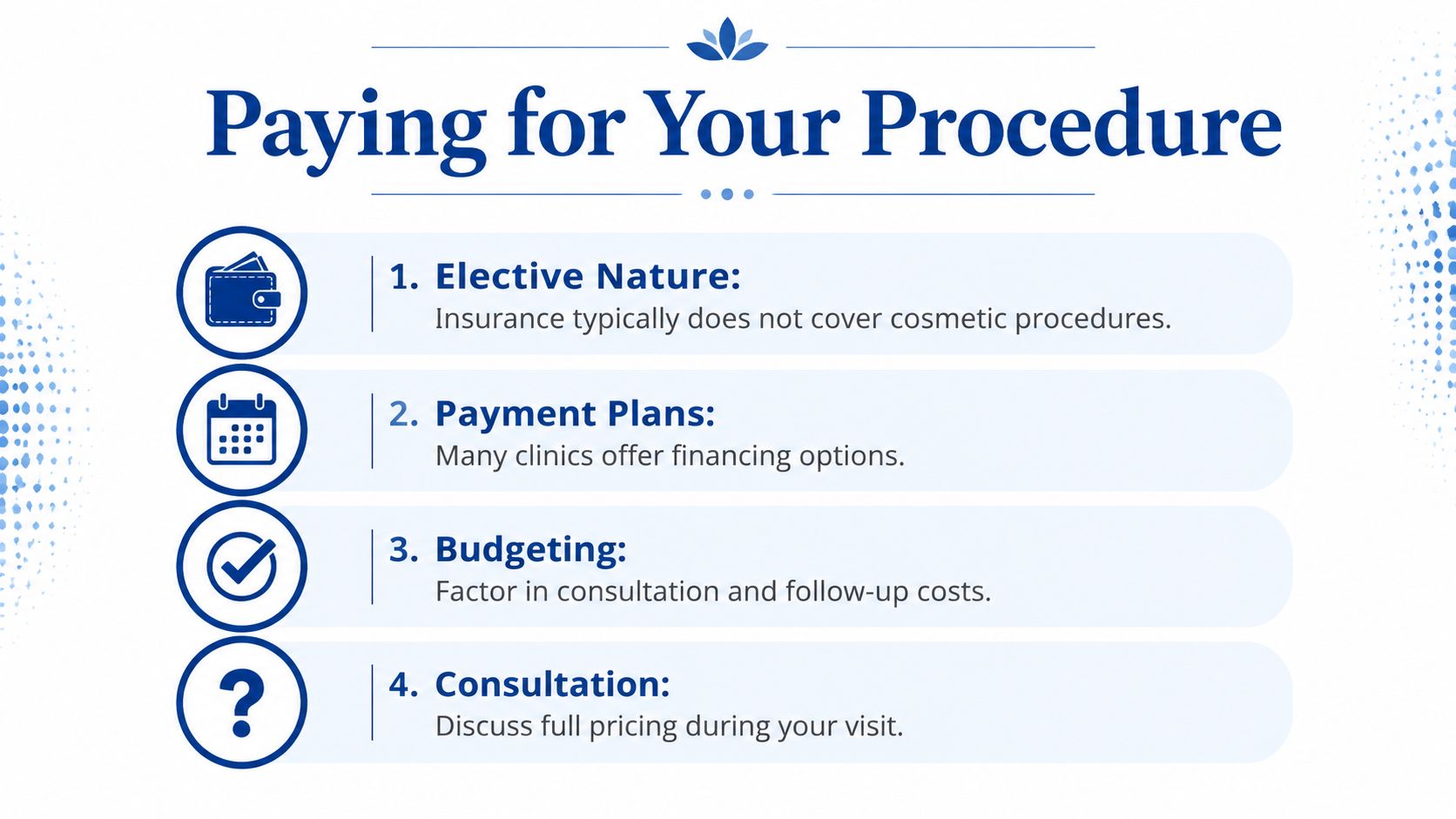
Hand rejuvenation is elective care, so insurance generally doesn't apply. The exception is limited reconstructive treatment connected to trauma, surgery, or another medically necessary situation. Cosmetic volume restoration, pigment correction, and texture improvement usually require personal payment.
Start by asking the practice for the complete financial outline before scheduling treatment. A well-run office may support several payment pathways:
- Third-party medical financing: Review the annual interest rate, promotional period, approval terms, and consequences if the promotional balance isn't paid on time.
- In-house payment plans: Confirm the deposit, installment schedule, cancellation policy, and whether treatment must wait until the balance is complete.
- Healthcare credit cards: Read deferred-interest language carefully and avoid assuming a promotional period means the balance is interest-free in every circumstance.
- HSA or FSA funds: Ask whether any medically necessary adjunct qualifies, because cosmetic services often don't.
Ask about legitimate ways to control overhead
Bundling multiple clinically appropriate procedures into one visit can sometimes reduce per-session overhead. That doesn't mean adding treatments you don't need. It means asking whether a planned combination can be performed safely and efficiently rather than scheduling separate visits with duplicate administrative or facility charges.
Use the financing information from Ideal Face & Body as a starting point for questions, not as a substitute for reviewing your specific agreement.
Before signing: Ask whether the written quote includes consultation, treatment, materials, facility charges, anesthesia, follow-up, and management of expected aftercare.
What to Expect at a Beverly Hills Consultation
A proper consultation starts with examination, not a sales pitch. The clinician studies the backs of your hands under bright, angled lighting to assess volume, veins, tendons, pigmentation, skin thickness, and texture. This lighting matters because flat room light can hide the very changes you want corrected.

The conversation should be candid
The clinician should ask which sign bothers you most. Some patients care about prominent veins. Others focus on brown spots, dryness, or a papery surface. That answer shapes the treatment sequence and prevents the common mistake of treating every visible change at once.
Expect a review of your medical history, supplements, allergies, prior injectables, healing history, and medication use. You should also discuss whether the proposed treatment is performed awake under local anesthesia or with sedation, what downtime is realistic, and how follow-up will work.
The quote should show its construction
Photography for before-and-after tracking is standard in a professional setting. The written estimate should itemize the procedure, materials, facility resources, anesthesia if applicable, and planned follow-up. You shouldn't have to guess whether the quoted hand rejuvenation cost includes everything required for the visit.
Bring direct questions:
- Longevity: What changes first, and when will maintenance become relevant?
- Combination timing: Can surface correction and volume restoration happen together?
- Recovery: What swelling, bruising, redness, or activity limits should you expect?
- Alternatives: What is the smallest effective plan for your primary concern?
- Safety: What complications require an urgent call?
A clinical review of fillers for aging hands documented swelling, pain, redness, and bruising as common patient-reported effects, with most adverse events lasting less than two weeks. It also identified embolic ischemic complications as a major safety concern and noted an association between PLLA and hand nodules. Review the clinical evidence on dermal fillers for aging hands before making a decision.
Planning Your Next Steps With Ideal Face and Body
Start with a diagnosis of the problem, not a treatment you found online. If volume loss is dominant, discuss a structural option. If pigmentation or crepey texture leads the concern, ask about a surface-focused approach. If several issues appear together, request a phased plan that identifies what should happen first and what can wait.
Your consultation should translate the variables behind hand rejuvenation cost into a clear treatment map. That means identifying the provider performing the procedure, the materials or device involved, the anesthesia setting, facility charges, expected downtime, follow-up schedule, and maintenance strategy. Ideal Face & Body in Beverly Hills offers hand rejuvenation with autologous fat transfer and hand-focused biostimulatory treatment, so patients can discuss volume restoration and collagen support within an in-person evaluation.
Don't choose based on a single advertised figure. Choose a plan that matches your anatomy, goals, recovery preferences, and tolerance for maintenance. Ask for an itemized quote, confirm what is included, and make sure the clinician explains why each recommended component belongs in the plan.
Bring photographs or notes about what bothers you, disclose prior injectables and supplements, and ask how the clinician will measure improvement. Natural-looking hands should look refreshed, not overfilled, and the treatment plan should respect that distinction.
Ideal Face & Body offers hand rejuvenation options in Beverly Hills, including autologous fat transfer and biostimulatory treatment for volume loss and visible hand aging. Visit Ideal Face & Body to request a consultation, ask for transparent itemization of your hand rejuvenation cost, and discuss a plan designed around your actual concerns.