
Yes, gynecomastia surgery does leave scars, but in many patients they're small enough to hide in the areola border or chest crease. The question isn't whether scars happen, it's whether the case is mostly fat, which may need only tiny liposuction access points, or firm glandular tissue, which can require a periareolar or longer chest incision.
Most men come in worried about the scar line and leave thinking more about the chest shape. That trade-off is real, and it's exactly why tissue type, skin excess, and severity grade matter so much more than any promise of “scarless” surgery.
Table of Contents
- Why Gynecomastia Surgery Always Leaves Some Scarring
- Incision Types and Where Scars Appear on the Chest
- The Scar Healing Timeline From Surgery to One Year
- Techniques That Minimize Scarring During Surgery
- Post-Surgical Scar Care and Revision Options
- Common Questions About Gynecomastia Surgery Scars
Why Gynecomastia Surgery Always Leaves Some Scarring
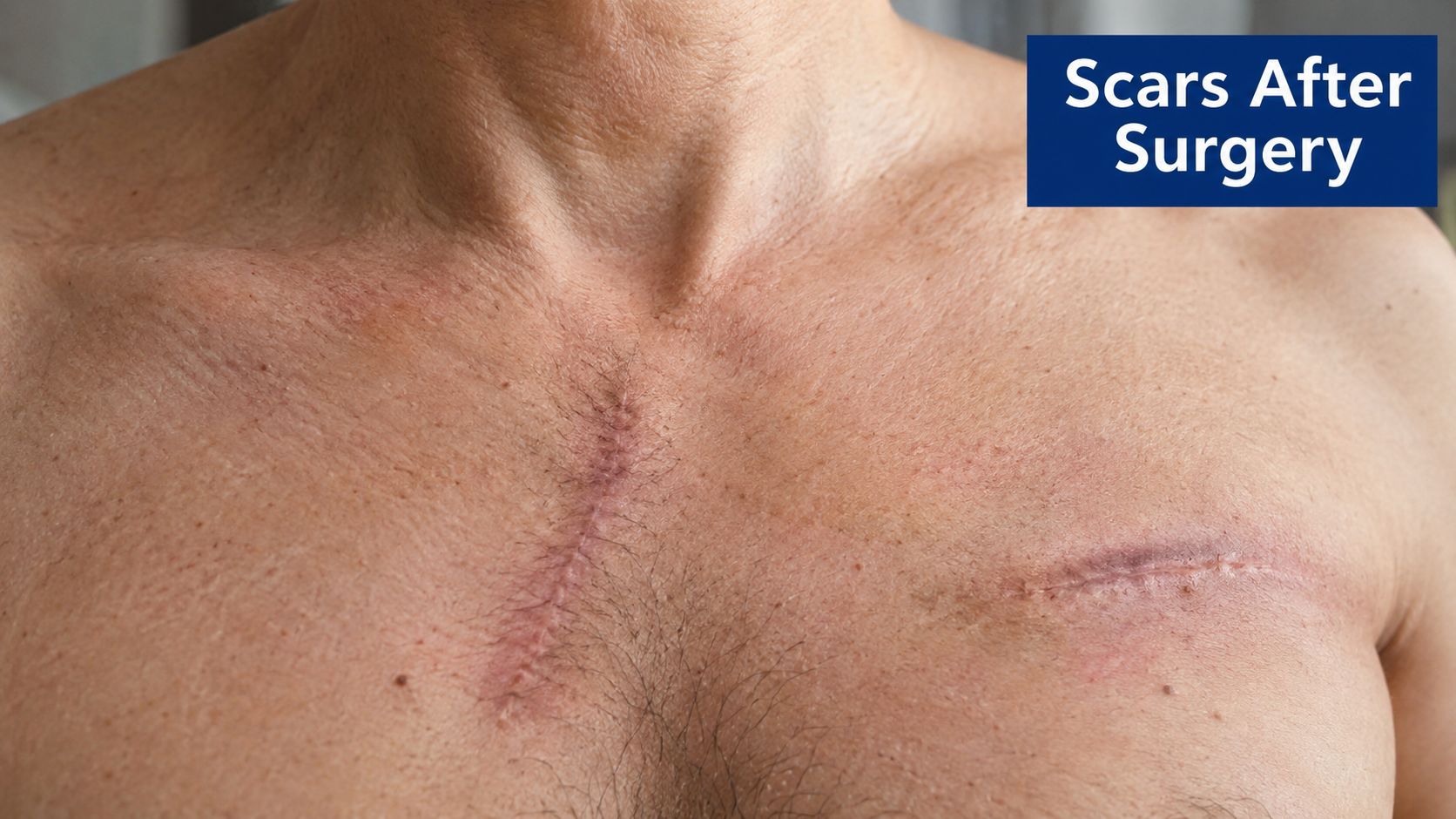
Scarless gynecomastia surgery is a misleading phrase. Any operation that opens the skin and removes tissue leaves a permanent incision line, even when that line is placed in a natural border and kept as short as anatomy allows. The American Society of Plastic Surgeons notes that incision lines are permanent, and larger male breast reduction cases may need a periareolar scar or scars that extend across the chest ASPS gynecomastia surgery results.
Tissue type drives the scar burden
The amount of scarring starts with what is in the chest. A man with mostly fatty enlargement may be treated through tiny liposuction access points, while a patient with dense glandular tissue usually needs direct excision, and that changes the scar pattern before technique even enters the discussion. The scar burden reflects what's being removed, not just how carefully the surgeon works.
Severity matters just as much. Mild puffiness and severe skin redundancy do not behave the same way, because the more tissue and extra skin there is, the more incision length is usually required to reshape the chest properly. That is why claims about “minimal scarring” apply mainly to selected, fat-predominant cases.
Practical rule: if the chest can be flattened through tiny access points, the scars are usually tiny too. If the skin has to be tightened or a firm gland has to be removed directly, the scar map gets more complex.
Why consultation has to be anatomy-based
A good consultation starts with a real assessment of fat, gland, and skin excess. Without that, any scar promise is just a guess. The same operation name can mean a completely different incision plan from one patient to the next, which is why the scar pattern depends on the anatomy under the skin and on the type of operation selected, as outlined in Ideal Face & Body's gynecomastia surgery types guide.
Severe cases deserve especially honest counseling. Patients often focus on the line on the chest, but in advanced gynecomastia, the larger cosmetic issue can be residual skin laxity or contour irregularity rather than the incision itself, as shown in long-term follow-up of grade 4 cases grade 4 gynecomastia follow-up.
Incision Types and Where Scars Appear on the Chest
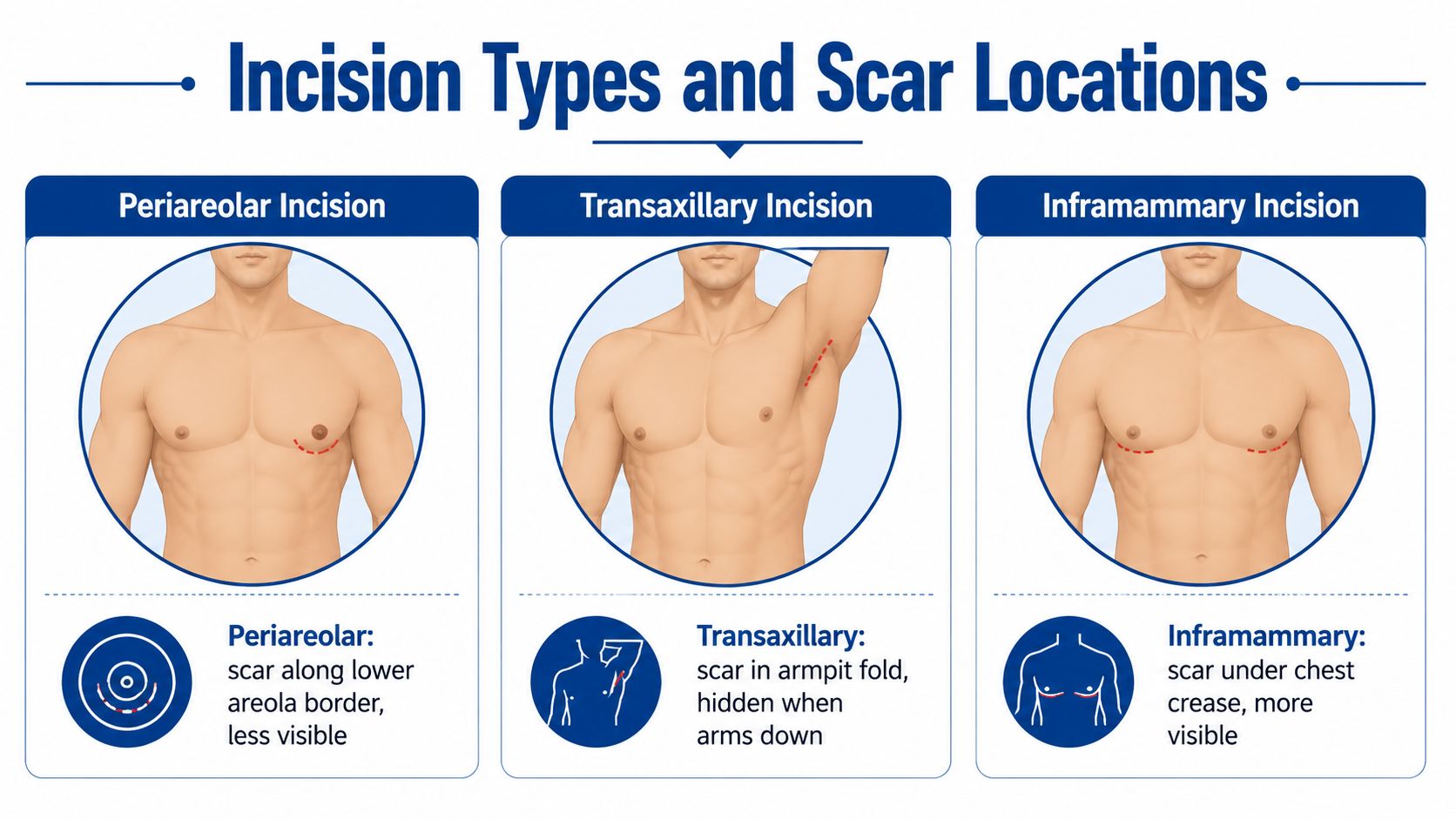
Scar location matters almost as much as scar length. A short incision in the wrong place can draw more attention than a slightly longer one hidden along a natural border, and gynecomastia surgery depends on that trade-off. For fat-predominant cases, the scar burden can be very small. Once the chest contains firm gland or extra skin, the incision plan usually has to expand to match the tissue that needs to be removed, as outlined in gynecomastia surgery types.
Liposuction-only access points
These are the smallest scars in the operation. When the enlargement is mostly fat, the surgeon may use tiny access openings, often a few millimeters wide, placed where they are least noticeable, such as near a fold or within a shaded contour. A minimal-incision series described a single 5 to 7 mm transverse incision over the nipple to keep scarring in darker areolar tissue, and the scars were reported as barely visible minimal-incision series.
Liposuction alone cannot address firm glandular tissue or excess skin. Tiny scars are only useful when the tissue to be removed can be handled through tiny openings.
Periareolar and extended incisions
A periareolar incision follows the border of the areola, where the color change helps hide the line. That is the classic choice when the surgeon needs direct access to glandular tissue. Traditional excisional approaches can leave more visible periareolar or T-shaped scars, especially when skin also has to be removed incisions and scars.
For more severe enlargement, the scar can extend beyond that border and run along the chest crease. The right incision is the one that fits the anatomy, not the one with the shortest line on paper. In advanced cases, honest counseling matters more than promise-making, because the goal is a flatter chest with scar placement that makes sense for the tissue present, not a cosmetic shortcut that leaves residual fullness.
You can see how incision planning is usually matched to the underlying operation in this overview of gynecomastia surgery types.
For a visual reference, this medical infographic illustrating three different surgical incision types and resulting scar locations for gynecomastia procedures. shows how access points, areolar scars, and longer chest-crease scars are typically positioned.
If you want the healing side of the equation, the wound healing timeline by EkagraHealth AI explains why early redness does not reflect the final scar.
The Scar Healing Timeline From Surgery to One Year
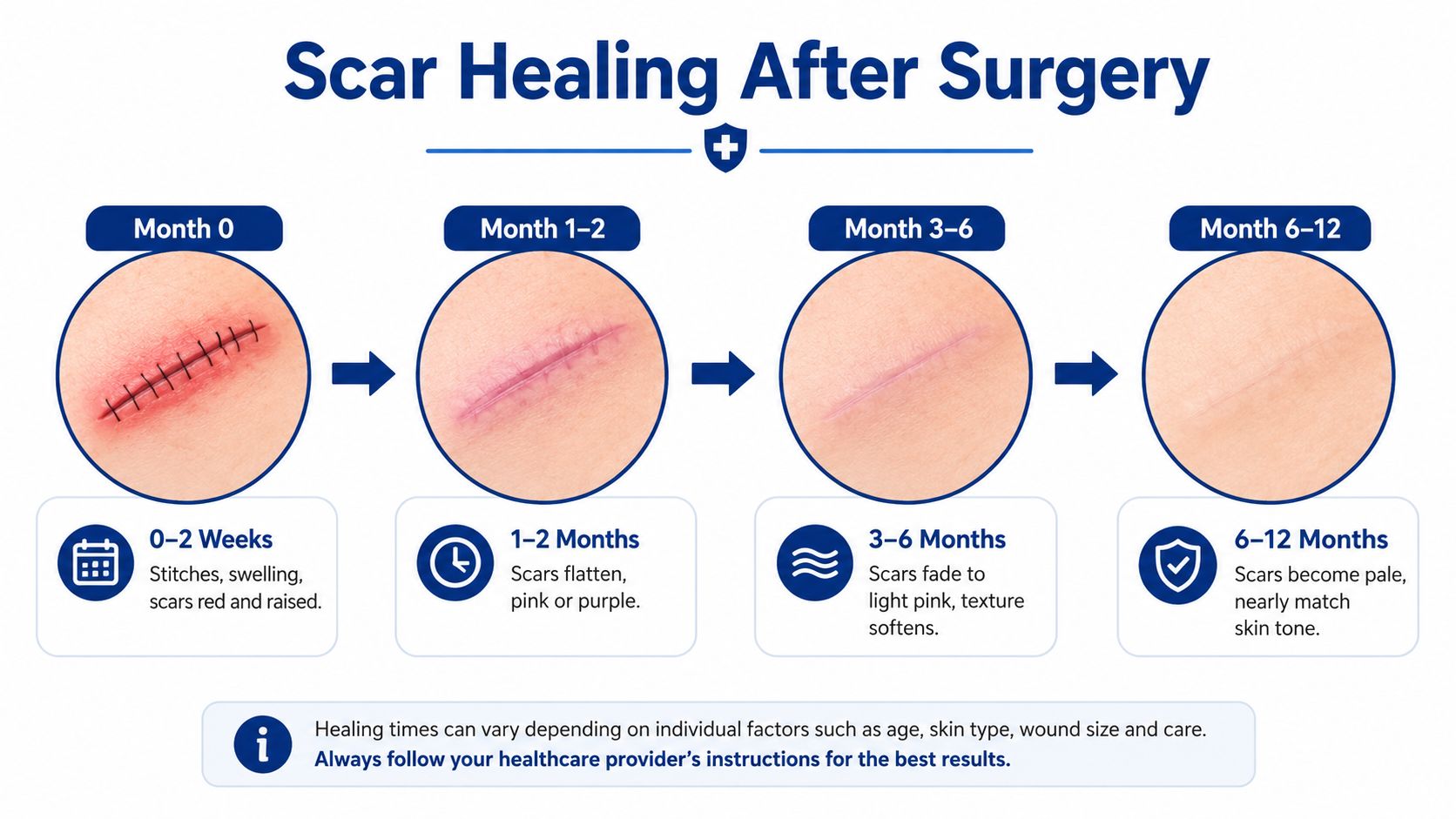
Surgical scars follow a well-documented healing sequence that patients can track over 12 months. The early redness, firmness, and mild swelling are part of that sequence, not proof that the result is failing. In many cases, the biggest visible change happens over the middle months, and scars often look paler or blend better with the areola edge or chest folds by the time healing has matured, especially when care is consistent scar timeline.
The first weeks and the later remodeling phase
The first few weeks usually show the scar at its most obvious. Swelling is still present, the incision line is active, and the body is laying down new collagen, so the area can look redder and feel firmer before it starts to soften.
That early appearance can be misleading. A scar that looks too visible at six weeks is often still maturing rather than permanently prominent.
Internal scar tissue has its own pace. One source reports that firm scar tissue often appears around 6 to 8 weeks or later after surgery, and that normal healing can take 6 months to a year scar tissue development after gynecomastia surgery. That is why the chest may feel tight even while the skin line is slowly settling.
What the one-year mark really means
By the time a year has passed, the outside scar and the deeper scar tissue have usually matured enough to show the true result. That does not mean every line disappears. Incision lines are permanent, but the final version is usually calmer, flatter, and less reactive than it was in the early postoperative period.
The pace still depends on the operation and on the patient. Incision placement, skin quality, the amount of tissue removed, and whether there were any postoperative issues all affect how quickly the scar quiets down. A useful reference for the broader sequence of wound repair is the wound healing timeline by EkagraHealth AI, which lays out how healing changes over time in plain language.
Recovery habits also shape the scar timeline. Activity limits, compression, and wound care all influence how the chest settles, which is why a practical overview of gynecomastia surgery recovery is useful when patients want to understand what helps the scar mature cleanly.
Techniques That Minimize Scarring During Surgery
Scar-minimizing surgery starts with the chest anatomy in front of you. In fat-predominant gynecomastia, the surgeon can often use a smaller access point, remove the excess tissue cleanly, and close the incision with less tension. In firmer, gland-heavy cases, or in severe grades with skin excess, the operation often needs a wider exposure and more skin management, so the scar burden is higher even when the technique is sound. That trade-off is part of the planning, not a failure of technique.
A small incision only helps if the tissue under it is handled carefully and the closure is built to hold. Layered closure, gentle dissection, and placing the incision along a natural border can keep the final line flatter and narrower. Surgeons also emphasize wound closure technique alongside gland removal. In modern series of 567 patients, scar-adherence revision occurred in 9 cases, or 1.6%, and every revision was specifically for postoperative scar-tissue accumulation scar-minimizing outcomes.
Why access and closure both matter
A tiny incision can still scar poorly if the surrounding tissue is stretched or bruised. When the closure is under too much tension, the line tends to widen and become more visible as it matures. Layered closure, careful tissue handling, and incision placement along natural borders all help reduce that stress on the wound.
A separate 198-case series reported hypertrophic scars in 4 patients, or 2.02%, alongside broader postoperative complications such as recurrence and hematoma clinical series. The practical point is straightforward, troublesome scar overgrowth does happen, but it remains uncommon when closure is deliberate and follow-up is structured.
Why awake, office-based surgery can help healing
Local anesthesia in an awake setting can reduce the physiologic stress of surgery for some patients. That alone does not guarantee a better scar, but it can limit unnecessary swelling and make the early healing period easier to control. Less swelling usually means less tension on the incision, and less tension supports better scar quality.
Best candidate profile: a man with fat-predominant enlargement, decent skin recoil, and no major skin excess is the patient most likely to benefit from the smallest-access approach.
The strongest scar-minimizing strategy is still matching the operation to the anatomy. A patient with severe redundancy should not be promised a tiny scar if that means leaving excess tissue or skin behind. A patient with mostly fat should not be over-incised for no reason either. For men who already know they want to discuss scar revision procedure, that conversation belongs in the planning stage, because the best chance to avoid a problem scar is choosing the right operation from the start.
Post-Surgical Scar Care and Revision Options
Scar care begins after the surgeon confirms the incision has achieved adequate initial closure, usually within the first two weeks. From there, the goal is to keep the line calm while it matures. Silicone, gentle massage, and sun protection are the main tools because they help a scar stay flatter and less reactive as it settles. Patient-reported scar outcomes in one study were highly favorable, with most patients describing their scars positively after surgery patient-reported scar outcomes.
Practical scar care after clearance
A useful scar plan is simple and consistent. Silicone sheets or silicone gel can help soften and flatten a raised line over time, while massage can be added once the tissue is stable enough for it. Sun protection matters because newly healed scars can darken more easily than the surrounding skin. Compression garments also play a role early on because they reduce swelling and support the chest contour while the incision continues to mature.
The type of scar care needed also depends on the tissue that was removed and the grade of gynecomastia. A fat-predominant chest with good skin recoil usually heals with less scar burden than a dense glandular chest or a case with major skin excess. That is why claims about “minimal scarring” only fit some patients. Severe gynecomastia often demands a more honest trade-off, because a longer incision may be the price of removing enough tissue and tightening the chest in a controlled way.
If scar tissue starts to thicken, the response should be early and specific. Raised scars, painful scars, or scars that begin to distort the chest contour deserve a surgeon's review before they become harder to correct.
When revision becomes reasonable
Problem scars are not the usual outcome, but revision has a clear place when healing does not go the way it should. The ASPS gynecomastia results page notes that surgical revisions are tied to scar-tissue problems or scar-related deformities, which fits what is seen in practice, scar revision is for a structural problem, not for an impatient check-in during early healing ASPS gynecomastia results.
For patients who do need another procedure, the scar revision process is used to refine a thick, widened, or painful line after the scar has matured. More detail on that approach is available in this overview of scar revision procedure.
Common Questions About Gynecomastia Surgery Scars
The most common patient questions about gynecomastia scarring focus on visibility, healing time, and revision options. Those questions are practical, because the scar is the part of surgery you live with every day while the chest settles. A satisfaction study in the plastic surgery literature found that many men would accept more scarring if it meant a flatter chest wall, which matches what I hear in consultation, the trade-off is usually scar burden versus contour improvement.
Will the scars show in a swimsuit or open shirt
That depends on the incision pattern and the tissue that had to be removed. A fat-predominant chest with good skin recoil usually leaves smaller, harder-to-notice marks, while a chest with firm glandular tissue or excess skin often needs scars that are easier to see up close. Liposuction-only marks are often tiny, periareolar scars sit at the areola border, and longer scars may rest in the chest crease.
A shirtless chest always shows more than a clothed chest. In daily life, though, well-placed scars are usually kept low-profile so they do not draw attention unless someone is looking closely.
What increases the chance of noticeable scarring
Genetics, skin type, and the way a wound heals all matter. Some men are prone to thicker scars, and some develop more visible color change if the area gets too much sun before it has matured. Persistent swelling, tension across the incision, or scar-tissue buildup can make the scar look more obvious during recovery.
Tissue composition matters just as much. A chest that was mostly fat and tightened easily usually leaves less scar burden than a dense, gland-heavy chest or one with major skin excess, because the second group often needs more dissection and a longer incision to get a controlled result.
Should severe gynecomastia patients expect longer scars
Usually, yes. When the chest has a lot of skin excess or firm tissue, a longer incision may be part of the plan, and that is a trade-off worth discussing clearly before surgery. Severe gynecomastia is not a case where “minimal scarring” claims should be taken at face value, because the scar burden is driven by anatomy, not just by the surgeon's technique.
That is why a good consultation should answer one question clearly, what scar pattern matches your tissue and grade. If that answer stays vague, the surgical plan probably is too.