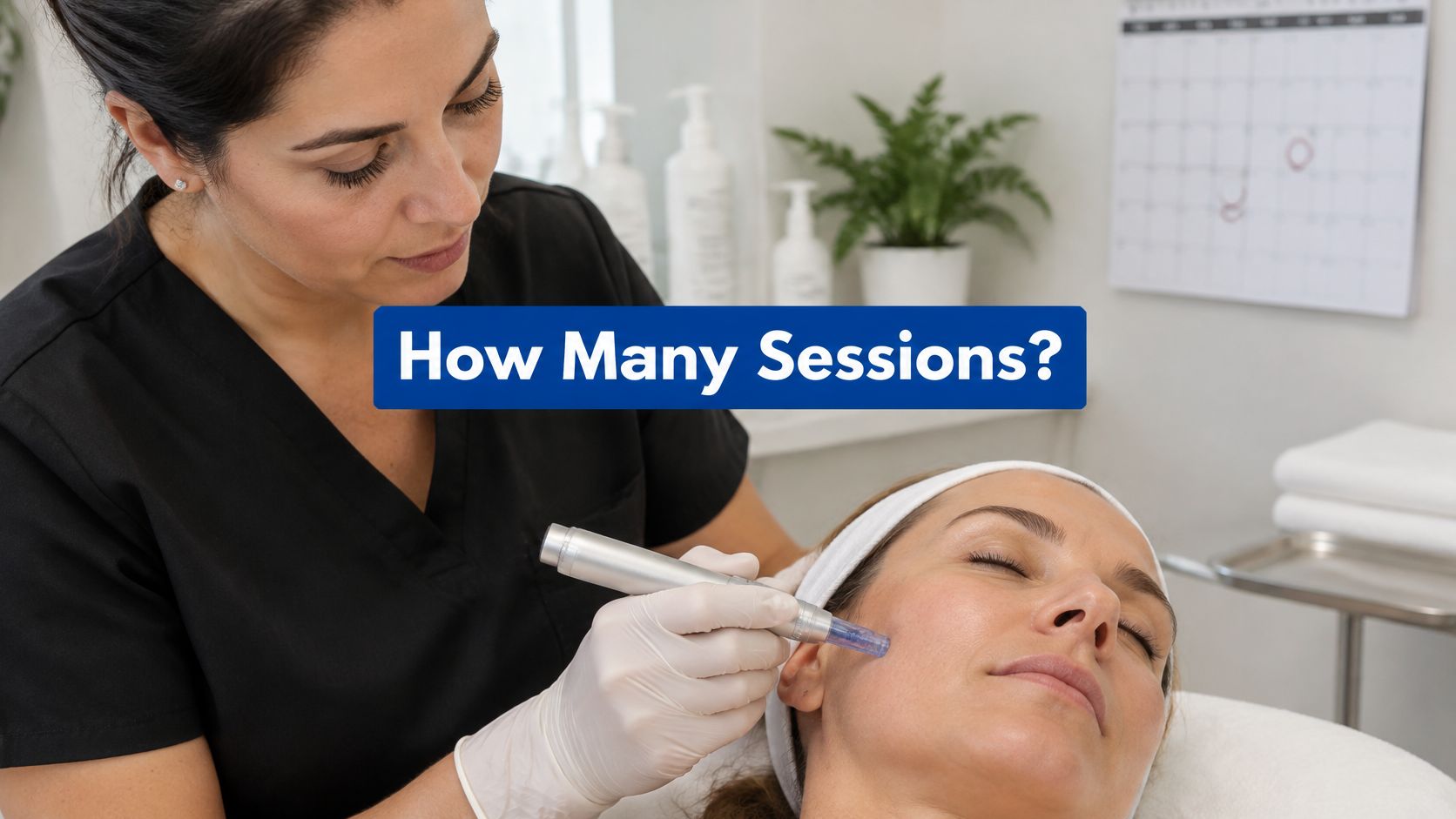
There's no universal number of microneedling sessions, but many patients start with three sessions, and people treating established acne scars often need four to six, usually spaced about four weeks apart. The right plan depends on what you're treating, how deep the skin needs to be treated, how it responds, and whether an adjunct such as PRP is used.
You may be looking at a proposed treatment series and wondering whether it's a sensible plan or a package with a tidy number attached. It's a fair question: microneedling research uses a range of protocols, so a single session count can't suit every person or concern.
A better approach is to ask what the plan is designed to improve, how your skin will be assessed between visits, and what would make your clinician adjust the timing. If you're exploring general beauty and skin topics, keep that same curiosity when you discuss a procedure: useful information should help you understand your choices, not substitute for an individual assessment.
Table of Contents
- What Realistic Microneedling Plans Look Like
- How Microneedling Triggers a Skin Remodeling Cycle
- Session Counts by Skin Concern
- Why Spacing Between Sessions Is Non-Negotiable
- How PRP and Radiofrequency Change the Math
- Reading Your Own Skin to Adjust the Plan
- Maintenance, Timeline for Visible Change, and a Practical Planning Checklist
What Realistic Microneedling Plans Look Like
The evidence helps explain why recommendations differ. A 2021 systematic review of nine randomized controlled trials, covering 341 participants, found schedules ranging from three to eight sessions, generally two to four weeks apart. Improvement could become apparent after three treatments, while more substantial improvement commonly called for four to six. The review also found meaningful differences in needle depth, scar type, timing, and how results were measured, so it didn't establish one ideal schedule for everyone. The systematic review of microneedling for atrophic acne scars offers useful context for those differences.
That makes “How many microneedling sessions do you need?” a question to answer in stages, not with a number pulled out of context. First, clarify your main concern. Then consider how extensive it is, the depth and device proposed, your healing and pigment history, and whether another treatment will be combined with microneedling. Finally, agree on a point to review progress before automatically continuing the series.
A starting course of three sessions can be a reasonable way to assess response. It isn't a promise that three will be enough, or a rule that everyone must continue to six. Someone with mild texture concerns may choose to reassess sooner; someone with established scarring may discuss a longer course.
A useful consultation question: What result are we aiming for, and what would make you recommend another session, delay it, or stop?
A well-explained plan connects each appointment to your goal and your skin's response. You should feel comfortable asking why a particular number and interval make sense for you.
How Microneedling Triggers a Skin Remodeling Cycle
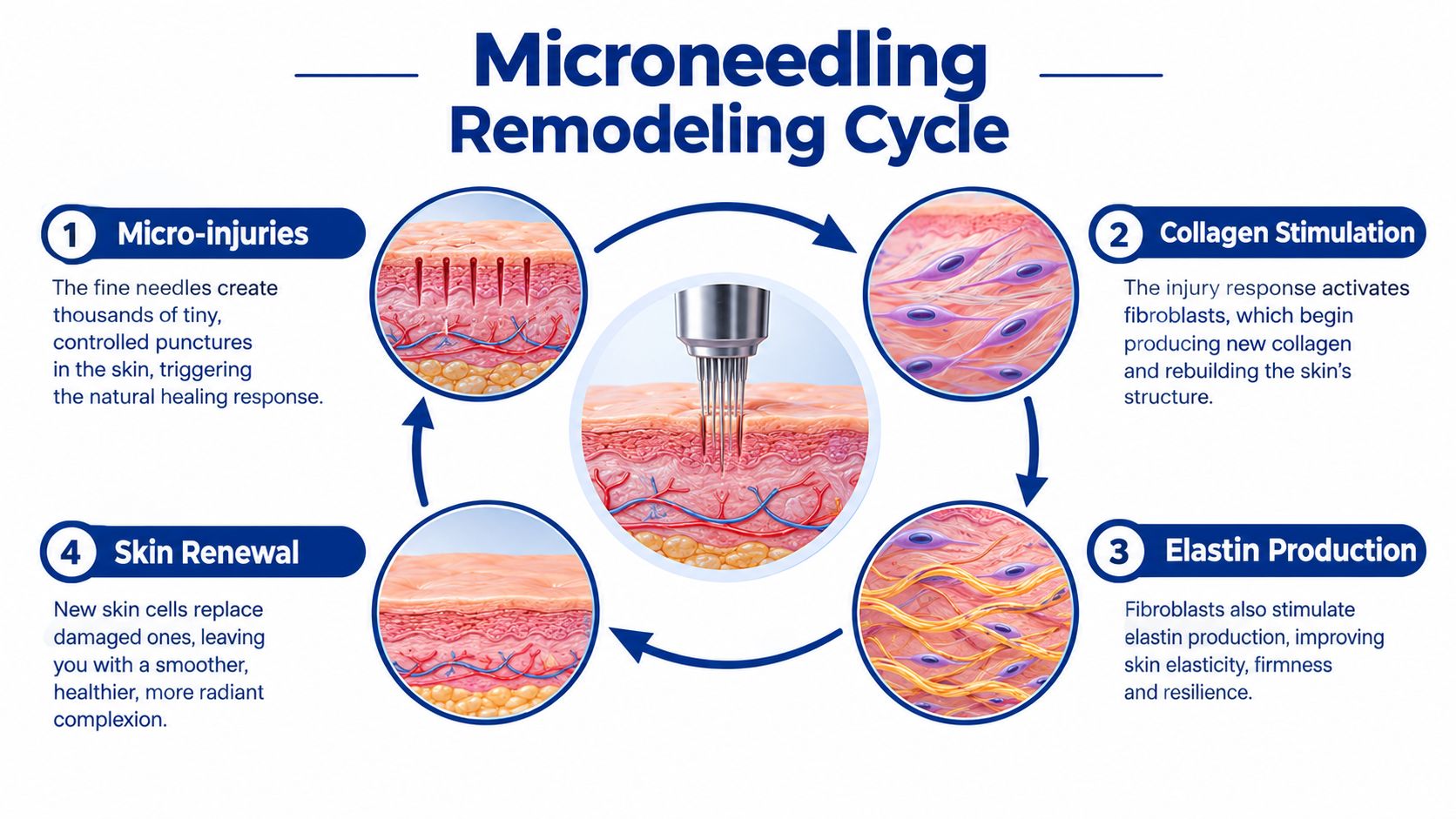
Microneedling uses fine needles to create controlled micro-injuries in the skin. The aim is to prompt a healing response, including activity involved in collagen remodeling. That process unfolds over time, which is one reason results aren't judged only by how your skin looks immediately after a visit.
Think of compacted soil in a garden. Aerating it makes small channels that allow the soil to function differently over time; it doesn't produce a mature lawn overnight. Microneedling similarly starts a process rather than instantly replacing old tissue with finished, new skin.
Why one appointment may not answer the question
Healing involves an early response followed by tissue repair and longer-term remodeling. The visible surface can settle before the deeper changes are fully apparent. So a person might see some early improvement without yet knowing what the full response to a treatment will be.
A prospective study of 48 adults evaluated four automated microneedling treatments spaced 30 days apart for facial aging. It reported improvements in lines, wrinkles, laxity, and texture, with measurable benefits still developing at 90 and 150 days after the first session. The facial-aging study illustrates why clinicians may assess progress well after the appointment itself.
If you're also learning about non-procedural approaches, this overview of ways to improve skin texture naturally can help put skin care choices into a broader context. Whatever approach you consider, give the skin time to respond before deciding that one session did or didn't meet your goal.
Session Counts by Skin Concern
The condition being treated is one of the clearest reasons plans differ. Acne scars involve a different treatment goal from general facial rejuvenation, while scalp protocols shouldn't be assumed to follow facial schedules. The published scar protocols alone range from one to 12 sessions, with intervals from one to eight weeks, reinforcing that no single count applies to every indication. The systematic review of microneedling for scars documents that variation.
| Indication | Typical session count | Common interval | Typical needle depth |
|---|---|---|---|
| Atrophic acne scars | Often four to six, with reassessment after an initial course of three | About two to four weeks in the reviewed trials; individual protocols vary | Selected by the clinician for the scar and treatment plan |
| Facial lines and texture | A practical starting plan is three to four | About four weeks for conventional microneedling | Selected by the clinician and device |
| Pigmentation concerns | No universal count established; individual assessment is important | Set according to recovery and pigment response | Selected cautiously for the individual |
| Hair-loss applications | Published protocols vary widely; some studies used three to six, while the broader review ranged from three to 52 | Study schedules ranged from twice weekly to once monthly | Depends on the diagnosis and protocol |
How the goal changes the course
For atrophic acne scars, the evidence supports discussing a series rather than expecting a single treatment to do the entire job. One review of non-energy-based acne-scar treatments described protocols with two to four sessions or more. It included a study in which 32 patients received two treatments eight weeks apart, and a split-face trial in which 15 participants received three treatments two weeks apart using depths of 1.0 or 2.0 millimeters. Those are examples from studies, not prescriptions for every patient. The review of non-energy-based acne-scar treatments shows how much protocols can differ.
For facial rejuvenation and texture, three to four treatments can be a practical starting discussion, but the device and concern matter. Pigmentation needs particular care: the goal isn't to choose a session count, but to weigh whether the procedure and settings are appropriate for your skin and history.
Hair-loss research illustrates why a facial plan shouldn't be copied for the scalp. A systematic review found schedules ranging from twice weekly to once monthly, with total session counts from three to 52 across studies; a subset used three to six sessions. The review of microneedling for hair loss reflects varied diagnoses, protocols, and adjuncts rather than a universal scalp schedule.
If you're considering treatment for scarring, microneedling for scars is a relevant place to learn more about that specific goal. When someone wants to address more than one concern, the plan should account for the more demanding goal rather than assuming that one short course will address everything equally.
Why Spacing Between Sessions Is Non-Negotiable
The interval between treatments is part of the protocol, not an empty gap to fill. The skin needs time to recover, and the clinician needs an opportunity to judge how it responded. Scheduling another appointment too soon doesn't mean the remodeling process will finish faster.
A useful analogy is a cake baking slowly in an oven. Turning up the heat or checking it repeatedly won't make it ready sooner. Likewise, compressing appointments doesn't necessarily speed visible change, and treating skin that hasn't recovered can make it harder to judge the response and plan safely.
Match the calendar to the treatment
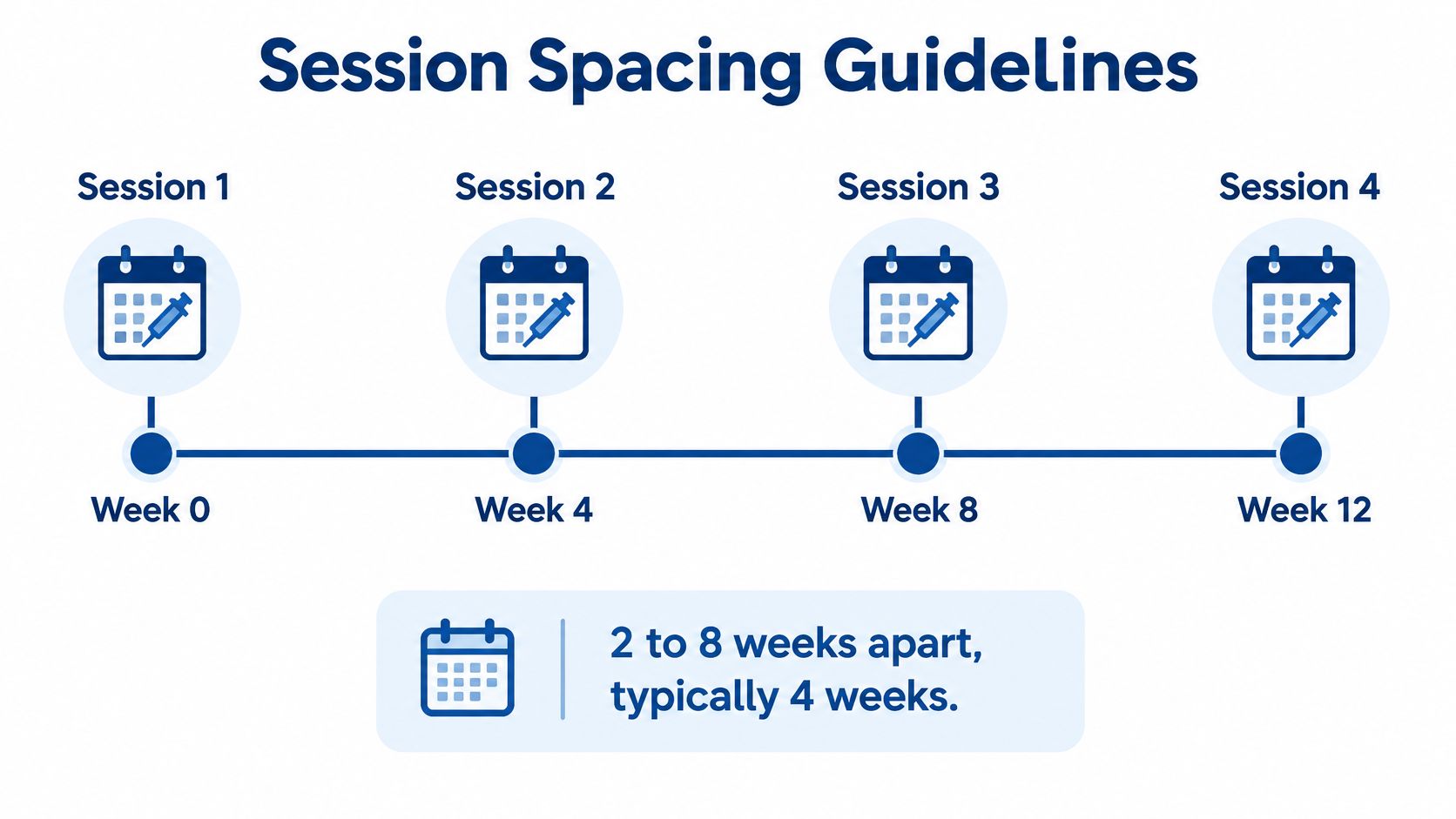
Across acne-scar protocols, a practical planning range is roughly two to eight weeks between sessions, not a weekly default. The studies described earlier include both shorter and longer intervals, which is why the clinician should connect the timing to treatment depth, the device, and how your skin heals. The review of facial radiofrequency microneedling protocols also describes schedules that vary by procedure rather than supporting a single calendar for all devices.
Conventional microneedling is often planned around a multi-week interval, with about four weeks serving as a practical reference point for some facial protocols. Radiofrequency microneedling adds energy to the treatment, so its recovery and remodeling interval may differ. Don't assume that a schedule designed for one device or depth is automatically right for another.
At follow-up, your clinician should look beyond the date on the calendar. Has your redness settled? Is the treated area recovering as expected? Has the concern started to improve, stayed the same, or worsened? Those observations help determine whether the next treatment should proceed, wait, or be reconsidered.
How PRP and Radiofrequency Change the Math
Adding an adjunct doesn't automatically mean fewer appointments. It changes what the treatment involves, and the effect on session count depends on the concern, device, technique, and your response. Ask what the addition is intended to do and how it changes the expected recovery, rather than assuming that “more” treatment means a shorter course.
Standard microneedling, PRP, and radiofrequency
Standard microneedling uses controlled needling without added radiofrequency energy. The clinician selects the device and depth for the treatment area and goal, then sets an interval that allows for recovery and reassessment.
PRP, or platelet-rich plasma, is an adjunct that may be used with microneedling. If it's proposed, ask how it fits your plan and whether it changes the treatment approach. Don't assume that PRP will cut the number of sessions in half; that outcome can't be promised from the information available here. Learn more about microneedling with PRP and discuss whether the combination is appropriate for your goals.
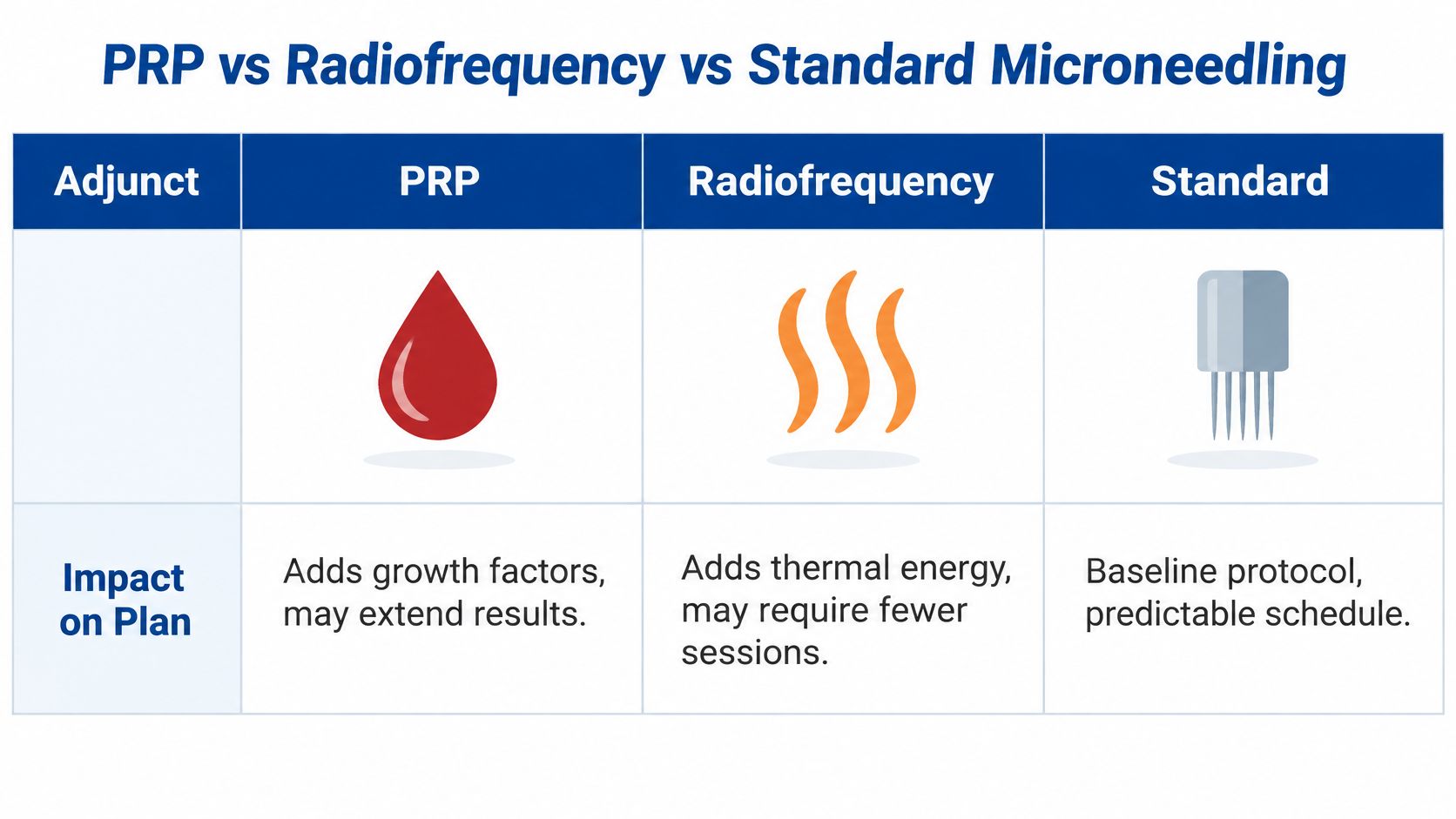
Radiofrequency microneedling combines needling with energy delivered through the device. That makes it a different treatment plan, not conventional microneedling with a new label. Published rejuvenation protocols include radiofrequency treatments spaced six to eight weeks apart, while schedules for conventional approaches may be shorter. Your provider should explain which device is being used, the intended depth, and how those choices affect recovery.
Ideal Face & Body offers consultation-based microneedling planning, in which a provider evaluates skin goals, the treatment area, health history, and skin response before recommending a series or maintenance approach. The useful comparison isn't which option sounds more intensive. It's which plan fits the concern and recovery your skin can manage.
Reading Your Own Skin to Adjust the Plan
Your skin's history should matter more than a pre-set calendar. Fitzpatrick skin type, previous pigment changes, the depth of treatment, and any active irritation can all affect how a clinician approaches timing. A systematic review found generally mild, temporary effects but identified post-inflammatory hyperpigmentation as a real concern, particularly for darker skin types; studies reported both pigment changes and no pigment changes across different patients and protocols. The review of microneedling in skin of color supports individualized assessment rather than a blanket assurance.

Before treatment, tell your clinician about prior hyperpigmentation or prolonged redness, active acne or dermatitis, recent sun exposure, and any medicines or health conditions that may affect healing. Discuss the proposed depth and whether PRP or another adjunct is being added. Active inflammation or incomplete recovery may be a reason to delay treatment rather than follow the original date.
Use recovery as your decision guide
Before another session, check whether the skin appears to have recovered and whether the treatment area has changed in a way that needs review. Persistent redness, darkening, signs of infection, or worsening texture are reasons to pause and contact your clinician. Don't treat these as routine milestones or just reschedule the next appointment without asking for guidance.
Delay and ask for advice if the skin hasn't returned to its expected baseline or a new concern has appeared.
This isn't about predicting risk from skin tone alone. It's about telling your provider how your skin has behaved before and making sure the next decision reflects what's happening now.
Maintenance, Timeline for Visible Change, and a Practical Planning Checklist
A course of treatment may end before the visible changes do. In the facial-aging study discussed earlier, benefits continued to develop during follow-up, so clinicians may assess results after the series rather than right after the final appointment. The timeline varies with the skin concern, treatment, and individual response.
Maintenance is another part of planning. The FDA notes that microneedling may require more than one procedure to reach the desired result, and improvement may be temporary. The agency states that FDA-cleared devices are authorized to improve the appearance of facial acne scars, facial wrinkles, and abdominal scars in adults aged 22 years or older. It also lists possible risks, including redness, bruising, bleeding, itching, pigment changes, and infection, and identifies health and medication factors that may affect candidacy. Review The FDA's microneedling-device guidance with your clinician as part of that discussion.
Skin care products and procedures can serve different roles, so keep those choices in perspective when discussing a plan. You can compare anti wrinkle Q10 formulas. For expectations after a course, read about how long microneedling results last.
Bring these questions to your appointment:
- Goal: Which concern is the treatment intended to address?
- Series: What is a reasonable starting point, and when will we reassess?
- Technique: Which device and depth are planned, and why?
- Timing: What recovery signs should be present before another session?
- Safety: Which symptoms mean I should pause and contact the clinic?
- Progress: How will we judge whether the plan is working?
A good plan is personalized and adjustable. Ideal Face & Body's microneedling planning is consultation-based, so the series is set after your skin, history, and goals are assessed.
If you're considering microneedling, bring your goals, treatment history, and recovery questions to a consultation with Ideal Face & Body. The team can assess your needs and discuss whether a custom treatment series or another option is appropriate.